-
-

Landing page
-
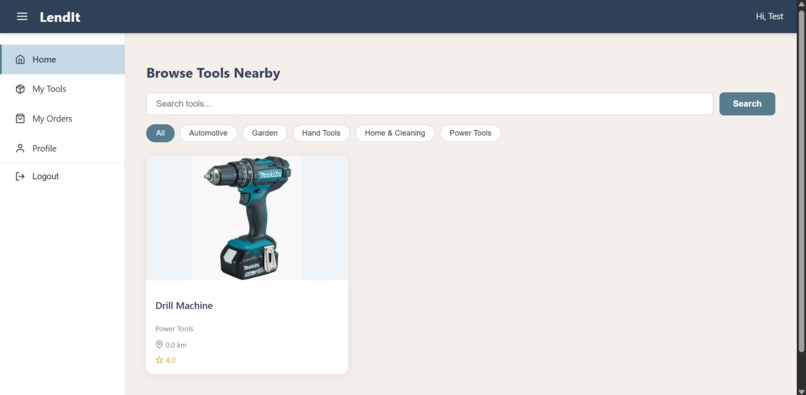
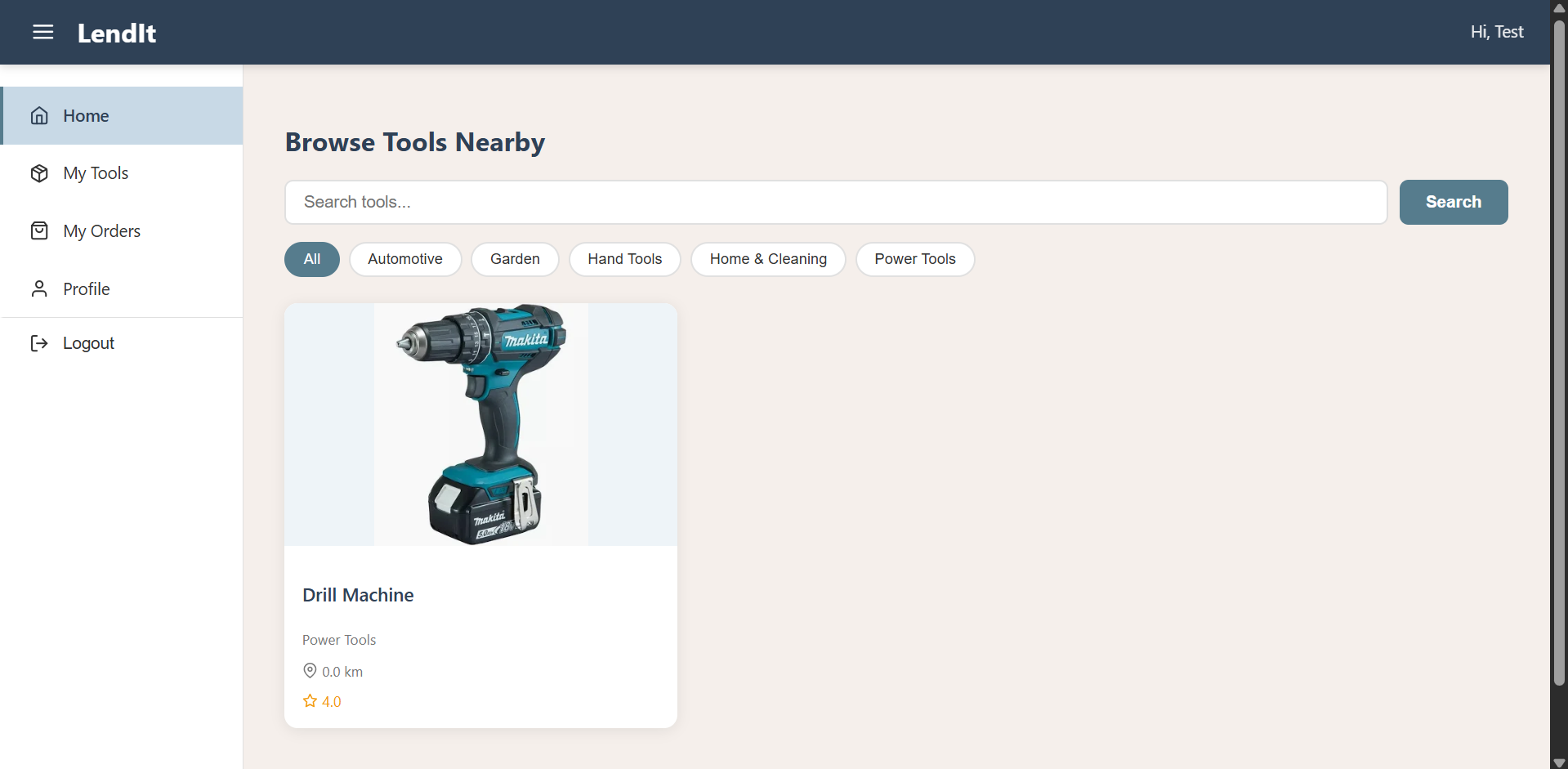
Home page
-
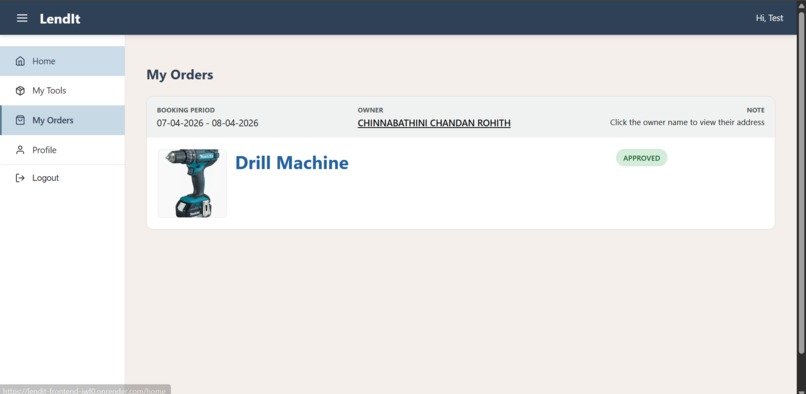
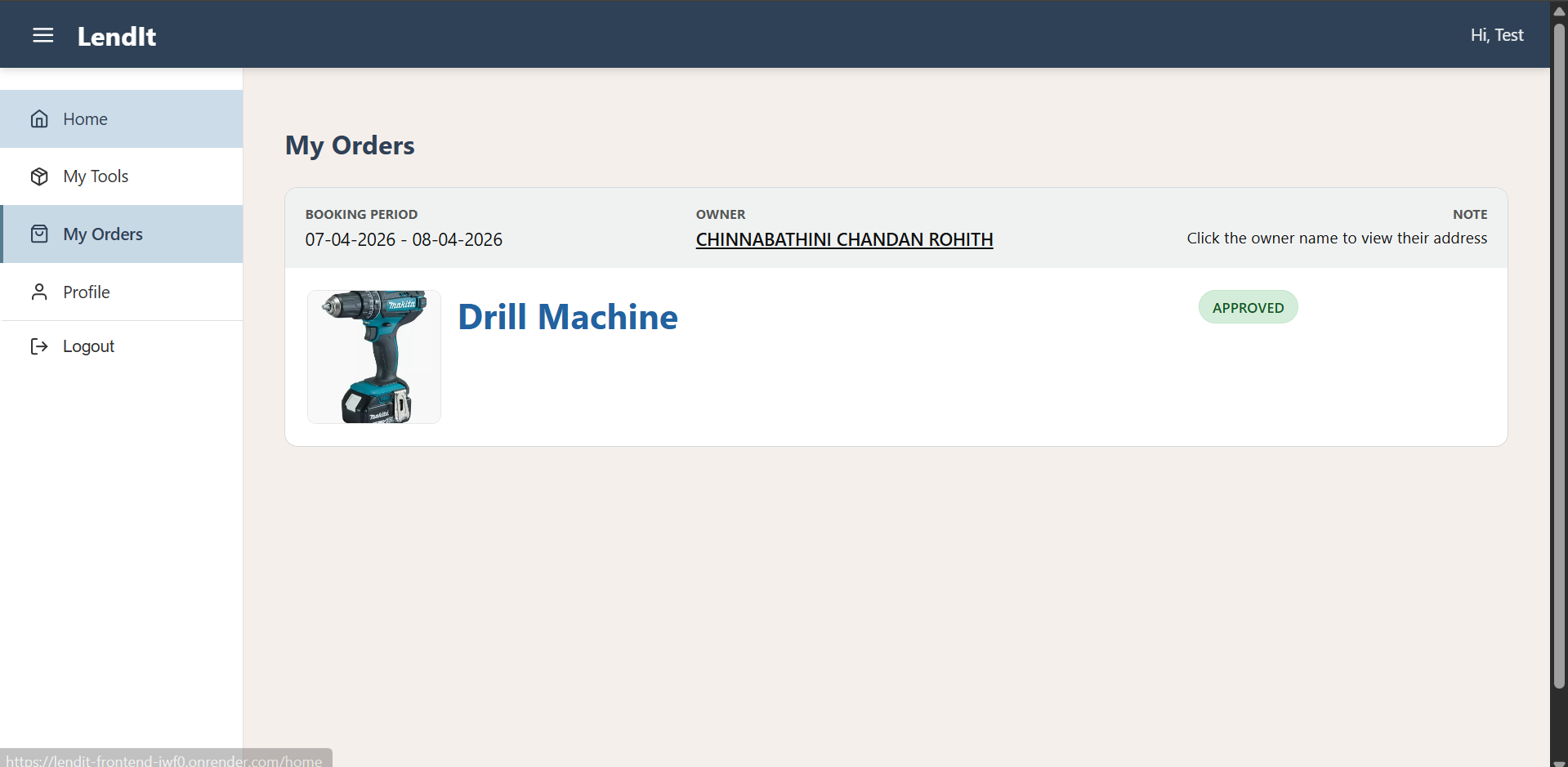
My-Orders
-
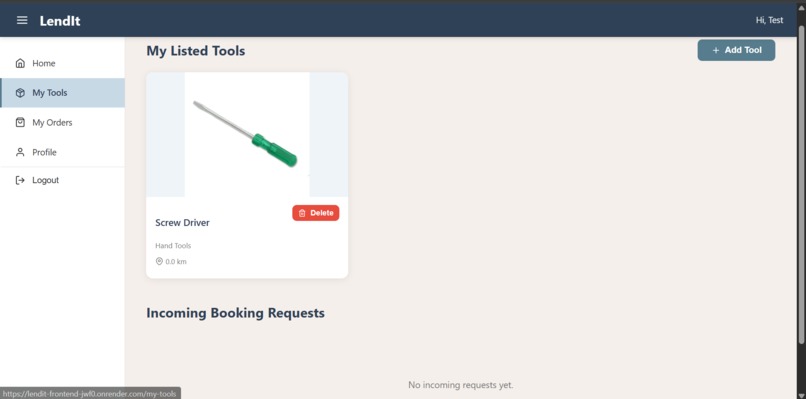
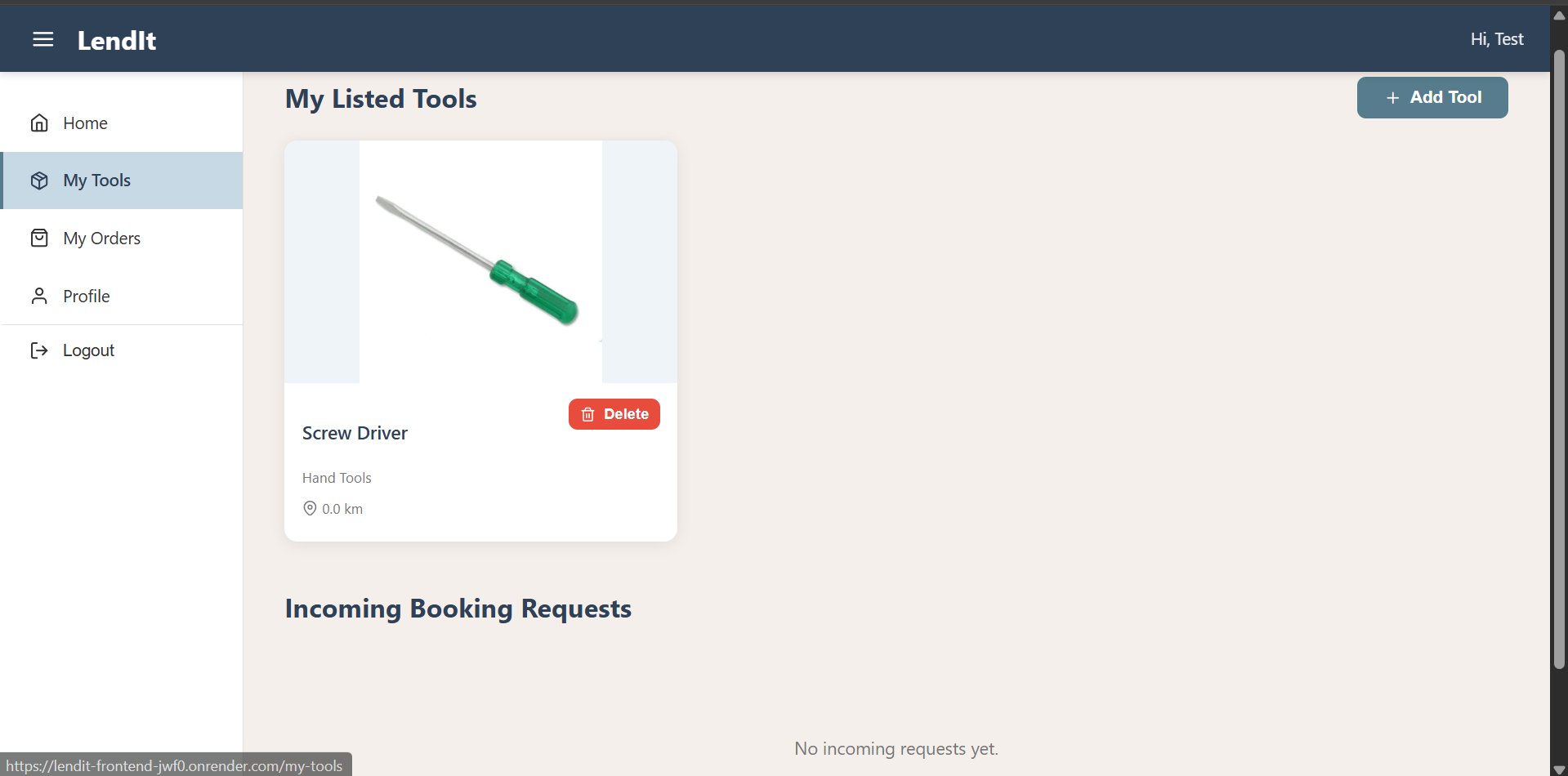
My-Tools
-
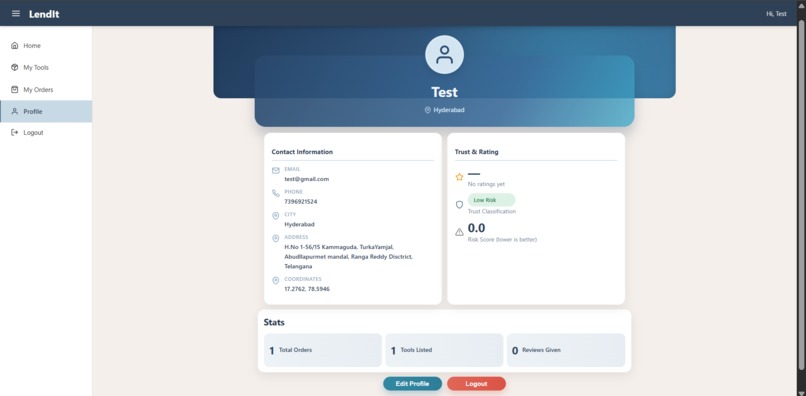
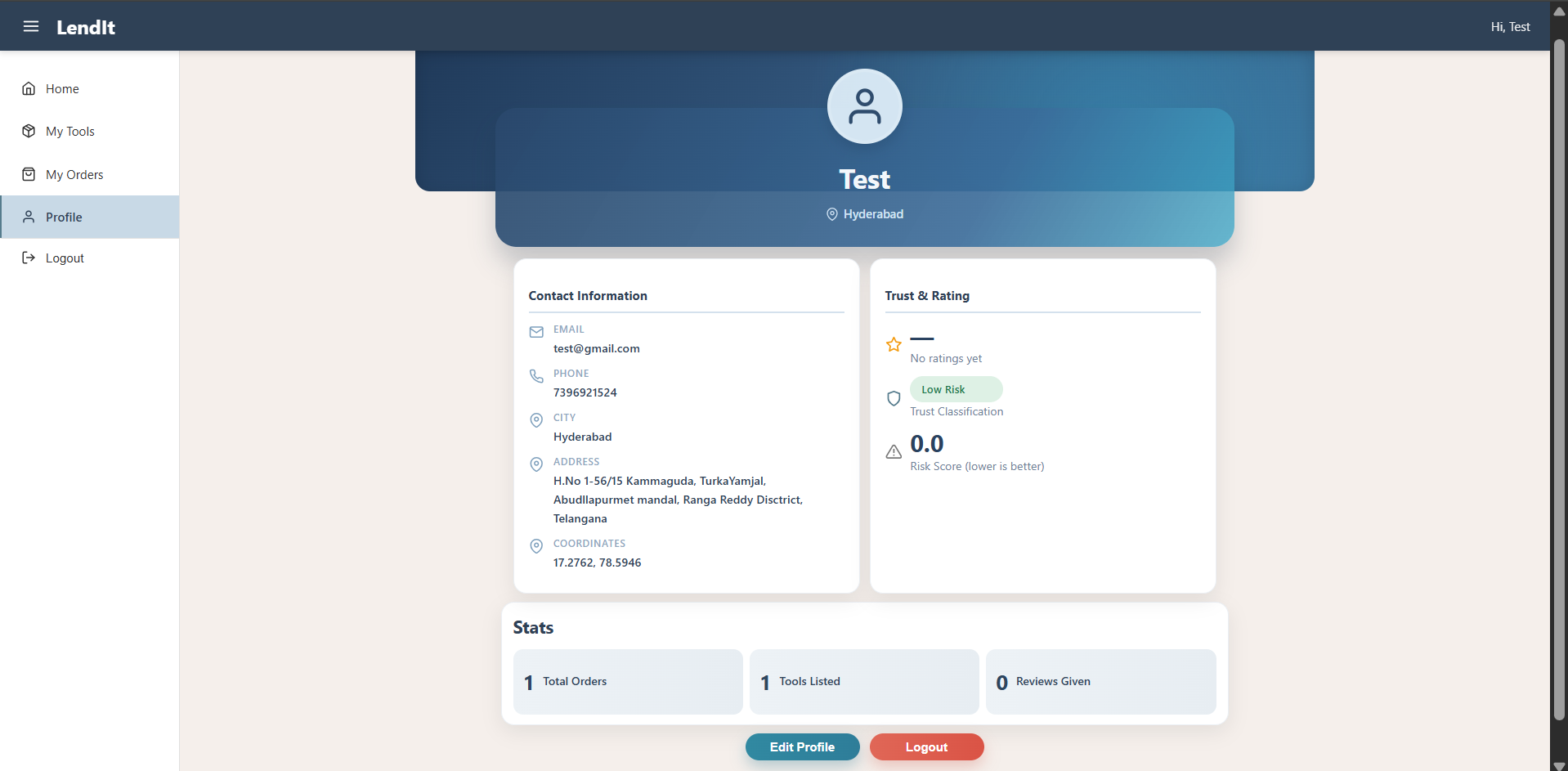
Profile-page

LendIt
Inspiration
LendIt started from a simple frustration we kept seeing around us: people buy expensive tools for one-time use, while the same tools often sit unused in someone else’s home.
We wanted to build a trust-first local borrowing platform that makes it easier to share tools within nearby communities instead of purchasing new ones every time.
We were especially inspired by two questions:
- How can we make local borrowing feel as reliable as buying?
- How can we reduce waste and unnecessary spending with a better user experience?
What it does
LendIt is a hyper-local peer-to-peer tool sharing platform that allows users to:
- List the tools they own for others to borrow
- Find tools available within a 10 km radius
- Book tools easily through a simple interface
- Leave reviews after transactions to build trust
A key feature of LendIt is its AI-based risk scoring system.
- Supports ML-based inference when available
- Uses rule-based fallback scoring when ML is unavailable
This ensures reliability while maintaining fairness.
How we built it
Frontend:
- React + Vite application for authentication, tool discovery, booking flows, review submission, and profile navigation
Backend:
- Spring Boot (Java 21) REST API with JWT authentication, role-based booking logic, validation, and business rules
Database:
- MySQL with JPA/Hibernate for managing users, tools, bookings, reviews, categories, blocked dates, and risk scores
Trust Engine:
- Python-based ML inference pipeline
- Includes fallback scoring system for reliability
Location Intelligence:
- Client geolocation + backend Haversine distance calculation for nearby tools
Automation:
- Scheduler that auto-completes expired bookings
Challenges we ran into
- Designing booking workflows: Managing state transitions and permissions between owners and borrowers
- Preventing overlaps: Handling date conflicts and race conditions
- Fair review system: Ensuring one review per booking and correct user roles
- ML integration reliability: Supporting ML with fallback to avoid system failure
- Location UX issues: Handling denied permissions smoothly
- Backward compatibility: Supporting evolving features without breaking older data
Accomplishments that we're proud of
- Built a complete end-to-end platform from UI to backend and trust scoring
- Developed a trust pipeline combining reviews with risk classification
- Implemented resilient architecture with ML + fallback logic
- Handled real-world constraints like blocked dates and booking conflicts
- Created a smooth user experience for both borrowers and owners
- Designed a scalable foundation for future growth
What we learned
- Trust systems go beyond algorithms and require strong product design
- Fallback design is critical for system reliability
- Booking systems need strong state modeling to avoid edge cases
- Geolocation requires clear UX handling for permissions
- Full-stack integration requires tight coordination between frontend and backend
- Real workflows reveal hidden complexity faster than isolated development
What's next for LendIt
- Add payment integration
- Improve AI risk model accuracy
- Introduce real-time chat system
- Enhance location intelligence
- Deploy for real-world community use


Log in or sign up for Devpost to join the conversation.