-
-
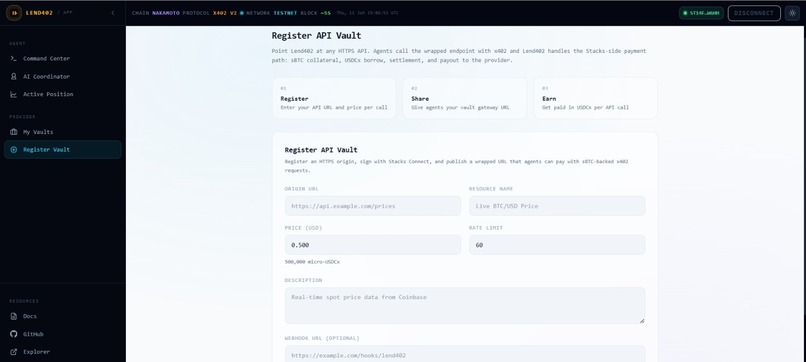
REGISTERING WALLET
-
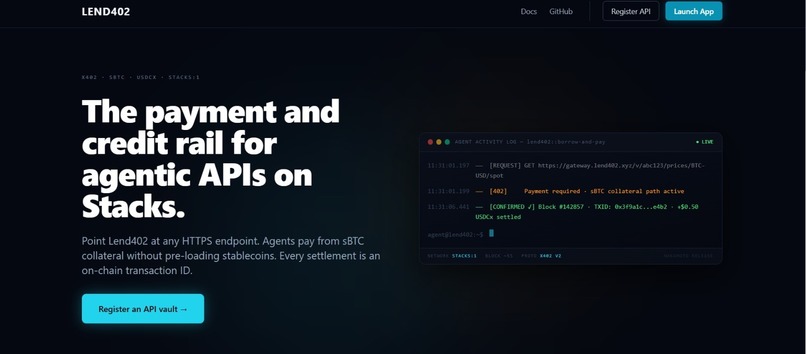
DASHBOARD
-
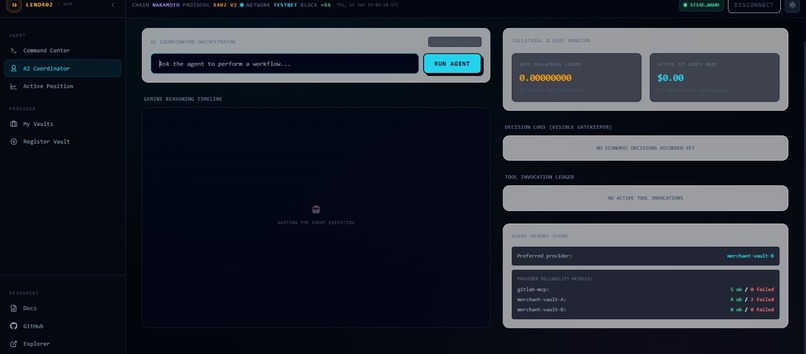
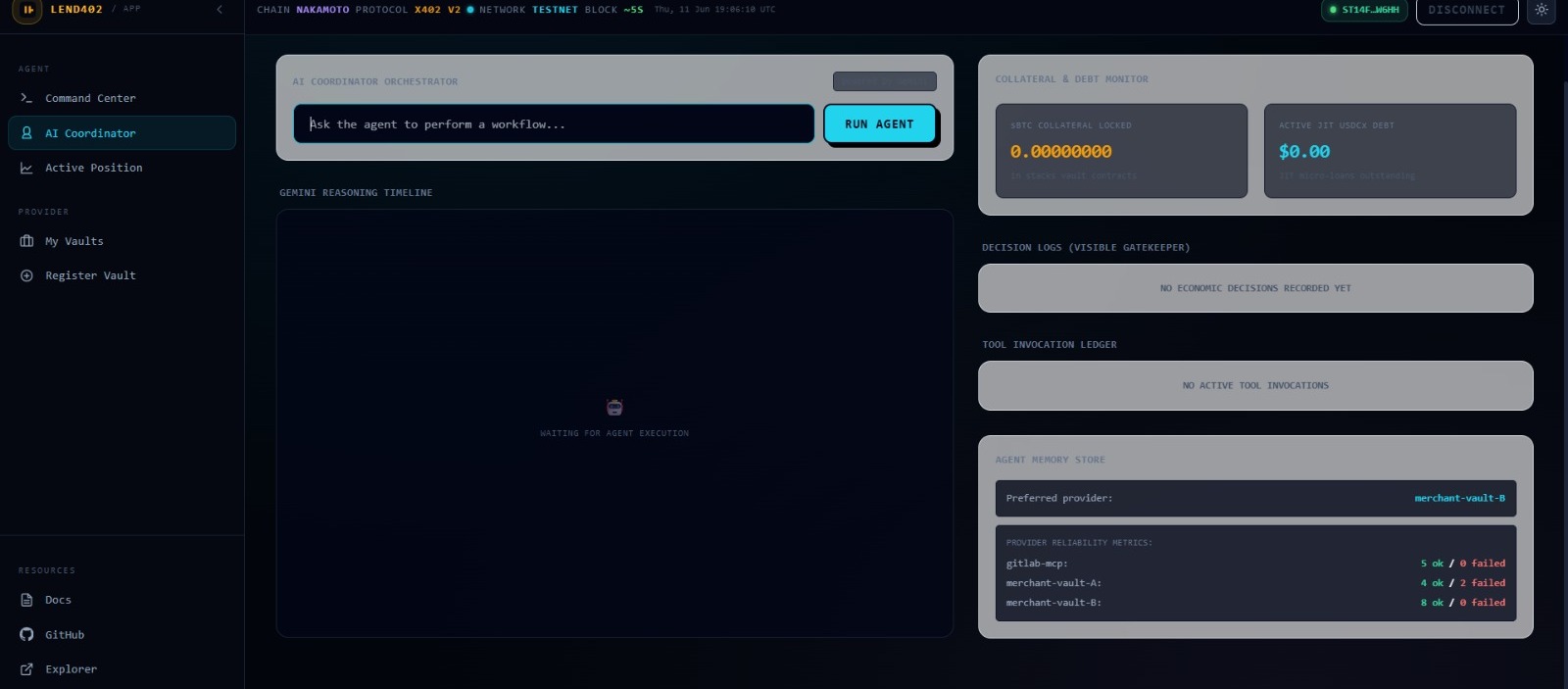
AI COORDINATOR
-
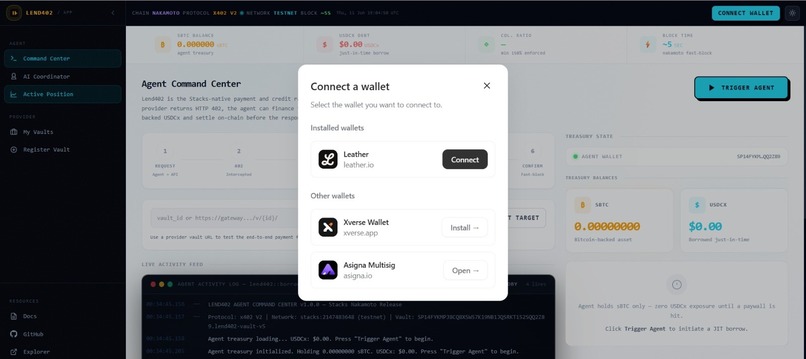
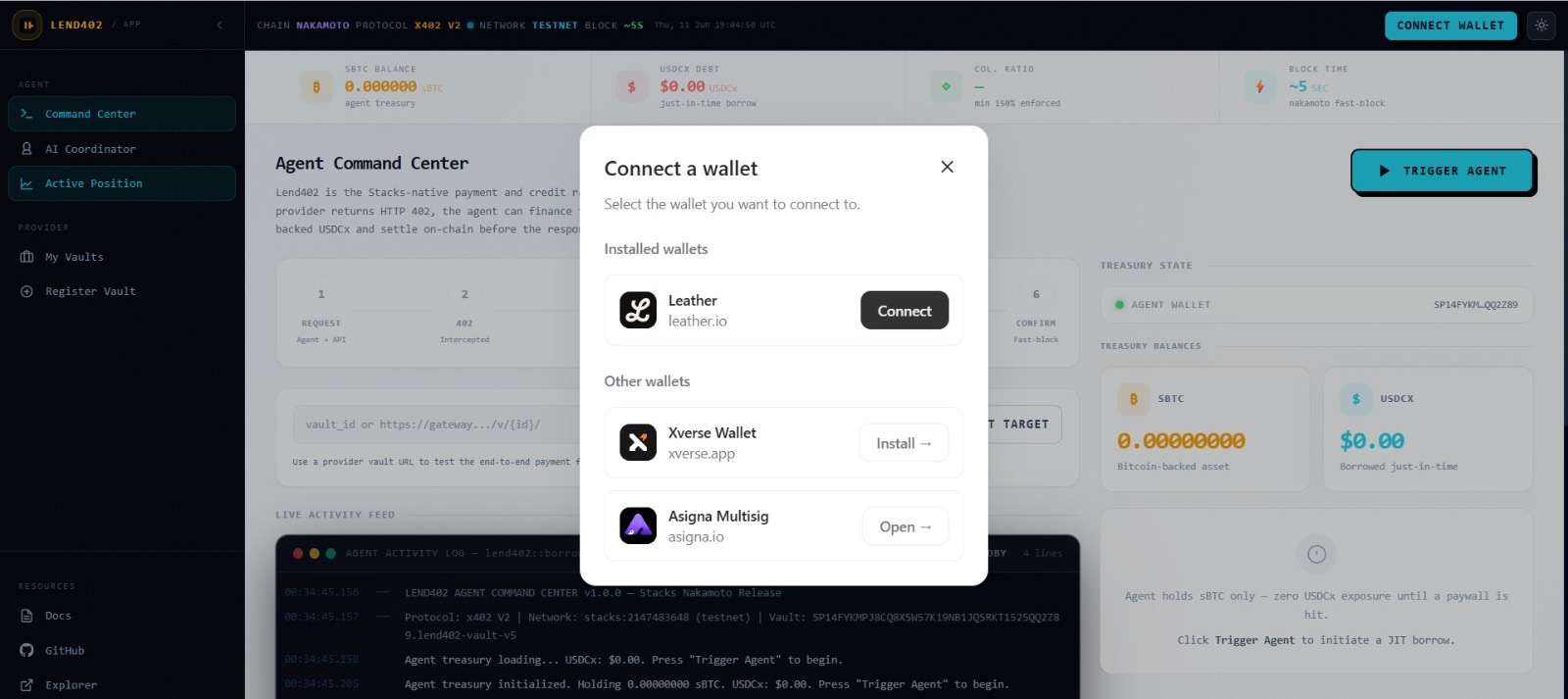
CONNECTING WALLET
-
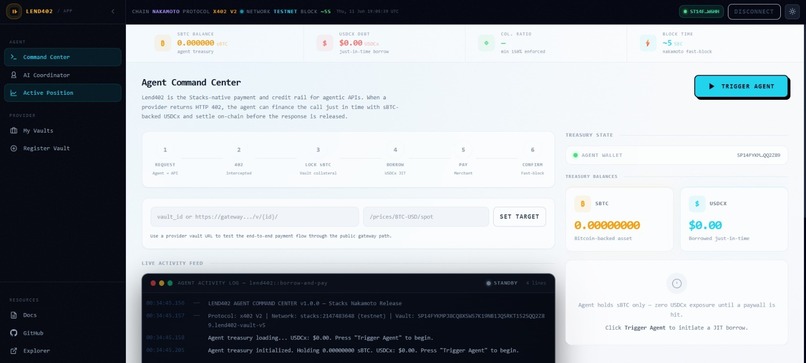
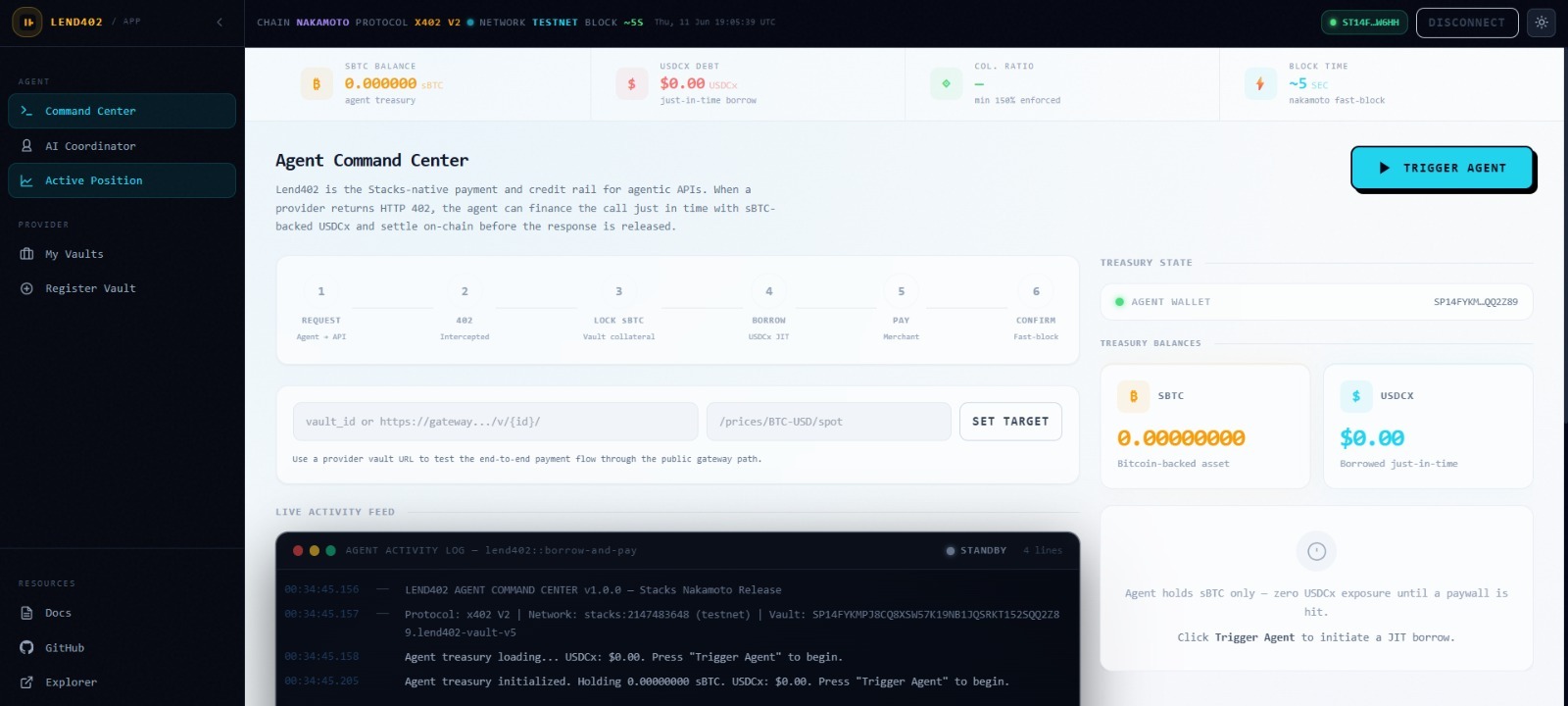
COMMAND CENTER
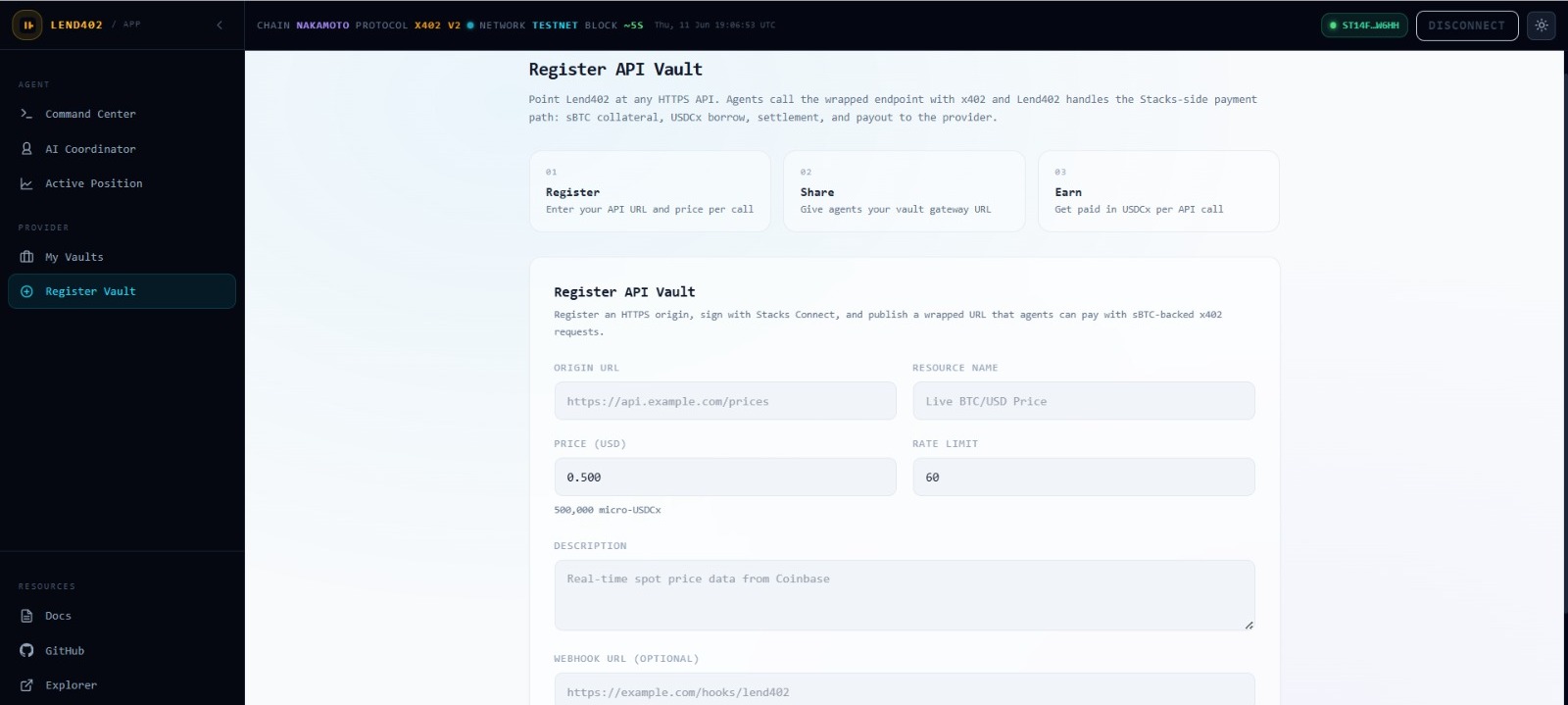
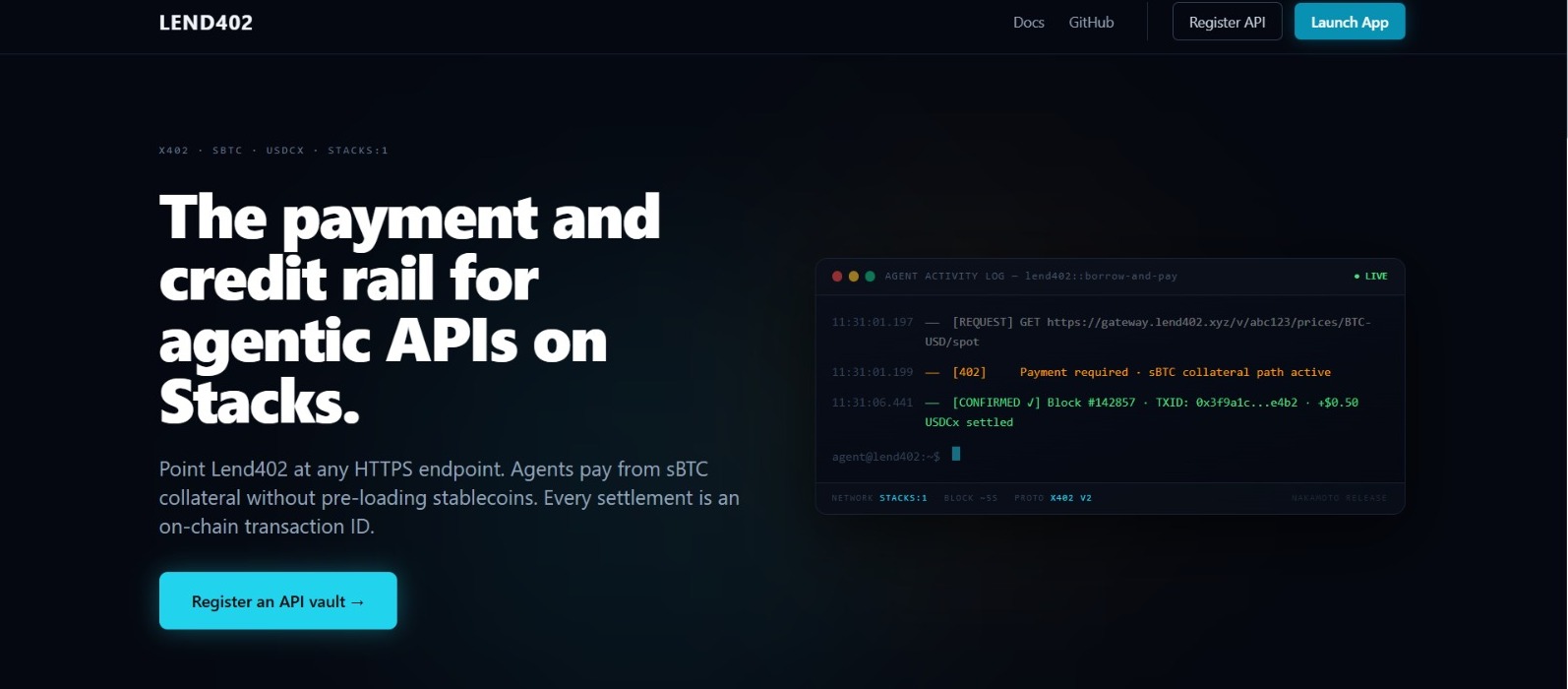
Inspiration
Most AI agents can reason, but they cannot autonomously pay for premium services or APIs when they encounter a paywall. In real-world workflows, this limitation prevents agents from completing tasks without constant human intervention.
We wanted to explore a different paradigm: what if an AI agent could reason about its budget, collateral, and payment decisions, then finance premium actions just in time while remaining under human oversight?
That idea led to Lend402 AI: Autonomous Economic Coordinator.
What it does
Lend402 AI is a Gemini-powered autonomous economic agent that plans complex workflows, maintains persistent memory, reasons about costs and collateral, dynamically selects tools, and executes Bitcoin-backed just-in-time payments through the Lend402 protocol.
The coordinator goes beyond chat by following a complete:
Think → Plan → Act → Observe → Reflect
execution cycle.
For example, when a workflow requires a premium dependency scan or protected API access, the agent:
- Analyzes the goal.
- Generates an execution plan.
- Loads historical memory and provider reliability metrics.
- Evaluates available budget and collateral.
- Decides whether payment is required.
- Executes a just-in-time Bitcoin-backed borrow through Lend402.
- Continues the workflow using MCP-integrated tools.
- Observes results and produces an enterprise audit report.
How we built it
The system is built around a modular cognitive architecture.
- Gemini powers planning, reasoning, observations, and reflections.
- Google Cloud Agent Builder concepts inspired the orchestration model.
- A Coordinator manages execution.
- A Planner decomposes goals into actionable steps.
- A Decision Engine evaluates budgets, collateral requirements, and provider reliability.
- A Memory Store persists execution history and influences future decisions.
- A Tool Registry dynamically invokes available capabilities.
- An Executor coordinates Think → Act → Observe → Reflect cycles.
- GitLab MCP integration enables automated repository and deployment workflows.
- Lend402 payment adapters perform Bitcoin-backed just-in-time economic execution.
- Server-Sent Events (SSE) stream reasoning and execution state to a live dashboard.
The frontend provides enterprise-grade observability with:
- Dynamic execution graphs
- Reasoning timelines
- Decision logs
- Tool invocation ledgers
- Memory inspection
- Budget and collateral monitoring
- Execution compliance reports
Challenges we ran into
One of the biggest challenges was integrating autonomous reasoning with economic execution without disrupting the underlying Lend402 protocol.
We also had to design a reliable decision engine capable of evaluating budgets, collateral safety, provider reliability, and payment requirements before invoking tools.
Maintaining backward compatibility while introducing a fully autonomous orchestration layer required careful architectural separation between reasoning and execution.
Building transparent observability for every decision—including planning, payment approvals, observations, and reflections—was another major engineering challenge.
Accomplishments that we're proud of
- Built a complete autonomous coordinator instead of a traditional chatbot.
- Implemented Think → Plan → Act → Observe → Reflect execution.
- Added persistent memory that influences provider selection.
- Integrated Bitcoin-backed just-in-time payments through Lend402.
- Added dynamic planning based on user intent.
- Built a live execution dashboard with reasoning and compliance reporting.
- Integrated MCP-powered tooling for real-world task orchestration.
What we learned
This project reinforced that autonomous agents require more than reasoning—they also need economic awareness, memory, and safe execution policies.
We learned how cognitive planning, payment infrastructure, and observability can be combined into a production-style architecture capable of handling complex real-world workflows.
What's next for Lend402 AI
Future work includes:
- Multi-agent collaboration
- Autonomous replanning after execution failures
- Additional MCP integrations
- Richer long-term memory
- Expanded financial policies and governance controls
- Enterprise deployment support through Google Cloud services


Log in or sign up for Devpost to join the conversation.