-
-
-
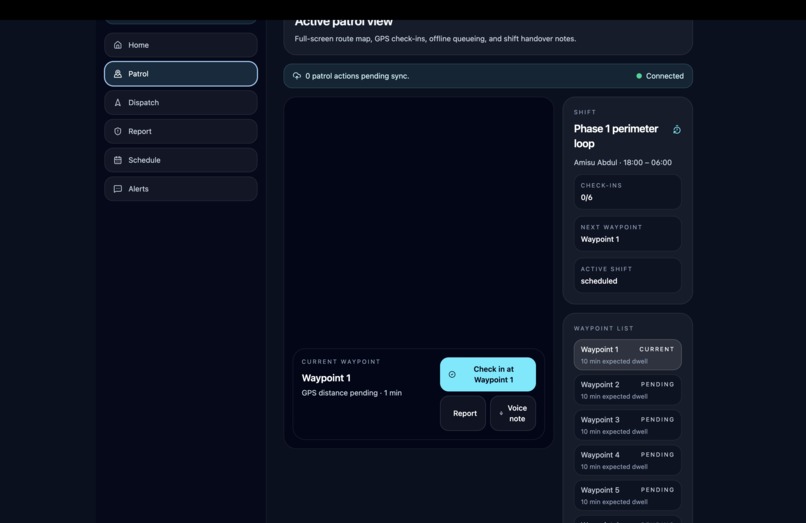
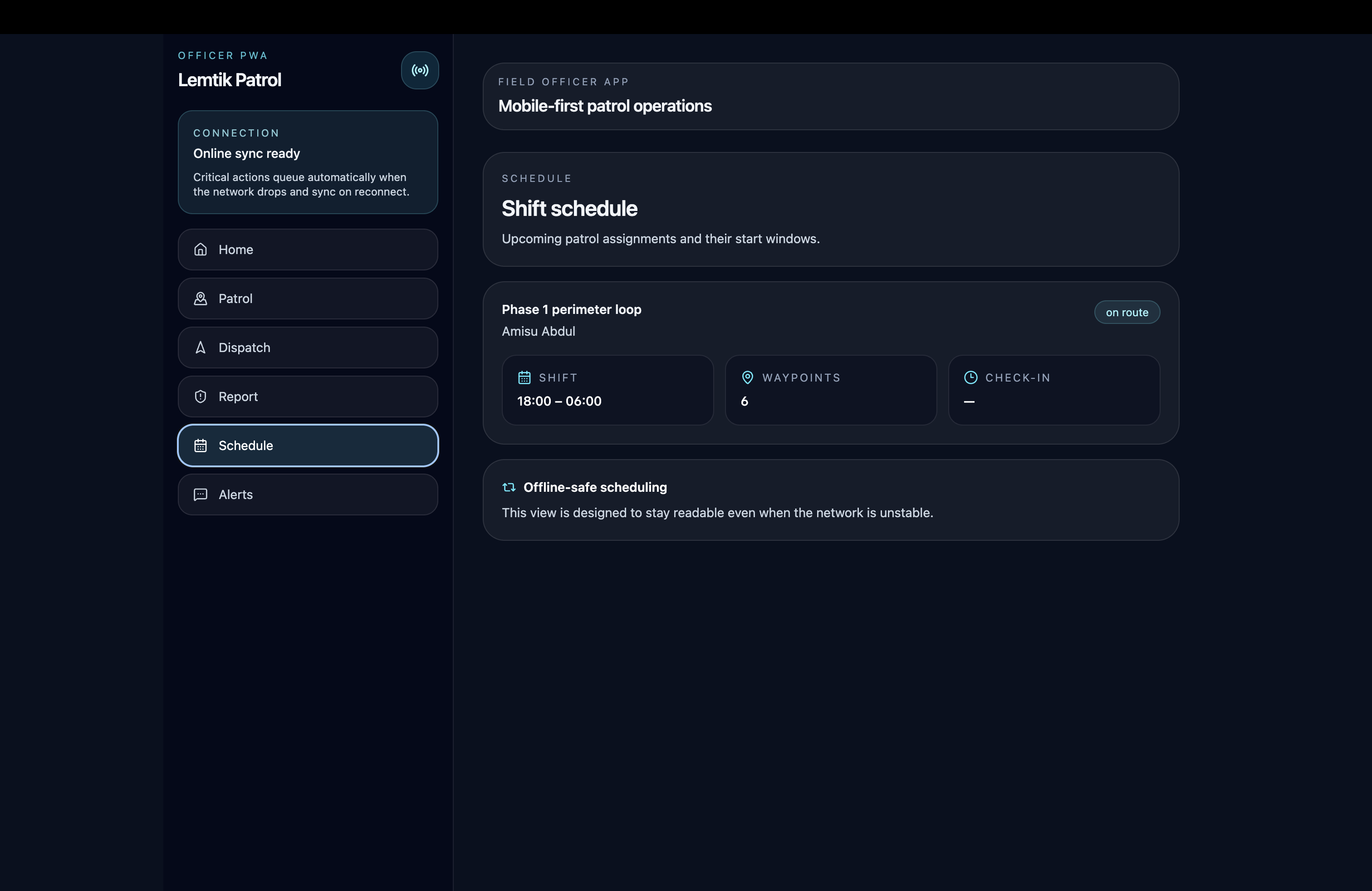
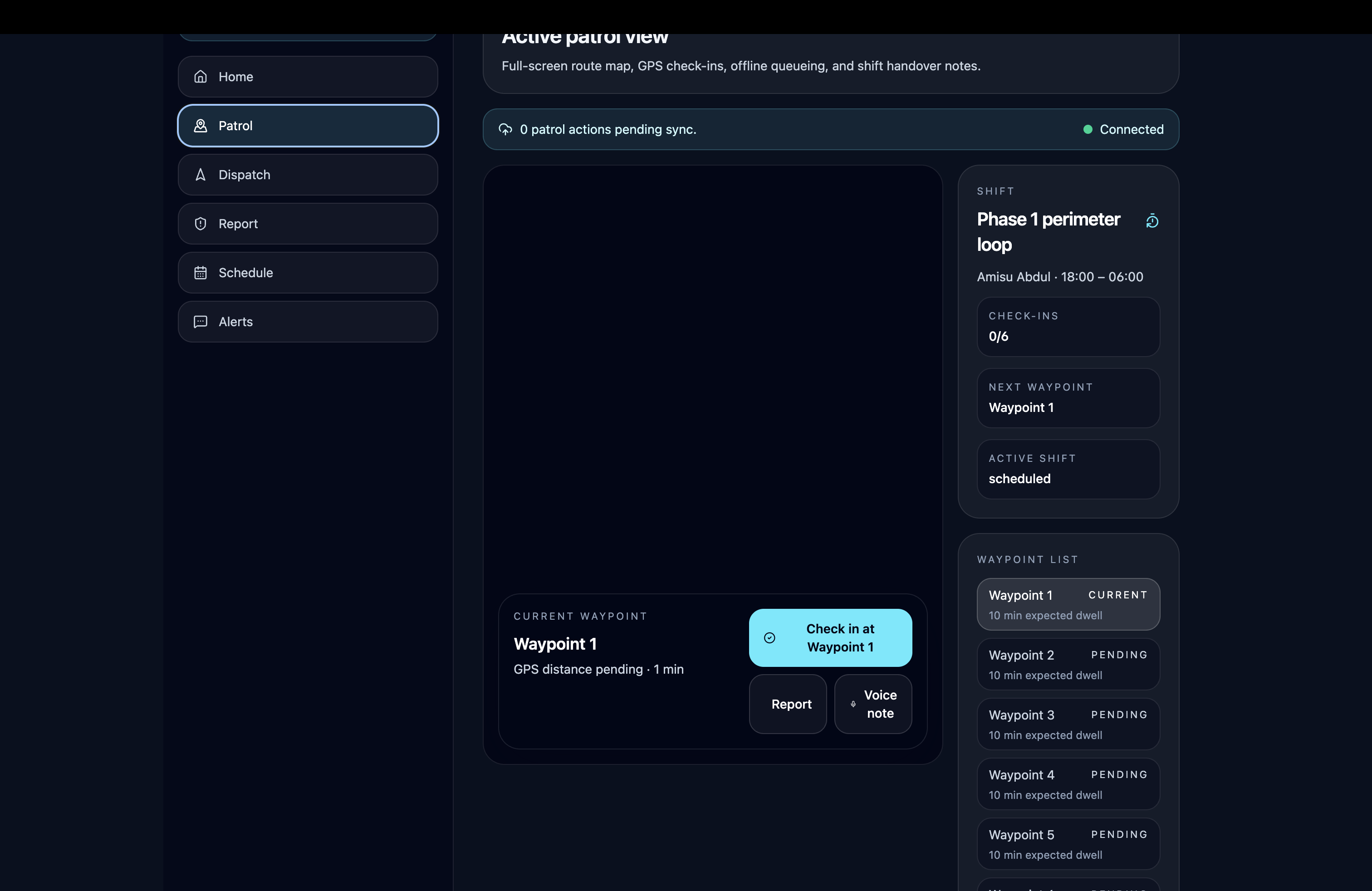
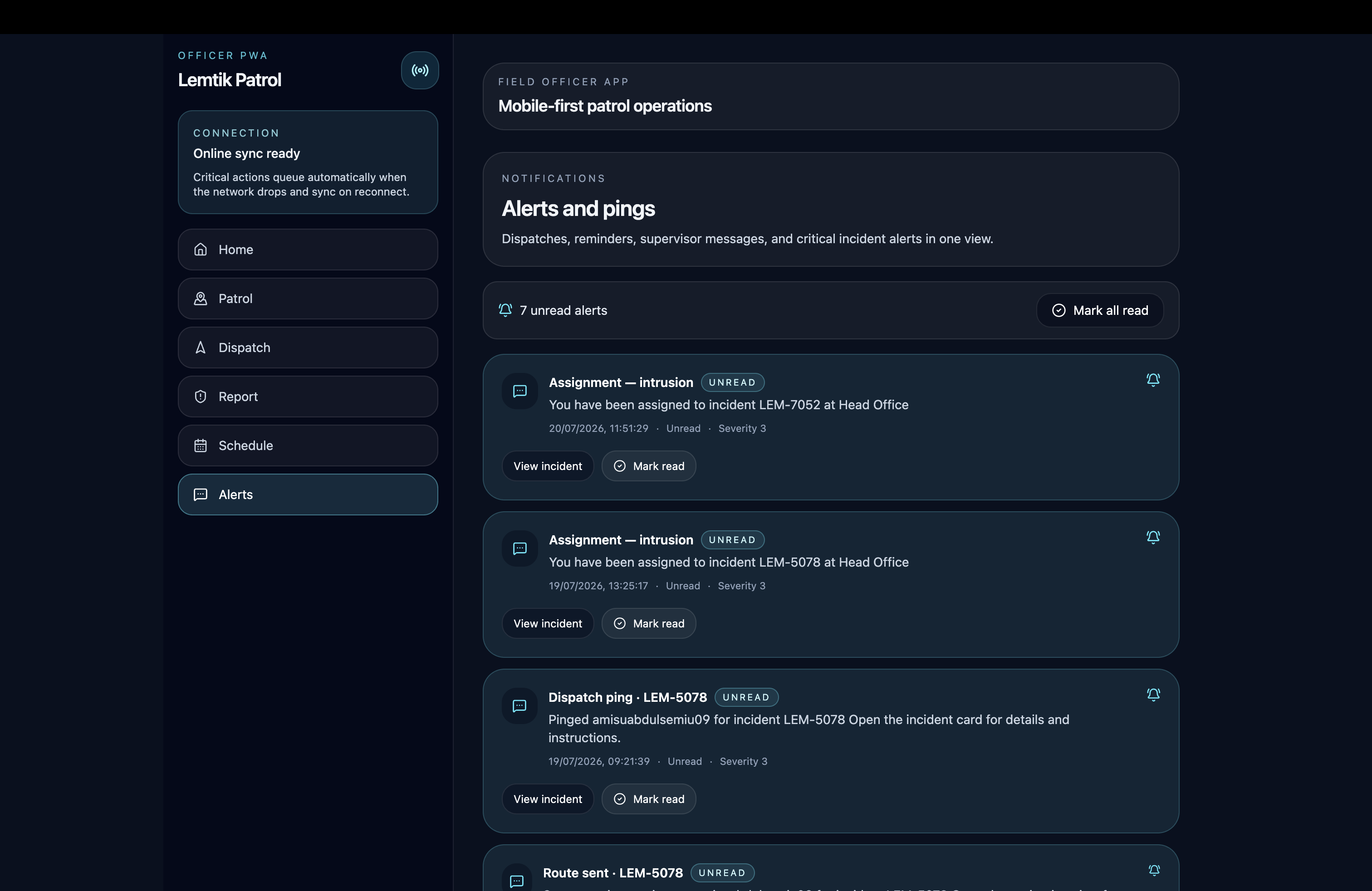
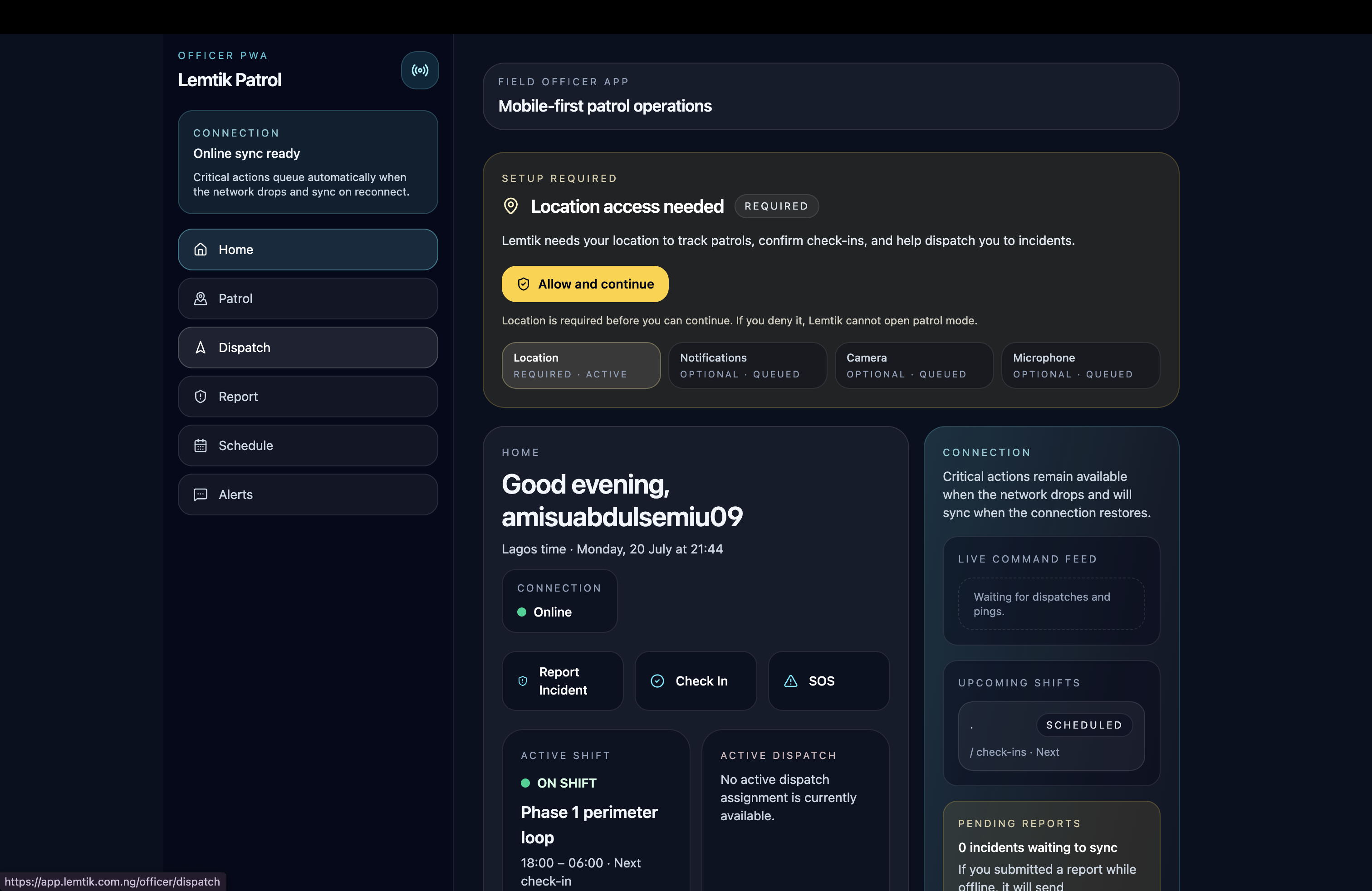
Officer patrol page
-
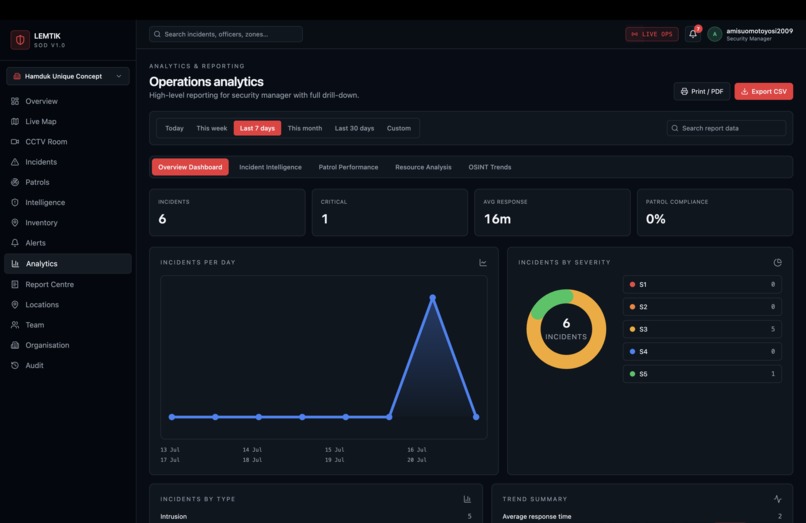
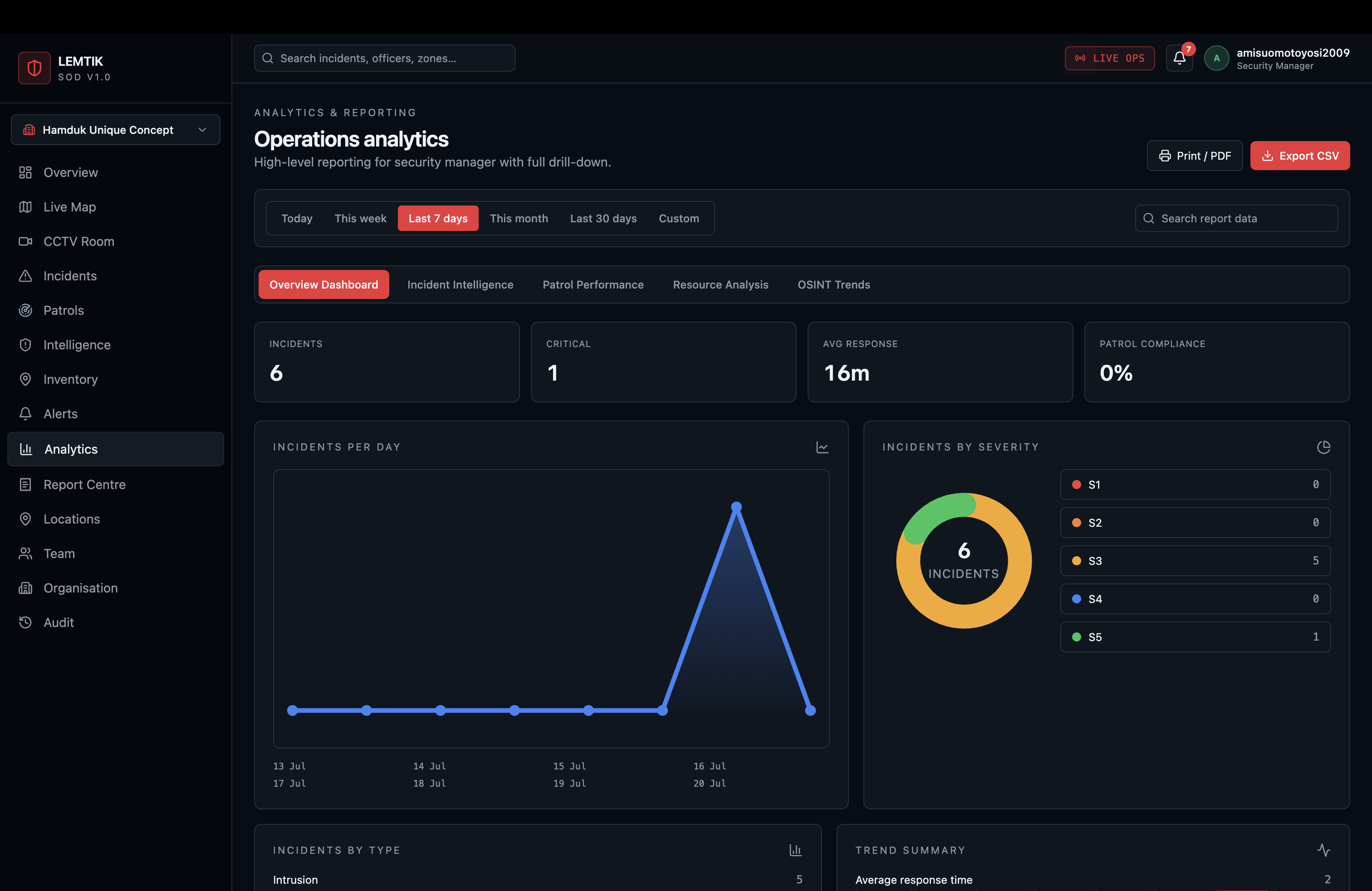
Analytics
-
-
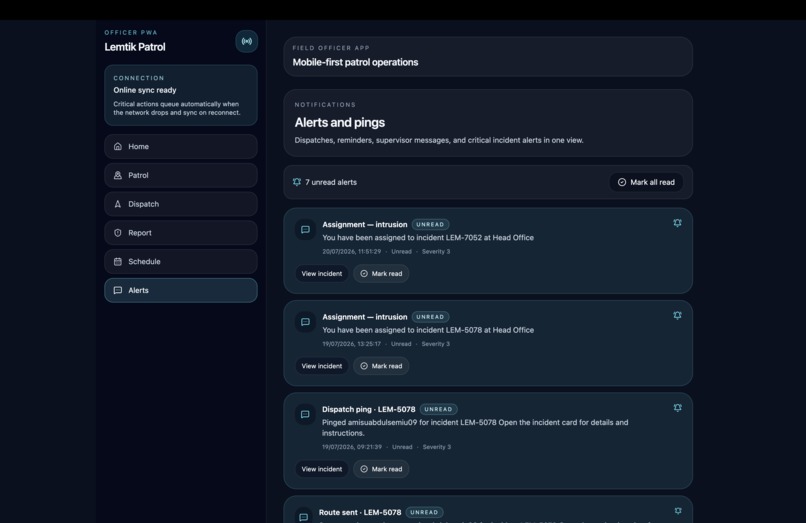
-
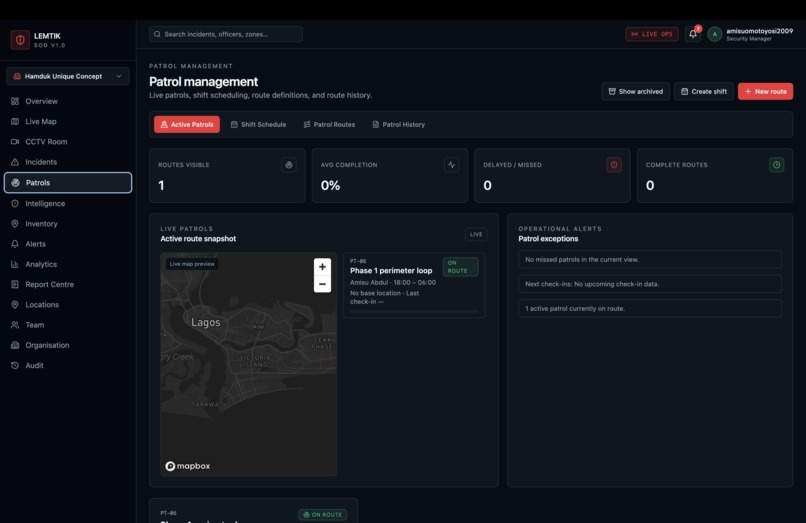
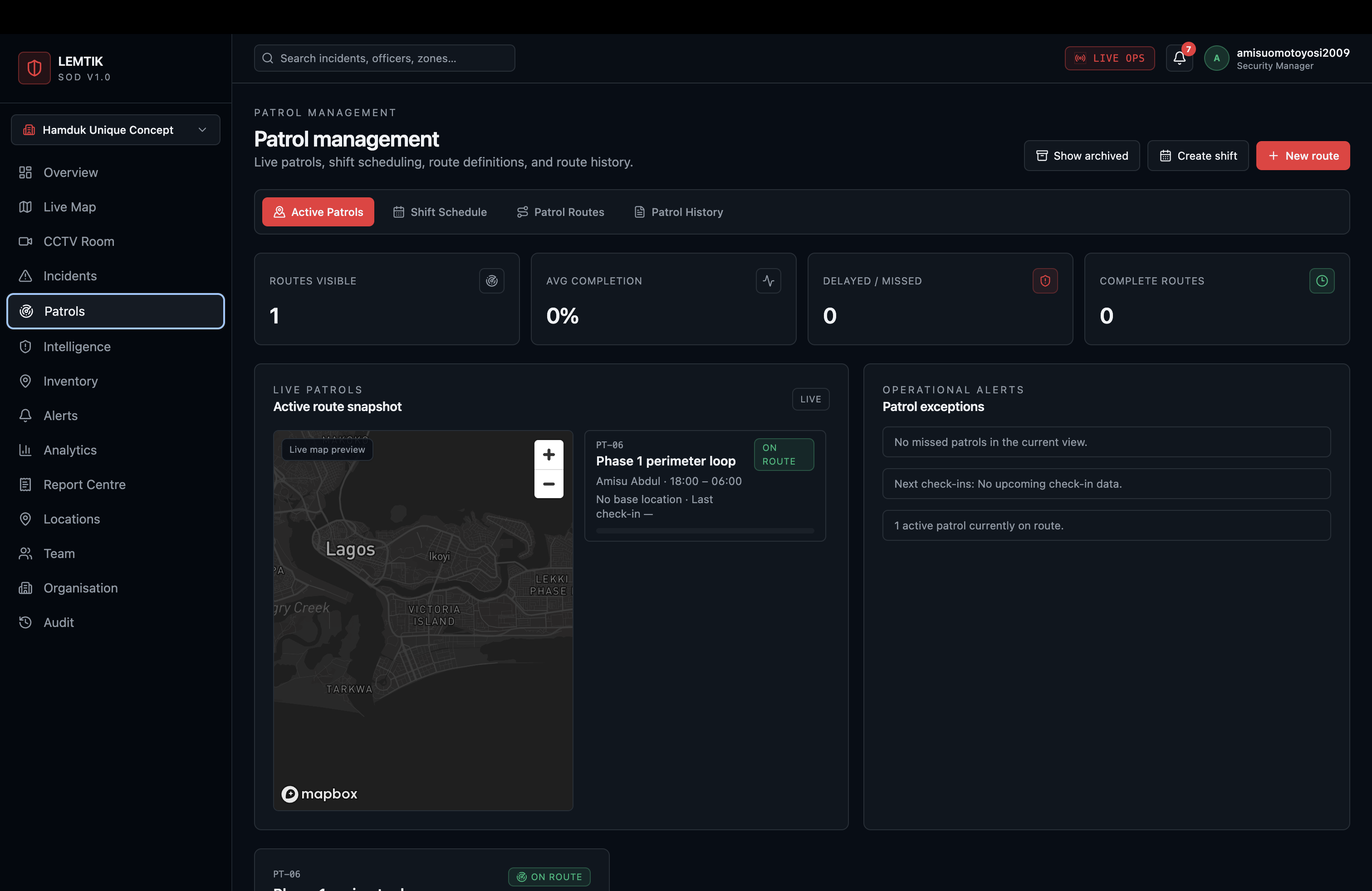
Patrol Page
-
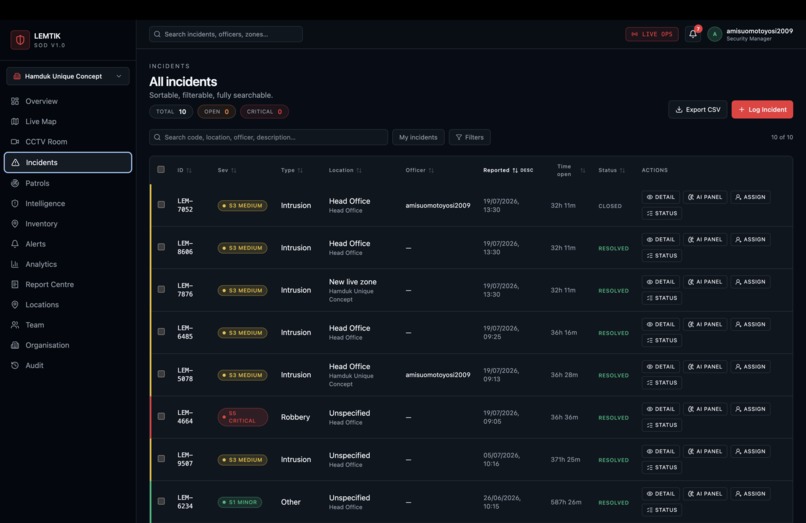
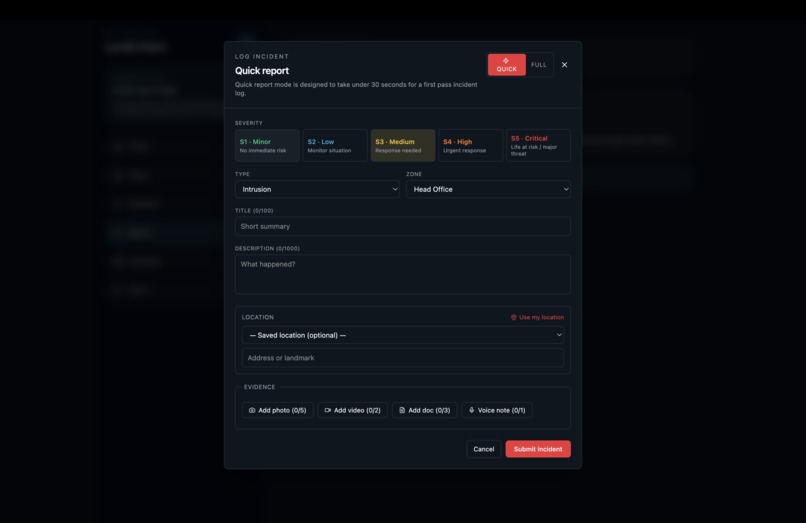
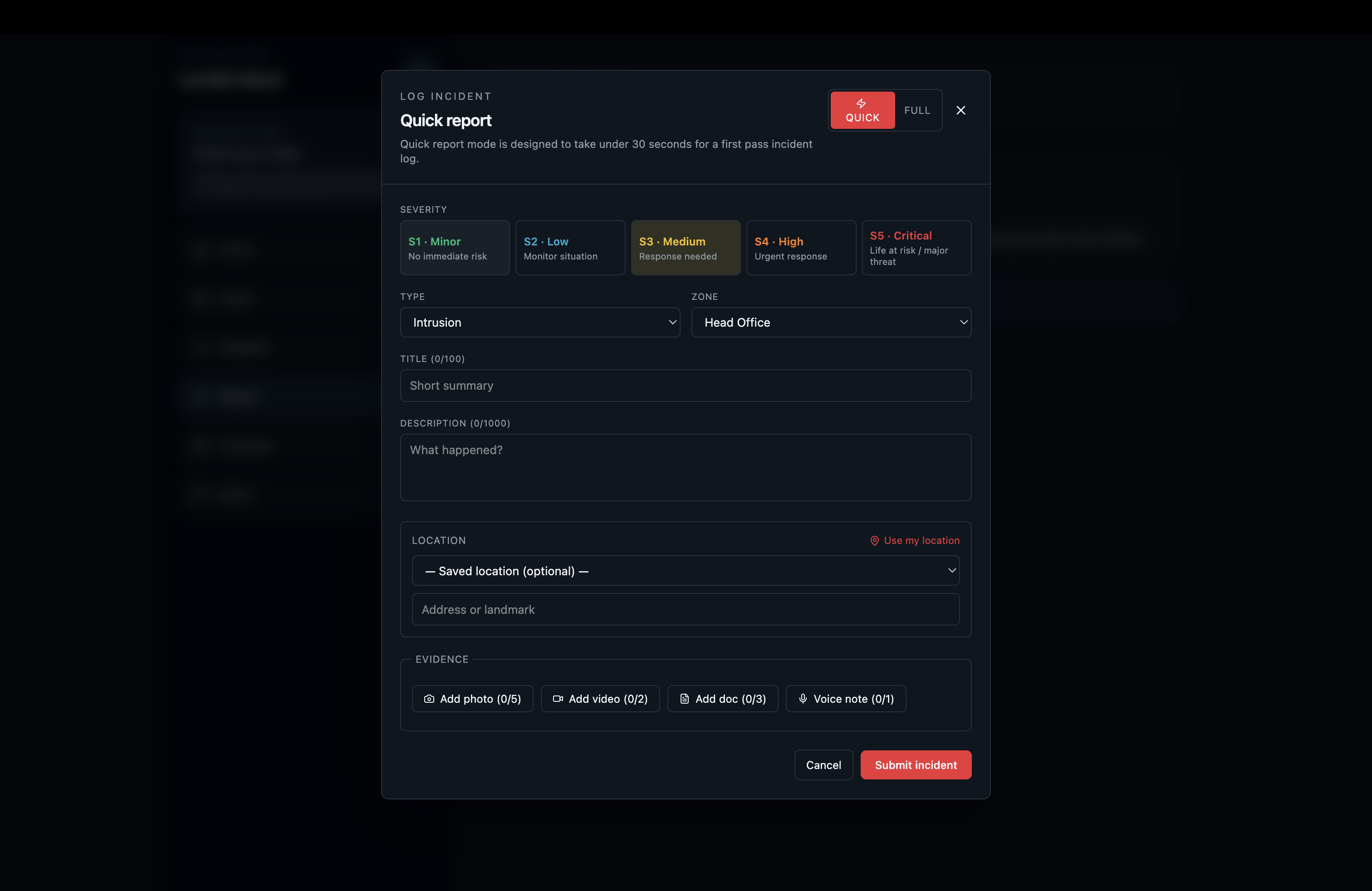
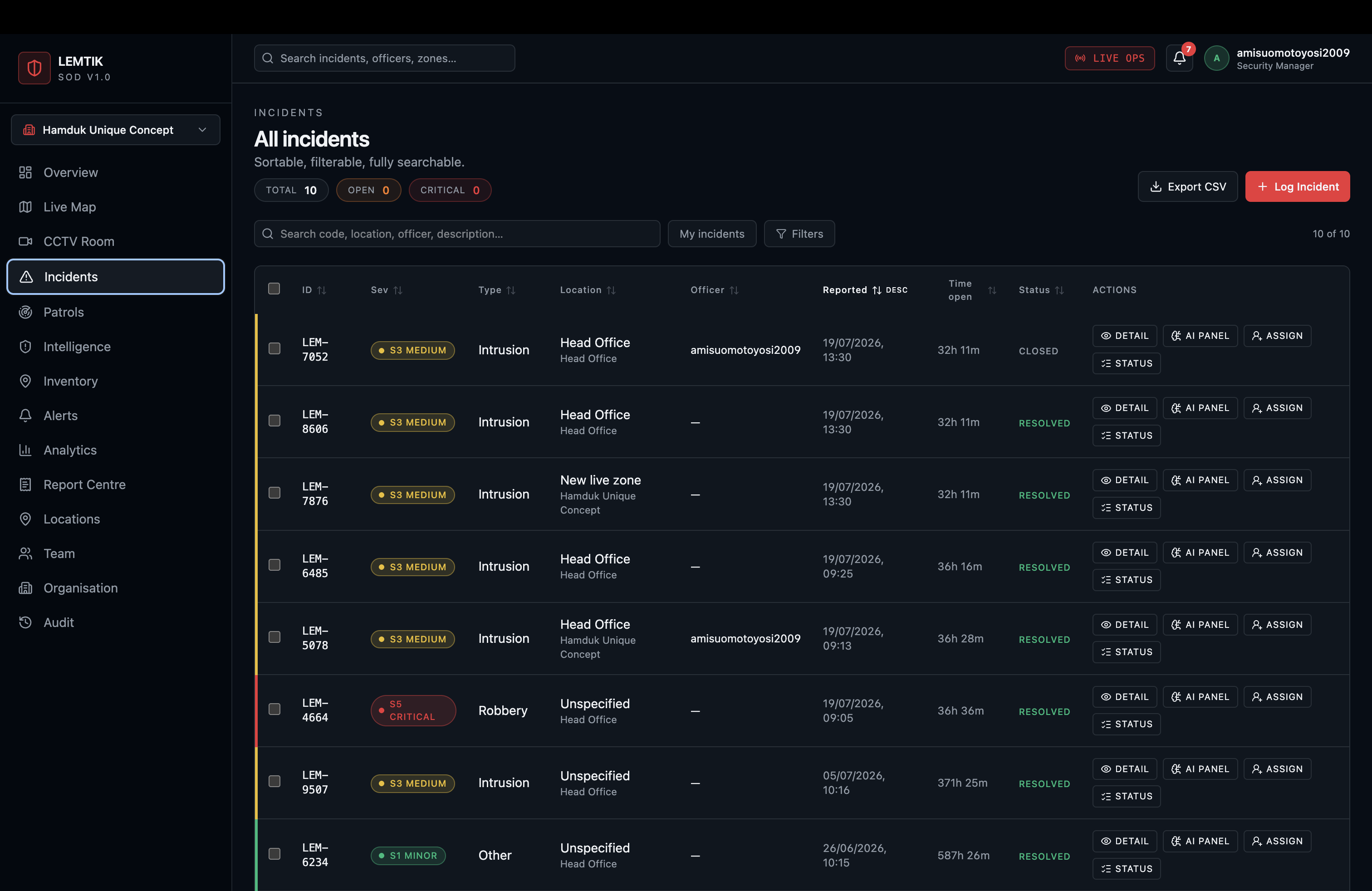
Incident page
-
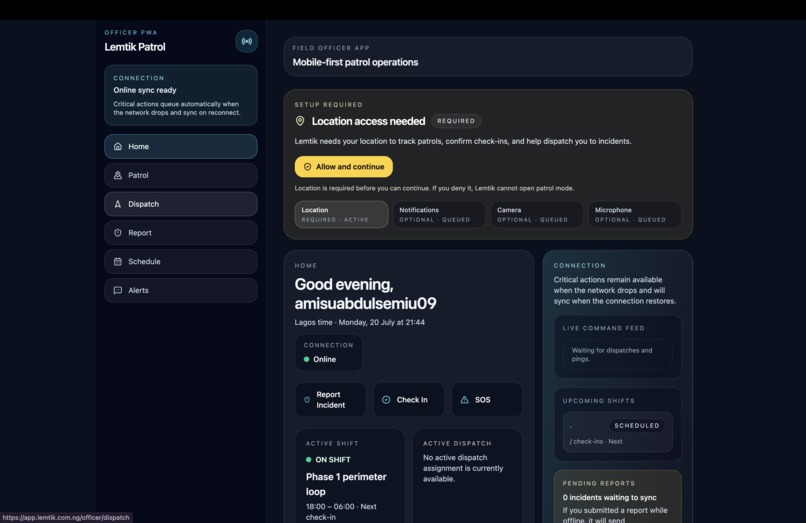
Offiocer pwa page
-
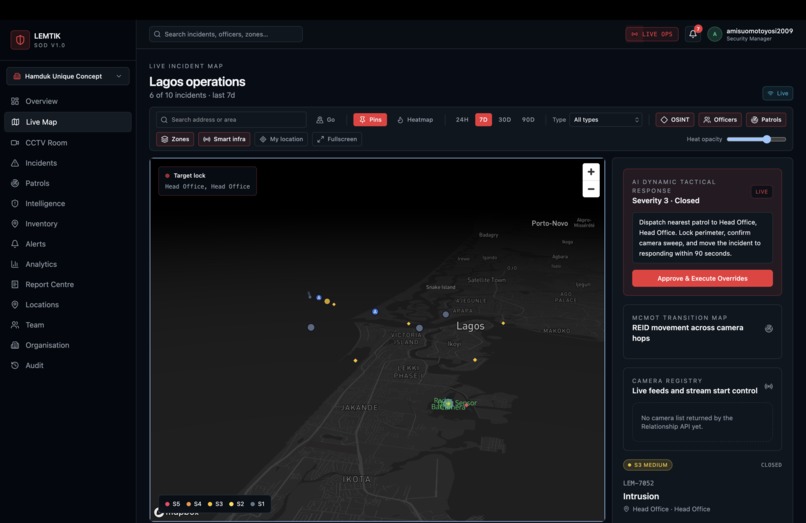
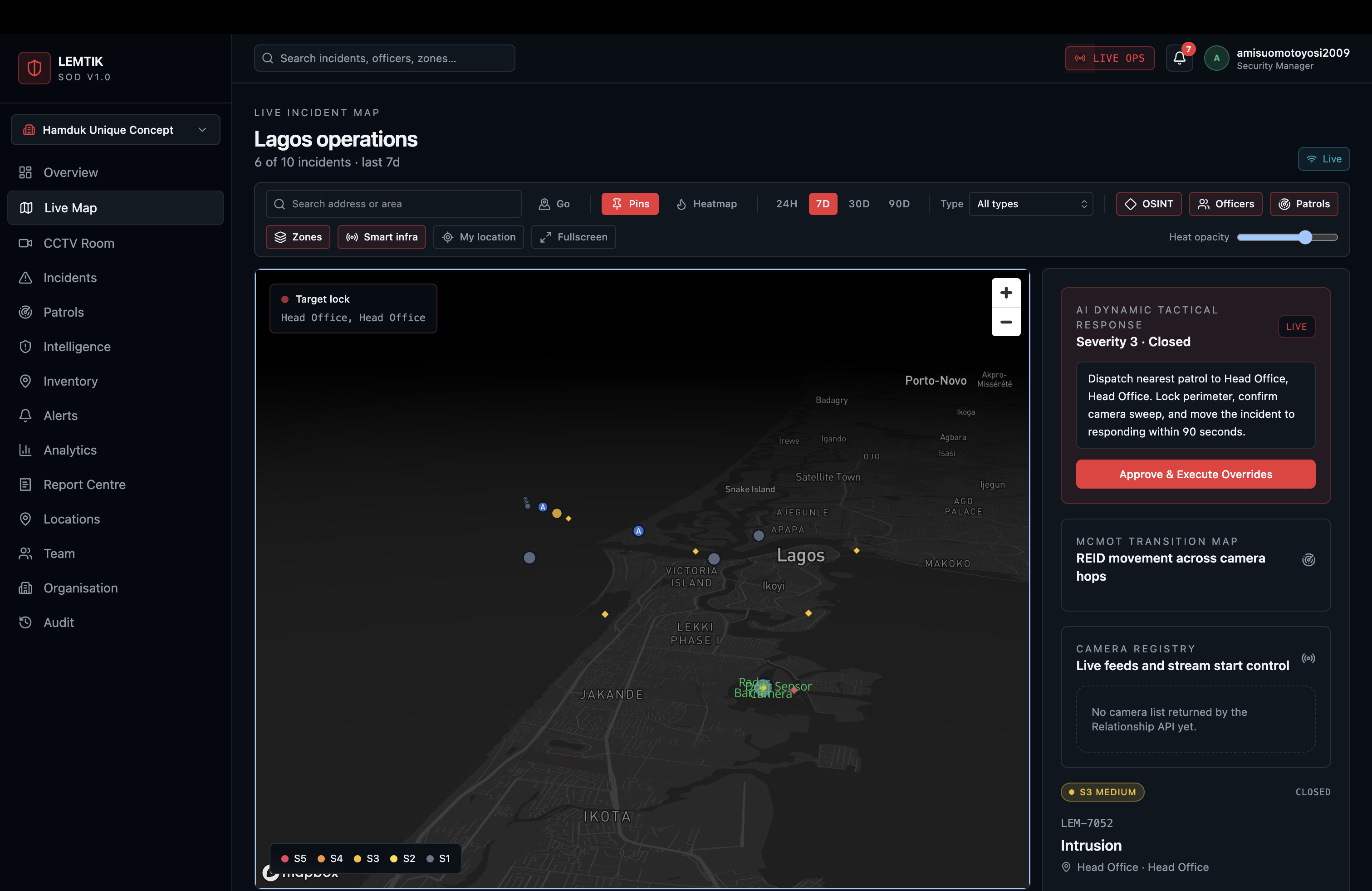
Map
-
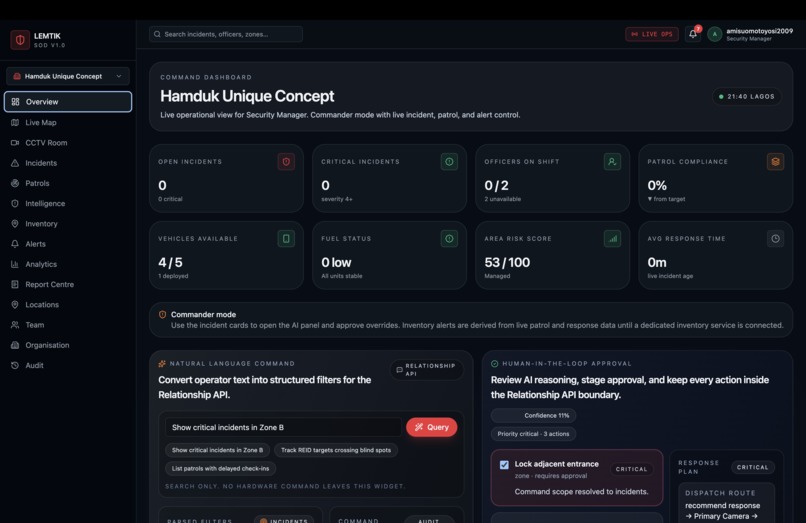
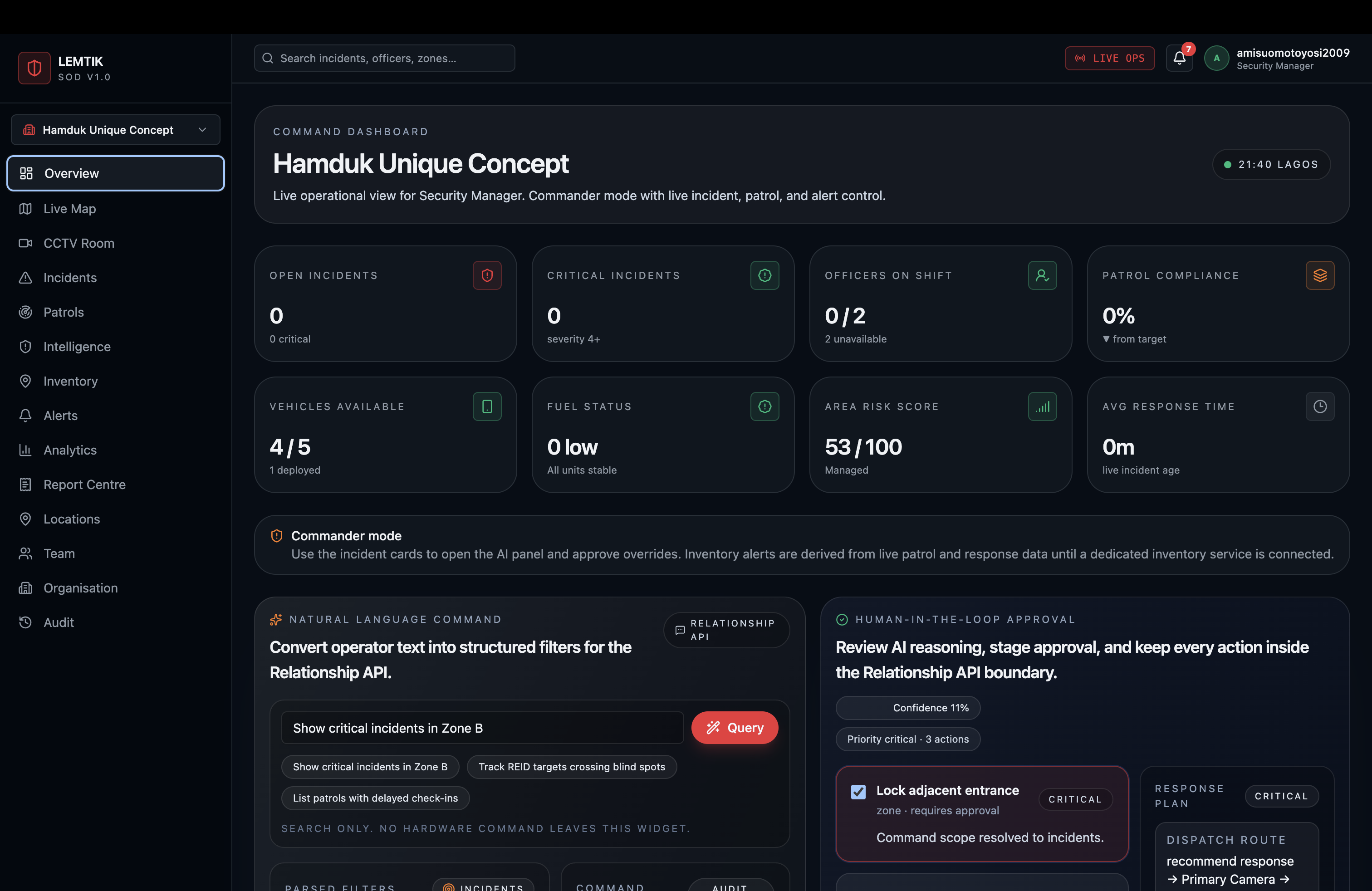
Operators Dashboard
Inspiration
Modern security operations still rely on fragmented tools. Operators constantly switch between radios, WhatsApp groups, CCTV consoles, spreadsheets, access-control systems, patrol logs, and phone calls just to understand what is happening. While organizations invest heavily in cameras, guards, sensors, and access control, these systems rarely work together as a coordinated operational platform.
We started building Lemtik Security to solve this fragmentation by creating a unified command-and-control platform for physical security operations. During this hackathon, we challenged ourselves with a bigger question:
What if AI could understand everything happening across a security operation and recommend coordinated actions without removing the human from the decision loop?
That challenge became the focus of our hackathon build.
What existed before the hackathon
Before participating, Lemtik already included the operational foundation required for a modern security platform:
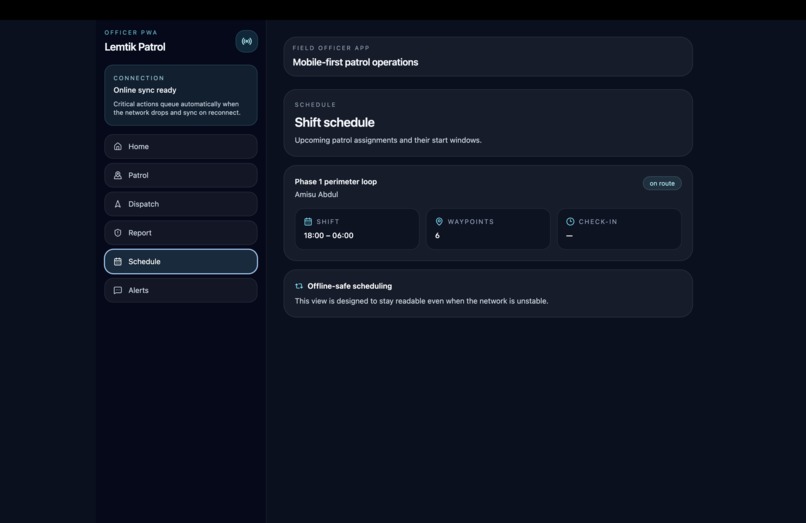
Incident and patrol management Asset and inventory management Authentication and role management PostgreSQL and Supabase backend OSINT collection CCTV and access-control registries Interactive operational dashboard Modular microservice architecture
Although these modules managed operational data, they primarily acted as isolated systems. Human operators still had to manually interpret information, correlate events, and coordinate responses across multiple interfaces.
What we built during the hackathon
Rather than adding a chatbot, we built the Qwen Cognitive Intelligence & Human-Governed Autonomous Automation Layer, transforming Lemtik from a management platform into an AI-native operational intelligence system.
The major additions included:
Master AI Orchestrator: A dedicated AI orchestration service responsible for prompt management, structured JSON generation, provider failover, retry logic, and coordination between AI services. Multimodal CCTV Intelligence: A new computer vision pipeline that sends camera snapshots to Qwen Vision for visual threat understanding, target continuity, blind-spot reasoning, and scene analysis. Natural Language Security Intelligence: Operators can submit noisy field reports, including Nigerian Pidgin English radio messages, WhatsApp reports, SMS messages, and emails. Qwen converts these into structured operational intelligence instead of requiring predefined formats. Human-Governed Autonomous Controller: AI recommendations are never executed automatically. Every recommendation passes through a deterministic safety validation engine before operators explicitly approve physical actions such as camera tracking, smart-gate control, or elevator restrictions. AI Command Center Interface: We designed an interactive control-room experience where operators can analyse incidents, inspect AI reasoning, review recommended actions, and approve only the actions they trust.
How we used Qwen
Qwen became the cognitive reasoning engine across multiple operational workflows.
Qwen Vision analyses CCTV imagery to detect intrusions, forced entry, camera obstruction, suspicious behaviour, and other visual threats while producing confidence scores and human-readable explanations.
Qwen Text processes unstructured operational information including radio communications, Nigerian Pidgin English, WhatsApp conversations, SMS alerts, and email reports, converting them into structured incident records without hallucinating missing information.
Qwen also generates coordinated operational response plans by combining incident context with available responders, operational intelligence, routing information, infrastructure status, and historical records.
Finally, operators can interact with the platform using natural language, allowing them to search incidents, retrieve operational intelligence, generate reports, and query the system without complex filters.
The implementation uses Qwen Vision models (qwen3-vl-flash-us, qwen3-vl-plus) for multimodal reasoning and Qwen text models (qwen-plus, qwen-turbo, qwen3-coder) for structured reasoning and operational intelligence.
Challenges we faced
One of our biggest challenges was ensuring AI recommendations could safely interact with physical infrastructure.
Unlike many AI applications, incorrect decisions in security operations can have real-world consequences. An AI should never automatically lock emergency exits, open security gates, or restrict evacuation routes.
To address this, we designed a deterministic safety-validation layer that evaluates every AI recommendation against operational constraints before presenting it to the operator. Human approval remains mandatory before any physical action is executed.
Another challenge involved processing real-world security communications. Field officers rarely communicate using perfect English—they often use abbreviations, call signs, incomplete sentences, and Nigerian Pidgin. Traditional parsers struggled with this variability, while Qwen enabled robust interpretation into structured operational data.
What we learned
The hackathon reinforced that the real opportunity for AI in security is not replacing operators but augmenting them.
Large language models become significantly more valuable when combined with deterministic operational workflows, multimodal perception, geospatial reasoning, and human governance.
We also learned that trust is essential in safety-critical environments. Operators are more willing to adopt AI when they can understand its reasoning, review recommendations, and remain in control of every operational decision.
What's next
Our immediate roadmap is to expand the multimodal perception layer, strengthen multi-camera tracking, integrate additional smart infrastructure, improve operational reasoning across larger deployments, and launch commercial pilot programmes with security organizations.
Our long-term vision is to build the operational intelligence layer that coordinates people, assets, infrastructure, and AI into a single trusted decision platform for enterprises, critical infrastructure, municipalities, and smart cities.
The one thing we want judges to remember
Lemtik uses Qwen to transform unstructured security data, from CCTV imagery and Nigerian Pidgin radio communications to operational reports, into coordinated, safety-validated, human-approved security actions in real time.
Built With
- agents
- ai
- alibaba
- api
- cloud
- computer
- dashscope
- fastapi
- mapbox
- microservices
- multimodal
- node.js
- openai
- osint
- postgresql
- python
- qwen
- qwen3-vl
- react
- rest
- supabase
- typescript
- vision
- vite


Log in or sign up for Devpost to join the conversation.