Inspiration
Legal documents are often complex, and reading through them feels like an uphill battle. Yet we all have heard stories saying, "You should read it before you sign it". In our day to day often found ourselves at the crossroads where we had to sign a contract, but lacked the time, knowledge, or patience to read through it. Getting a professional to read the document for us would have been a great solution, but we weren't sure if we could afford it. LegalVis is a solution to this problem.
What it does
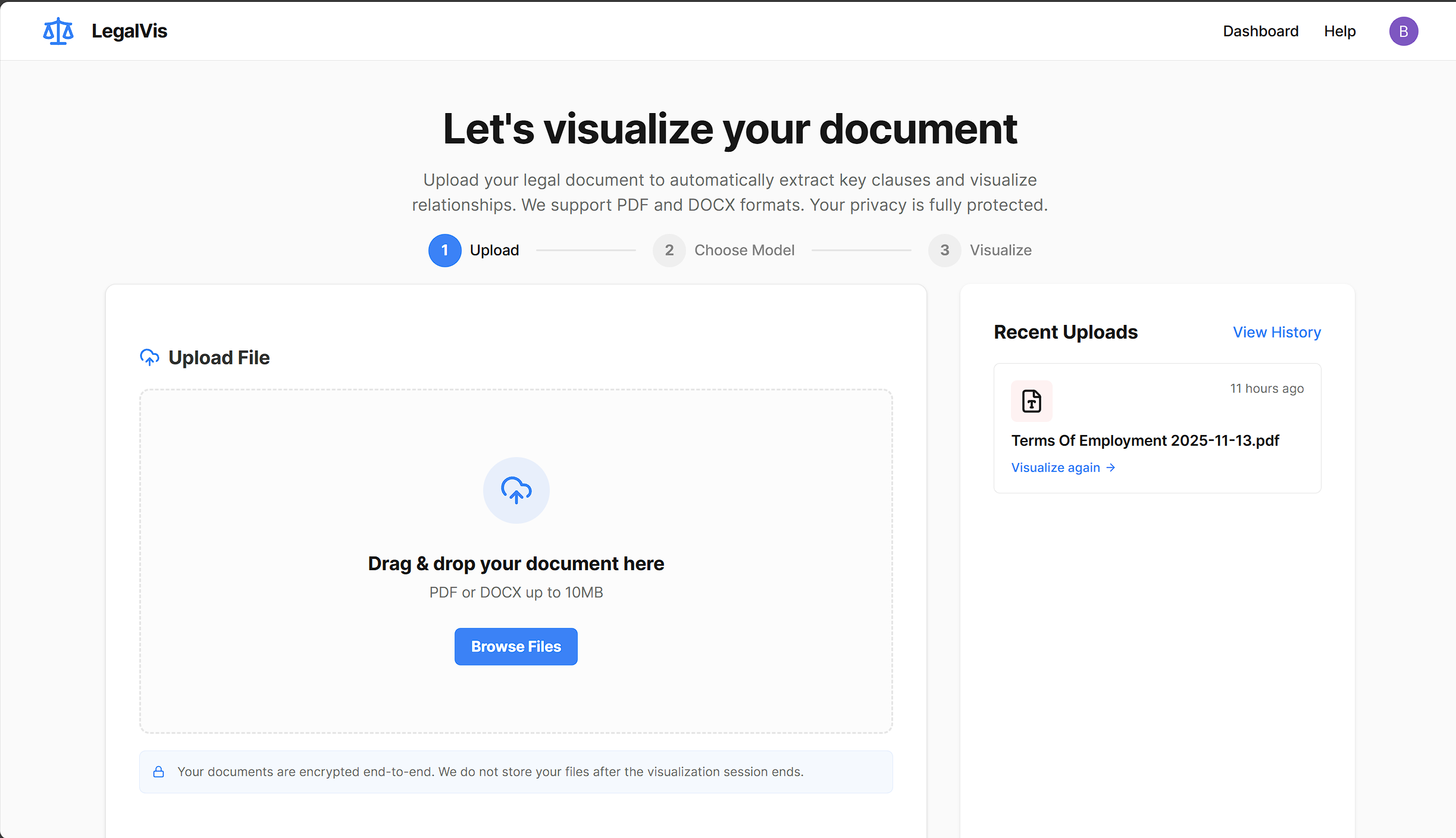
LegalVis is a tool that helps you understand legal documents. It extracts all the key clauses mentioned in the document and represents them through diagrams. The diagrams are interactive and allow you to drill down into the clauses to understand the context and meaning behind them. It aims to make legal documents more accessible and understandable.
How we built it
We built LegalVis using the following technologies:
- React - Frontend
- Go - Backend
- Clerk - Authentication
- PostgreSQL - Database
- Azure Blob Storage - Storage
- Azure OpenAI - AI
Challenges we ran into
Building this application had its own ups and downs. Our initial approach was to build a wrapper over the popular AI models like GPT-4 and Gemini. However, we realized that the efficiency of such models was not up to our expectations. We figured the best results could be achieved by using various smaller models for entity extraction in conjunction with LLMs for generating the response. As we fine-tune the performance of our models, we wanted to make sure to have a working prototype before we commit to a full-fledged solution. Our submission to this hackathon is a working prototype that helps us understand the requirements of our target audience.
Accomplishments that we're proud of
We are proud to say that from the inception to the first working prototype of LegalVis was developed within the time frame of this hackathon. We have successfully developed a user-friendly interface that allows users to upload their documents and visualize them in forms of easy-to-understand diagrams. As we continue to polish our backend, we have made significant progress in improving the performance of our AI models. We have also started to present our application to people who match our targeted user personas and are incorporating their feedback to improve the user experience.
What we learned
Our interaction with people taught us that we are not alone when it comes to being overwhelmed by legal documents. Legal advisors and lawyers are a luxury that not everyone can afford. Especially when it comes to situations like small bank loans, either for personal or business reasons, people are often left with little time to read through the documents. They are reluctant to seek professional legal advice because it's costly, time-consuming, and maybe not financially feasible. This creates a gap in the market for reliable tools that can help people understand legal documents. This gap is what LegalVis aims to fill.
What's next for LegalVis
We want to see LegalVis become a go-to tool for people who deal with legal documents but can't afford professional advisors. We plan to complete the integration of GPT-4 and Gemini models by the end of Q1 of 2026. This would enable us to validate our product in the open market. As we continue with reaching out to more people, we plan to fine-tune different models to improve their performance and eventually to have our own custom in-house models. To make sure that we are actually building something that people want, we are planning to follow an agile approach where we develop features in increments and plan based on user feedback.


Log in or sign up for Devpost to join the conversation.