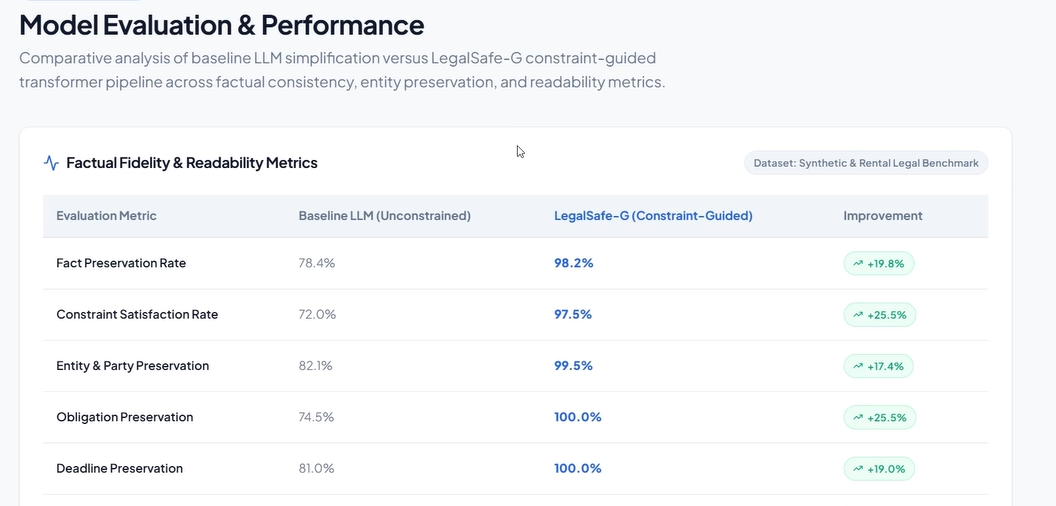
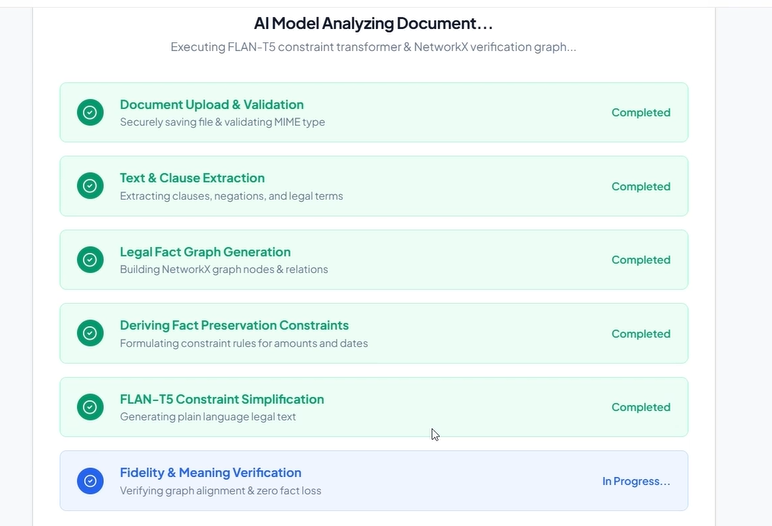
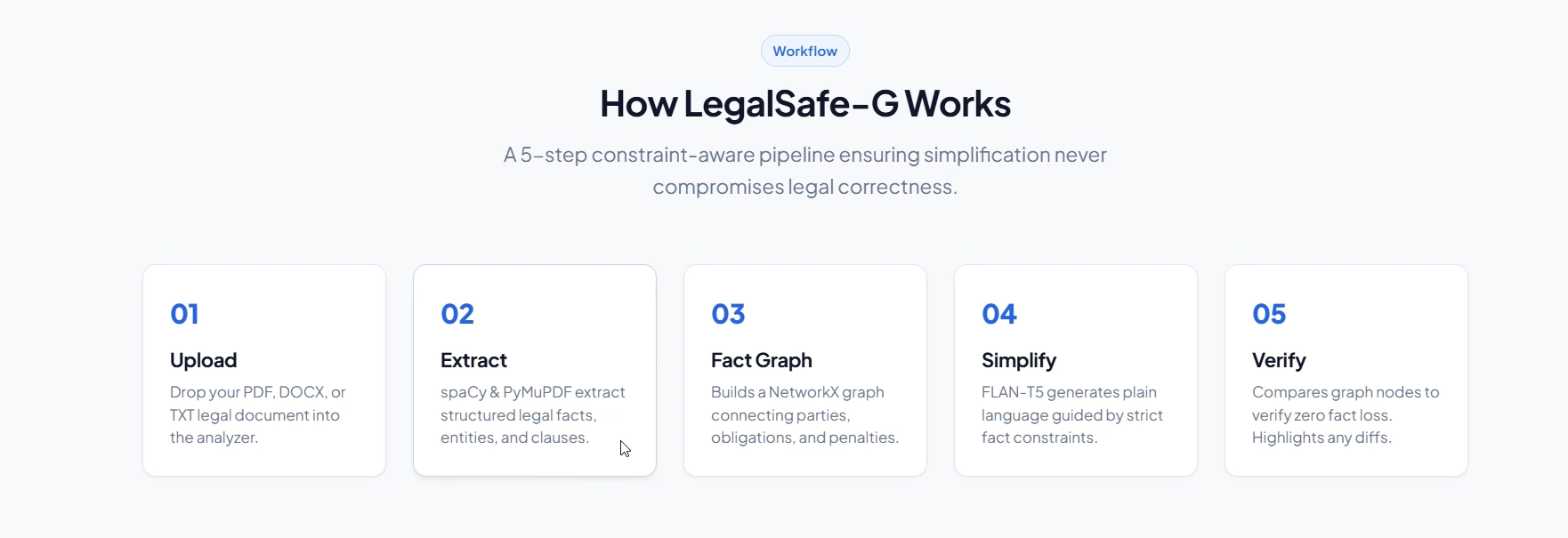
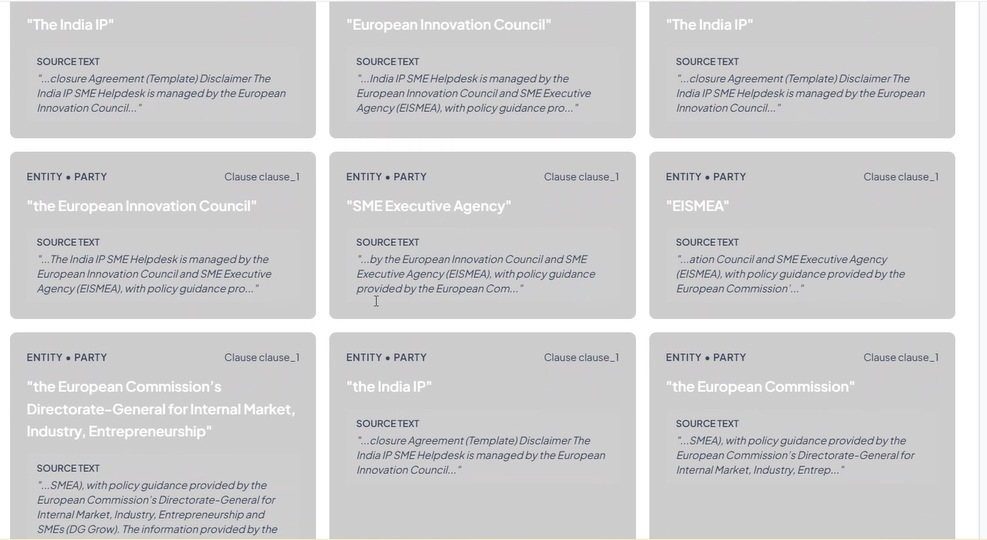
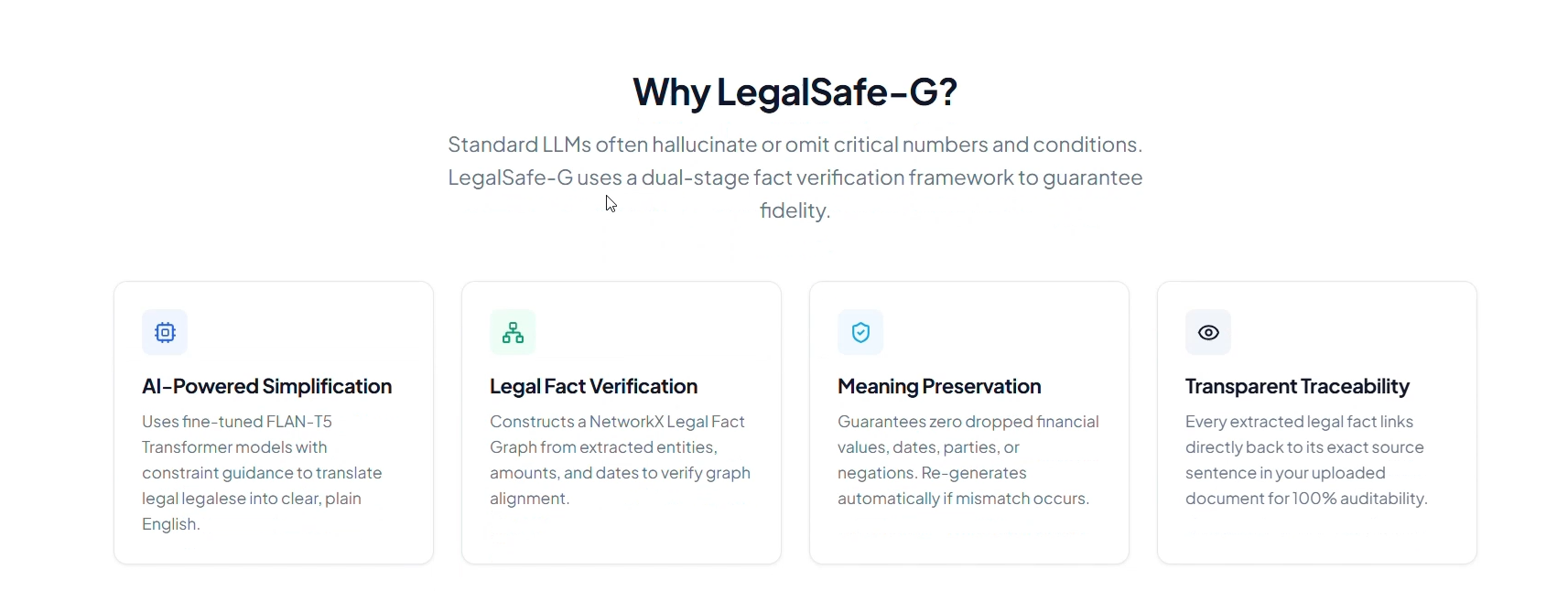
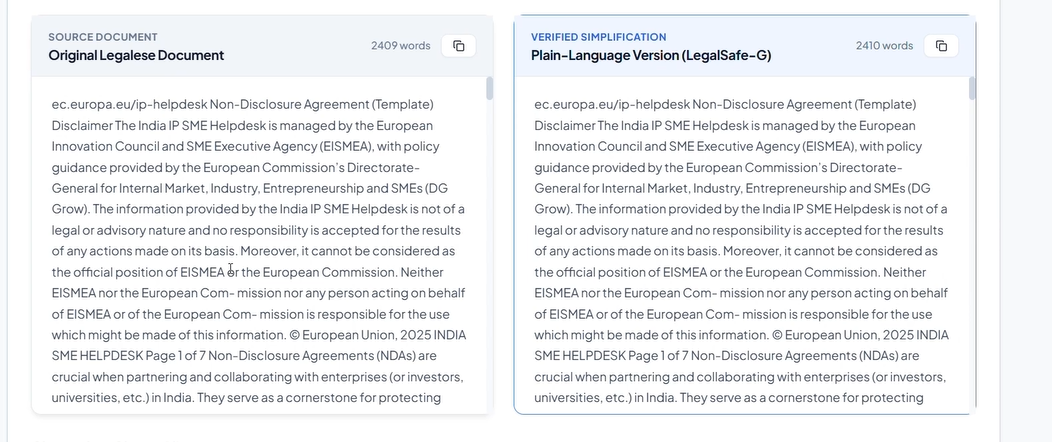
Legal documents are often difficult for ordinary people to understand because they contain complex terminology, lengthy clauses, conditions, obligations, deadlines, and legal relationships. This inspired us to build LegalSafe-G, an AI-powered system that makes legal documents easier to understand without compromising their original legal meaning. The main challenge we identified is that a normal AI summarizer or simplification model may unintentionally change, omit, or weaken important legal facts while generating simpler text. To address this, our project does not rely only on the generated text. It first extracts important legal facts and constraints from the original document and represents them as a Legal Fact Graph (G). The simplified document is then independently analyzed to create another graph G′, which is compared with the original graph and legal constraints. If a legally significant mismatch is detected, the system triggers targeted regeneration and performs verification again. Only after successful verification is the simplified document considered safe to release. We learned how OCR, NLP, Transformer models, legal information extraction, knowledge graphs, and constraint-based verification can work together to solve a real-world problem. The major challenges included handling scanned legal documents, identifying legally important information, preserving relationships between legal entities, and ensuring that AI-generated simplification does not alter the original legal meaning. Our goal is simple: make legal language easier to understand while keeping its legal facts safe and verifiable.
Built With
- constraint
- deberta
- extraction
- flan-t5
- graph-based
- graphs
- information
- knowledge
- legal
- legal-bert
- luke
- natural-language-processing
- neo4j
- ocr
- python
- transformers
- verification

Log in or sign up for Devpost to join the conversation.