Inspiration
Legal document generation is a challenging and time-consuming task that requires a lot of expertise and attention to detail. However, with the advancement of large language models and natural language processing tools, it is possible to automate and simplify this process, saving time, money, and resources for both lawyers and clients. By combining large language models and natural language processing tools, it is possible to create a website for legal document generation based on user queries.
What it does
- A user-friendly interface that allows users to enter their queries in natural language and select the type of legal document they want to generate.
- A large language model that can understand the user's query and generate a draft of the legal document based on the relevant laws and regulations.
- A natural language processing tool that can check the grammar, spelling, style, and accuracy of the generated document and provide suggestions for improvement.
- A database that can store the generated documents and allow users to access, edit, download, or share them.
How we built it
-Clearly define the project's scope, including the kinds of legal papers to be produced, the target user demographics, and the intended results and advantages. -Select the right language models and NLP tools, taking into account aspects like data accessibility, performance, scalability, and compatibility. -Using Python and React.js, develop the frontend and backend of the website, then deploy it on an appropriate platform, such as AWS or Heroku, guaranteeing functionality, usability, and effective error monitoring.
Challenges we ran into
- Finding and collecting enough high-quality data for training and testing the large language model
- High computational power is needed to locally deploy the model.
Accomplishments that we're proud of
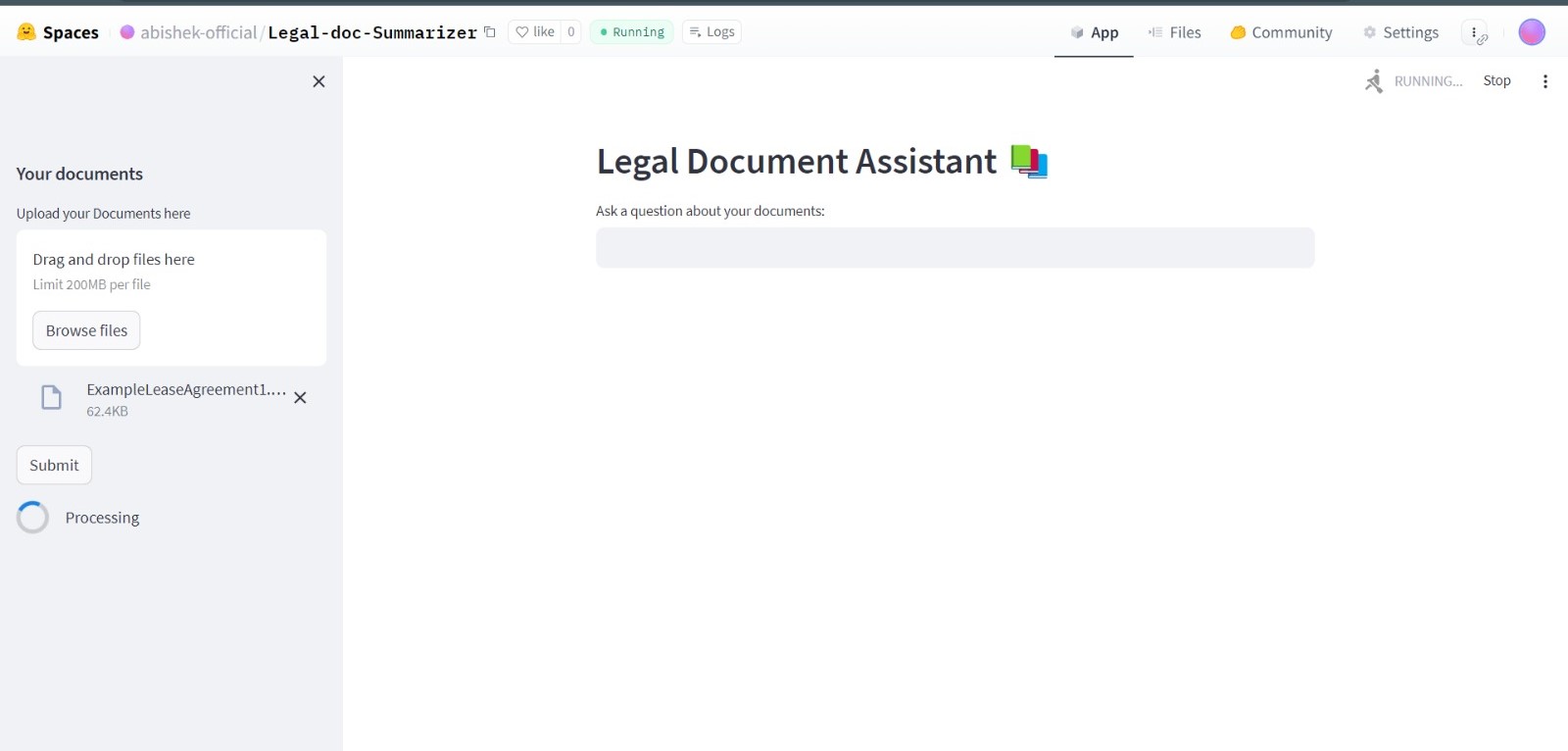
- Providing users with the ability to upload existing legal documents for summarization, making it easier for them to understand complex legal content.
- Enabling users to engage in interactive conversations with the system to seek clarifications and explanations regarding legal document content.
- Simplified legal processes, making legal documents accessible to individuals and small businesses, ultimately saving time and increasing access to legal resources.
What we learned
-Effective NLP Integration: We learned how to effectively integrate natural language processing (NLP) technologies, including large language models and language processing tools, into a user-friendly web application. -Data Quality and Preprocessing: The project highlighted the significance of data quality and preprocessing. -User-Centric Development: Building a user-centric web application was a key takeaway. -Legal Documents: We learned about how legal documents work.
What's next for LegalLingo
-Expanding the types of legal documents that can be generated. Initially, you might focus on contracts, wills, and basic legal forms, but consider adding more complex documents like patent applications, immigration forms, or real estate contracts. -Legal requirements can vary greatly by jurisdiction (country, state, or region). Developing the capability to customize generated documents based on local laws and regulations -Implementing machine learning for document improvement, developing mobile and cloud solutions, prioritizing data security, offering multi-lingual support, seeking certification, marketing, and user education, and maintaining a feedback loop for ongoing refinement.
Built With
- amazon-web-services
- azure
- django
- express.js
- flan
- hugging-face
- llm
- ml
- nltk
- node.js
- pytorch
- react.js
- redux
- sagemaker
- spacy
- tensorflow

Log in or sign up for Devpost to join the conversation.