-
-
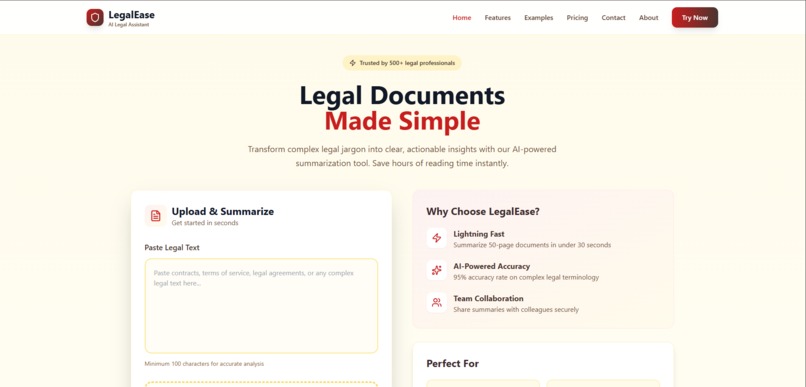
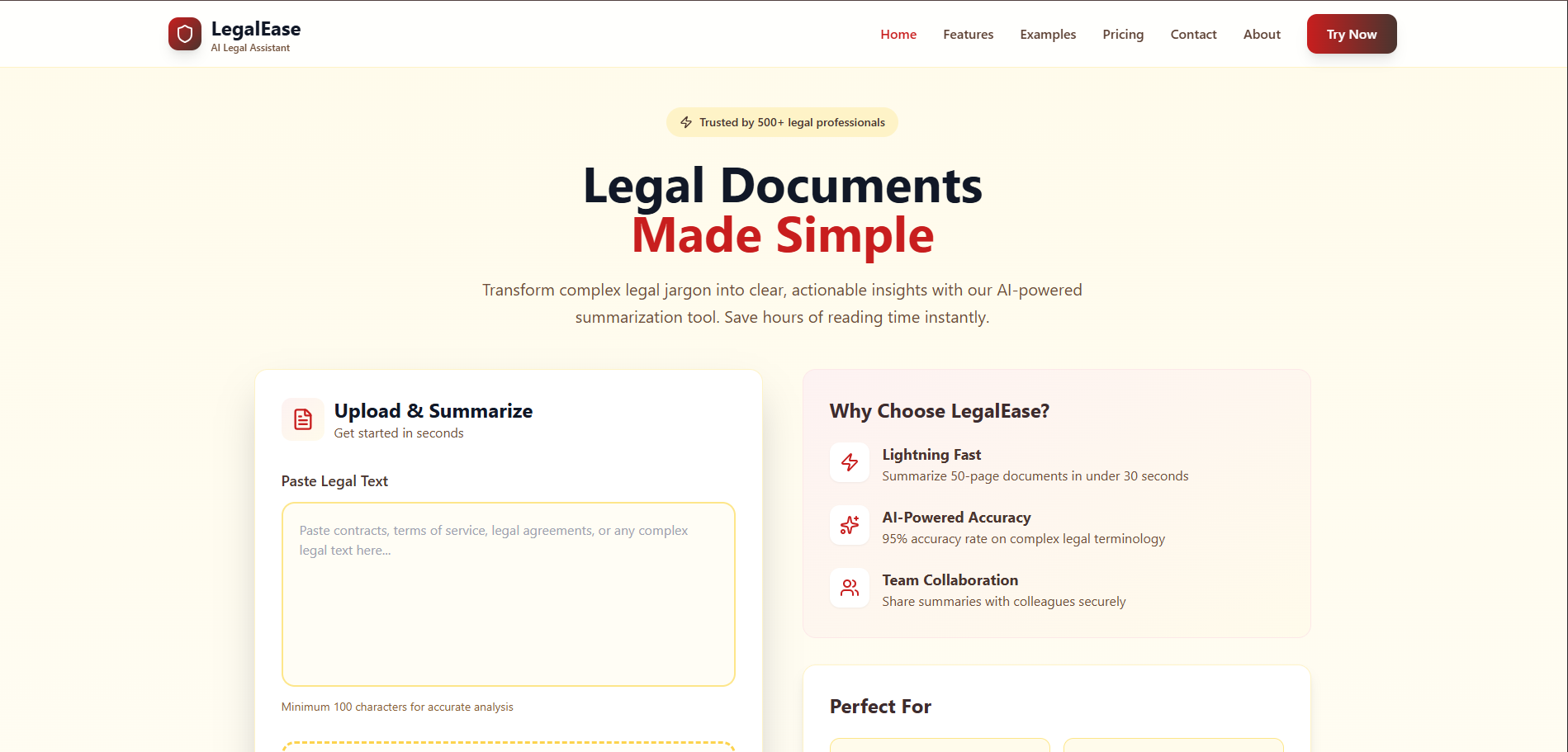
Home Page
-
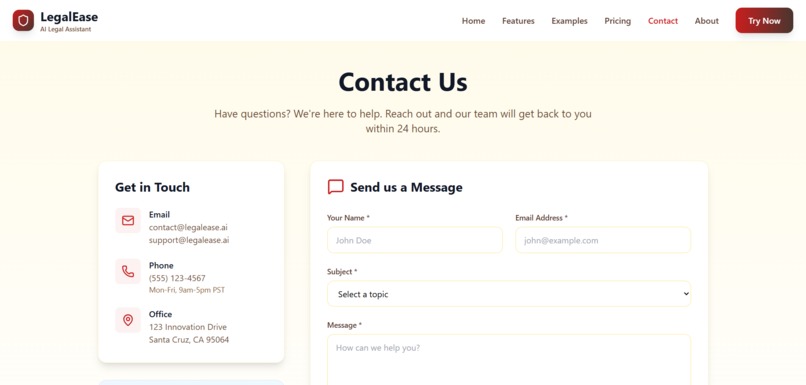
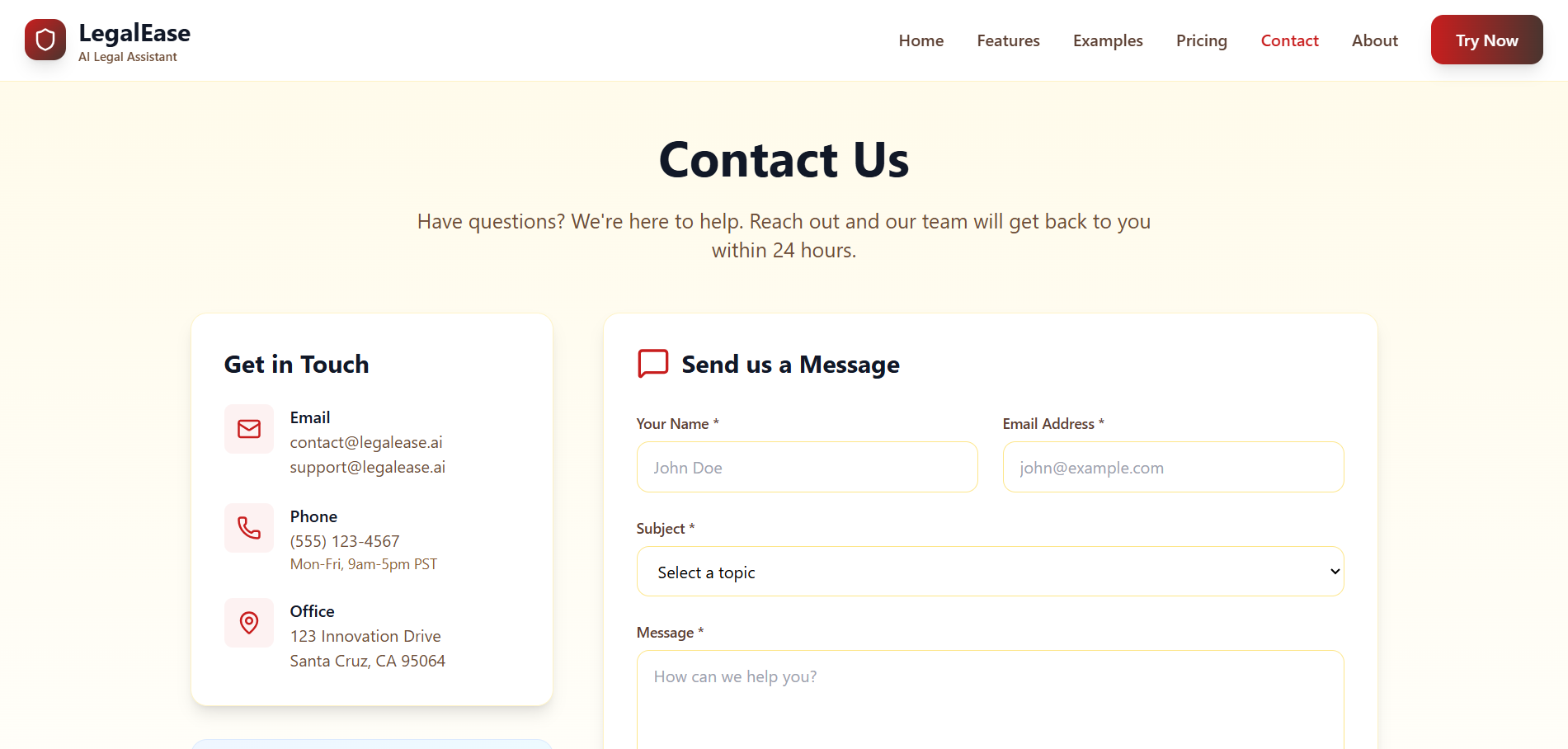
Contact Page
-
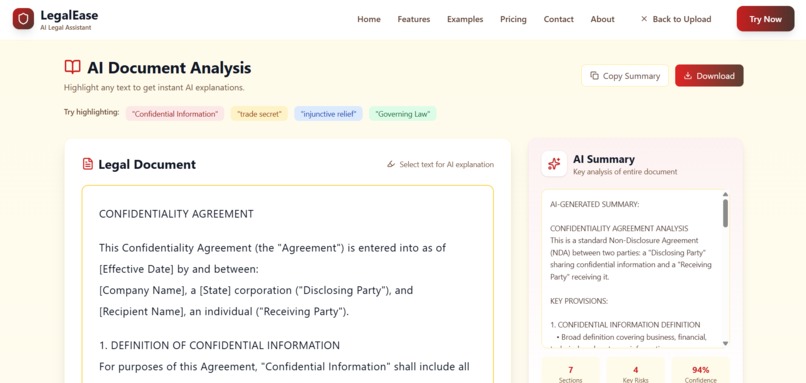
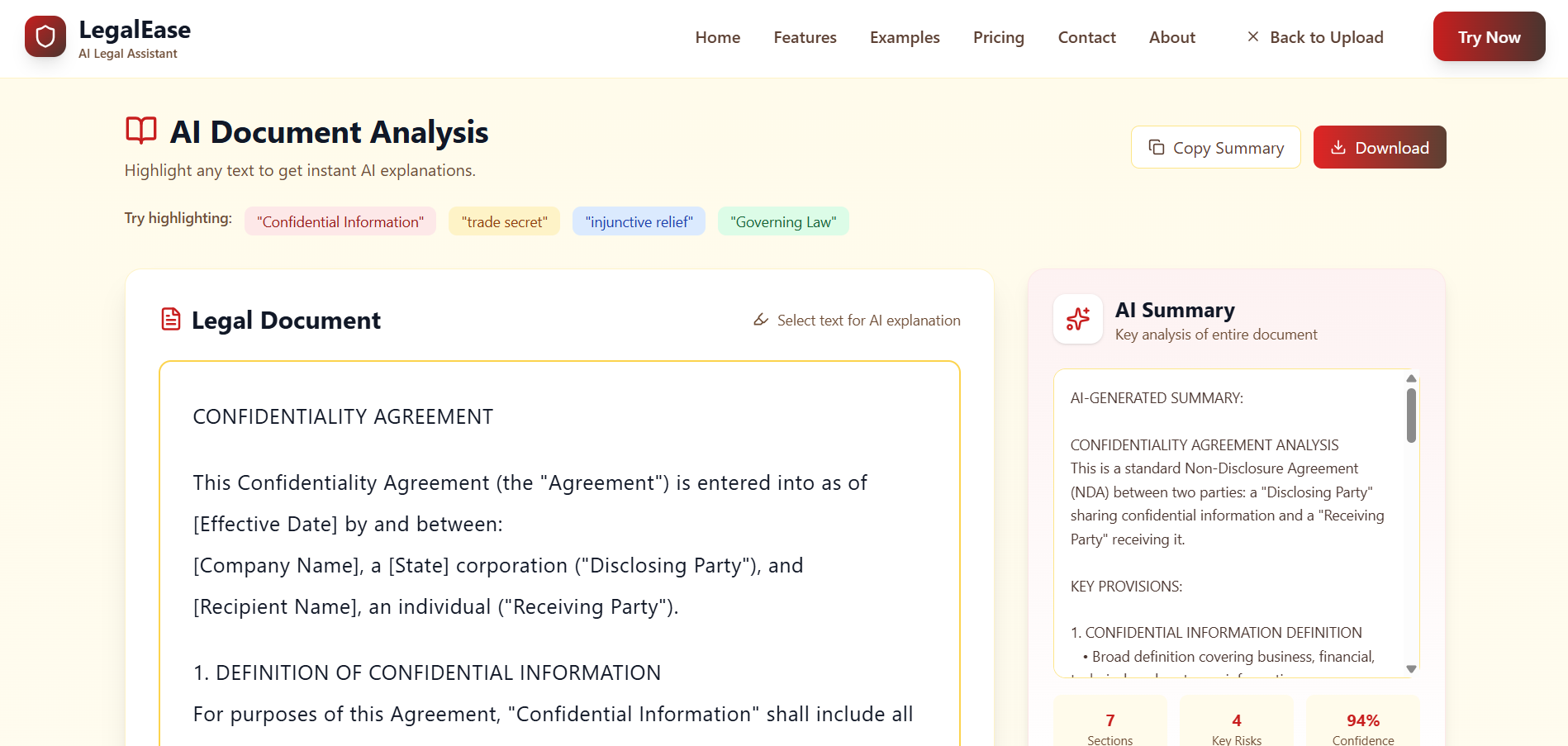
Document + AI Summary Viewer
-
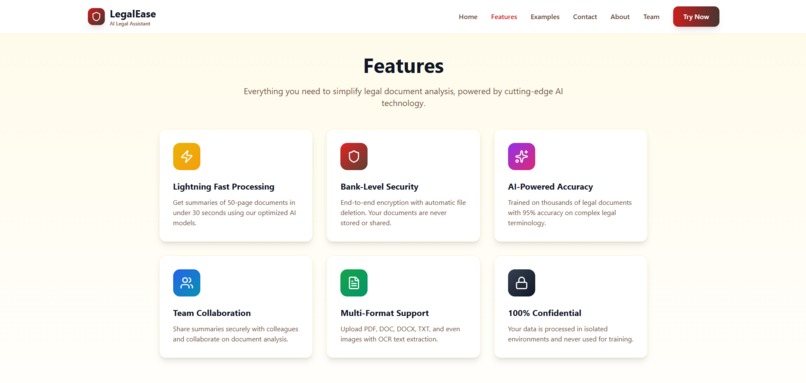
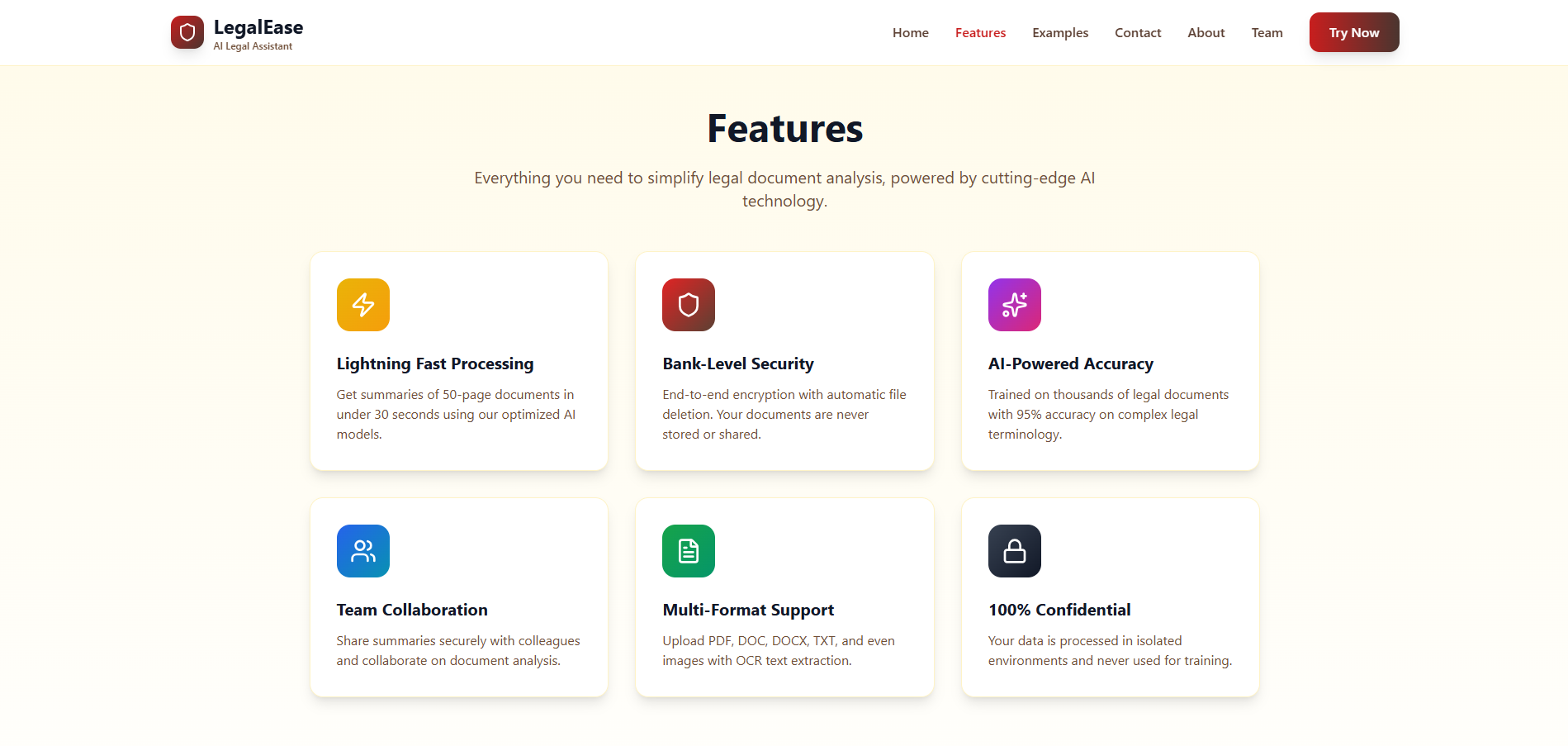
Features
-
Examples
-
Contact Us
-
About
-
Team
Inspiration
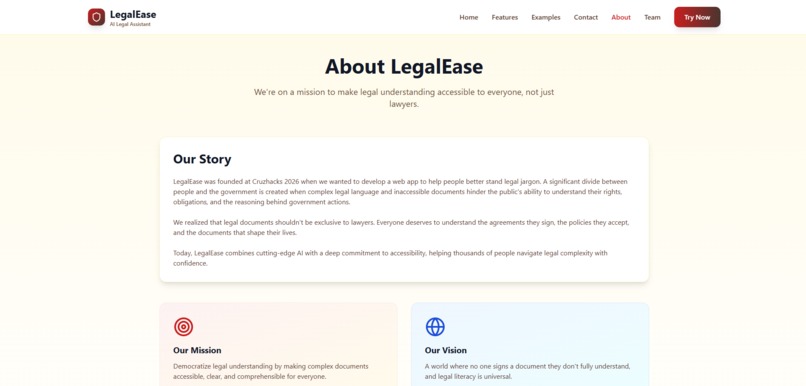
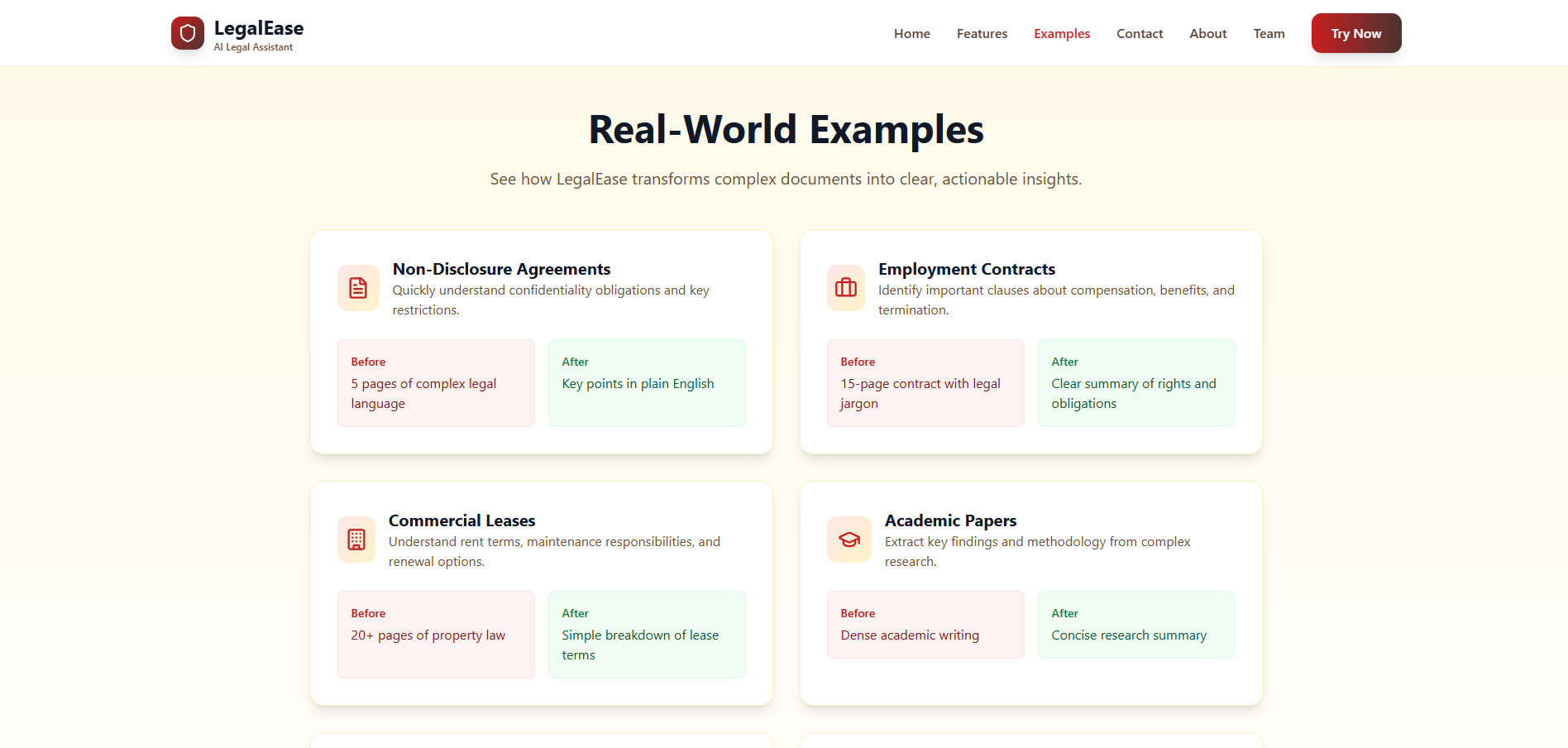
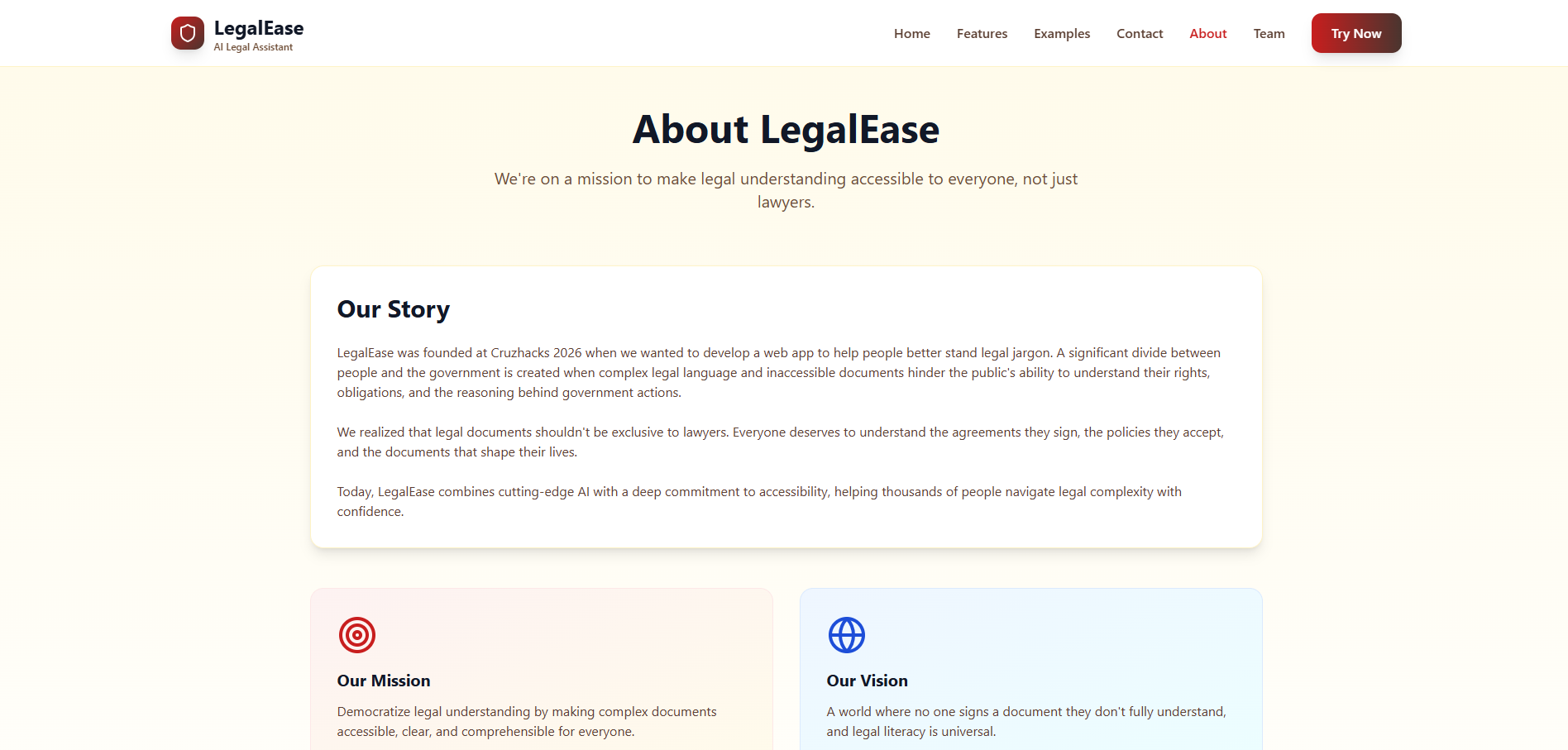
LegalEase was founded at Cruzhacks 2026 when we wanted to develop a web app to help people better understand legal jargon. A significant divide between people and the lawmakers is created when complex legal language and inaccessible documents hinder the public's ability to understand rights, obligations, and what they are contractually agreeing to. Contracts, terms of service, privacy policies, and legal notices frequently use dense language and complex terminology that can feel intimidating and exclusionary, especially to those in marginalized groups. Many people sign or agree to documents without fully understanding what they mean simply because the language contains too much jargon. Legal language can be especially isolating to people who’s first language is not English and people who may not have access to legal counsel. In this way, legal documents and the legal system in the United States contribute to the racialized and classist systems of our society. We realized that legal documents shouldn't be exclusive to lawyers. Everyone deserves to understand what is entailed in the documents they sign, the policies they accept, and the agreements that shape their lives.
What it does
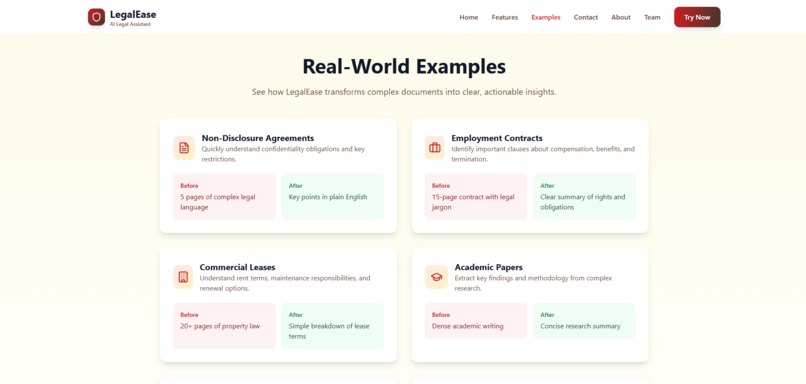
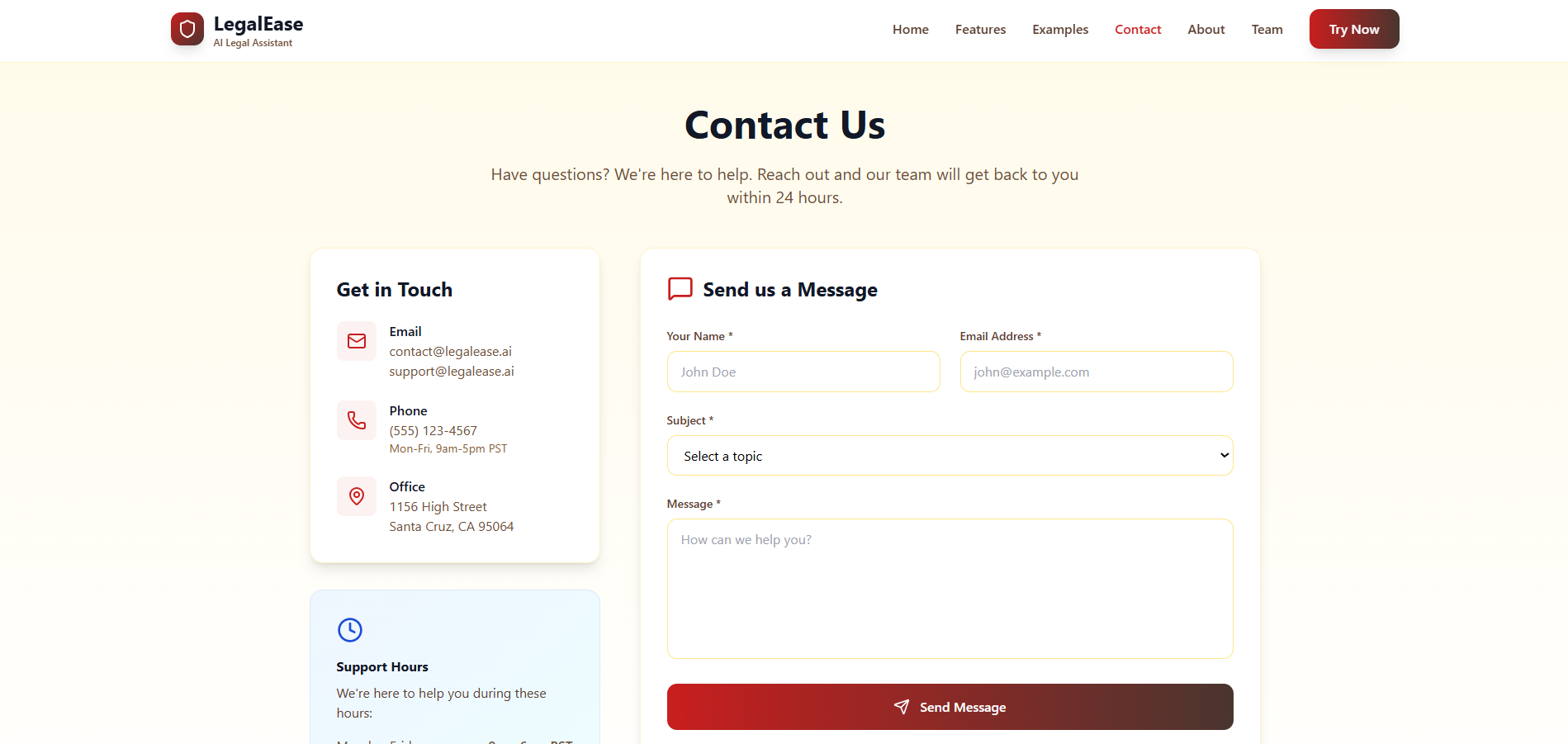
LegalEase is a web application that simplifies legal documents by translating complex legal jargon into clear, plain-English explanations at the click of a button. Users can input legal text, such as contracts, policies, or legal notices, and receive an easy-to-understand summary or simplification that explains what each section means, why it matters, and what potential obligations or red flags to be aware of. The platform is designed for accessibility and ease of use, helping users better understand documents they may otherwise skim or avoid going too deep into. LegalEase allows individuals to engage with legal content efficiently and confidentially, without requiring any prior legal knowledge.
How we built it
We began by designing the structure and flow of the website, focusing on clarity and usability. The frontend was built to provide a clean, intuitive interface that allows users to easily input legal text and view simplified explanations. On the backend, we implemented language-processing Gemini integration to analyze legal text and generate understandable summaries. Throughout the development process, we emphasized user-centered design and readability to ensure the output remained accessible to non-expert users. The frontend was developed using React and Next.js, styled with Tailwind CSS to create a clean, intuitive, and approachable interface. We focused heavily on readability, spacing, and visual hierarchy to make dense legal content feel less intimidating. Interactive features, such as text highlighting and on-demand explanations, were implemented to help users engage with specific clauses instead of passively reading long documents. On the backend, we built a Python FastAPI server that handles document processing and AI analysis. Legal text is sent to the backend, where it is analyzed using the Gemini API to generate plain-English summaries, simplified versions of the text, and contextual red-flag detection. We structured prompts carefully to preserve legal meaning while translating jargon into language that is clear and understandable to non-experts. We used GitHub for version control and collaboration, working across branches to divide frontend and backend development. The backend and frontend were deployed separately using Render and Vercel, allowing us to manage environment variables securely and ensure smooth communication between services. This modular setup made it easier to iterate quickly and debug issues during the hackathon.
Challenges we ran into
One of the main challenges we faced was balancing accuracy with simplicity. Legal language is precise by nature, and simplifying it without losing critical meaning required careful consideration. Another challenge was ensuring that explanations were detailed enough to be helpful while remaining concise and not overwhelming the user. Some other challenges we encountered were understanding how to use git for version control. We had some problems with large files not being able to be pushed to github and some problems pushing and committing from branches and resolving merge conflicts. Additionally, designing an interface that felt approachable while handling dense legal content required multiple design iterations to get right.
Accomplishments that we're proud of
We’re proud of building a working platform that meaningfully improves the accessibility of legal information. LegalEase successfully transforms complex legal text into clear, readable explanations while maintaining usefulness and clarity. Some members of our team had never worked with React, Node.js, and Tailwind CSS before, so we are proud of ourselves for learning to use these tools for the first time. We also were able to include working Gemini integration in our project, which is something that we had issues with in the previous hackathon we attended. We’re also proud of creating an intuitive user interface that reduces the intimidation factor often associated with legal documents. Completing a functional, user-focused project within the time constraints of a hackathon was a major accomplishment for our team.
What we learned
Through this project, we learned how challenging yet impactful it is to design tools that simplify complex, high-stakes information. We gained experience in building user-centered web applications, working with nuanced language, and collaborating effectively as a team under time constraints. Some of our group members had never used React, Node.js or Tailwind CSS before so through the process of developing this web application, we learned more about these tools. We also learned about how to quickly familiarize ourselves with different frameworks and environmenets, while using them to implement our project ideas. We also learned the importance of iteration, testing, and clear communication when developing a product meant for a broad audience. We learned to consider different kinds of people coming with different walks of life and a range of experiences.
What's next for LegalEase
Moving forward, we plan to expand LegalEase by adding support for full document uploads, section-by-section highlighting, and contextual alerts for potentially risky clauses. We also hope to improve explanation accuracy, add customization options based on user familiarity with legal topics, and introducing multilingual support to extend our reach toward non-English speaking communities as well. Our long-term vision is to continue developing LegalEase into a comprehensive tool that makes legal understanding accessible, transparent, and empowering for everyone.
Built With
- css
- gemini
- javascript
- node.js
- python
- react.js
- tailwind


Log in or sign up for Devpost to join the conversation.