-
-
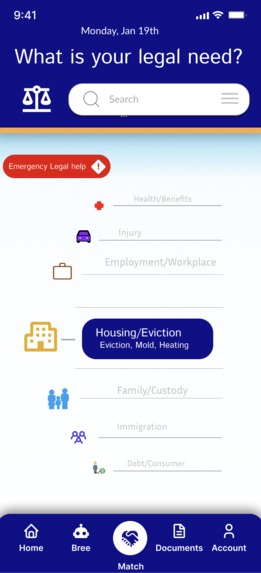
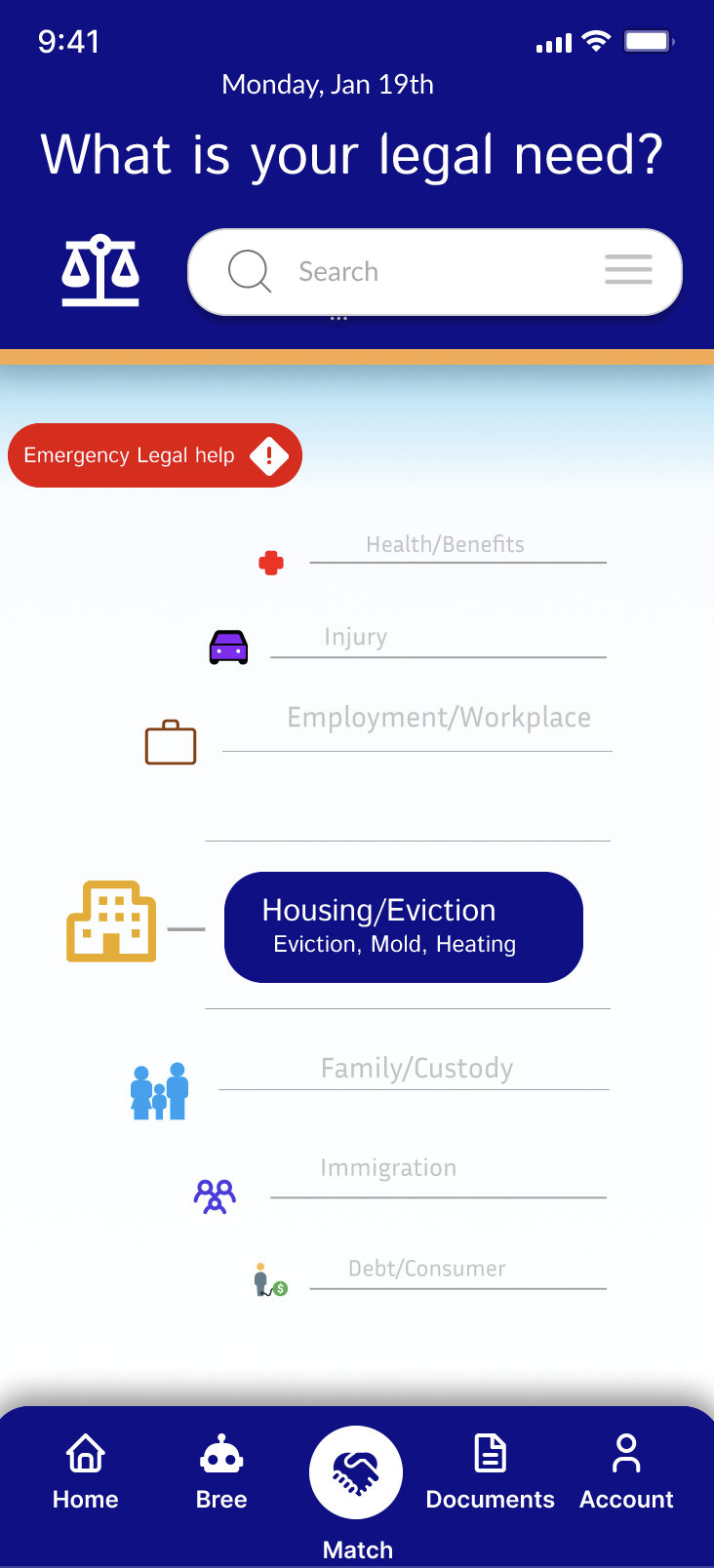
Client Homescreen
-
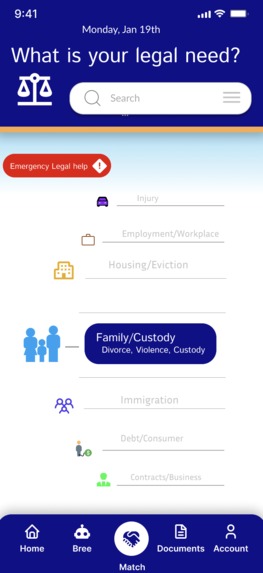
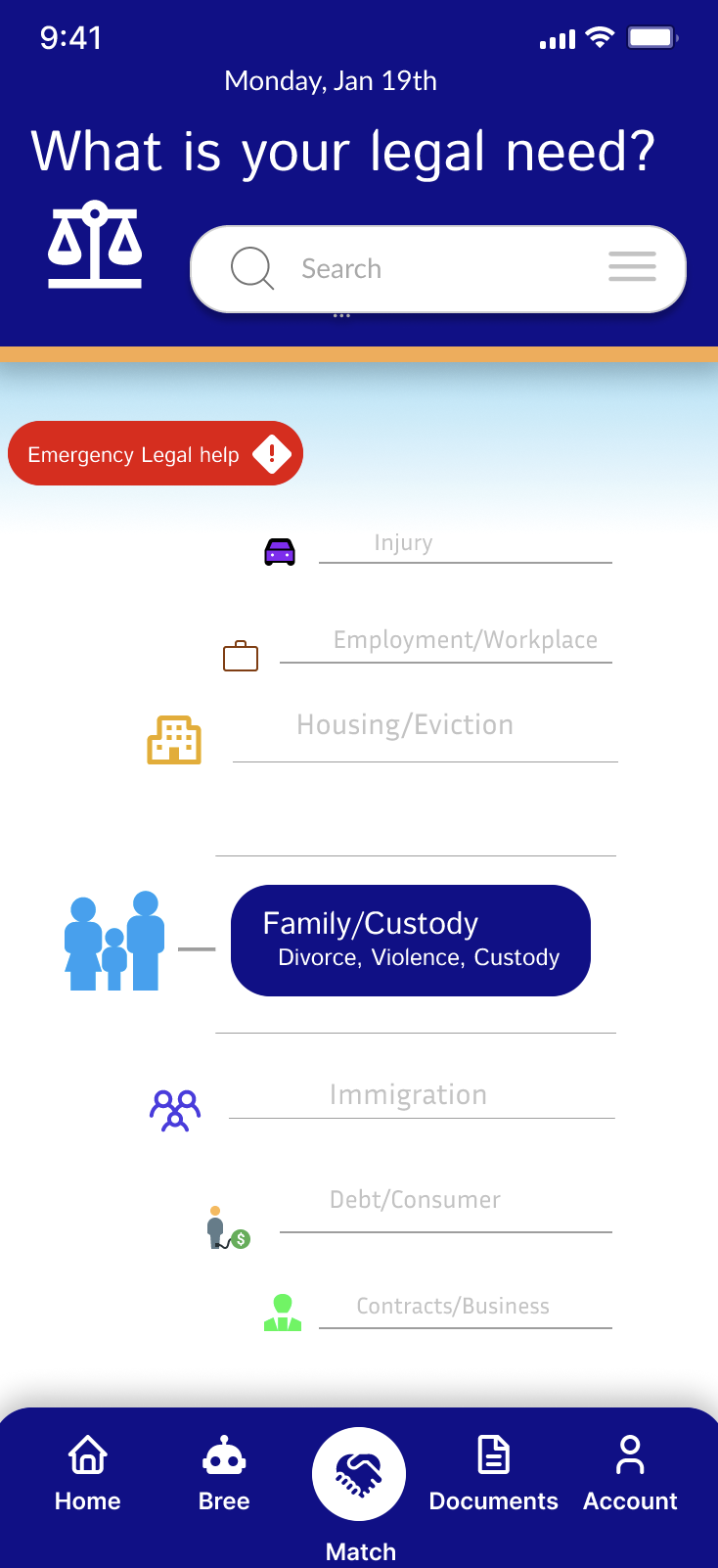
Client Homescreen scrolling1
-
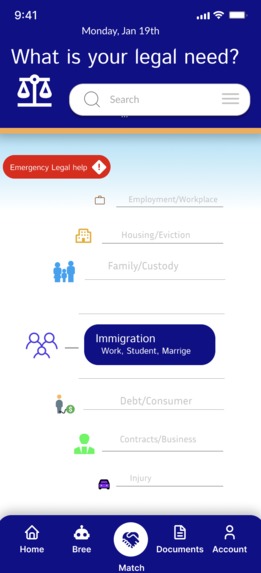
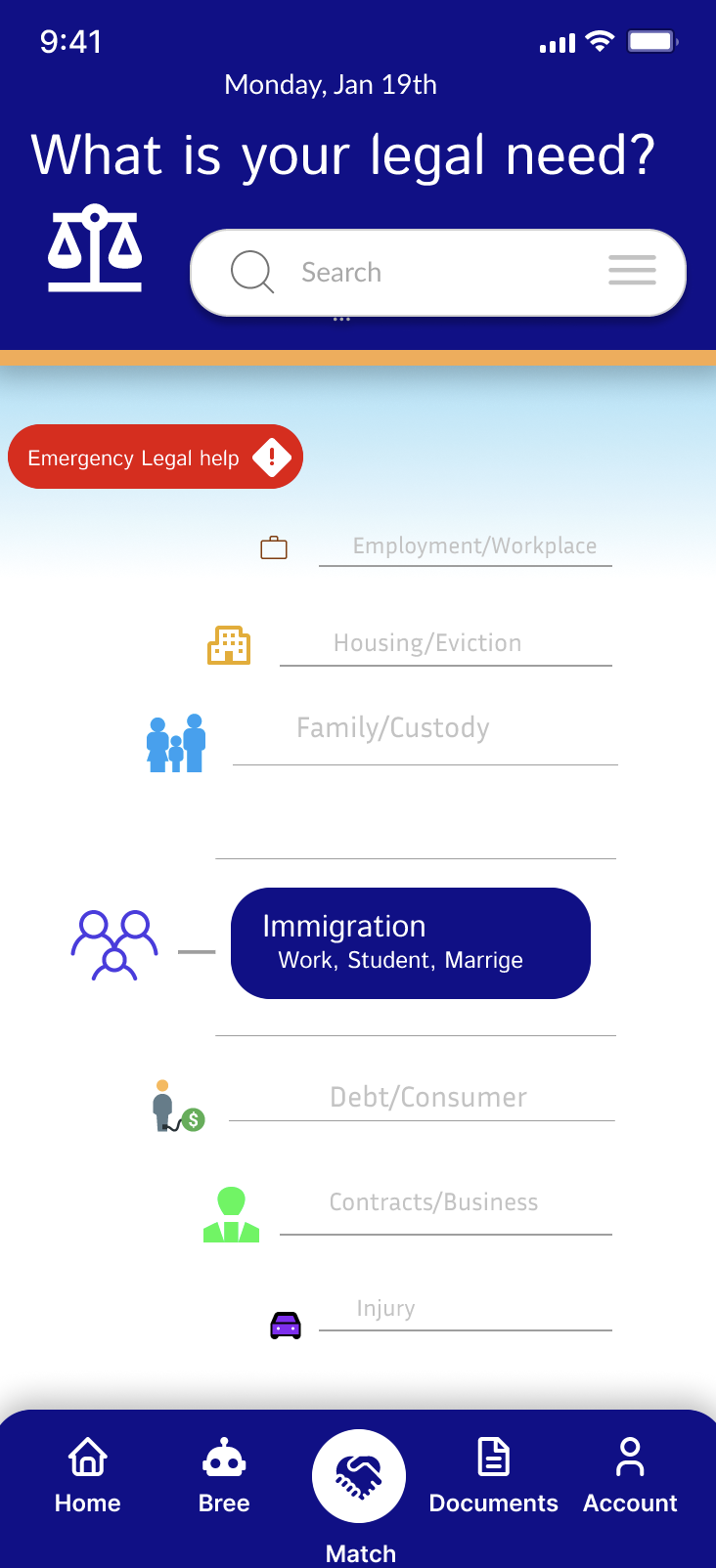
Client Homescreen scrolling2
-
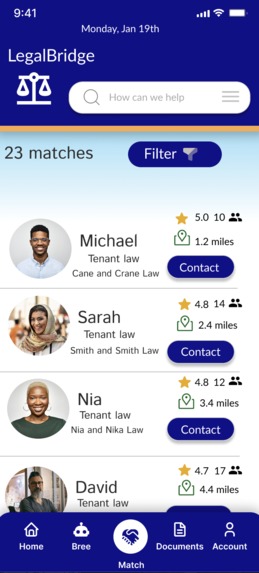
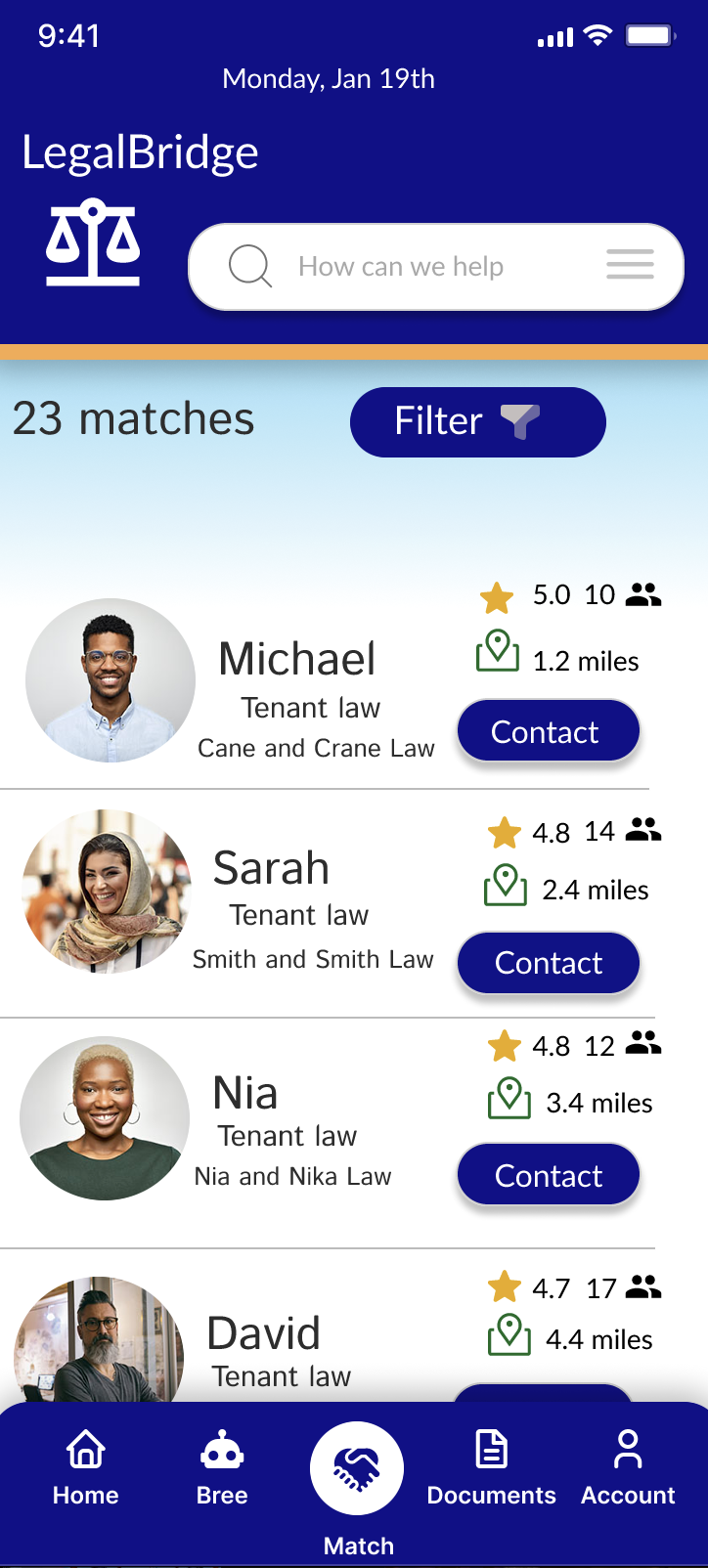
Connect with Lawyer
-
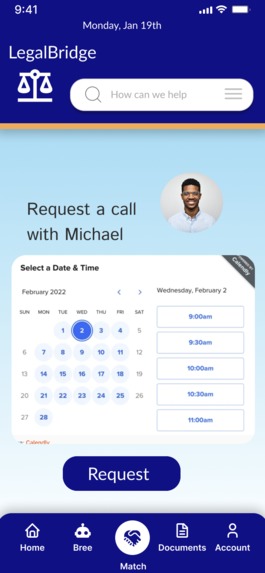
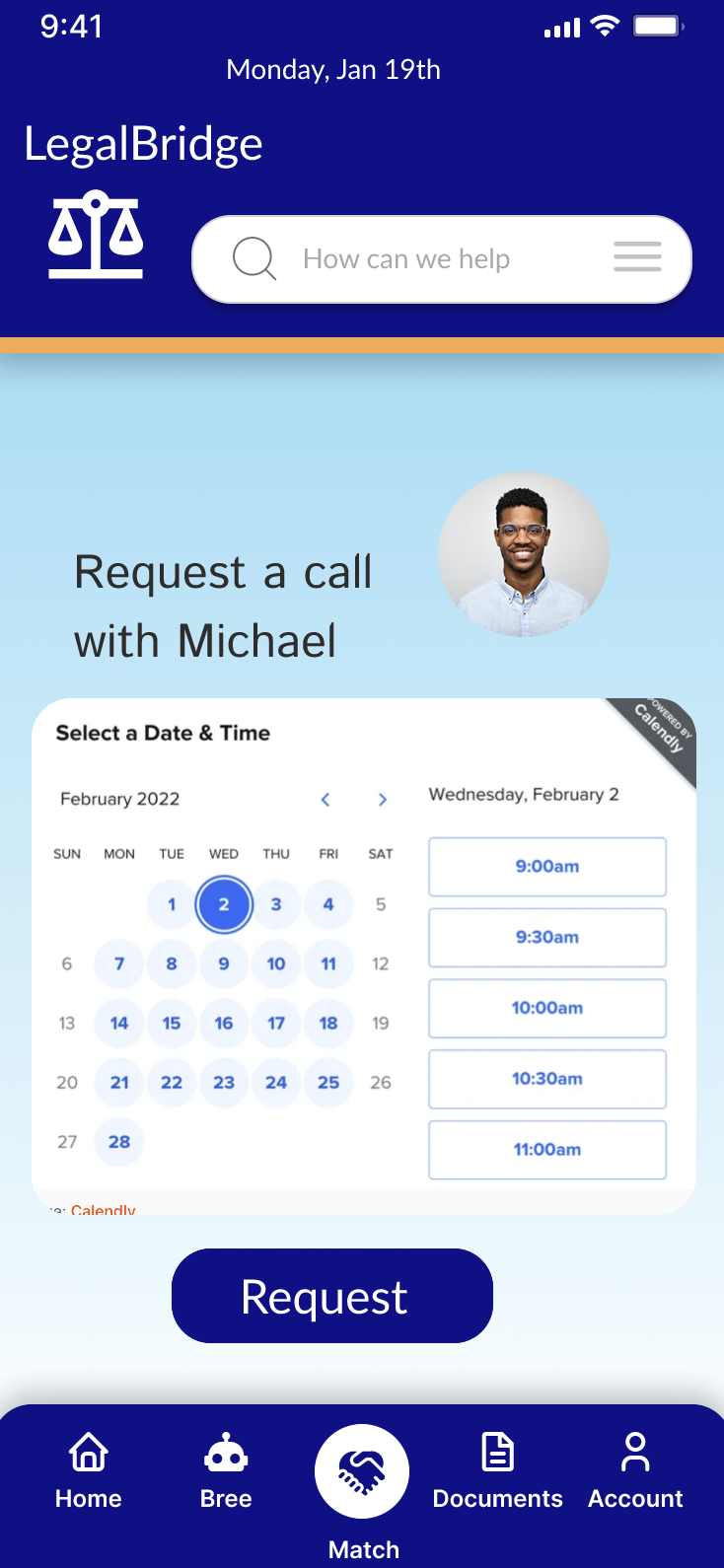
Schedule with Lawyer
-
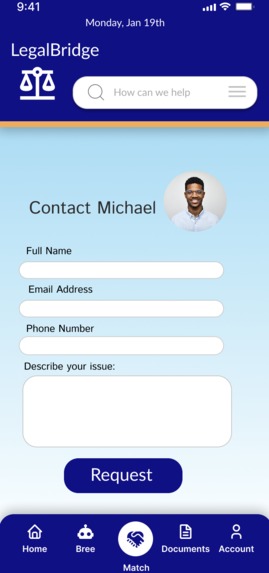
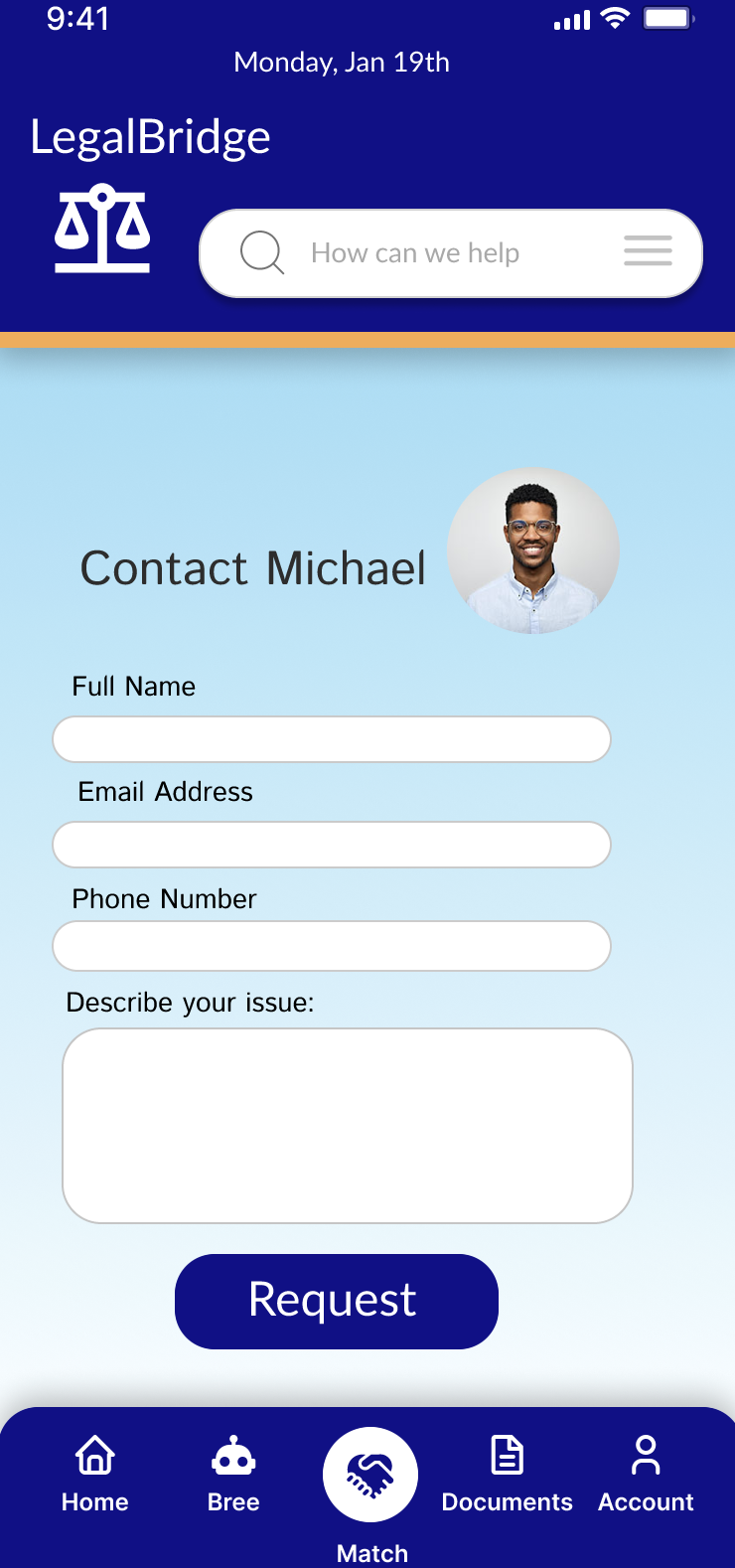
Contact Lawyer
-
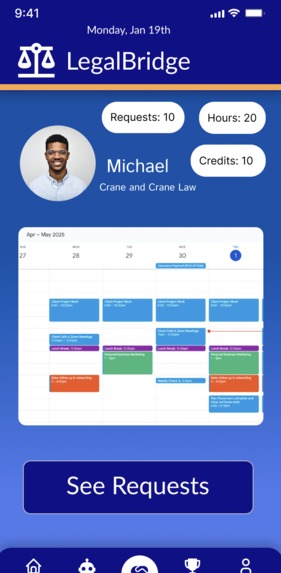
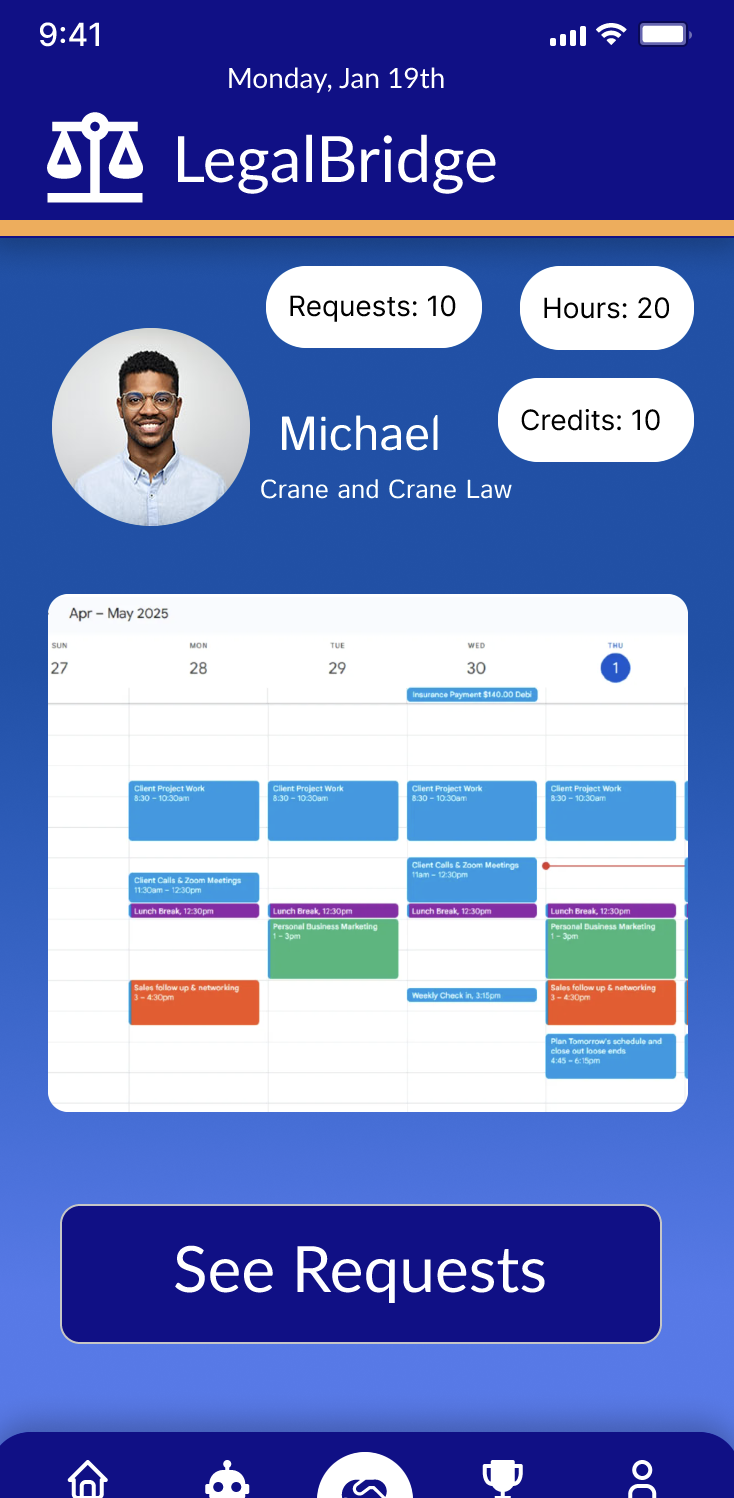
Lawyer Homescreen
-
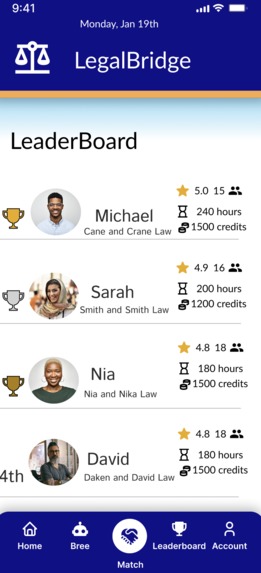
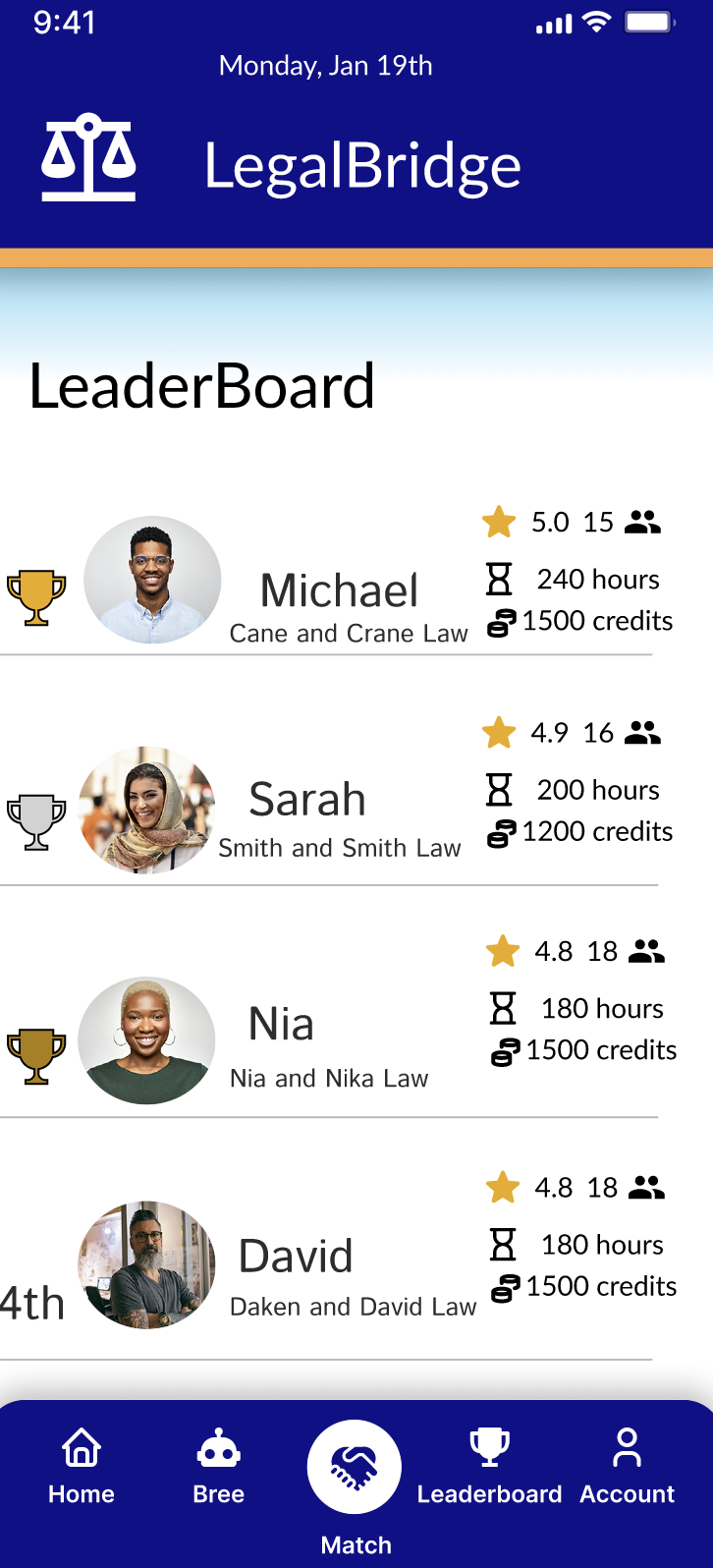
Lawyer Leaderboard
-
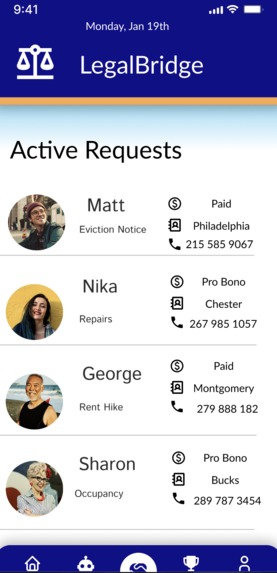
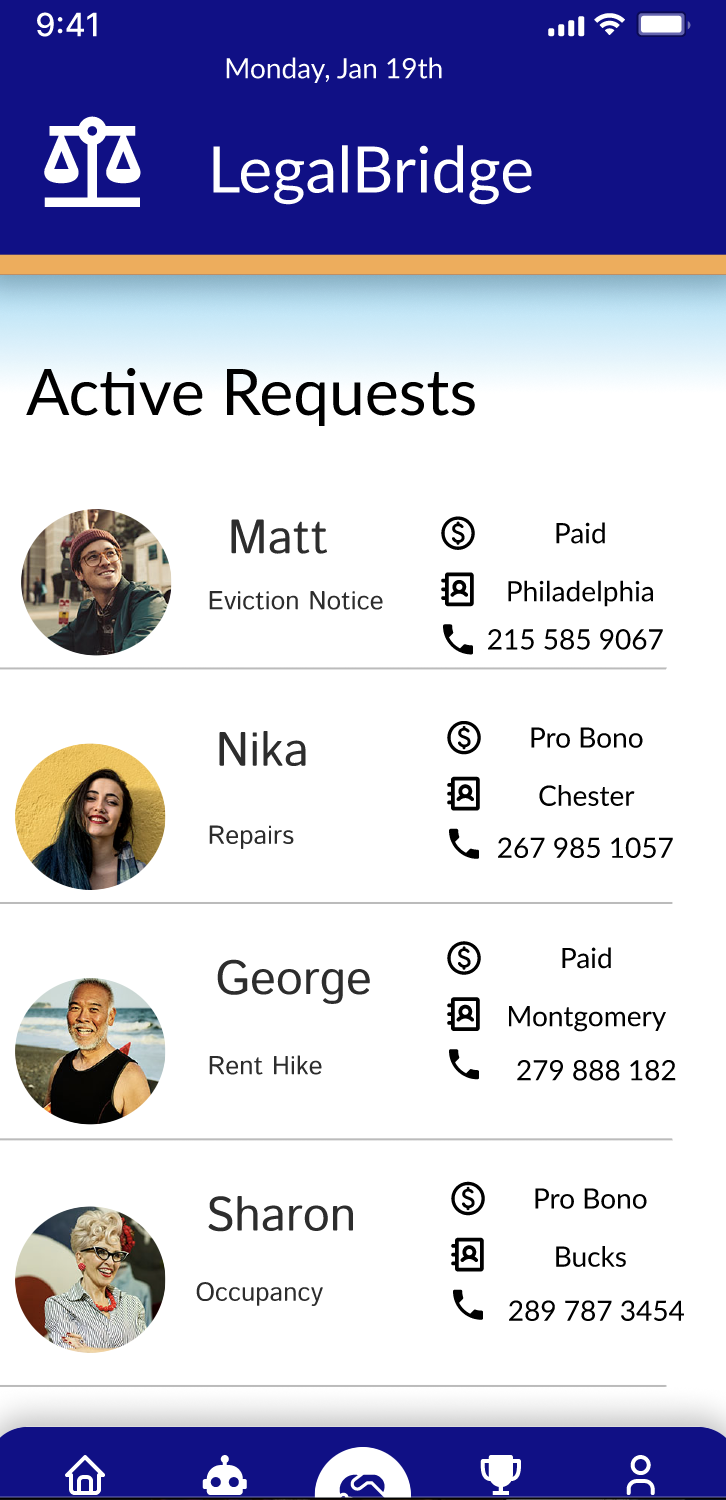
Lawyer Active Client Requests
Inspiration
Early in my legal career in Nigeria, I met a young man who had been held in prison for seven months without legal representation. He was a commercial motorcyclist who had unknowingly carried someone later accused of theft. Because he had no lawyer and no access to legal help, he remained in detention for months. When I eventually represented him, I was able to get his case struck out. But what stayed with me was not just his case. it was the system failure behind it. His experience made me realize that for millions of people, justice is not denied because they are guilty, but because legal help is inaccessible, unaffordable, or simply too far away. That experience planted the seed for LegalBridge.
What it does
LegalBridge is designed to bring legal help to people who are priced out, shut out, or too far from it. In simple terms, it connects people who need legal support, especially underserved and low-income individuals — with attorneys willing to provide free, low-cost, or accessible legal services. It is an AI-powered legal access platform built to help close the justice gap, particularly in legal deserts and underserved communities. Our long-term vision also includes mobile kiosk access points to bring legal support to people in rural and hard-to-reach areas.
How we built it
We started by identifying the biggest barriers to legal access: cost, complexity, lack of trust, and geography. From there, we mapped out a simple user journey focused on helping users quickly identify their legal issue, determine whether they need free or paid legal support, and get matched to the right attorney.
Because legal services involve real risk, we were intentional about designing the product with compliance, trust, and responsible legal-tech principles in mind from the start.
We used tools like Figma to design the user interface and prototype the core user flow, including legal issue intake, and smart attorney matching.
Challenges we ran into
The biggest challenge is that the problem we are trying to solve is far bigger than a weekend hackathon.
Access to justice is a deeply complex issue, and building a meaningful solution requires balancing technology, legal ethics, compliance, trust, and user safety. Time, tools, and technical resources were all constraints.
One major challenge was thinking through how to responsibly integrate AI into a legal workflow. Because this is a high-stakes space, generic AI tools are not enough, we need specialized, carefully designed systems that can support legal triage without creating legal or ethical risk. We also recognized the importance of bringing in stronger AI and product engineering expertise as we continue building.
Accomplishments that we're proud of
We are proud that LegalBridge is not just another app idea, it is a solution rooted in a real and urgent human problem. We are proud of:
- Building a clear and scalable concept around legal access.
- Creating a demo that communicates both the immediate value and long-term vision.
- Designing a product that can serve both people who cannot pay and those who can.
- Framing a solution that has the potential to reduce the impact of legal deserts.
- Turning a deeply personal and systemic problem into something actionable within a limited timeframe.
Most importantly, we are proud that this idea has the potential to help people before they fall through the cracks of the legal system.
What we learned
This process reinforced how real and widespread the access-to-justice gap truly is.
We learned that legal deserts are not abstract policy concepts — they affect real people, real families, and entire communities. Even within our own team and networks, we encountered people who have personally experienced the exact barriers LegalBridge is trying to address.
We also learned the importance of teamwork, clarity of vision, and building responsibly in a space where trust matters as much as innovation.
What's next for LegalBridge
For us, this is only the beginning. There is real urgency behind this problem, and our goal is to move LegalBridge from concept to real-world impact as quickly and responsibly as possible.
Our next steps are to:
- Further develop the MVP
- Refine the AI-powered intake and matching logic
- Begin attorney and legal aid partner recruitment
- Conduct deeper user testing with underserved communities
- Launch an initial beta platform.
- Begin early user acquisition and partnership development Our hope is that by the end of the year, LegalBridge can move toward a broader platform release and begin expanding its reach to the communities that need it most.
Built With
- figma


Log in or sign up for Devpost to join the conversation.