-
-
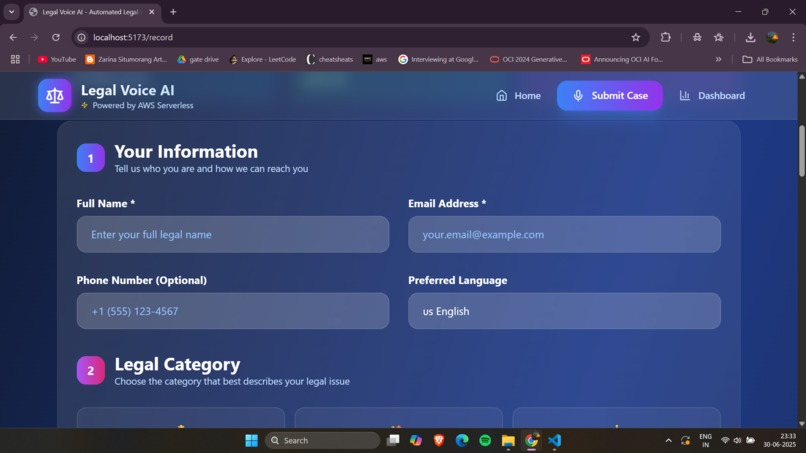
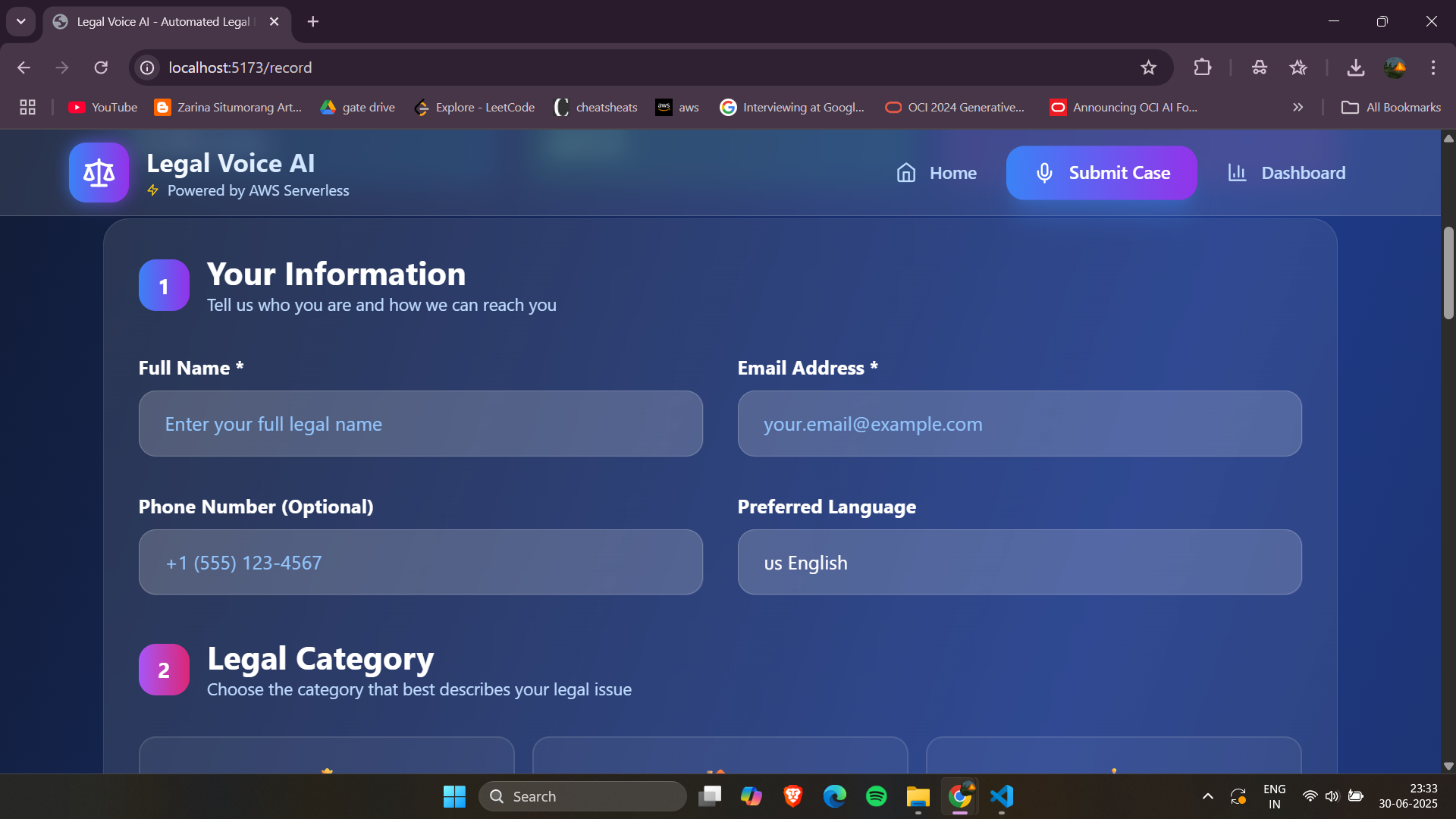
information of client
-
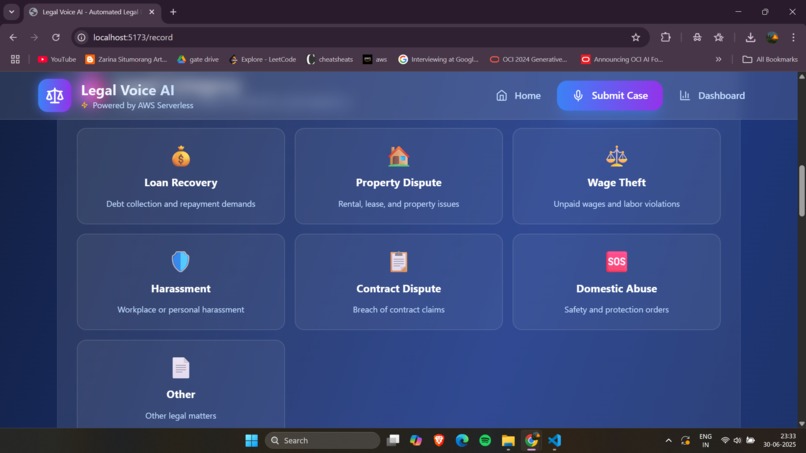
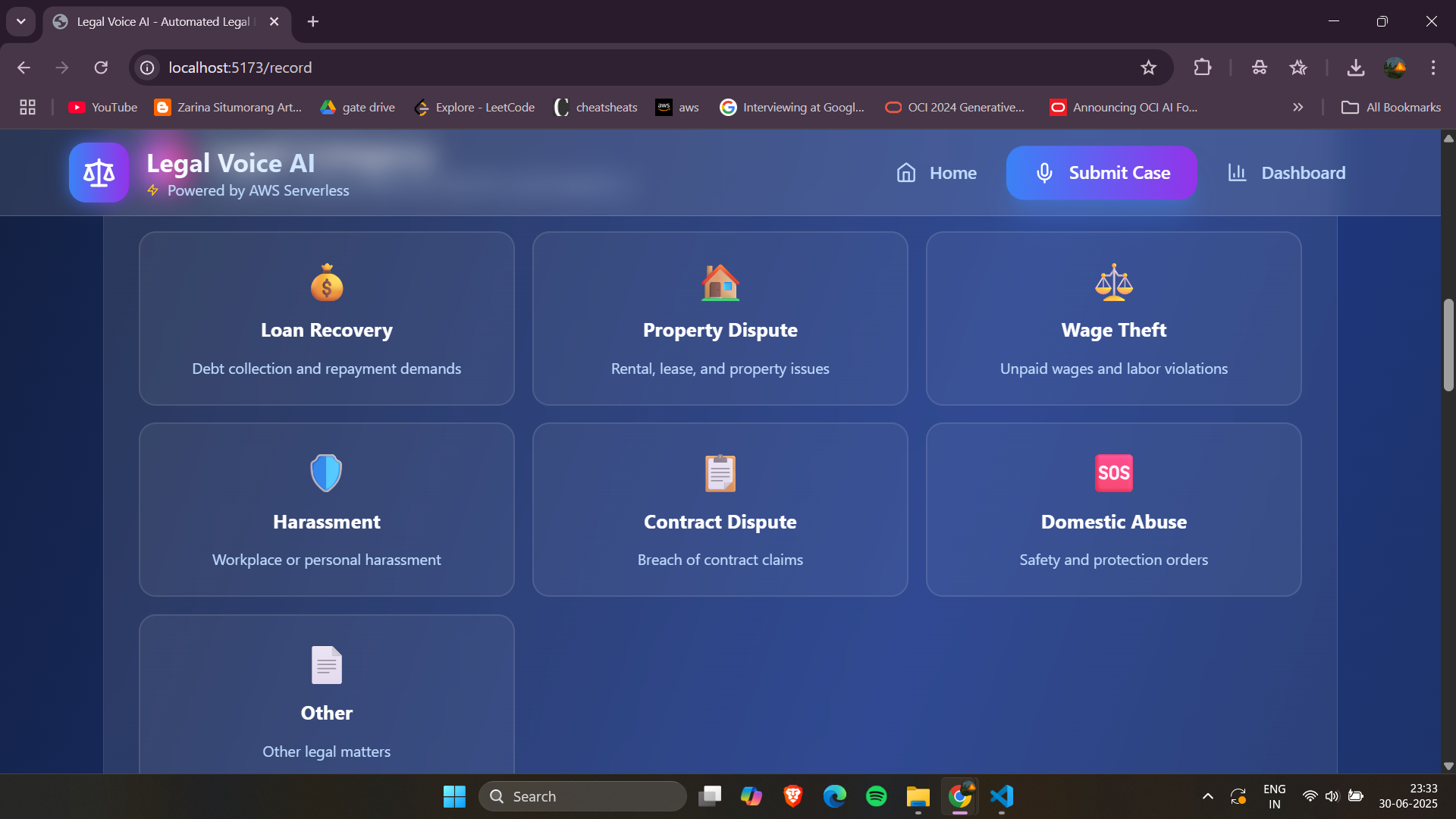
types of legal issues
-
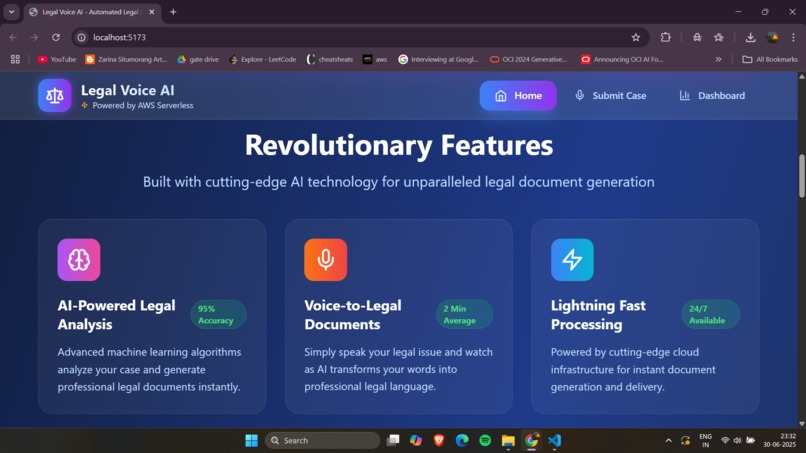
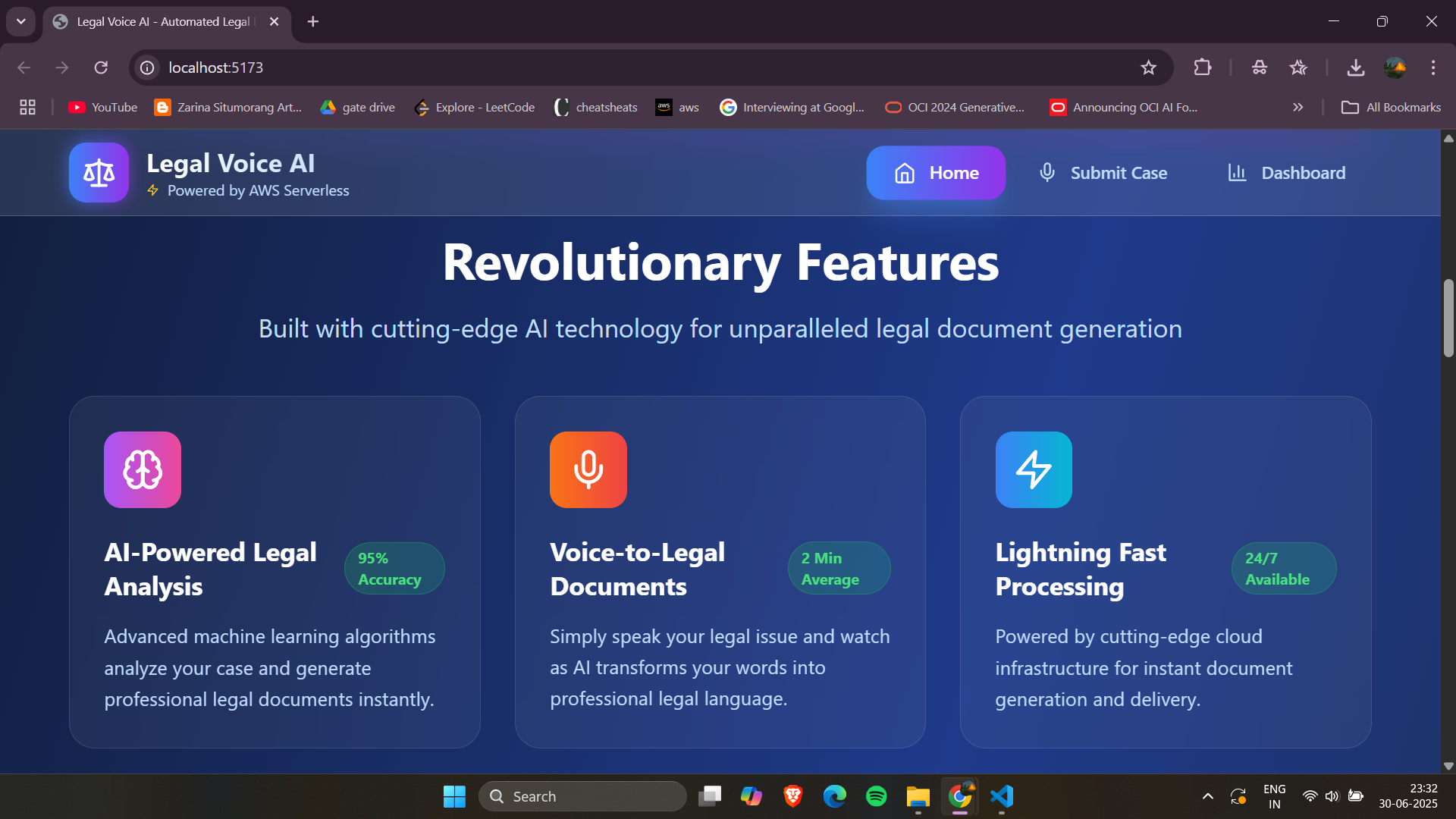
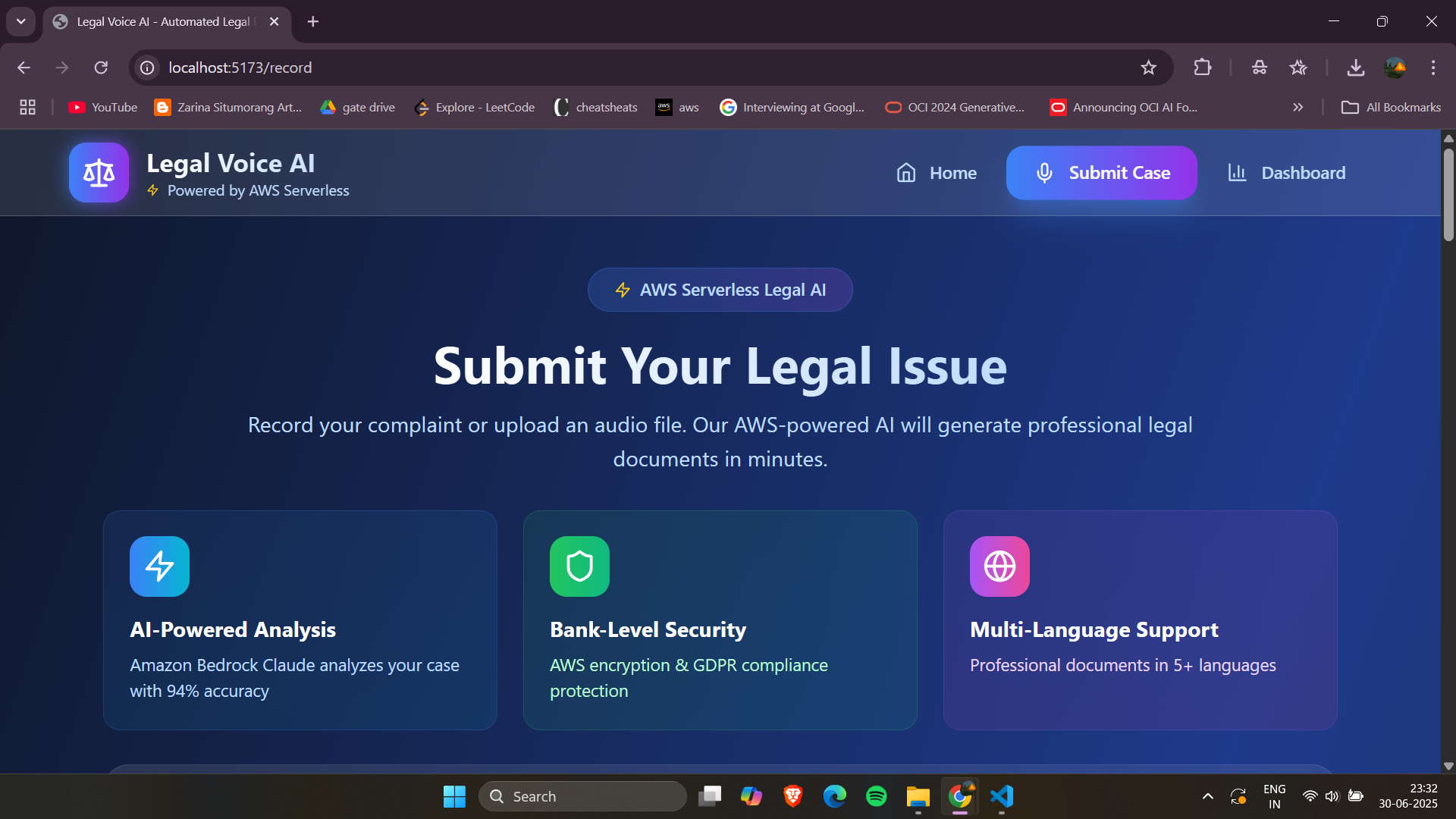
features available
-
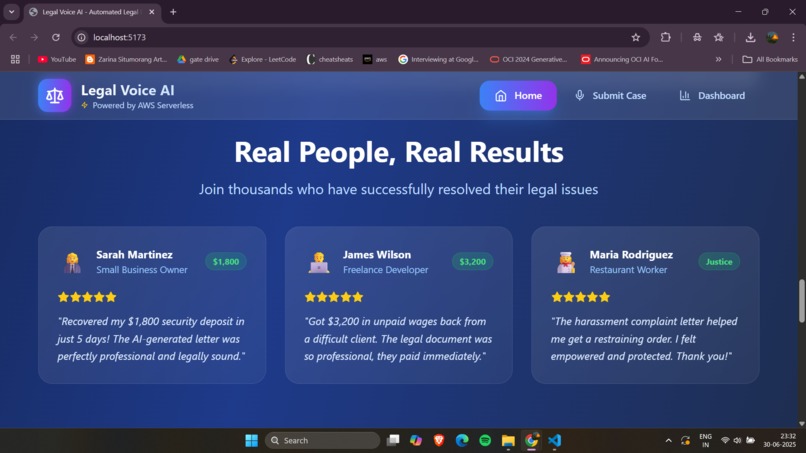
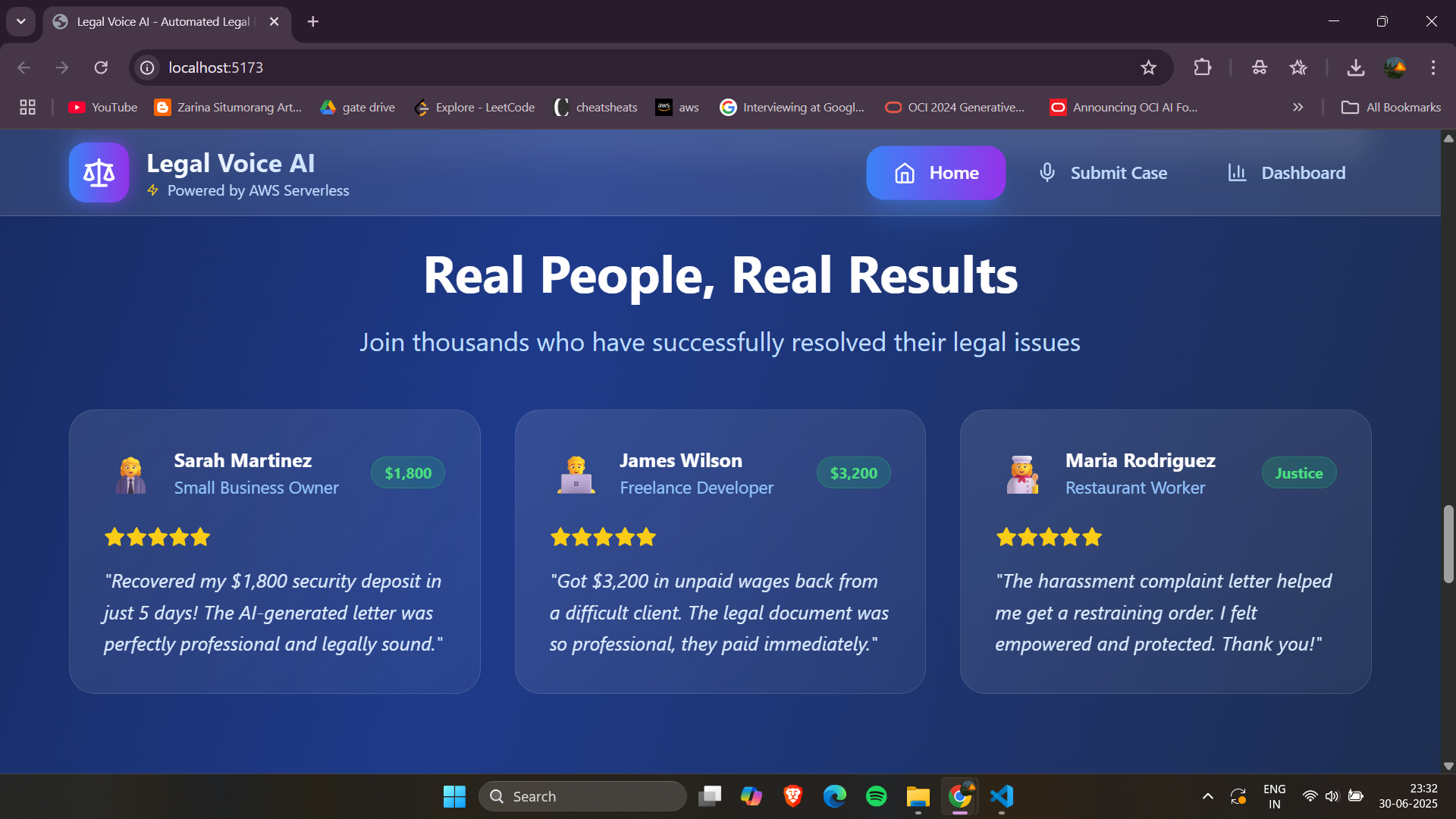
reviews and remarks
-
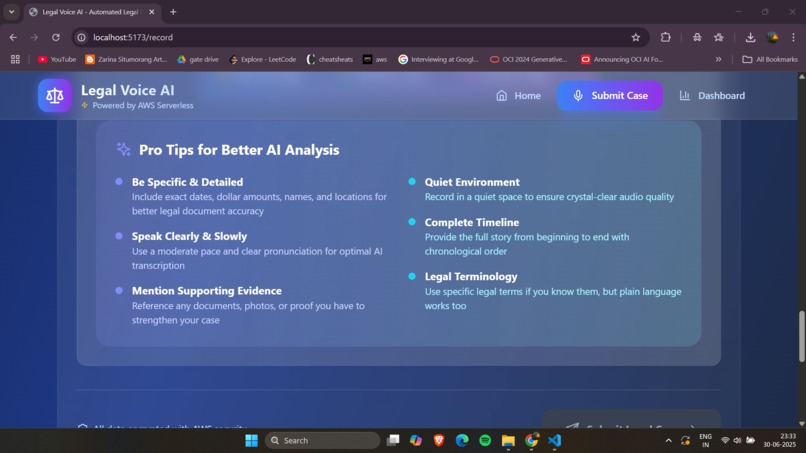
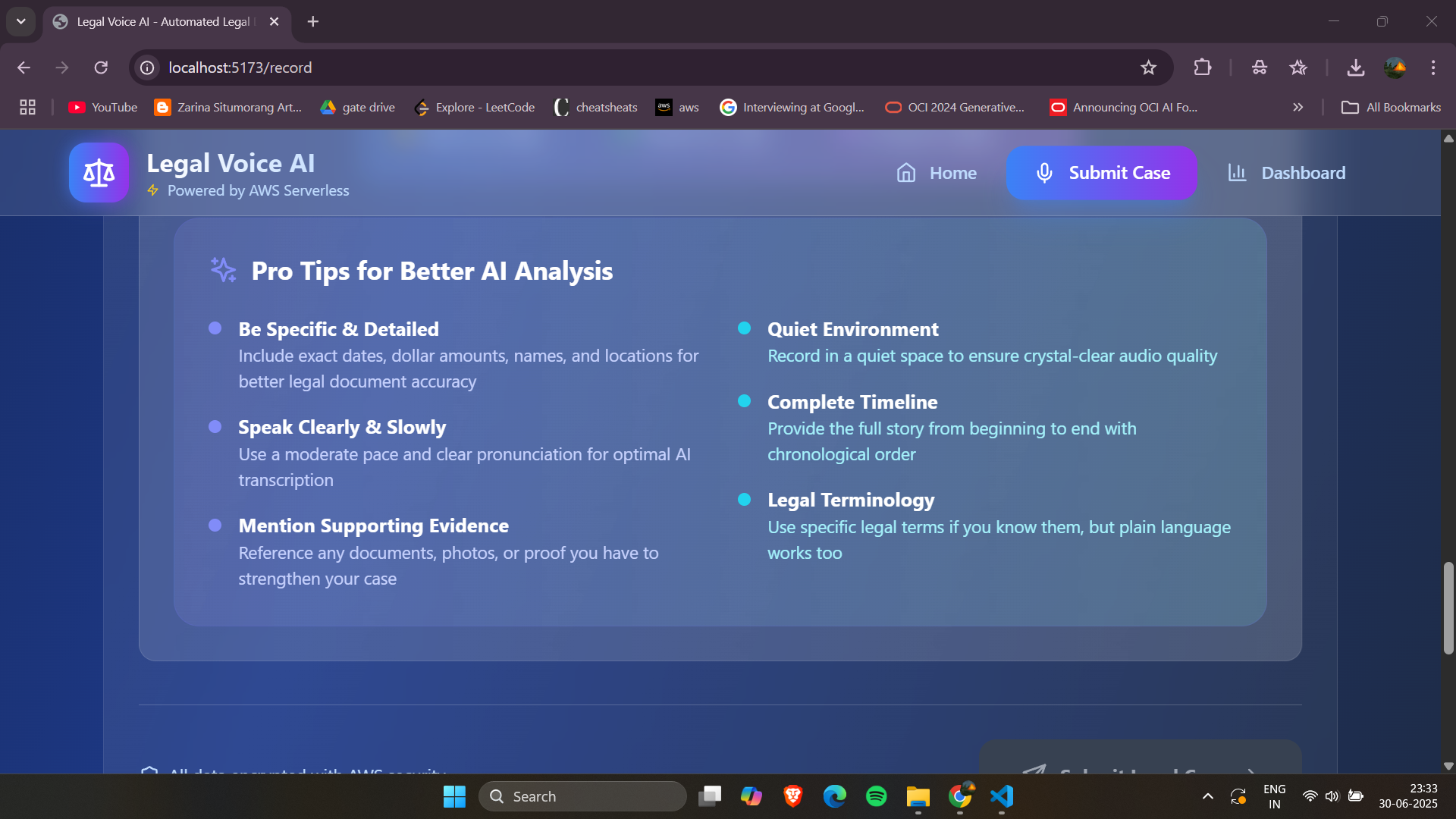
for a better prompt and guidance
-

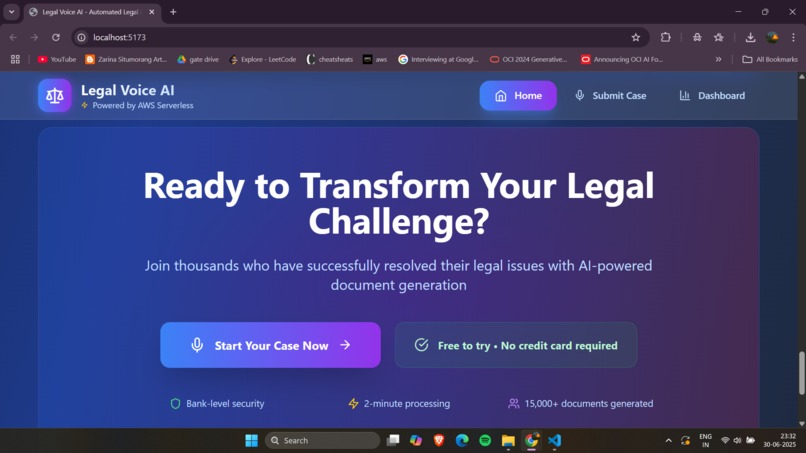
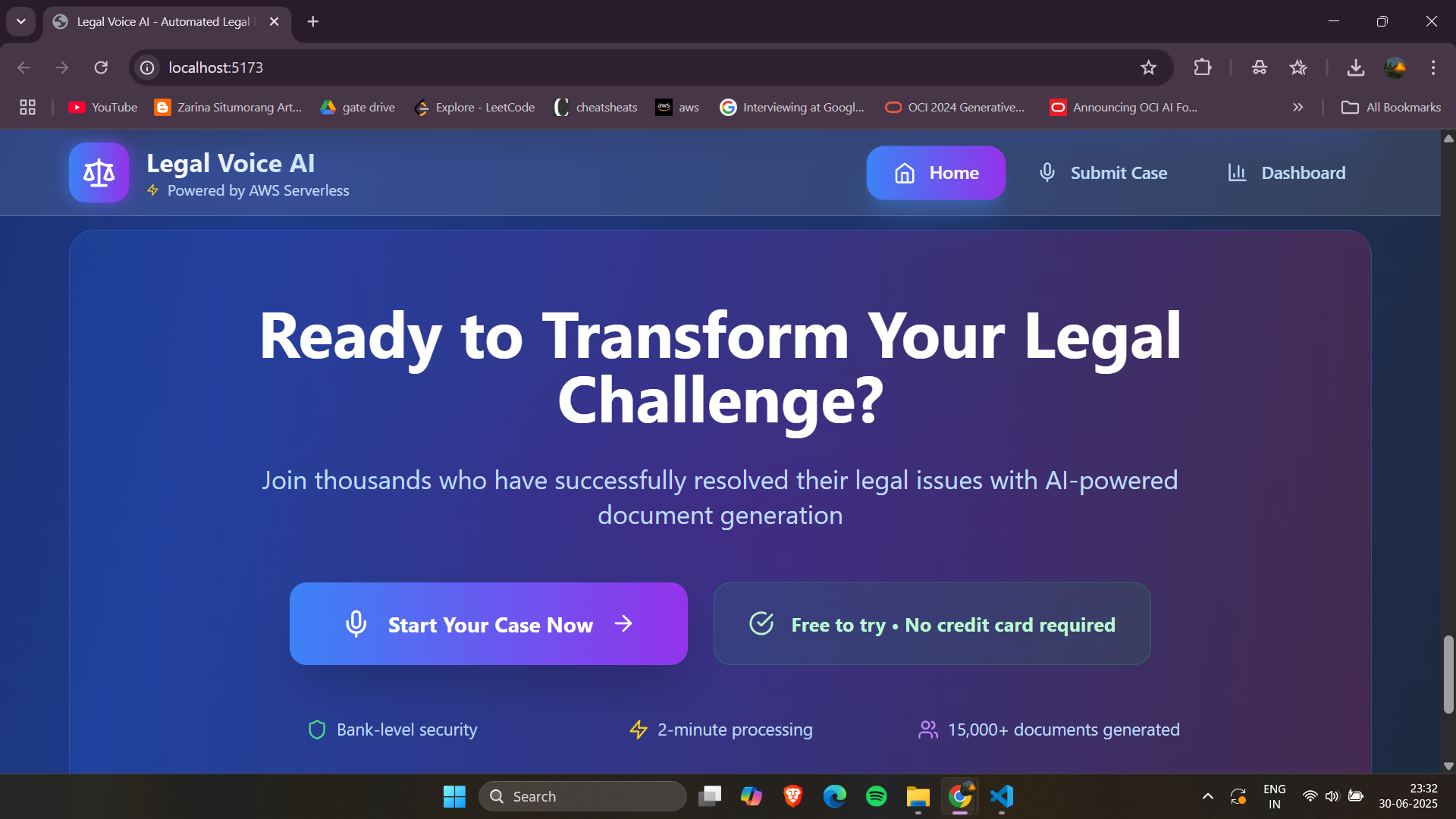
scrolled down home page
-
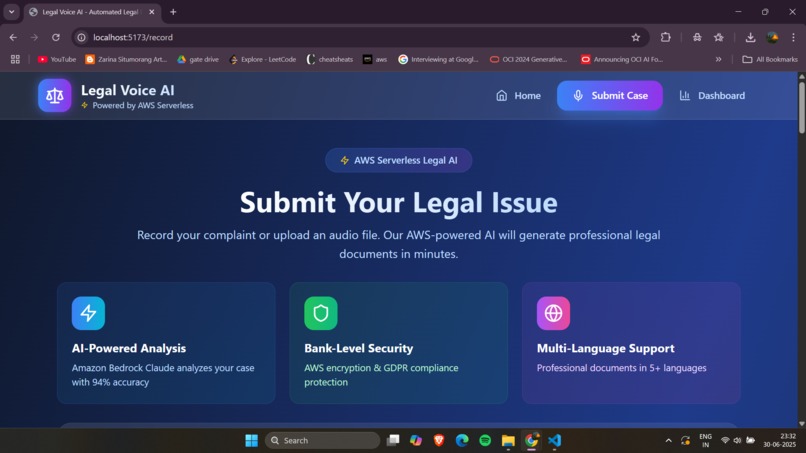
submitting issue through voice or media
-
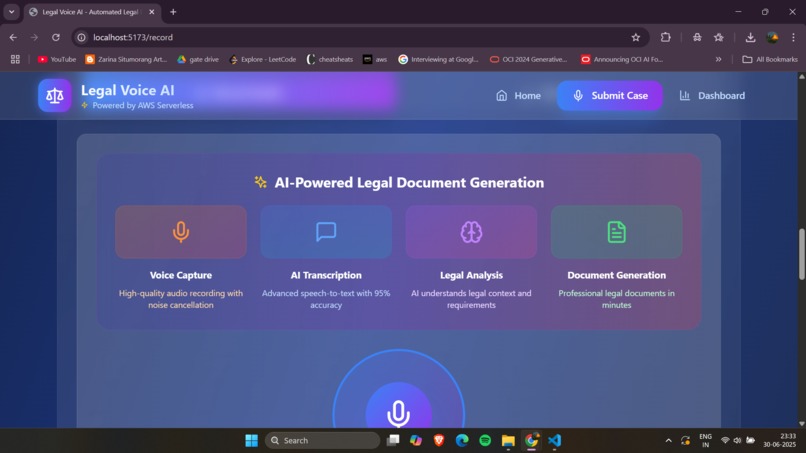
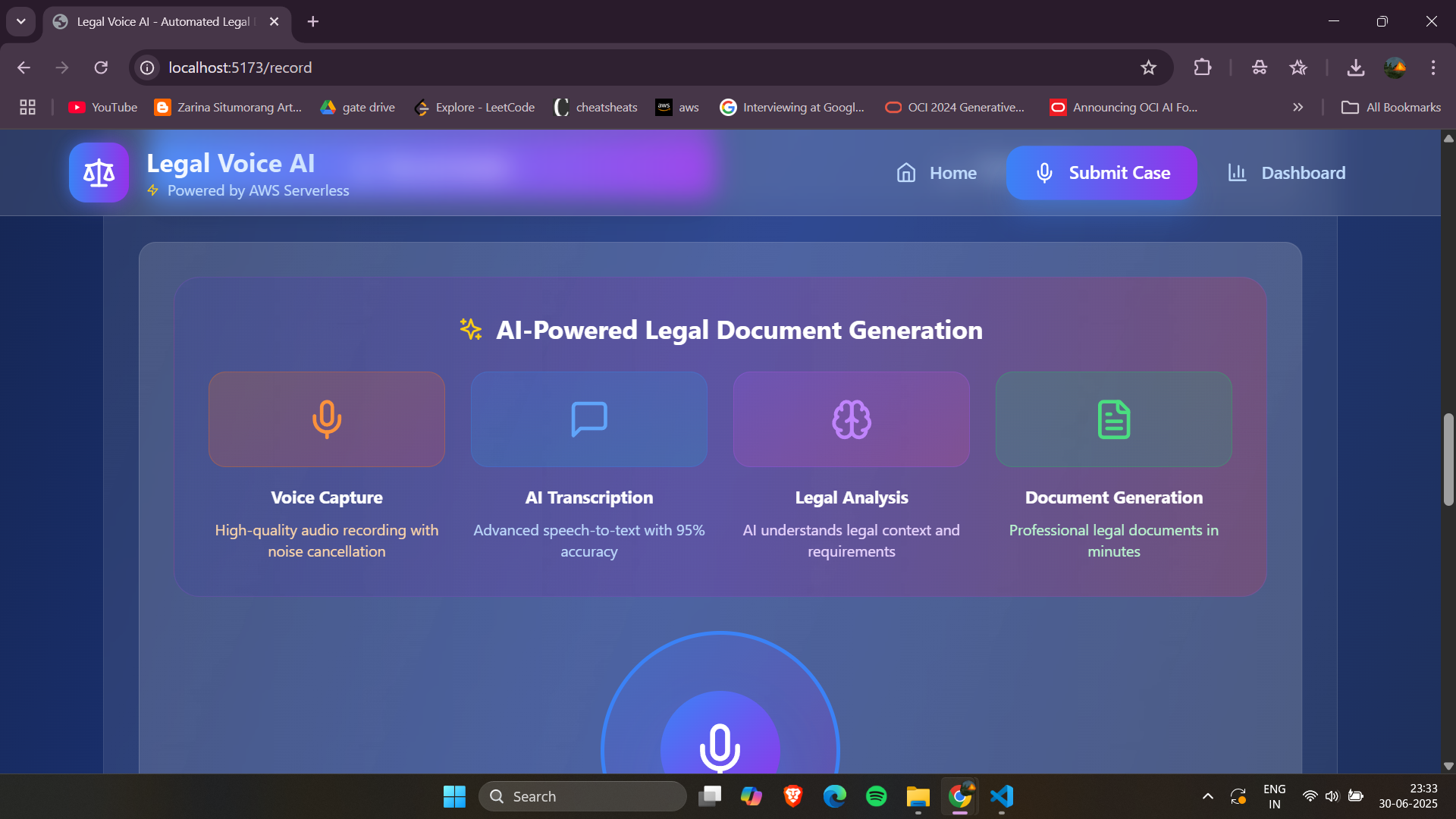
document options in site
-
voice assistant
-
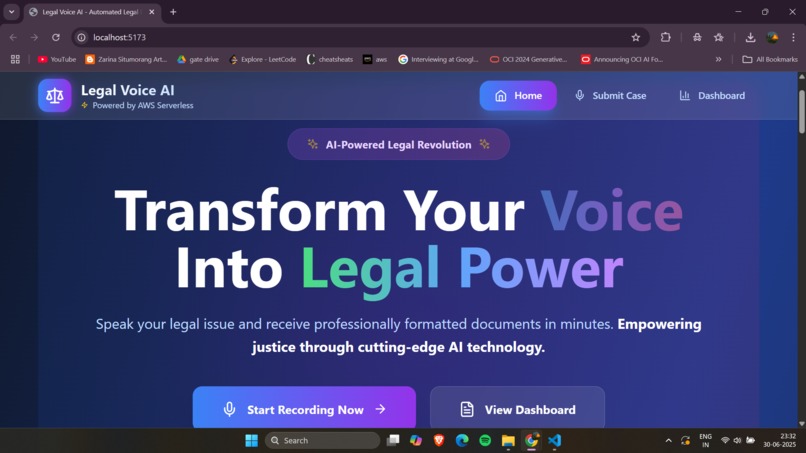
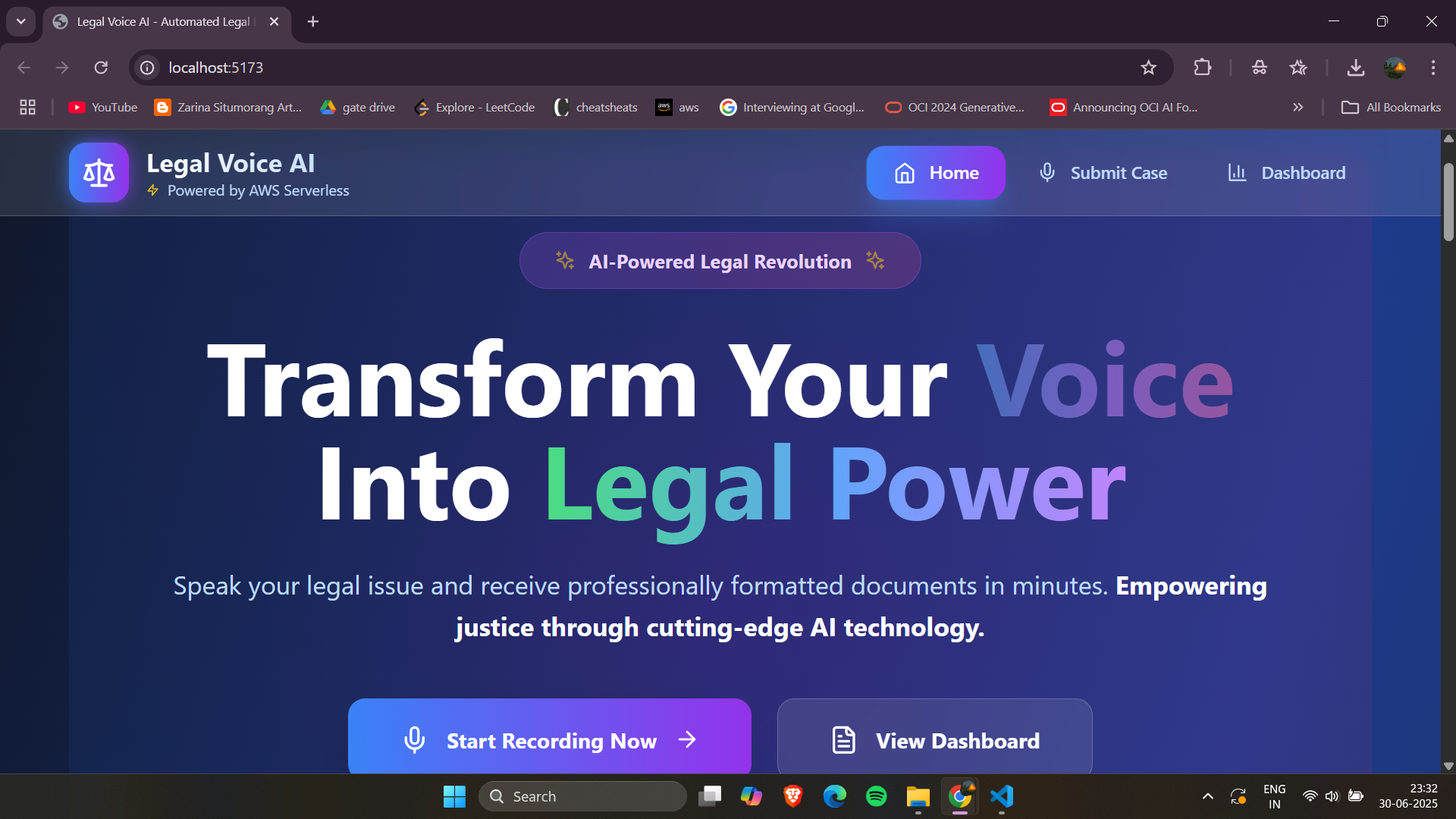
home page

Inspiration This project was inspired by my mother’s long-standing legal struggles. Despite her strength, she lacked access to affordable legal help and the tools to present her case effectively. Witnessing her journey made me realize how many others are silenced not due to lack of truth, but due to lack of resources. Legal Voice AI is a tribute to her resilience and a mission to democratize access to justice through AI.
What it does Legal Voice AI converts spoken words into organized, professional legal documents in real time. Users can voice-record their legal issues by categories (Property Disputes, Wage Theft, Harassment, Loans, etc.), see audio feedback through visualization, monitor processing steps, and get simulated delivery alerts—all through a beautiful, simple, no-setup-needed interface.
How we built it The application was developed with React, TypeScript, Tailwind CSS, and Web Audio APIs. We created a completely responsive UI with glass morphism, gradient themes, and animation effects with the help of Framer Motion. Mock data is used to mimic backend workflows, meaning we don't need Supabase or any other third-party service. Voice input is recorded, displayed, and processed into structured text in real-time.
Challenges that we came across Supporting real-time voice visualization with seamless UI performance
Building a convincing mock backend flow with no real database/API dependencies
Delivering production-grade design and UX refinement within a short time frame
We were proud of these accomplishments A complete, functional legal automation tool with no setup at all
A beautiful, Apple-quality interface with instant audio feedback
Smooth workflow simulation from voice input through to the generation of legal documents
Providing an emotionally resonant solution based on real-world issues
What we learned How to build high-fidelity UI/UX comparable to production SaaS products
Techniques for backend logic simulation and document generation pipelines
The role of accessibility, localization, and responsive design in legal tech
Translating personal pain points into scalable, empathetic technology solutions
What's next for Legal Voice AI Integrate actual backend (e.g., Supabase or Firebase) for long-term case tracking
Include NLP-based legal classification and auto-summarization
Implement multilingual voice transcription for regional language support
Collaborate with legal aid organizations to implement it in real-world cases
Maintain data security, privacy compliance, and document validity standards
Built With
- client-side-rendering
- environment-variables
- frontend
- jsx
- modern
- node.js
- react
- stack
- supabase
- tailwind-css
- typescript
- vite

Log in or sign up for Devpost to join the conversation.