Inspiration
The idea for Legal Vision came from a personal mistake. Before this hackathon, I attended an in-person event and paid an entry fee without reading the terms. I later found out I wasn’t eligible to participate. That experience made me realize how often people agree to things online without understanding them.
We researched real signup flows across major platforms and found that most websites technically disclose their terms but rarely explain what users are actually agreeing to. Legal Vision was built to bridge that gap — by informing users at the exact moment consent happens.
What it does
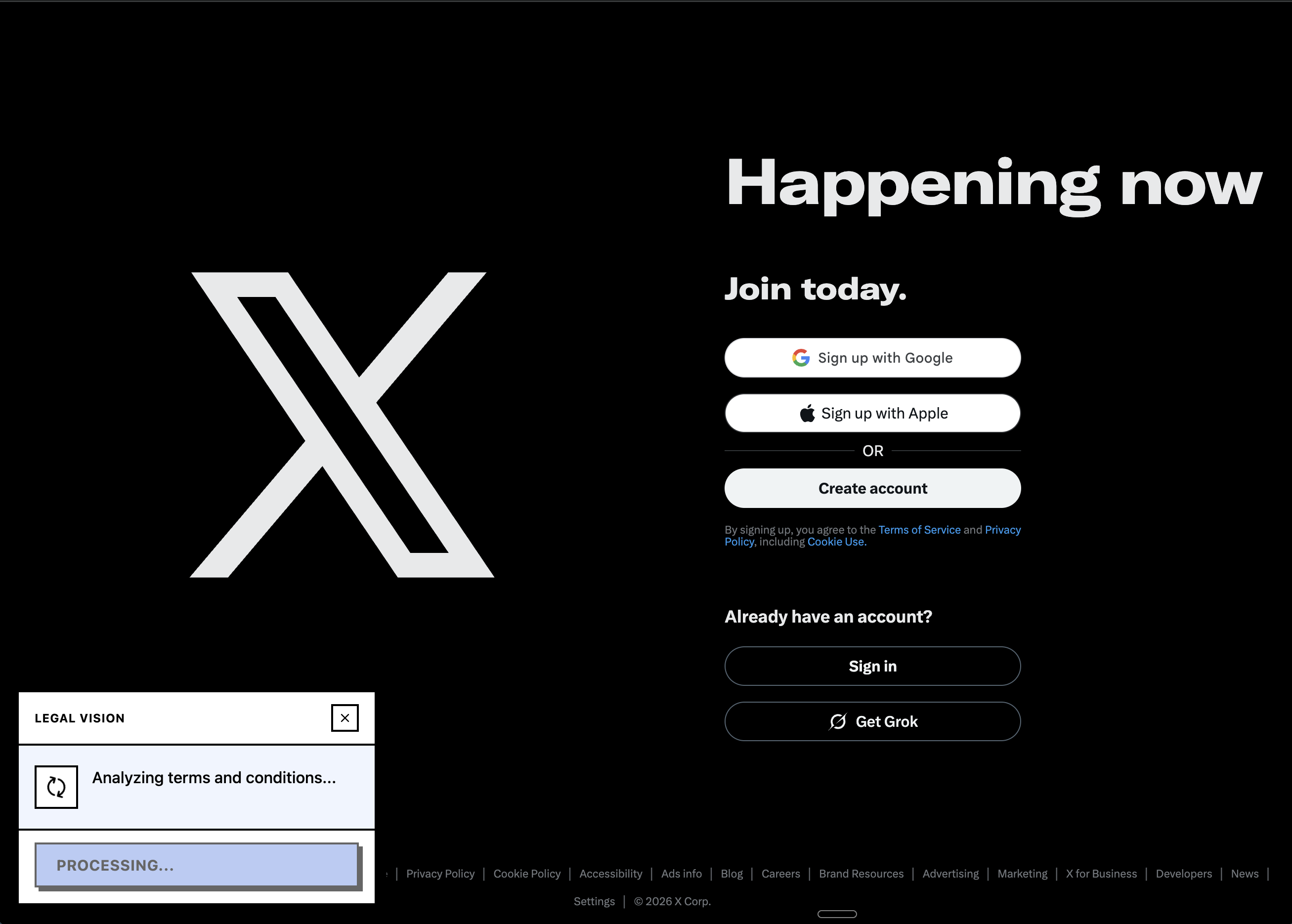
Legal Vision helps users understand what they’re agreeing to before they click “I agree.”
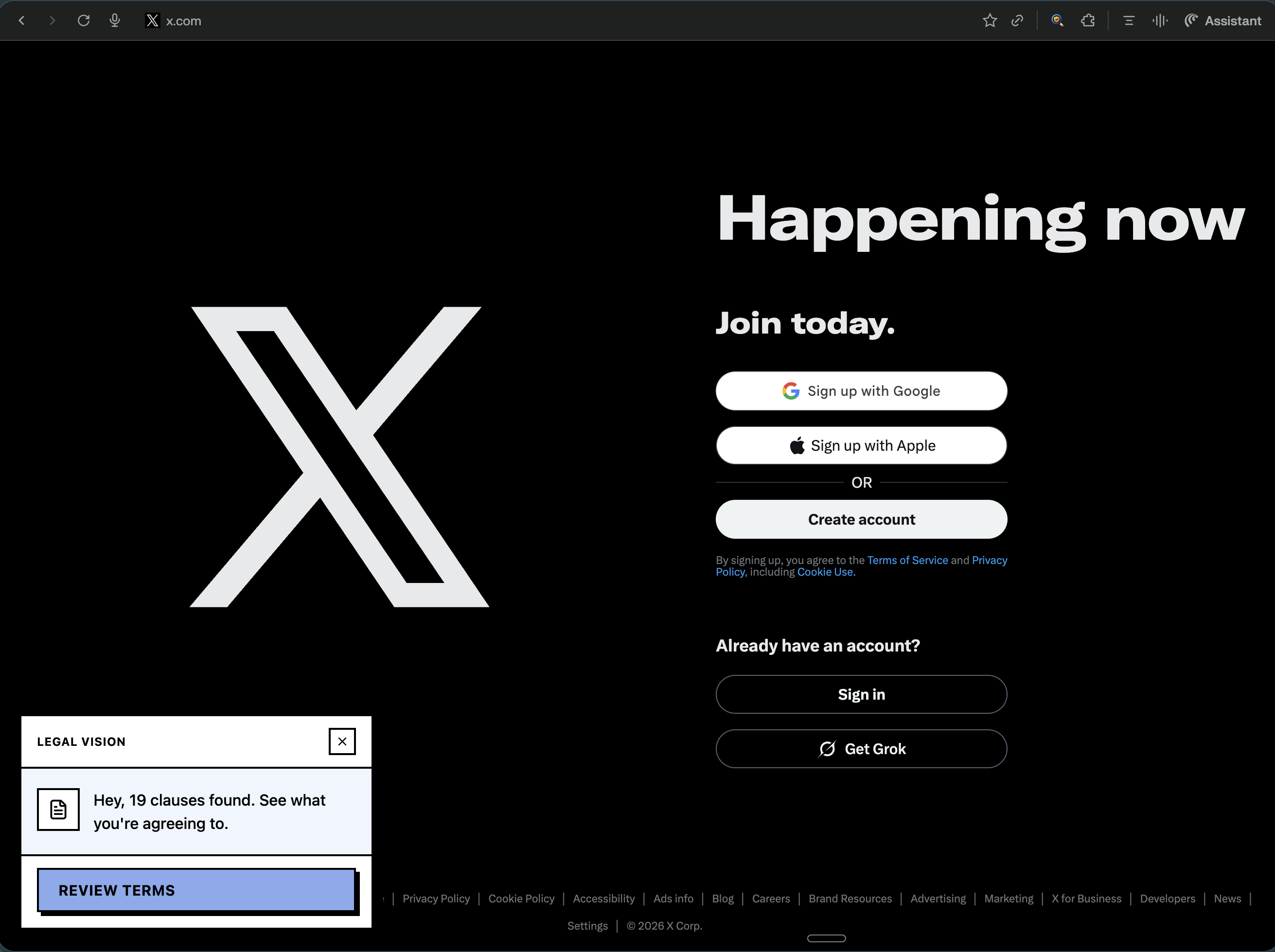
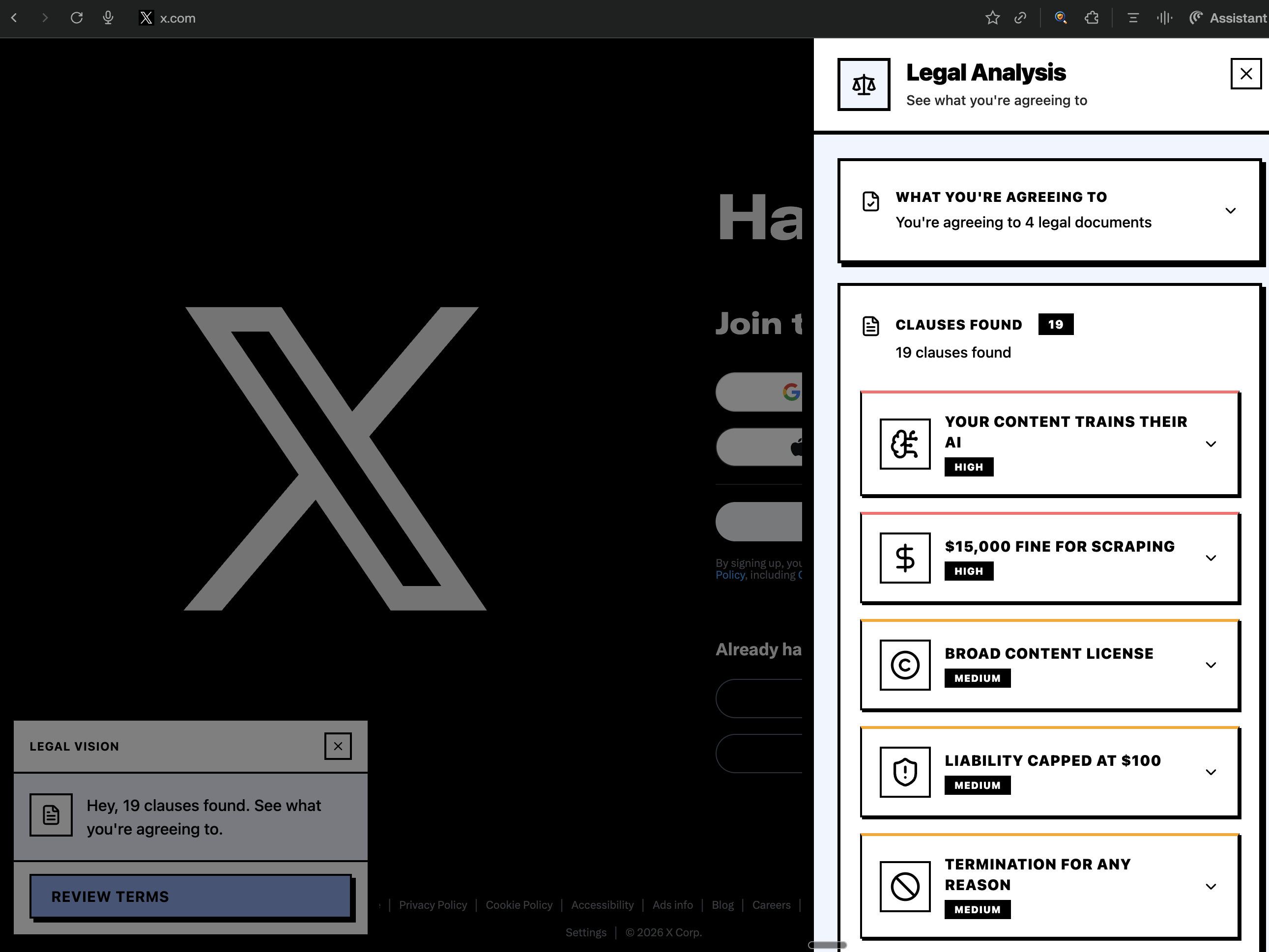
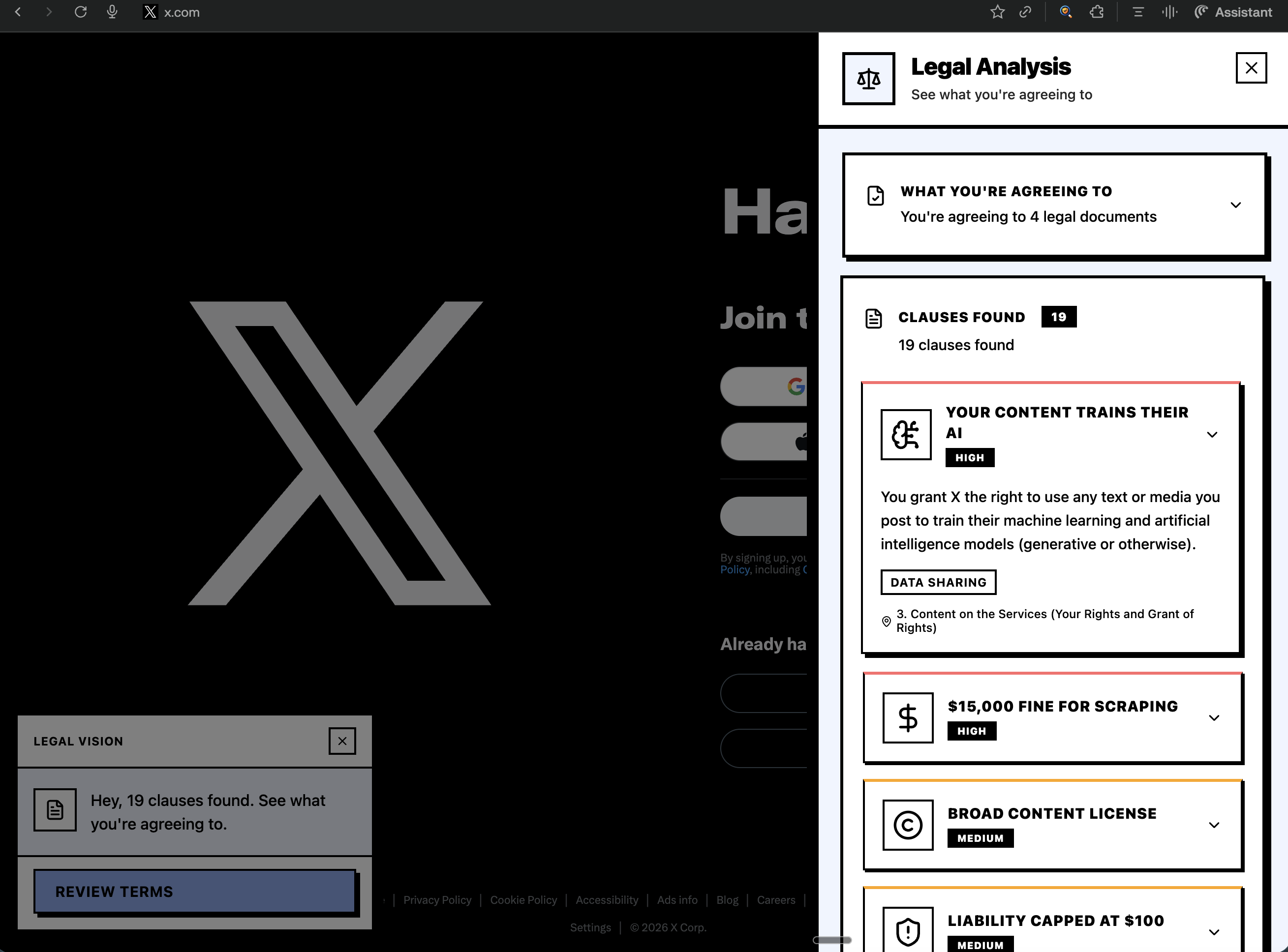
When a website shows consent language like “By clicking this button, you agree to the Terms and Conditions,” the extension detects that moment and displays a small, non-blocking notification. If risky or important clauses are found, users can view a clear, plain-language report explaining what those terms mean and why they matter.
The user can always continue normally — Legal Vision informs, but never blocks.
How we built it
Legal Vision consists of three main components:
- A Chrome extension that detects consent moments on websites
- A server that gathers and processes legal documents
- The Gemini API, which analyzes legal text and generates clear explanations
Detection is handled with reliable heuristics so the extension works everywhere. AI is used only for analysis and explanation, not detection, and the system gracefully degrades if experimental AI features are unavailable.
Challenges we ran into
Our biggest challenge was designing the right user experience. Early versions attempted to modify website buttons or consent flows, but this proved fragile and invasive across different sites.
We shifted to a non-blocking popup approach that respects existing website designs while still giving users meaningful context. This decision simplified the system and aligned better with our goal of informed, voluntary consent.
Accomplishments that we’re proud of
We’re proud that Legal Vision feels realistic, ethical, and usable on real websites. Instead of disrupting flows, it integrates quietly at the moment consent matters most.
We’re also proud of how we used AI thoughtfully — not for flashy automation, but to make complex legal language understandable to everyday users.
What we learned
We learned that online consent is often more symbolic than informative. Most users technically agree to terms, but rarely understand them.
We also learned that AI can be most impactful when used to explain and clarify — not replace — human decision-making.
What’s next for Legal Vision
Next, we want to improve analysis accuracy, expand the types of agreements we support, and refine how risks are communicated.
Long-term, Legal Vision could grow beyond a browser extension — helping users, companies, and regulators better understand how digital consent actually works.
Built With
- bun
- postgresql
- prisma
- trigger.dev

Log in or sign up for Devpost to join the conversation.