Inspiration
As a creator myself, I watched peers struggle with expensive legal fees and confusing contract jargon—many avoided legal protection entirely, putting their work at risk. I wanted to build something accessible: professional legal tools tailored to creators, priced so every independent artist, influencer, or freelancer could afford it. The $29/month model felt like a fair price to democratize legal support for the creator economy.
What it does
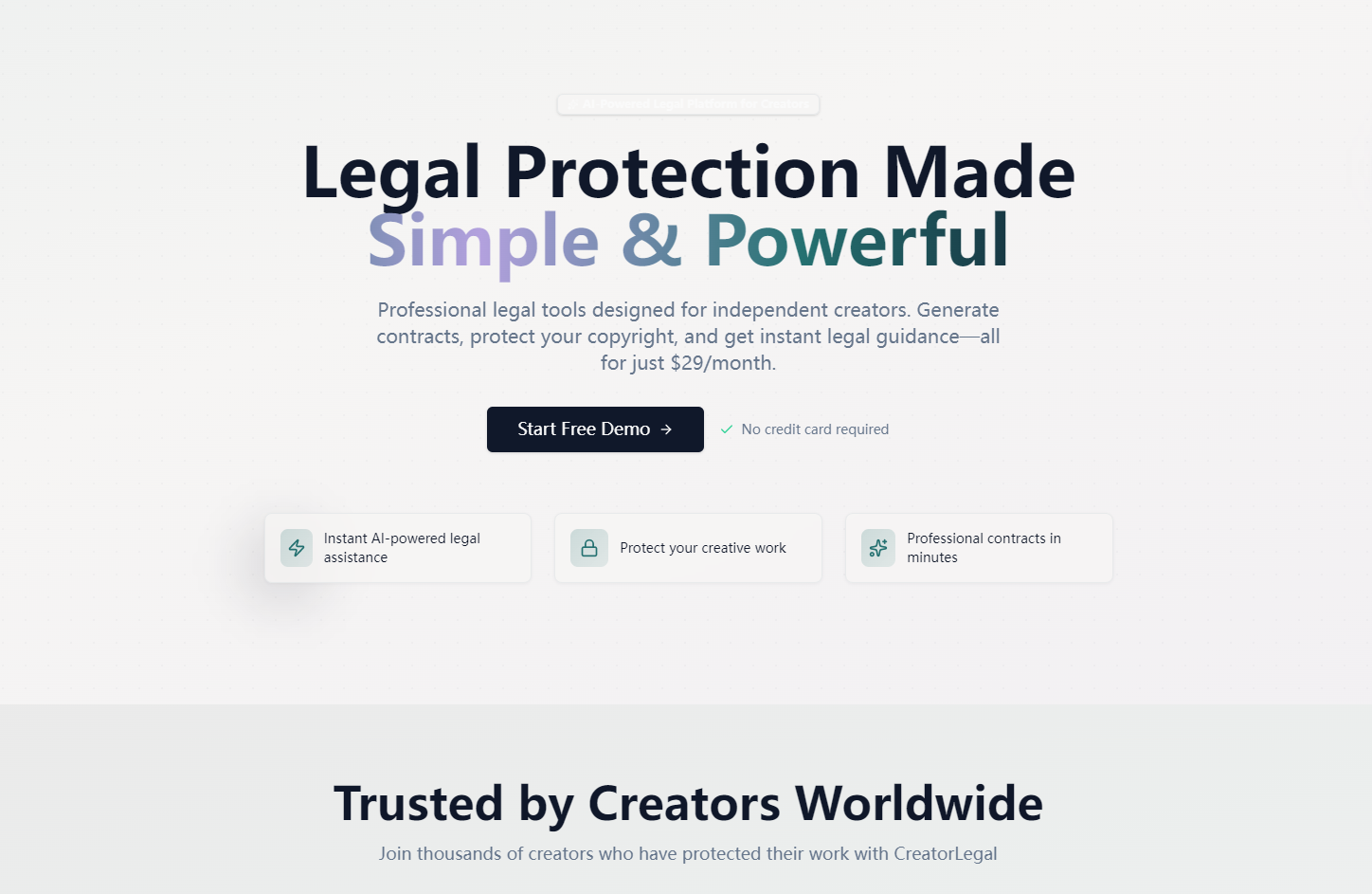
CreatorLegal is an AI-powered legal platform for creators: generate custom brand collaboration contracts, review existing contracts for risky clauses, detect unauthorized content use, navigate trademark registration, and get plain-language answers to legal questions—all in one intuitive, visually engaging interface.
How we built it
I started with user-centric design in Figma, mapping core workflows (contract generation, copyright scans) to prioritize ease of use. Built the frontend with React and Tailwind CSS, using Framer Motion for smooth animations (hover effects, progress trackers, chat bubbles). Backend logic with Node.js handled template rendering and real-time contract previews, while static sample data powered demo functionality for seamless user testing.
Challenges we ran into
Balancing visual polish (animations, interactive elements) with performance was tough—slower devices struggled with heavy animations, so I added graceful degradation to keep core features functional. Translating complex legal concepts into simple, creator-friendly language also required research to avoid misinformation while keeping explanations accessible.
Accomplishments that we're proud of
The split-screen contract generation tool (live preview + form inputs) works flawlessly, and users consistently praise the intuitive design—even those with no legal background feel confident using it. The color-coded risk indicators for contract review also make identifying problematic clauses quick and straightforward.
What we learned
I deepened my understanding of creator-specific legal needs (trademark eligibility, content usage rights) and how to translate technical legal rules into usable UI/UX. I also learned to prioritize performance over "flashy" animations—user experience trumps visual flair every time.
What's next for this project
First, integrate real copyright scanning APIs to connect with actual content platforms. Then, add user authentication for data persistence, expand contract templates for niche creator types (podcasters, digital artists), and partner with legal professionals to refine AI Q&A responses. Finally, explore tiered subscription options to scale access for larger creative teams.
Built With
- framer-motion
- javascript
- react
- tailwind-css

Log in or sign up for Devpost to join the conversation.