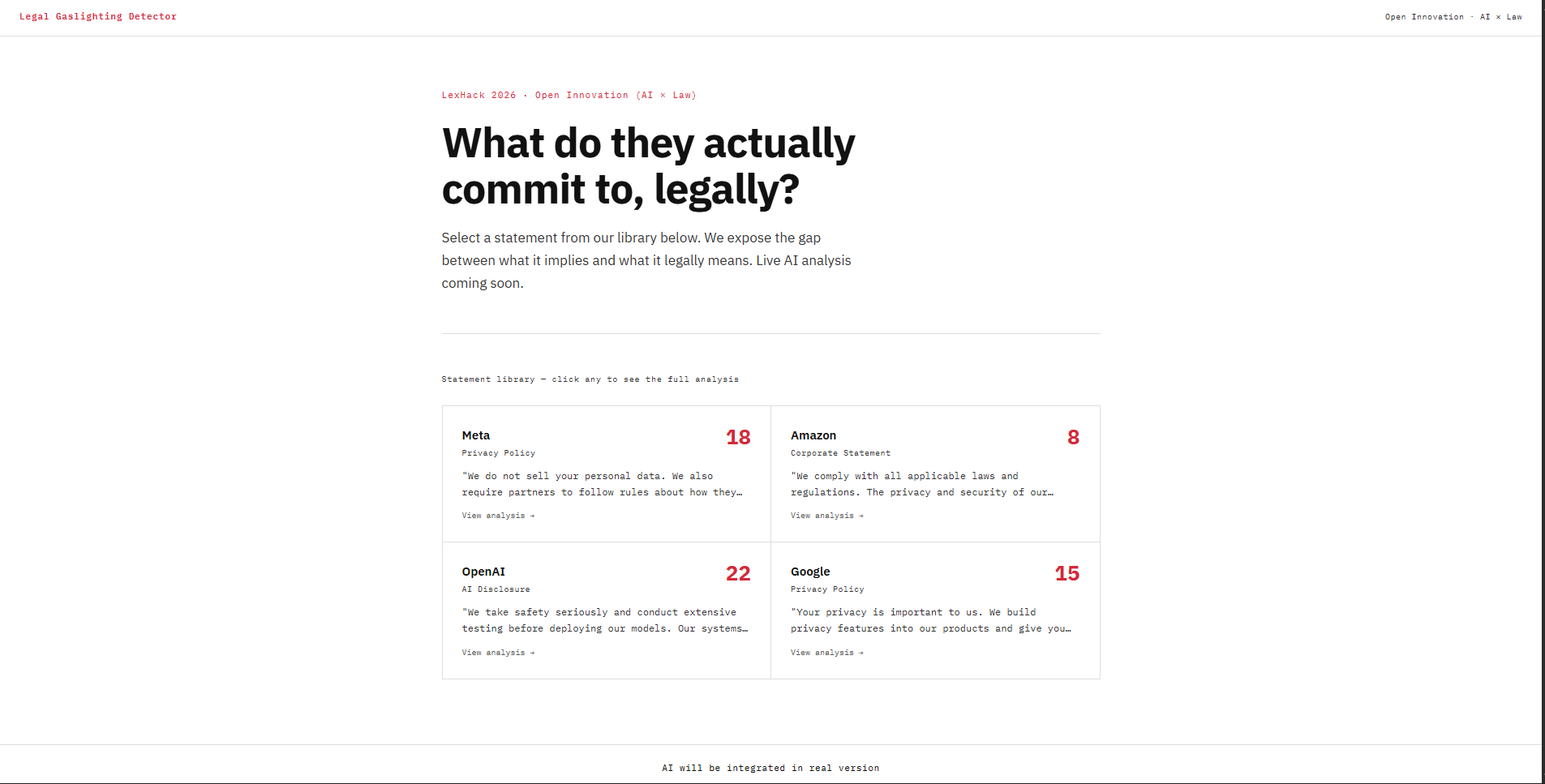
Inspiration: I kept seeing companies say things like "we don't sell your data" or "we take privacy seriously" statements that sound protective but legally mean nothing. No tool existed to call this out plainly. So I built one.
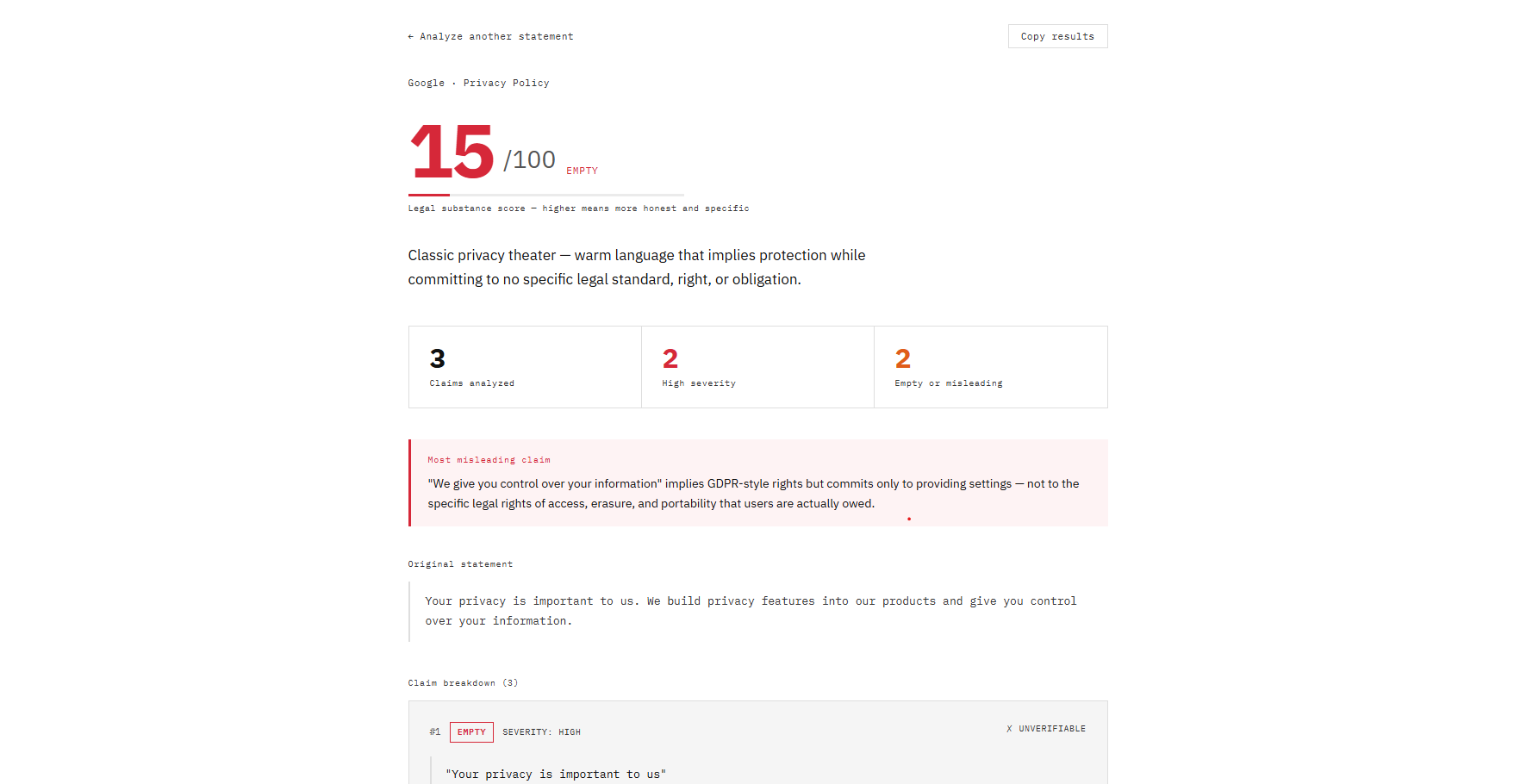
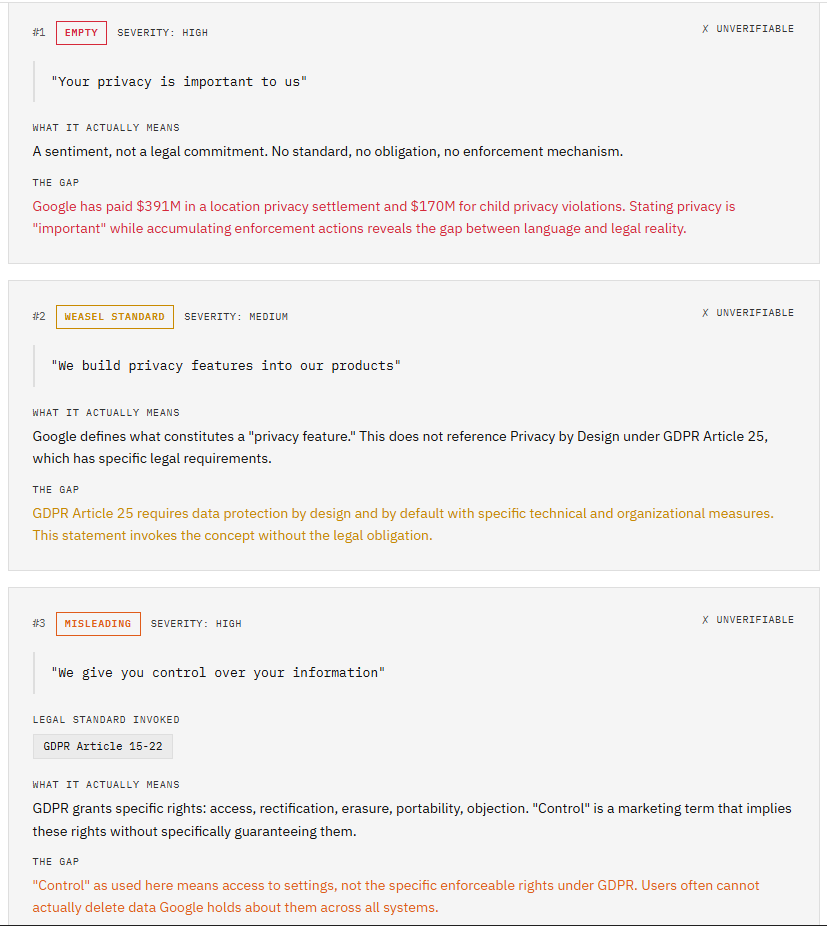
*What it does: * It analyzes any corporate or government statement and exposes the gap between what it implies and what it legally commits to. Each claim gets classified, scored, and explained in plain English with the specific law it invokes (or deliberately avoids).
How I built it: Single-page HTML frontend with an investigative design aesthetic. AI analysis via Groq with a prompt encoding real legal knowledge CCPA, GDPR, FTC Act Section 5. Pre-loaded library of verified real-world analyses.
Challenges i ran into: Getting the AI to reason about legal gaps specifically not just summarize. I had to encode statutory definitions directly into the prompt before the output was genuinely useful rather than generic.
Accomplishments that i am proud of: The claim taxonomy i built Empty, Misleading, Weasel Standard, Audit Theater, Substantive, Omission captures how corporate legal language actually works. The Meta analysis alone shows something most people have never seen explained: "we don't sell your data" is technically true and functionally false at the same time.
What i learned: The most powerful use of AI in law isn't replacing lawyers. It's making the gap between legal language and legal reality visible to people who aren't lawyers.
What's next for Legal Gaslighting Detector: Live analysis for any pasted statement. A browser extension that intercepts consent screens before you click agree. A public library journalists and regulators can cite. Statement change tracking over time.
Built With
- ai-safety
- civic-tech
- css
- groq
- html
- javascript
- legal-tech
- llm
- natural-language-processing
- next.js
- open-innovation
- postgresql
- rest-api
- tailwind-css

Log in or sign up for Devpost to join the conversation.