-
-
Legal App: legal consultations from your phone
-

Splash screen / branding
-
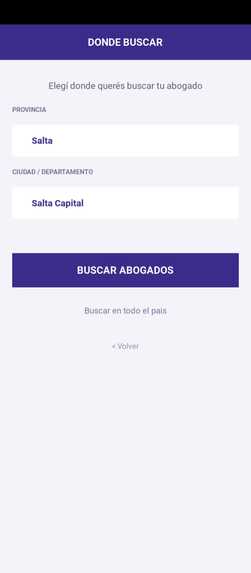
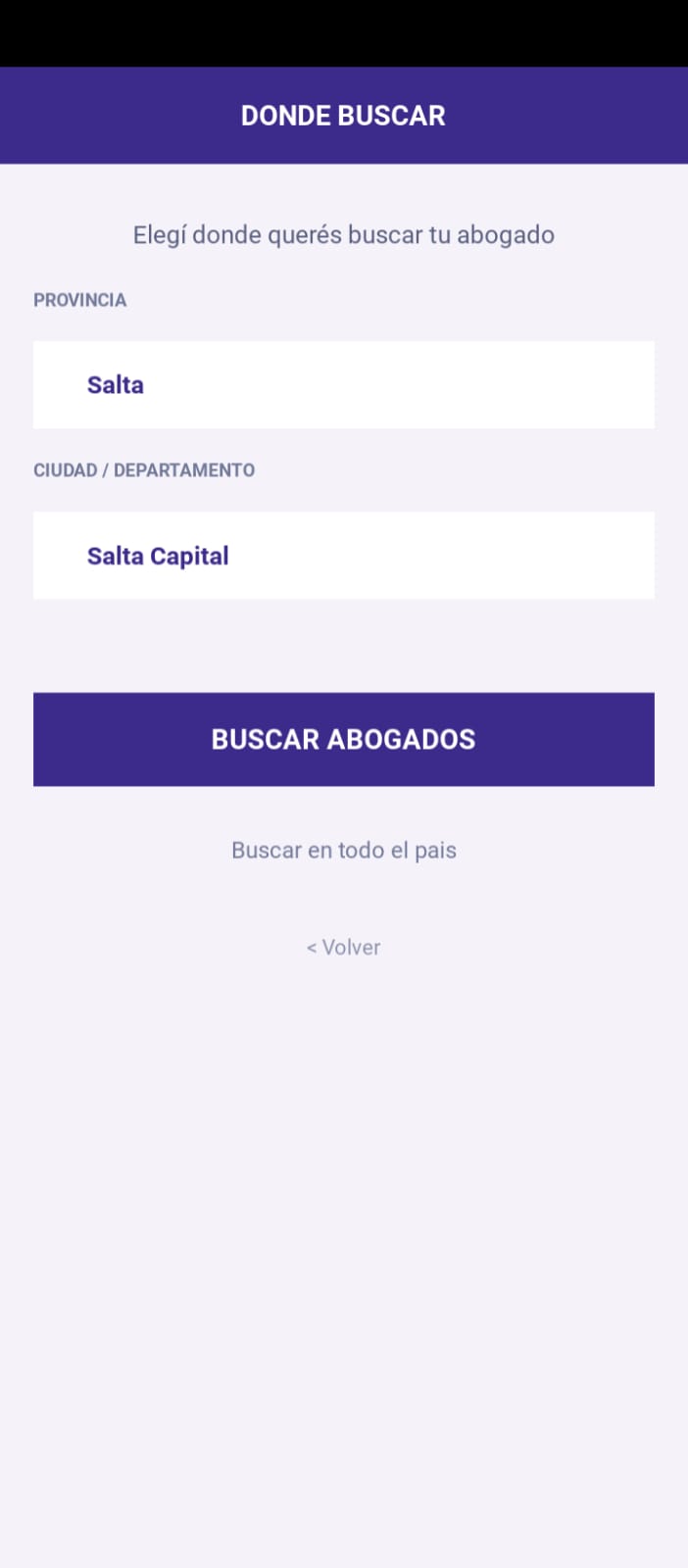
Choosing a lawyer to start a consultation
-
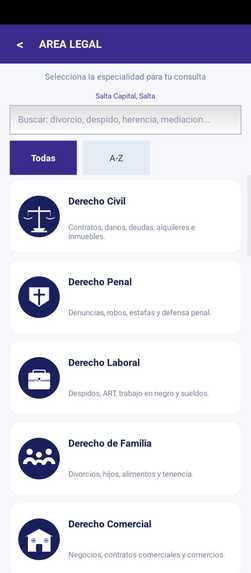
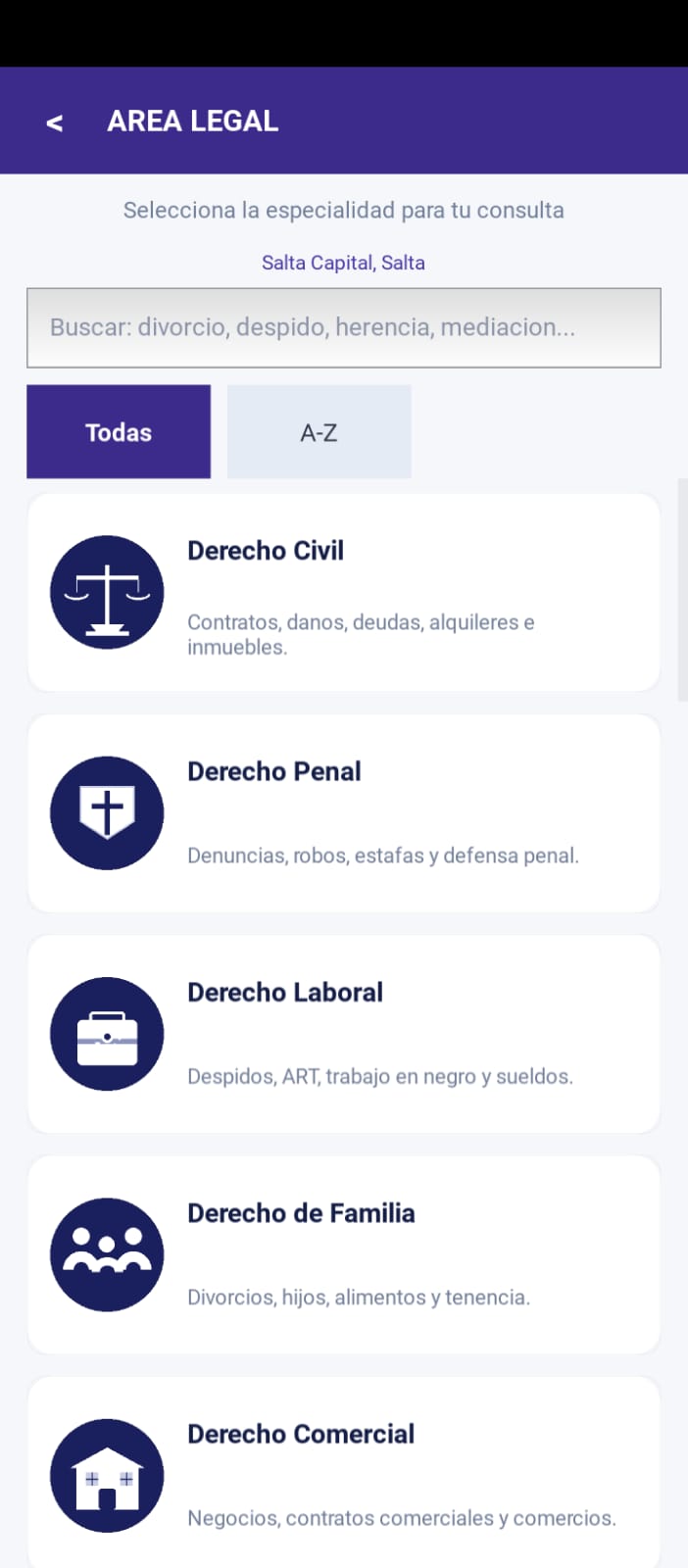
Choosing a legal specialty to start a consultation
-
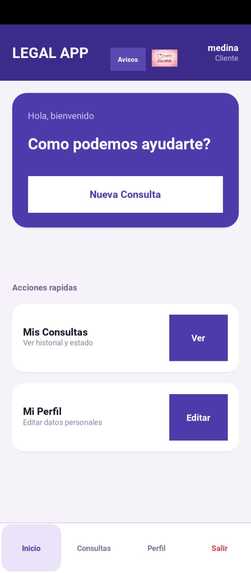
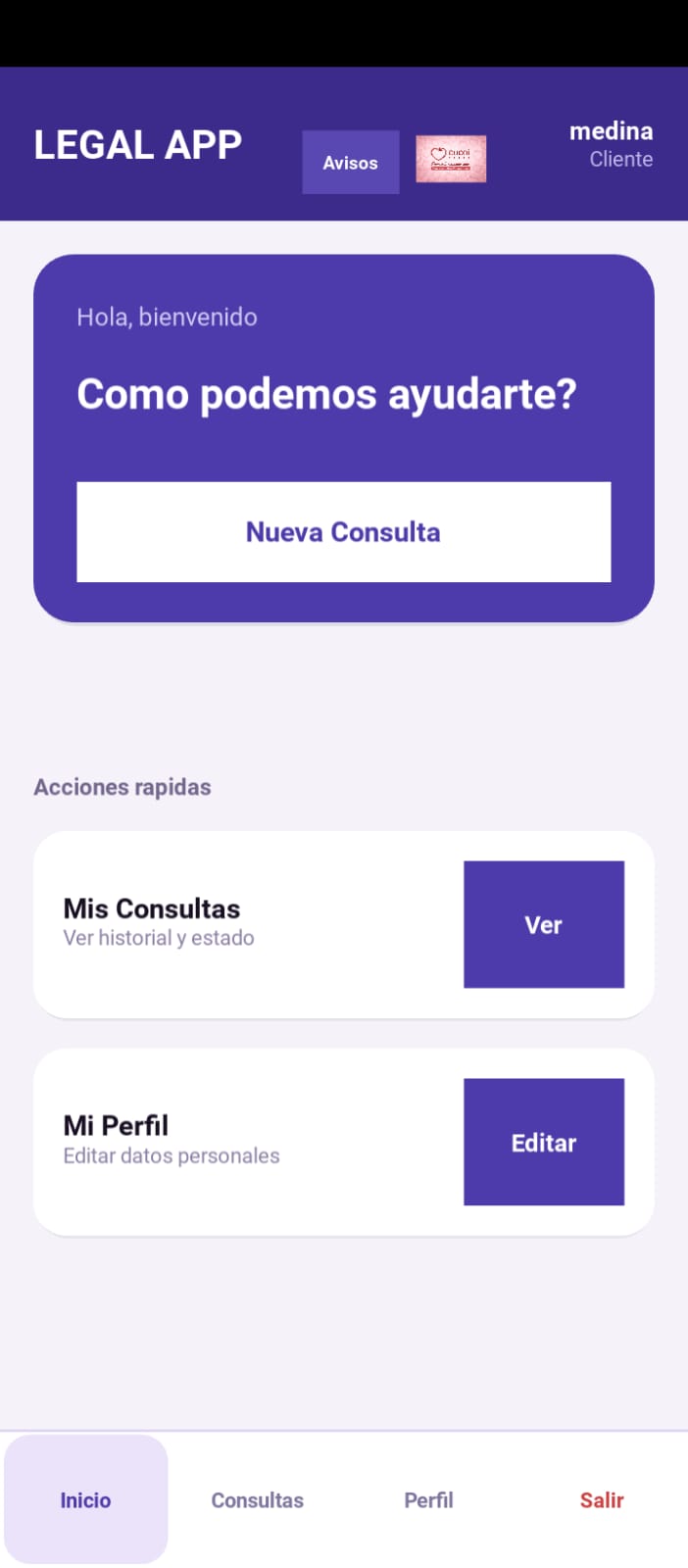
Client home screen to start a new consultation and check history
-
Legal App icon

Inspiration
Legal App was born to solve a very common friction: many people need legal help, but don't know who to contact, how to explain their case, how to send documentation, or how to quickly set up a consultation.
The idea was to build a simple, direct mobile app to connect clients with lawyers from their phone, with consultations by chat, video call, and urgent mode.
What it does
Legal App lets a person choose a legal area, find available lawyers, review profiles, and start a consultation by chat, video call, or urgent mode, paying directly from the app.
It also includes an experience for lawyers, where they can manage their profile, specialties, fees, and consultations received.
Legal App does not replace a lawyer's professional judgment or issue its own legal opinions. It works as a technology platform to connect clients and professionals.
How we built it
The app was built for Android using Python, Kivy, Buildozer, and python-for-Android. The backend uses Supabase for data and Firebase Auth for authentication. It also integrates Firebase Cloud Messaging for push notifications.
During development I used AI as a technical copilot to review code, interpret logs, debug errors, improve screens, and turn concrete problems into implementation tasks.
Challenges we ran into
One of the biggest challenges was going from an idea to a real app published on Google Play. That included designing mobile flows, authentication, user roles, lawyer profiles, payments, consultation history, terms, privacy, and stability on real Android devices.
There was also significant security work: access rules, backend validations, protection of sensitive data, and separation between client-side logic and critical operations.
Accomplishments that we're proud of
Legal App got published and approved on Google Play in August 2026. The app works as a real product, with client and lawyer flows, legal consultations, payments, files, history, and notifications.
What we learned
Turning a personal project into a real, published product surfaced problems that only show up with real users and real devices: session handling, native Android permissions, payment edge cases, and keeping a consistent experience across very different phones. We also learned how much a clear security model (access rules, data validation) matters once real people's information is involved.
What's next for Legal App
The next step is to strengthen monetization with RevenueCat, improve the premium experience, add growth metrics, and keep polishing the product's stability for more users.

Log in or sign up for Devpost to join the conversation.