-
-
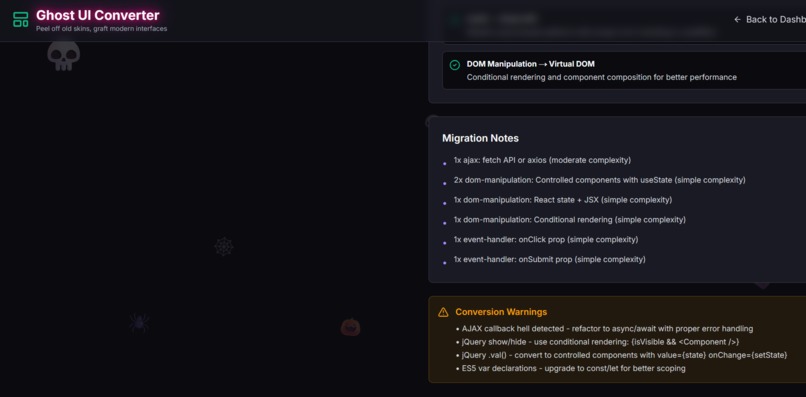
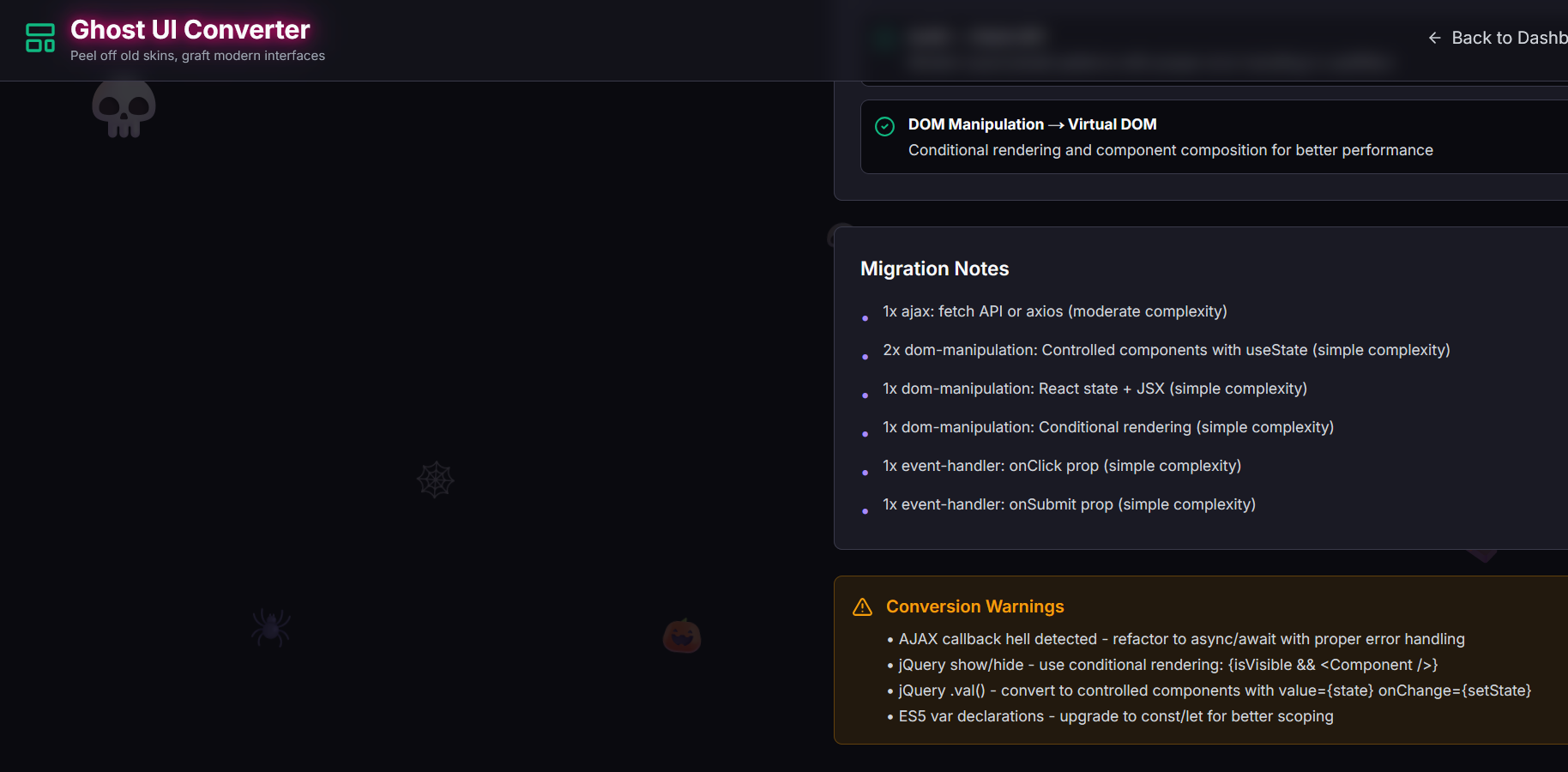
Ghost UI Convertor glimpse
-
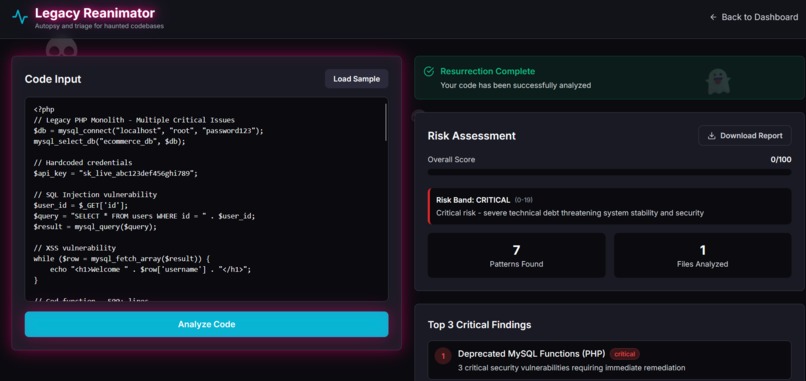
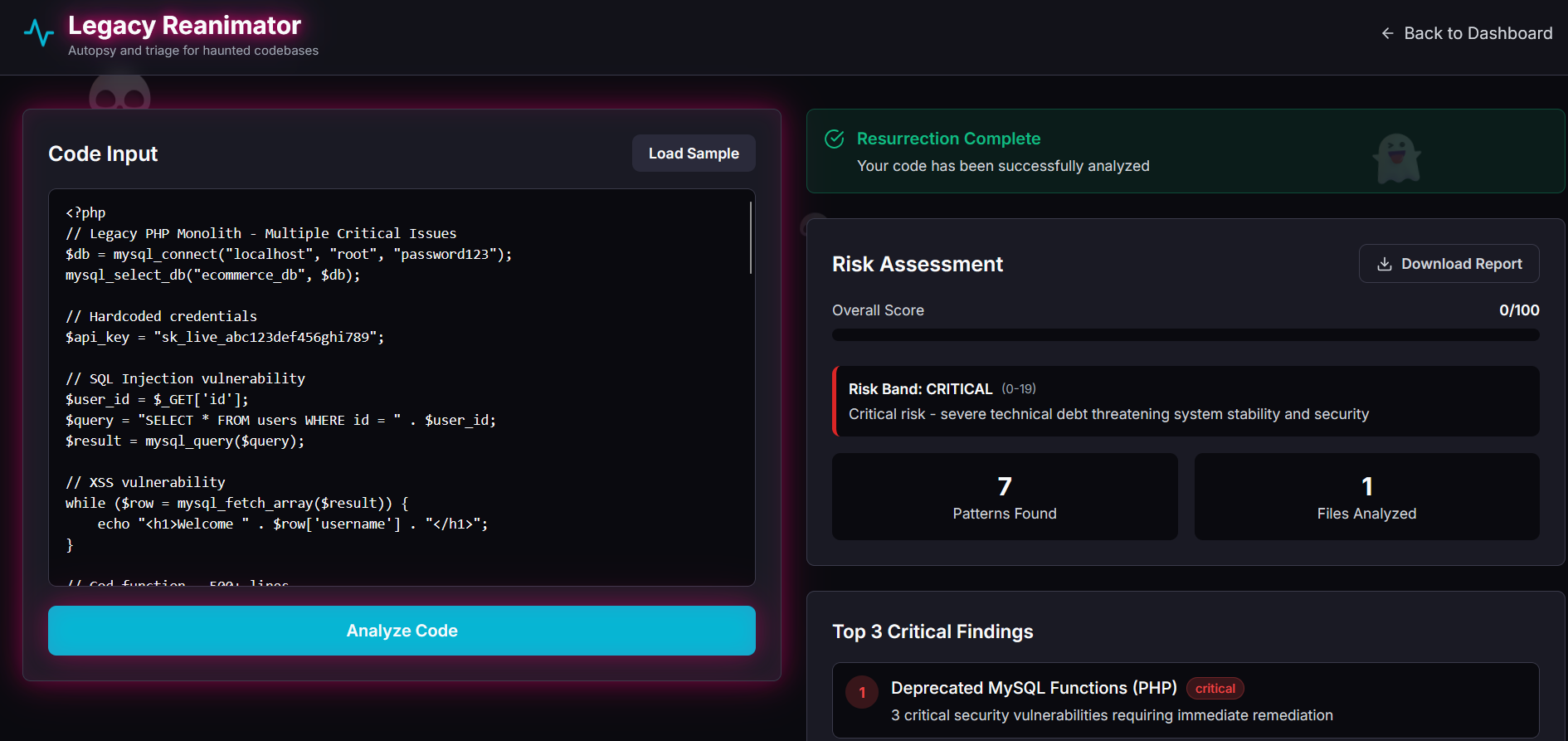
Legacy Reanimator
-
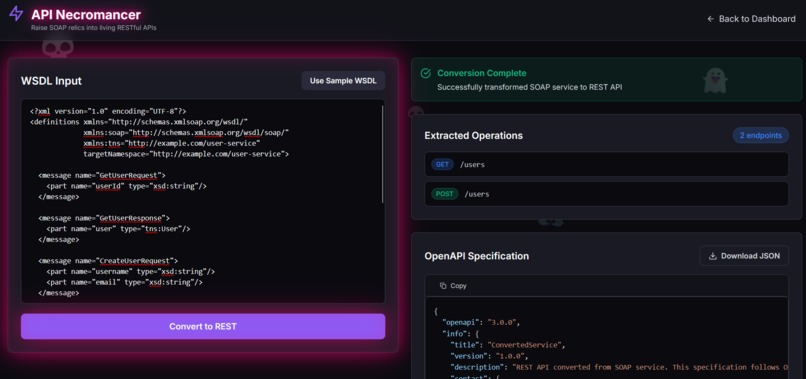
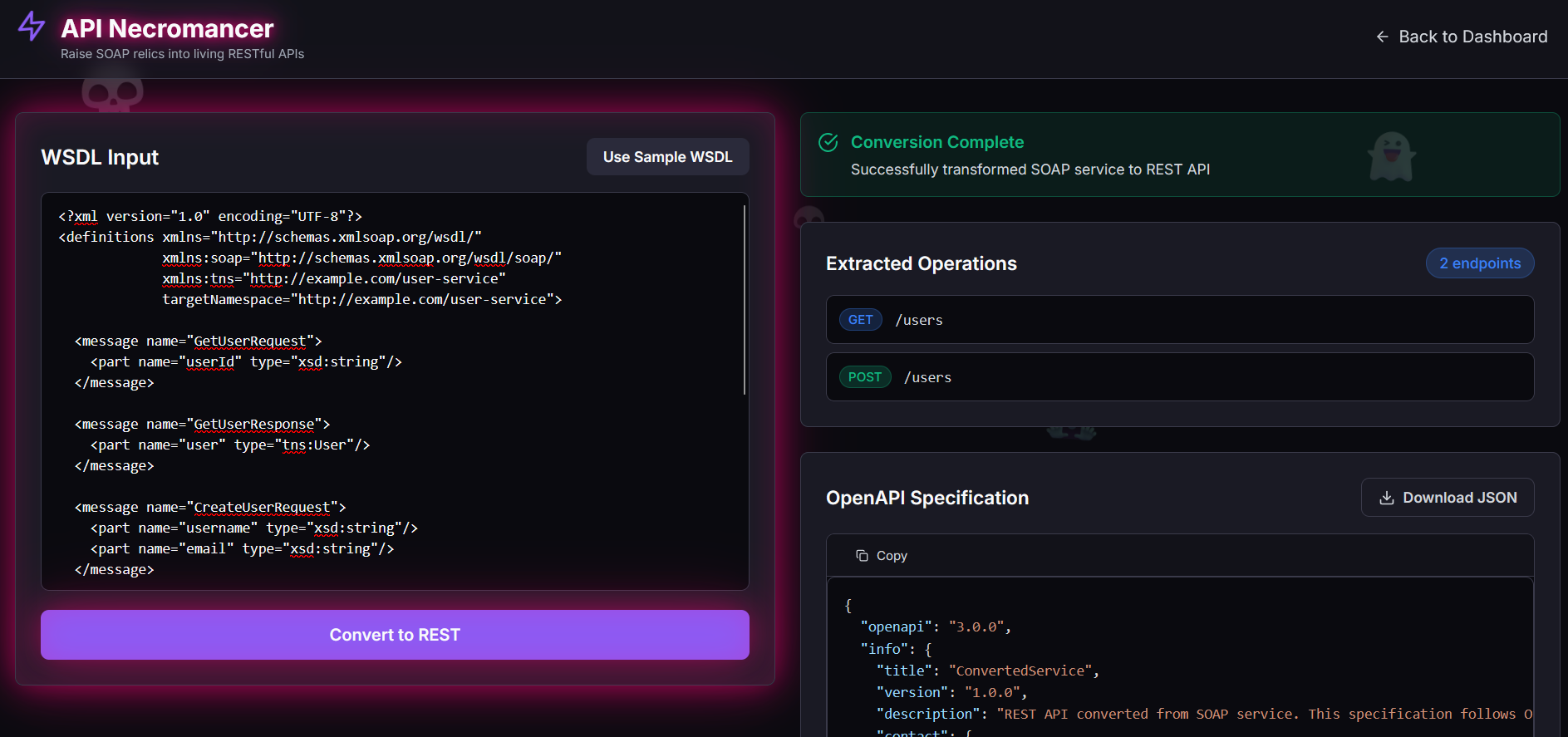
API Necromancer
-
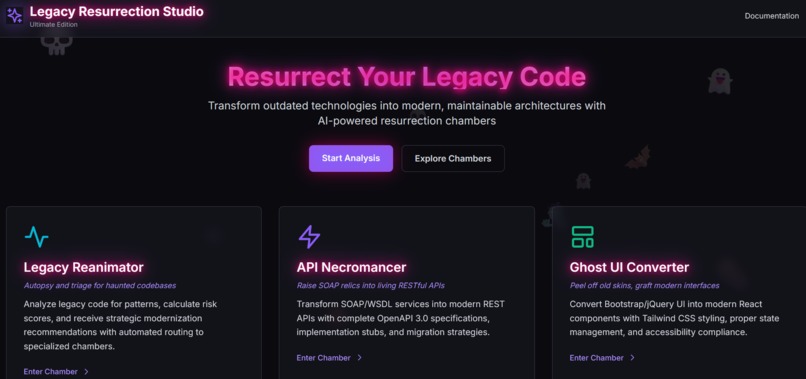
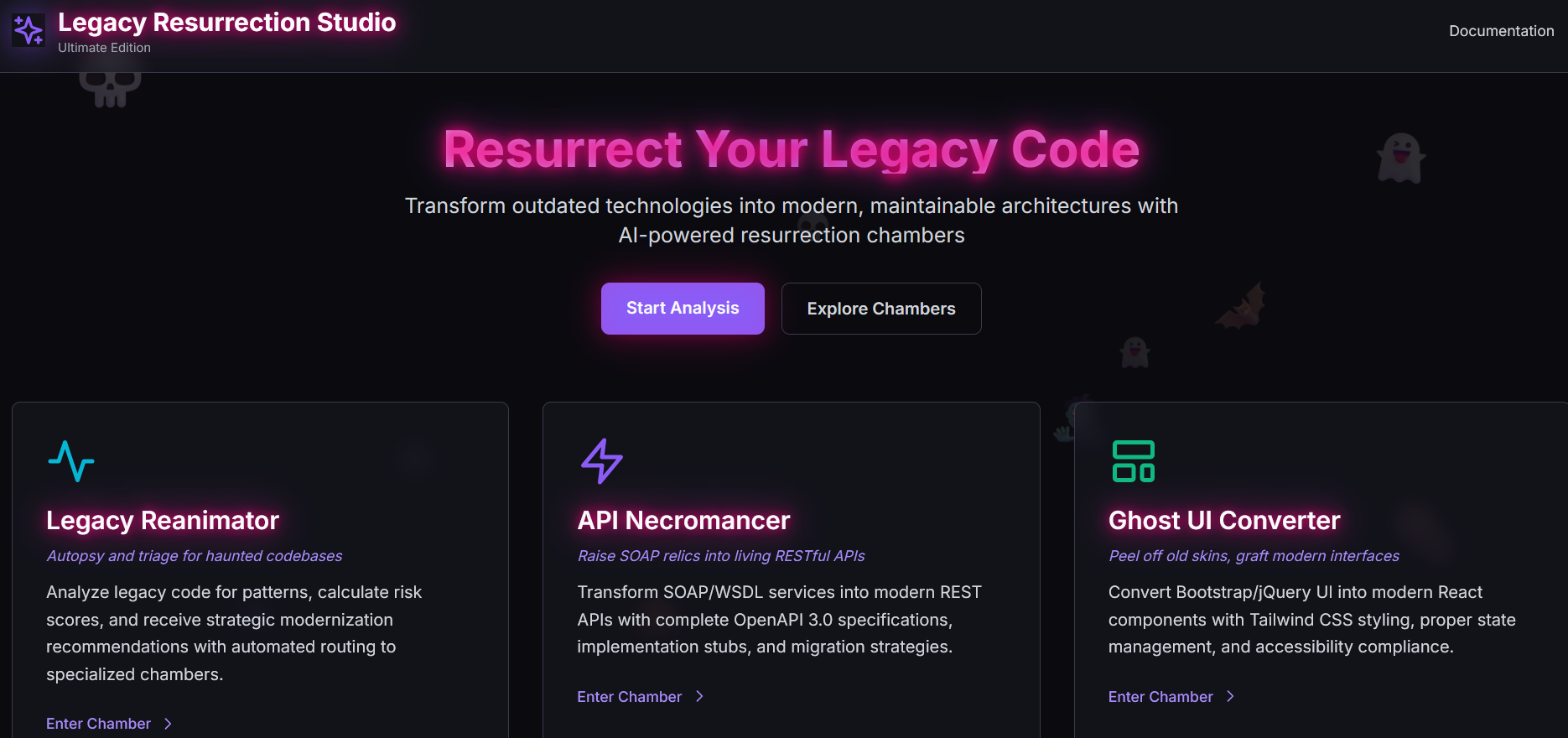
Homepage
Legacy Resurrection Studio – Project Story
What it does
Legacy Resurrection Studio is a three-chamber "necromancer's lab" for modernizing haunted legacy systems.
It helps engineers go from old PHP/jQuery/SOAP/Bootstrap systems to modern REST APIs and React UIs in minutes instead of weeks.
The Three Chambers
🔬 Legacy Reanimator
Analyzes legacy code (e.g. PHP + jQuery) and:
- Detects risky patterns (SQL injection, XSS, deprecated APIs, global state, etc.)
- Scores modernization risk
- Suggests which modernization chamber to use next
- Generates a downloadable migration report
⚡ API Necromancer
Takes SOAP/WSDL services and:
- Extracts operations and types from WSDL
- Maps them to REST endpoints
- Generates an OpenAPI 3.0 spec with schemas, responses, and examples
👻 Ghost UI Converter
Takes legacy Bootstrap + jQuery HTML and:
- Strips out jQuery, inline scripts, and Bootstrap classes
- Generates React + TypeScript + Tailwind components
- Uses a dark, spooky Kiroween theme with neon glows and ghostly icons
Together, these chambers form a mini migration pipeline:
Legacy code in → analysis → REST APIs + modern UI + migration plan out.
How we built it
Tech Stack
The project is built with:
- Next.js 14 + TypeScript (App Router)
- Tailwind CSS with a custom "necromancer" dark theme
- lucide-react for spooky-but-clean icons
Architecture
A modular architecture under:
src/lib/analysis– code scanning, risk scoring, routingsrc/lib/soap– WSDL parsing, SOAP → REST transformation, OpenAPI generationsrc/lib/ui– HTML parsing, jQuery/Bootstrap detection, React generation
Kiro as an Engineering Partner
Instead of just "asking Kiro for code", I used Kiro with:
Specs (/.kiro/specs)
analysis-spec.yaml– legacy patterns + risk scoring rulessoap-spec.yaml– WSDL parsing + REST mapping + OpenAPI rulesui-spec.yaml– Bootstrap → Tailwind mapping + jQuery → React hookstheme-spec.yaml– dark spooky palette + spacing + typographymigration-plan-spec.yaml– phased migration strategies
Steering Docs (/.kiro/steering)
code-conventions.md– TypeScript & structure guidelinesmigration-voice.md– how reports and recommendations should soundui-consistency.md– how every card/button/panel should look and feel
Hooks (/.kiro/hooks)
doc-sync.yaml– keep docs aligned with codetest-gen.yaml– generate test scaffolds for new logic
The Workflow
- Define behavior and constraints in specs
- Use Kiro to generate detectors, transformers, and UI components
- Refine with vibe coding sessions until everything compiled under TypeScript strict mode
- Wire up the three chambers as separate pages with a shared spooky UI
This let me build something that feels closer to an internal AWS migration tool than a quick weekend demo.
Challenges we ran into
1. Messy WSDL & SOAP edge cases
Realistic WSDLs can be deeply nested and inconsistent.
I had to iterate with Kiro multiple times to:
- Recursively resolve complex types
- Keep schemas readable
- Still output valid OpenAPI 3.0
2. Converting "dirty" HTML + jQuery → clean React
The Ghost UI Converter needed to:
- Remove
<script>,onclick="",$('#id').val()and friends - Map layout classes like
col-md-6→ Tailwind flex/grid - Preserve intent while changing structure
The hardest part was making sure the output was always valid JSX and matched the theme.
3. Consistency across 3 chambers
With three different tools in one app, it's very easy for the UI to feel stitched-together.
The ui-consistency.md steering doc became critical to:
- Keep headings, shadows, colors, and spacing identical
- Make the whole experience feel like one studio, not three separate tools
4. TypeScript strict mode everywhere
Running with strict mode forced me (and Kiro) to be disciplined:
- No implicit
any - Clear types for analysis results, routes, schemas
- Safer refactors as the chambers evolved
Accomplishments that we're proud of
✅ Building three fully working migration chambers in one polished app:
- Code analysis + reporting
- SOAP → REST + OpenAPI
- Legacy UI → React + Tailwind
✅ Using Kiro beyond simple prompting:
- Specs, steering docs, and hooks living in
/.kiro - Reproducible workflows, not just "magic outputs"
✅ Producing real artifacts developers can export and use:
- Migration reports
- OpenAPI 3.0 JSON
- React components that drop into a Next.js app
✅ Delivering a UX that is:
- Dark, spooky, and on-theme for Kiroween 🎃
- Still clean, accessible, and readable
✅ Going from bare repo → working studio in roughly two focused days with Kiro as an accelerator
What we learned
1. Specs + steering > ad-hoc prompts
The moment I started treating Kiro like a teammate that needs a spec and coding standards, the quality of the output jumped dramatically.
2. AI shines at structured transformation tasks
Pattern detection, mapping SOAP → REST, Bootstrap → Tailwind – these are all highly structured tasks that are perfect for AI-assisted tooling.
3. Consistency doesn't have to be painful
Instead of manually tweaking every button and card, I locked the system design into a steering doc and let Kiro enforce it.
4. Small UX details matter for trust
Copy buttons, skeleton loaders, empty states, safe error messages – they don't add many lines of code, but they make the app feel like a tool you'd actually use at work.
What's next for Legacy Resurrection Studio
Short term:
- Add a database migration chamber for schema analysis and modernization
- Expand Ghost UI Converter to support more legacy frameworks (AngularJS, Backbone, etc.)
- Generate test scaffolds alongside migration plans to help teams validate changes quickly
Longer term:
- Turn this into a SaaS or internal tool that teams can point at real repositories
- Add collaboration features: shared projects, comments on reports, progress tracking
- Build out a community pattern library for legacy smells and migration recipes
The Goal
For Legacy Resurrection Studio to become a serious starting point for teams facing the "we have a huge legacy system, where do we even begin?" problem—and to show how far you can go when you treat Kiro as part of the engineering team.
Built with 💀👻 for Kiroween 2025
Built With
- eslint
- git
- github
- javascript
- kiro
- kiro-ai
- lucide-react
- markdown
- nextjs
- node.js
- openapi
- react
- react-syntax-highlighter
- rest-api
- soap
- tailwind-css
- typescript
- vercel
- wsdl
- xml2js
- yaml


Log in or sign up for Devpost to join the conversation.