Inspiration
After watching loved ones struggle to navigate a family member’s estate—sifting through scattered documents, unorganized assets, and unknown digital accounts—I knew there had to be a better way. Estate planning felt intimidating, exclusive, and overly complex for everyday people. I wanted to create something that removed barriers: no logins, no jargon, just a straightforward platform to protect what matters most.
What it does
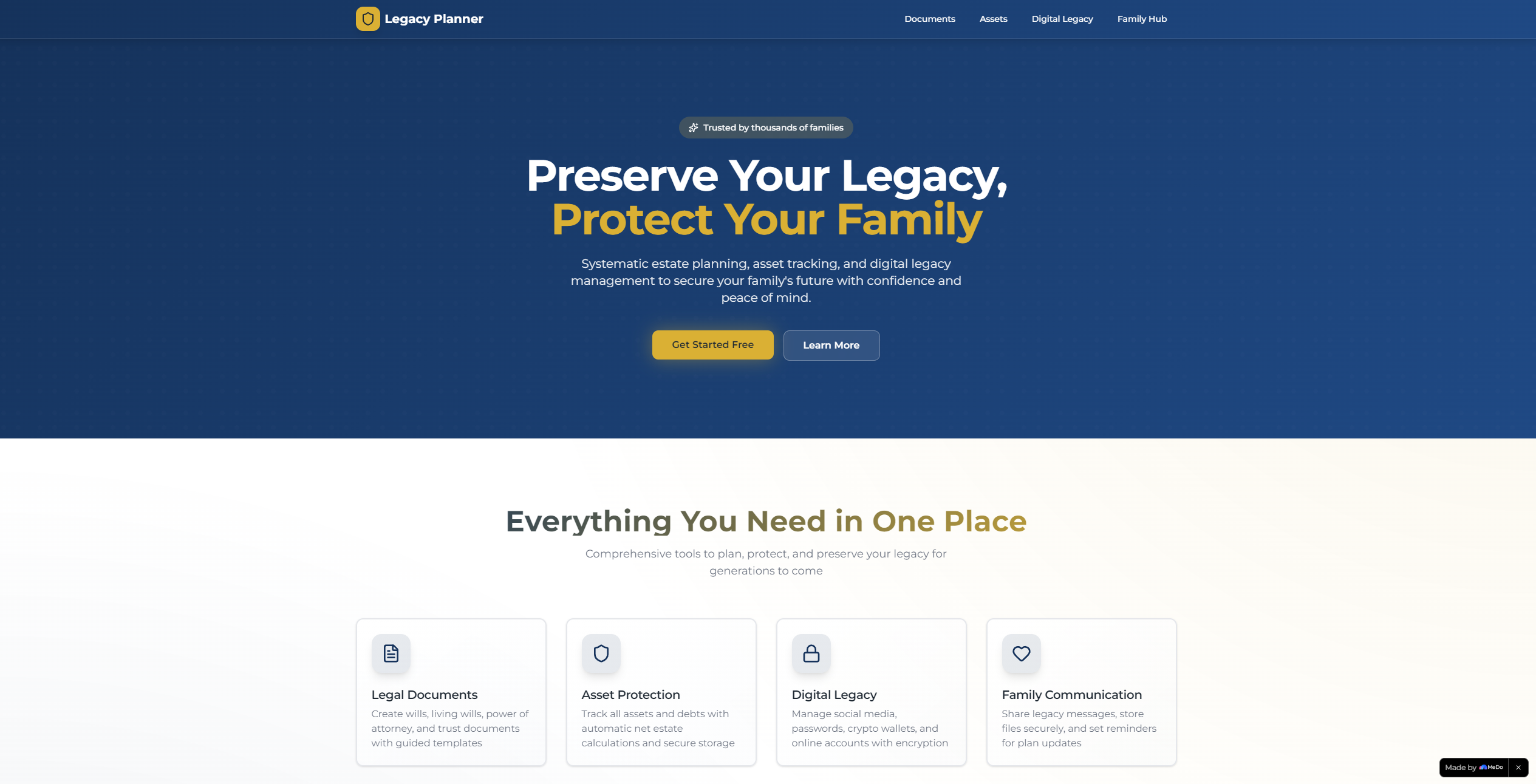
Legacy Planner centralizes end-of-life planning: create legally-aligned wills/trust documents, track physical/digital assets/debts, manage digital legacy (crypto, social media, passwords), and share wishes with family—all in one intuitive space. Every feature is designed for clarity, with thoughtful UI that works for all ages.
How we built it
I started with core user flows: mapping how someone would create a will, log an asset, or share a legacy message. Using React for the frontend, I built glassmorphic UI components with custom CSS animations (fade-ins, hover states, count-up counters). For backend logic, Node.js/Express handled data calculations (net estate value = Σassets − Σdebts) and PDFKit generated exportable documents. Firebase stored demo data to keep access open (no auth required).
Challenges we ran into
Balancing visual polish (animated backgrounds, glassmorphism) with accessibility was tough—we had to ensure animations respected prefers-reduced-motion settings. Also, building PDF export that matched legal document formatting required fine-tuning PDFKit to align with US/UK estate standards. Keeping the platform fully functional without logins meant rethinking data persistence (client-side storage for edits, no server-side user accounts).
Accomplishments that we're proud of
We created a platform that’s both beautiful and functional: glassmorphic design that feels premium but not overwhelming, real-time financial calculations with satisfying animations, and a login-free experience that makes estate planning accessible to everyone. Most importantly, every feature works as intended—no broken buttons, no empty states, just a seamless experience.
What we learned
We learned that accessibility and simplicity beat complexity every time. Senior users valued clear typography and intuitive navigation over flashy features, so we prioritized readability and reduced friction. We also discovered how powerful "no login" access is—users engage more when they don’t have to create an account. Legal compliance for estate documents taught us to balance flexibility with clear, standardized templates.
What's next for this project
First, we’ll add a pet care planning module (a top request from users) to document care instructions for furry family members. Next, we’ll expand legal template support to cover more European jurisdictions, and integrate secure family notification tools (simulated now, but real email/SMS next). Finally, we’ll add mobile optimization for on-the-go updates—making legacy planning even more flexible.

Log in or sign up for Devpost to join the conversation.