-
-
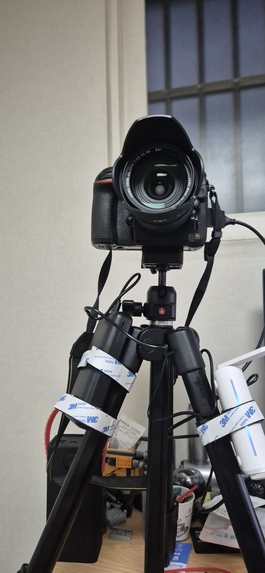
The Final Prototype
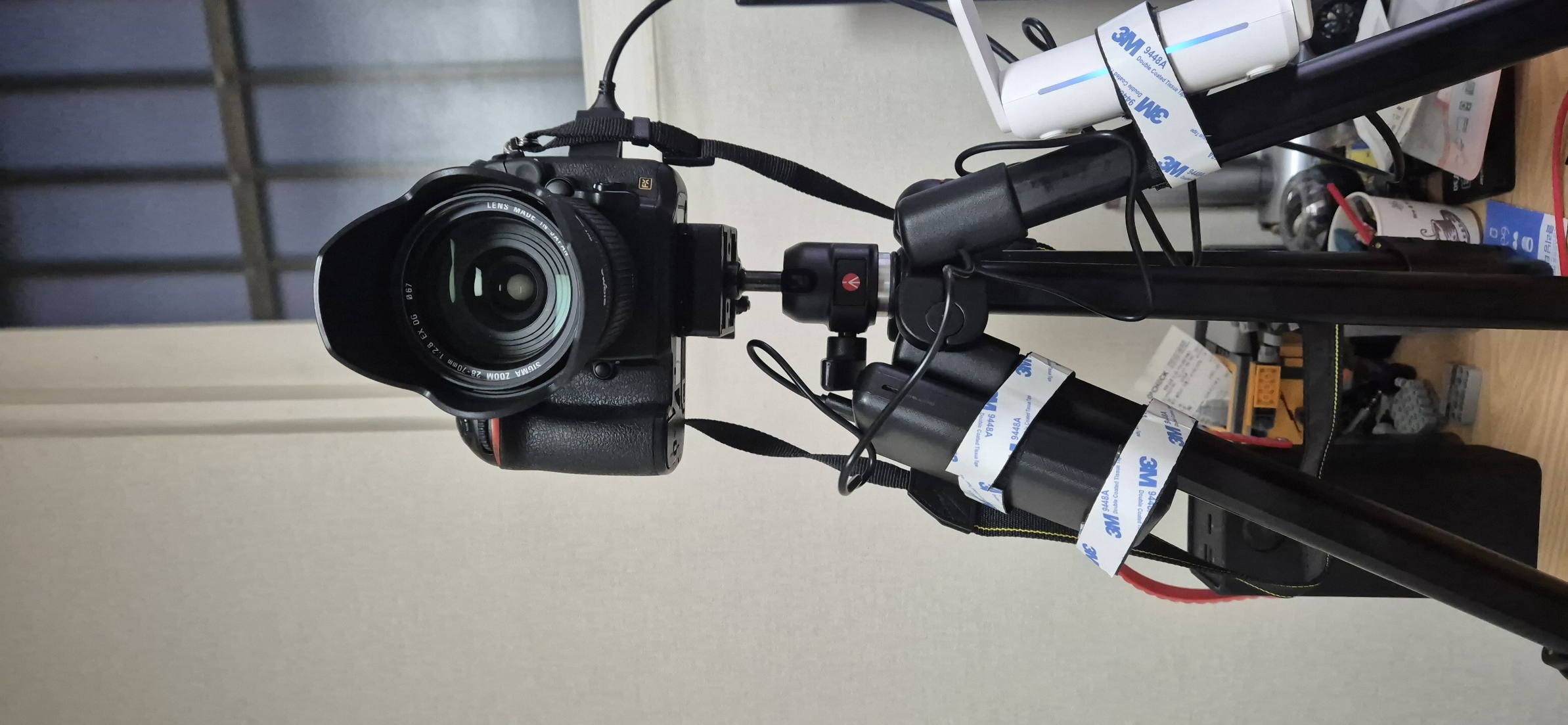
Inspiration
Modern mirrorless cameras make wireless control, live view, and fast image preview feel natural. Older DSLRs still offer excellent image quality and mechanical value, but their workflows often depend on desktop software or wired connections. We wanted to explore whether an older Nikon D810 could gain modern wireless convenience without modifying the camera itself.
What it does
Legacy DSLR Remote Control turns a Nikon D810 into a wireless field camera system. Users can access live view, autofocus, shutter control, captured-image preview, and session-aware recovery from a mobile or desktop browser through a GL.iNet Opal router. The current prototype focuses on the Nikon D810, with support for more cameras planned later.
How we built it
The D810 connects to the Opal router through USB/PTP. ddserver handles the low-level camera transport, while a camera bridge coordinates Nikon commands, sessions, live view, and image delivery. WebSocket is used for live-view streaming, while CGI endpoints provide browser-facing actions and JPEG delivery. Session management, repair units, guardian processes, locks, and runtime observation were added to keep the system usable during long-running field operation. Codex was used as an active engineering collaborator for investigation, implementation, debugging, optimization, and documentation. The developer remained responsible for hardware operation, architecture decisions, testing, and final validation.
Challenges we ran into
The biggest challenges were working across a physical camera, USB/PTP transport, an OpenWrt router, and a browser at the same time. We had to diagnose inconsistent camera responses, separate live-view and ordinary camera sessions, recover degraded connections, and reduce memory usage on the small router. Image delivery also required balancing JPEG size, PTP transfer behavior, RAM usage, and wireless throughput.
Accomplishments that we're proud of
We built a working browser-controlled wireless camera prototype around a legacy Nikon D810. Live-view performance improved from an early approximately 2 FPS baseline to approximately 20 FPS in normal operation, with a measured peak of 26.3 FPS. The current 9MP JPEG preview path completes end-to-end delivery in approximately 5.2 seconds under the verified RAW + Fine JPEG configuration. The system also includes numbered sessions, runtime observation, recovery behavior, and a documented AI-assisted development process.
What we learned
Hardware-backed software requires continuous verification on the real device. A command returning success does not always mean that the camera completed the intended operation. We learned to treat camera state, transport state, session state, and UI state as separate systems that must be observed and synchronized. We also learned that AI is most valuable when the developer remains responsible for judgment, testing, and accountability.
What's next for Legacy-DSLR-Remote-Control.
The project is currently an alpha-stage prototype focused on the Nikon D810. Next, we plan to improve installation and packaging, support additional cameras, expand remote image-transfer workflows, and make the system easier for other users to reproduce. The long-term goal is to provide a practical compatibility layer that gives legacy cameras a more modern wireless workflow.
Built With
- cgi
- css
- ddserver
- gl.inet-opal
- gpt-5.4
- gpt-5.4-mini
- gpt-5.6-sol
- html
- javascript
- lua
- nikon-d810
- openai-codex
- openwrt
- tailscail
- usb/ptp
- websocket

Log in or sign up for Devpost to join the conversation.