Inspiration
As someone who’s always hated wasting food (and eating boring leftover meals!), I noticed how many friends and family toss out perfectly good food because they lack ideas for repurposing it. I wanted to create a tool that makes reducing food waste easy, accessible, and creative—no fancy cooking skills required.
What it does
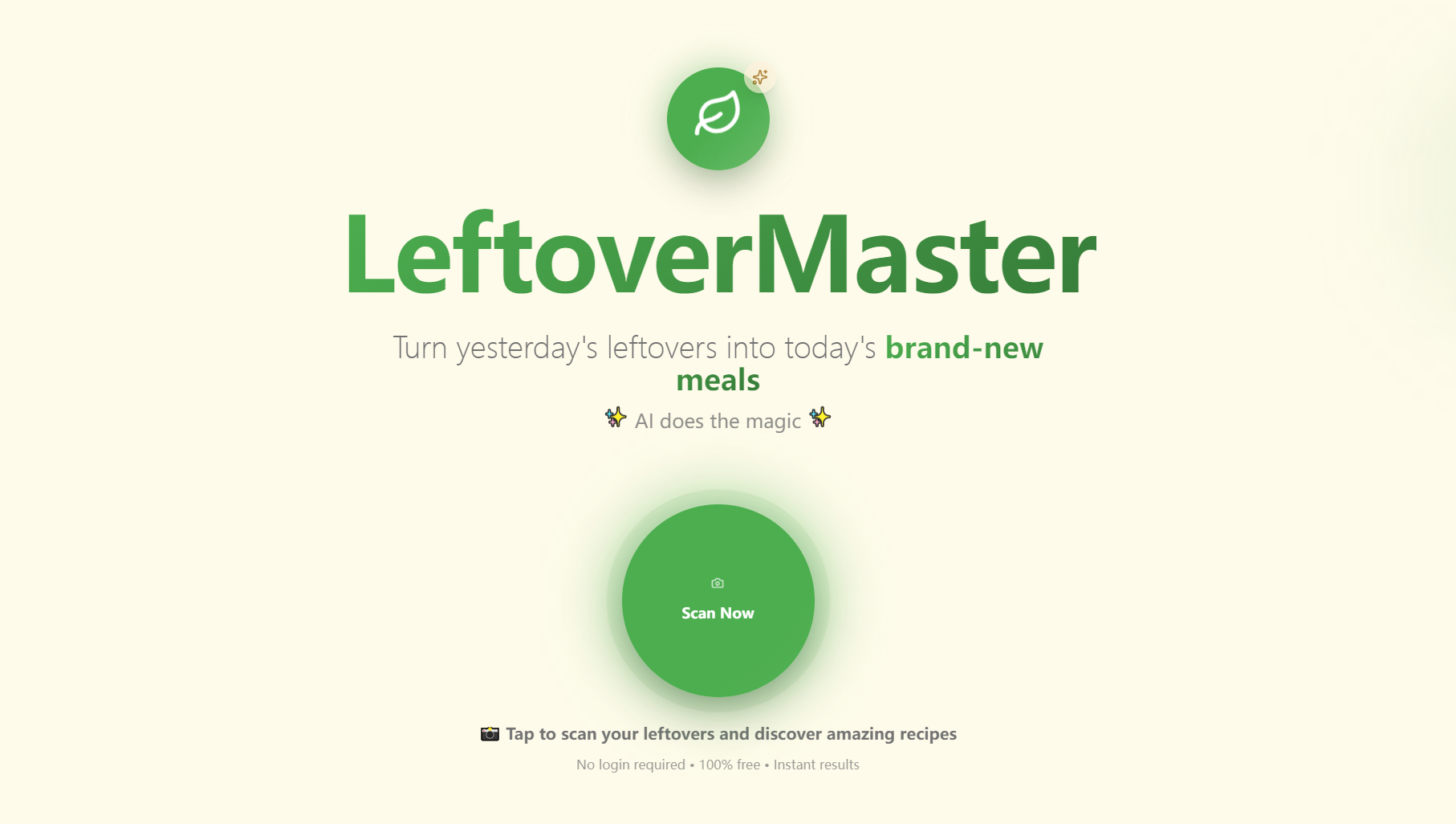
LeftoverMaster lets users snap a photo of their leftovers; AI identifies the food, then generates 3-5 creative new recipes tailored to common kitchen tools. It also provides custom reheating instructions (microwave/oven/air fryer/stovetop) and clear storage/safety guidelines, including visual timelines for safe consumption.
How we built it
I started by mapping core user needs (photo capture, AI recognition, recipe generation, safety guidance) and designing a simple, card-based UI with a fresh green/cream color palette. I used React for the front end, TensorFlow for AI image recognition, and AWS for backend hosting. I integrated the Camera API for photo capture and built PWA functionality to enable offline access to basic guides after the first launch.
Challenges we ran into
The biggest hurdle was fine-tuning the AI to recognize varied leftover dishes quickly (within 1-2 seconds) and accurately—poor lighting or odd angles often led to misidentification. I also had to balance offline functionality with keeping the app lightweight, and ensure food safety guidelines were accurate and easy to understand for everyday users.
Accomplishments that we're proud of
We built an app that’s 100% accessible without logins, loads instantly, and delivers AI recognition results in under 2 seconds. It’s fully responsive on phones/tablets, and the recipe generator consistently creates creative, doable meals (e.g., roasted chicken → salad/sandwich/soup) that users actually want to make. Most importantly, it puts food waste reduction at the forefront without feeling preachy.
What we learned
I deepened my skills in AI image recognition and PWA development, and gained a better understanding of translating technical food safety data into user-friendly visuals. I also learned how to prioritize core functionality (speed, accuracy, simplicity) over nice-to-have features to keep the app focused on its mission.
What's next for this project
While the first release focuses on core functionality, I want to add support for more regional cooking styles, expand the AI’s recognition library to include more niche leftovers, and integrate basic nutritional info (calories, macros) for users who track that. I also plan to refine the offline content library to include more preloaded recipes and tips.
Built With
- amazon-web-services
- javascript
- react
- tensorflow

Log in or sign up for Devpost to join the conversation.