LeftoverGo — Smart Food Rescue Marketplace Project Overview
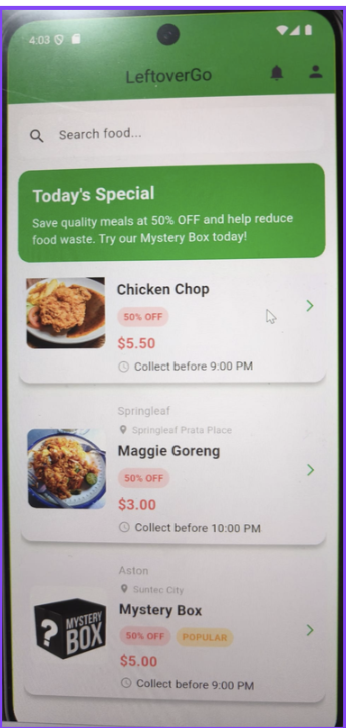
LeftoverGo is a mobile application built using Flutter that helps reduce food waste by connecting food businesses with consumers looking for affordable meals.
Restaurants, bakeries, cafés, supermarkets, and convenience stores often throw away perfectly edible food at the end of the day because it cannot be sold the next day. LeftoverGo allows these businesses to upload unsold food items at discounted prices so nearby users can purchase and collect them before closing time.
The app benefits:
Businesses → reduce losses and waste Consumers → buy cheaper food Environment → less food thrown away The Main Problem Current Situation in Singapore
A large amount of food is wasted daily from:
Bakeries Bubble tea shops Cafés Supermarkets Hotels Buffets
Most unsold food:
Is still edible Gets thrown away due to expiry policies Causes financial loss Contributes to environmental pollution
At the same time:
Students and workers want affordable meals Inflation and food prices are rising Proposed Solution
LeftoverGo acts like a:
“Food rescue marketplace” “Discounted food finder” “GrabFood for surplus food”
Businesses upload leftover items before closing time, and users nearby can purchase them at reduced prices.
Example:
A bakery has 10 unsold sandwiches at 8 PM Instead of throwing them away: They upload them on LeftoverGo Users nearby receive notifications Customers reserve and collect them How the App Works User Side Flow Step 1 — User Opens App
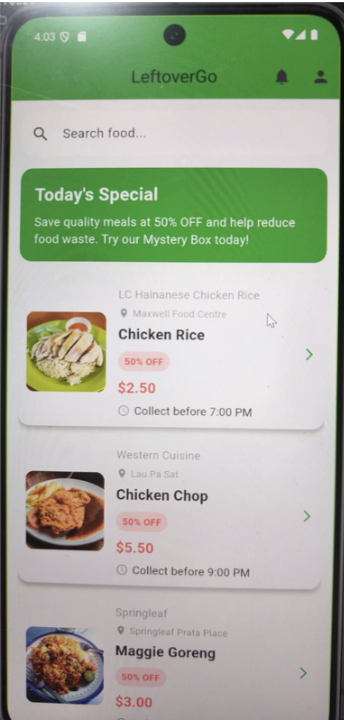
The app shows:
Nearby discounted food Distance from user Discount percentage Collection timing
Example listings:
50% off bread $3 sushi set $2 bubble tea $5 meal box Step 2 — Browse Nearby Stores
Users can:
Filter by category Search nearby food View ratings/reviews View collection deadline Step 3 — Purchase Food
Users:
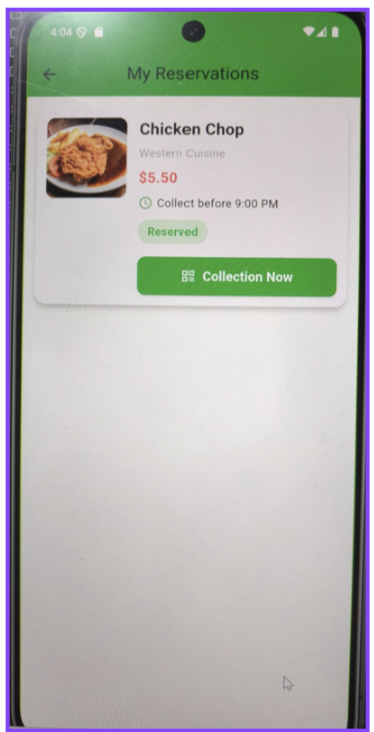
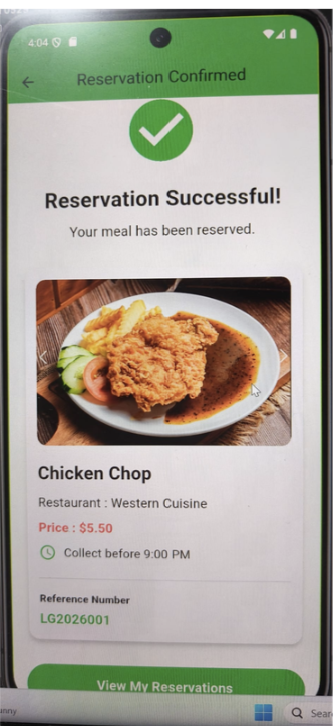
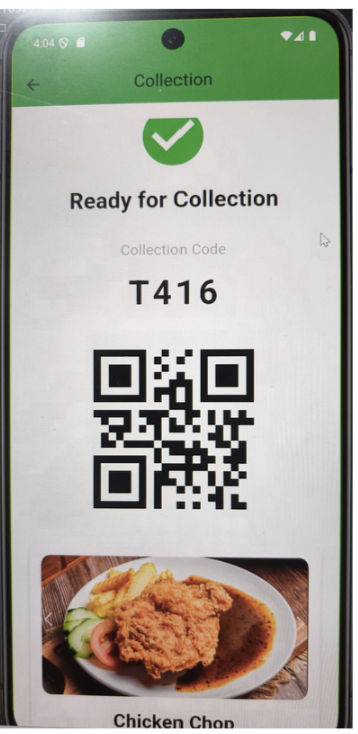
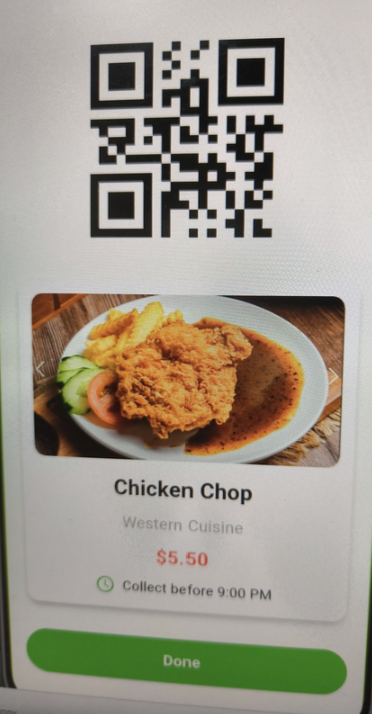
Reserve item Make payment (prototype can simulate payment) Receive QR code confirmation Step 4 — Collection
At the store:
Staff scans QR code User collects food Order completed Merchant Side Flow Step 1 — Merchant Uploads Unsold Food
Businesses input:
Food name Original price Discounted price Quantity left Pickup timing
Example:
Item Original Discount Croissant Box $12 $5 Sushi Set $8 $3 Step 2 — System Notifies Nearby Users
The app:
Uses GPS/location services Sends push notifications
Example: “Bakery near you has 70% off pastries!”
Step 3 — Merchant Confirms Pickup
Merchant scans customer QR code and updates order status.
Core Features
- GPS Location Services
Shows nearby food deals using maps.
Flutter Tools Google Maps API Geolocator package
- Real-Time Food Listings
Businesses update listings instantly.
Backend Firebase Firestore
- Push Notifications
Alerts users when:
New deals appear Pickup timing is near
- QR Code Collection System
Reduces fraud and simplifies collection.
Flutter Packages qr_flutter mobile_scanner
- Sustainability Dashboard
Shows:
Food saved CO₂ reduced Money saved
This is very strong for presentation.
Example: “You saved 15 meals and reduced 10kg CO₂ emissions.”
Why Businesses Would Use It Current Problem for Businesses
Unsold food = losses.
Example: A bakery throwing away:
20 pastries/day Worth $100/day
Monthly loss:
~$3000
With LeftoverGo:
Recover partial revenue Reduce waste disposal costs Improve eco-friendly branding Revenue Model (How the Business Earns Money)
- Commission Fee
Take 5–10% per order.
Example:
User buys $5 food LeftoverGo takes $0.50
- Merchant Subscription
Premium merchant dashboard:
Analytics Featured listings Customer insights
- Sponsored Promotions
Restaurants pay to appear first.
- Sustainability Partnerships
Possible partnership with:
NEA Eco organizations Universities Shopping malls Target Audience Main Users Students Office workers Budget-conscious consumers Merchants Bakeries Cafés Supermarkets Food courts Why This Idea Is Strong for Polytechnic
- Real Problem
Food waste is a real issue.
- Strong Social Impact
Helps environment and affordability.
- Easy to Demonstrate
Can fully prototype in Flutter.
- Strong Business Potential
Can realistically scale in Singapore.
- Strong UNSDG Linkage UNSDG Connections SDG 12 — Responsible Consumption and Production
Reduce food waste.
SDG 13 — Climate Action
Less food waste = lower methane emissions.
SDG 2 — Zero Hunger
Affordable food access.
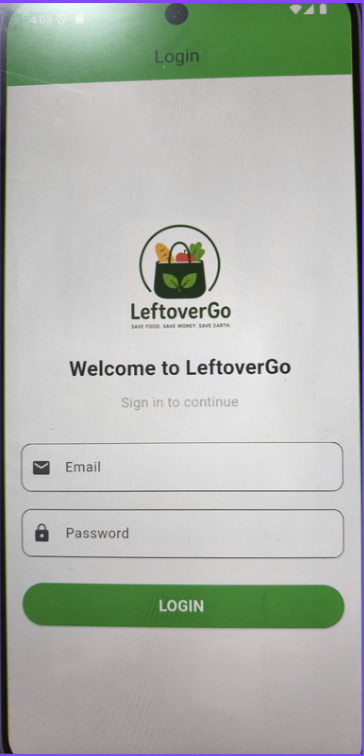
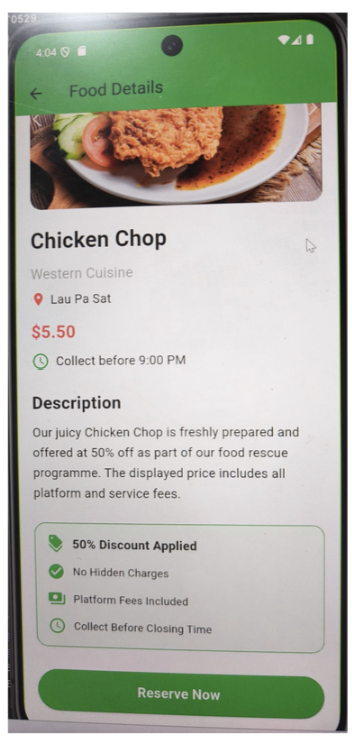
Suggested Flutter App Pages User Side Login/Register Home Page Nearby Deals Food Details Cart QR Collection Page Sustainability Stats User Profile Merchant Side Merchant Dashboard Upload Food Listing Order Management Sales Analytics Suggested Database Structure (Firebase) Users Collection users/ userID/ name email points Food Listings listings/ listingID/ foodName storeName originalPrice discountedPrice quantity pickupTime Orders orders/ orderID/ userID listingID status Prototype Scope (Realistic for School)
You do NOT need a fully working commercial app.
A strong prototype can include:
Functional UI Firebase login Food listing system Simulated payment QR code generation Sustainability tracker
That is already strong enough for presentation.
Future Expansion Ideas Smart Food Lockers
Arduino-powered pickup lockers.
AI Demand Prediction
Predict unsold food quantity.
Integration with Delivery
Partner with delivery riders.
Carbon Credit Rewards
Reward users for sustainable behavior.
Example Presentation Pitch
“LeftoverGo transforms unsold food into affordable opportunities by connecting businesses with nearby consumers through a smart food rescue platform. Our solution reduces food waste, supports sustainability goals, and creates new revenue streams for merchants while helping users save money.”
Why This Idea Can Score Well
Lecturers usually look for:
Realistic implementation Clear business model Technology integration Sustainability impact Prototype feasibility
LeftoverGo checks all five.
how this app can earn money How LeftoverGo Can Earn Money
For your Technologies to Business module, lecturers usually want to see:
A real problem A working solution A sustainable business model
So your monetization strategy is very important.
LeftoverGo Revenue Model
LeftoverGo mainly earns money by acting as a platform between:
Food businesses Customers
Similar to how food delivery apps earn money.
- Commission Per Order (Main Revenue Source) How It Works
Every time a customer buys food through LeftoverGo, the app takes a small percentage.
Example:
Bakery sells leftover pastries for $5 LeftoverGo takes 10% LeftoverGo earns $0.50
Merchant receives:
$4.50 Why Businesses Will Accept It
Without LeftoverGo:
Food gets thrown away Business earns $0
With LeftoverGo:
Business still recovers part of the cost Reduces waste
So even after commission, businesses still benefit.
Example Profit Calculation Assume: 100 orders/day Average order = $6 10% commission
Daily revenue:
100 × $6 × 10% = $60/day
Monthly revenue:
$60 × 30 = $1800/month
As more merchants join, revenue scales up.
- Merchant Subscription Plans
Businesses can pay monthly fees for premium features.
Free Plan
Basic features:
Upload food listings Accept orders Premium Plan ($20–$50/month)
Extra features:
Sales analytics Featured placement Customer insights More visibility Example
If:
50 merchants subscribe $30/month
Revenue:
50 × $30 = $1500/month
- Featured Listings / Advertising
Businesses can pay to appear at the top of the app.
Example: A bakery wants more exposure during lunch hours.
They pay:
$5/day promotion fee
This works similarly to:
GrabFood sponsored listings Shopee sponsored products
- Sustainability Partnerships & Grants
Since LeftoverGo supports sustainability and food waste reduction, it could receive:
Government grants Sustainability sponsorships School innovation funding
Possible Singapore organizations:
NEA Enterprise Singapore ESG innovation programs
- Delivery Service Fees (Future Expansion)
Later, LeftoverGo could:
Partner with riders Offer delivery instead of self-collection
Revenue sources:
Delivery fee Service charge
Example:
User pays $3 delivery fee LeftoverGo keeps part of it
- Reward Points Ecosystem
Users earn “Green Points” when saving food.
Later:
Businesses pay to participate Points redeemed for promotions
This increases:
Customer retention User engagement Why This Business Model Is Strong Businesses Benefit
Instead of:
Unsold food → Trash → $0
It becomes:
Unsold food → Discount sale → Some profit recovered Customers Benefit
Users get:
Cheap food Sustainability rewards Convenience LeftoverGo Benefits
The platform earns:
Commission Subscriptions Ads Partnerships Why This Model Is Realistic
Apps with similar models already exist globally:
Too Good To Go Olio
But your project can localize it specifically for:
Singapore hawker culture Poly students MRT-area businesses
That makes your version more unique for school.
Example Real-Life Scenario Bakery Example Before LeftoverGo
At 9 PM:
15 unsold pastries Worth $60 All thrown away
Profit:
$0 After LeftoverGo
Bakery discounts them:
$60 → $25 total
LeftoverGo takes 10%:
$2.50
Bakery still earns:
$22.50
Instead of losing everything.
Why Investors / Lecturers Like This Idea
Because it has:
Real market demand Sustainability impact Scalable revenue Clear target users Existing proof that the concept works Strong Business Pitch Line
“LeftoverGo converts food waste into revenue opportunities by helping businesses monetize unsold food while providing consumers with affordable meals.”
Simple Business Model Summary Stakeholder Benefit Businesses Recover losses Customers Buy cheap food Environment Less food waste LeftoverGo Earns commission & subscriptions MOST IMPORTANT FOR YOUR PRESENTATION
Your lecturers do NOT expect:
Millions of dollars Full startup-level business plans
They want:
A realistic monetization strategy Logical explanation Sustainable business idea
LeftoverGo satisfies that very well.
Built With
- dart
- flutter
- vsc

Log in or sign up for Devpost to join the conversation.