-
-
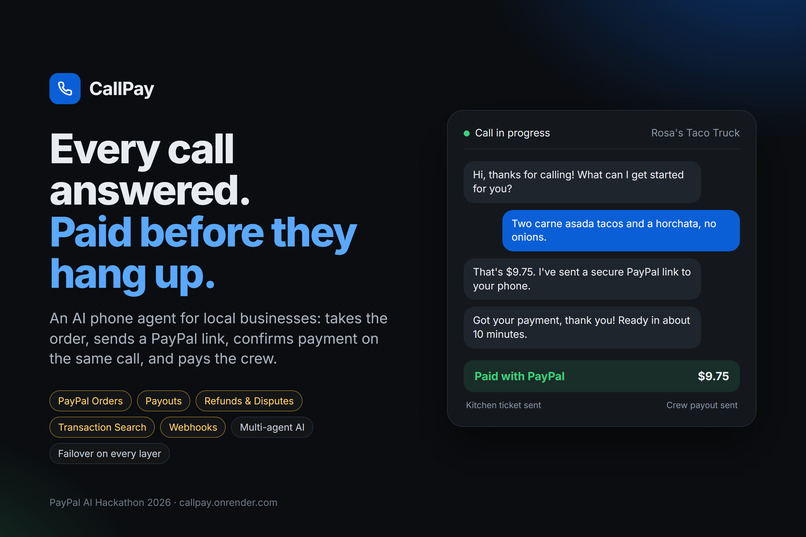
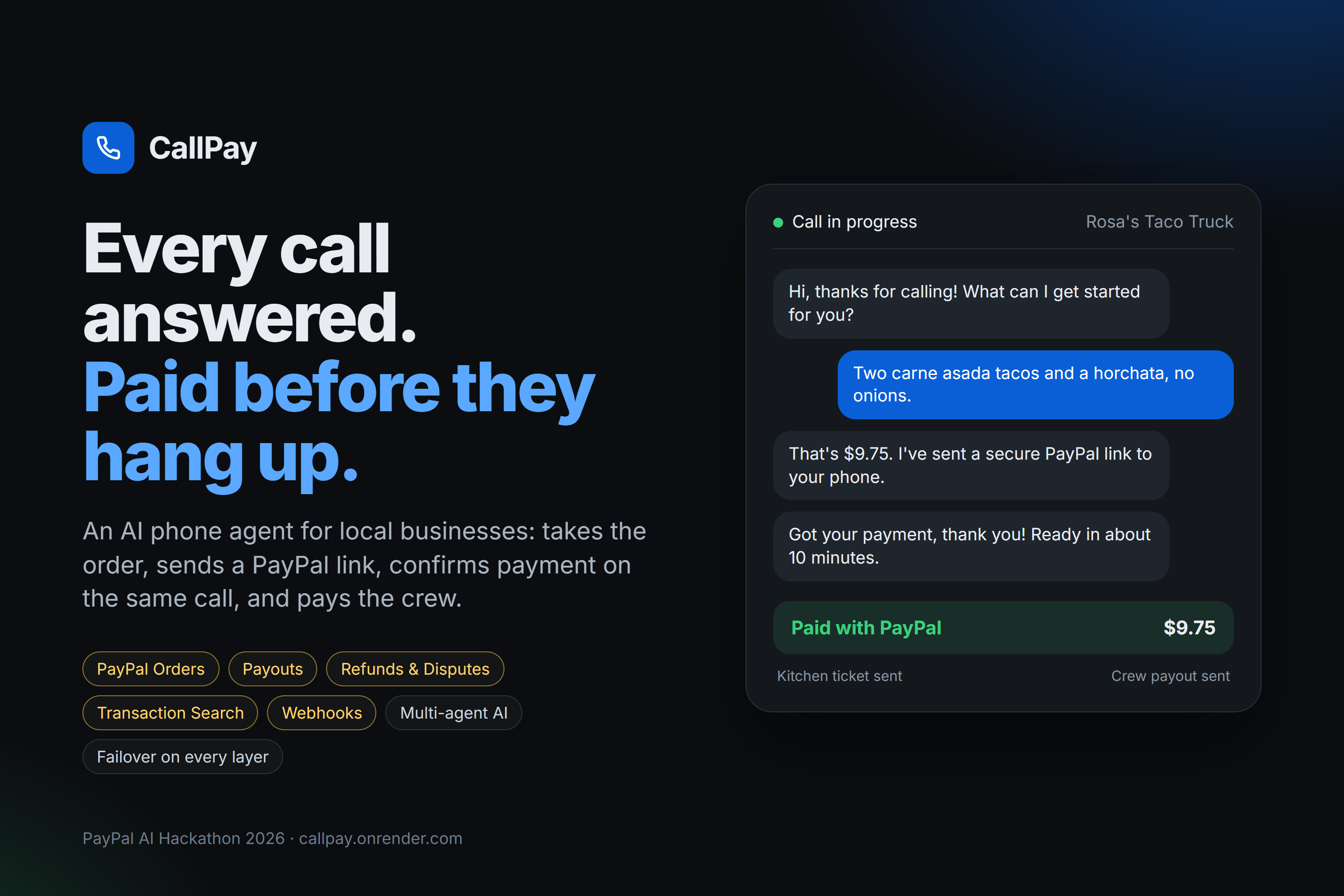
CallPay: an AI phone agent that takes the order, collects a PayPal payment on the same call, and pays the crew.
-
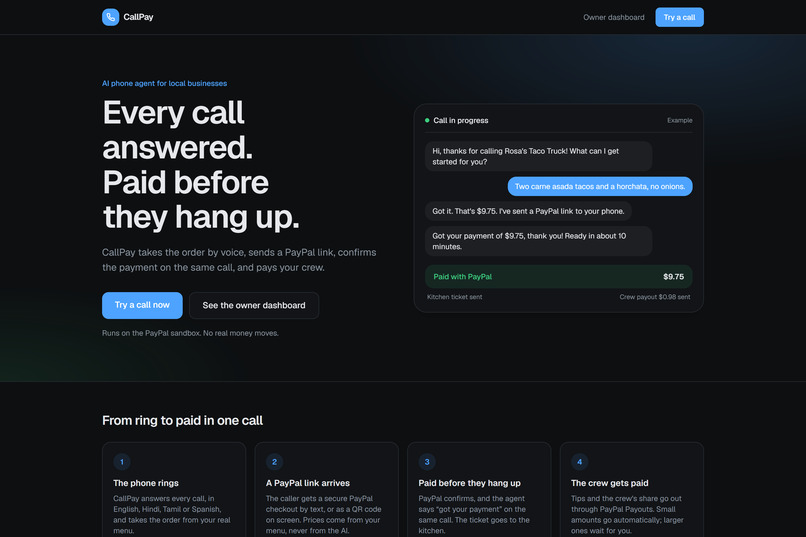
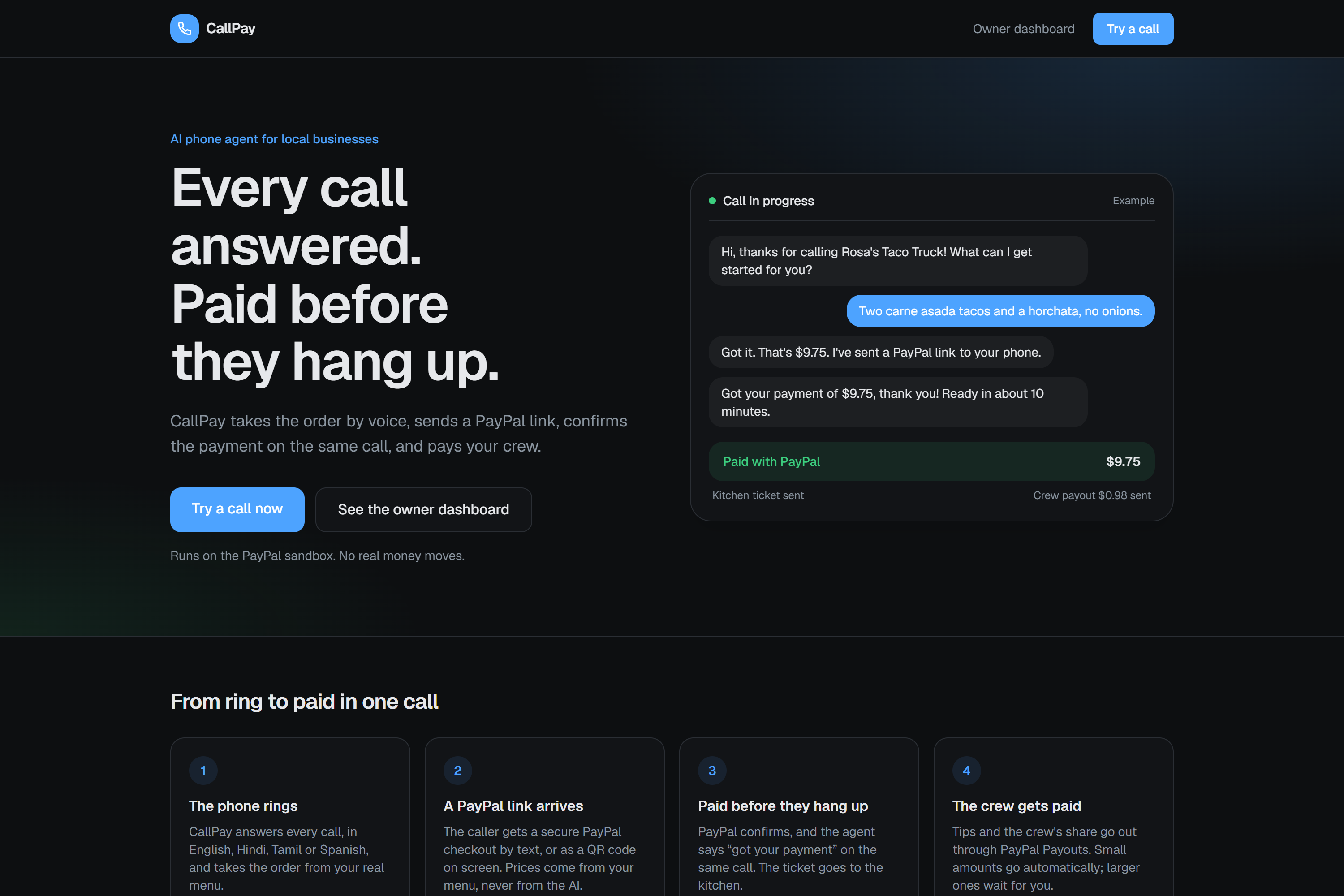
The landing page judges see first: one button starts a live call in the browser, no install needed.
-
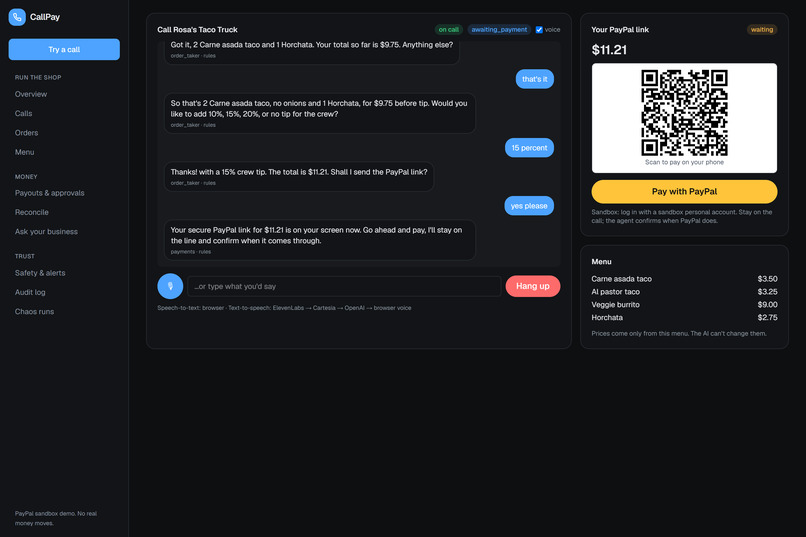
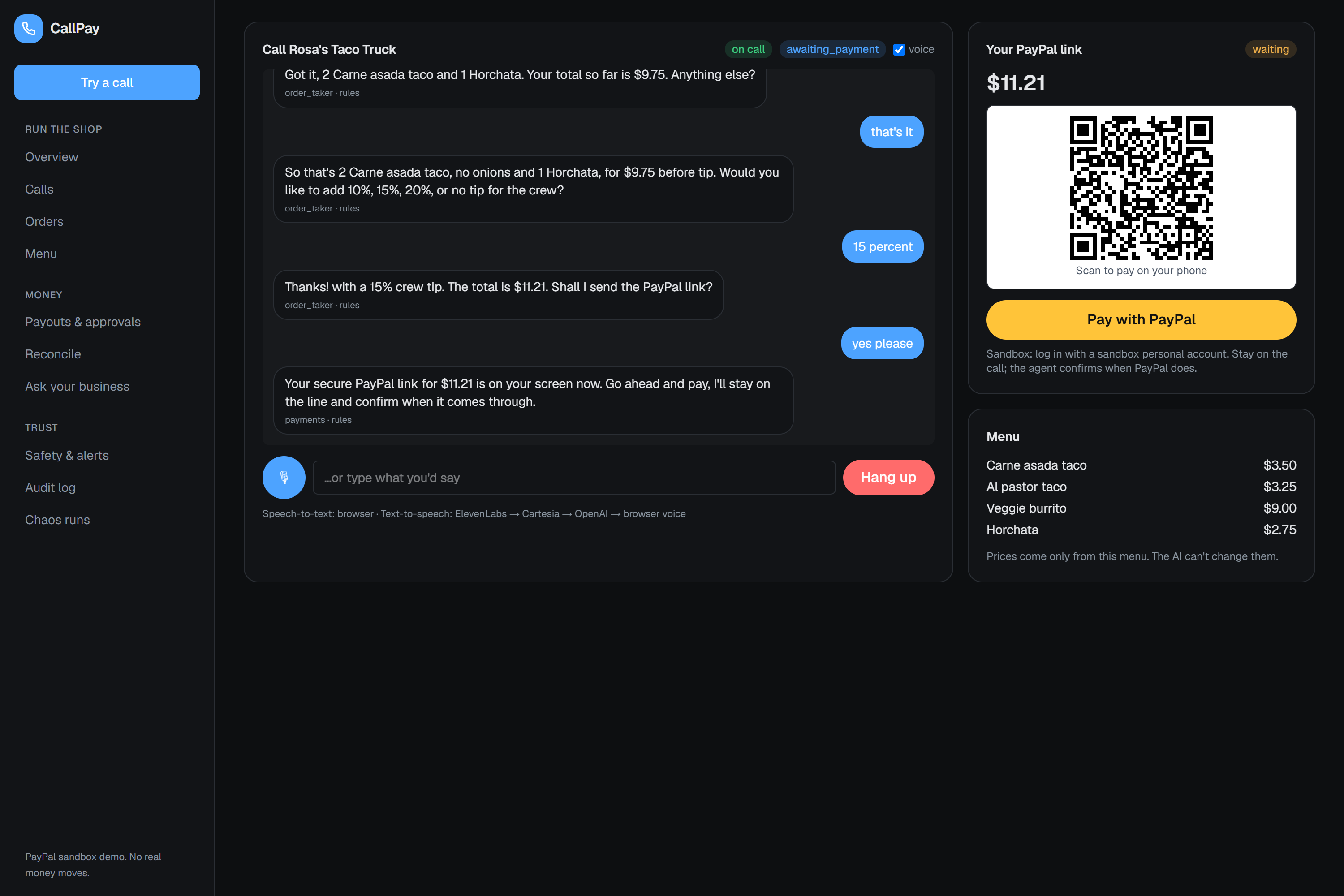
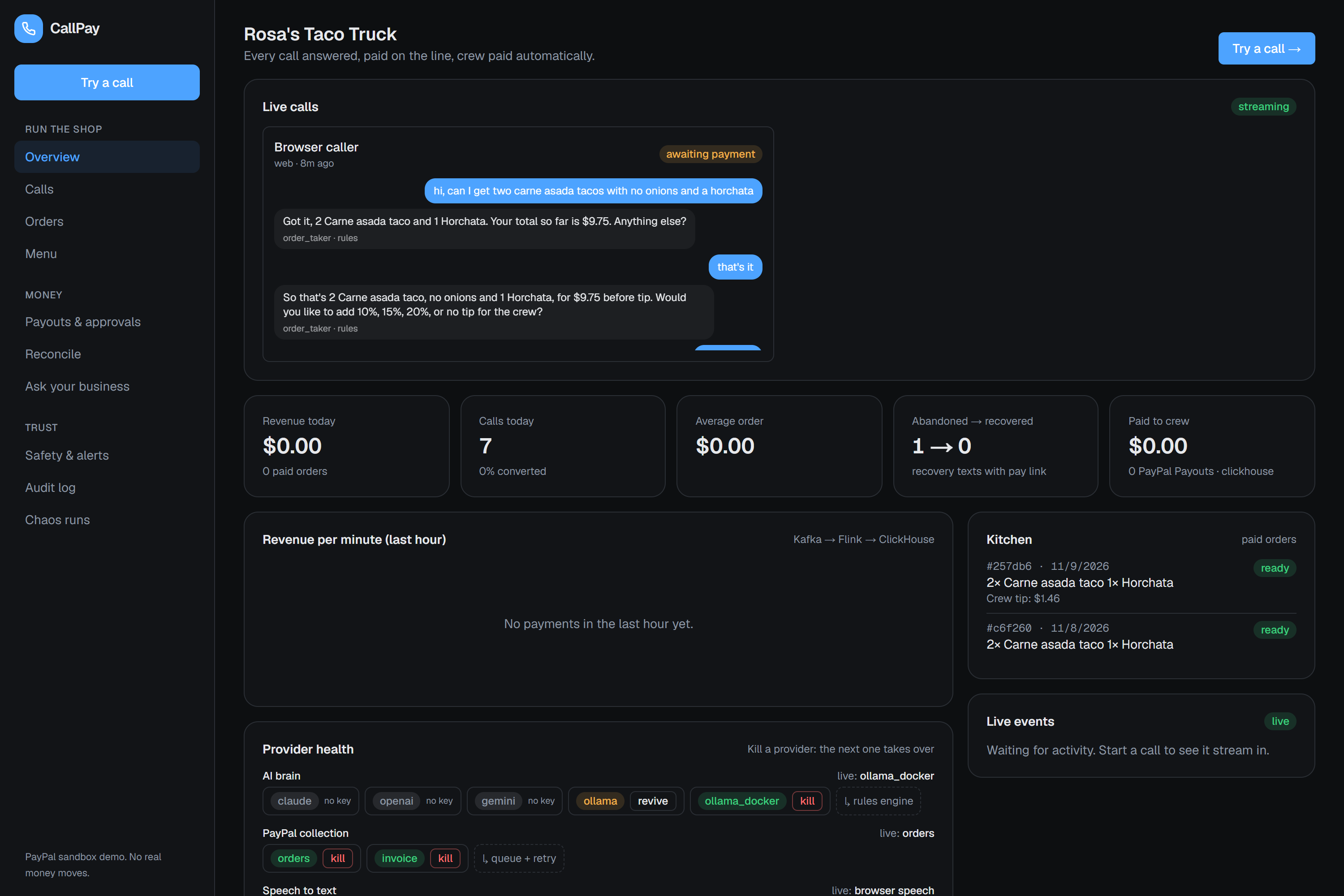
A real call: the agent notes "no onions", adds a 15% crew tip, and sends a PayPal checkout link with a scan-to-pay QR code.
-
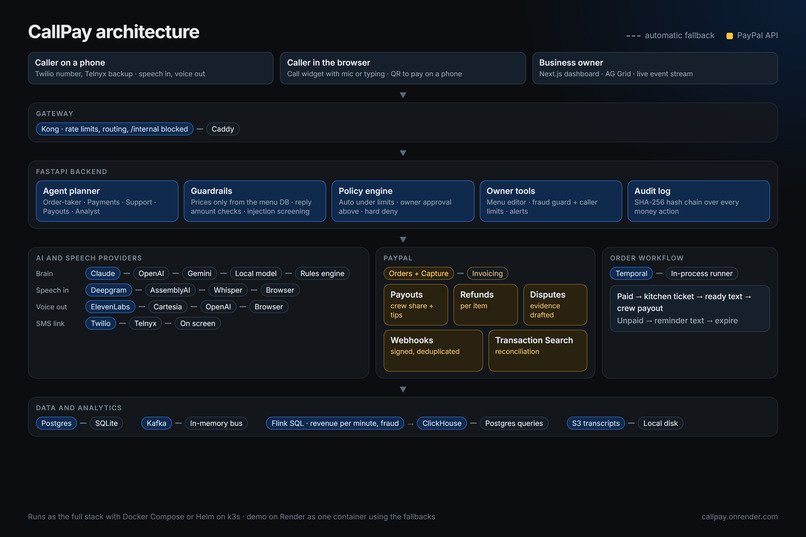
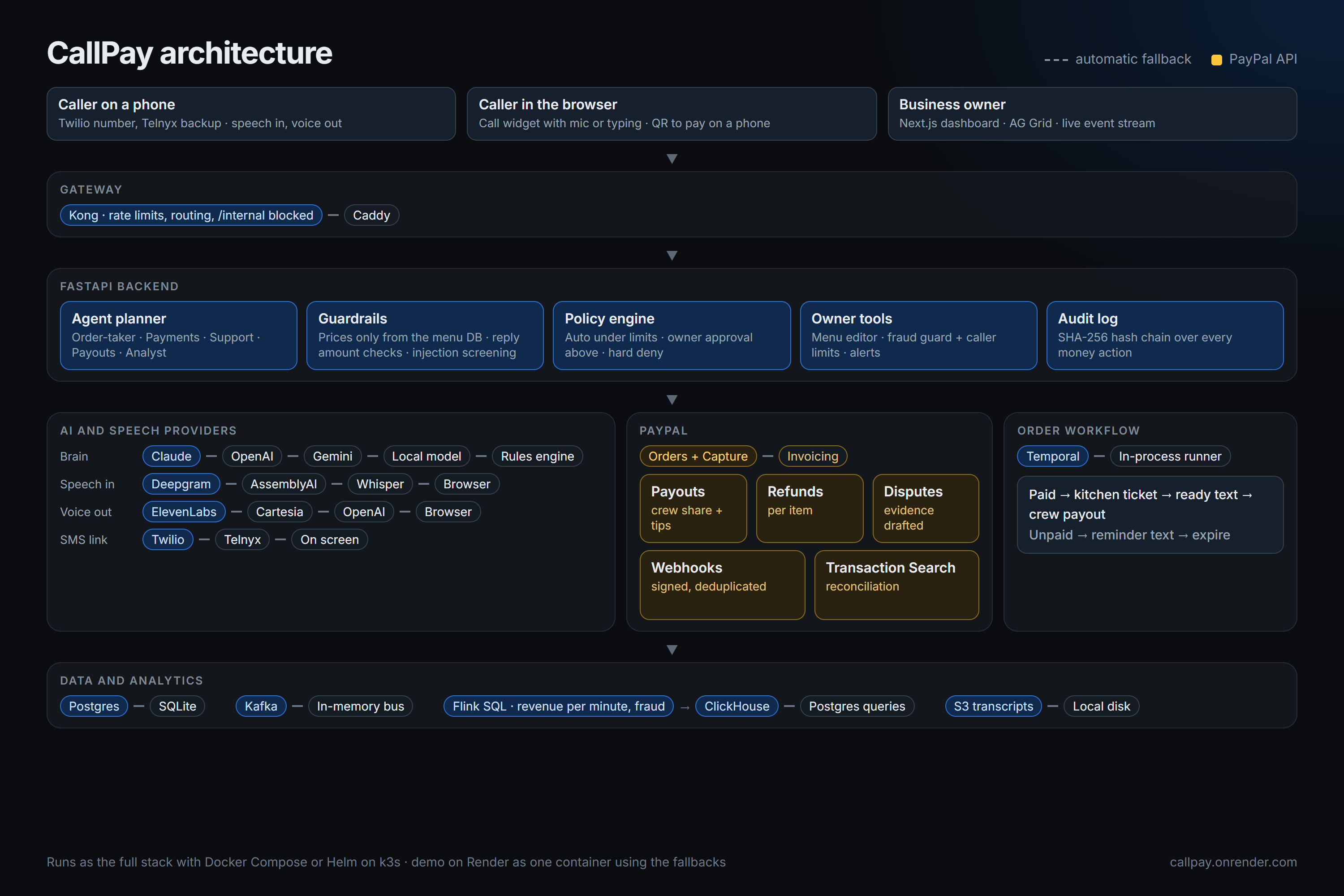
Architecture: every layer has an automatic fallback, from the AI brain and speech to PayPal Orders and the workflow engine.
-
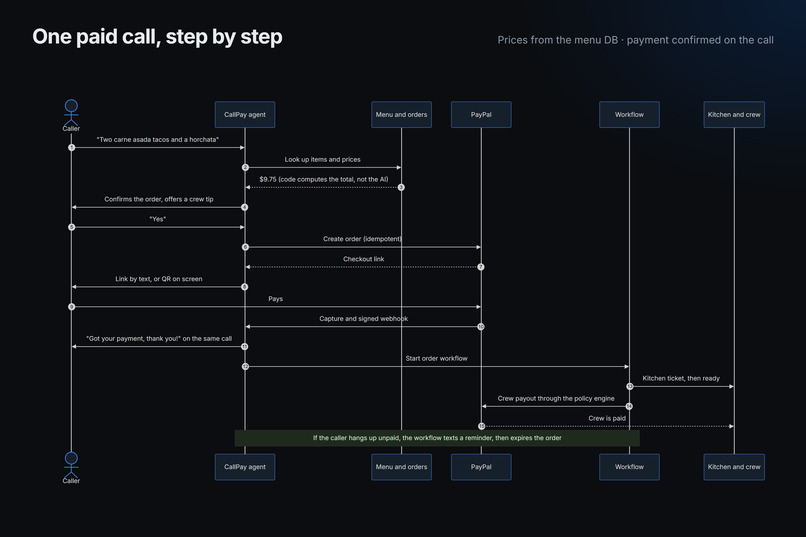
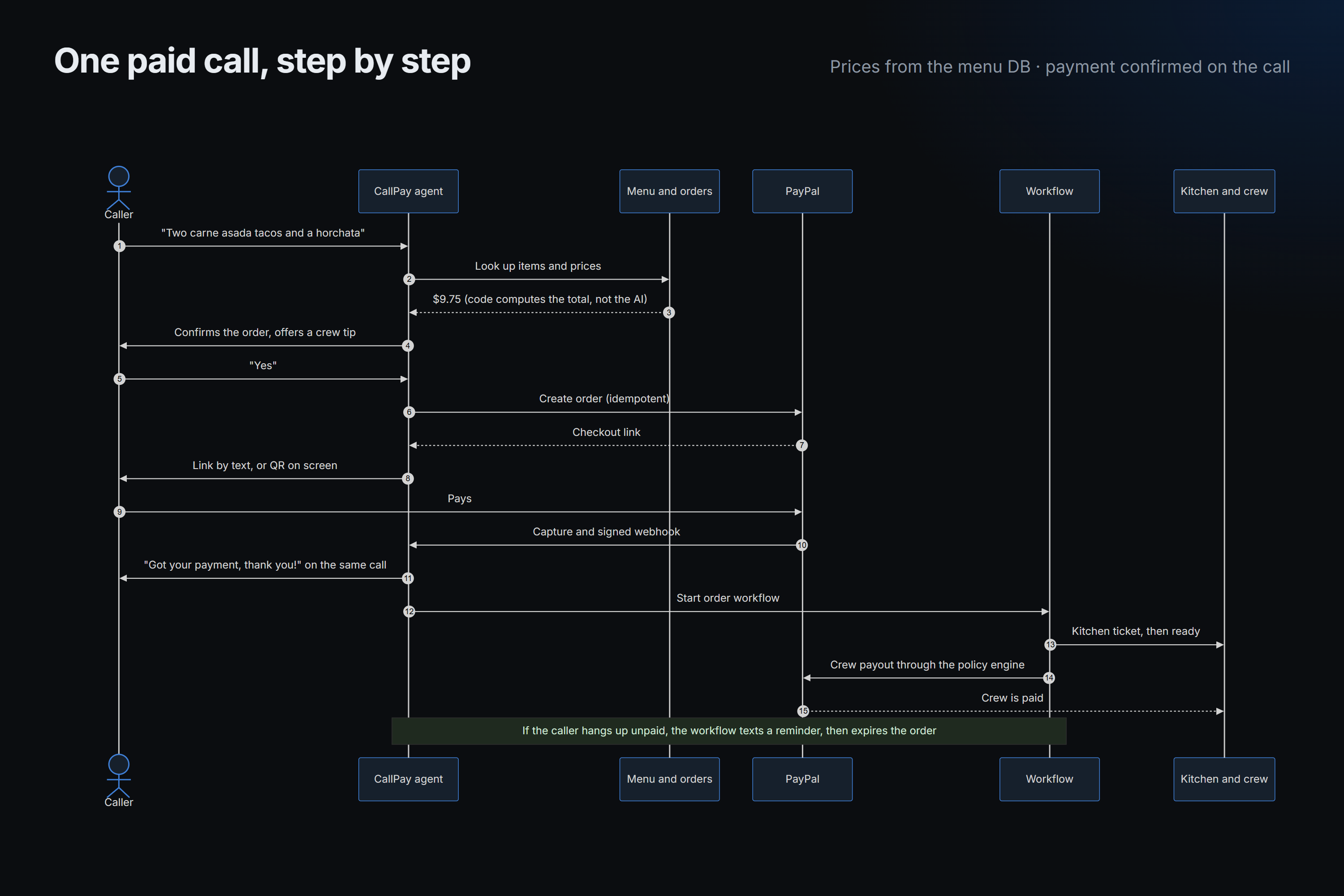
One paid call: prices come from the menu database, and PayPal's capture is confirmed while the caller is still on the line.
-
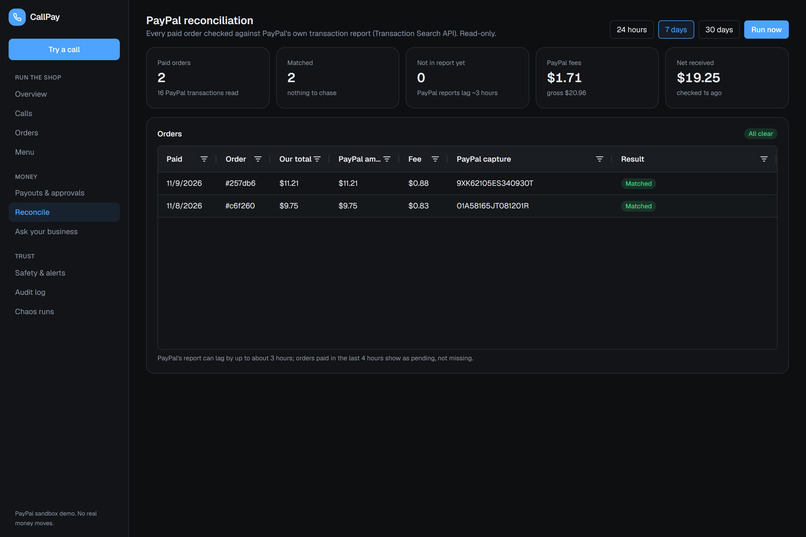
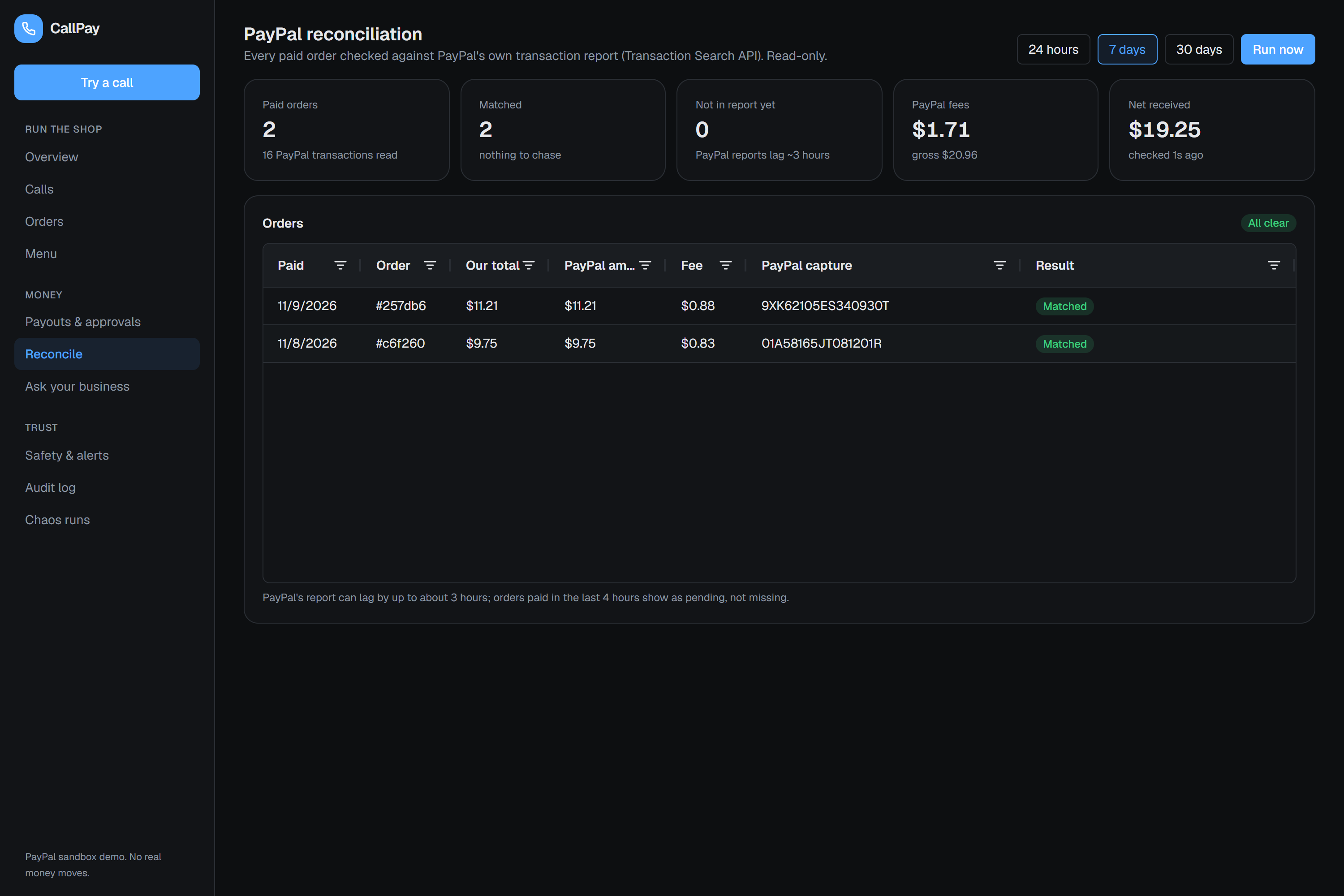
Reconciliation via PayPal Transaction Search: real sandbox orders matched to PayPal's report, with fees and net received.
-
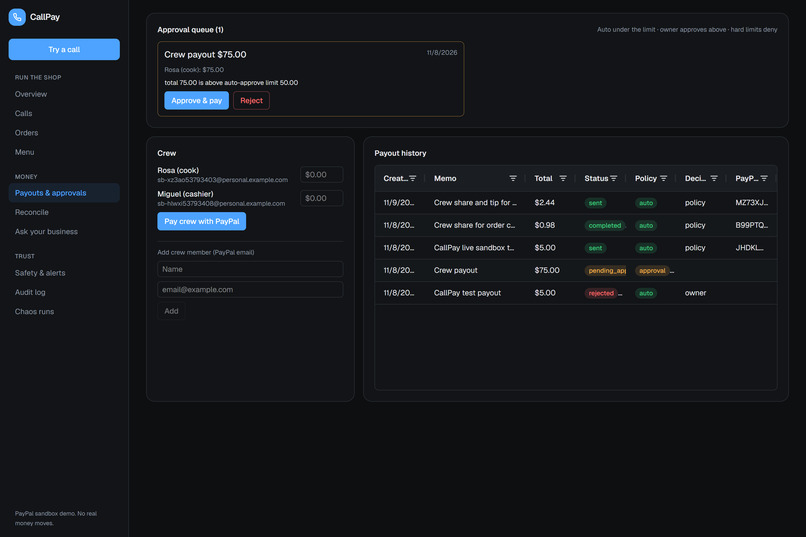
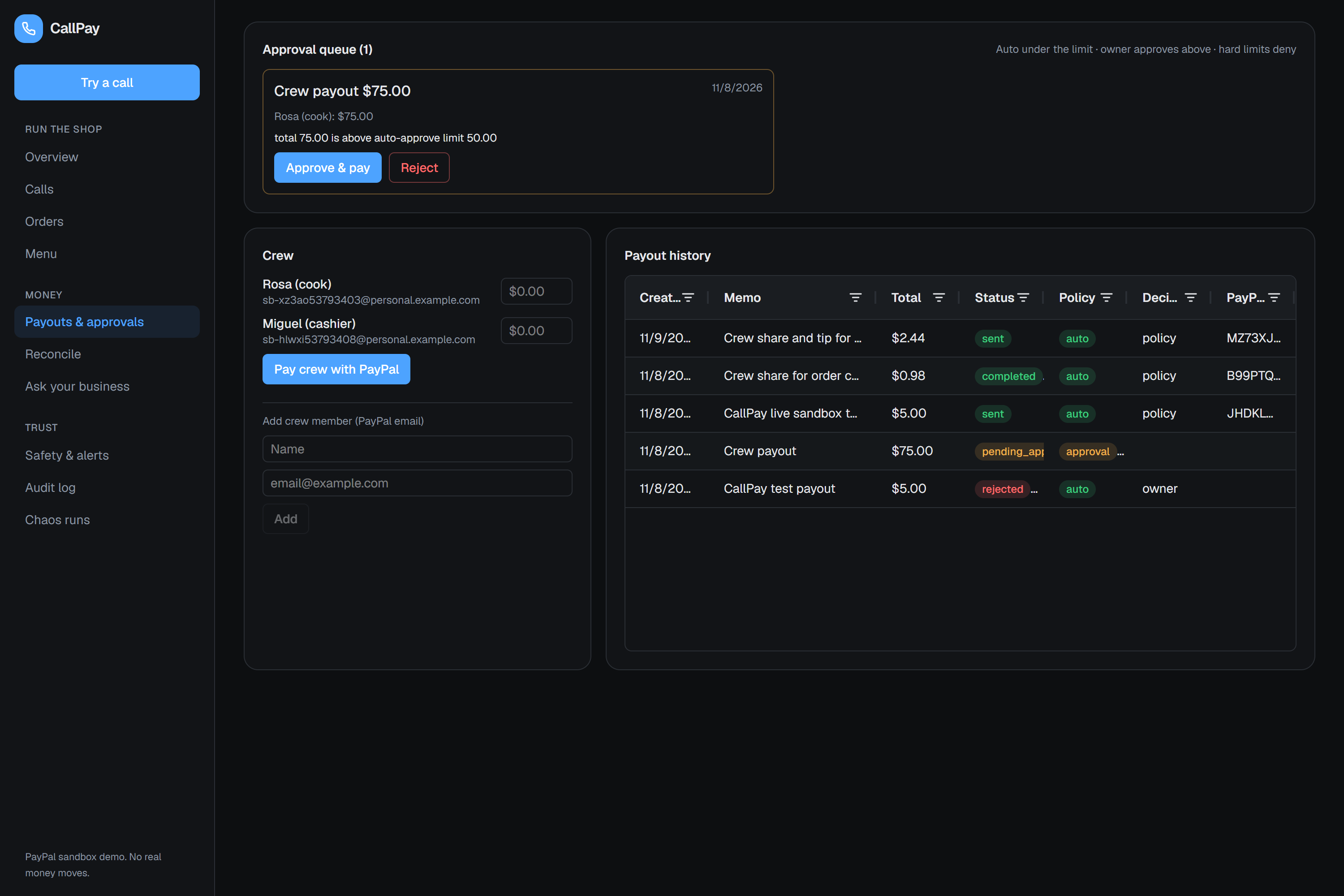
Crew payouts with PayPal Payouts: small ones go out automatically, larger ones wait in the queue for the owner to approve.
-
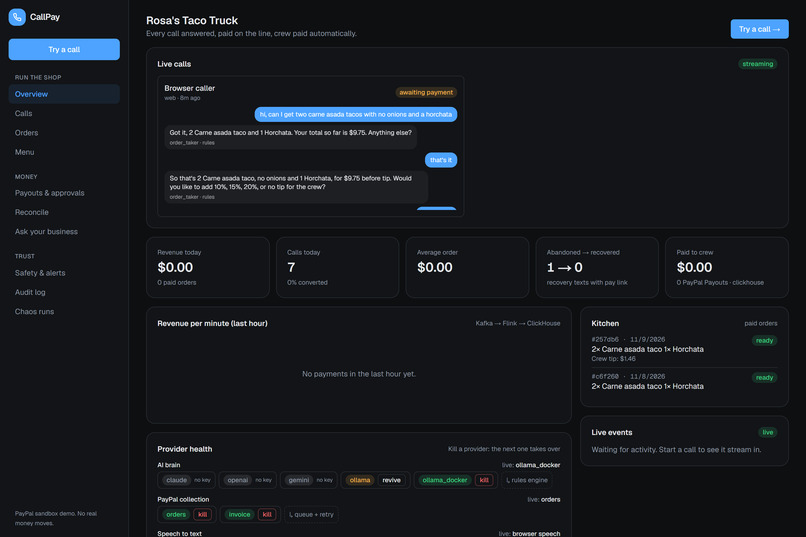
Owner dashboard: live call transcript, kitchen tickets, and provider health with kill switches to demo failover live.
-
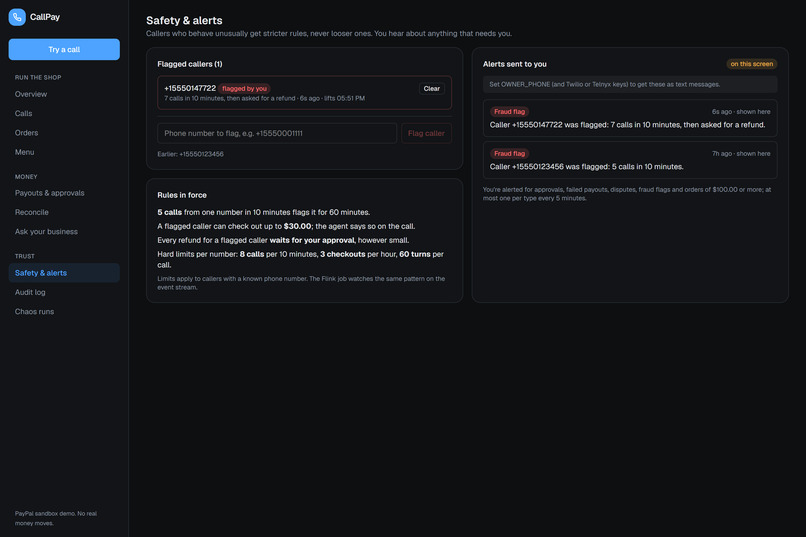
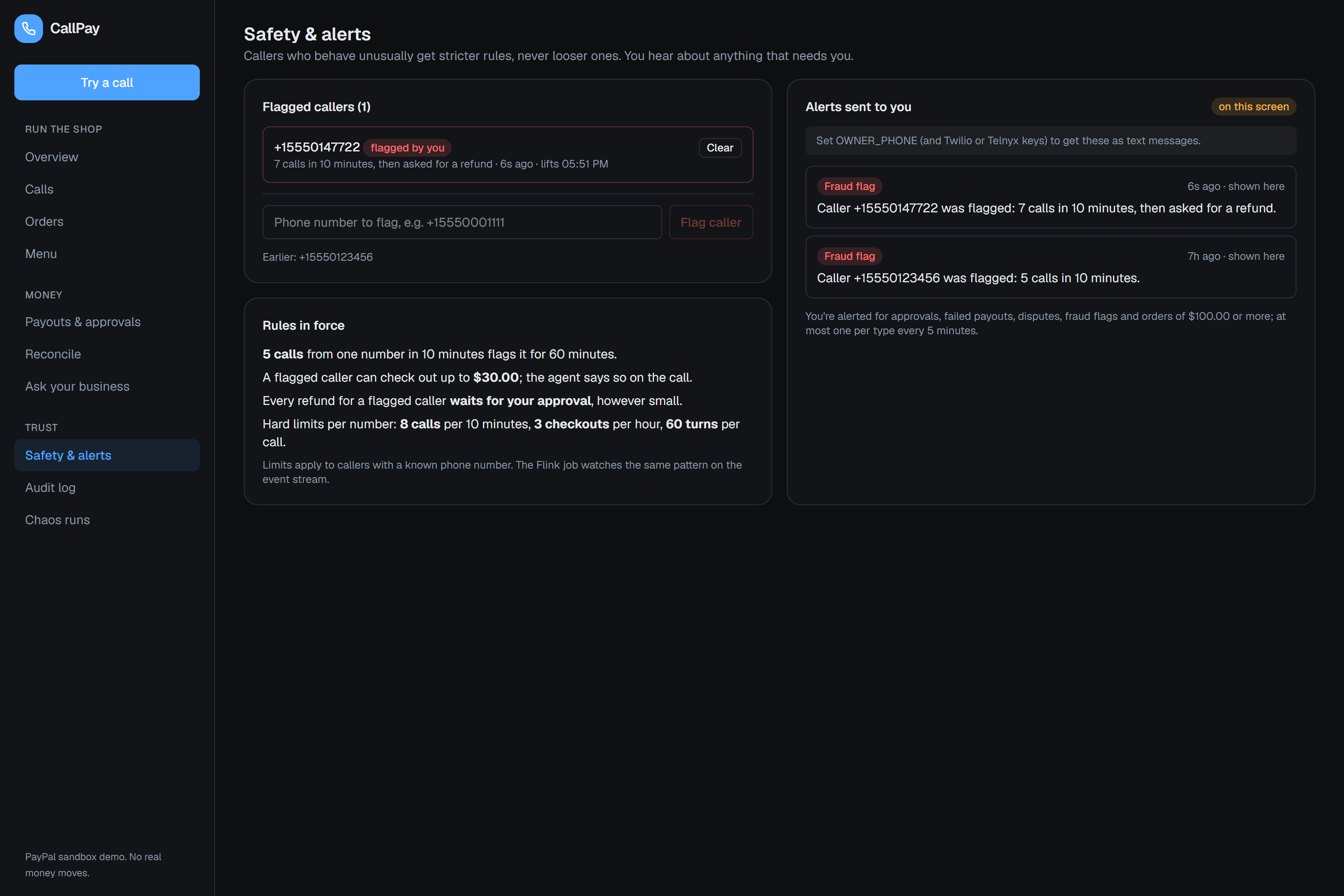
Fraud guard: a flagged caller gets a $30 checkout cap and every refund needs the owner. Approvals and disputes alert the owner.
-
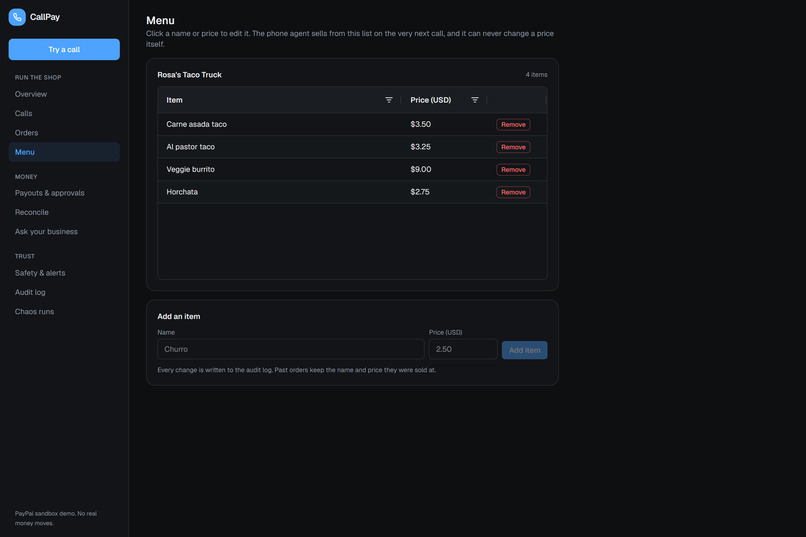
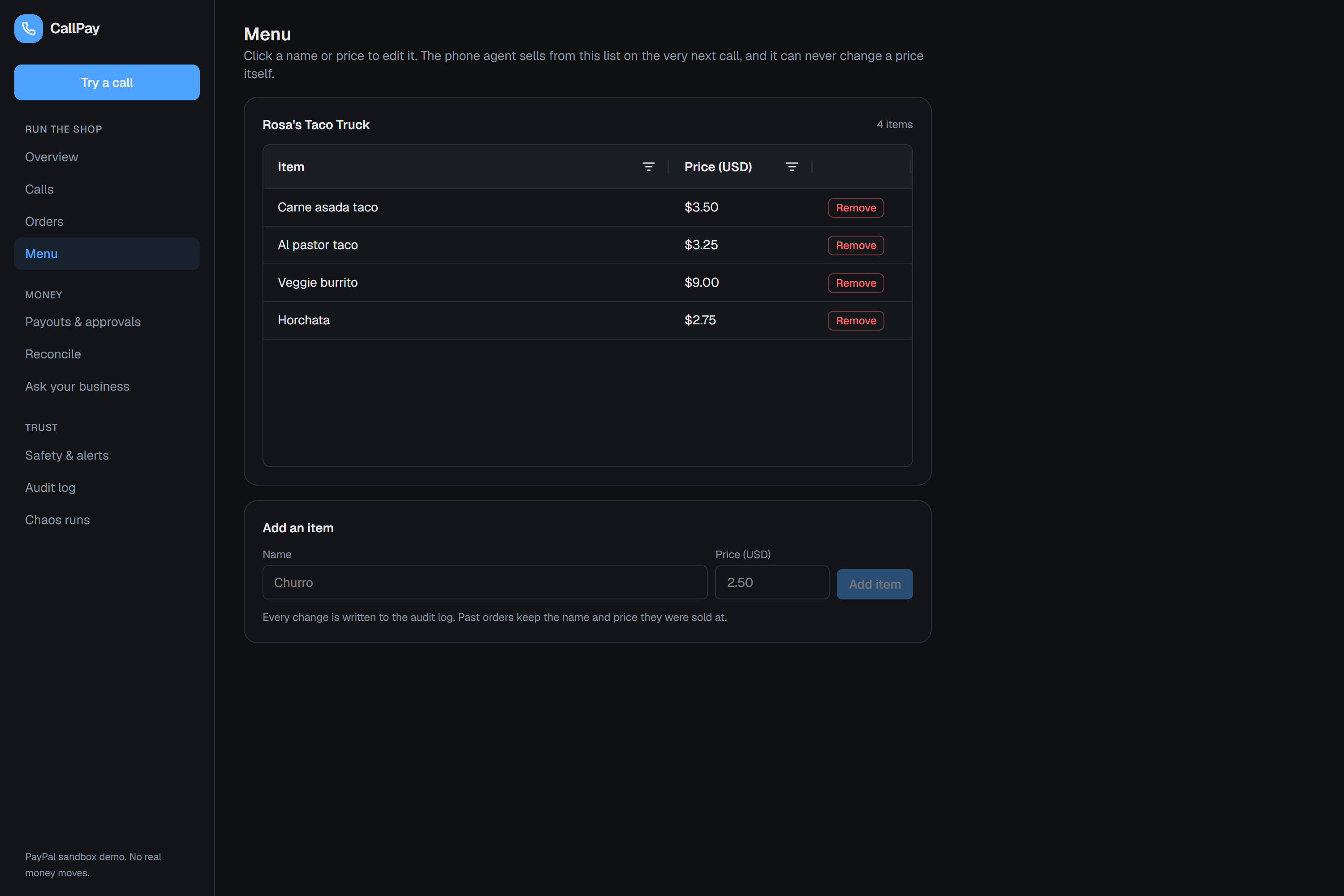
Menu editor: the owner changes a price and the agent quotes it on the very next call. The AI itself can never set a price.
-
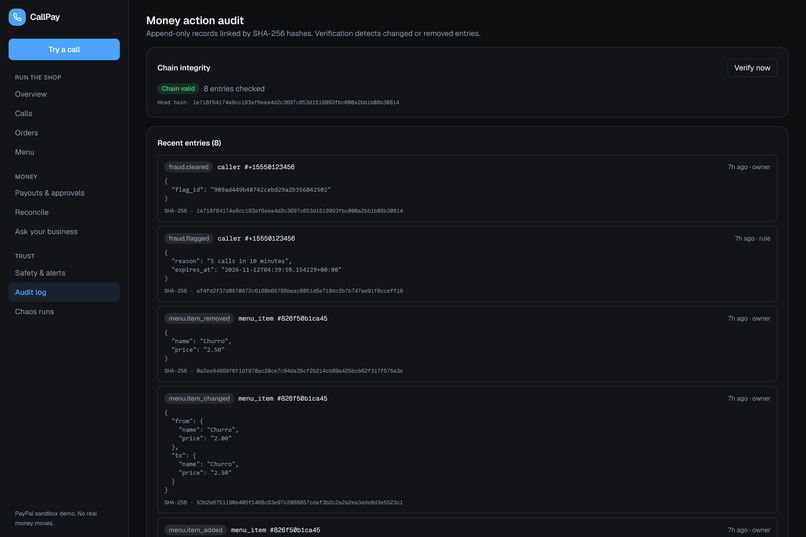
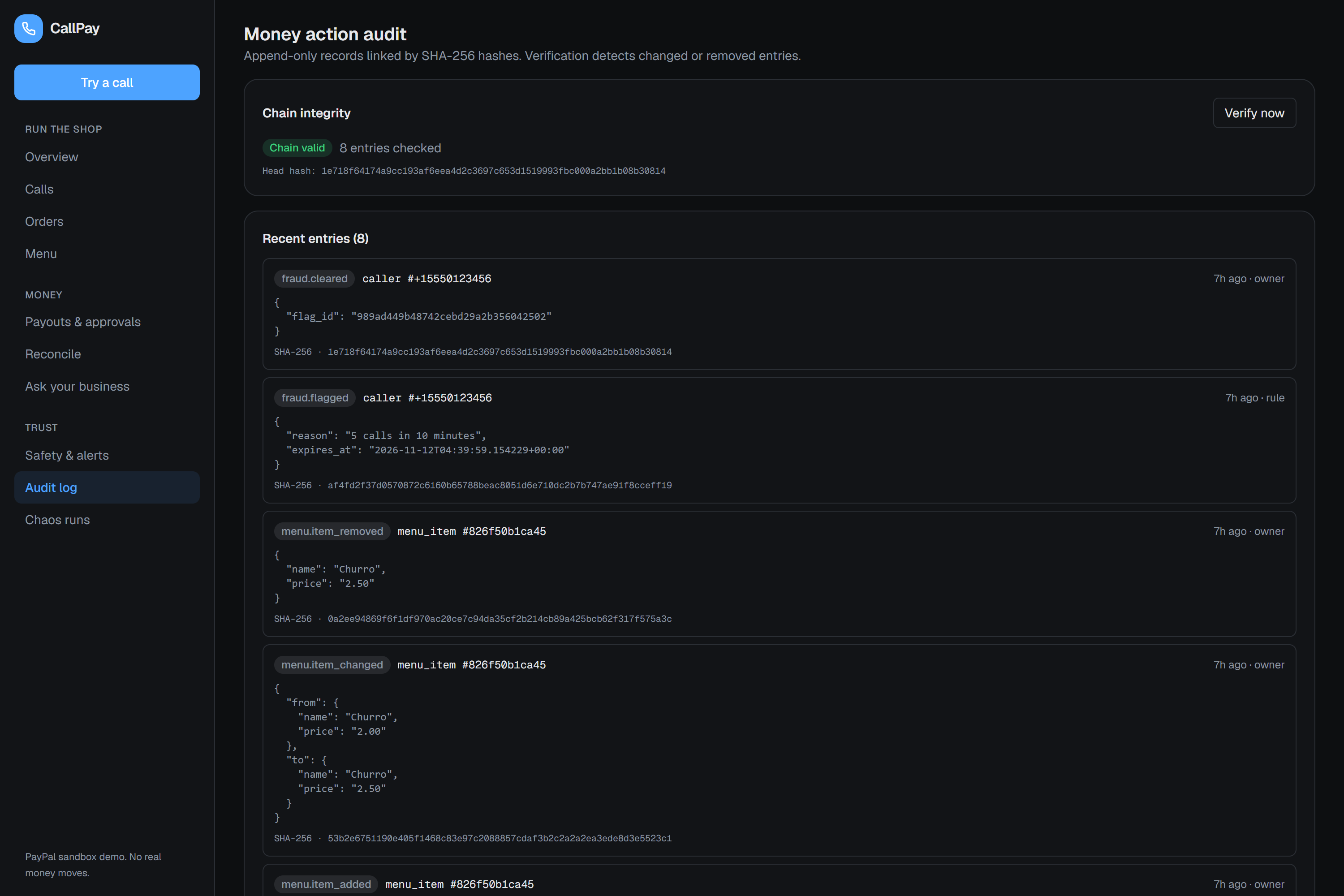
Hash-chained audit log: every order, payout, refund and menu change is recorded, and one click verifies nothing was altered.
Inspiration
Phone orders often leave restaurant staff juggling several separate tasks: taking the order, collecting payment, getting it to the kitchen, and handling tips. We wanted to connect those steps so fewer orders and follow-ups slip through.
What it does
CallPay takes an order through a browser-based voice conversation, sends the customer a PayPal payment link, confirms payment, and forwards the order to the kitchen. After fulfillment, it can pay the crew through PayPal Payouts, including their share of tips.
The owner dashboard brings calls, orders, payouts, refunds, and an audit trail together in one place.
How we built it
We built the dashboard with Next.js, React, TypeScript, and AG Grid, with a FastAPI backend in Python and PostgreSQL for business and order data. The backend connects the conversation flow to PayPal Orders and PayPal Payouts.
The AI helps understand and respond to the caller. Application code validates menu items and calculates totals, tips, refunds, and payouts from stored data under policy rules. A workflow handles fulfillment, while the dashboard shows calls, orders, and payment activity.
Challenges we ran into
The hardest part was coordinating multiple steps that can fail independently: voice, checkout, payment confirmation, kitchen fulfillment, and crew payouts. We added fallback paths and made the payment and order state visible to the owner.
We also had to draw a clear boundary around AI and money. The agent can help with conversation, but the backend is responsible for every amount.
Accomplishments that we're proud of
We connected ordering, PayPal checkout, payment confirmation, kitchen fulfillment, and crew payouts in one application. We’re proud that totals and payouts come from application rules, and that owners can review activity through the dashboard and audit log.
What we learned
A useful voice agent needs more than a good conversation. It needs dependable handoffs, clear payment states, and a way for people to understand what happened. We also learned to keep financial decisions deterministic and leave the model focused on language.
What's next for CallPay: Voice Orders & Instant Payouts
We’re preparing the public demo deployment and webhook, then we’ll verify the full flow on the hosted app. Next, we want to test more real-world calls, improve reliability under provider outages, and explore a phone-number experience alongside browser calls.
Built With
- ag-grid
- apache-flink
- apache-kafka
- clickhouse
- docker
- fastapi
- next.js
- paypal
- paypal-orders
- paypal-payouts
- postgresql
- python
- react
- temporal
- typescript

