-
-
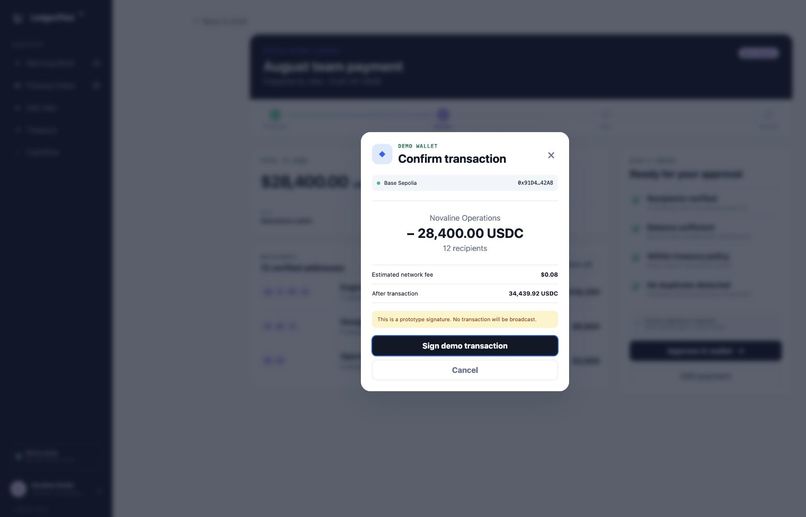
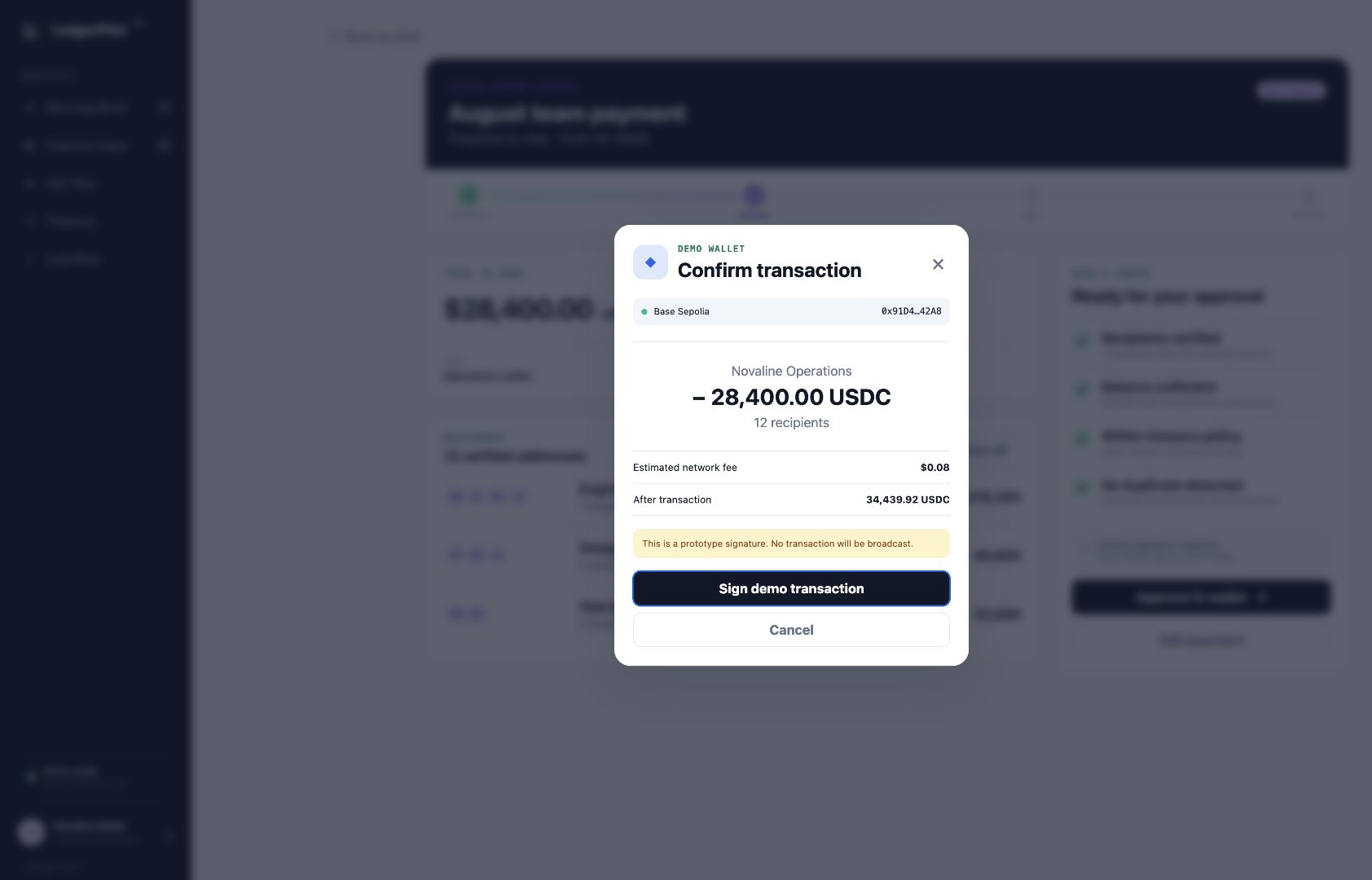
Wallet Confirmation
-
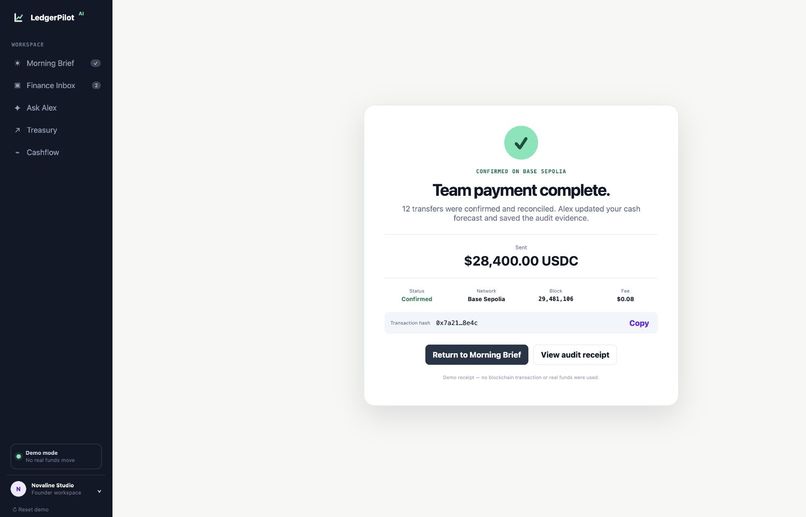
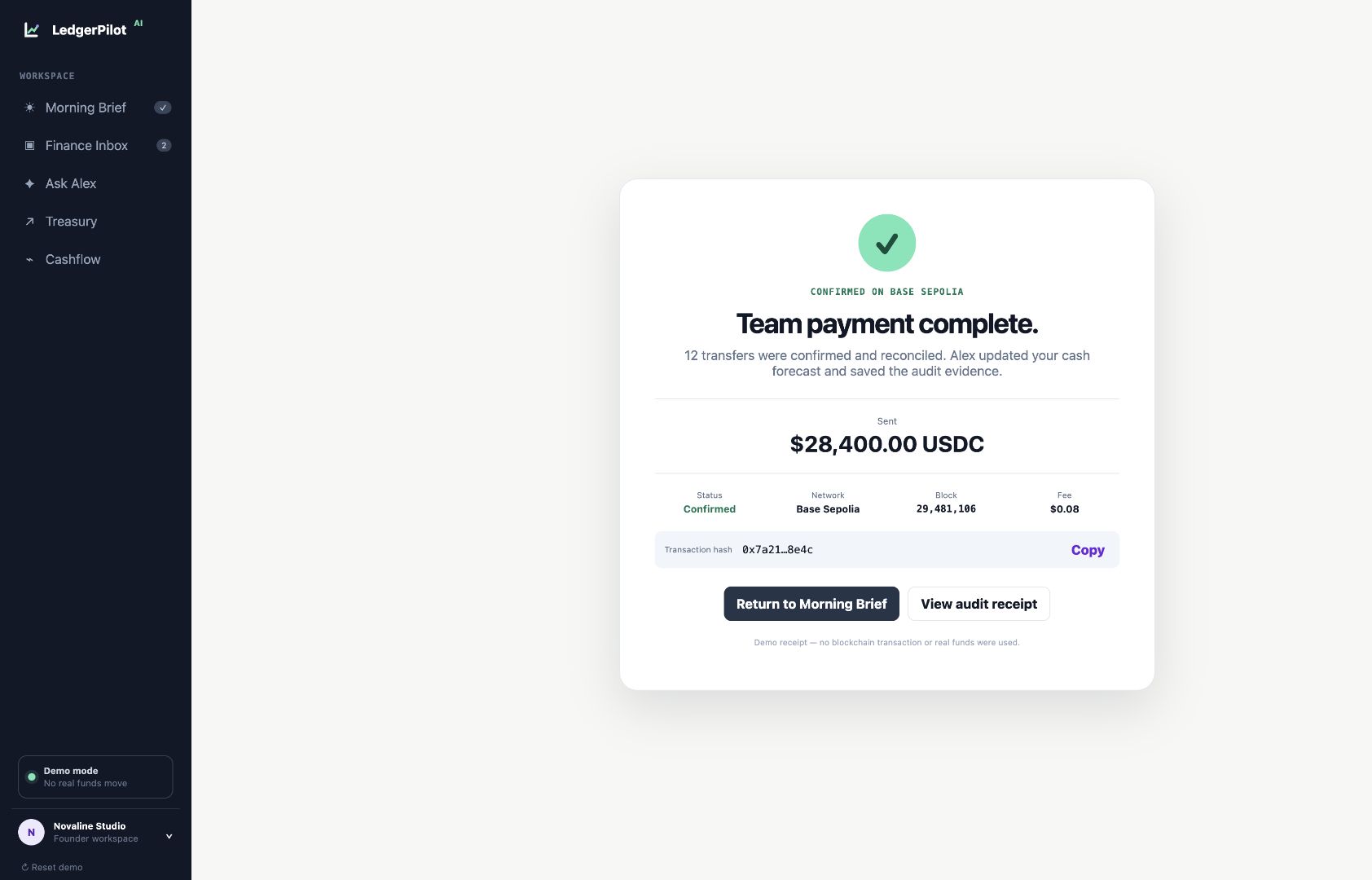
Receipt
-
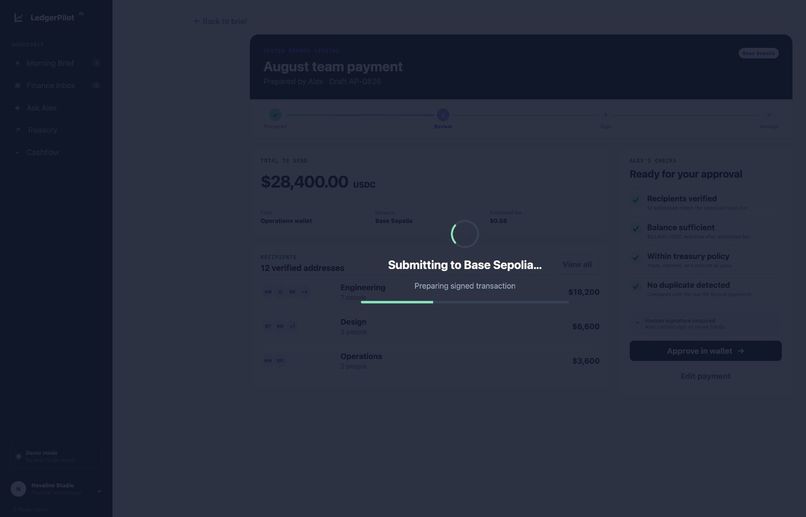
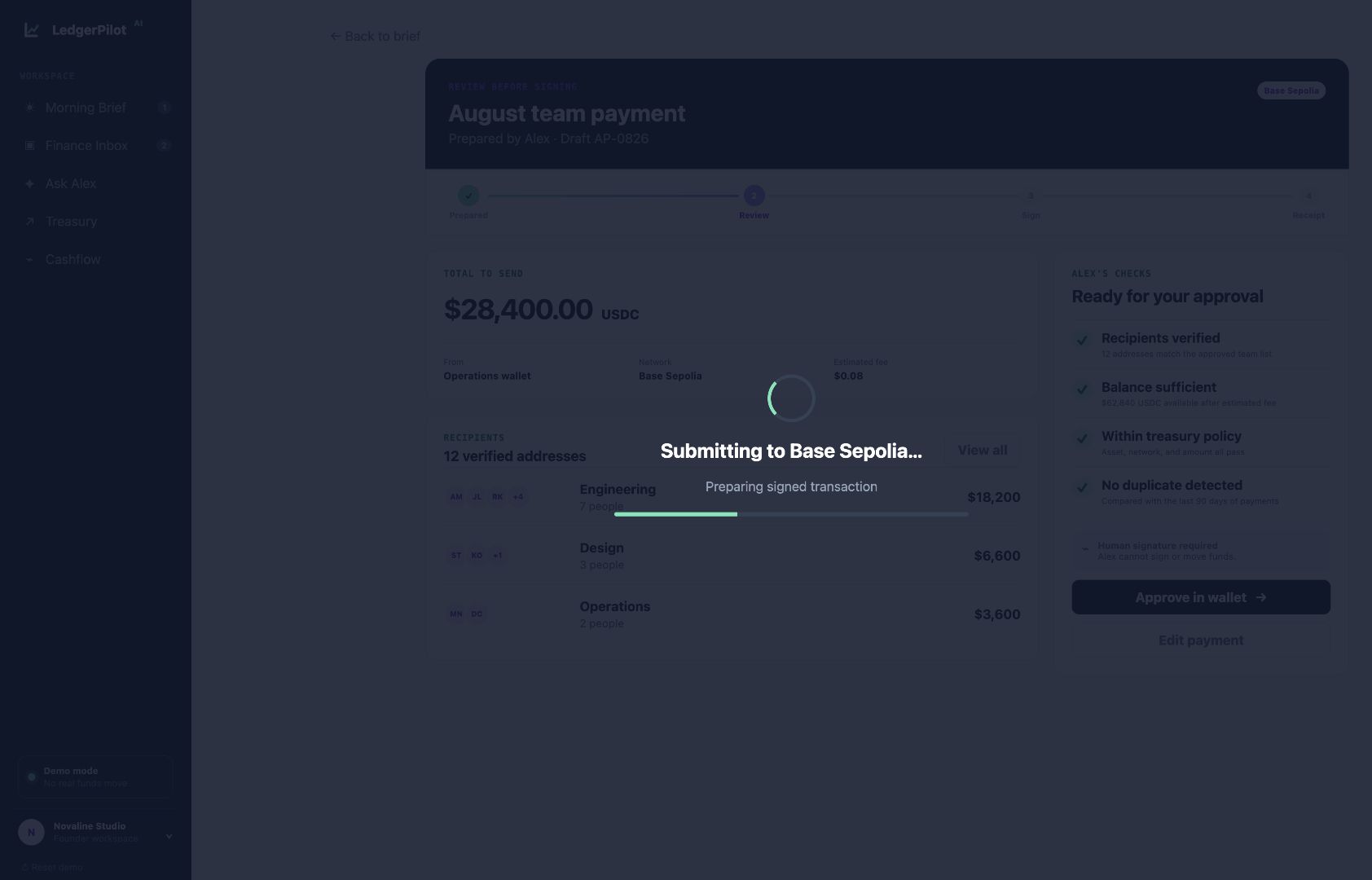
Submitting
-
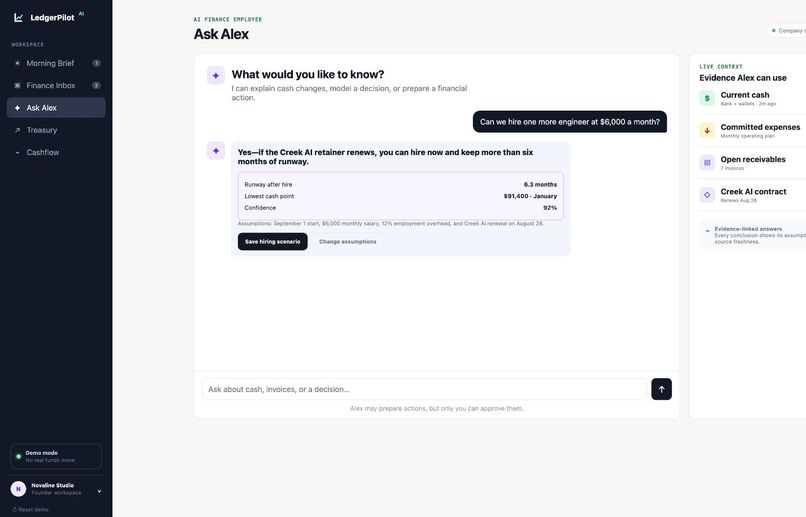
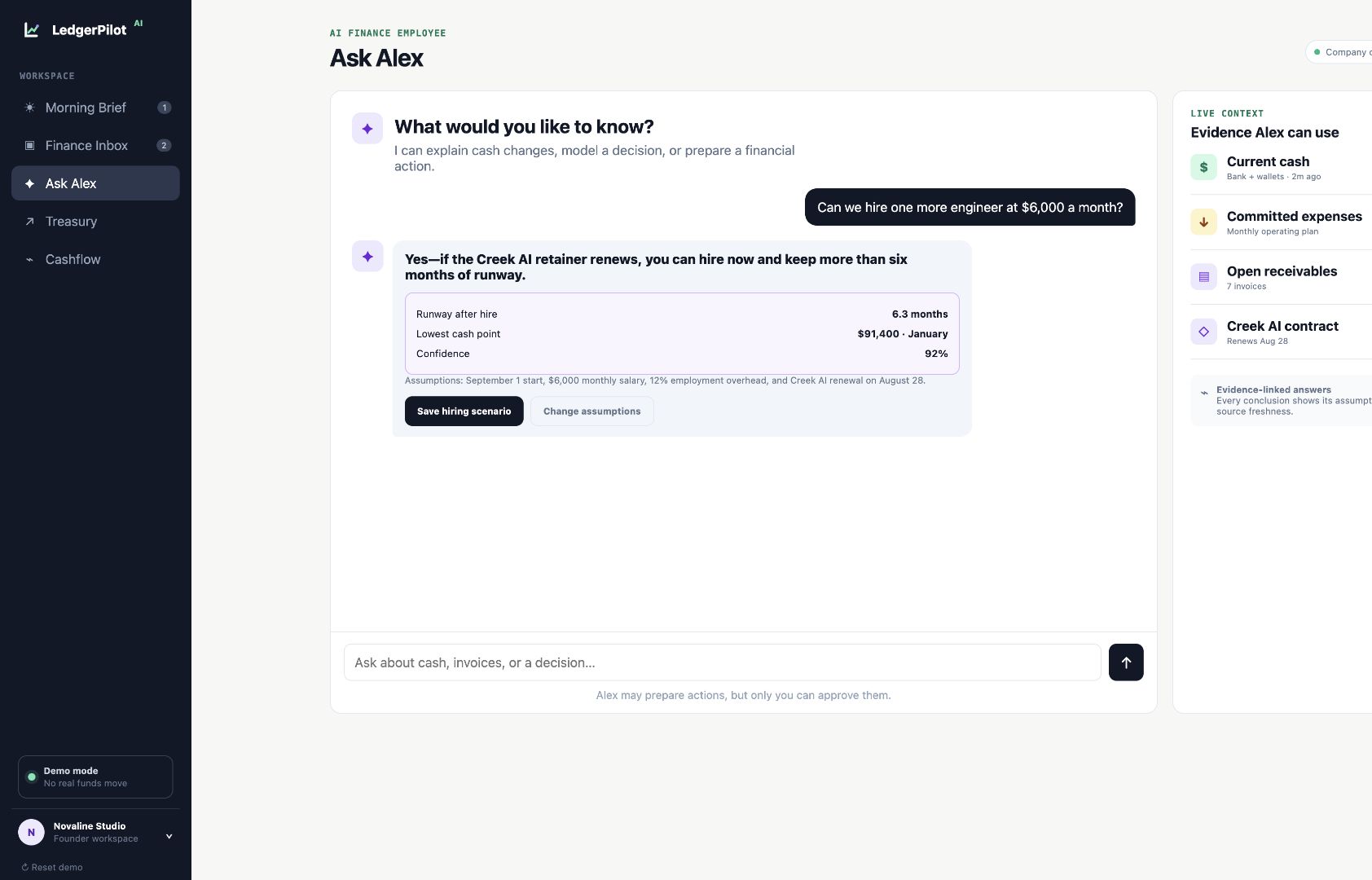
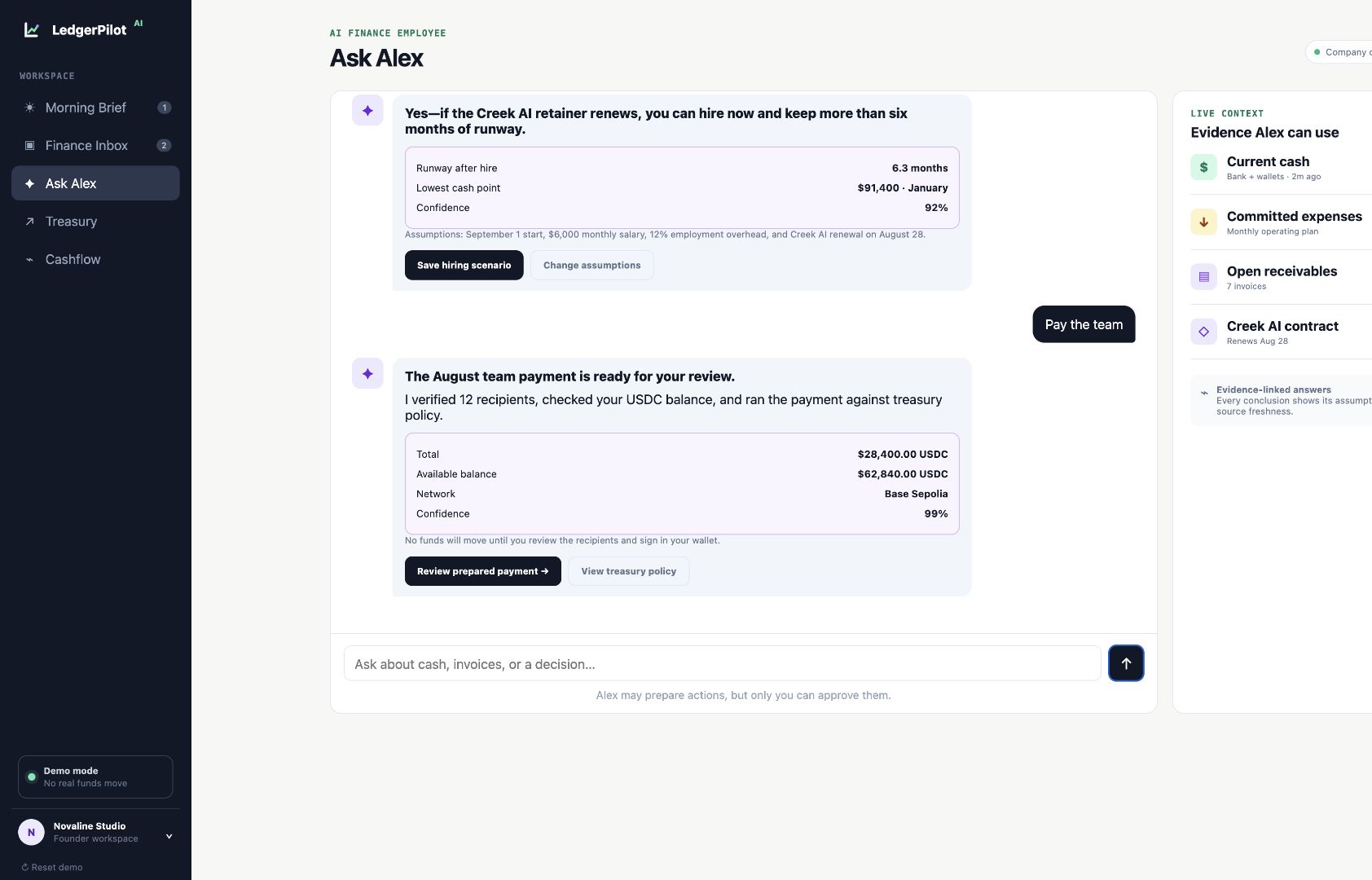
Hiring analysis
-
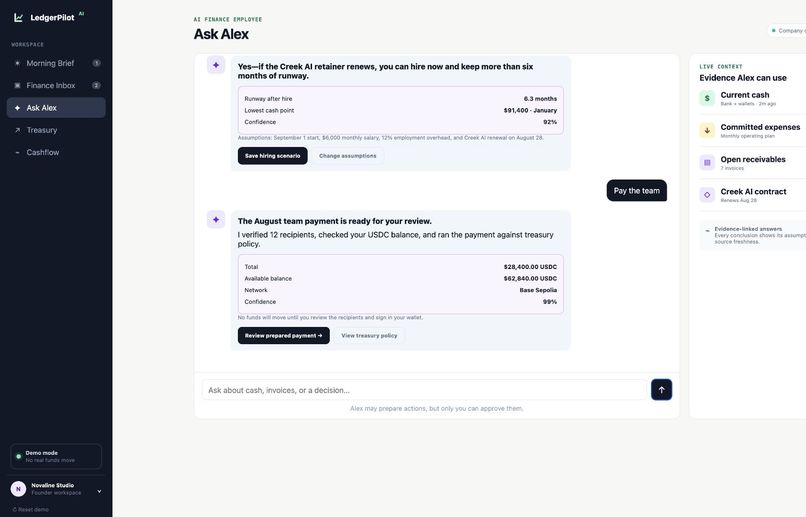
Payment Prepared
-
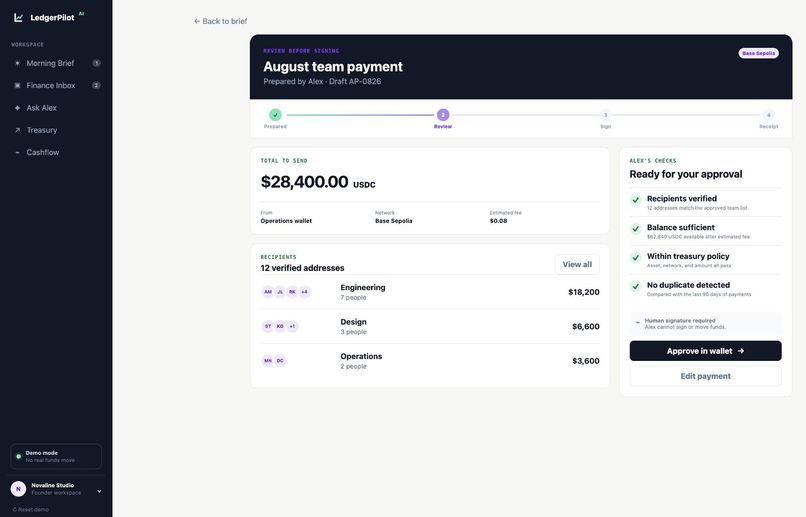
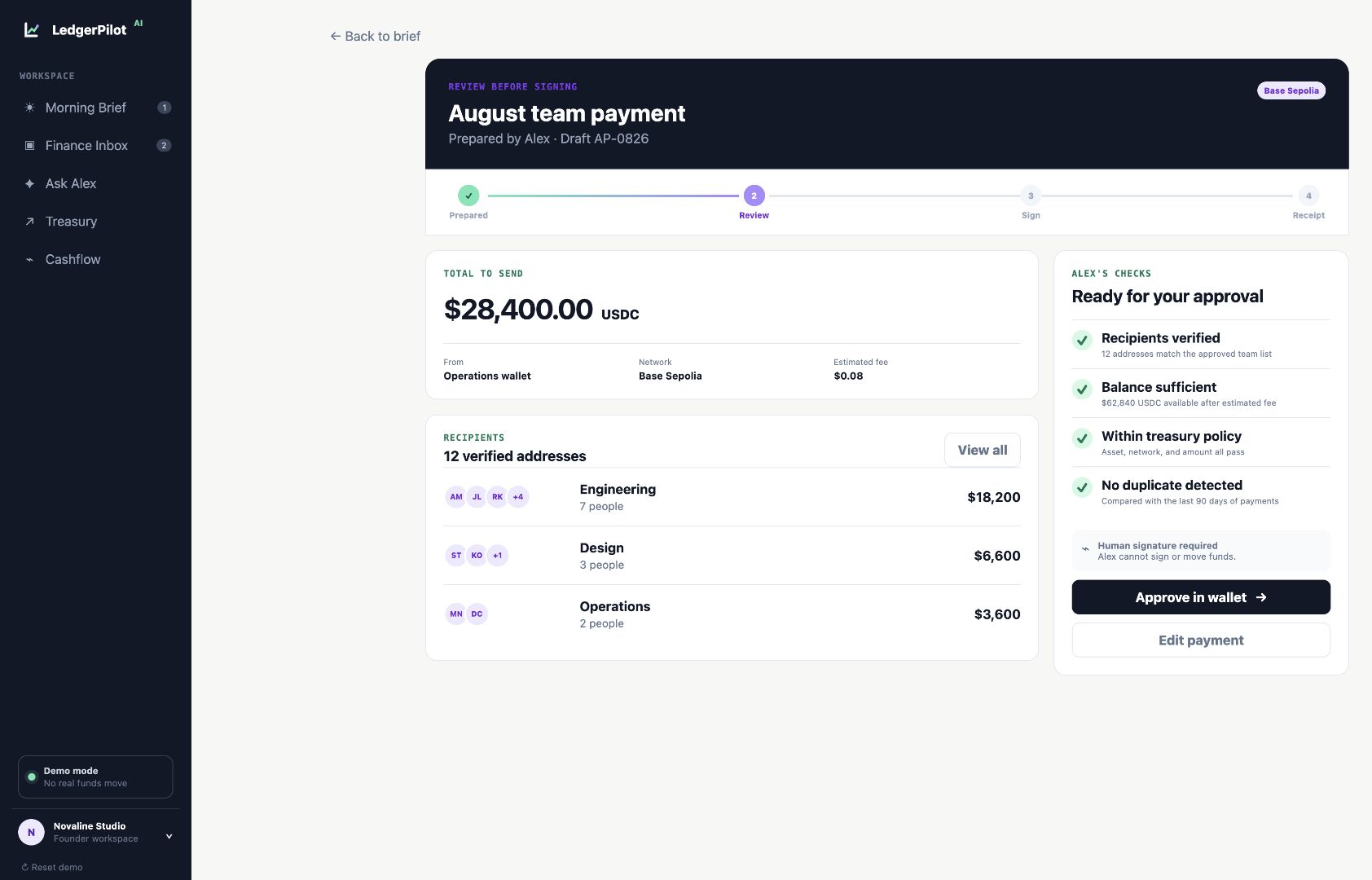
Approval Review
-
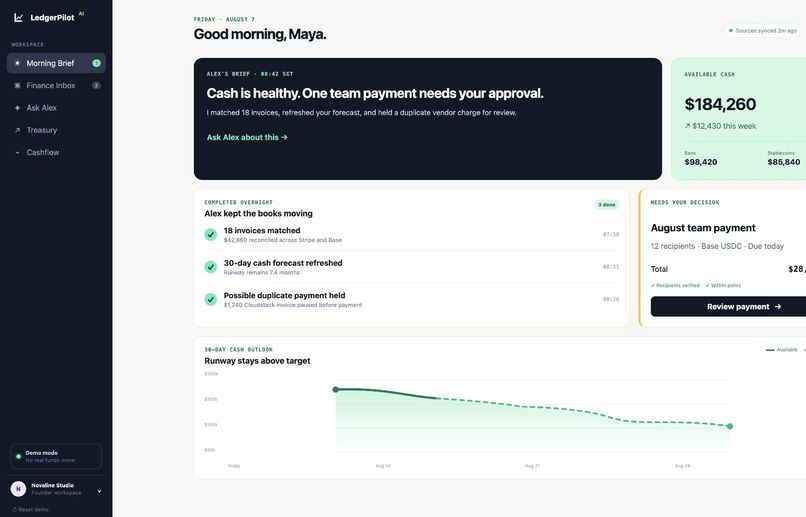
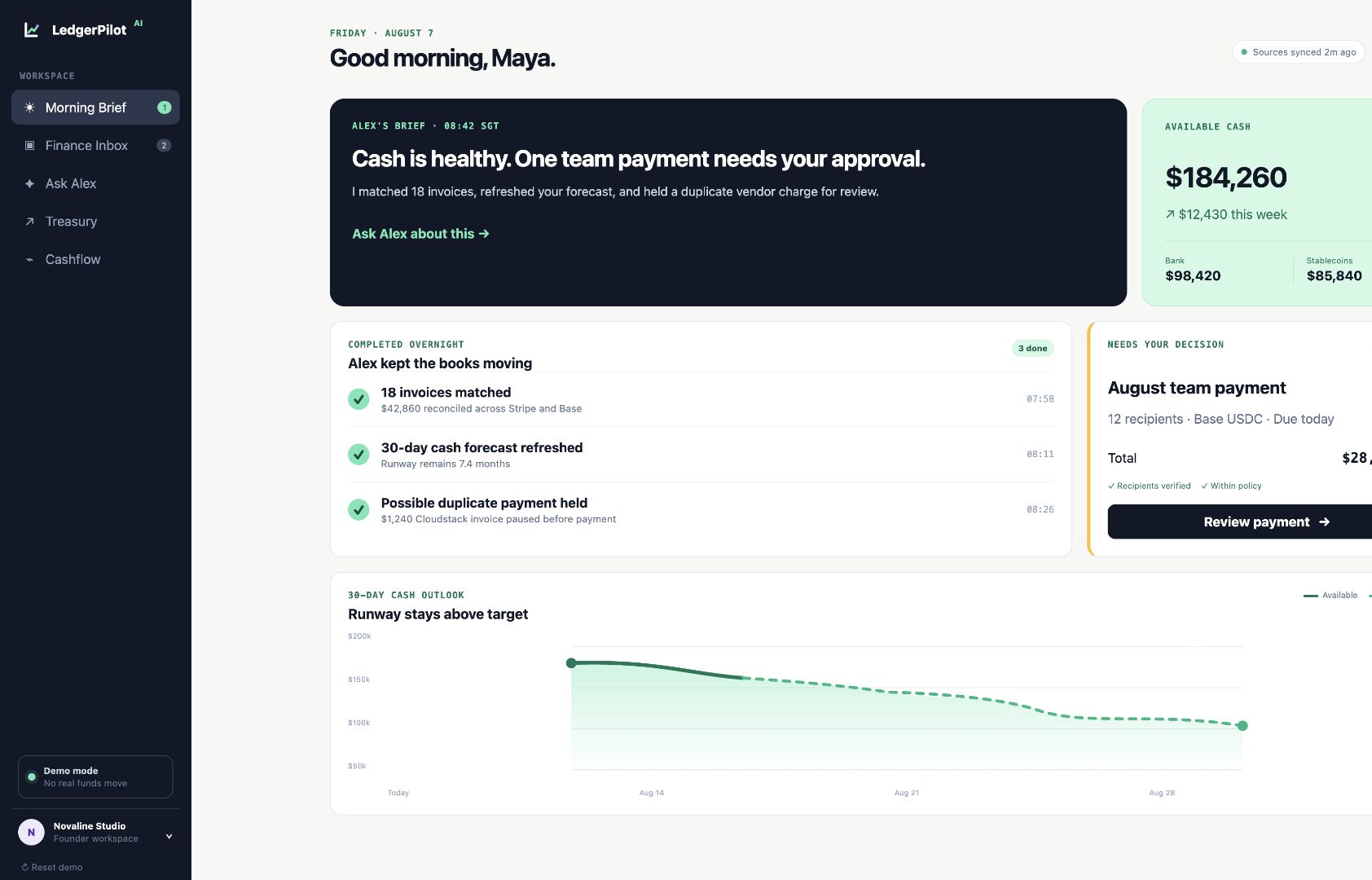
Morning Brief
-
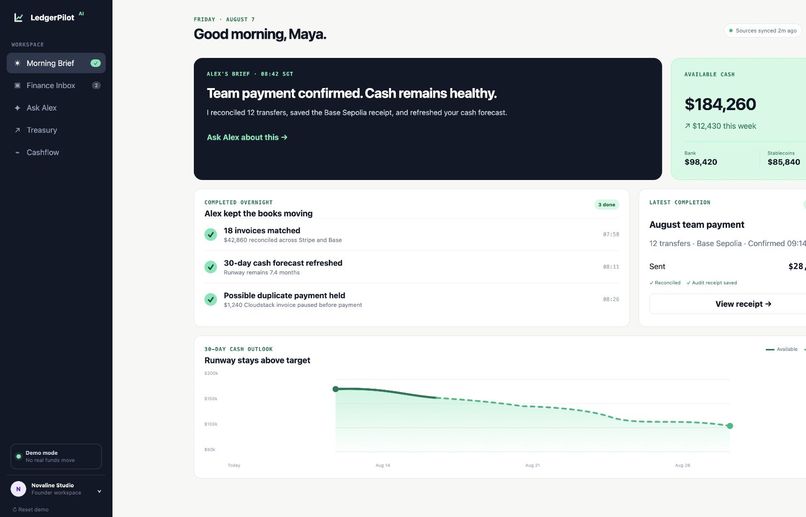
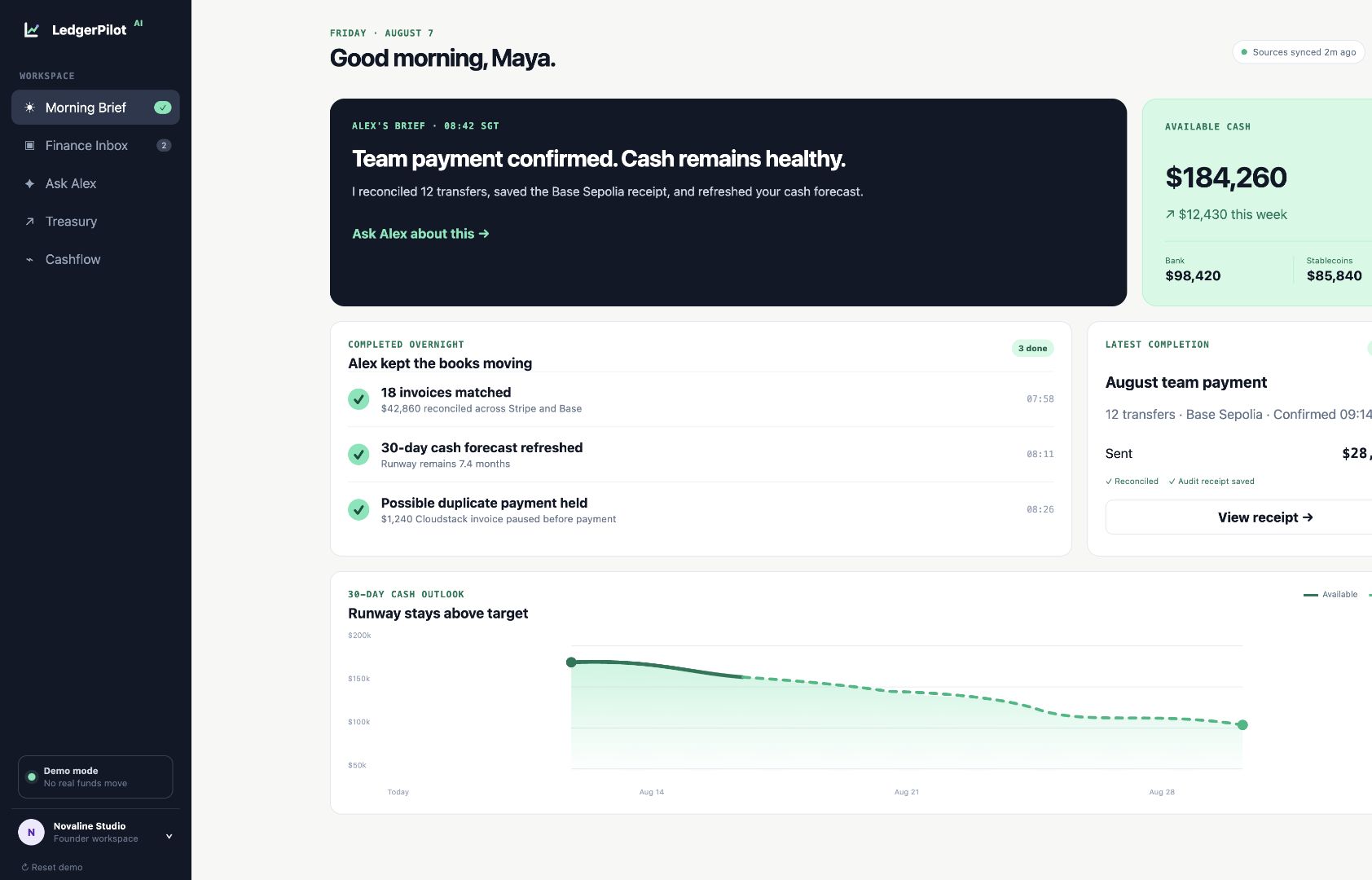
Updated Brief
One-line description
LedgerPilot monitors a company’s receivables, treasury, and cash flow, then turns financial events into a daily brief and safe, approval-ready actions.
The problem
Lean teams do not lack finance software; they lack the time and context to operate it. Invoices live in inboxes, payments live across bank accounts and wallets, and cash decisions are rebuilt in spreadsheets. Traditional tools record financial activity but still wait for a founder to notice the issue, interpret the numbers, and perform the task.
The solution
LedgerPilot is an AI Finance Employee called Alex. Every morning, Alex presents work already completed, exceptions that require attention, and decisions that need a human. A founder can ask questions such as “Can we hire another engineer?” or “Pay the team,” receive an evidence-backed answer, and review a prepared action before signing it in their wallet.
What makes it different
- Proactive rather than passive: LedgerPilot finds work and prepares the next step instead of waiting for dashboard navigation.
- Evidence before action: Recommendations expose sources, assumptions, confidence, and expected impact.
- Human authority: The AI can recommend and prepare, but it cannot sign or move funds.
- One operational story: Morning Brief, Finance Inbox, Conversation, and Approval form a continuous work loop rather than separate modules.
Initial customer
The MVP is designed for 5–30 person AI automation agencies in Southeast Asia that receive cross-border income, manage multiple currencies or stablecoins, and do not yet have a full finance team.
Stage 1 concept
The current design demonstrates four core moments:
- Alex opens the day with a Morning Brief.
- The Finance Inbox triages exceptions and completed work.
- AI Conversation turns business questions into evidence-backed decisions.
- Approval Flow makes every money-moving action legible and human-controlled.
Technical direction
- Next.js 15 and TypeScript for the product and API orchestration.
- Supabase for authentication, Postgres data, and evidence storage.
- OpenAI Structured Outputs for classification, reasoning, alerts, and actions.
- wagmi and a user-controlled wallet for approvals.
- Base Sepolia and a focused
TreasuryExecutorcontract for proposed, approved, and executed payment plans.
The security boundary is deliberate: the model may prepare a structured action, but policy checks run before submission and only the user’s wallet can sign.
Interactive prototype delivered
The deployed prototype now demonstrates the complete judge-visible loop:
“Pay the team.” → Retrieve company facts → Explain the plan → Review recipients and policy checks → Approve in wallet → Confirm on Base Sepolia → Save the audit receipt.
The Stage 1 build uses deterministic AI responses and a simulated wallet/receipt so the complete experience is reliable and safe to judge. The repository documents the live prototype separately from the planned OpenAI, Supabase, wagmi, and Base Sepolia integrations.
Long-term vision
LedgerPilot starts with the daily finance operations of lean agencies and grows into the financial operating layer for internet-native companies: one accountable AI employee coordinating receivables, treasury, cash planning, and controlled execution.
Asset disclosure
All company names, balances, invoices, confidence values, recipient counts, and transaction details shown in the prototype are fictional demonstration data.
Built With
- css3
- html5
- javascript
- next
- node.js
- postgresql
- rainbowkit
- sepolia
- solidity
- typescript
- wagmi

Log in or sign up for Devpost to join the conversation.