-
-
LedgerMate
-
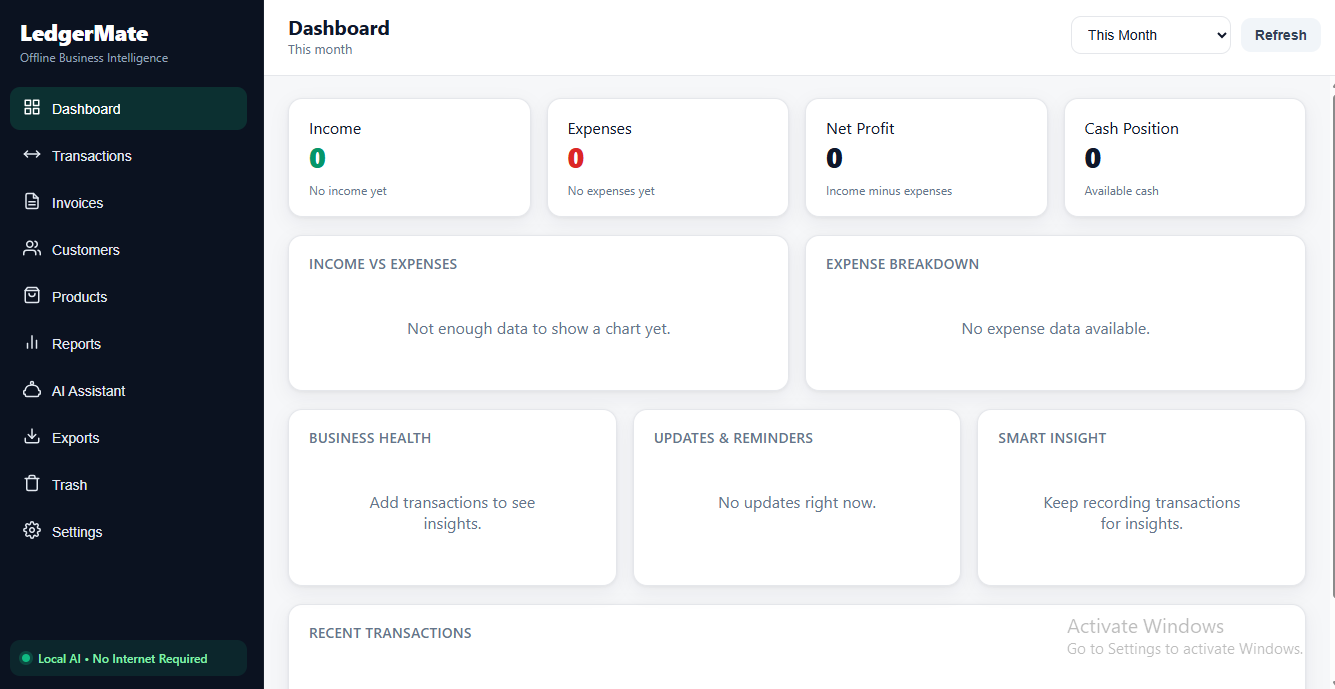
Dashboard
-
-
-
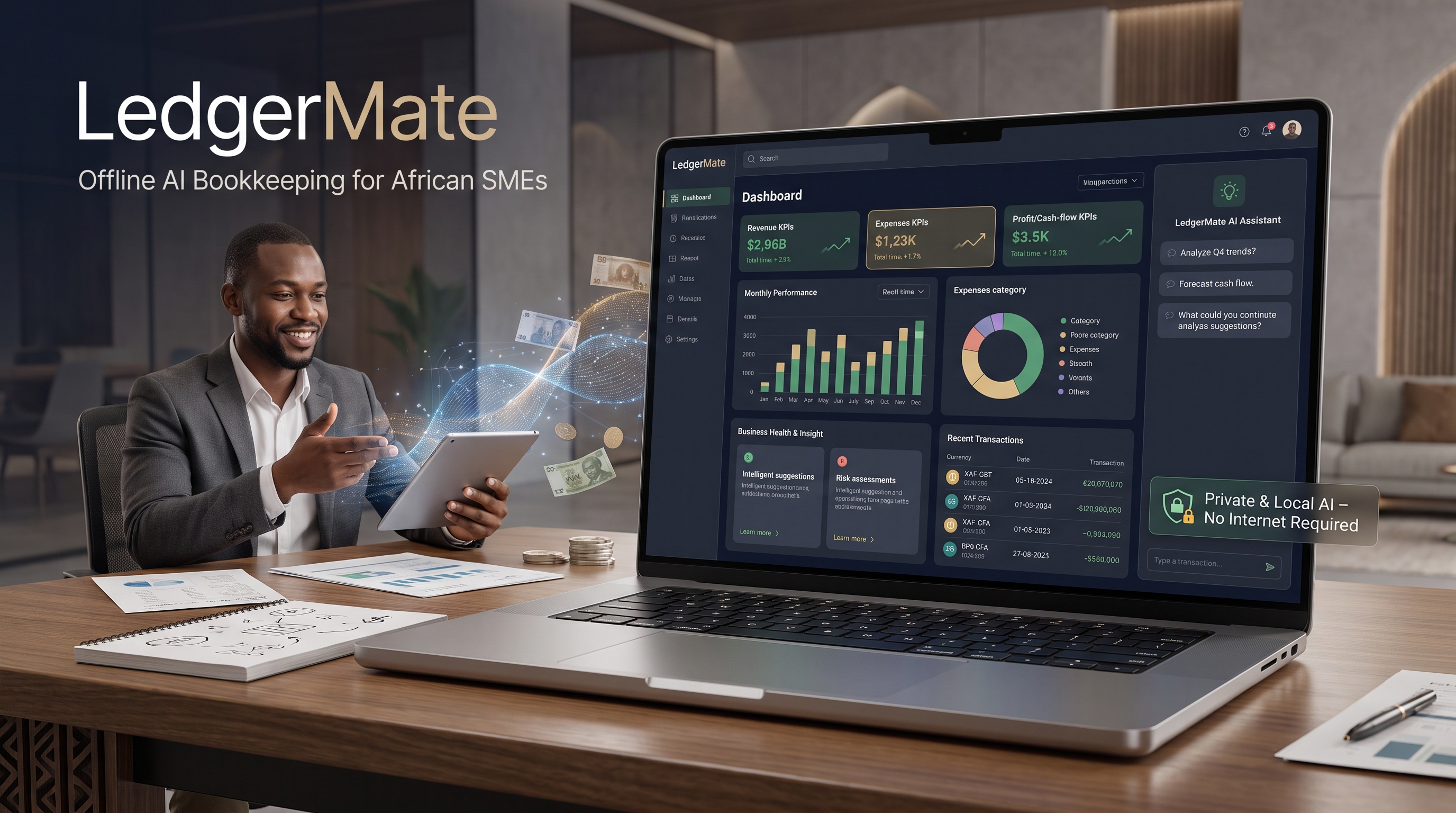
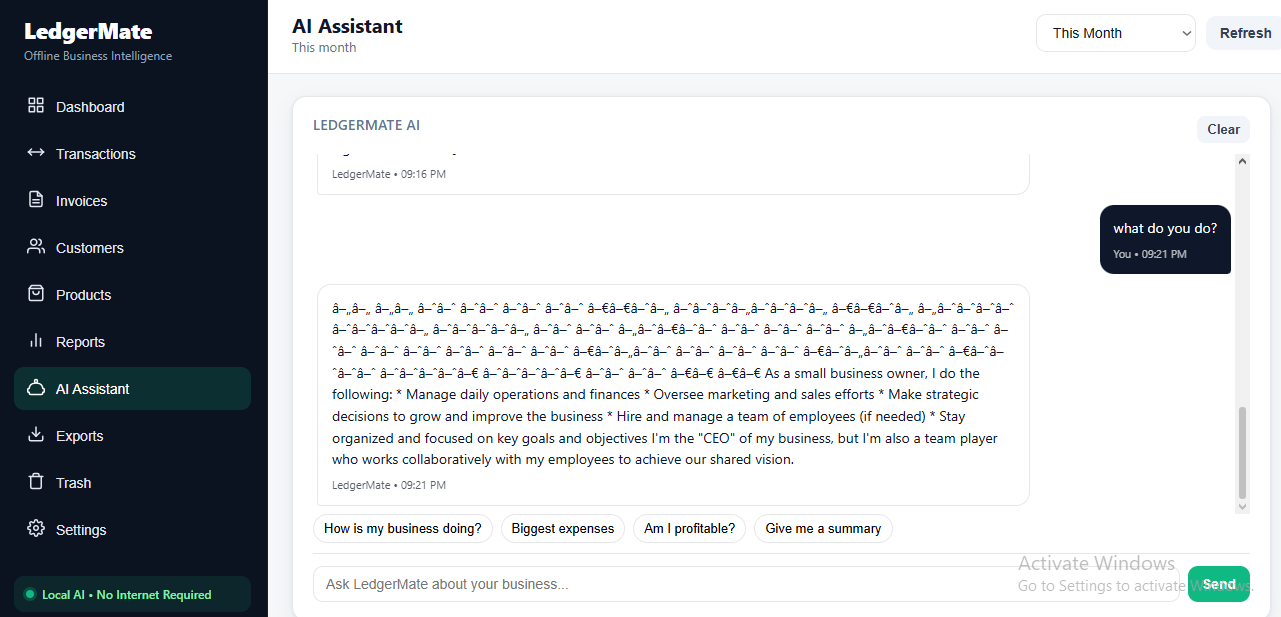
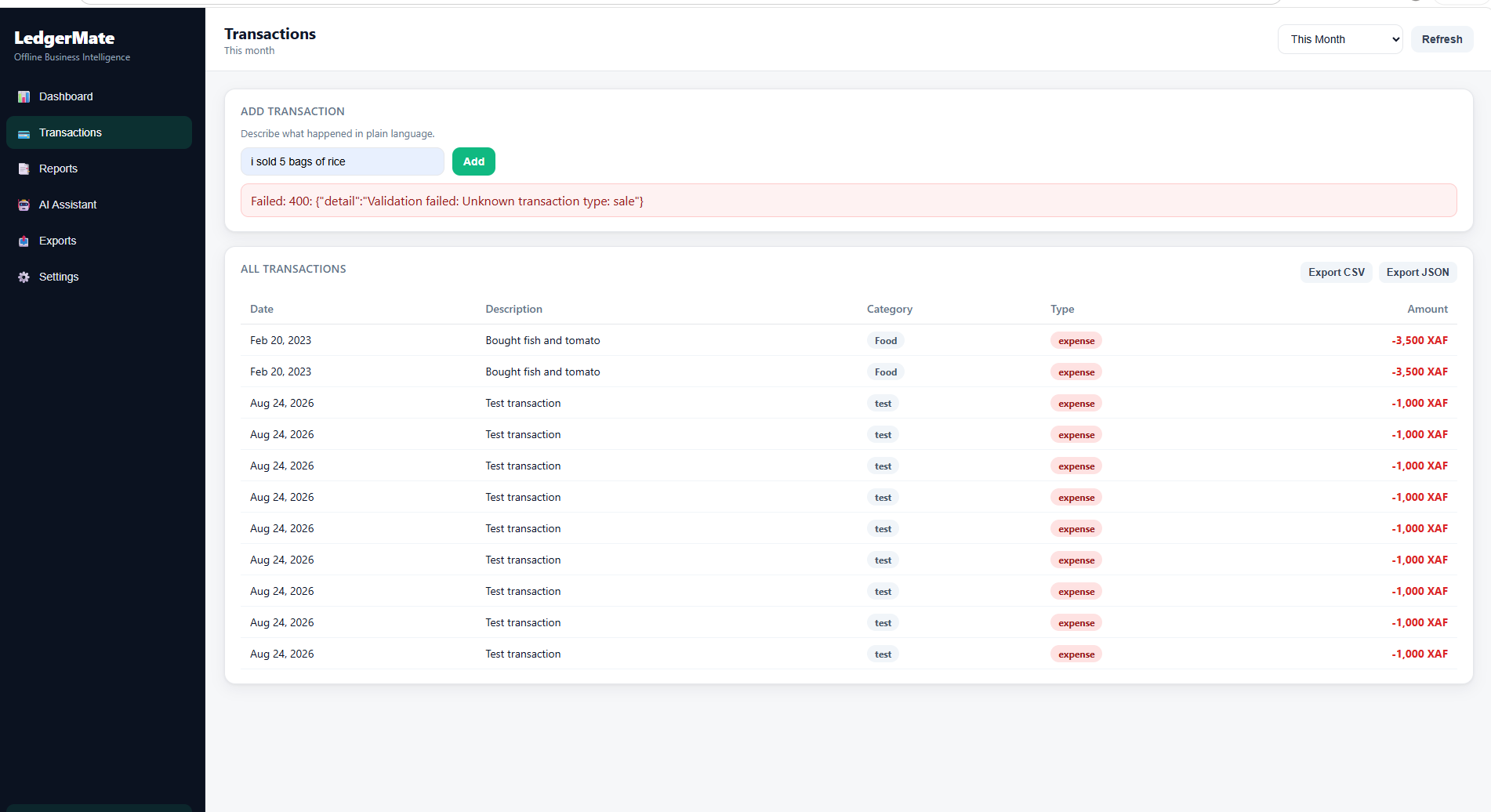
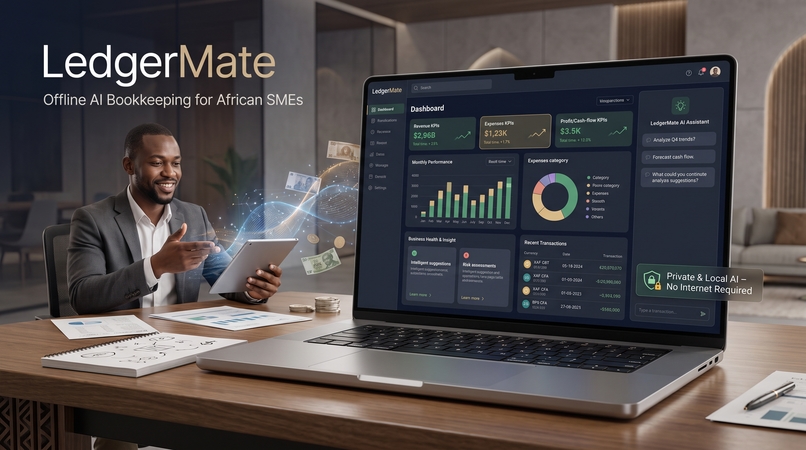
LedgerMate — Offline AI Bookkeeping for African SMEs
Small businesses often need reliable bookkeeping but may have limited access to expensive accounting software, stable internet connections, or technical expertise. LedgerMate was created to explore a simple question:
Can an AI assistant help a small business manage everyday bookkeeping completely offline?
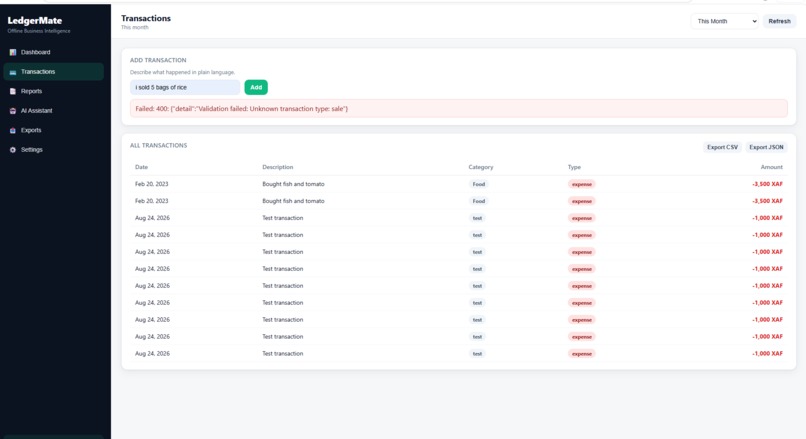
LedgerMate is an offline AI bookkeeping assistant designed for African SMEs. Instead of requiring users to understand accounting interfaces, users can describe transactions naturally, such as:
"I received 150,000 XAF from a customer for a completed order."
LedgerMate processes the transaction locally, validates the financial information, stores it in a local ledger, and makes the resulting data available for dashboards, reports, analytics, invoices, and business questions.
What inspired the project
The project was inspired by the practical challenges faced by small businesses operating in environments where reliable internet connectivity, affordable business software, and accounting expertise cannot always be assumed.
Rather than treating offline operation as a limitation, LedgerMate was designed around it as a core requirement.
How we built it
LedgerMate was built as a local-first application with an AI-assisted natural-language transaction workflow and a local database.
The system includes:
- Natural-language transaction entry
- Deterministic financial calculations
- Transaction validation and duplicate protection
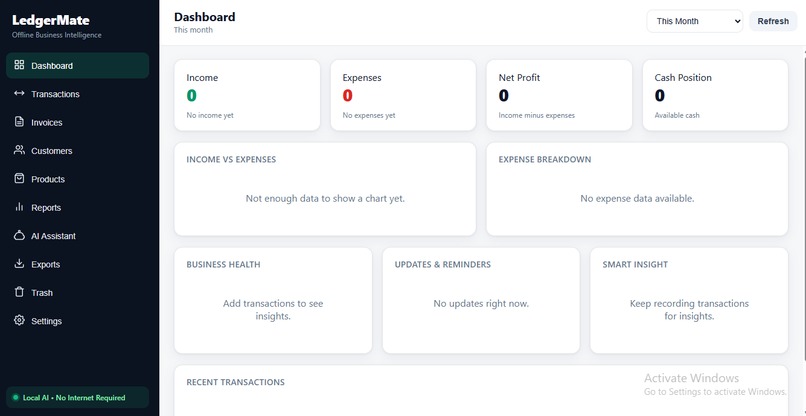
- Dashboard KPIs and financial charts
- Business health analysis
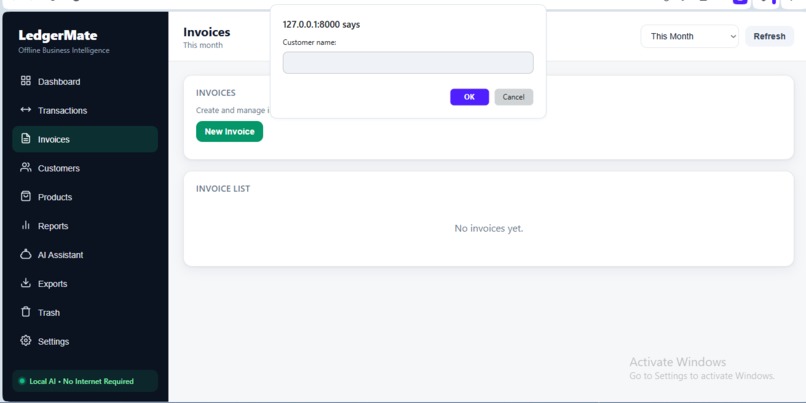
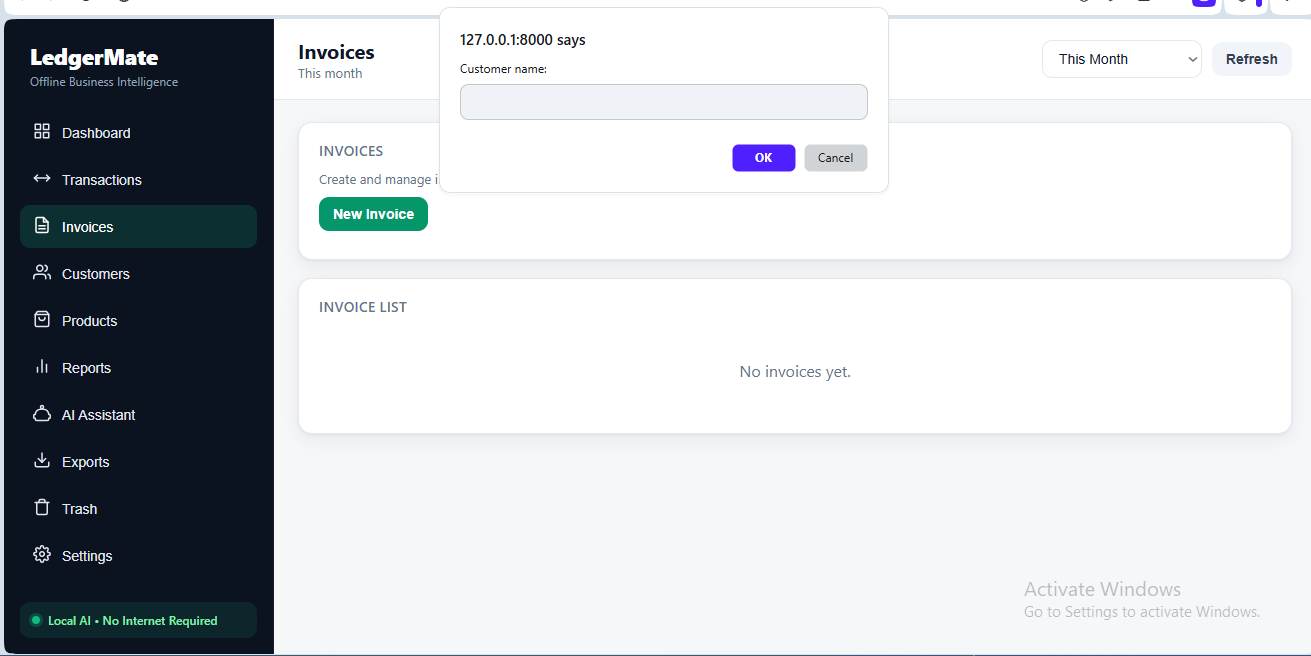
- Invoices and invoice templates
- Customer and product management
- Reports and analytics
- CSV, JSON, PDF, and DOCX exports
- Trash and recovery workflows
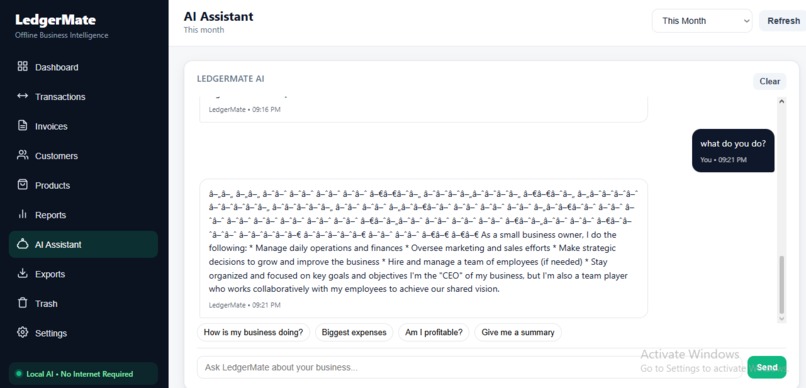
- AI business assistant
- Persistent AI conversations and business memory
- Global currency support
- Multilingual interface support
- Offline operation with local runtime paths
The AI component is designed to assist with interpreting user input, while financial calculations and ledger operations remain deterministic and validated by the application.
What we learned
The biggest lesson was that building an offline AI application is not simply about running a model locally. The surrounding software architecture is equally important.
We had to make the AI work together with structured financial data, validation rules, database operations, business settings, reporting, exports, and a user-friendly interface.
We also learned the importance of testing beyond the model itself. LedgerMate reached a verified automated test baseline of 96/96 passing tests, alongside a 24/24 setup verification result and an offline audit pass.
Challenges we faced
The project presented several challenges, including:
- Making natural-language transaction input reliable
- Preventing duplicate transactions
- Keeping financial calculations deterministic
- Enforcing correct transaction dates
- Maintaining complete offline operation
- Connecting AI responses to verified business data
- Implementing multilingual and multi-currency support
- Building professional reporting and export workflows
- Packaging the application for desktop distribution
The packaging process was particularly challenging because the application had to remain fully local while also being distributed as a standalone Windows application.
Why LedgerMate matters
LedgerMate demonstrates that useful AI-powered business software does not necessarily need a cloud backend.
By combining local AI, deterministic financial logic, structured business data, and an offline-first architecture, LedgerMate aims to make intelligent bookkeeping more accessible to small businesses operating with limited connectivity.
Built With
- accounting
- ai
- analytics
- api
- artificial
- bookkeeping
- business
- data
- fastapi
- generative
- gguf
- html
- intelligence
- javascript
- language
- learning
- llama
- llama.cpp
- machine
- natural
- offline
- processing
- python
- rest
- sqlite


Log in or sign up for Devpost to join the conversation.