-
-
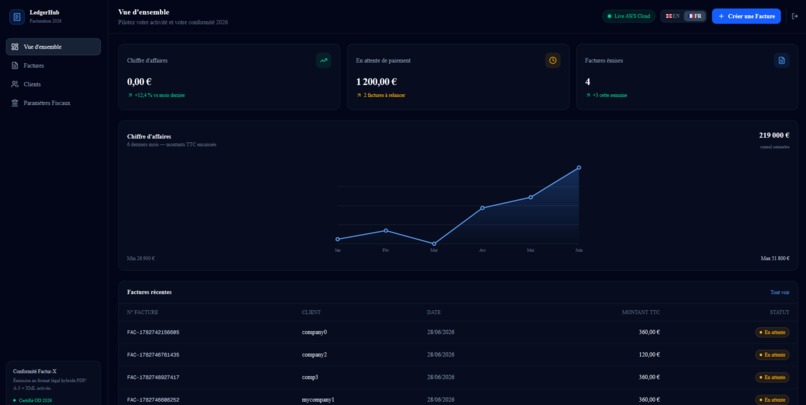
Overview
-
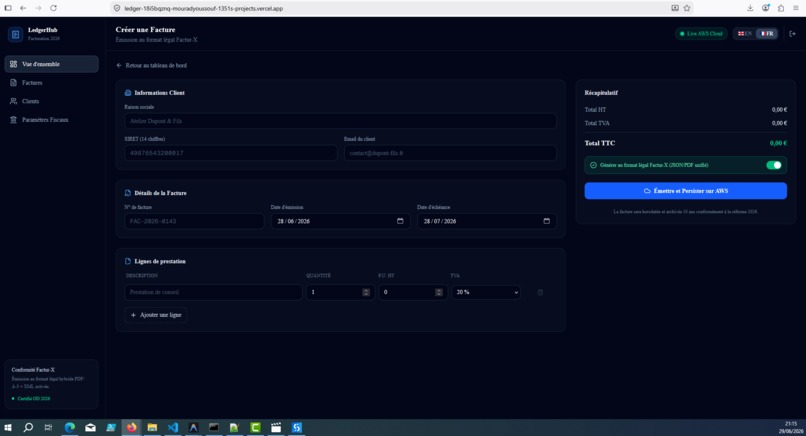
Create an Invoice
-
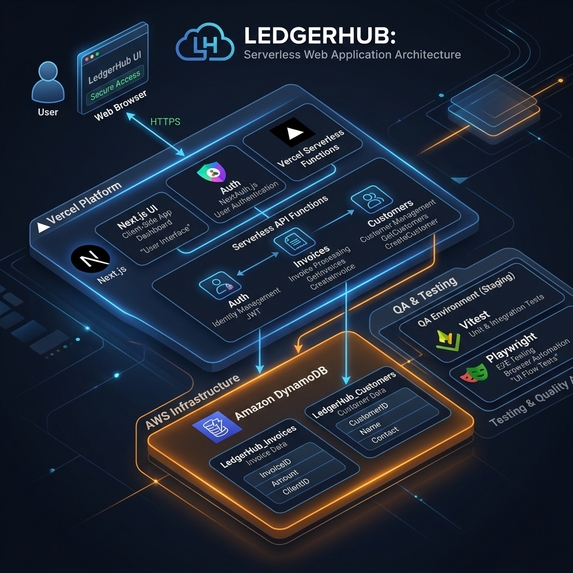
Architecture
-
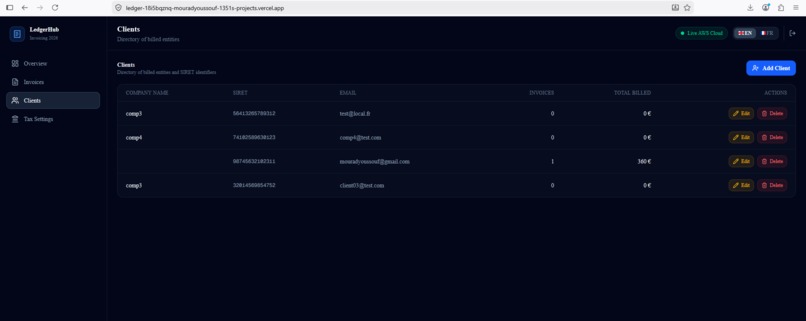
Client
-
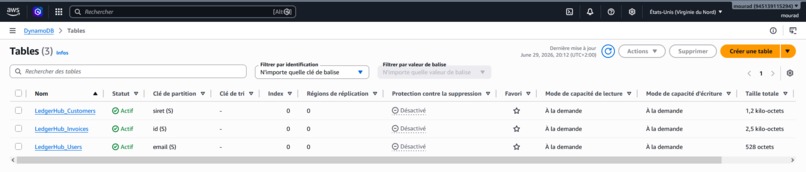
DynamoDB-AWS
Inspiration
LedgerHub was born from the upcoming 2026 French mandate for Factur-X electronic invoicing. The market is saturated with heavy, monolithic SaaS solutions that rely on unstable third-party authentication stacks, often leading to performance bottlenecks and platform lock-ins. We wanted to challenge the "all-in-one" provider paradigm by building a "Zero Stack" invoicing platform: sovereign, high-performance, and resilient, built entirely on modern web primitives and robust cloud infrastructure.
What it does
LedgerHub is a high-performance SaaS platform for Factur-X electronic invoicing compliance. It allows businesses and accounting cabinets to:
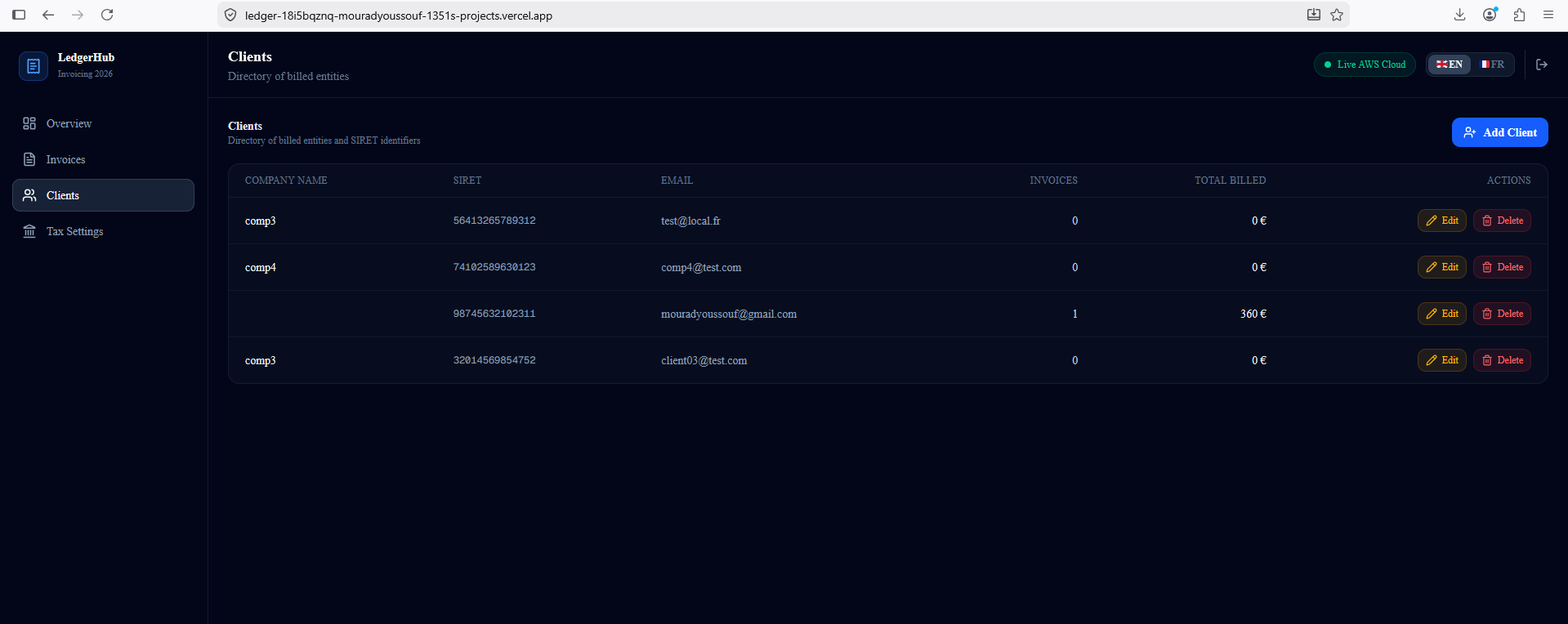
- Manage Clients: Create, update, and persist client data with strict multi-tenant isolation.
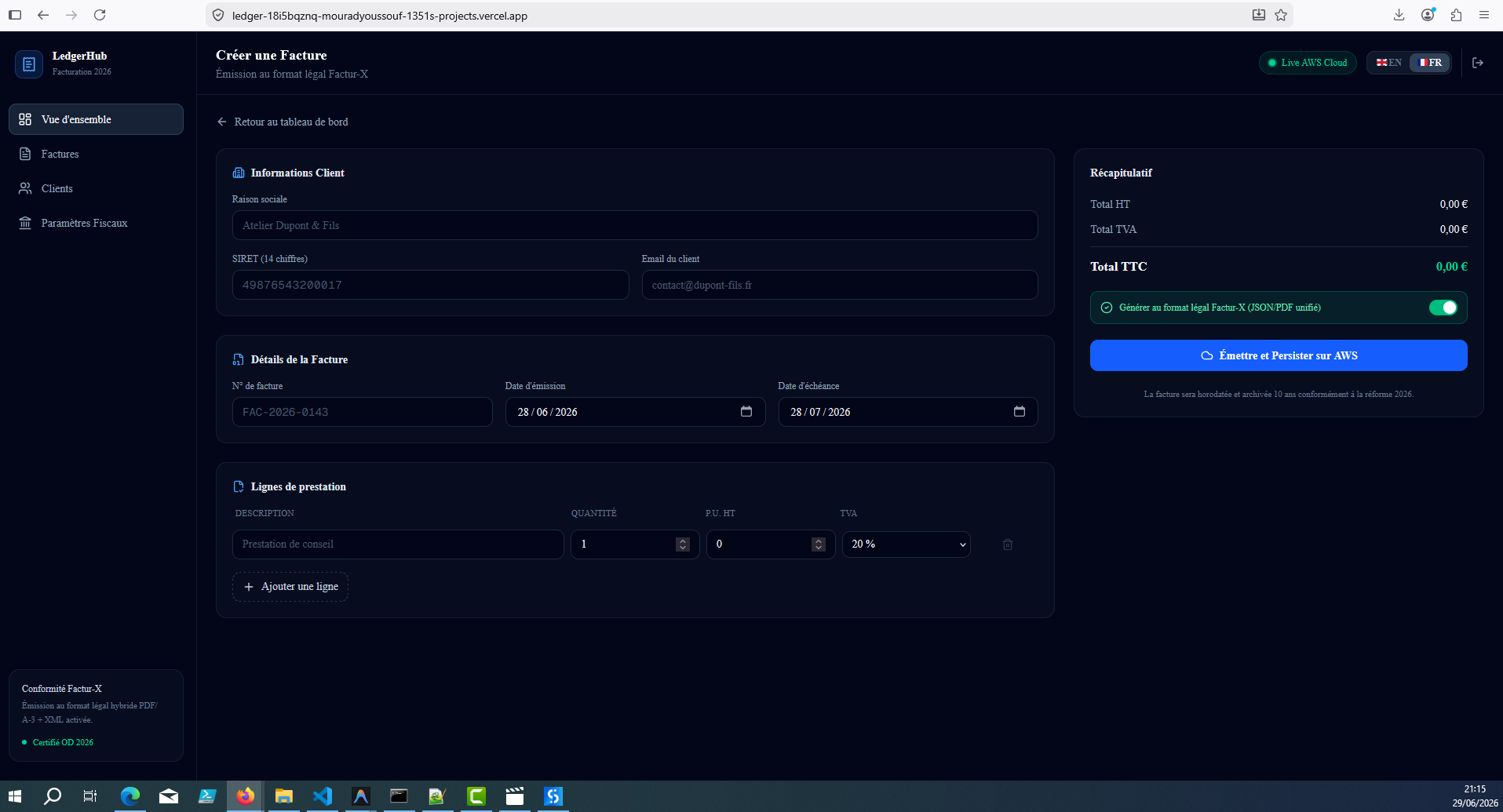
- Generate Invoices: Create compliant invoices with real-time dynamic tax calculation (HT/TTC).
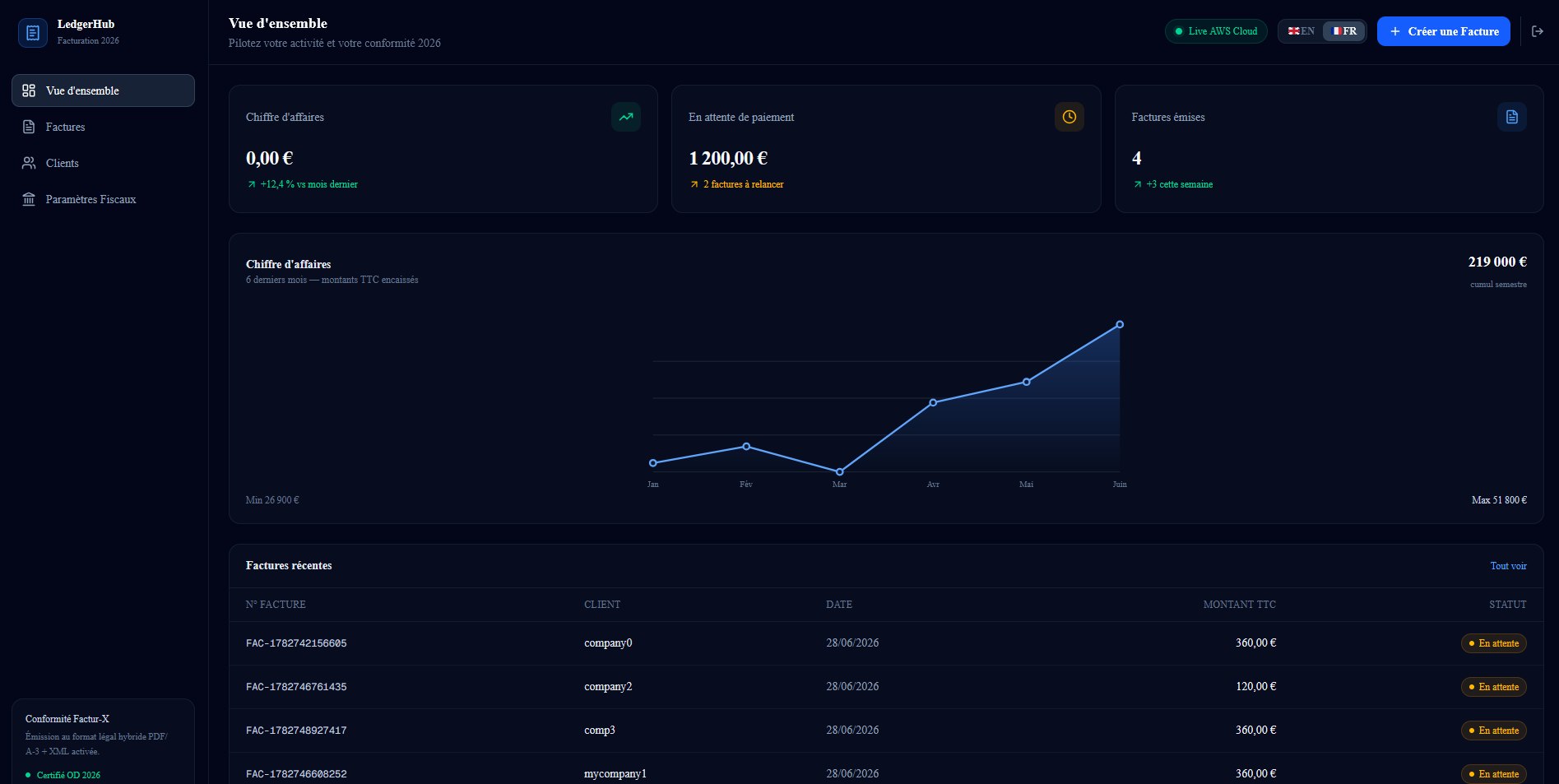
- Overview: Visualize financial health through a real-time dashboard aggregating data directly from the cloud.
- Ensure Compliance: Everything is built to support the hybrid PDF/A-3 + XML format required for 2026, ensuring users are future-proof. ## How we built it We prioritized a performance-first architecture, moving away from "black-box" providers to direct native integration:
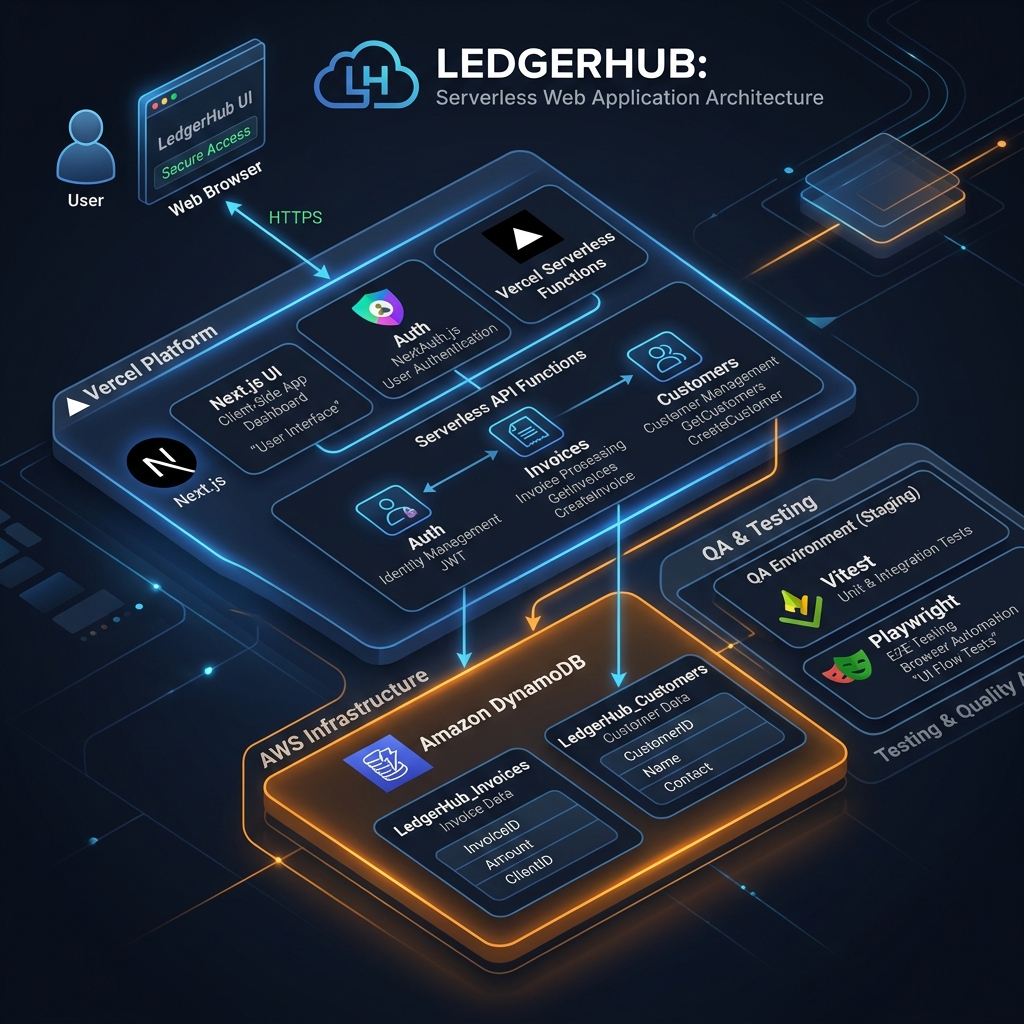
- Frontend: Next.js (App Router) with Tailwind CSS, deployed on Vercel.
- Backend: Native AWS SDK v3 integration directly in Server Components, eliminating middleware bottlenecks.
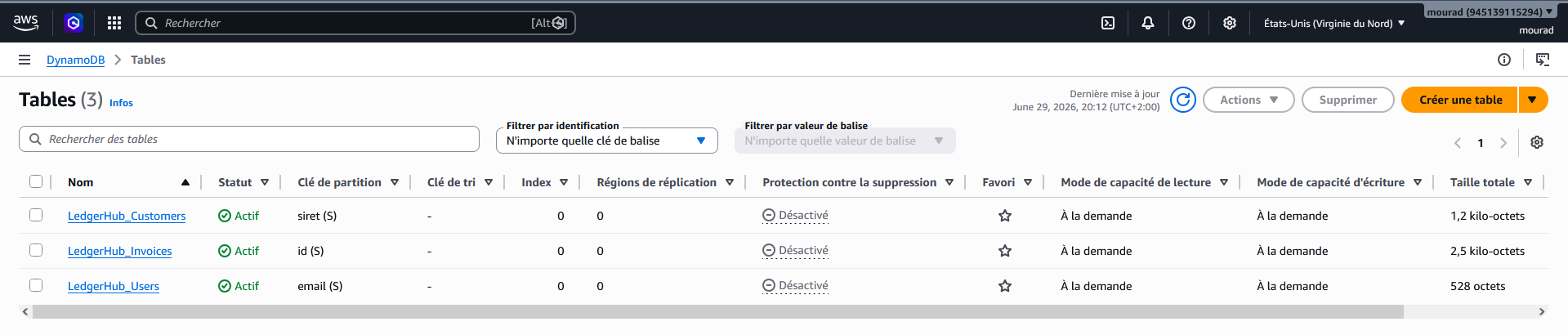
- Database: Amazon DynamoDB (Pay-Per-Request mode) for sub-150ms response times.
- Quality Assurance: Test-Driven Development (TDD) using Vitest to automate critical user journeys (Auth, Invoicing, Data Isolation).
- Resilience: Implemented a "Lazy Data Migration" pattern to handle schema evolution seamlessly as data scales.
## Challenges we ran into
The primary challenge was implementing strict multi-tenancy in a NoSQL environment. We encountered
ConditionalCheckFailedExceptionerrors when implementing security filters—initially viewed as a bug, it proved our security layer was working perfectly by preventing unauthorized cross-tenant data access. We also faced hurdles with local-to-production synchronization, which we solved by adopting a disciplined.envmanagement and TDD approach to ensure that code running on a local machine behaves exactly as it does on AWS.
Accomplishments that we're proud of
- Architectural Sovereignty: We successfully decoupled the application from third-party auth providers, proving that direct SDK integration is superior for speed and control.
- Resilient Data Migration: Building the "Lazy Migration" pattern allowed us to fix legacy data issues in real-time without downtime, a standard usually reserved for large enterprise systems.
- TDD Integration: Introducing automated non-regression testing in a hackathon timeframe, which gave us the confidence to push updates to production minutes before the deadline without fear of breaking the dashboard. ## What we learned We learned the importance of "Defensive Coding" in serverless environments. AWS DynamoDB is incredibly fast, but requires precise data modelling from day one. We also realized that the best way to ensure application stability is not by avoiding errors, but by instrumenting the system with automated tests that treat the database as a live entity rather than a static mock. ## What's next for LedgerHub
- Automated Bank Reconciliation: Integrate Open Banking APIs to match incoming payments with generated invoices.
- Advanced Compliance Engine: Add a dedicated serverless worker to validate the XML structure of Factur-X files against official XSD schemas.
- Audit Logging: Implement a immutable, blockchain-inspired audit log for all financial modifications, further increasing the platform's reliability for accounting firms.
Built With
- amazon-dynamodb
- aws-sdk-v3
- next.js
- react
- tailwind-css
- vercel
- vitest

Log in or sign up for Devpost to join the conversation.