Inspiration
Financial fraud investigations often begin with massive amounts of structured financial data. The challenge is not only finding suspicious transactions, but understanding where to look, how severe the situation is, and what the evidence means.
We wanted to build a tool that could turn raw financial data into an actionable investigation.
Inspired by the idea of a forensic “hound” following a financial scent, we created LedgerHound: a system that analyzes financial records, detects suspicious patterns, calculates risk, and then lets investigators interact with the resulting evidence through an AI-powered chatbot.
Our goal was simple:
Turn raw transactions into a clear trail of evidence.
What it does
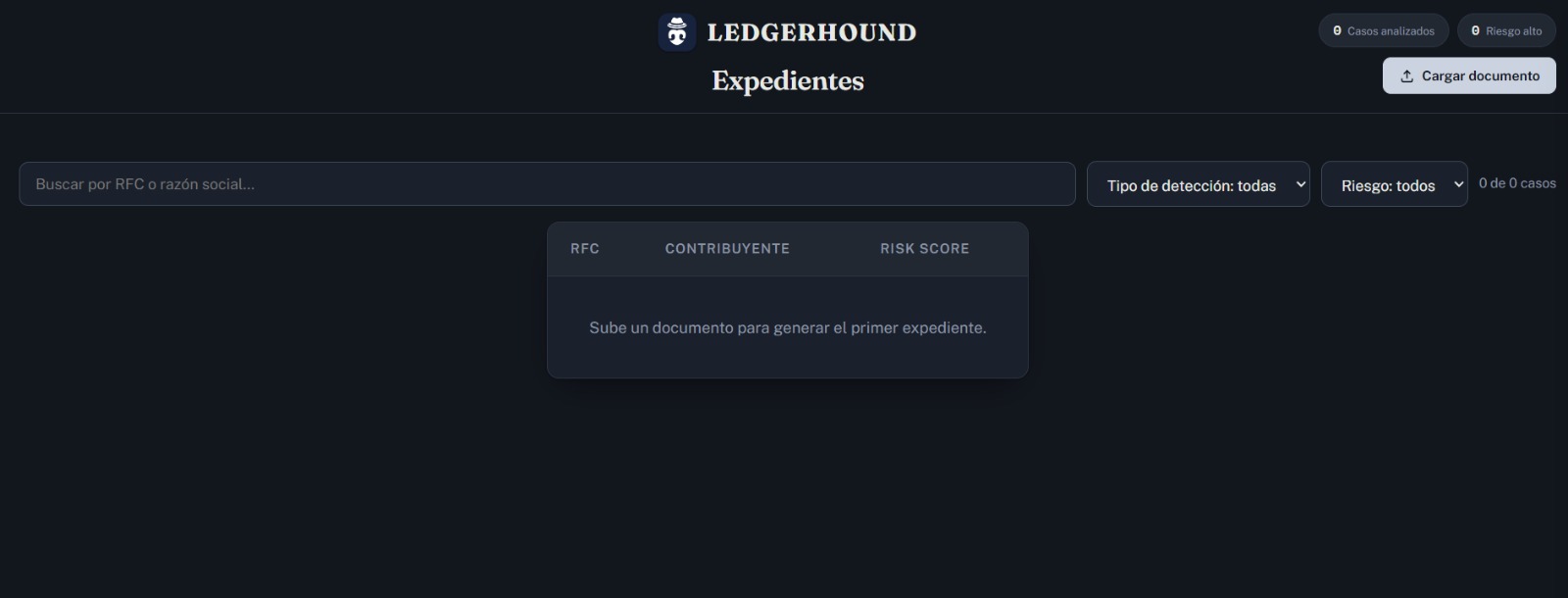
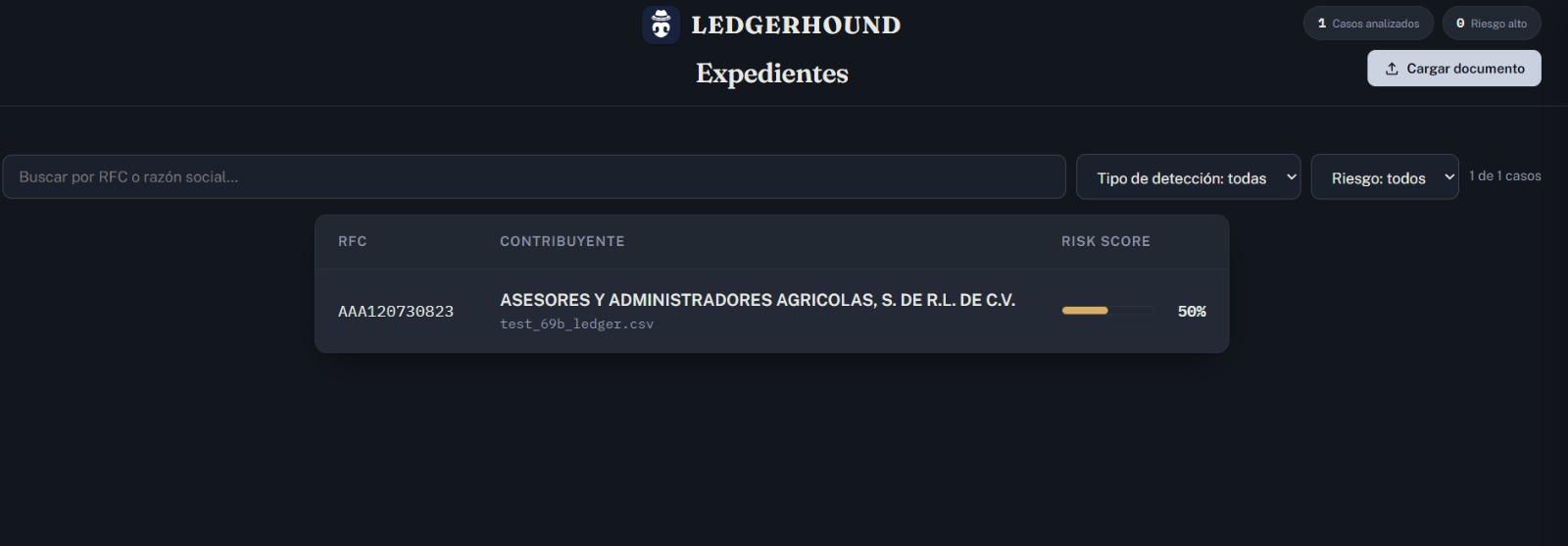
LedgerHound analyzes uploaded financial datasets and transforms them into a structured forensic assessment.
The system:
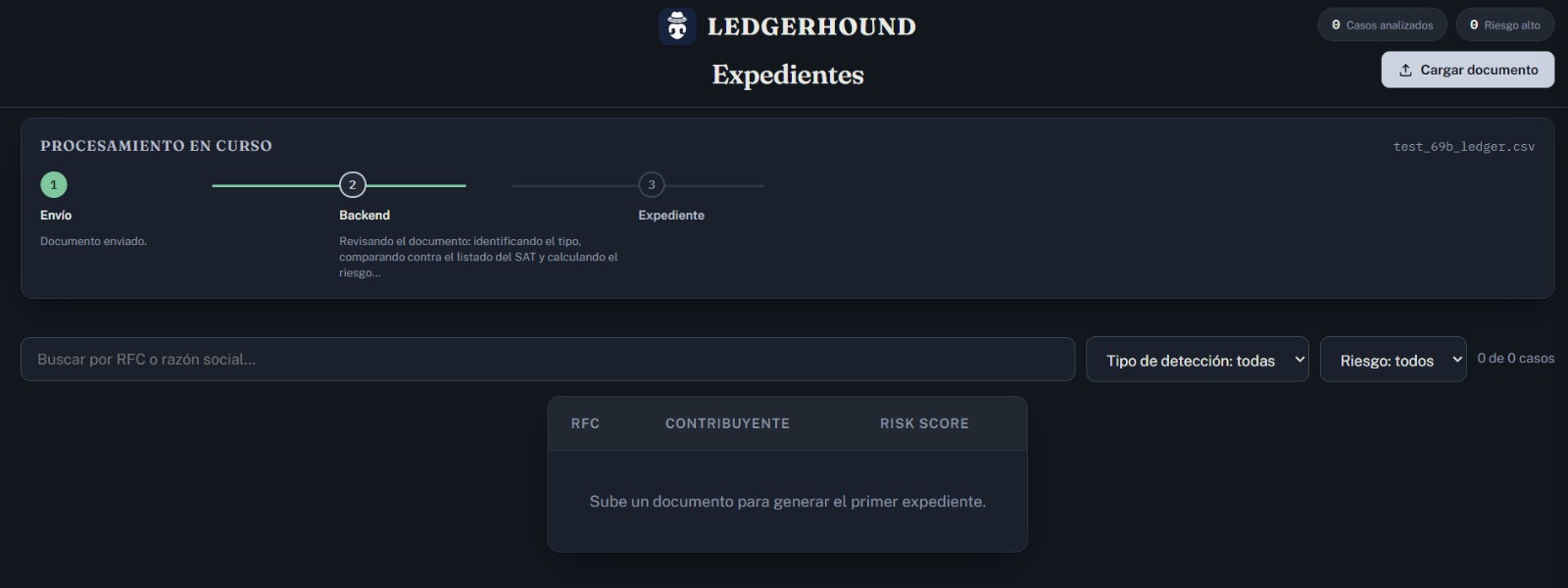
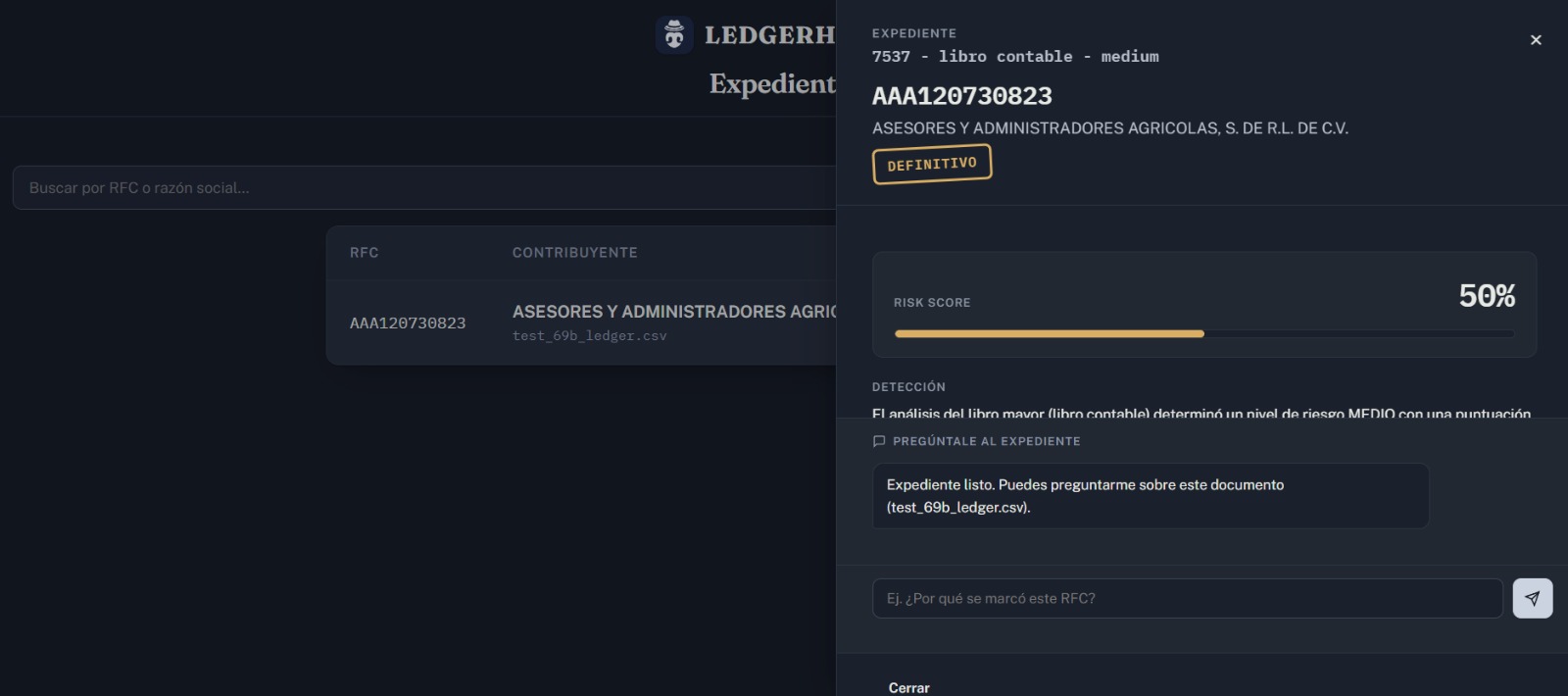
Receives a financial document or dataset. Parses the data into structured and manageable elements. Classifies the document and identifies the type of information it contains. Uses a Router to determine the severity level of the case: HIGH, MEDIUM, or LOW. Sends the relevant information to the Analyzer, which looks for suspicious patterns such as: Duplicate transactions Anomalous movements Detection of money trail Suspicious amounts Potentially relevant financial relationships Calculates an overall Risk Score. Generates a forensic report containing the findings. Finally, an AI chatbot powered by Gemini allows the investigator to ask questions about the report and receive answers based specifically on the analyzed evidence.
This creates a workflow from:
Document → Analysis → Risk Score → Report → AI Investigation
How we built it
We built LedgerHound as a multi-stage forensic analysis pipeline, separating deterministic data analysis from generative AI.
First, the user uploads a dataset, in our prototype based on SAT-related information such as the 69/69-B dataset. The document is parsed and transformed into structured data that our system can process.
Then, a document classifier determines how the incoming data should be handled. A Router evaluates the resulting information and assigns a severity level:
HIGH / MEDIUM / LOW
The corresponding analysis layer then evaluates the financial records, including duplicate movements, anomalous transactions, amounts, and relevant patterns. These findings are combined into a Risk Score.
Once the analysis is complete, LedgerHound generates a forensic report summarizing the relevant findings.
This is where our Generative AI layer comes in.
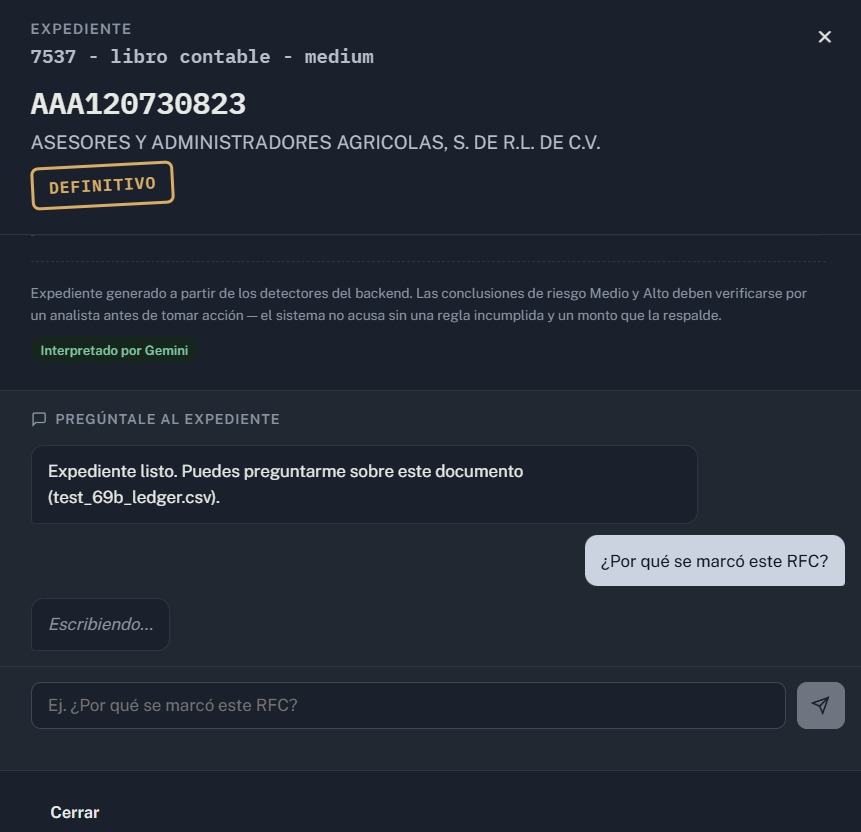
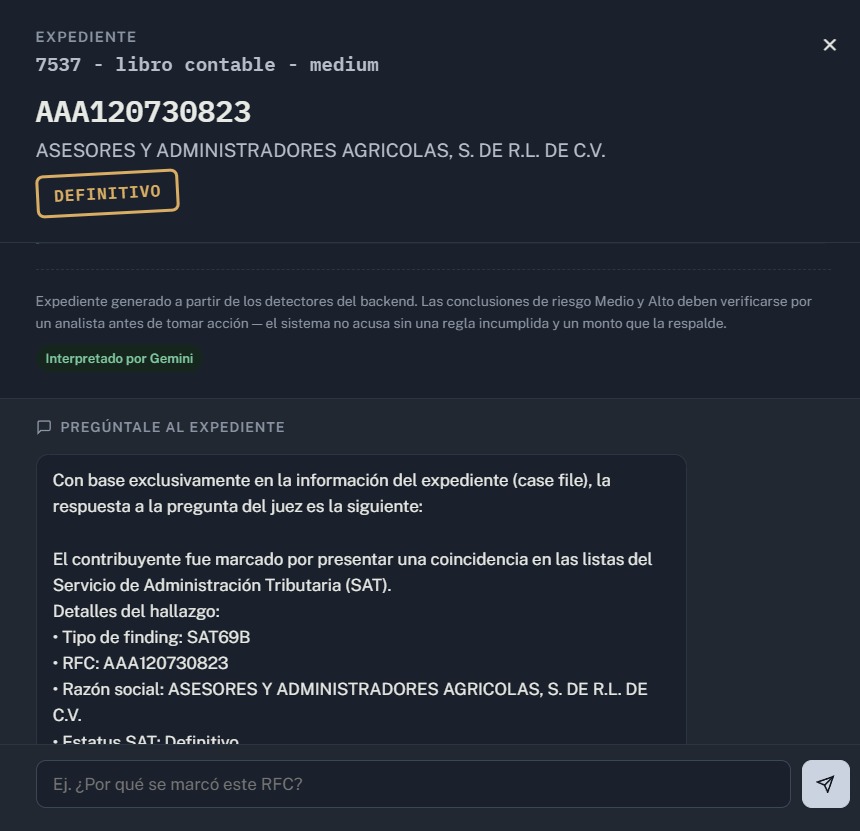
We integrated Gemini as a chatbot that is connected to the generated report. Instead of asking the LLM to independently decide whether something is fraudulent, we provide it with the specific evidence and results produced by our analysis pipeline.
The investigator can then ask questions such as:
“Why was this case classified as high risk?”
“Which transactions were duplicated?”
“What caused the risk score to increase?”
“Show me the anomalous movements.”
The chatbot uses the report's data to explain the findings and help the investigator navigate the evidence.
In short, our architecture is:
Upload → Parse → Classify → Route → Analyze → Risk Score → Report → Gemini Chatbot
This separation makes the system more controlled, explainable, and useful for forensic investigation.
Challenges we ran into
One of our biggest challenges was deciding where AI should actually be used.
At first, it was tempting to make the LLM responsible for the entire fraud-detection process. However, we realized that asking a generative model to independently determine whether financial activity is fraudulent would make the results harder to validate and explain.
Instead, we separated the problem into two parts:
The analytical engine finds the signals. The AI explains and investigates those signals.
Another challenge was processing financial data in a way that could be consistently analyzed. We had to parse and structure the uploaded information before the system could identify duplicates, anomalies, and other relevant patterns.
Finally, we had to transform technical analysis results into something that an investigator could actually understand and use.
Accomplishments that we're proud of
We're proud of building a complete end-to-end forensic workflow rather than simply creating a chatbot that answers questions about a dataset.
LedgerHound takes the user from a raw document all the way to an interactive investigation:
Raw Data → Structured Data → Classification → Risk → Evidence → Conversation
We're particularly proud of the separation between our analysis engine and AI layer.
The system doesn't ask Gemini to blindly identify fraud. Instead, our analysis produces concrete findings first, and Gemini helps the investigator understand, explore, and question those findings.
This makes the AI feel less like a generic assistant and more like an investigator's copilot.
What we learned
We learned that adding AI to a complex problem doesn't necessarily mean letting the AI do everything.
For forensic applications, trust, traceability, and explainability matter.
A system that simply says:
“This transaction looks fraudulent.”
is not enough.
An investigator needs to know:
What happened? Why is it suspicious? Which data supports the finding? How severe is the situation?
By separating the analytical pipeline from the generative AI layer, we learned that AI can be much more valuable when it is used to interpret and investigate structured evidence rather than invent conclusions.
We also learned how to transform a complex financial-data problem into a simple user experience: upload the data, receive a risk assessment, read the report, and ask questions.
What's next for Ledgerhound
Our next goal is to evolve LedgerHound from a prototype into a more complete AI-assisted forensic investigation platform.
We want to expand the system with:
- More financial datasets and data sources.
- More sophisticated anomaly detection.
- Expanded transaction relationship analysis.
- Financial network and money-flow visualization.
- More forensic indicators and risk factors.
- Cross-file investigations.
- Historical comparison of financial activity.
- Automatic evidence timelines.
- More detailed and customizable forensic reports.
- Real-time monitoring in future versions.
- Continuous investigator feedback to improve the system.


Log in or sign up for Devpost to join the conversation.