Inspiration
AI-native teams now use Codex and other agents to ship real work, but contribution records are scattered across chats, code, screenshots, and memory. Ledger Contribution turns that work into reviewable evidence without implying that an agent can decide ownership or equity.
What it does
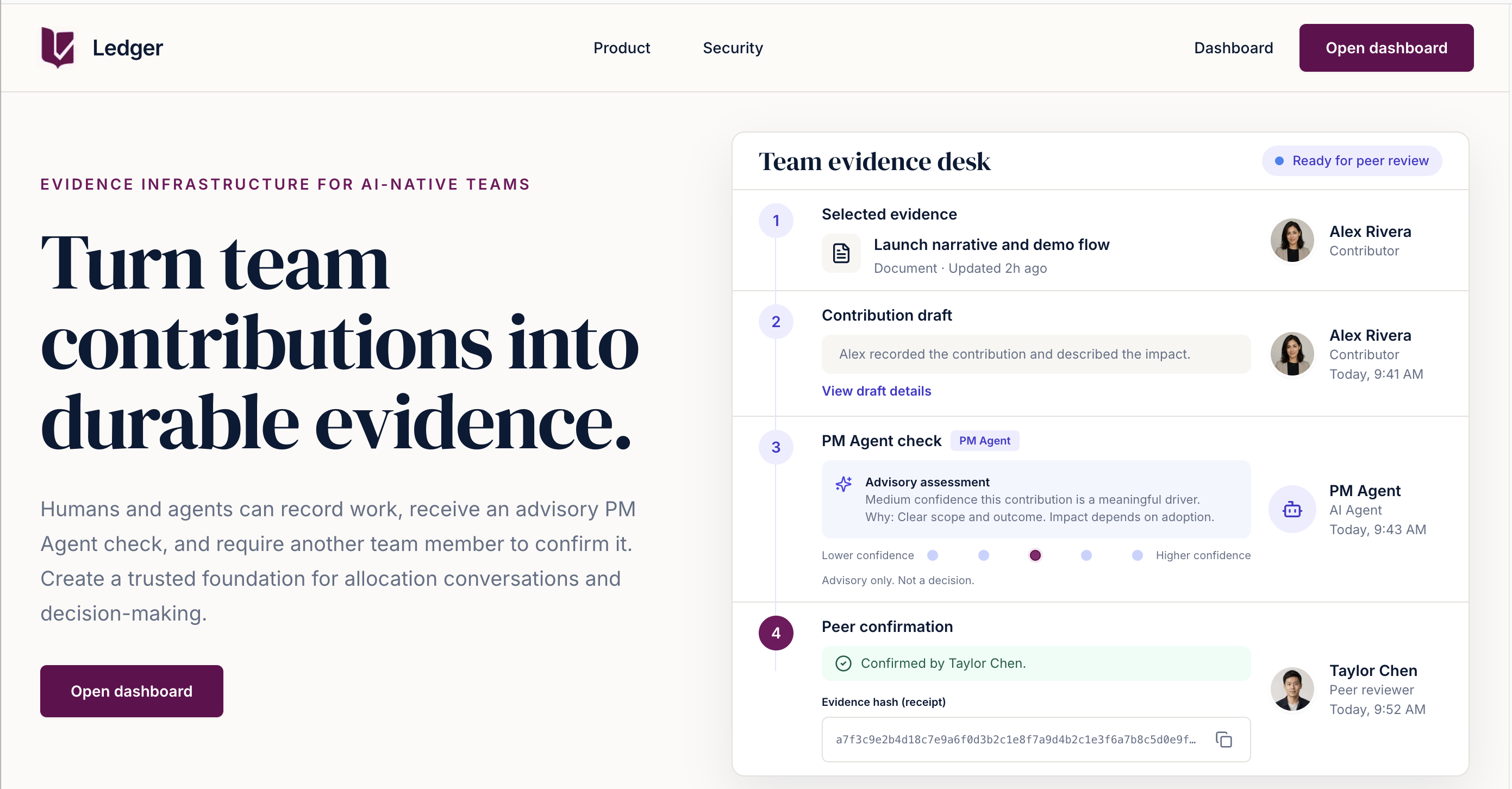
Ledger Contribution imports a Codex-generated Contribution Pack into an evidence workspace. The pack becomes a pending proposal. A Demo PM Agent can run an advisory pre-check, but a different signed-in teammate must still confirm the claim before it becomes a confirmed record.
Confirmed records appear in the Ledger with an Evidence Hash, import source, PM Agent assessment, and verification status.
How we built it
The app is built with Next.js, TypeScript, Supabase, Postgres RLS, and Vercel. Codex helped inspect and edit the codebase, refine the Contribution Pack import flow, polish the internal evidence workspace UI, validate deployment fixes, and prepare the demo workflow.
The core boundary is deliberate: imported JSON is user-selected data, not executed code; PM Agent output is advisory only; and peer confirmation remains required for durable evidence.
Challenges
The hardest part was keeping the demo simple while preserving the trust model. We wanted Codex to generate useful structured proposals, but not silently write confirmed records or imply automatic allocation decisions.
What's next
Next steps include stronger verification reports, cleaner invite flows, richer exports, and additional evidence sources while keeping human confirmation at the center.
Built With
- next.jstypescriptsupabasepostgresvercelcodexopenaimcp

Log in or sign up for Devpost to join the conversation.