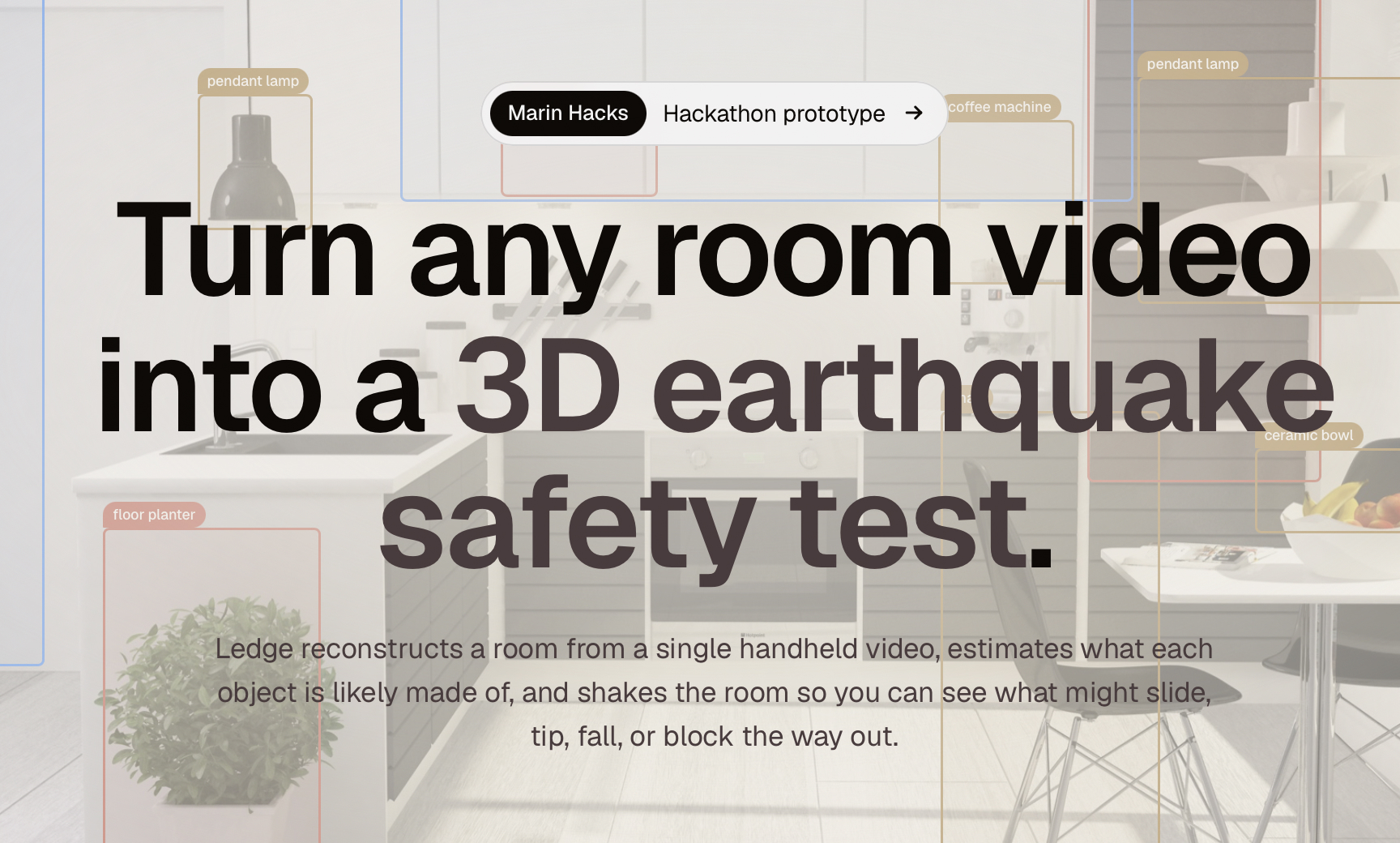
most people in earthquake countries have no idea which objects in their own home are the dangerous ones. The advice that exists is super generic and it never tells you if your bookcase, on your floor, is actually the thing that's going to hurt you. we wanted to replace the pamphlet with something you can watch happen.
What does Ledge do?
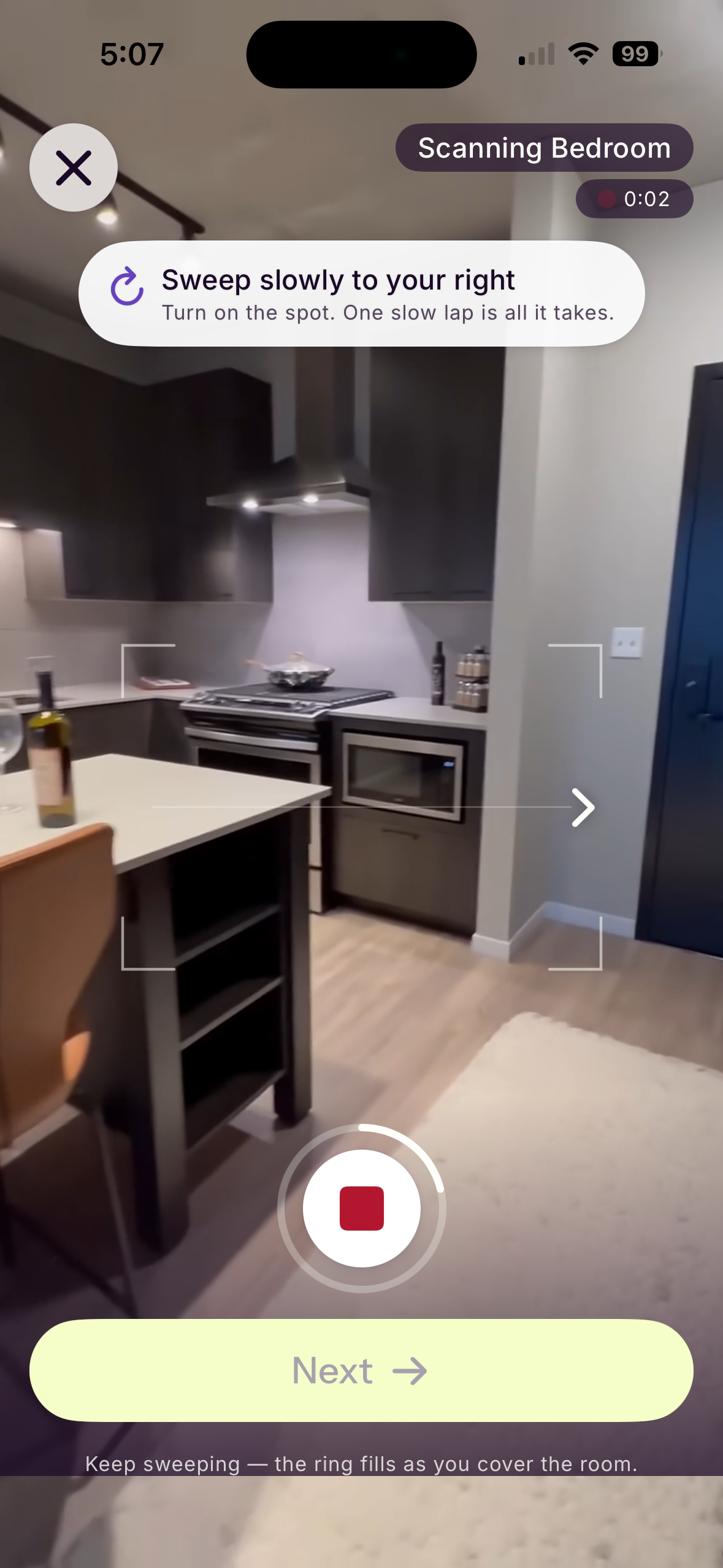
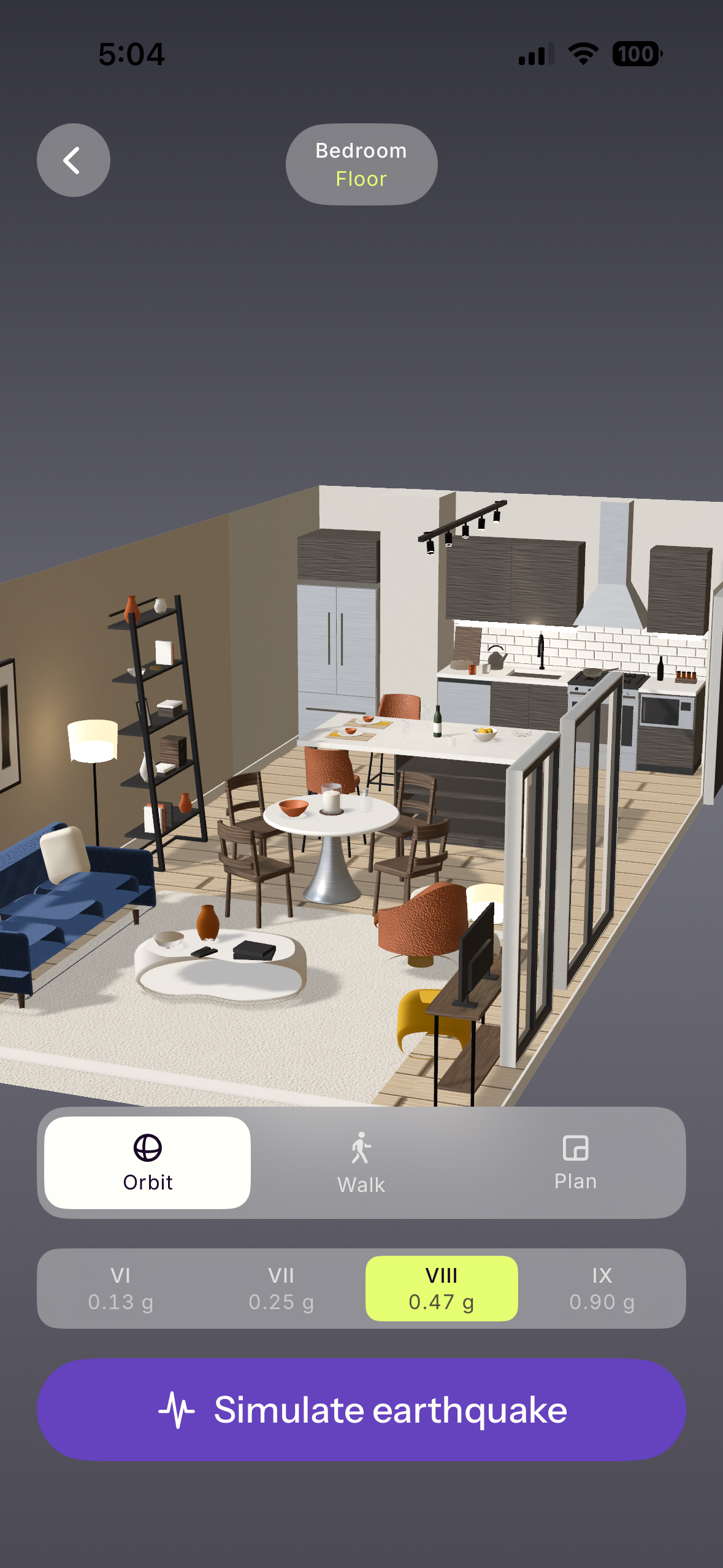
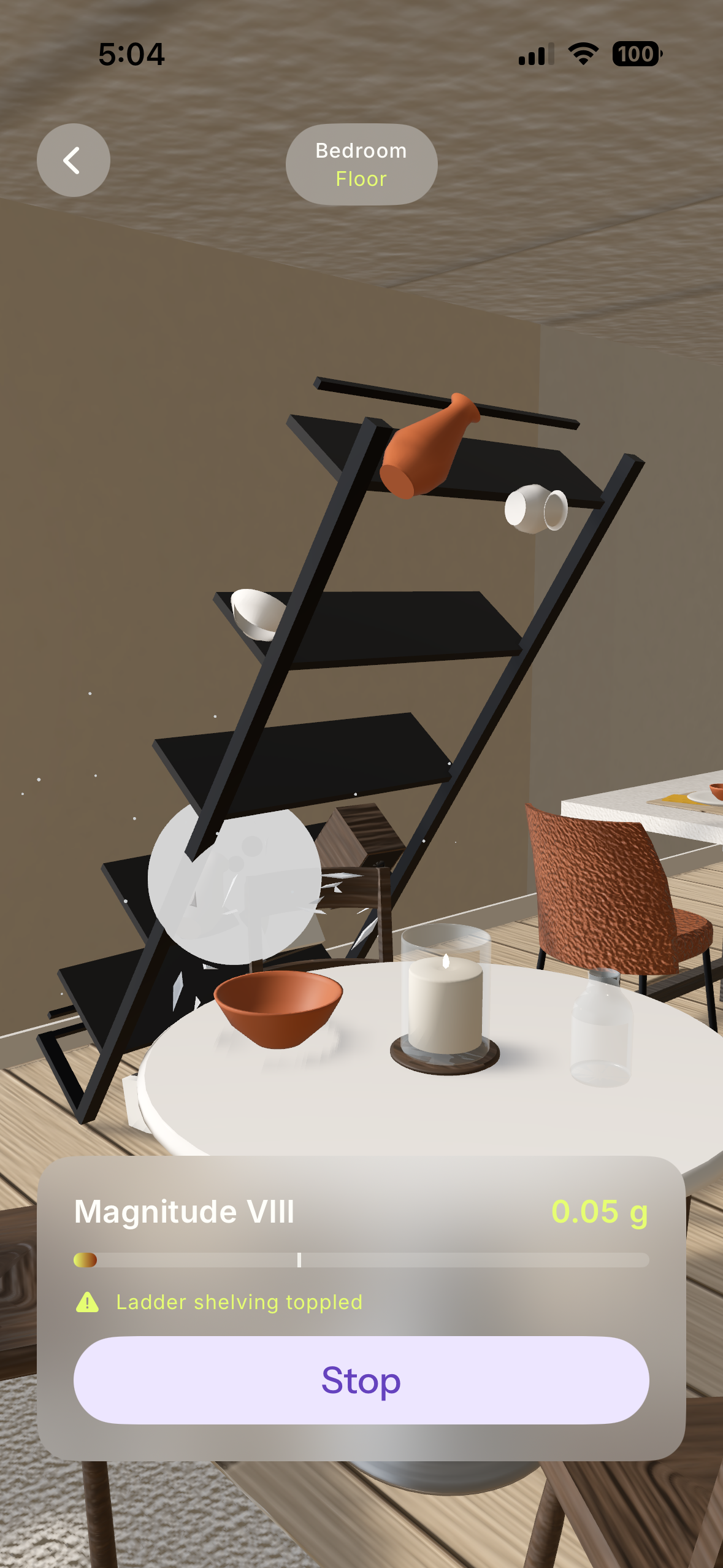
ledge scans your room by guiding you to record a video on your iPhone and rebuilds it as a physics-accurate 3D copy, then shakes it with a real recorded ground motion at whatever intensity you choose. you watch your own furniture slide, topple, and break. Afterward you get a ranked list of every hazard in the room, the reason each one scored the way it did, and the FEMA-recommended fix; most of which cost under $20! pretty cheap.
Ledge is different.
Ledge, unlike other apps, is able to estimate the material, weight, and other properties of objects in order to accurately simulate an earthquake. Other apps will treat all objects as the same item, but in reality, the most dangerous parts of an earthquake can be things like glass shattering and flying all over rather than a shelf falling over.
How does Ledge work?
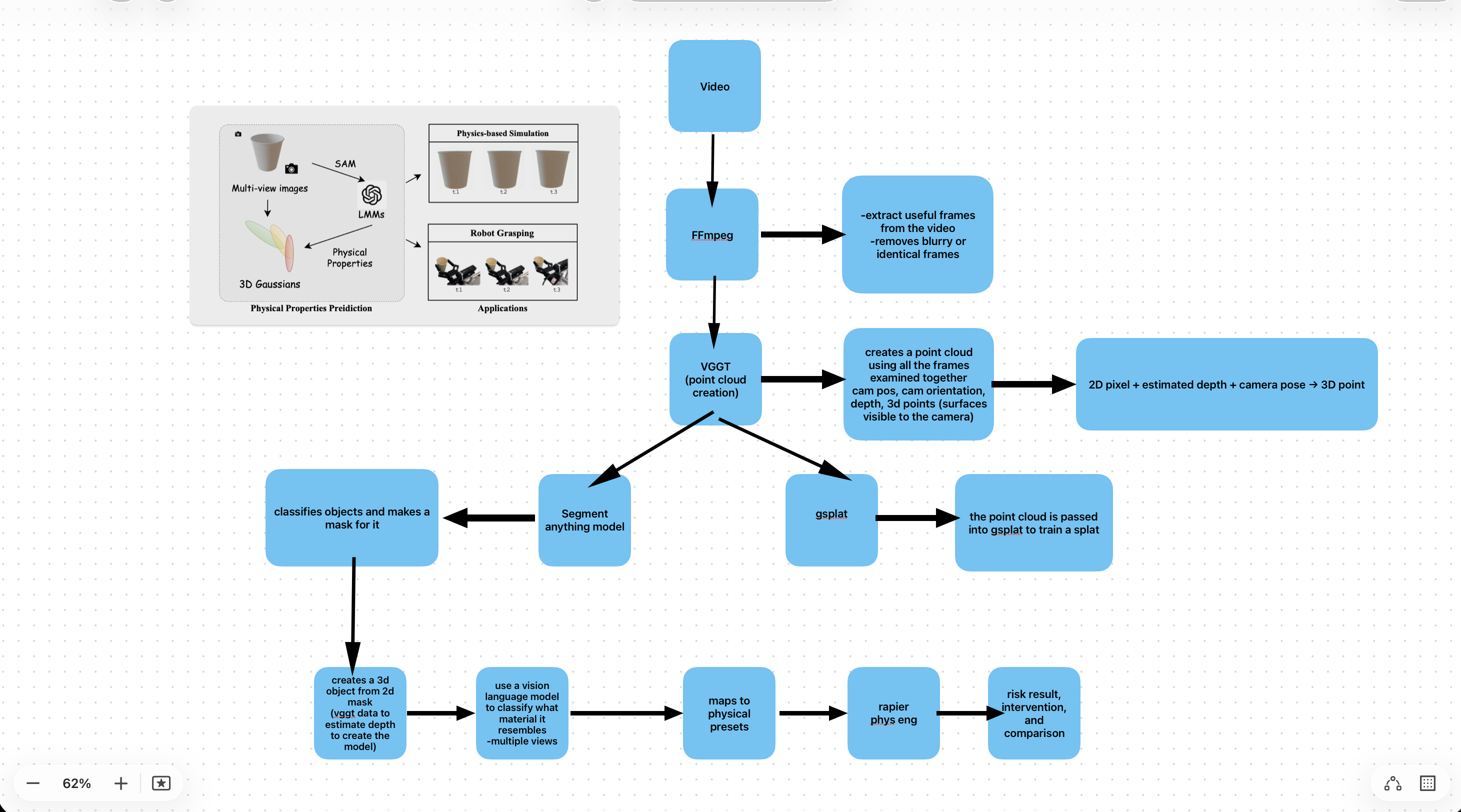
Ledge is a pipeline, NOT A MODEL. The video is validated and scored for blur, exposure, and overlap, then reduced to a set of sharp, non-redundant keyframes. Those frames go to VGGT, which predicts camera poses, depth, and point maps and exports COLMAP data that seeds a gsplat scene for the navigable twin. In parallel, SAM 3 segments hazard-relevant objects by text prompt (bookshelf, monitor, glass object, floor obstacle). We unproject those masks through the depth maps, vote across views, cluster the points, and fit oriented bounding boxes, which become the physics colliders.
Material family is inferred GaussianProperty-style: segmented crops go to a vision-language model against a constrained taxonomy, votes are pooled across views, and low confidence falls back to conservative defaults.

Log in or sign up for Devpost to join the conversation.