Inspiration
Classes at Wellesley, MIT, and Tufts average over an hour. When reflecting on what struggles we face the most in our education, we recognized our shared struggle of staying attentive in class–especially when professors cover material quickly. With an average attention span of just 8.25 seconds, it’s nearly impossible to retain an hour’s worth of learning without reviewing. We set out to create a simple playback tool for daily lectures, designed to make reviewing content easier and enhance our learning experience.
What it does
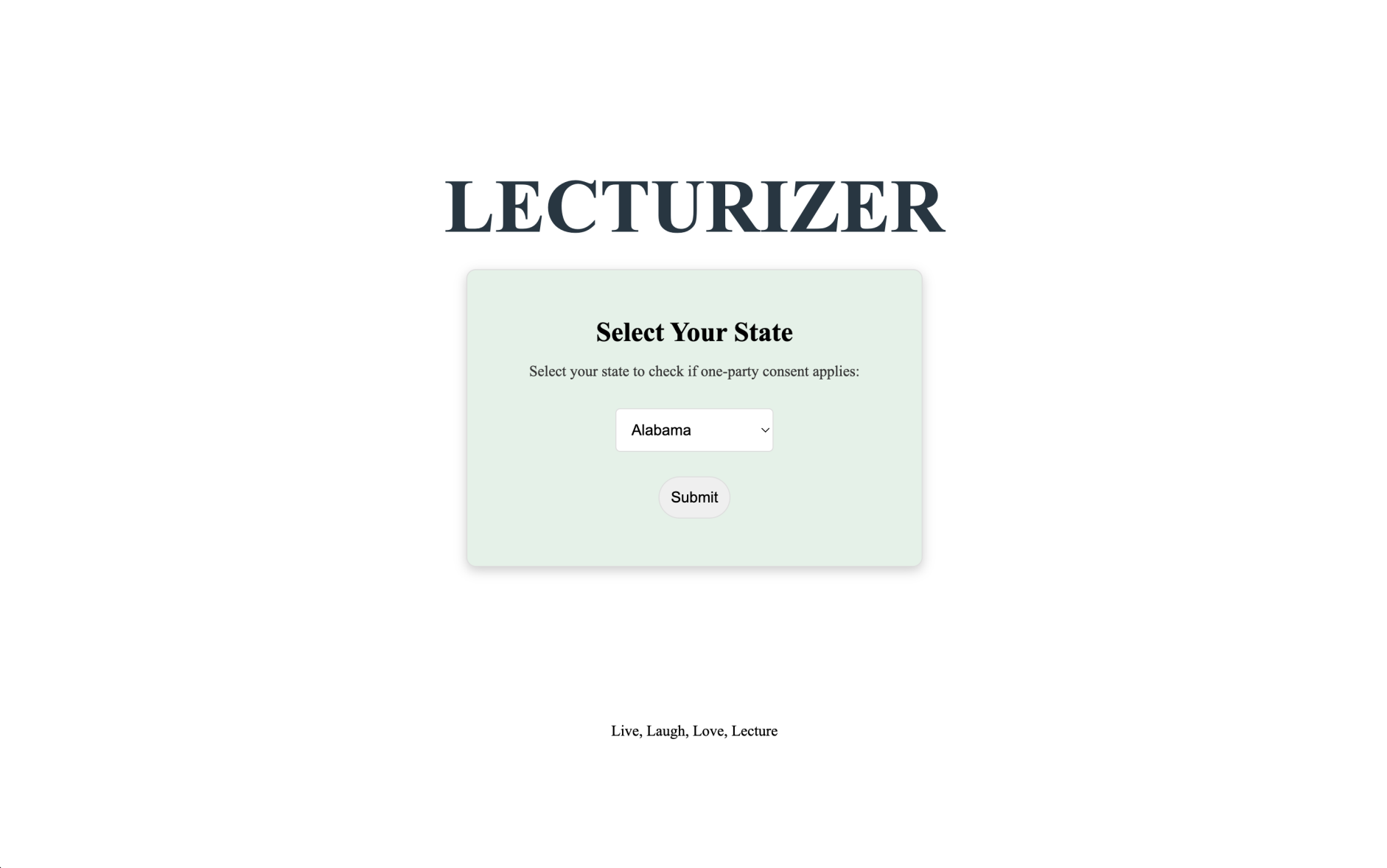
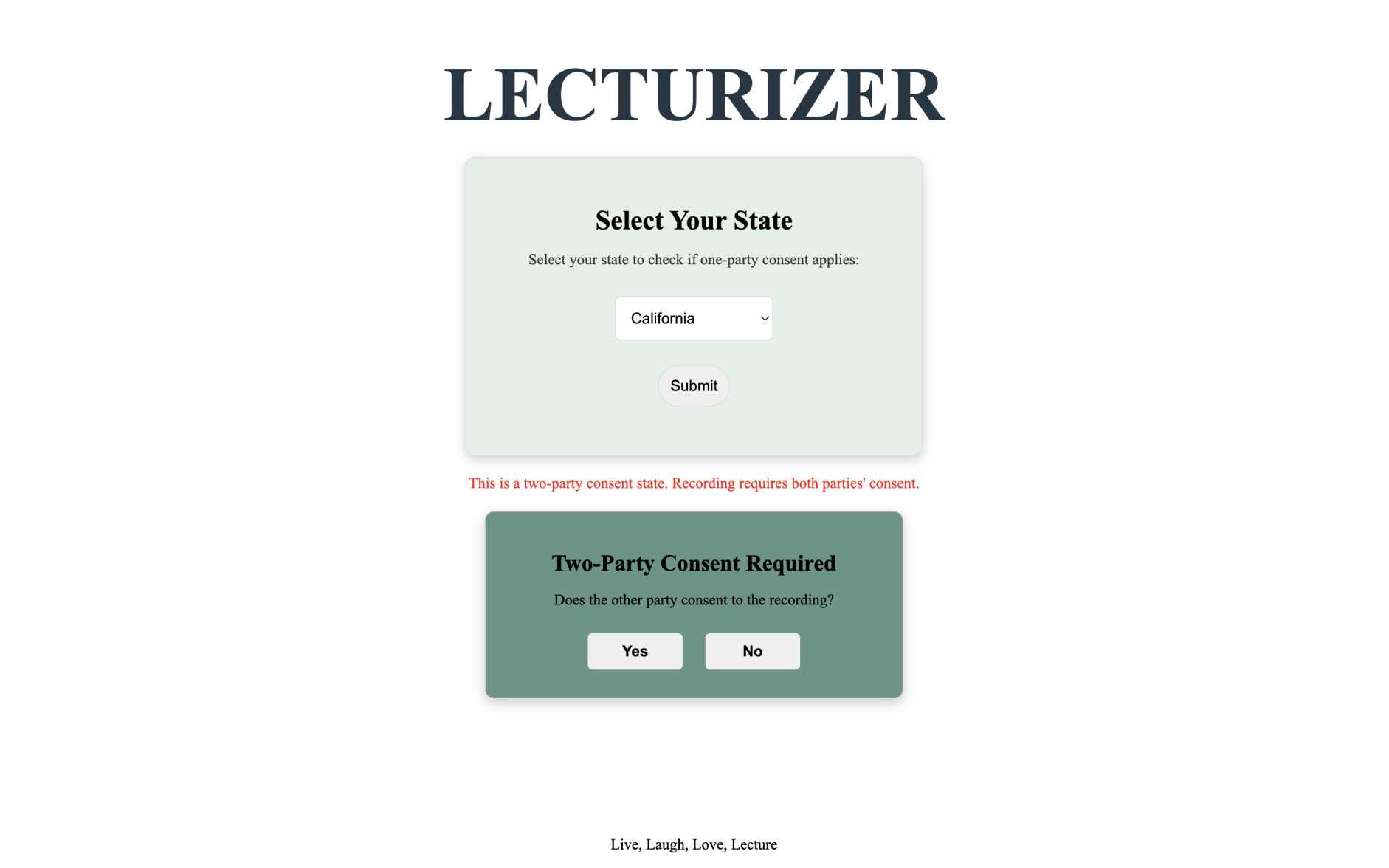
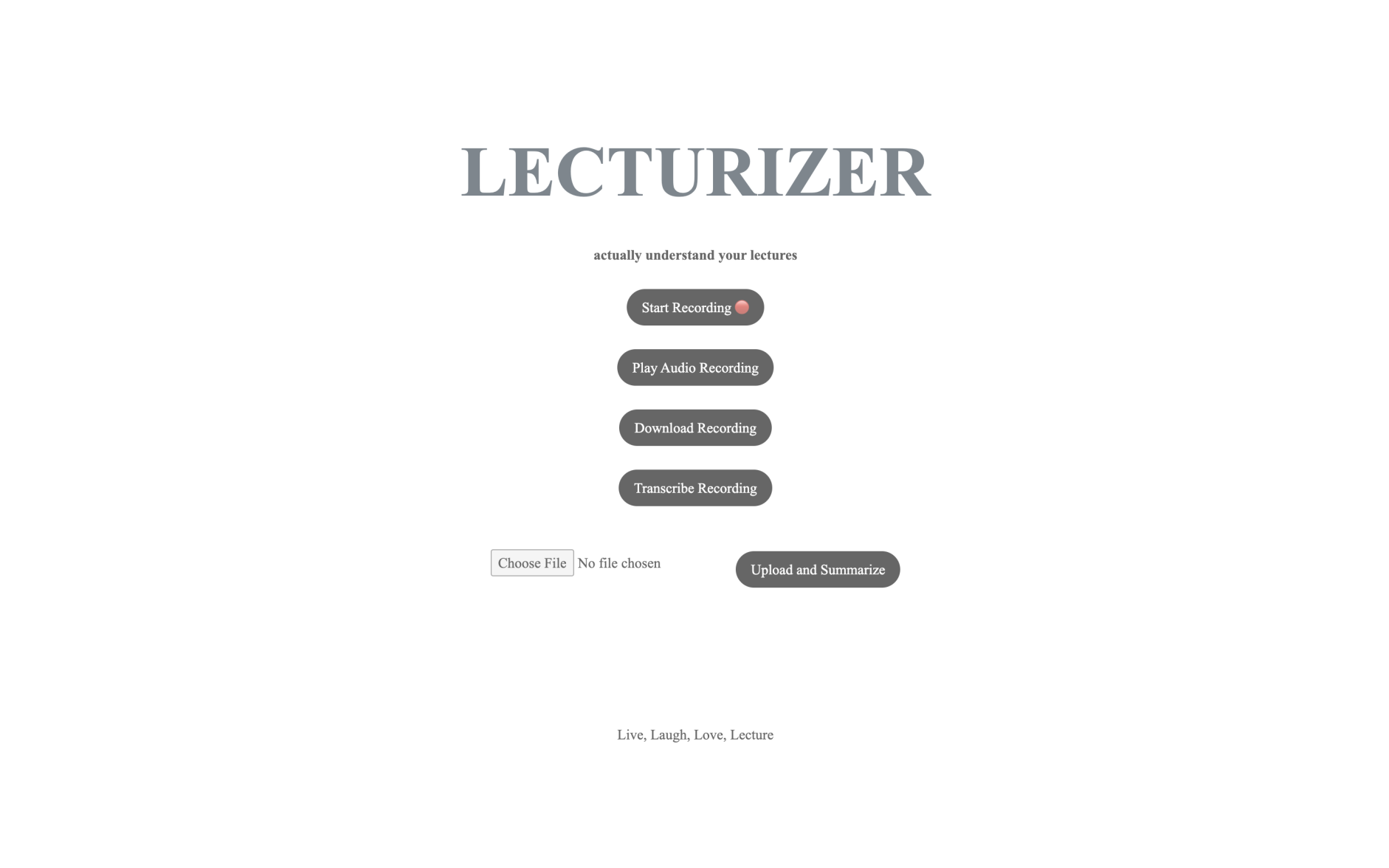
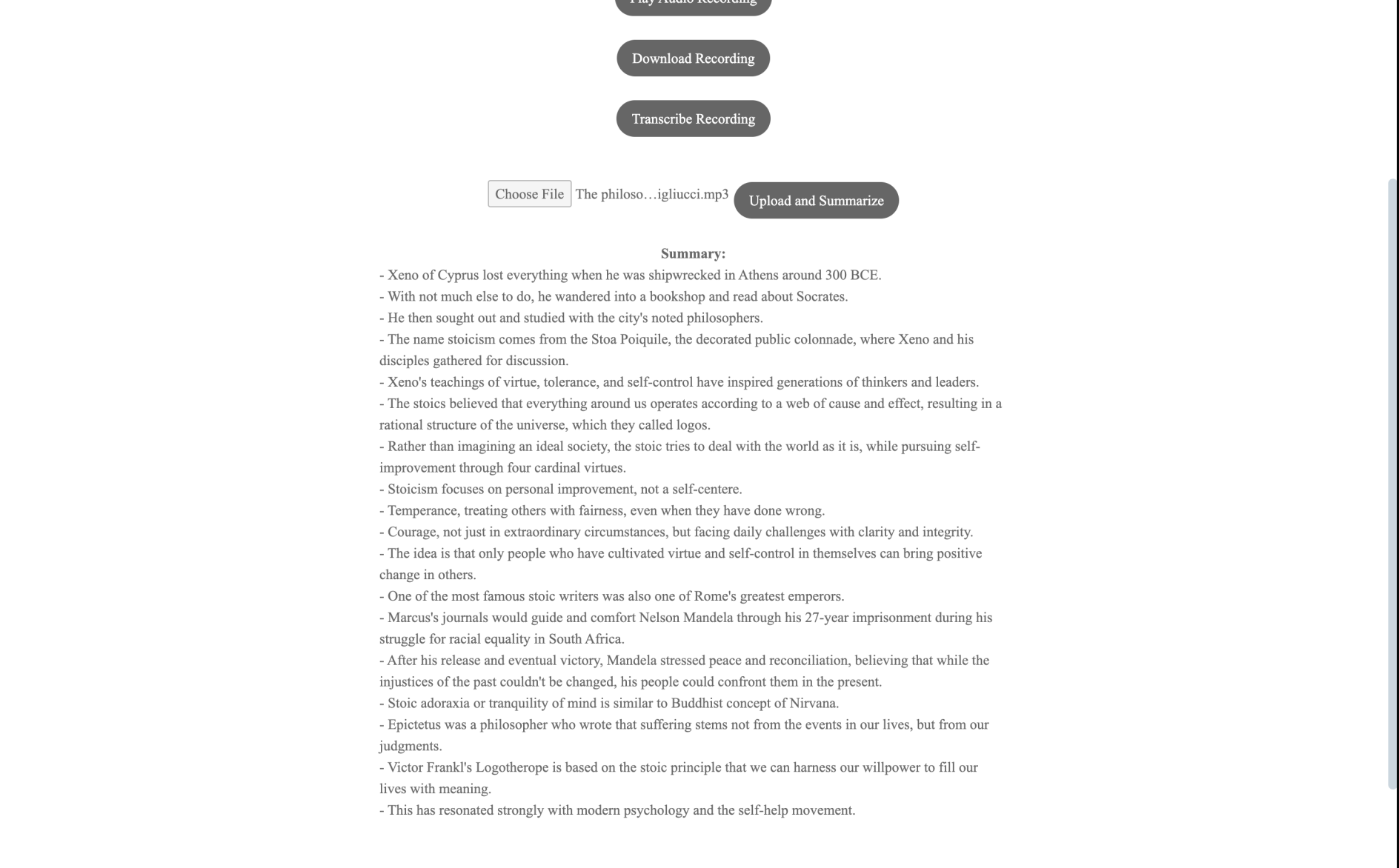
This website allows users to upload or record audio files of lectures, converting the spoken content into summarized text to support efficient study and review. Designed for educational purposes, it simplifies note-taking by providing a streamlined transcription and summary process. Additionally, it requests the user’s location within the U.S. to ensure compliance with legal requirements regarding recording laws and consent before giving the user permission to use the website.
How we built it
We coded our project’s AI feature in Python. Website interface was coded using HTML, JavaScript, CSS.
Challenges we ran into
Legality of recording - one party vs. two party consent in different states: solved by creating a consent disclaimer page before proceeding to the recording page. Transcription and summary of web-recorded audio: solved by creating a separate button for summarization of recording transcription instead of having it summarize right after stopping recording. Server-side vs. client-side webm file processing: solved by creating a temporary webm file in the uploads folder so that the file paths matched up with the file upload feature. Speed of summarization: solved by testing different models and picking one with a good balance of speed and accuracy.
Accomplishments that we're proud of
Seamless Audio-to-Text Conversion and Summarization: Successfully integrating a tool that not only transcribes audio files but also summarizes them for educational use demonstrates a commitment to improving user accessibility and efficiency in learning. User-Friendly Lecture Recording and Note-Taking: Developing a feature that allows users to record lectures on-the-go and transform them into concise, useful summaries showcases a focus on convenience and practicality, making it a valuable asset for students and educators alike. Legal Compliance for Responsible Usage: Incorporating a location-based check to comply with U.S. recording laws and consent regulations shows strong attention to ethical and legal considerations, ensuring that users are protected and that the platform operates responsibly.
What we learned
As freshmen with only a foundational understanding of programming, our team had numerous learning opportunities throughout the project. We learned how to integrate AI models with speech-to-text and summarization functions, while also gaining valuable exposure to new JavaScript and Python concepts.
What's next for Lecturizer
The next steps for Lecturizer include enhancing user experience and functionality to further attune to student needs. First, we would deploy Lecturizer to make it accessible to the public. We would improve the user interface by creating a mobile app option to make transcription readily available on the mobile device. To make a more comprehensive resource, we could research how to incorporate a personalized user account with a record of all recorded lectures and revisit specific topics with keyword search. On the backend, deploying the application to the cloud would enable scalability, allowing it to handle larger user volumes and ensuring smooth, efficient performance. With these enhancements, Lecturizer will revolutionize the way we learn.
Built With
- ai
- api
- cnn
- css
- html
- javascript
- json
- python


Log in or sign up for Devpost to join the conversation.