-
-
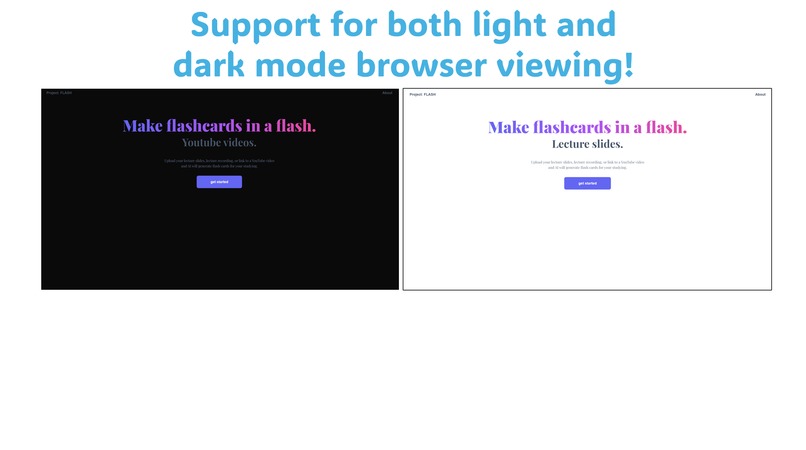
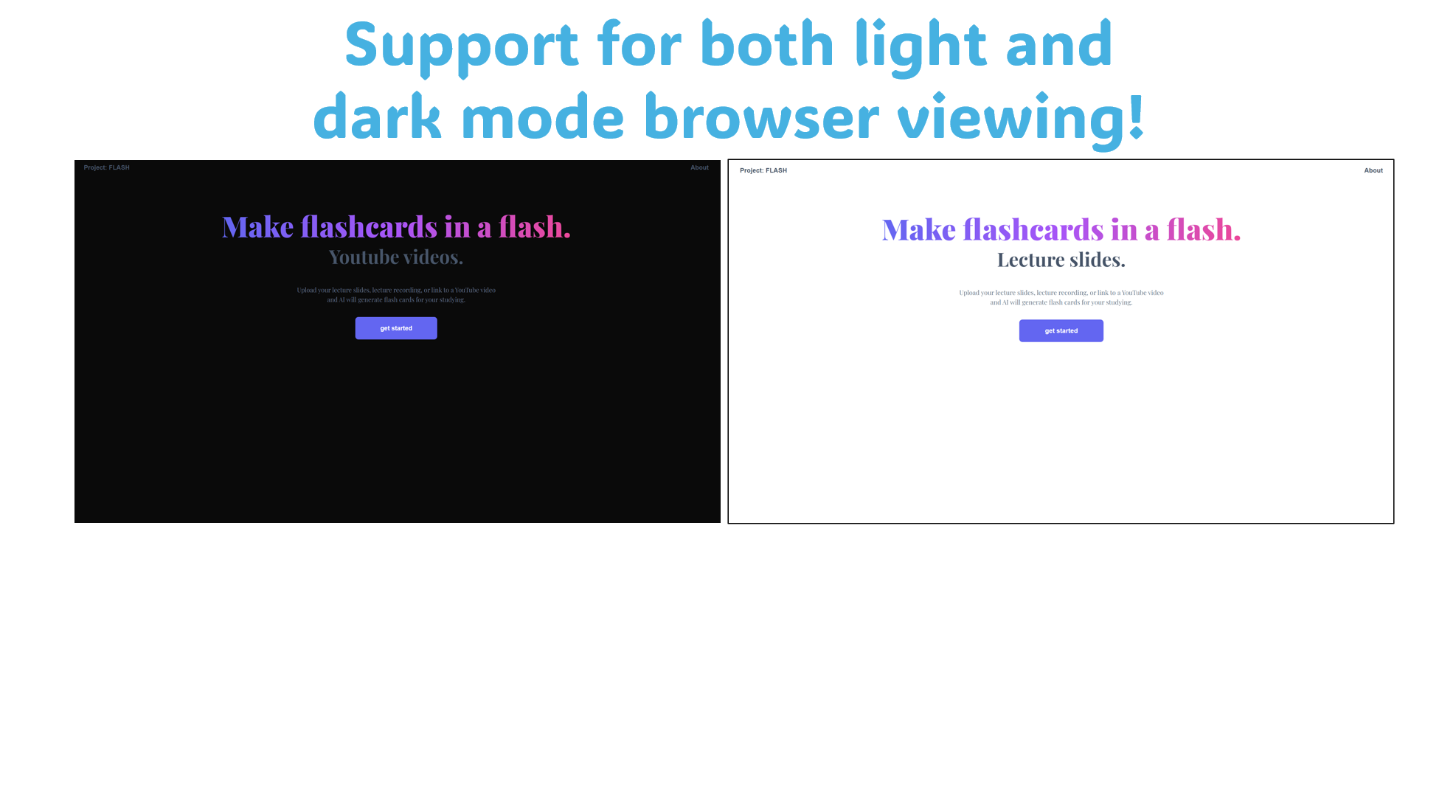
Home page (light and dark)
-
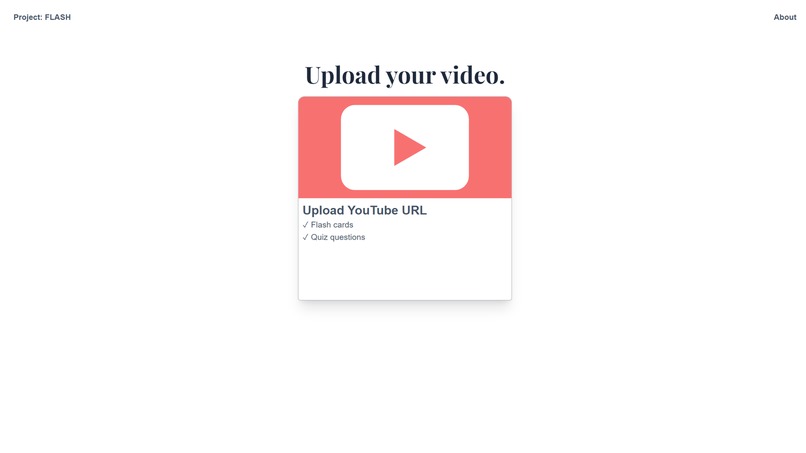
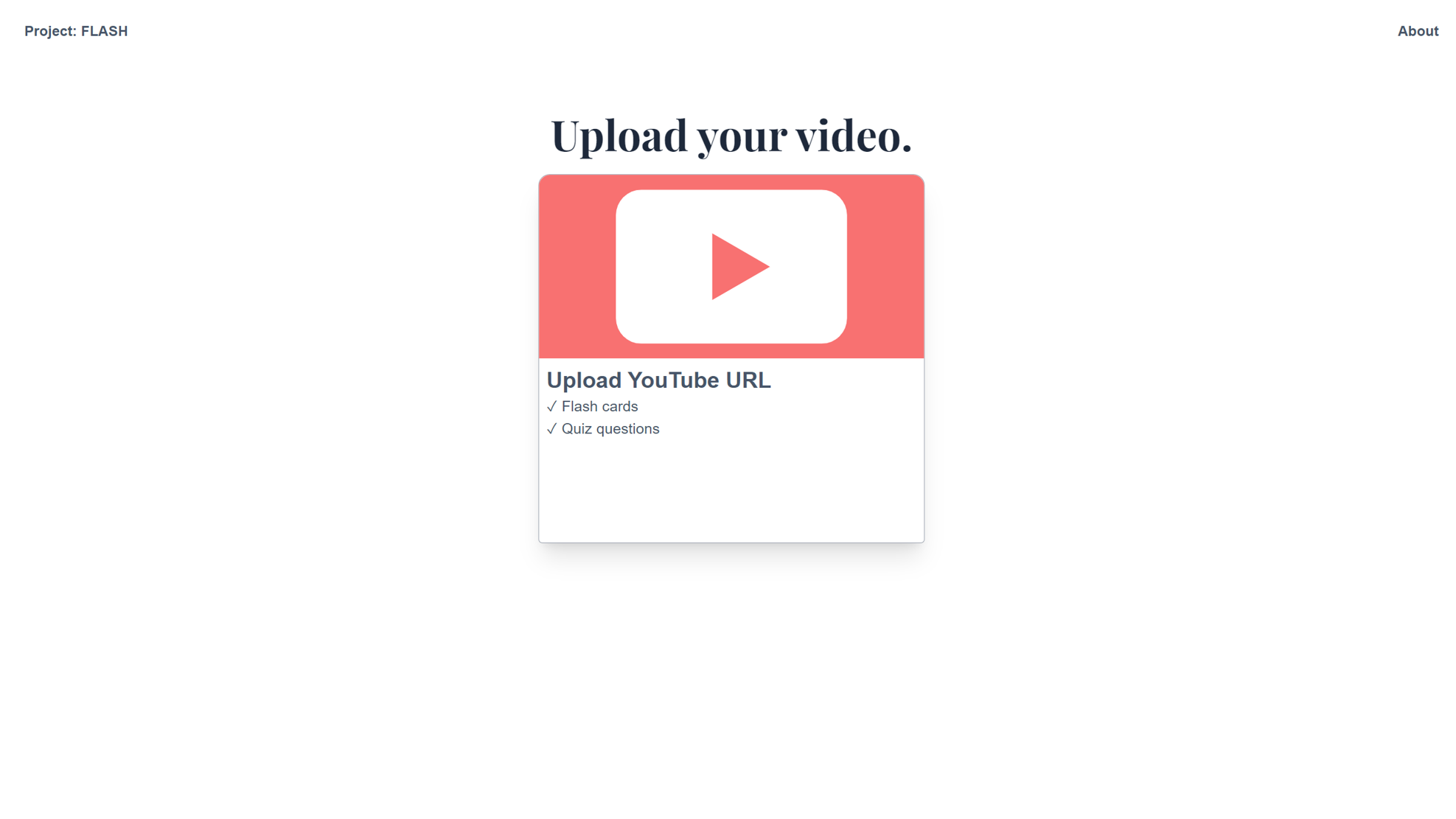
Upload page
-
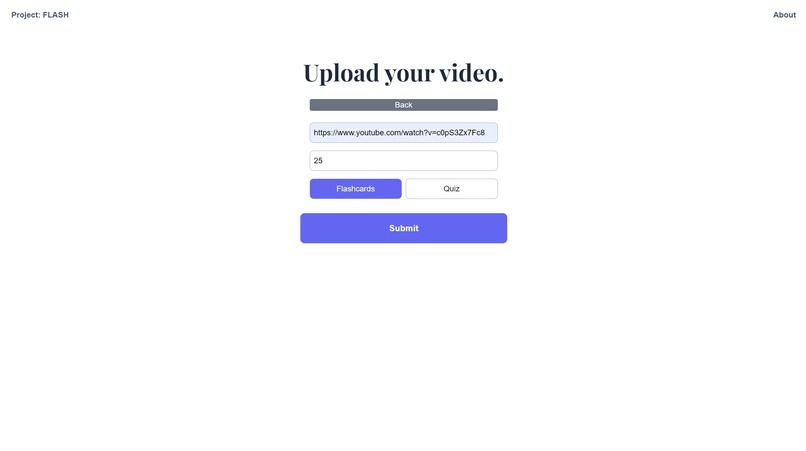
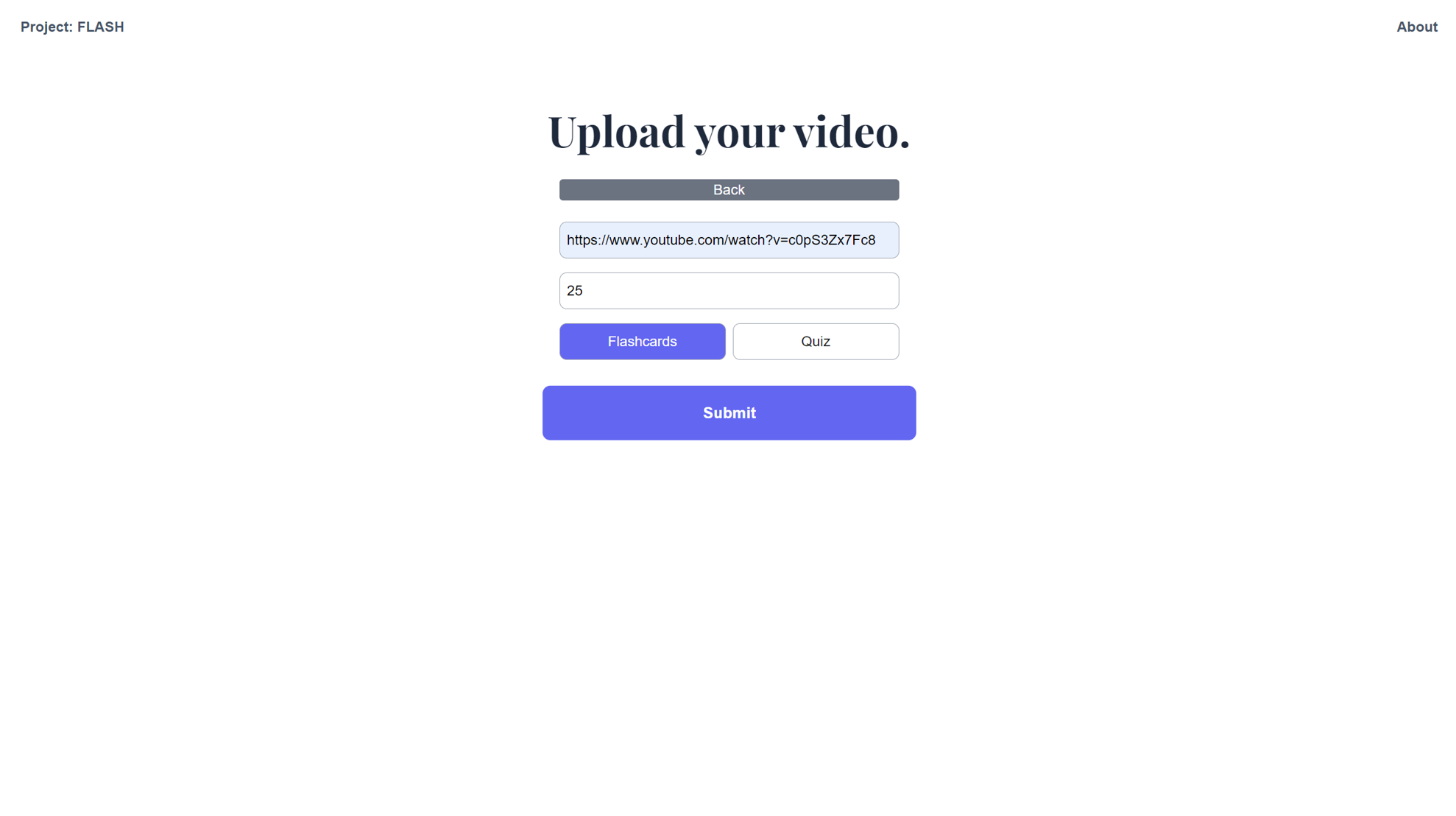
Paste url and generate flashcards and quiz
-
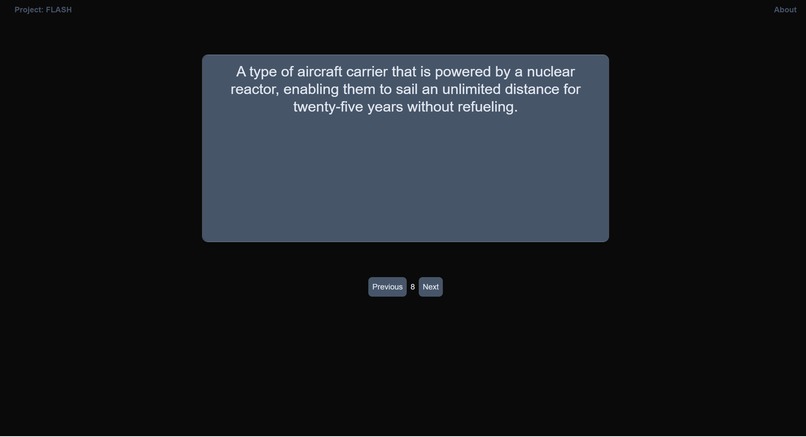
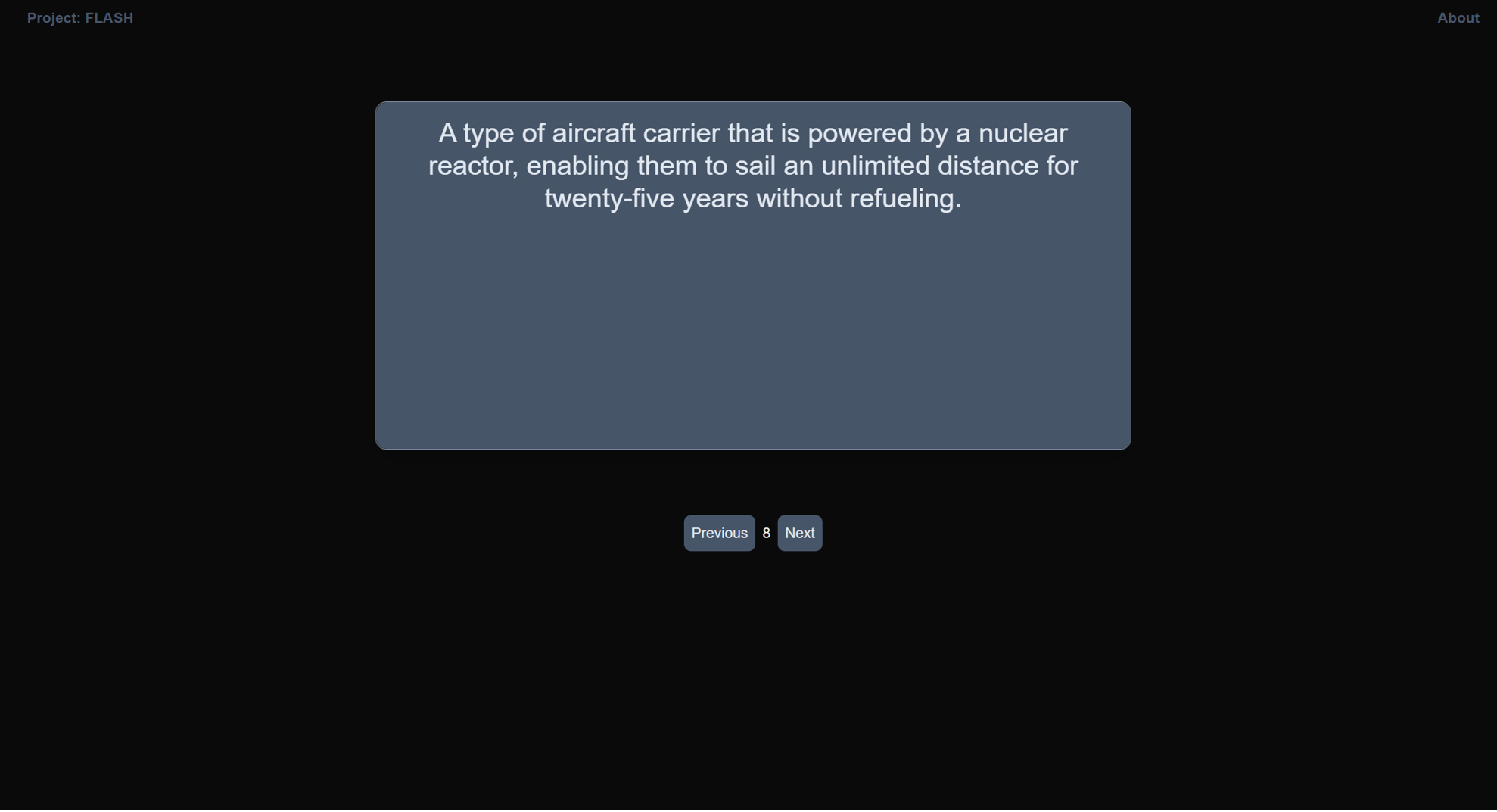
Flashcards (dark mode)
-
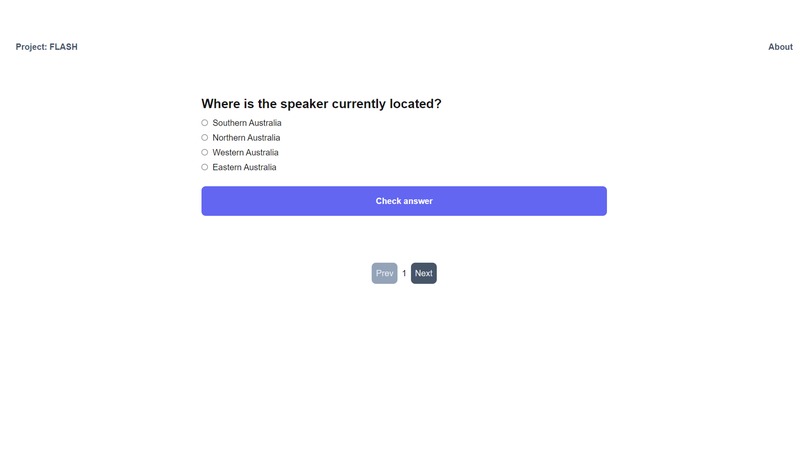
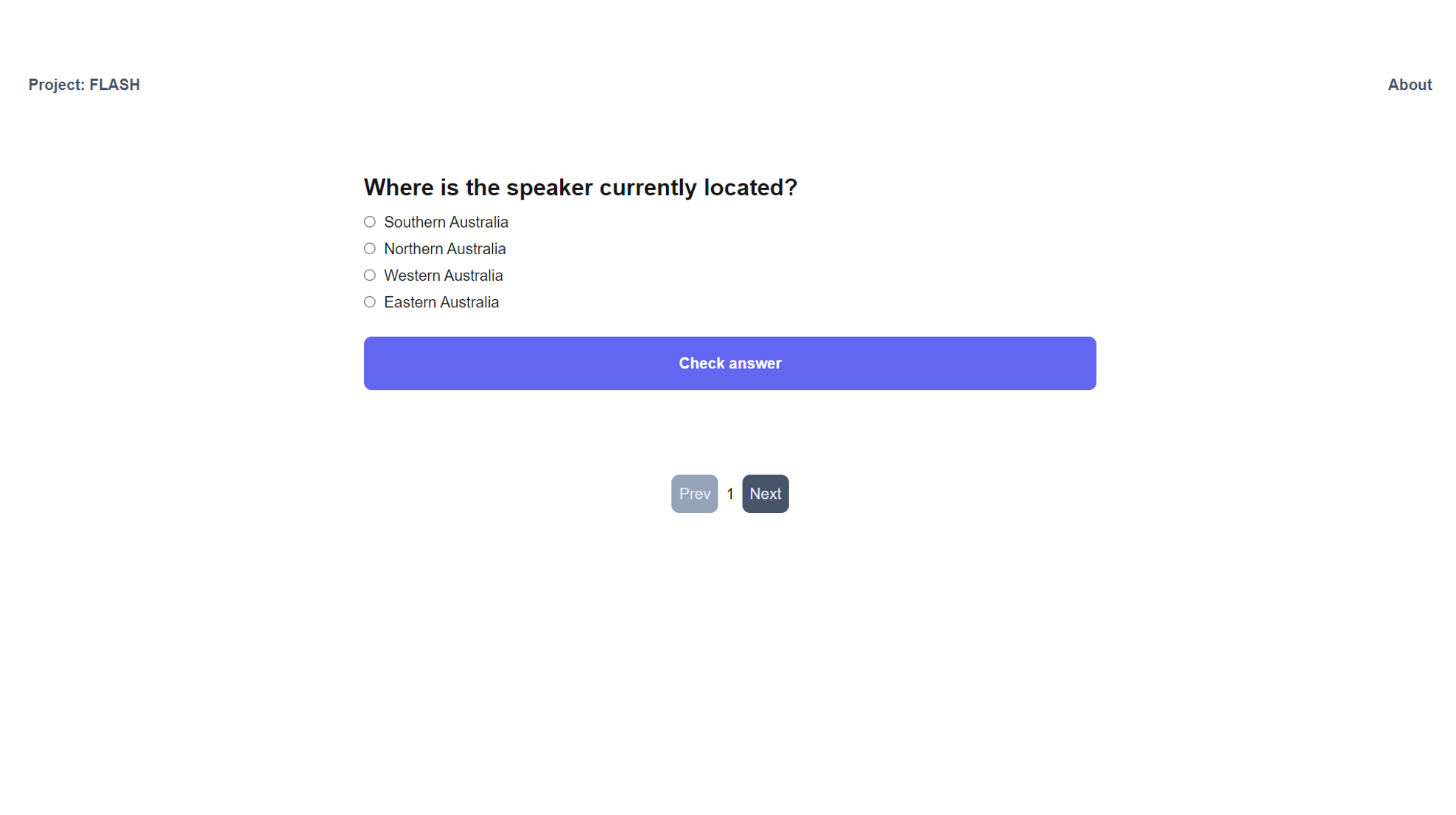
Quiz
Inspiration
Here at the University of Michigan, students use lecture recordings very often. While watching these recordings it is fairly easy to get off track, as well as find yourself distracted. It also can take a very long time to get through these lengthy lectures. We came up with Flash to help combat the high levels of passive learning that happens when rewatching lectures and increase efficiency when studying. Missing class is inevitable, and watching a 1-2 hour lecture may be tedious due to life circumstances. For this reason, we made Flash: a new and efficient way to learn. Flash is inspired by the optimization of time and energy for all students. Flash is also not just for students. It can be used on any video, on any topic. Whether you are learning rocket science or how to bake a pie, Flash offers the opportunity to significantly shorten the time spent learning unnecessary information by analyzing the video and making flash cards.
What it does
Flash uses to speech to text API to convert the video into a transcript. This transcript is then turned into a detailed note-like summary. These notes can then be turned into either flashcards or quizzes with however many cards or questions that the user wants.
How we built it
The current build allows for a YouTube url to be pasted in. The youtube video id is parsed using regex. The YouTube video is then put into the youtube_transcript_api which gives a copy of the subtitles, whether they are auto-generated or not. The text is then parsed. Then we used OpenAI's API and prompted it to make either notes, flashcards, or multiple-choice quizzes using the transcript that was generated. The entire backend is run on a virtual environment using flask/python. The web app was made using Next.js App router, a framework for react.
Challenges we ran into
The OpenAI API isn't able to handle very long transcripts. As a result, videos have to be under a certain time length. Because of this, hour long lectures would be difficult to make notes from. A future solution for this would be to break the video down into sections and feed those in one-by-one. However, this would also take a very long time to generate the flash cards, if the lecture is over an hour.
Accomplishments that we're proud of
We are proud to have made a final working product that is visually appealing and delivers high quality flashcards that pertain to the main ideas of the videos.
What's next for Flash
For the future of Flash, we want to support more file formats and include options to export the flashcards and notes. The flashcards we hope to be able to turn into a .csv which we can then turn into a .apkg (Anki deck). We also would like to add a feature to download the notes as a word document to allow the user to highlight and edit them as they like.


Log in or sign up for Devpost to join the conversation.