-
-
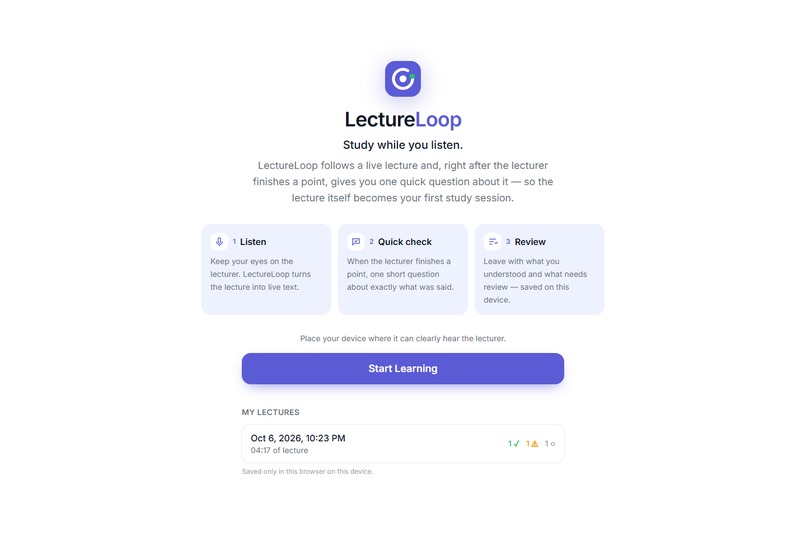
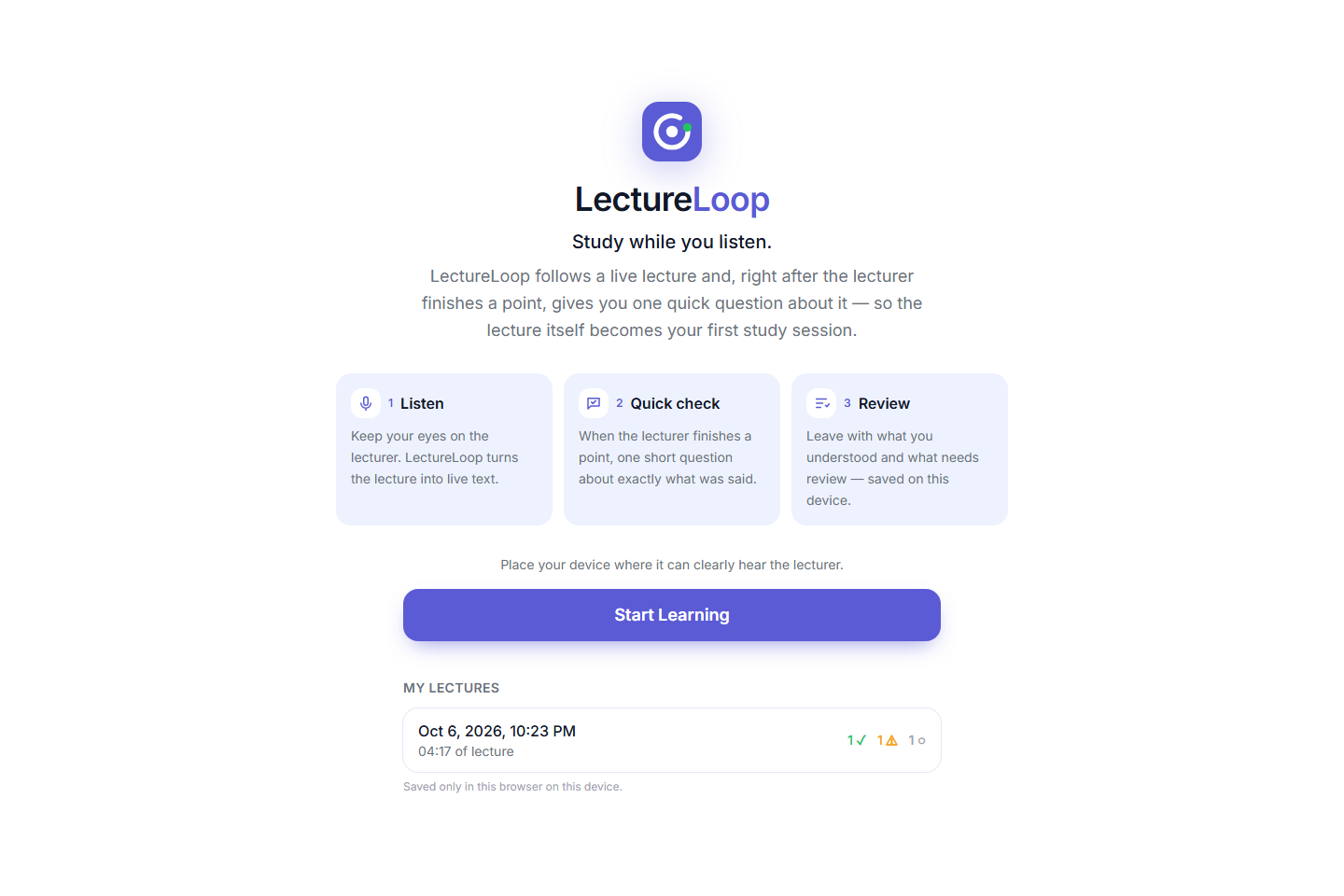
Start screen: logo, the three steps (Listen, Quick check, Review), and the "My lectures" list
-
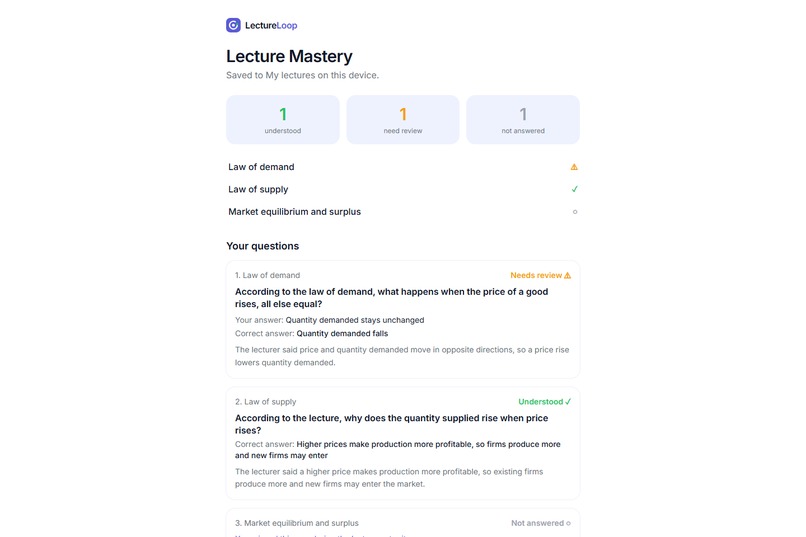
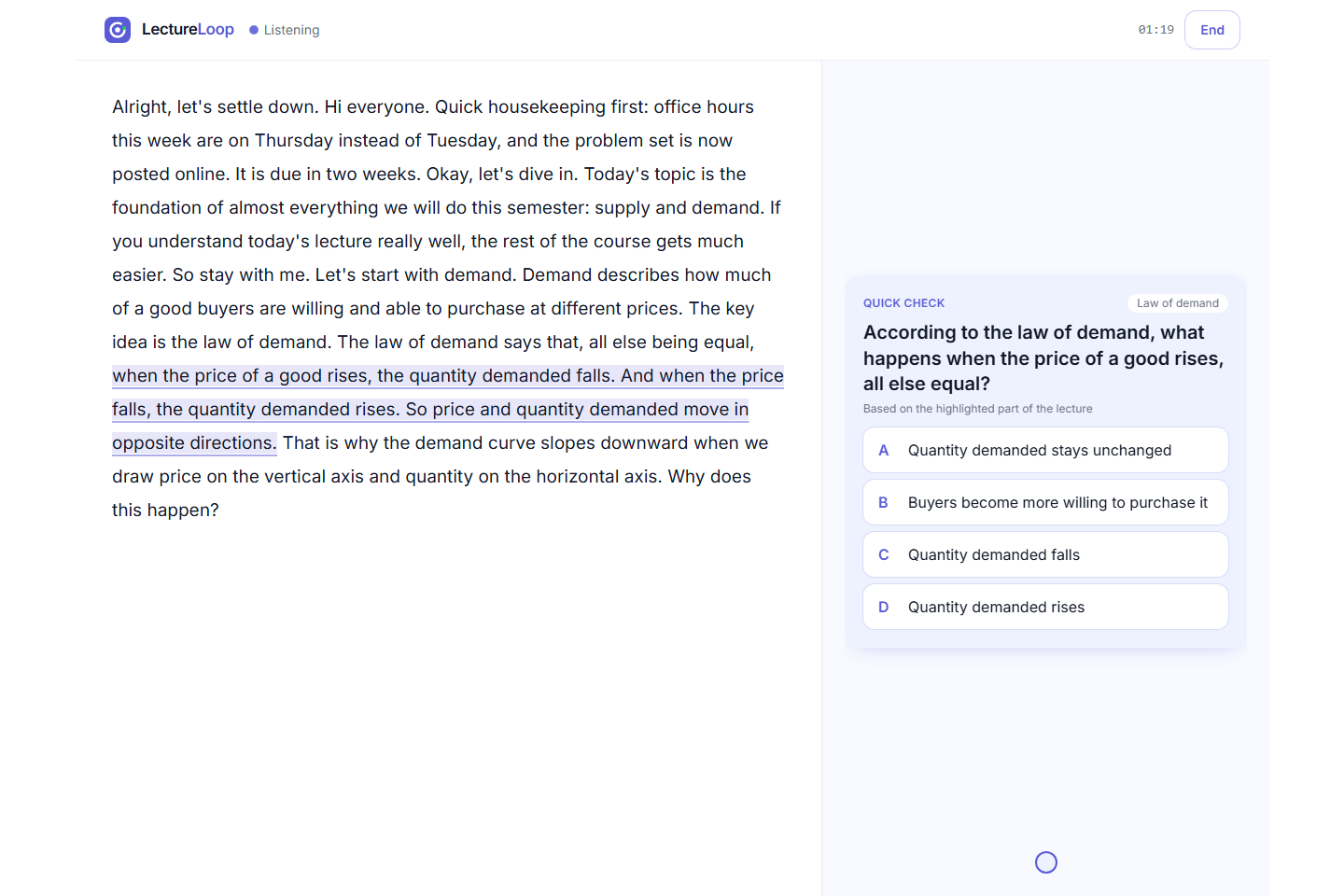
During the lecture on a laptop: a question on the right, and the sentence it came from highlighted in the transcript on the left
-
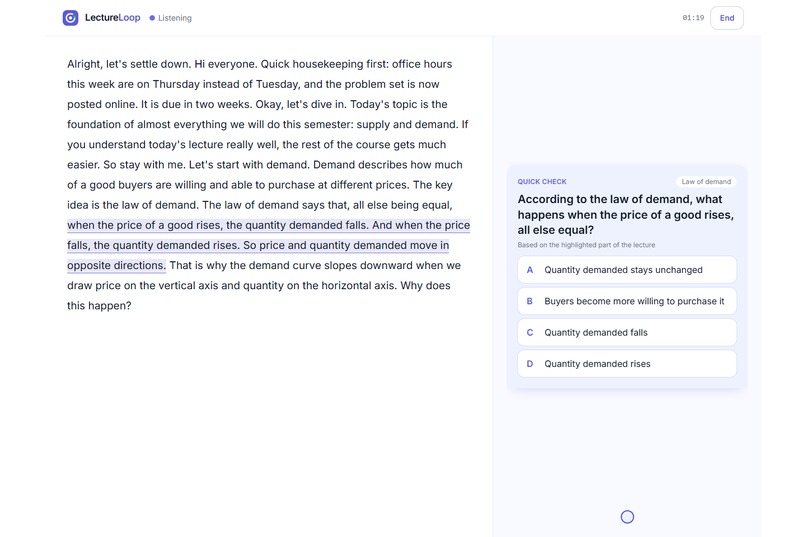
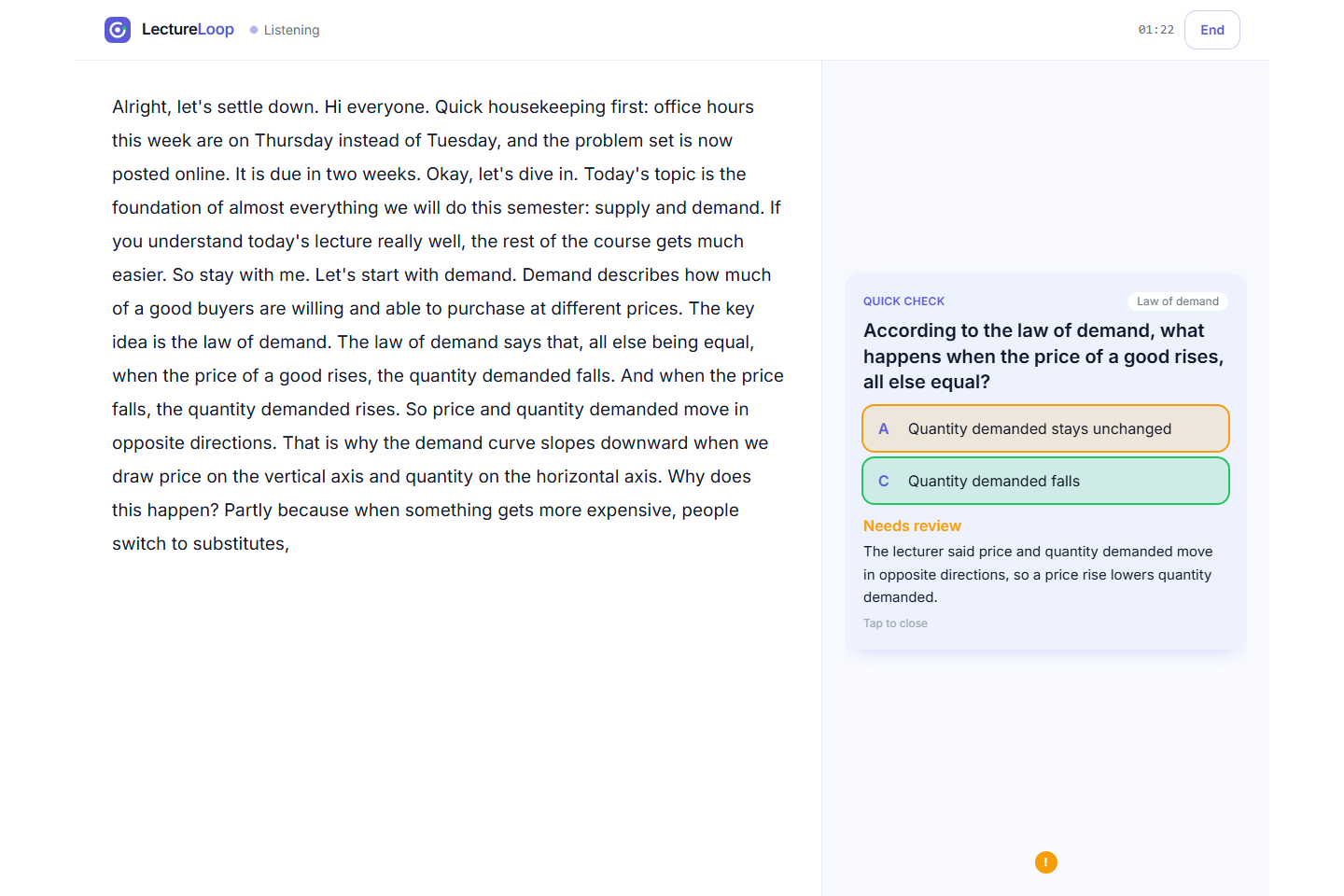
A wrong answer: "Needs review" with the correct answer and an explanation from the lecture
-
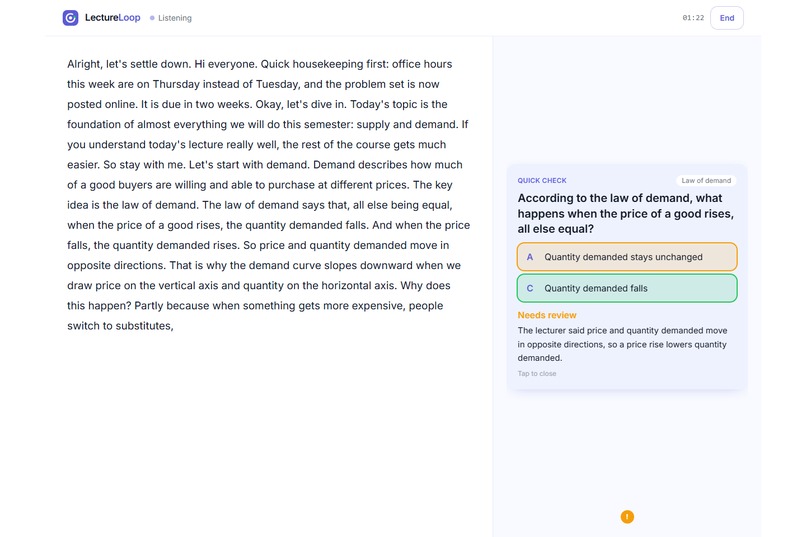
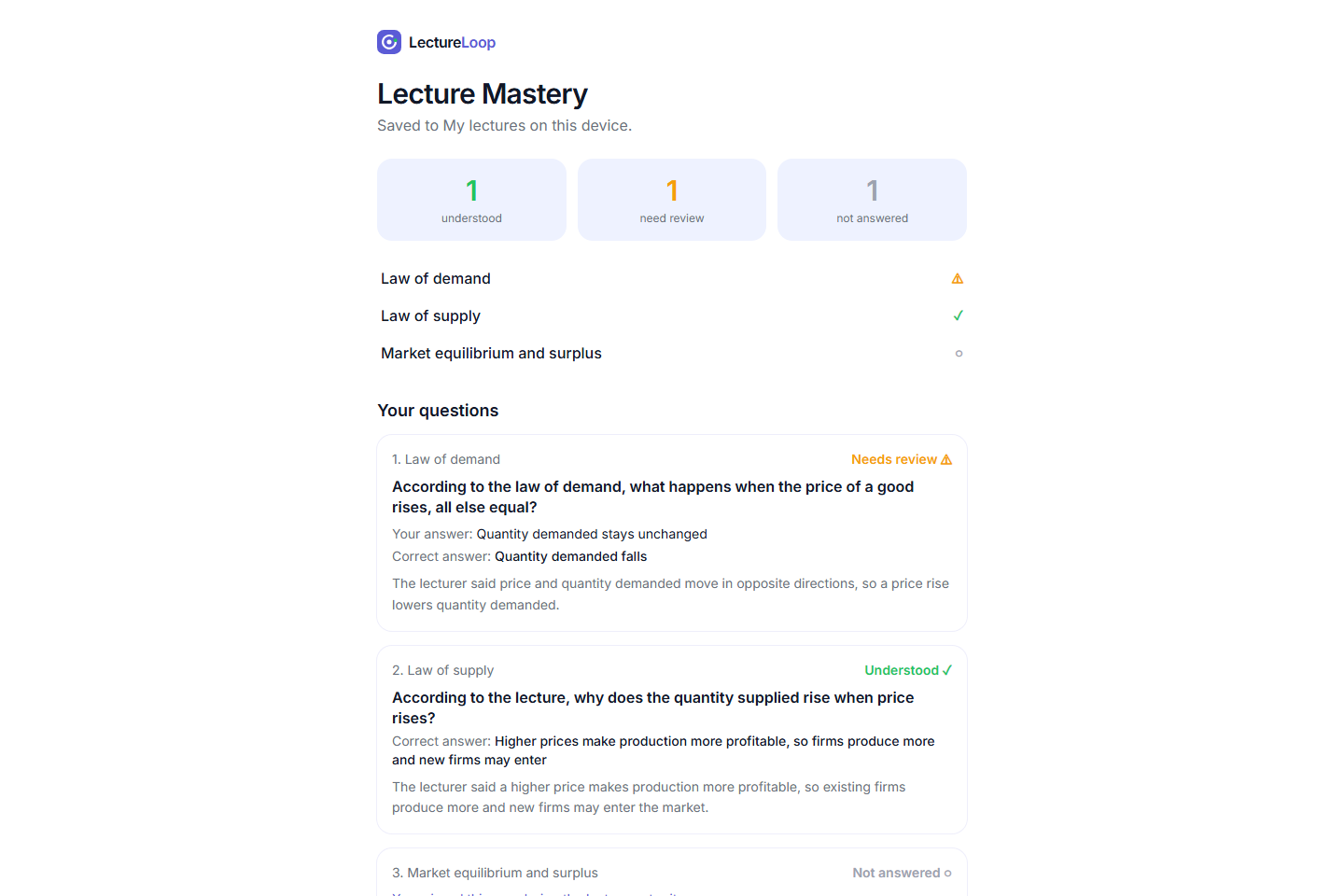
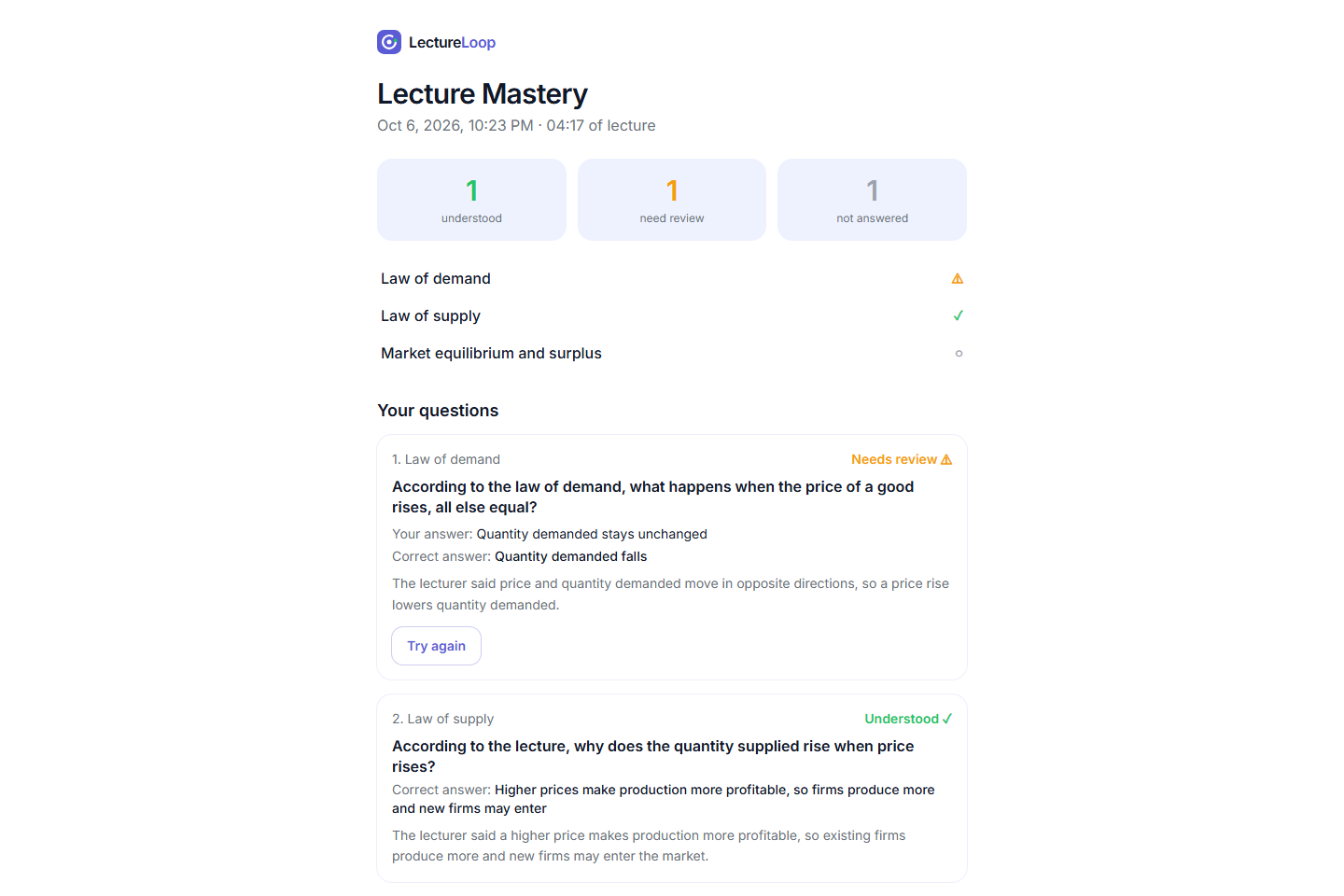
End-of-lecture summary: understood ✓, needs review ⚠, not answered ○, with each question's details
-
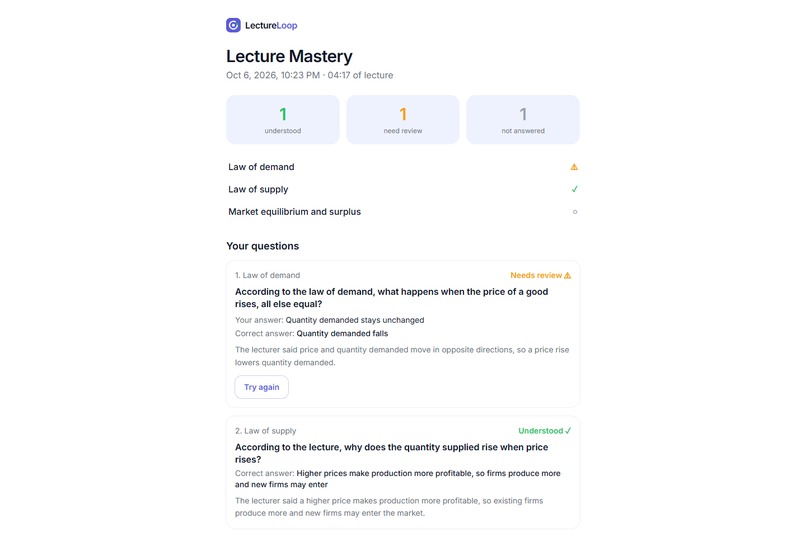
A saved lecture opened later, with a Try again button for questions you got wrong
-
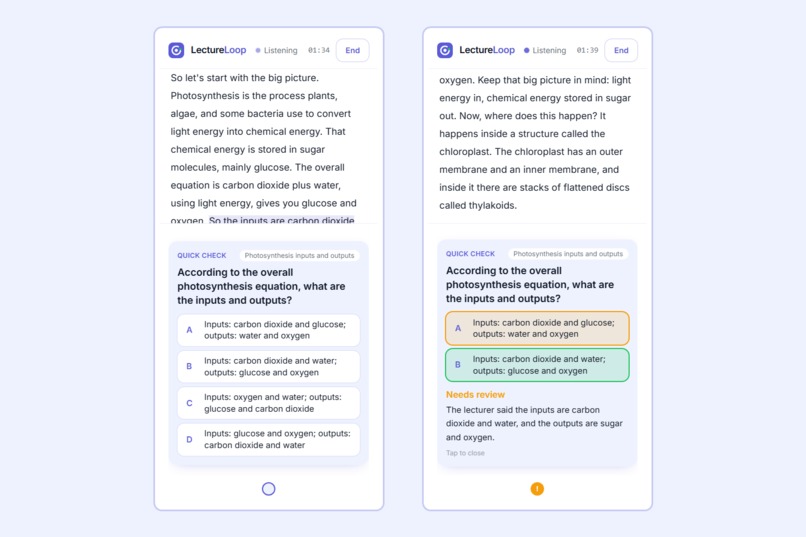
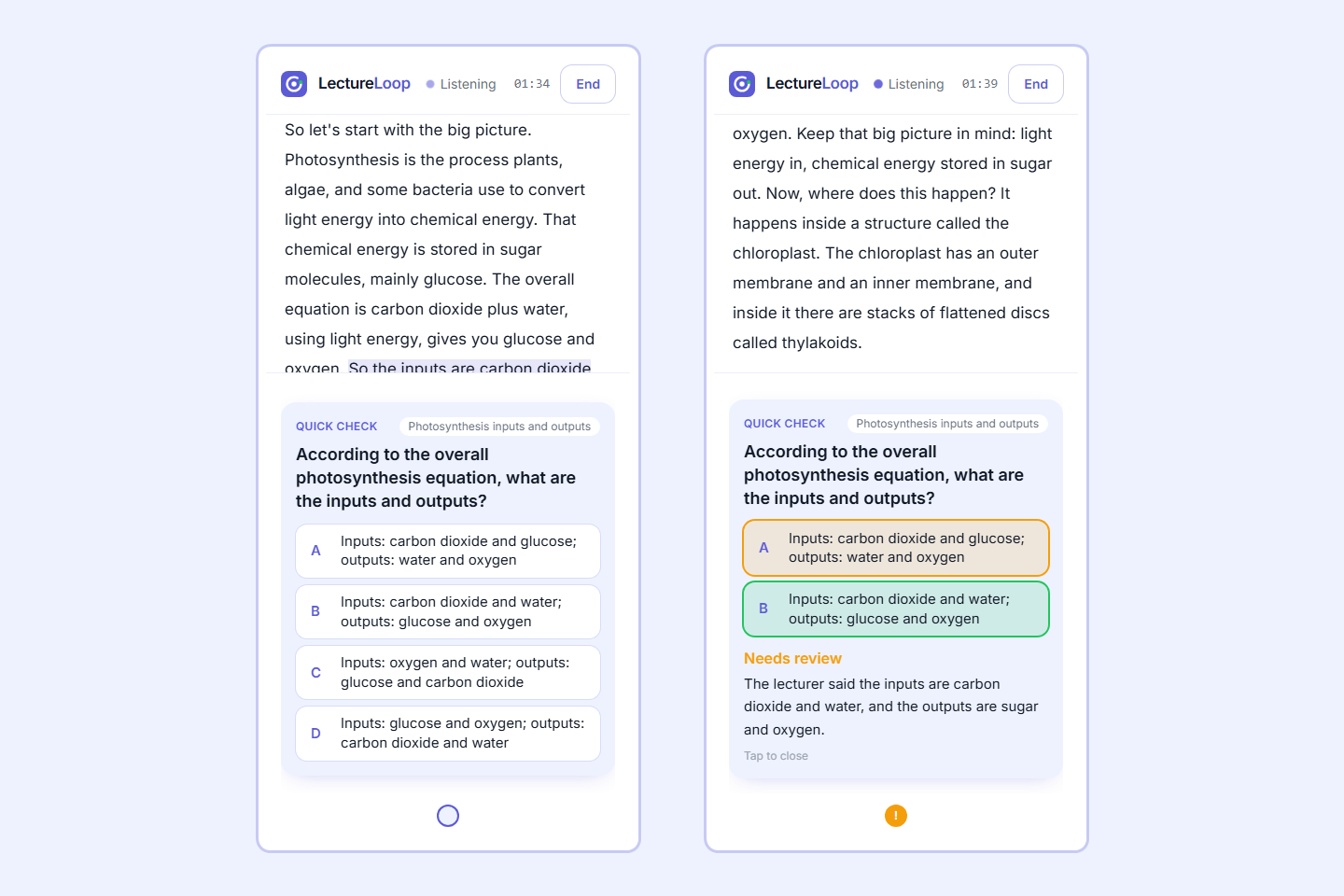
The same experience on a phone: the question, then the feedback after answering
Inspiration
As a college student, it was always devastating to have to listen to lectures for hours, then go home to understand them again (in case I was sleepy during lectures), then memorize and solve questions. So I thought of this tool.
What it does
It listens to the lecture, simultaneously generates questions after each complete idea, and corrects the answers. All the questions are saved, whether answered right or wrong. That cuts down a lot of studying. The tool forces you to concentrate in order to answer right, and helps you memorize most of the information, so you just go home to revise.
How we built it
Based on the Devpost Learn Skill Pack, I used a Claude coding agent and instructed it to build the app. The app uses Claude Sonnet 5.5 to generate questions and Deepgram for speech-to-text, and it is built with Next.js and deployed on Vercel. The demo was built using Remotion for scenes and trensitions ,FFmpeg to join frames into a 30 fps video, and the lecture audio.
Challenges we ran into
Timing: sometimes the AI would not ask questions unless the lecturer paused, so we modified that.
My own tests had hidden the problem: The test lectures were split into neat, complete sentences, so they looked great in testing. We changed the tests to break the speech into fragments the way real speech-to-text does, so they would catch this kind of problem.
Questions coming at the wrong moment: In the first tests, questions about a finished idea popped up while the lecturer was in the middle of explaining the next one. We added a rule that it only asks about a point that's finished, never about something still being explained.
Accomplishments that we're proud of
- The core idea works for real
- Real protection against hallucination
- It works across different subjects
- Improved from real observations
What we learned
I learned so much about building an AI tool from start to finish and connecting it to an API, and how to use AI coding agents properly in order to turn the exact image in my head into reality.
What's next for LectureLoop
There are so many developments that I want to work on, including:
- classifying lectures by subject.
- adding a choice to remove unwanted questions.
- supporting more languages.
Built With
- api
- claude
- deepgram
- github
- next.js
- remotion
- vercel


Log in or sign up for Devpost to join the conversation.