-
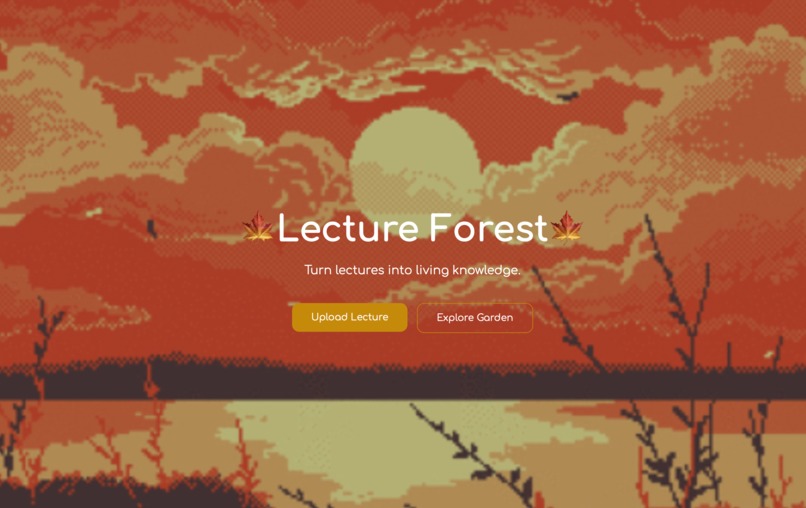
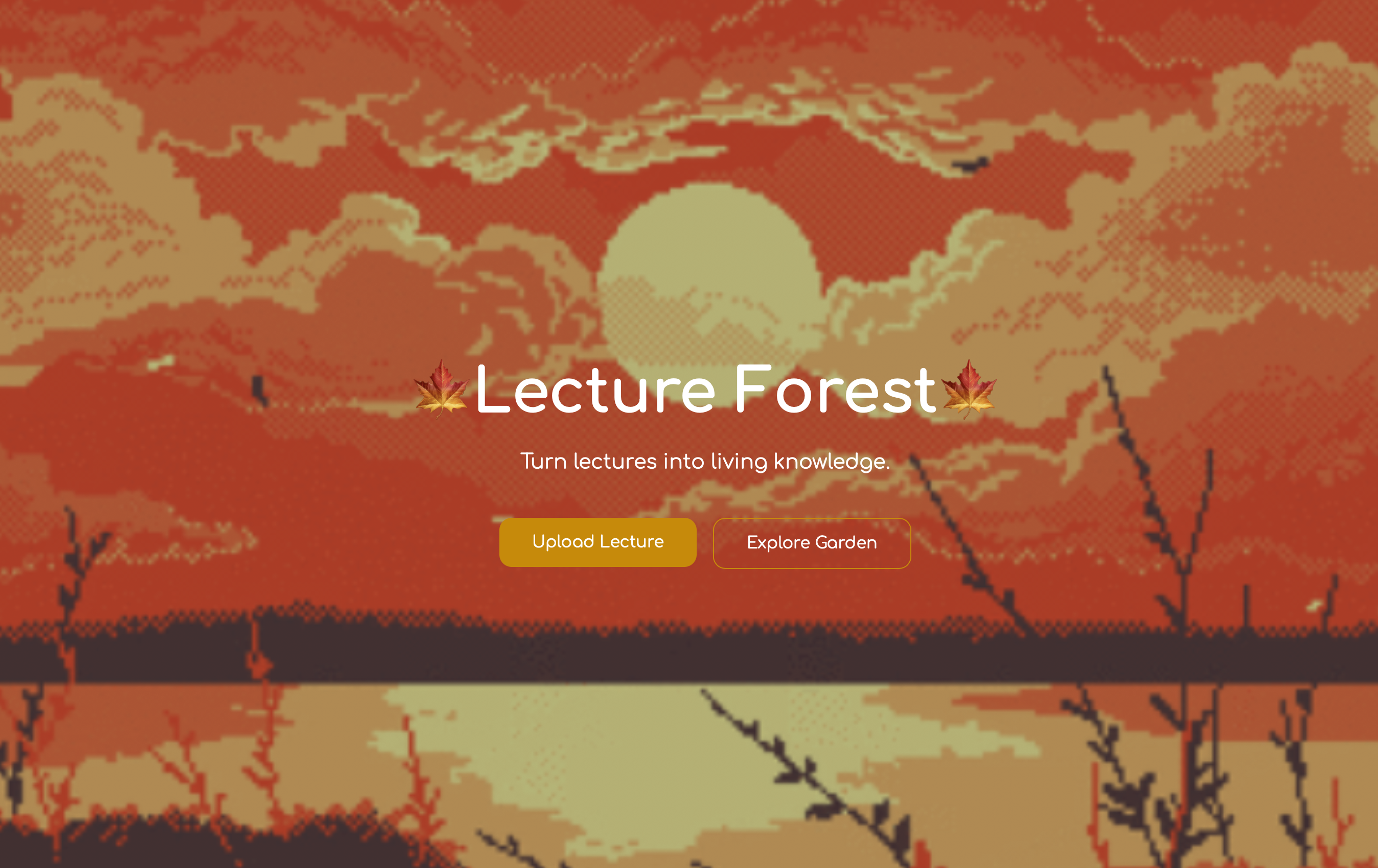
Homepage
-
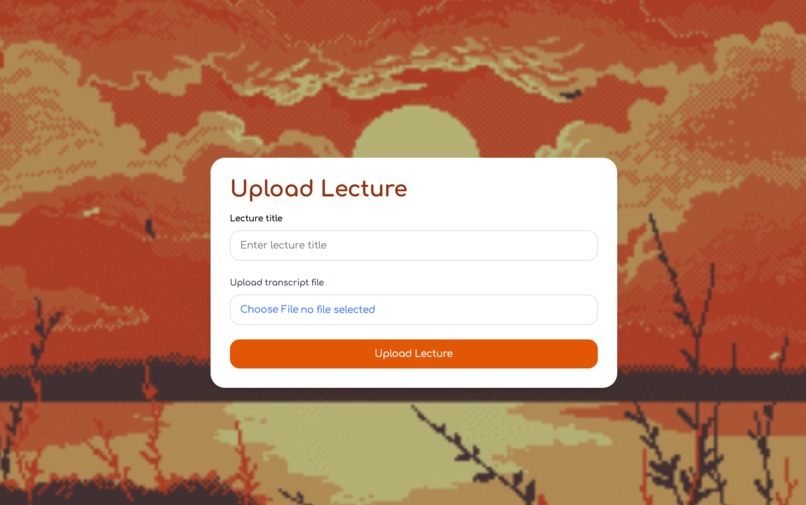
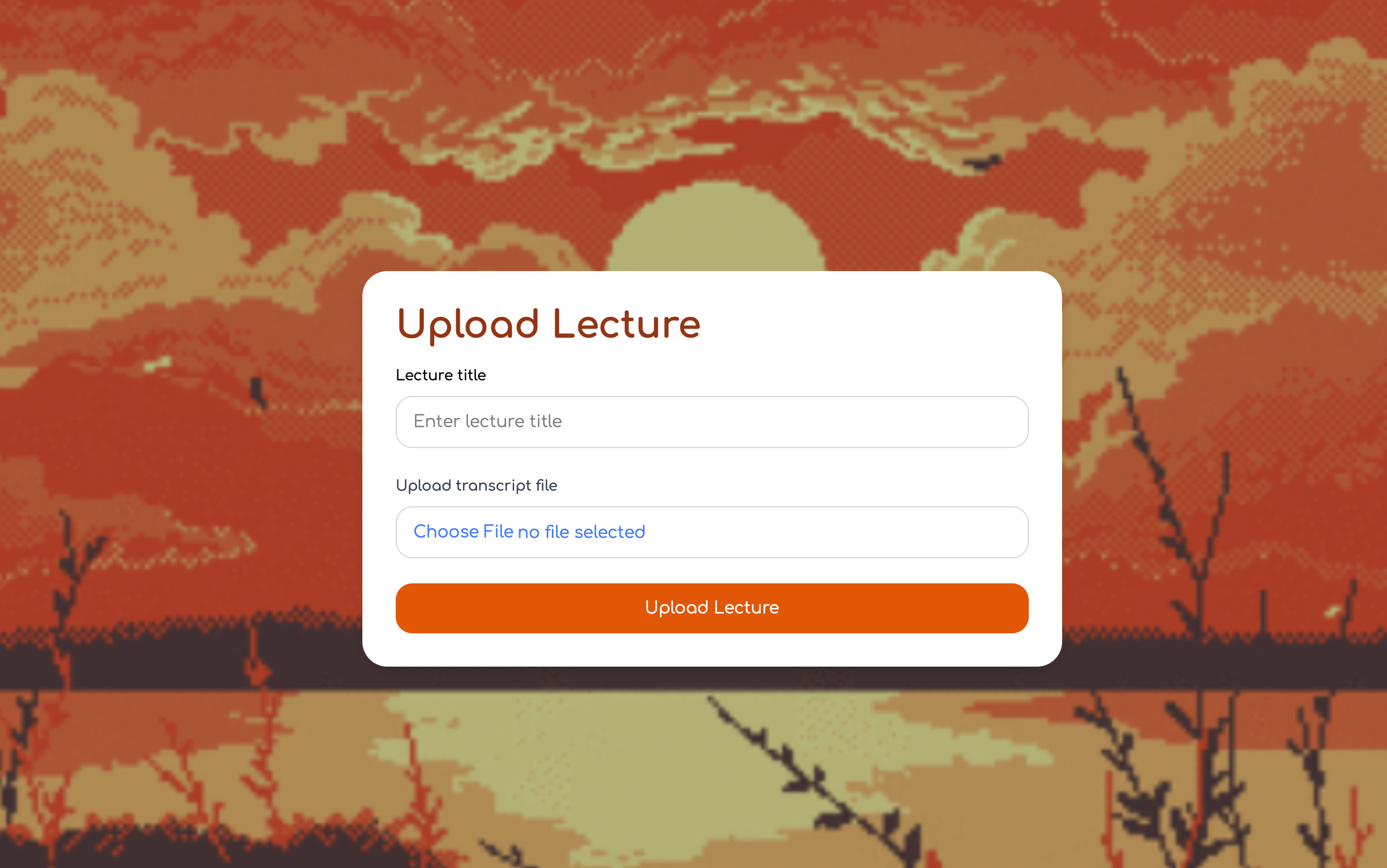
Uploading files
-
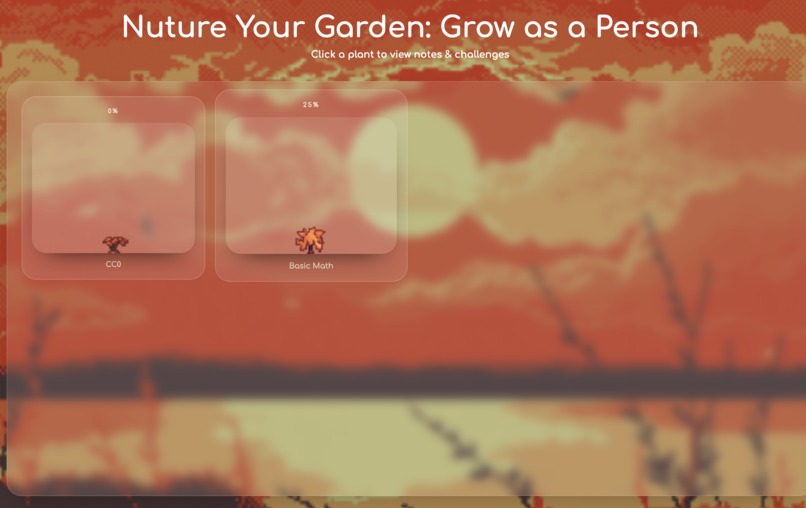
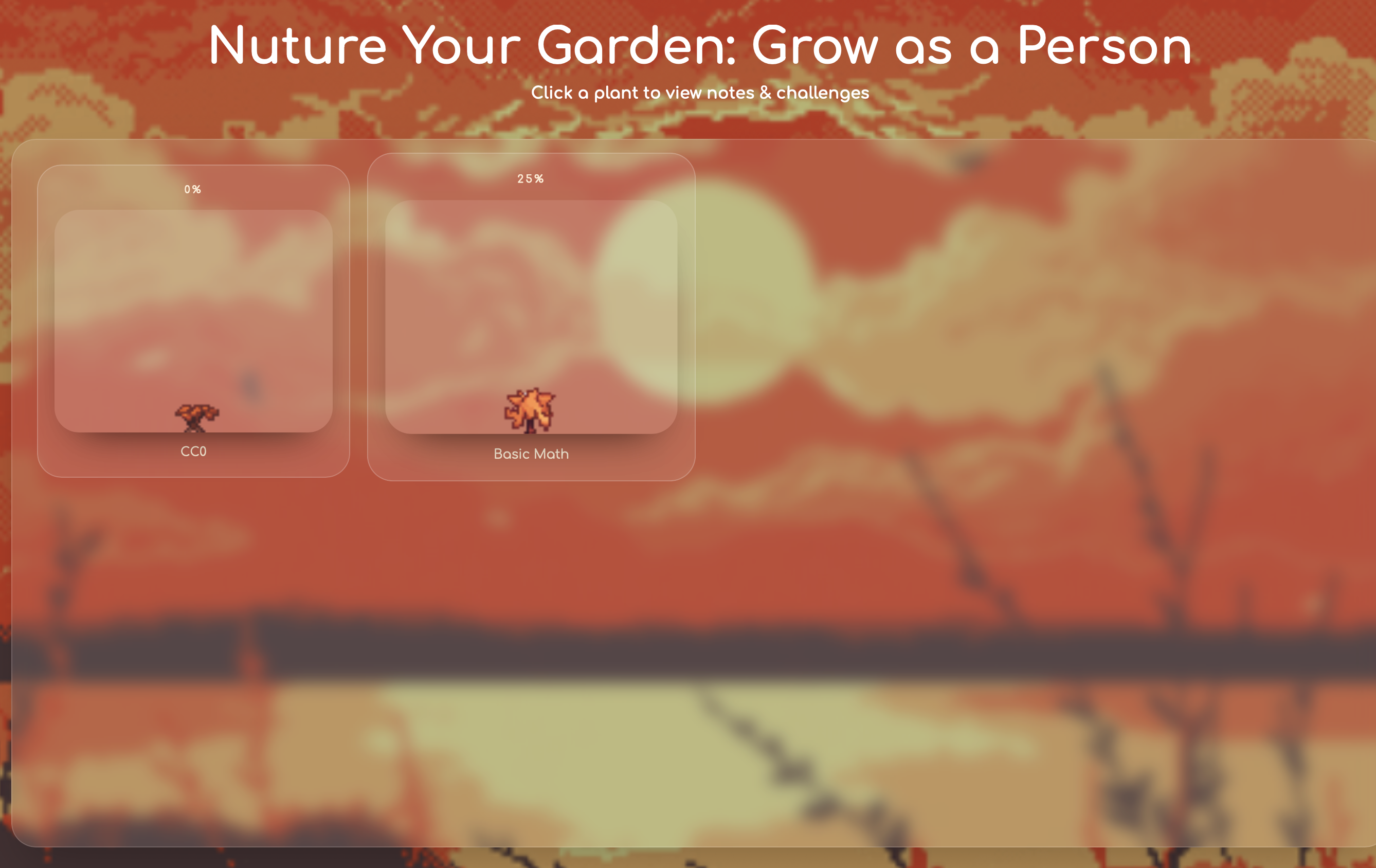
Garden Scene
-
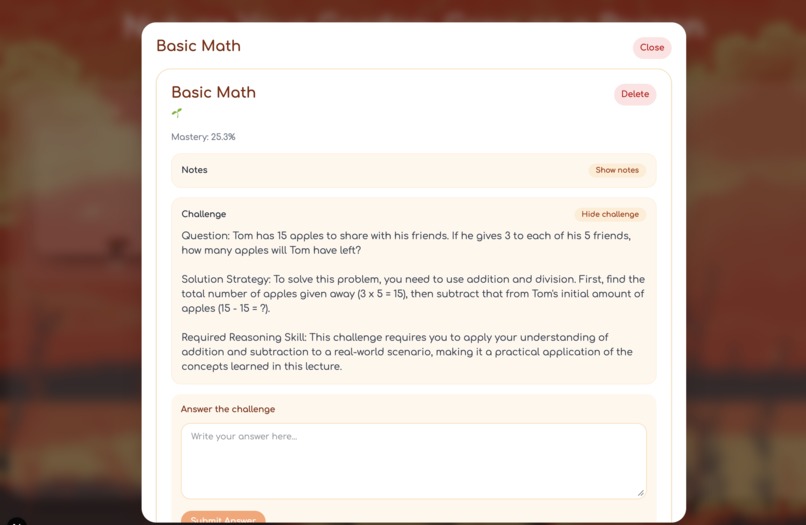
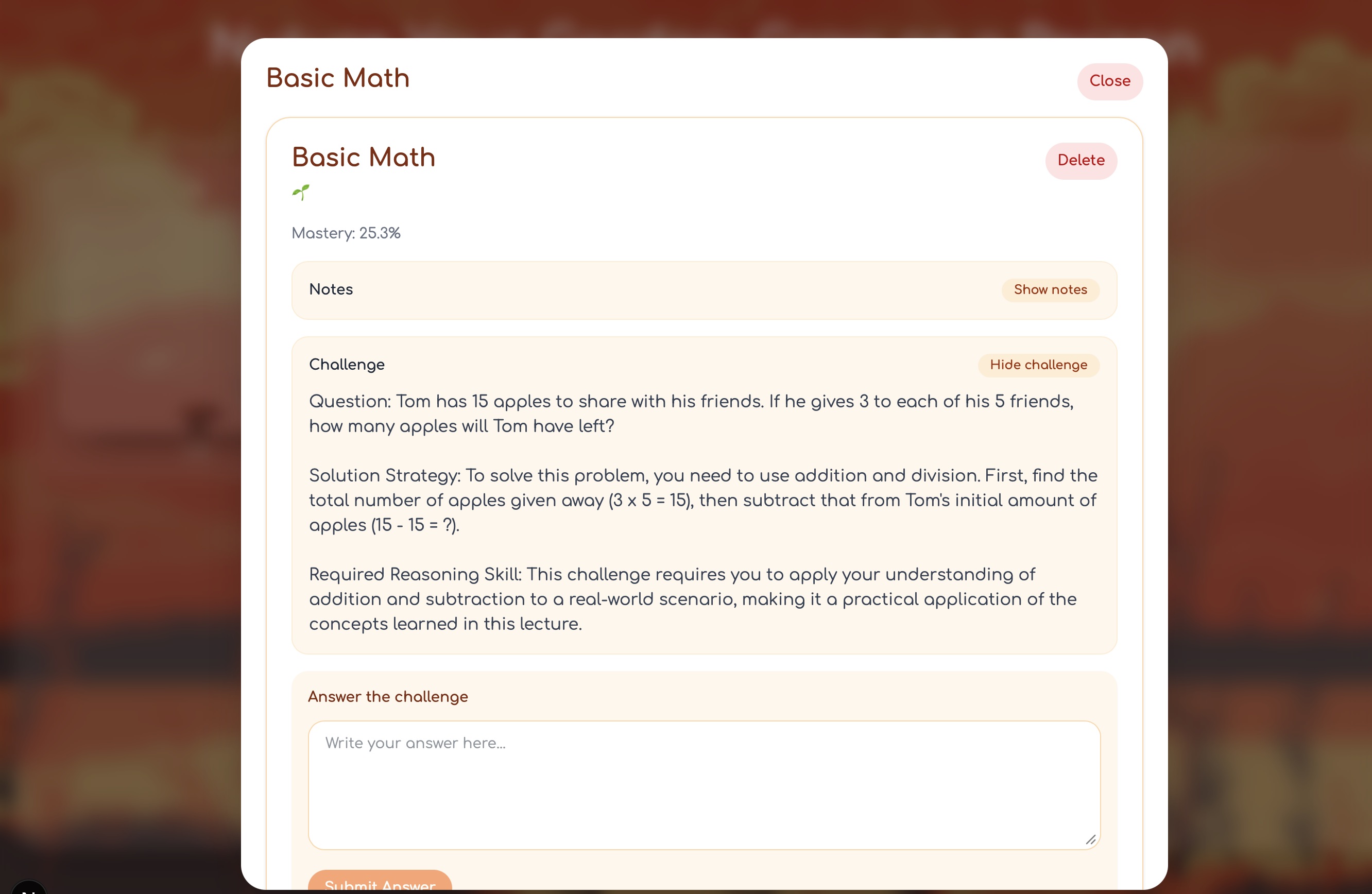
Example Question
-
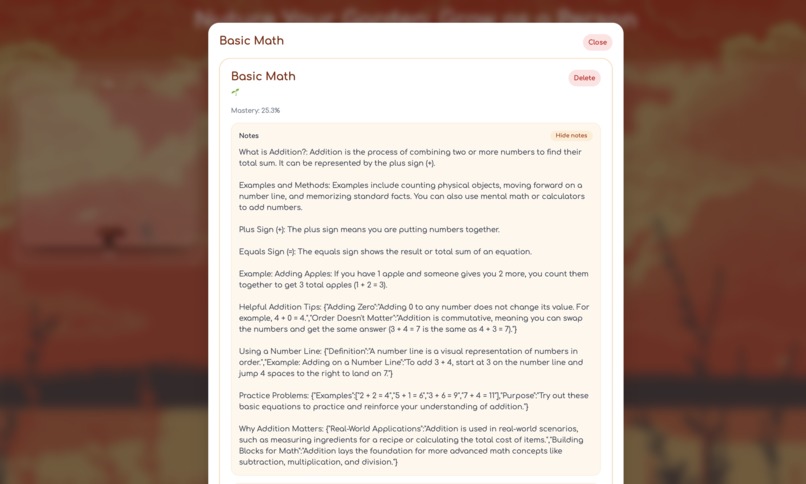
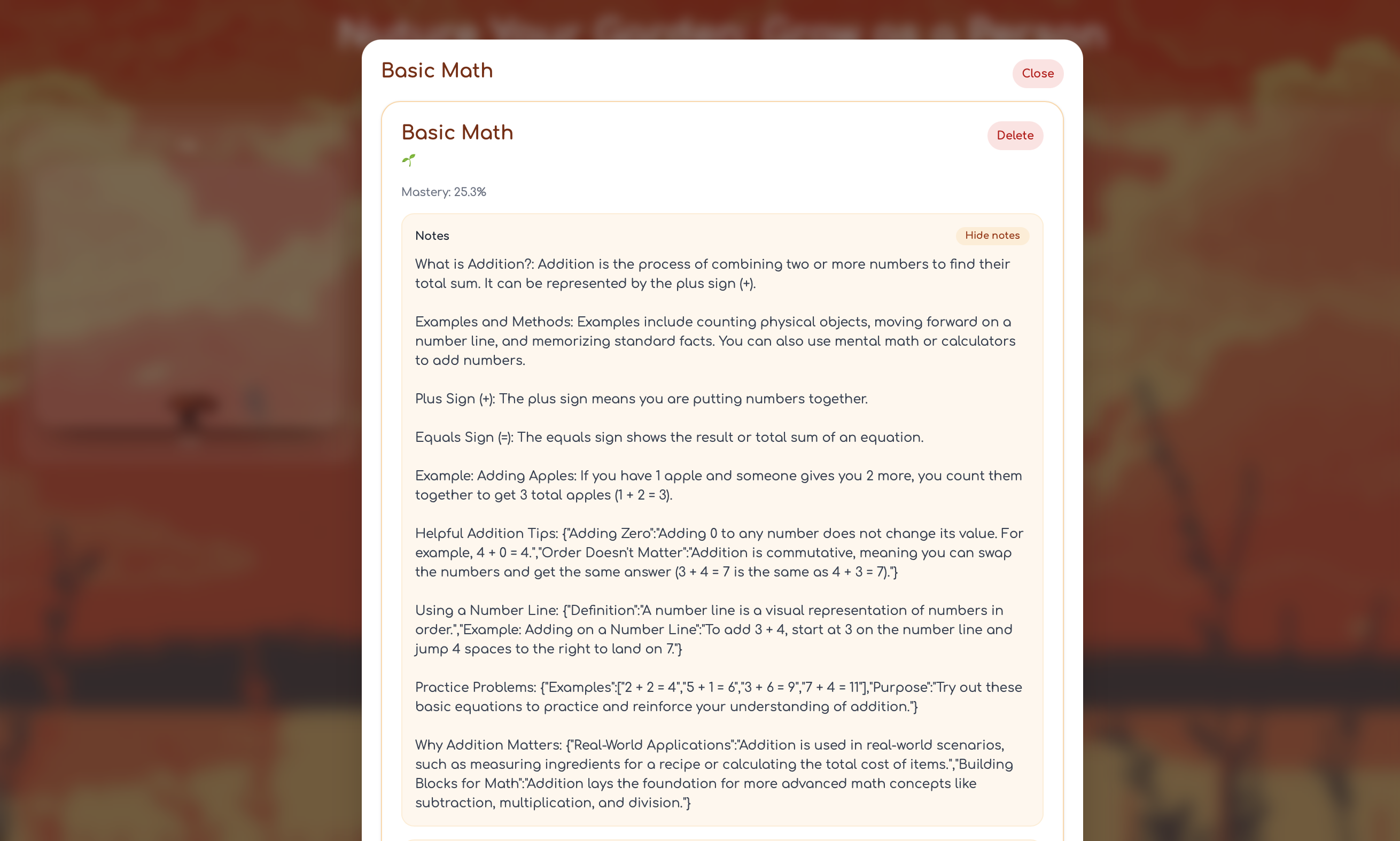
Example Notes
Inspiration
Lecture Garden was inspired by the fact that learning new topics and ideas can sometimes be boring. I wanted to create something that could summarize these topics for me but present them in a more fun and interactive way. That's when I thought of creating something like a virtual garden to reflect both the information and my own understanding through the trees' growth.
What it does
Lecture Garden takes in uploaded text files from the user and creates a "plant" for each text file. These plants each contain a Notes section and Challenges section, both of which are based on the text file and use AI to summarize the text file's key points as well as provide challenging questions that are also graded by the AI. As the user progresses through these challenges, mastery will increase and the plant will grow. If the user stops doing the challenges for a long time, mastery will decrease and the plant will shrink again.
How we built it
Lecture Garden was built using Next.js and React for the frontend, with Tailwind CSS for a clean, responsive interface. The app is organized into two main sections, one where you can upload files and another where you can view your garden, containing plants that represent different topics, each with AI generated notes and challenges. To implement the AI, the uploaded files are sent to a custom Next.js API route, which communicates with a locally hosted Llama 3.2 model through Ollama. The AI generates a structured set of study notes and challenges to improve understanding of the topics.
Challenges we ran into
There were many minor issues along the way with small formatting errors and different bugs that would crash the code, but the hardest part included connecting the project to an AI model because initially, the plan was to use one of the standard AIs with an API key, but that would cost too much money for the project so I had to find an alternative which was hosting a small AI model on my own computer using Ollama and the Llama 3.2 model and adjusting the AI prompting for the notes and grades to be quite a bit more precise in order to adjust to the lower intelligence of the smaller AI model.
Accomplishments that we're proud of
I'm proud that I've managed to finish at least the barebones of the project and the basic skeleton of the project to get something that actually works and functions as intended in most scenarios.
What we learned
I learned quite a lot about how to connect a local AI model to my code and how to use the AI in a more specific manner to get the desired outcome.
What's next for Lecture Forest
In the future, I hope to refine the grading and notes system, create a scene of plants/trees for each topic that are more connected to the background environment, introduce new types of trees for different topics to improve organization, and potentially have changing seasons for the background as wells as sounds like birds chirping or the crunch of leaves to improve the immersion of the experience.
Built With
- ai
- javascript
- next.js
- react
- tailwindcss

Log in or sign up for Devpost to join the conversation.