-
-
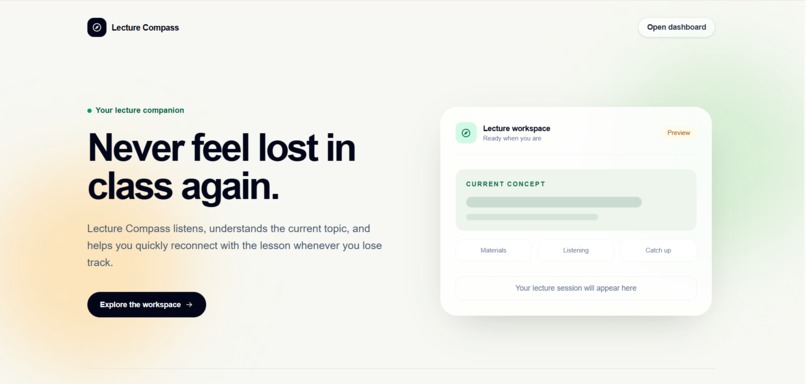
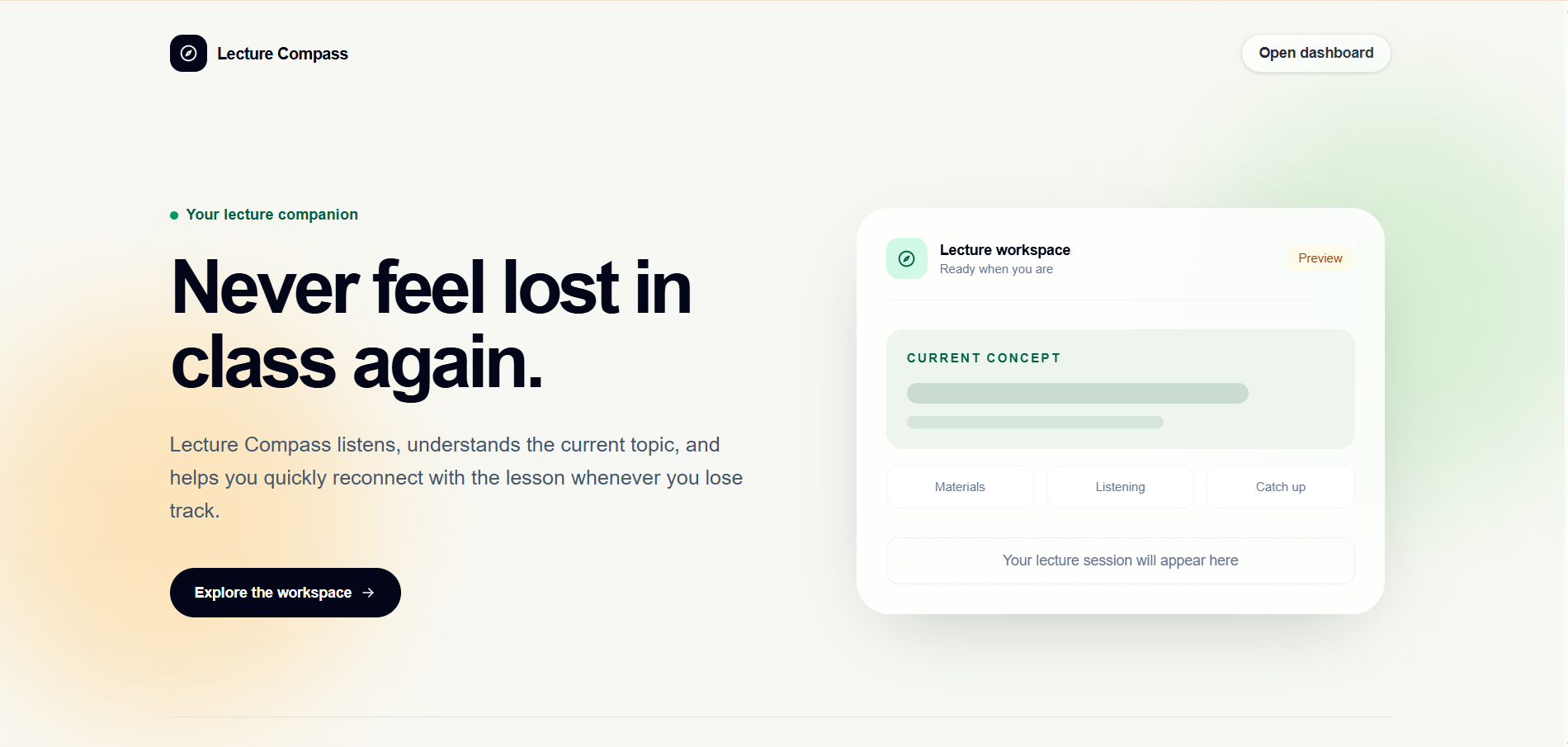
Laptop view - home
-
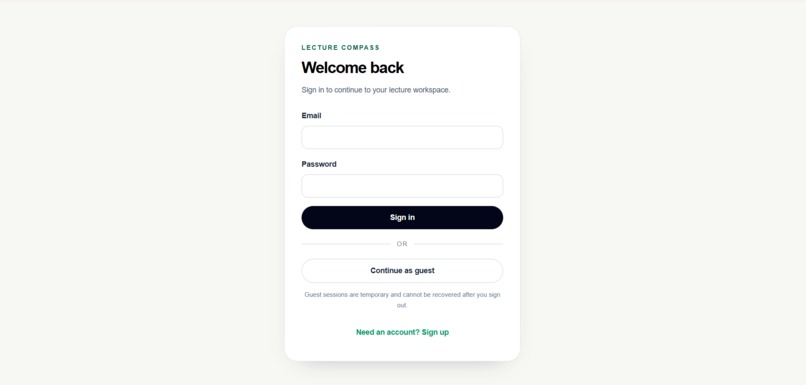
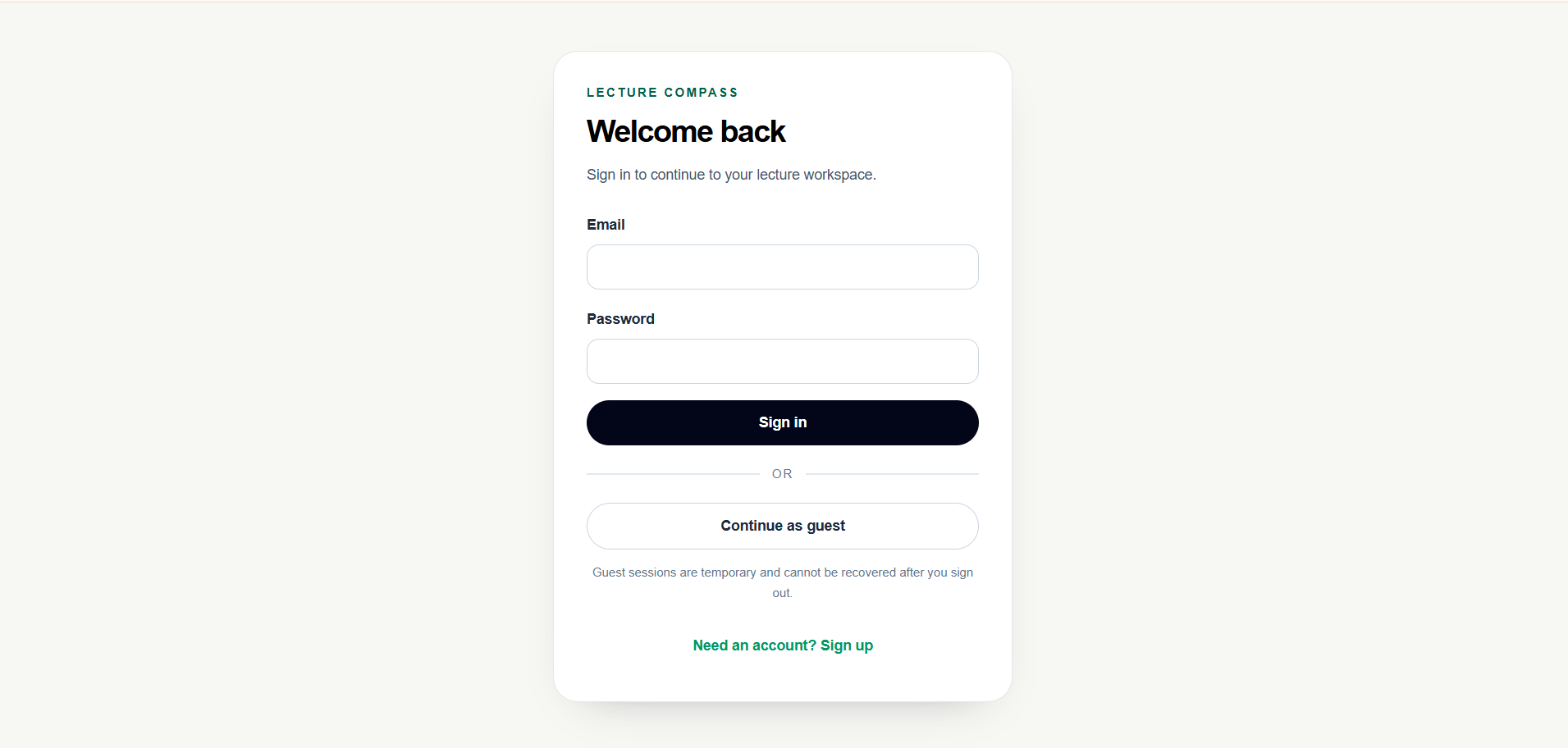
Laptop view - login
-
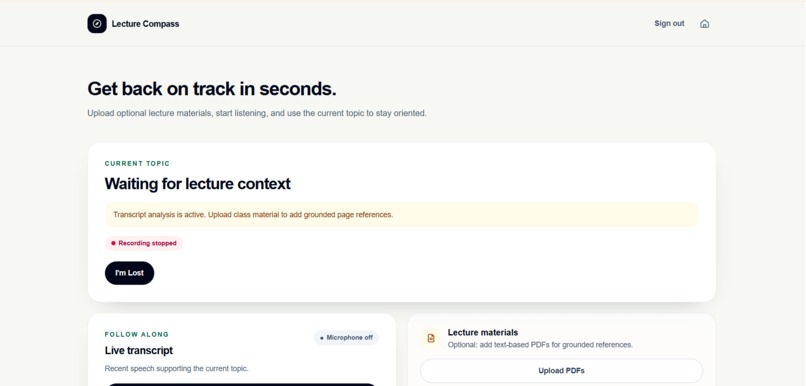
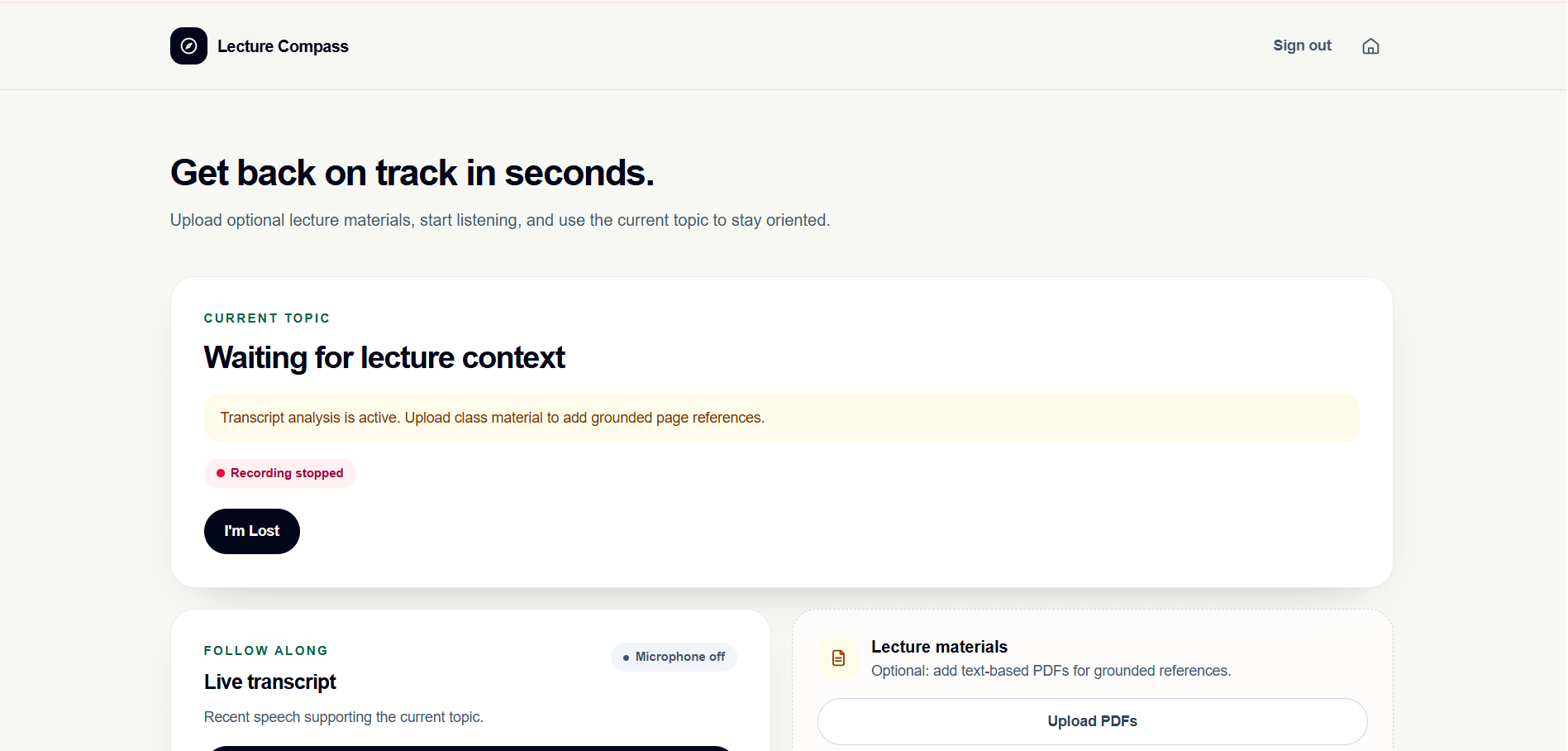
Laptop view - dashboard
-
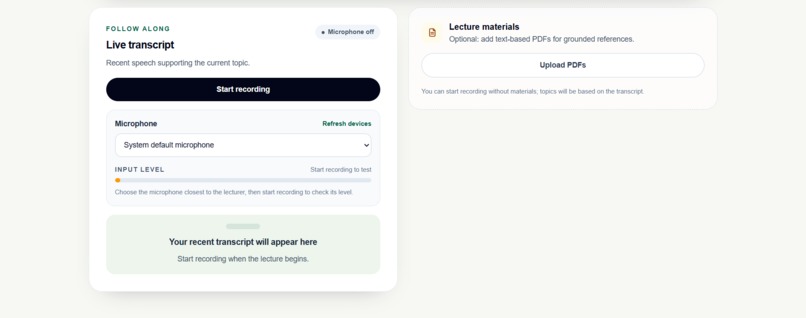
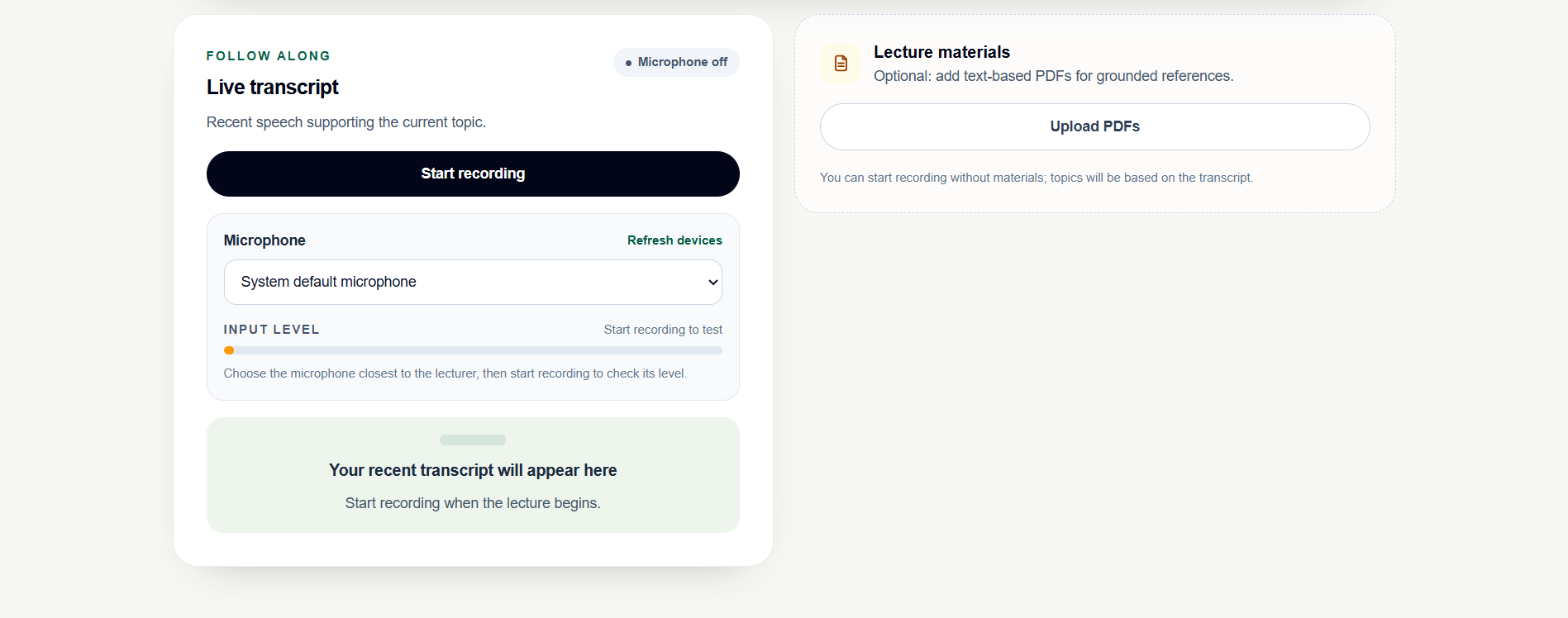
Laptop view - dashboard
-
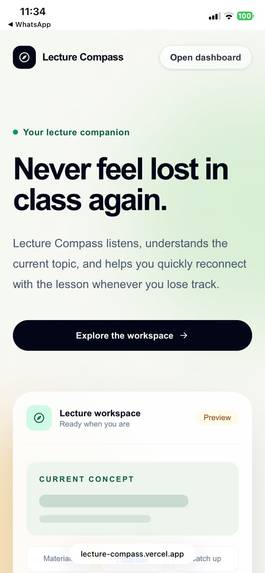
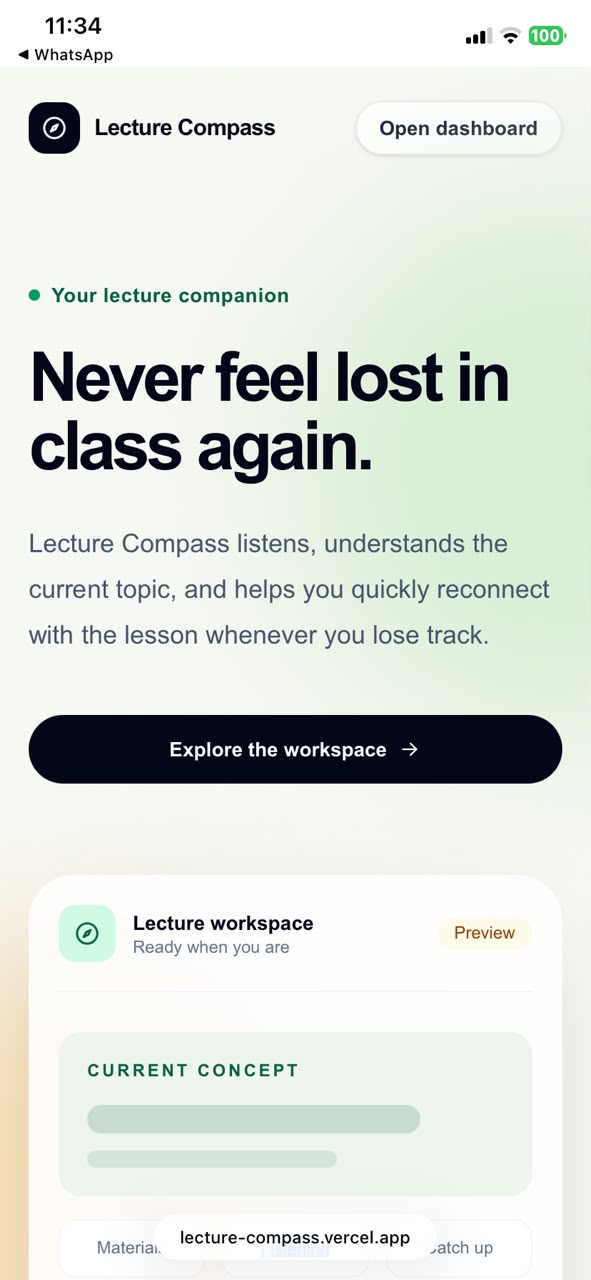
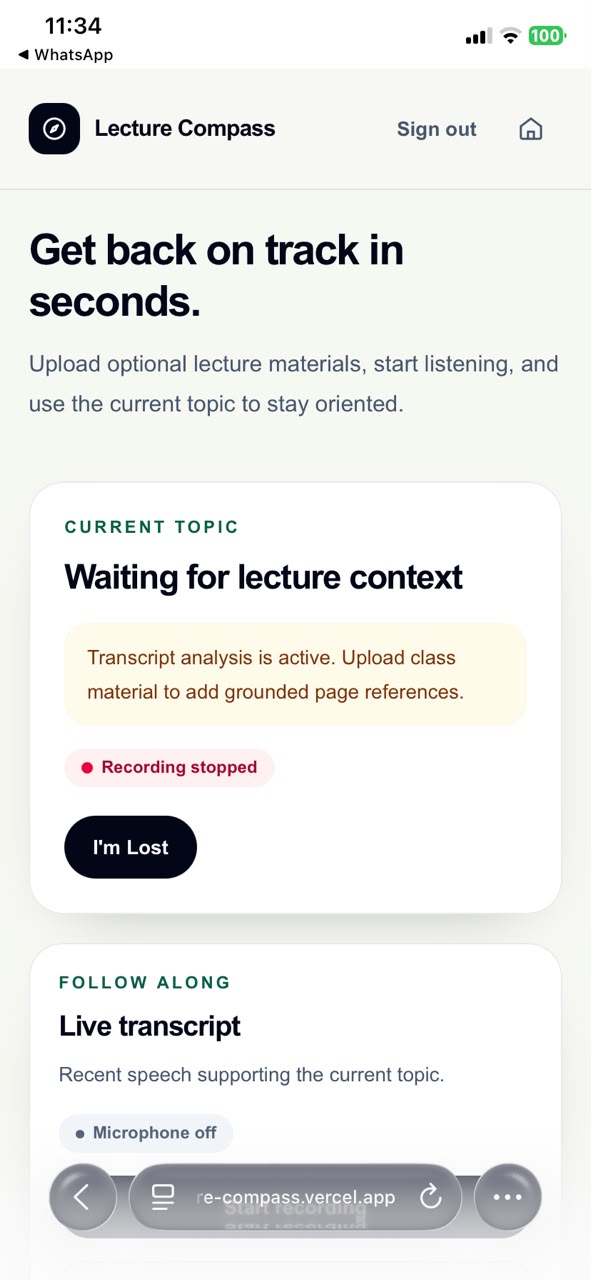
Mobile view - home
-
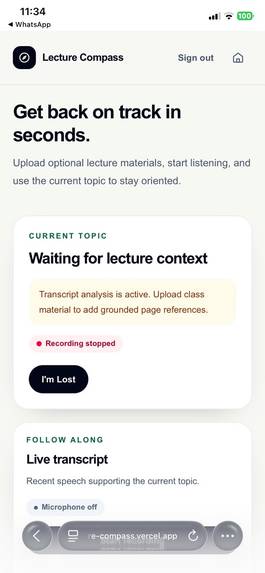
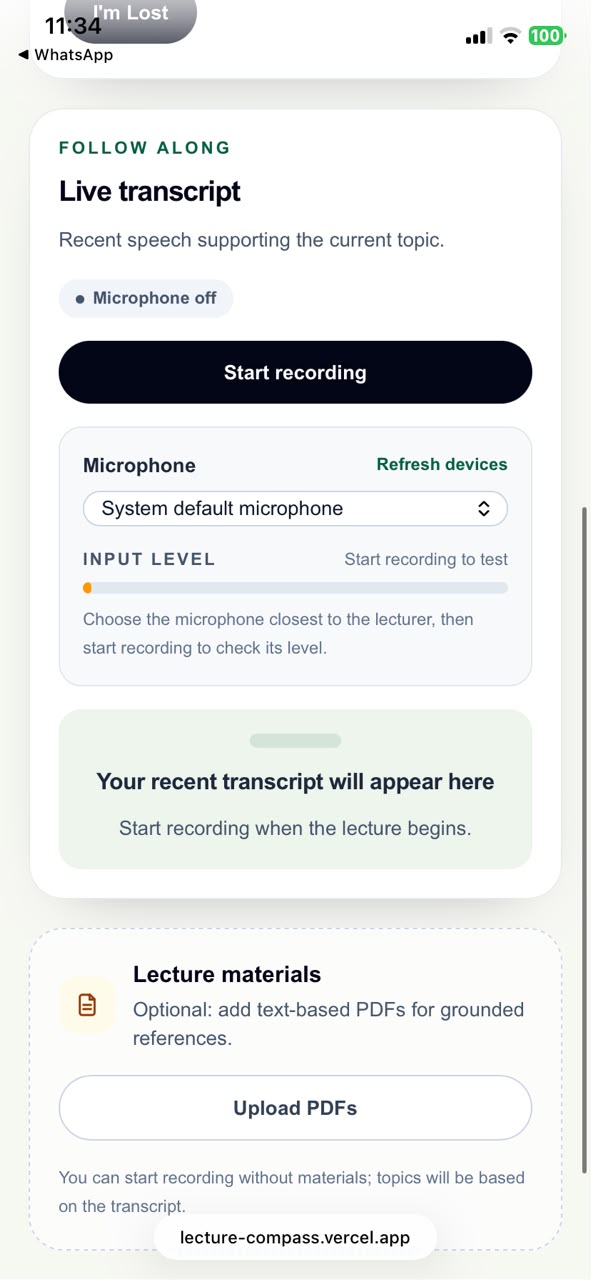
Mobile view - dashboard
-
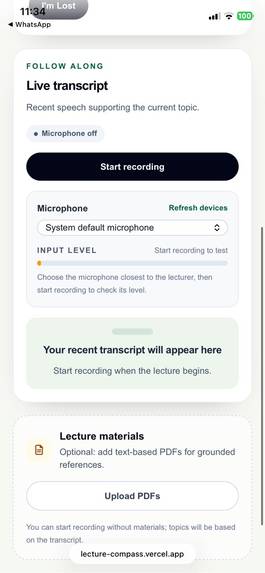
Mobile view - dashboard
Inspiration
Lecture Compass was inspired by my own experience as a student.
During one lecture, I accidentally lost focus for only two minutes. When I tried to follow the lecture again, I realized I had completely lost track of the topic being discussed. Although I only missed a short moment, it took a significant amount of effort to regain the context of the lesson.
This made me realize that many students experience the same problem. Losing focus briefly is normal, but recovering from that lost context during a fast-paced lecture can be difficult. I wanted to create a tool that helps students quickly find their way back into the lesson without interrupting their learning flow.
What it does
Lecture Compass is an AI-powered lecture companion designed to help students stay oriented during lectures.
It analyzes live lecture transcripts and identifies the current topic being discussed, displaying key information in a simple and easy-to-understand format. When students feel lost, the "I'm Lost" feature helps them quickly understand the current lecture context and catch up with minimal mental effort.
Instead of replacing the learning process, Lecture Compass acts as a support tool that helps students regain direction when they lose track.
How we built it
Lecture Compass was developed as my first individual hackathon project using Codex and GPT-5.6.
I built the application by combining frontend development, backend services, and AI integration. Throughout the development process, I used AI tools as a development partner to brainstorm ideas, explore technical solutions, debug issues, and accelerate implementation.
The system processes lecture transcripts, extracts meaningful information, and presents it through a focused interface designed for students. I also focused on keeping the experience simple because students need quick guidance during lectures rather than additional distractions.
Challenges we ran into
The biggest challenge was integrating AI-powered transcript analysis.
Accurately understanding lecture content from speech transcripts requires reliable AI processing. The OpenAI API was the best fit for achieving the quality and accuracy needed, but as a student developer, managing API costs was an important consideration.
After evaluating the trade-offs, I decided to invest in a small amount of API usage because I wanted to experience building a complete AI-powered application and provide the best performance I could achieve.
Another challenge was balancing the amount of information provided. Too much explanation could increase cognitive load, while too little information would not help students recover context. Designing the right level of assistance was an important part of the development process.
Accomplishments that we're proud of
I am proud that I was able to transform a personal frustration into a working application.
This project allowed me to experience the complete software development lifecycle — from identifying a problem, designing a solution, building the frontend and backend, integrating AI capabilities, and deploying the final product.
Seeing Lecture Compass work as I originally imagined was a rewarding moment because it is a tool that I would personally use as a student.
What we learned
This project taught me that building software is not only about writing code, but also about understanding users and solving meaningful problems.
I learned how to effectively use AI tools such as Codex and ChatGPT throughout the development process, while still making my own engineering decisions. I also gained practical experience in AI integration, system design, debugging, and deploying a complete application.
Most importantly, I learned that even a small personal problem can become the foundation for a useful solution when approached with curiosity and creativity.
What's next for Lecture Compass
In the future, I hope to continue improving Lecture Compass by making it more accurate, intelligent, and useful for different learning environments.
Possible improvements include:
- Better speech recognition and transcript accuracy
- More advanced understanding of lecture materials
- Improved personalization based on different courses and learning styles
- Support for more types of educational content
My goal is to continue developing Lecture Compass into a reliable AI learning companion that helps students stay engaged and confident throughout their learning journey.
Built With
- codex
- next.js
- openai
- pdf.js
- supabase
- tailwind.css

Log in or sign up for Devpost to join the conversation.