-
-
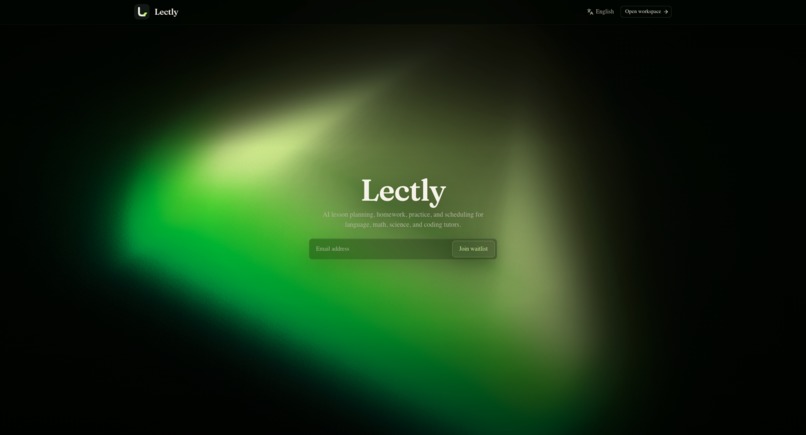
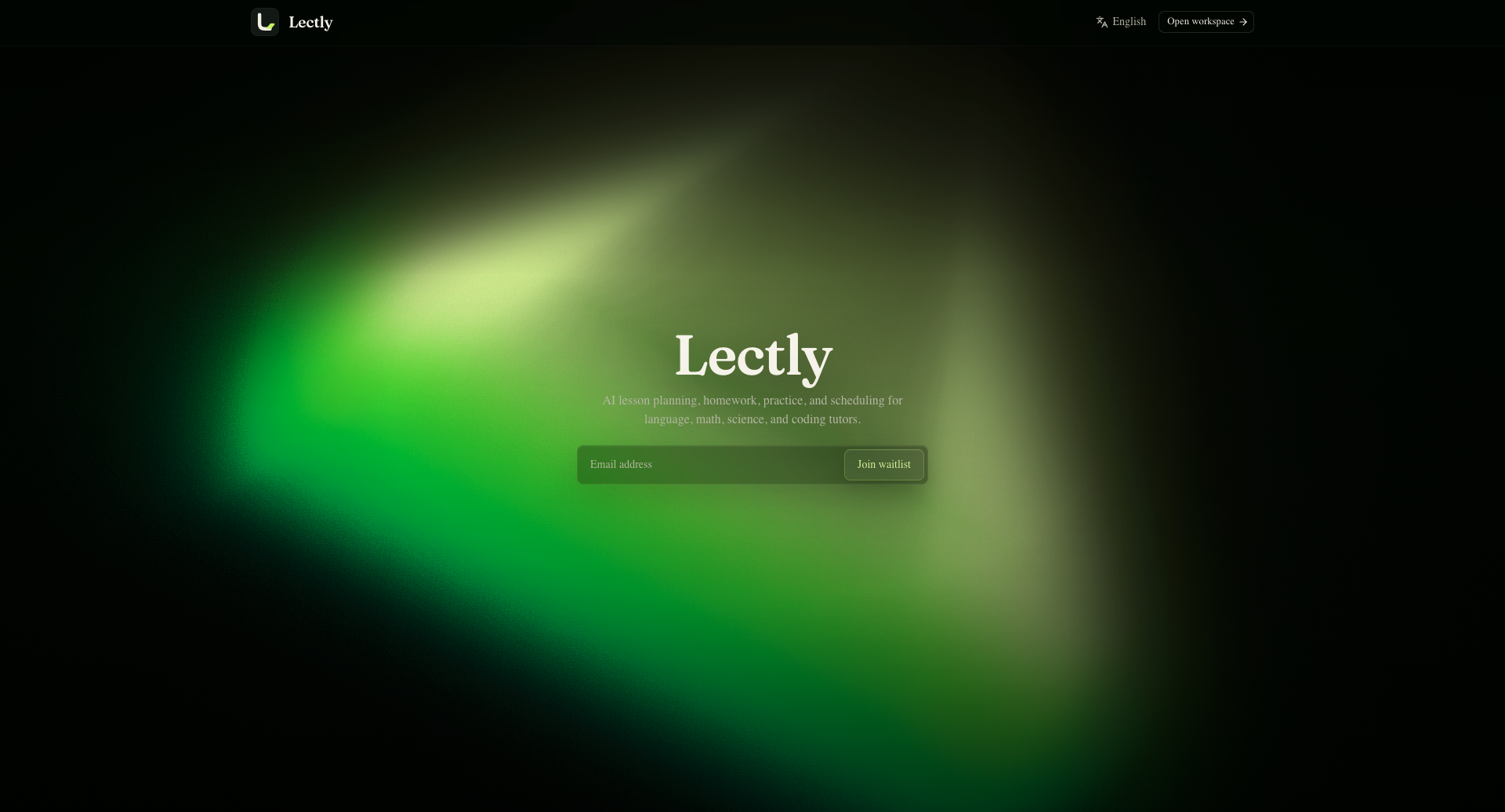
Waitlist Landing Page
-
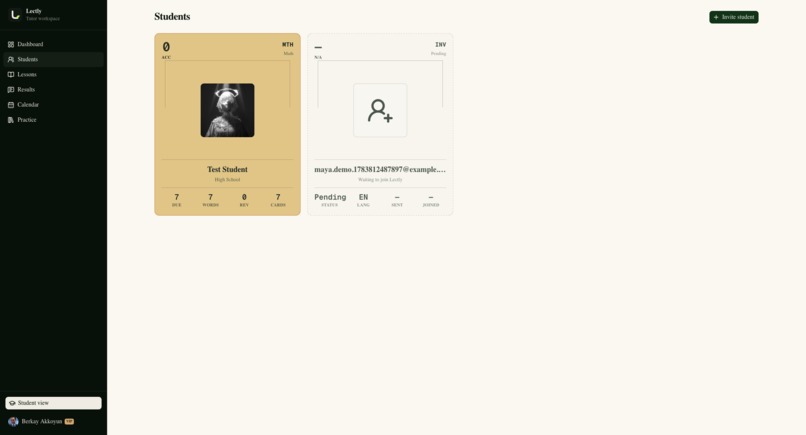
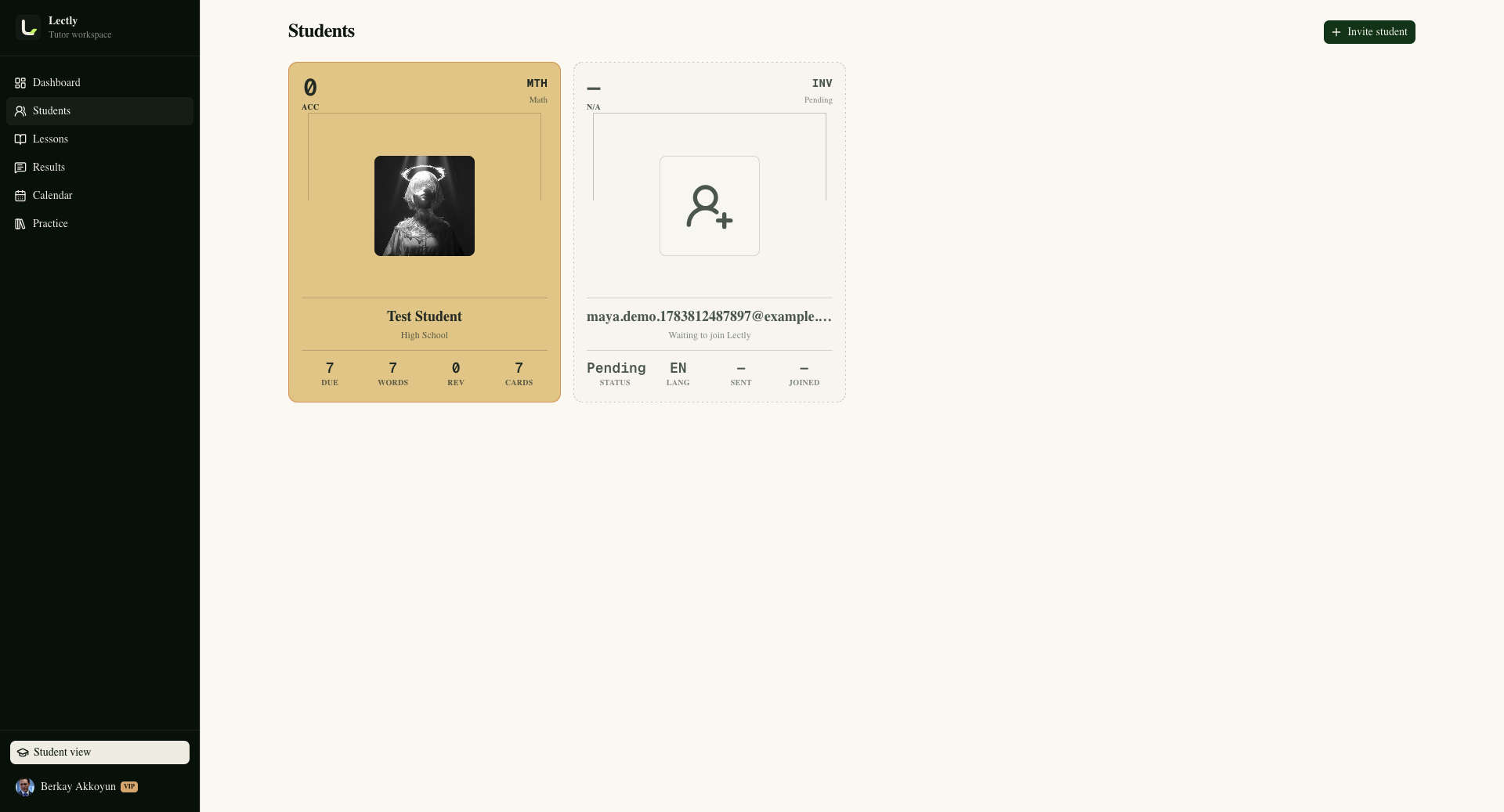
Student Management
-
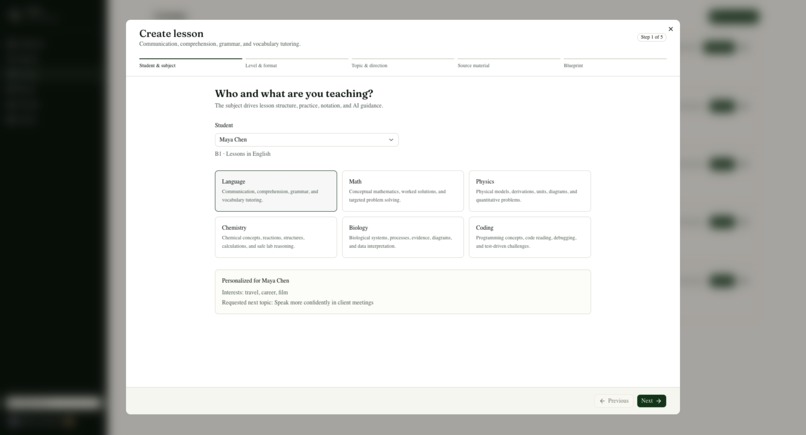
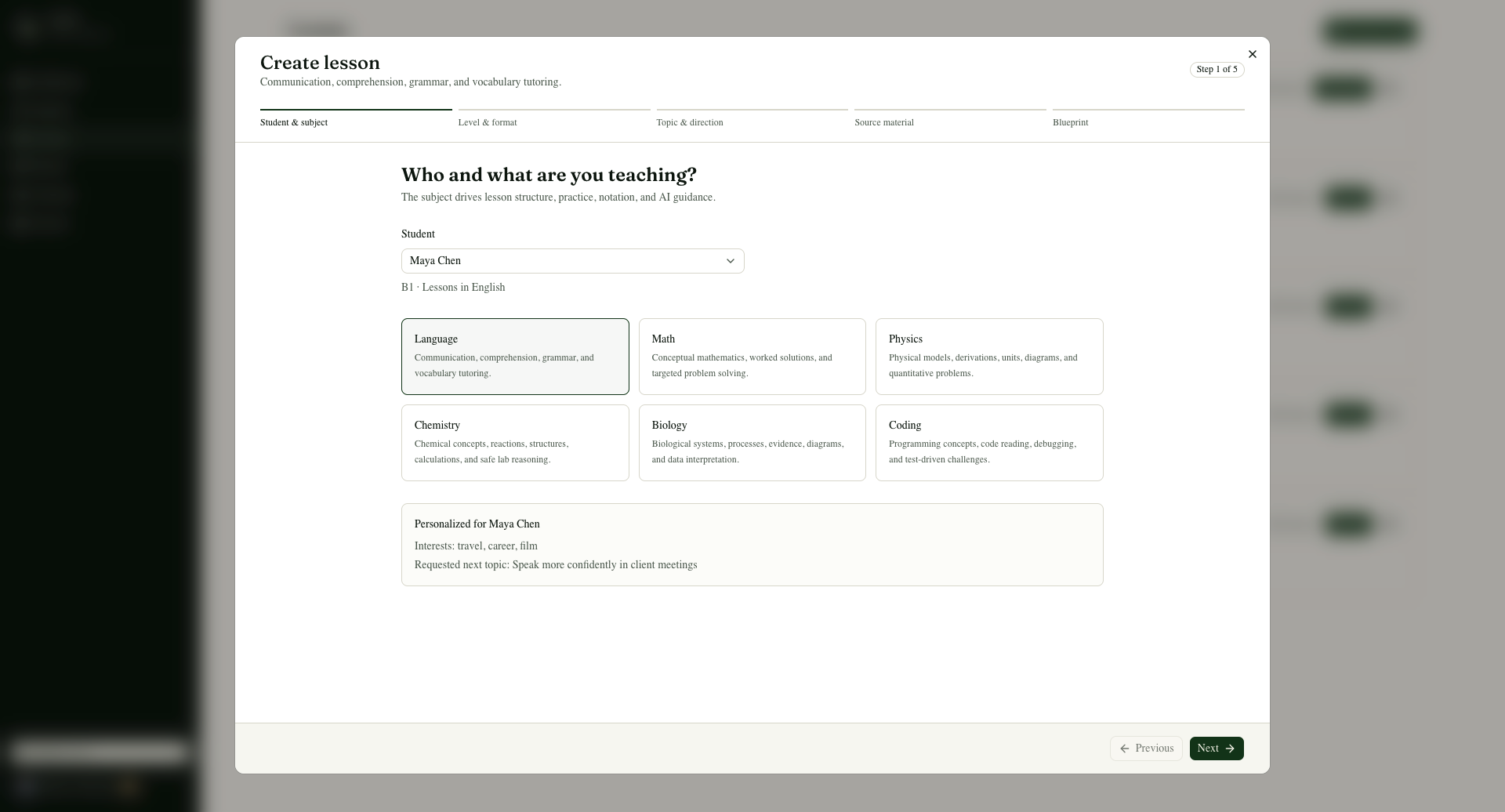
Lesson Generation
-
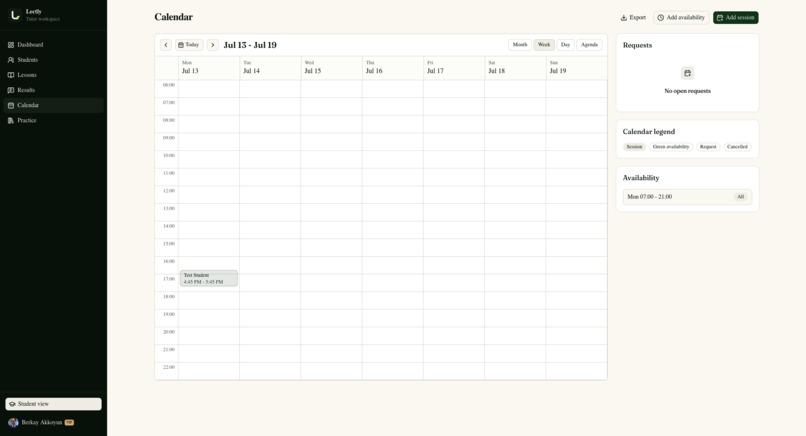
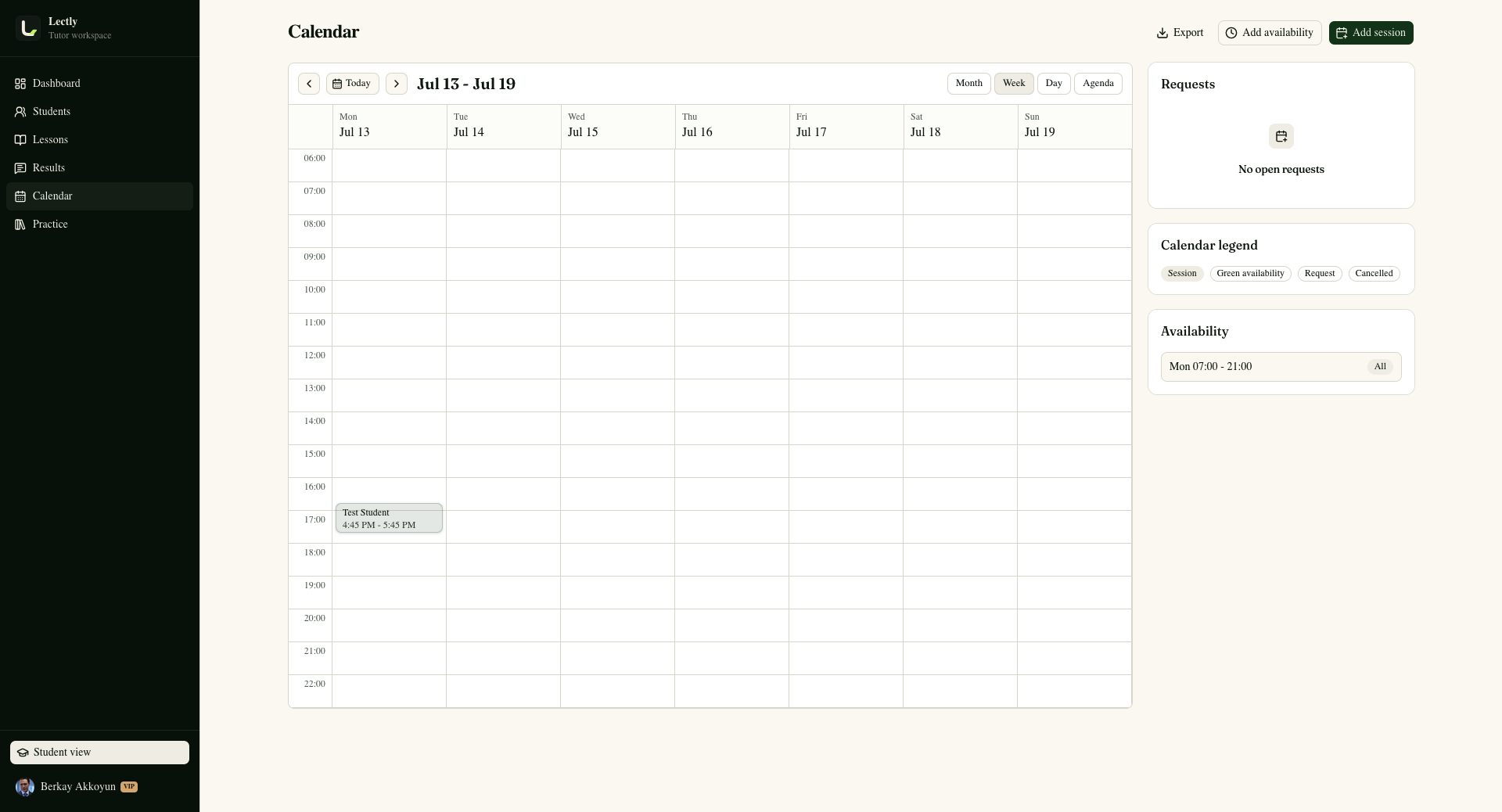
Calendar
-
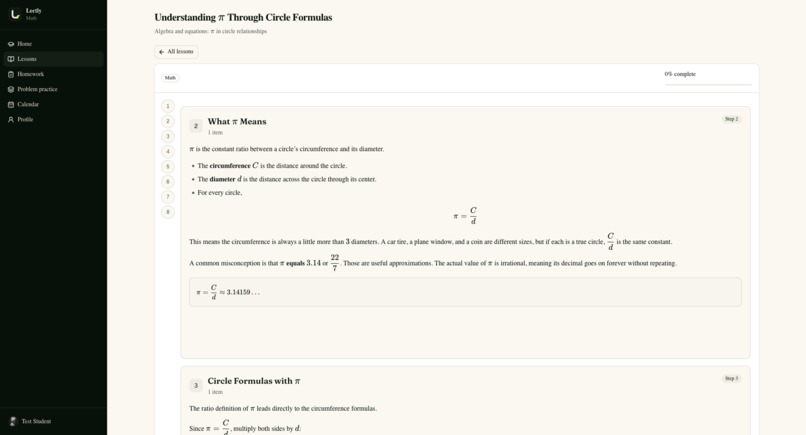
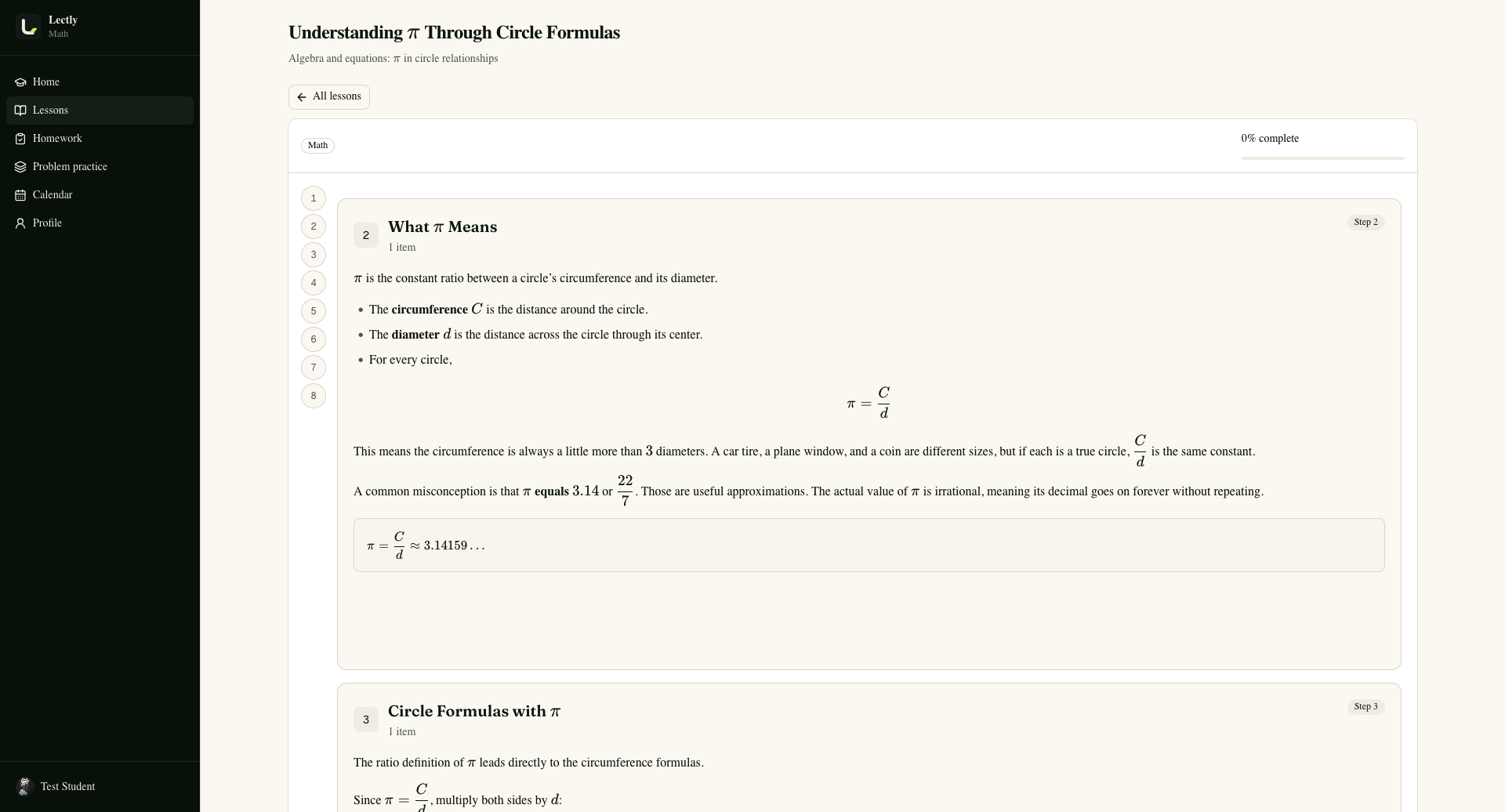
Student View
Inspiration
Lectly started from a simple frustration: good teaching often takes much more time outside the lesson than inside it.
There was always something to do before and after the actual class: finding materials, adjusting them to a student's level and interests, making homework, preparing vocabulary, remembering what was difficult last time, sending files, keeping track of everything. We wanted students to feel that their lessons were made for them, not simply taken from the same course or curriculum as everyone else.
AI helped, but it did not solve the whole thing. It still meant juggling prompts, documents, PDFs, calendars, messages, vocabulary tools, and different platforms. At some point it became clear that the process itself needed a home. Lectly is our attempt to build that home.
What it does
Lectly helps tutors build a learning space around each student. A tutor can keep track of a student's level, goals, interests, previous lessons, homework, and progress, then use that context to create lessons, practice activities, study cards, and homework.
The important part for us is that the content does not appear from nowhere and get sent away untouched. It is there to be edited, changed, and used by the tutor who knows the student.
How we built it
We built Lectly with Next.js, TypeScript, Convex, Clerk, and OpenAI.
We focused on structured generation instead of just putting AI text into a chat window. Lessons need to be usable: they need a clear shape, they need to be editable, and they need to render properly. Markdown, KaTeX, and interactive components let us use the same product for language lessons, but also for maths, chemistry, biology, coding, and other subjects.
Challenges we ran into
It was easy to generate something that looked good. It was much harder to generate something a tutor would actually want to use with a real student.
A lesson can be well written and still be wrong for someone: too difficult, too easy, too long, badly structured, or just not interesting to them. We had to think about making the output reliable and editable, while keeping the tutor in control.
Accomplishments that we're proud of
We are proud that Lectly is starting to feel less like an AI feature and more like a place where teaching can happen.
A lesson is connected to the student it was made for. Homework does not disappear after it is sent. Vocabulary and practice are not somewhere else. Feedback, progress, and future lessons can build on what happened before. That is the experience we wanted: less time trying to remember and organize everything, more room to actually pay attention to the student.
What we learned
We learned that the useful part of AI is not that it can write a lesson in seconds. The useful part is that it can take away the repetitive work around teaching without taking away the relationship.
A tutor still notices when a student is confused but pretending not to be. A tutor knows when to stop following the plan, explain something differently, or spend ten more minutes on something because it matters. We do not want to automate that part. We want to give it more space.
What's next for Lectly
We want Lectly to become better at understanding what happens over time: what a student keeps struggling with, what they improve at, what kind of materials work for them, and where they might need a different approach.
We also want to build richer assessments, collaborative activities, parent insights, and useful integrations. But the direction stays the same: helping independent tutors support more students without making their teaching feel less personal.
Built With
- clerk
- convex
- next.js
- openai
- typescript


Log in or sign up for Devpost to join the conversation.