Inspiration
As a lifelong advocate for animal welfare and sustainable fashion, I grew frustrated by the lack of accessible resources to find high-quality vegan leather alternatives. Watching friends struggle to replace their leather goods with ethical options—without sacrificing style or durability—sparked the idea: create a one-stop platform that demystifies vegan materials and connects conscious consumers with verified brands. I wanted to make cruelty-free fashion easy, informed, and stylish for everyone.
What it does
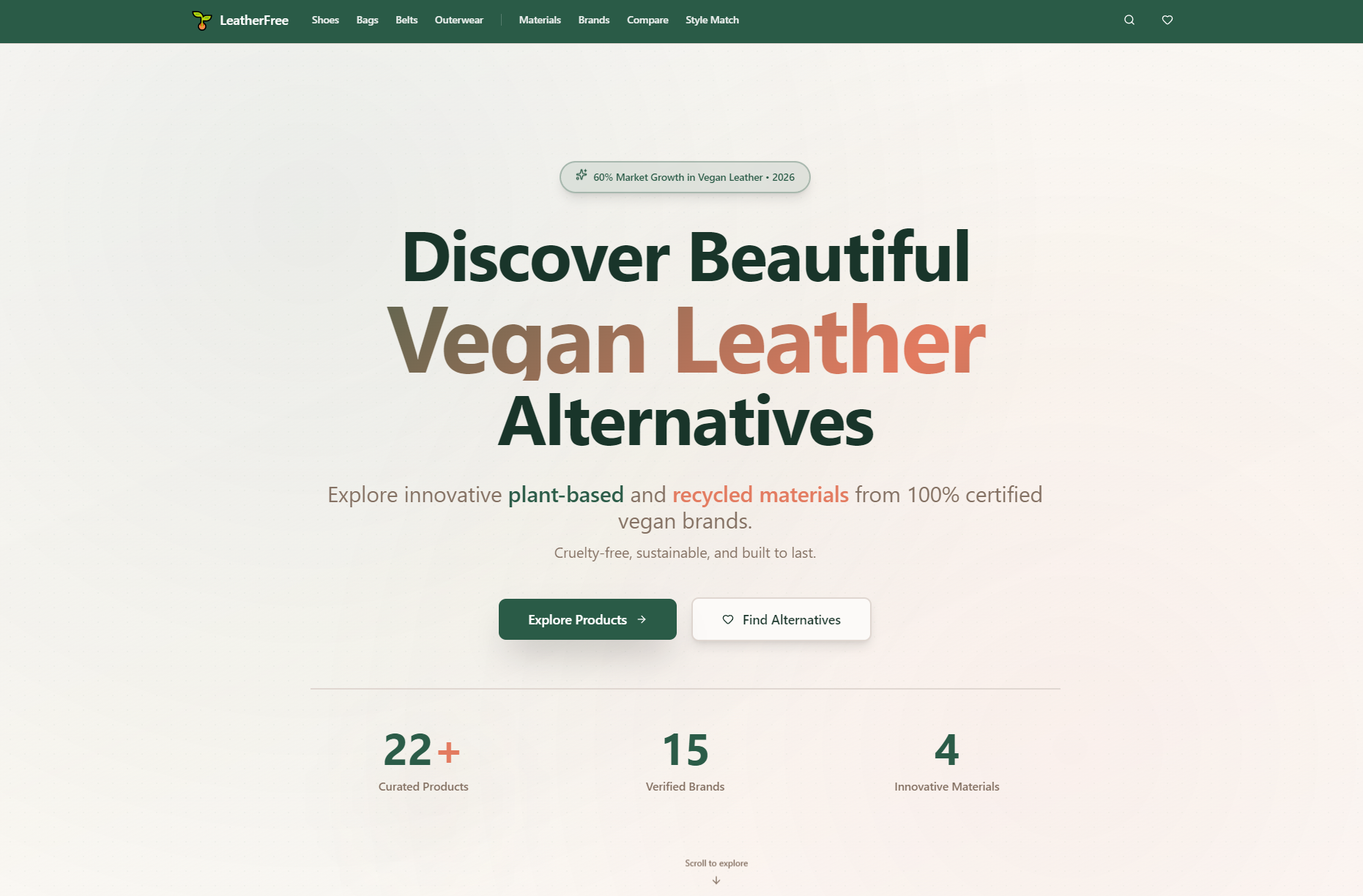
LeatherFree Fashion Finder is a web platform that lets users discover, filter, compare, and match vegan leather fashion items (shoes, bags, belts, outerwear) from 100% vegan-certified brands. It features a material database (Piñatex, Mylo, etc.) with sustainability/durability metrics, a brand directory, a style-matching tool (find vegan alternatives to conventional leather styles), and a wishlist for saving favorites.
How we built it
I started by mapping core user needs and page structures, then designed a minimalist, eco-focused UI with the specified color palette. Using React for the frontend and Node.js for the backend, I built responsive pages (home, category search, material comparison, etc.) and integrated MongoDB to store product/brand/material data. Chart.js powered visual score comparisons, and affiliate APIs added tracking to external links. The style-matching tool uses visual similarity APIs to align user inputs with vegan products.
Challenges we ran into
The biggest hurdle was validating brand credentials to ensure 100% vegan compliance—no shortcuts here. I also struggled with balancing detailed material data (durability/sustainability scores) with a clean, intuitive UX; too much data risked overwhelming users. The style-matching algorithm required fine-tuning to prioritize both visual similarity and ethical metrics (durability/sustainability).
Accomplishments that we're proud of
Creating a seamless, user-centric platform that makes sustainable fashion accessible—no jargon, no compromise on style. I’m especially proud of the material comparison tool, which turns complex sustainability data into easy-to-understand visuals, and the strict brand verification process that builds trust with users. The responsive design works flawlessly across mobile/desktop, ensuring accessibility for all.
What we learned
I deepened my understanding of vegan material science (Piñatex, Mylo, etc.) and ethical fashion supply chains. UX-wise, I learned to prioritize clarity over complexity—users want to find great products, not parse spreadsheets of data. I also gained hands-on experience with affiliate API integration and visual similarity algorithms, and the importance of centering user trust in every design decision.
What's next for this project
First, expand the material database to include emerging vegan leathers (like mushroom-based and recycled rubber options). Next, enhance the style-matching tool with AI-powered image recognition for even more accurate matches. I also plan to add a curated blog section for material/brand spotlights and partner with more European/US vegan brands to grow the product catalog—all while keeping the platform’s core mission: style, ethics, and accessibility for conscious consumers.

Log in or sign up for Devpost to join the conversation.