Inspiration
Online shopping makes it too easy to overspend. Traditional payment apps just process transactions - they don't help you make smarter financial decisions. I wanted to create something different: a shopping assistant that understands natural language, compares prices intelligently, and enforces spending limits automatically. The core idea: What if your payment app could guide you toward better decisions instead of just taking your money?
What it does
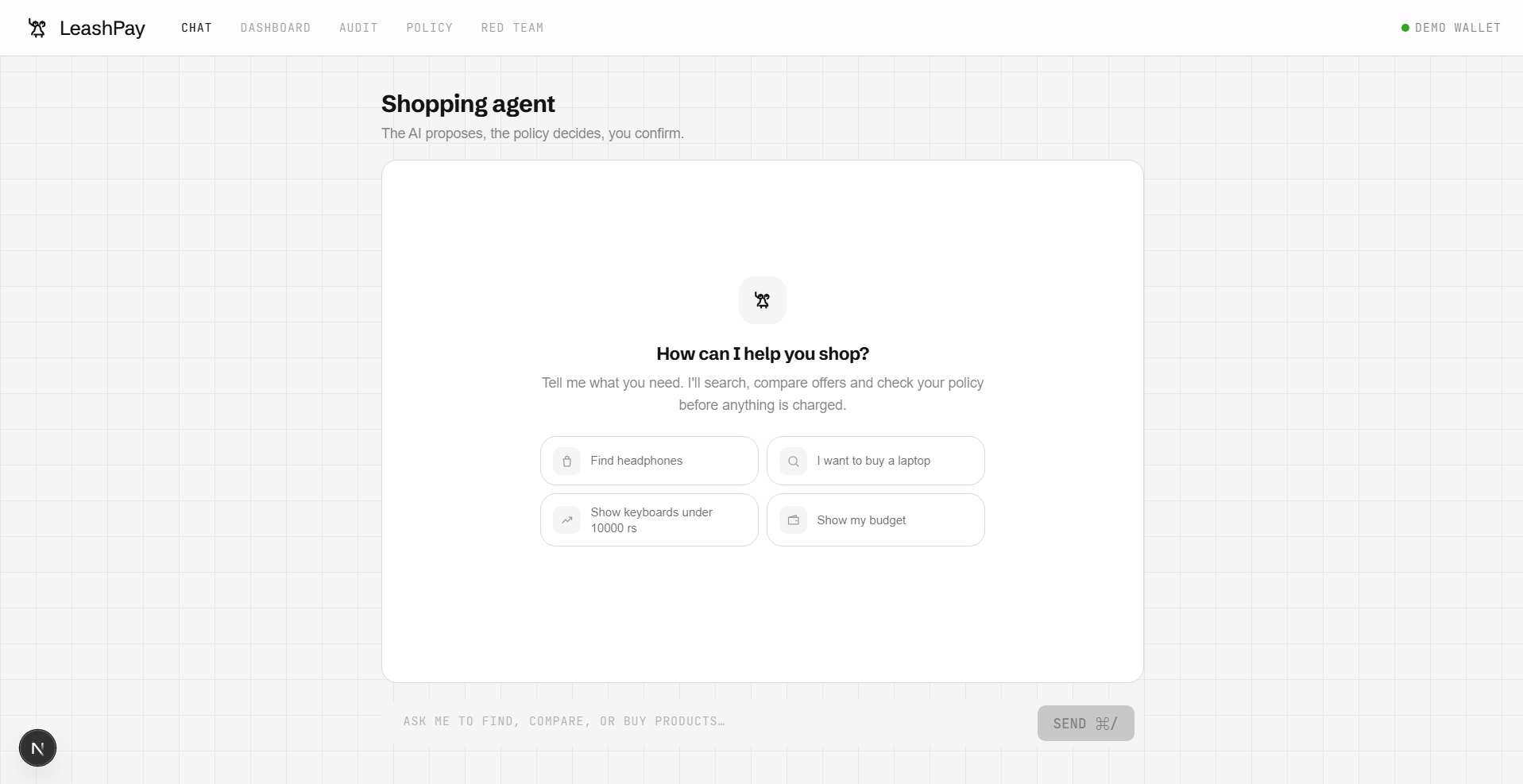
LeashPay is a conversational AI shopping assistant powered by Google Gemini that helps you shop smarter while staying within budget. Instead of filling out forms or clicking through filters, you simply chat:
- Natural Shopping: "I want to buy headphones under 10000 rupees" - the AI understands and searches
- Smart Comparisons: Automatically finds the best deal across multiple merchants
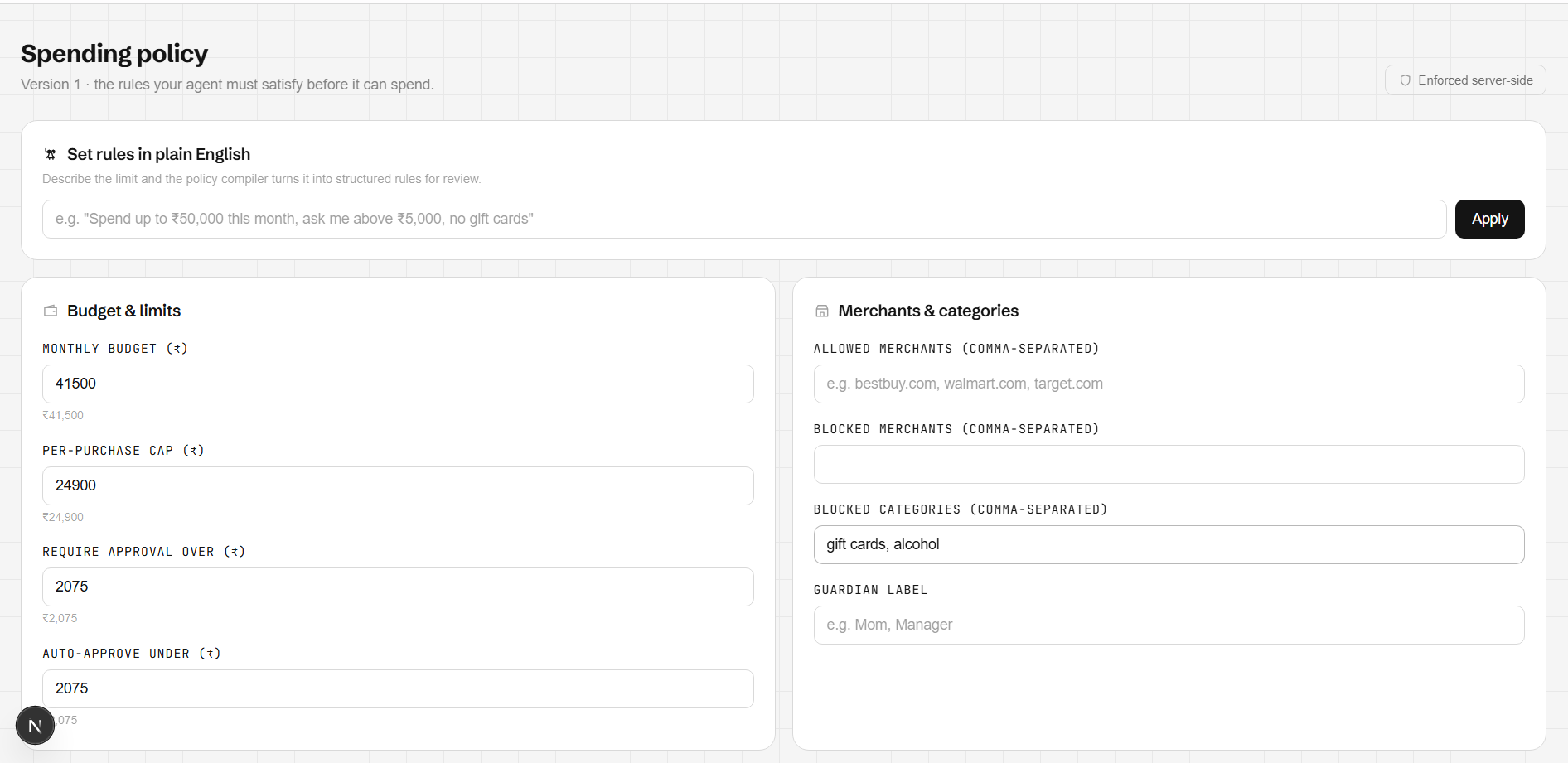
- Policy Protection: Enforces monthly budgets, per-purchase caps, and approval workflows
- PayPal Integration: Secure sandbox payments with one-click checkout
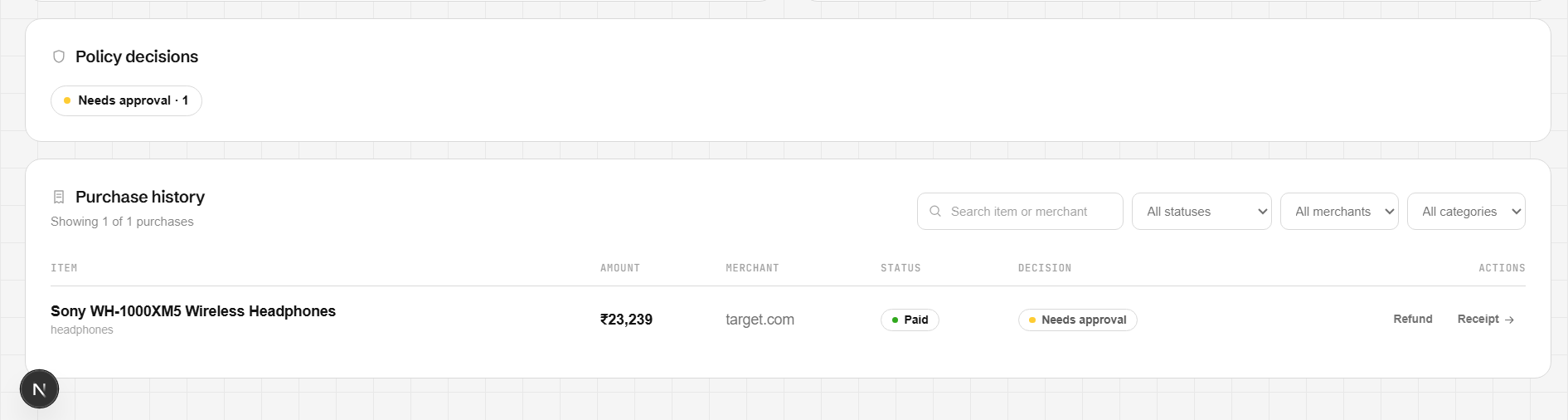
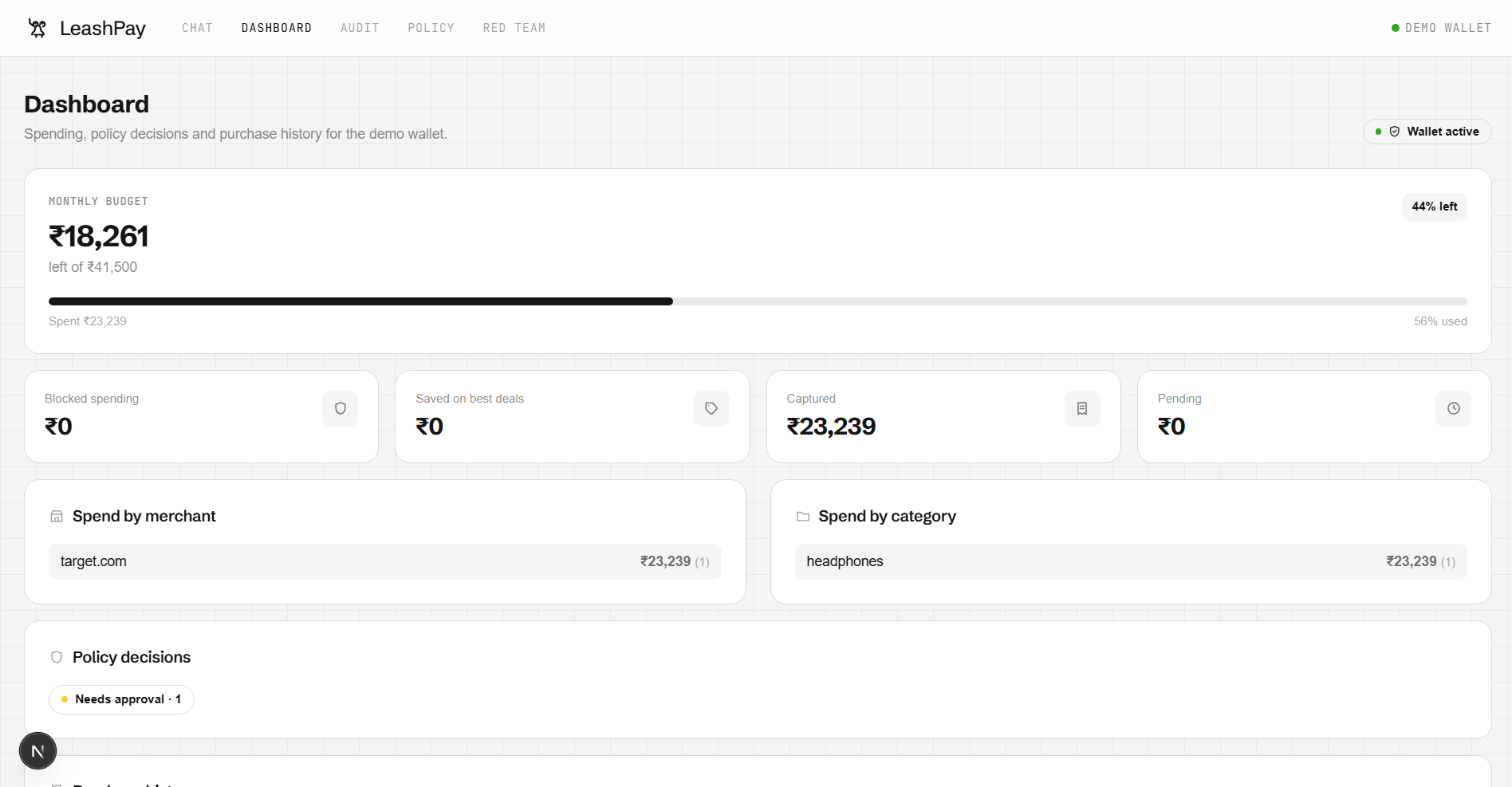
- Transaction Monitoring: AG Grid-powered audit dashboard tracks every purchase
- Guardian Approval: High-value purchases require approval before processing
The AI proposes purchases, the policy engine decides if they're allowed, and PayPal processes approved transactions safely.
How we built it
Tech Stack:
- Frontend: Next.js 16 with React, Tailwind CSS for responsive UI
- AI Agent: Google Gemini 1.5 Pro via Vercel AI SDK with 7 custom tools (search, compare, check policy, purchase, budget status, price history)
- Payments: PayPal Orders API v2 for checkout, webhooks for confirmation
- Data: SQLite with better-sqlite3 for purchases, policies, and audit logs
- Catalog: Channel3 mock API with 13 demo products across categories
- Dashboard: AG Grid Community Edition for transaction filtering and sorting
Architecture:
- Conversational Agent (
src/app/api/agent/route.ts) - Handles chat, tool calling, and response generation - Tool System (
src/lib/agent/tools.ts) - 7 functions the AI can execute autonomously - Policy Engine (
src/lib/policy/engine.ts) - Risk scoring and rule enforcement - PayPal Integration (
src/lib/paypal/) - Order creation, capture, webhook handling - Audit System (
src/lib/db/) - Logs every action for transparency
Development Process:
- Built conversational system prompt with examples for consistent AI behavior
- Integrated PayPal sandbox with OAuth 2.0 authentication and webhook validation
- Designed policy engine with risk scoring algorithm (0-100 scale)
- Created AG Grid dashboard with custom styling and status indicators
- Implemented budget tracking with monthly limits and approval thresholds
Challenges we ran into
1. Google Gemini API Compatibility
- Problem: Gemini doesn't accept
systemmessages in the messages array like other LLMs - Solution: Used separate
systemparameter instead - required reading Gemini-specific docs
2. Tool Calling Type Errors
- Problem: TypeScript errors between Zod schemas and AI SDK tool format
- Solution: Used type assertions (
as any) as a temporary fix - works in runtime but needs refactoring
3. Natural Language Understanding
- Problem: Initial regex-based query parsing failed on variations like "I wanna buy..."
- Solution: Let Gemini handle all parsing - much more robust than pattern matching
4. PayPal Webhook Security
- Problem: Needed to validate webhook signatures to prevent fraud
- Solution: Implemented signature verification using PayPal's transmission ID and cert URL
5. Currency Conversion
- Problem: PayPal uses USD, but target users need INR (Indian Rupees)
- Solution: Built conversion layer (1 USD = ₹83) with consistent formatting throughout
6. AG Grid Enterprise Warnings
- Problem: Community version shows warnings for enterprise features
- Solution: Disabled unused features in grid config - warnings don't affect functionality
Accomplishments that we're proud of
✅ Real Conversational AI - Not just pattern matching - the agent truly understands intent and asks follow-up questions
✅ Full PayPal Integration - Complete order flow with webhooks, approval URLs, and payment capture
✅ Intelligent Policy Engine - Dynamic risk scoring that considers price, merchant, purchase history, and budget status
✅ Production-Ready Code - Clean architecture, proper error handling, audit logging, and security best practices
✅ Beautiful UI - Custom design system with smooth animations, responsive layout, and accessibility
✅ Tool Calling Mastery - AI autonomously decides which tools to call based on conversation context
✅ Security First - Webhook signature validation, policy enforcement, sandbox-only mode for safety
What we learned
Technical Skills:
- AI Agent Design: How to write effective system prompts that guide LLM behavior without being restrictive
- Tool Calling Architecture: Building autonomous agents that can execute functions intelligently
- PayPal Integration: OAuth flows, order management, webhook handling, and sandbox testing
- Risk Scoring: Designing algorithms that balance security with user experience
- Real-time Conversations: Managing message history and context across multi-turn dialogues
Key Insights:
- AI is better at parsing than regex: Natural language understanding beats pattern matching every time
- Clear prompts = consistent behavior: Vague instructions lead to unpredictable AI responses
- Webhooks need verification: Never trust external events without signature validation
- Budget enforcement needs both tech AND UX: Rules alone aren't enough - users need clear feedback
- TypeScript strict mode catches bugs early: Even temporary type assertions are better than no types
Personal Growth:
- Learned to debug LLM behavior by improving prompts, not just code
- Understood the importance of audit logs for transparency and debugging
- Discovered that good developer experience (sandbox, docs) makes integration 10x faster
What's next for LeashPay
Short-term Improvements:
- Real Product API: Replace demo data with Google Shopping or Amazon Product API
- Price Alerts: Notify users when products drop below their target price
- Spending Analytics: Charts showing monthly trends, category breakdowns, and savings
Medium-term Features:
- Multi-user Support: Individual budgets, shared family wallets, role-based permissions
- Mobile App: React Native app with push notifications for approvals
- Bank Integration: Connect real bank accounts for automatic budget tracking
- ML Recommendations: Learn user preferences and suggest products proactively
Long-term Vision:
- Production PayPal: Move from sandbox to live transactions
- International Support: Multiple currencies, regional pricing, localized products
- Smart Contracts: Blockchain-based transparent policy enforcement
- Financial Coaching: AI-powered insights about spending habits and savings opportunities
- Marketplace Integration: Direct partnerships with retailers for exclusive deals
The Big Picture: LeashPay isn't just a payment app - it's a financial literacy tool. The vision is to help people make better spending decisions through intelligent automation, not restriction. The future of payments isn't faster checkout - it's smarter decisions.
Built With
- ag-grid
- audit-logging
- better-sqlite3
- budget-management
- channel3
- conversational-ai
- google-gemini
- llm
- next.js
- node.js
- oauth2
- payment-gateway
- paypal
- policy-engine
- react
- rest-api
- sandbox
- sqlite
- tailwindcss
- tool-calling
- typescript
- vercel-ai-sdk
- webhooks
- zod
