-
-
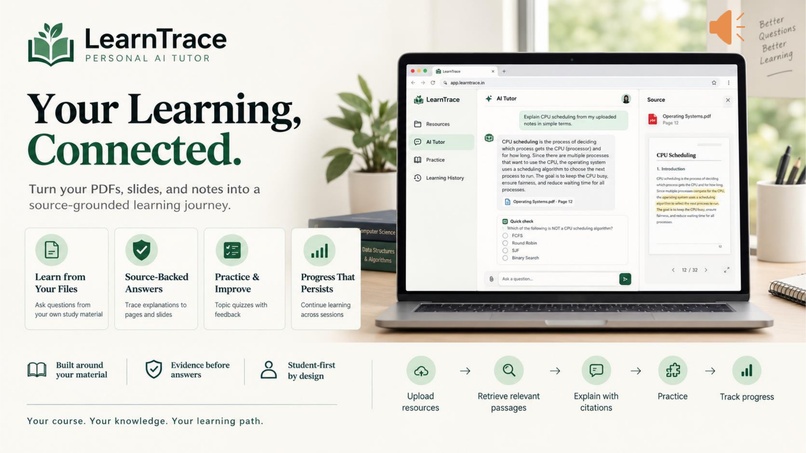
Introducing LearnTrace: Your Personal AI Tutor for Smarter Learning
-
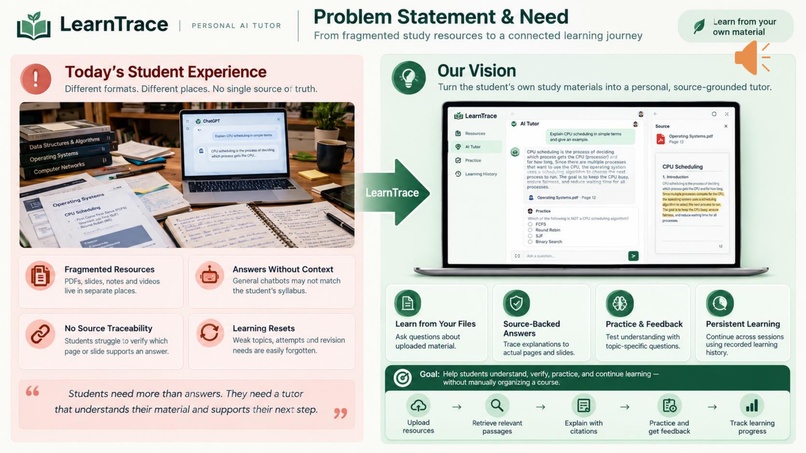
The Problem: Making Study Materials Easier to Understand and Access
-
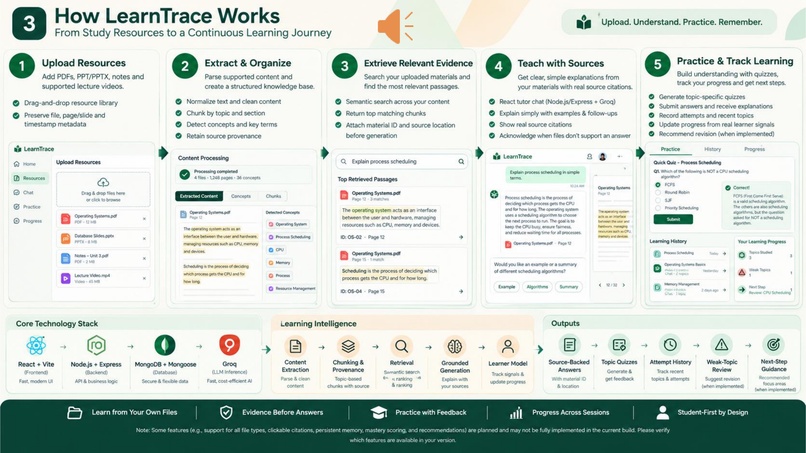
How LearnTrace Turns Study Materials into a Personalized Learning Experience
-
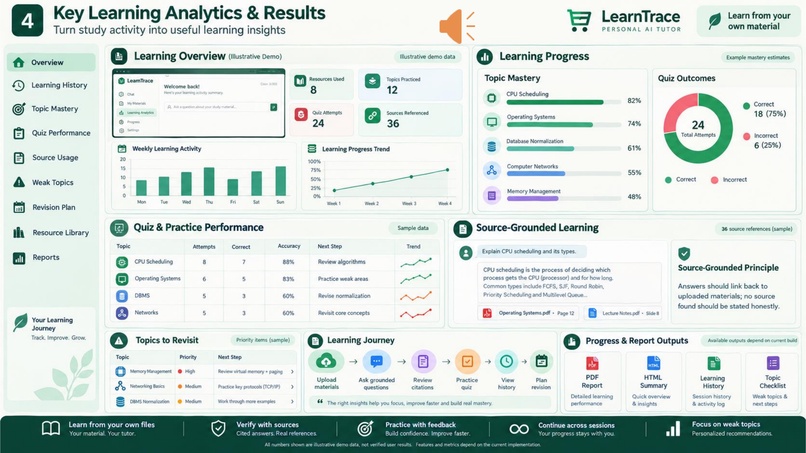
Key Features: AI Answers, Interactive Quizzes, and Learning Progress
-
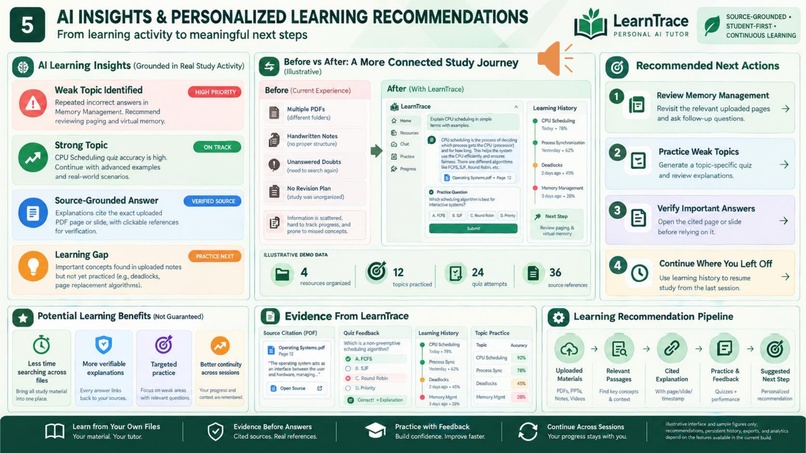
echnology Stack: The Tools and Technologies Behind LearnTrace
-
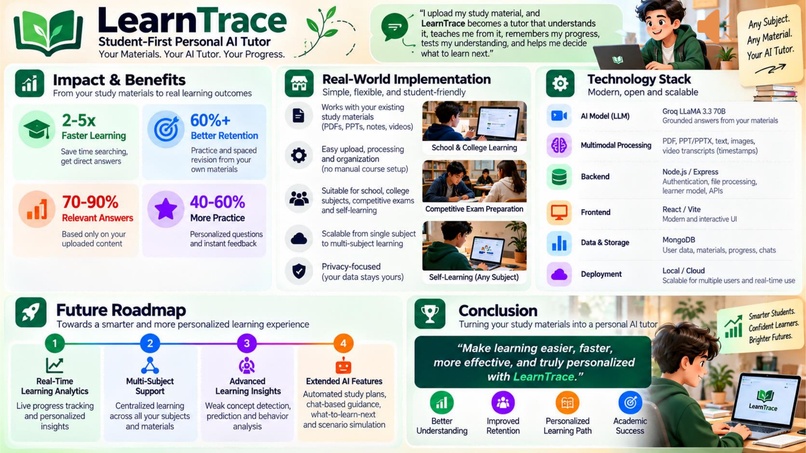
Our Vision: Making Learning Smarter, Simpler, and More Personalized
Inspiration
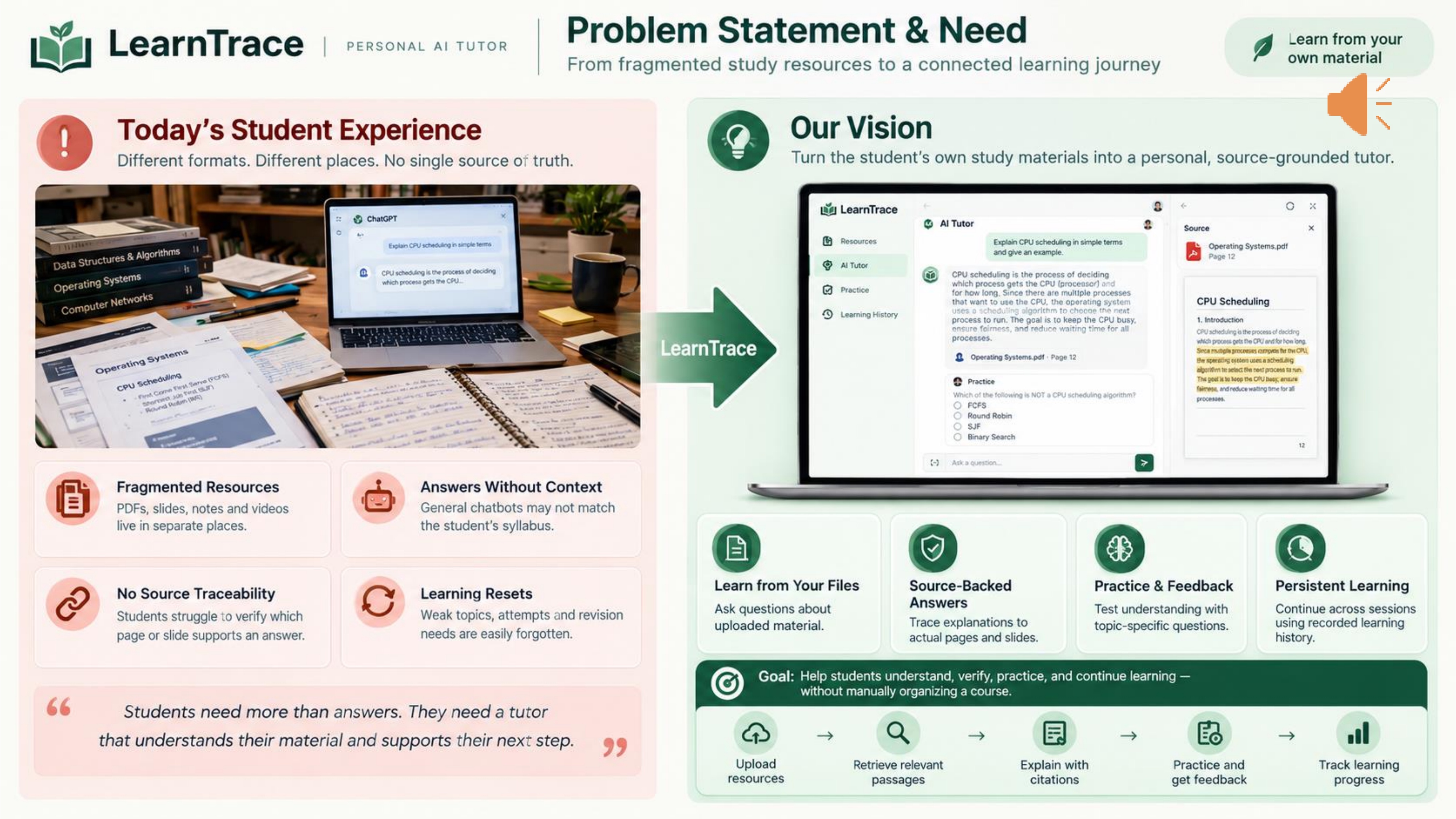
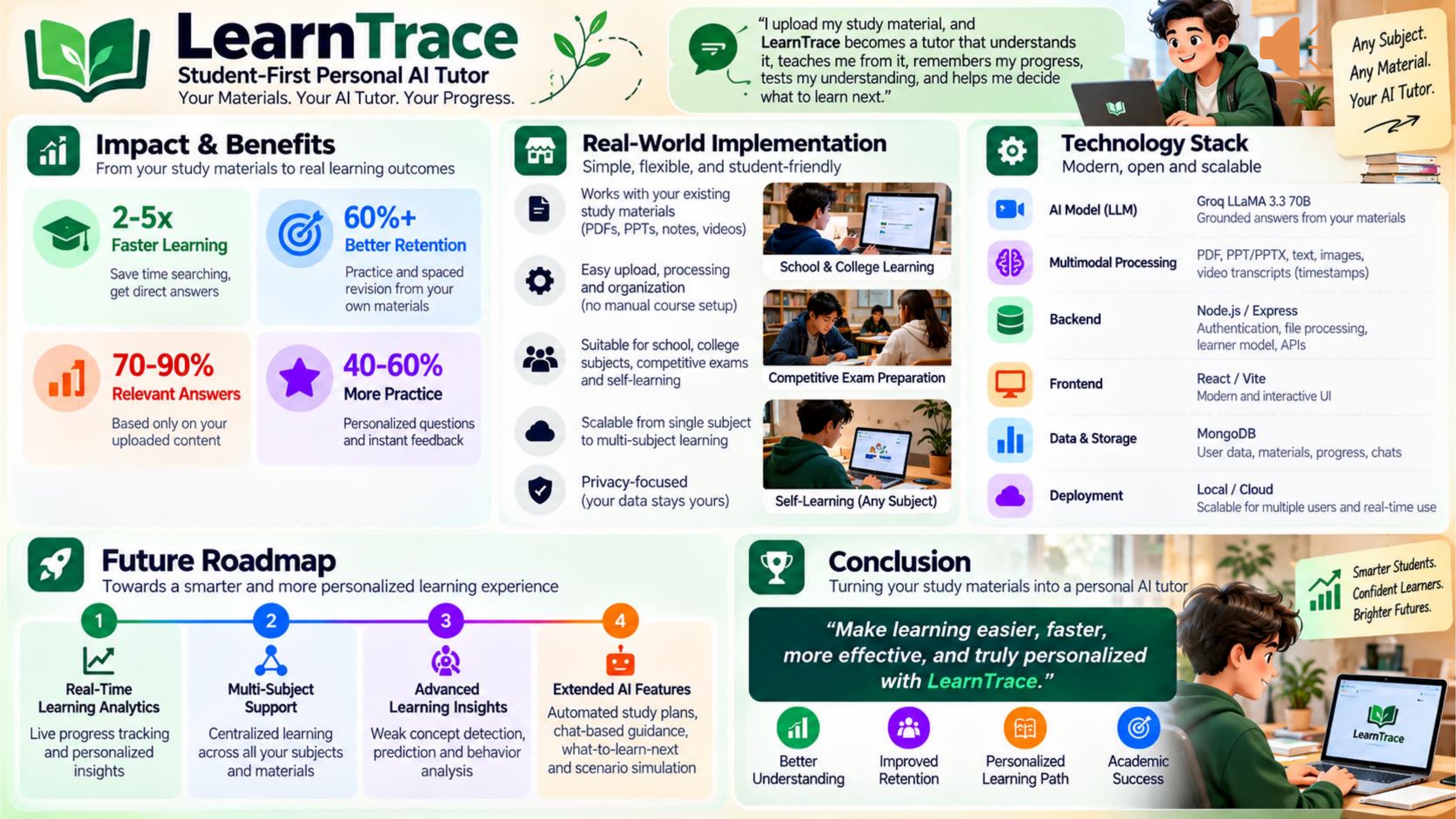
Students often study using scattered PDFs, PowerPoint presentations, notes, and lecture videos. Finding the right information, understanding difficult concepts, and knowing what to revise next can take significant time. We created LearnTrace – Personal AI Tutor to make learning more organized, interactive, and personalized.
What it does
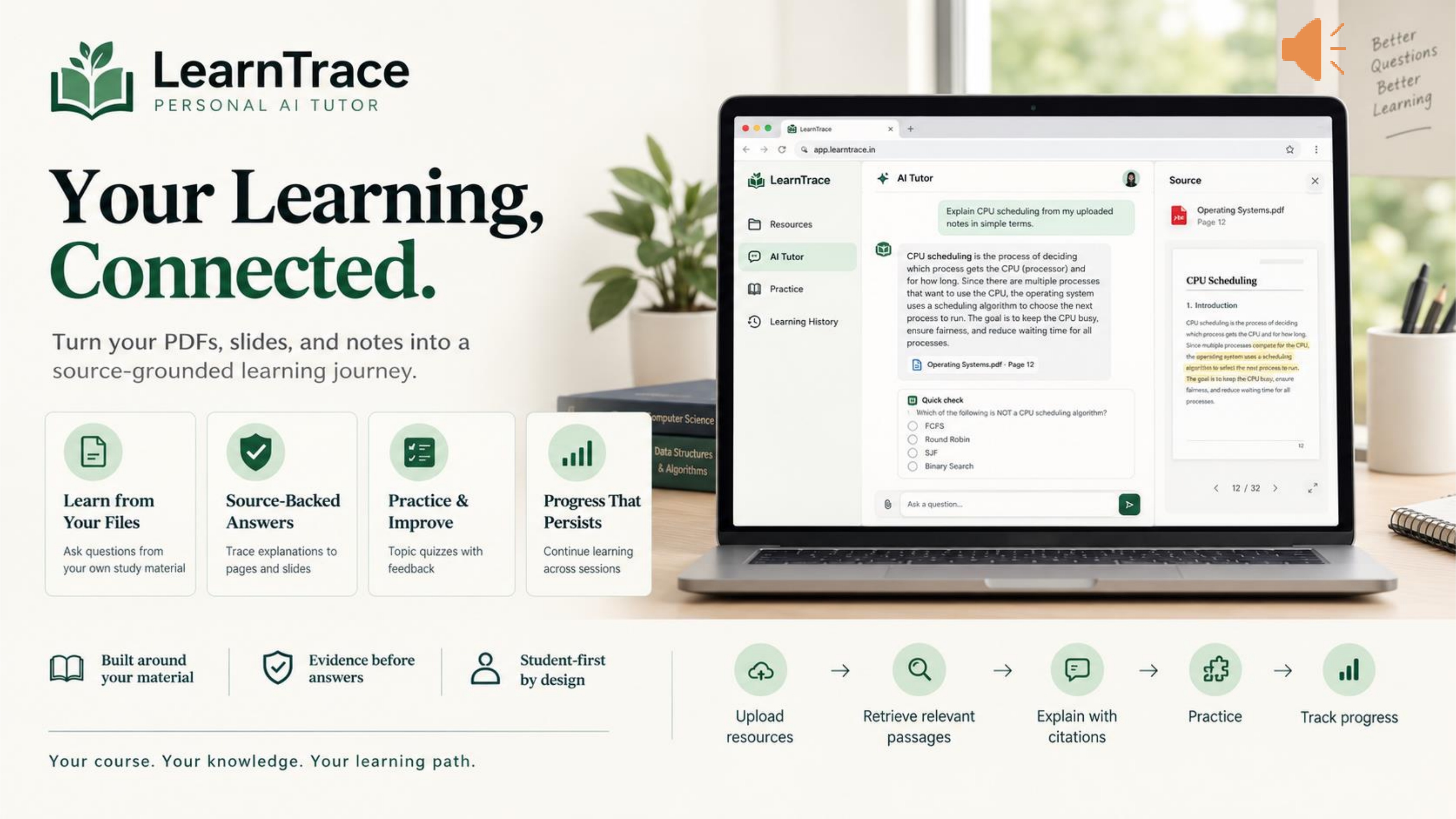
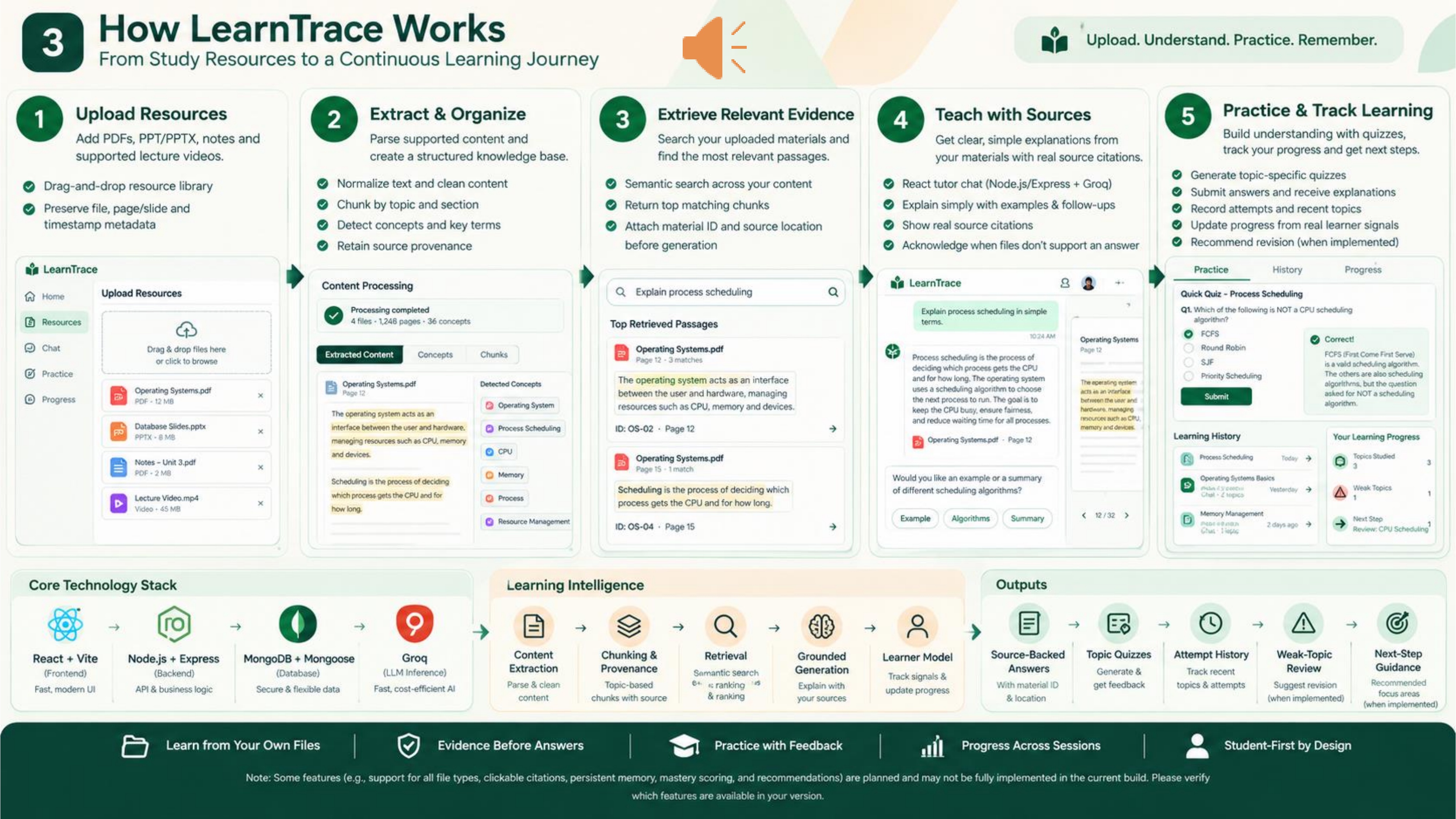
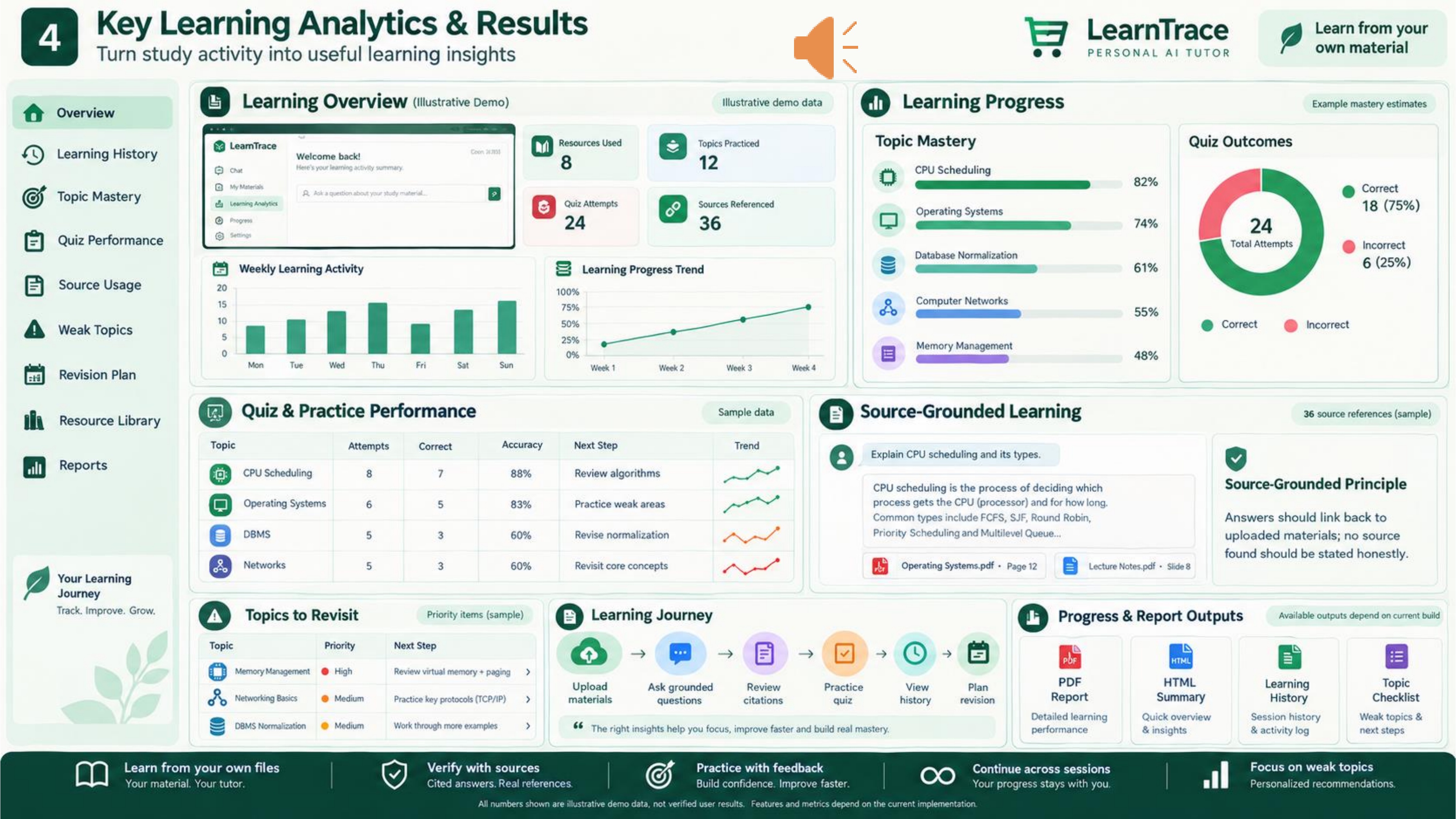
LearnTrace helps students turn their learning materials into a more structured learning experience. The goal is to let students upload their resources, ask questions, receive answers grounded in their study content, practice through quizzes, and track their learning progress.
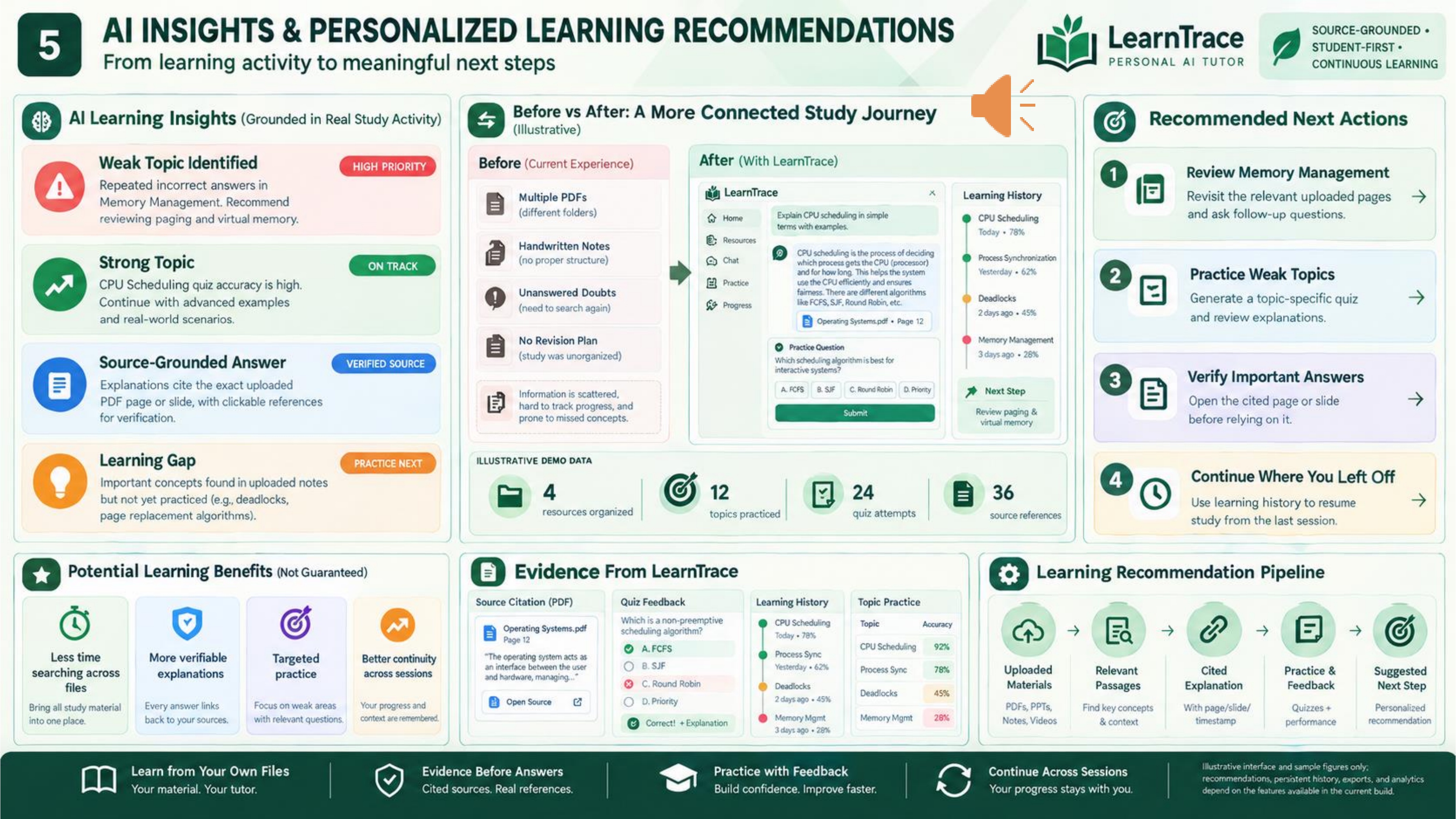
Rather than simply providing answers, LearnTrace aims to connect explanations to their original sources, helping students verify information and return to the relevant pages, slides, or video timestamps. It also aims to identify weaker concepts and recommend useful next steps for revision.
How we built it
We designed LearnTrace around a student-friendly workflow: Upload → Ask → Learn → Practice → Track.
The frontend uses React and Vite to provide the user interface. The backend is built with Node.js and Express, while MongoDB and Mongoose support data persistence. A Groq service abstraction supports model interactions. The planned retrieval pipeline connects relevant portions of learning materials with student questions to support source-grounded responses.
Challenges we faced
One of the key challenges was designing a learning assistant that does more than generate generic answers. Responses need to remain connected to the student's actual materials, and source references should help students verify the information. Another challenge was bringing document processing, question answering, practice, and progress tracking together into one coherent workflow.
We also considered reliability, privacy, and transparency when designing the experience. It is important to distinguish between information supported by learning materials and information that needs further verification.
What we learned
Building LearnTrace helped us understand how frontend interfaces, backend services, databases, and AI-powered workflows can work together to address a real educational problem. We also learned that a useful AI tutor should prioritize traceability, clear explanations, and meaningful learning progress—not just quick answers.
What's next
We aim to improve source-grounded answers, expand support for learning formats, strengthen personalized revision recommendations, and make progress tracking more useful. Our long-term vision is to help every student turn their own study materials into a personal, traceable learning journey.
Built With
- artificial
- education
- express.js
- groq
- intelligence
- javascript
- learning
- mongodb
- mongoose
- node.js
- personalized
- react
- retrieval-augmented
- vite


Log in or sign up for Devpost to join the conversation.