Inspiration
What it does
How we built it
Challenges we ran into
Accomplishments that we're proud of
What we learned
What's next for LearnSynth## Inspiration
As a second–semester IT student and indie builder, I spend hours jumping between PDFs, lecture notes, videos and voice memos. I wanted one place that could turn any source into a clean study pack, work on Android, Web and Windows, and track progress without friction.
What it does
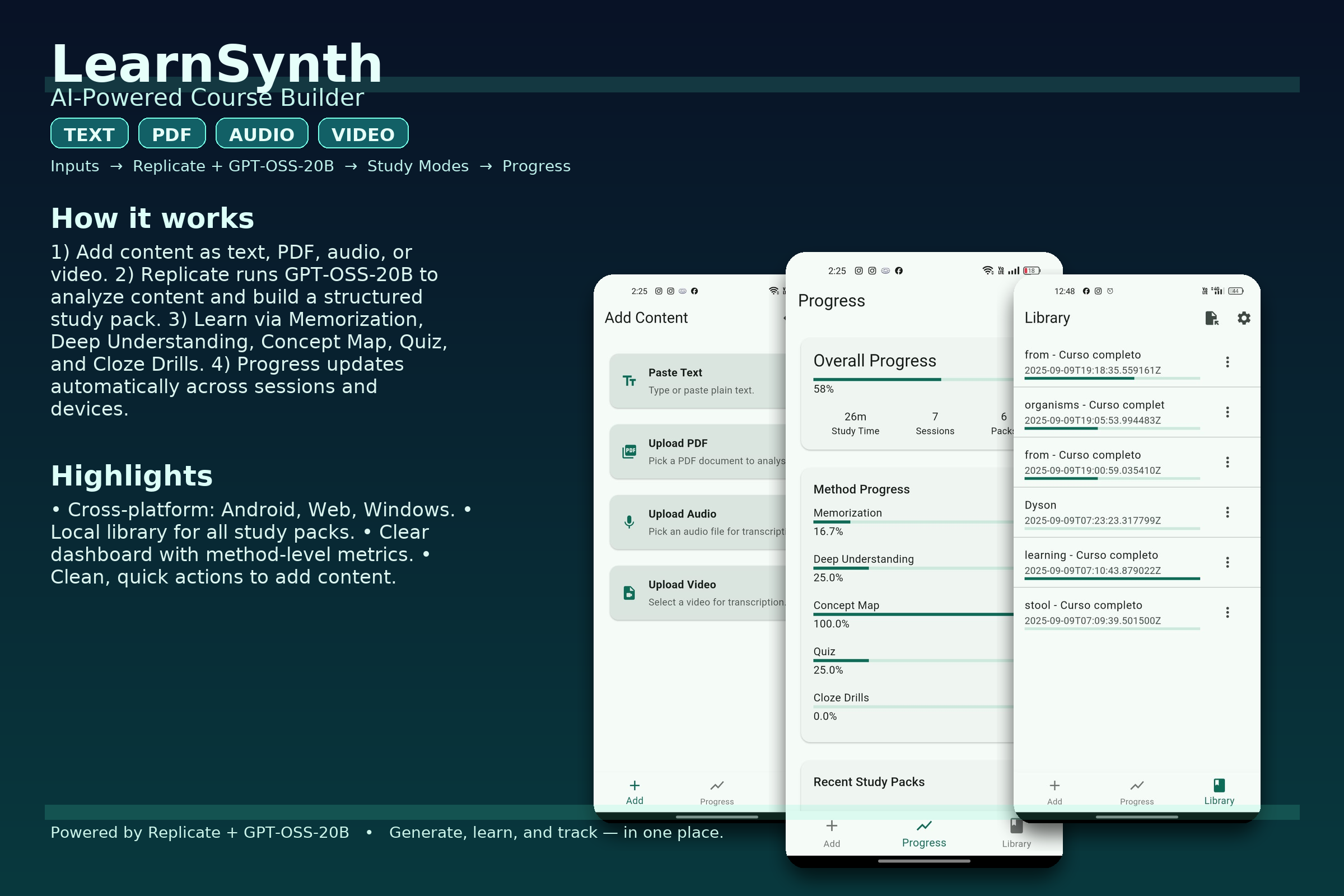
LearnSynth converts text, PDF, audio or video into a structured study pack using Replicate + GPT-OSS-20B.
It then lets you learn through five modes:
- Memorization (flashcards)
- Deep Understanding (guided prompts & explanations)
- Concept Map (auto-generated relationships)
- Quiz (quick checks)
- Cloze Drills (fill-in-the-blank practice)
Your library stores the packs locally and a dashboard shows session time and method-level progress.
How I built it
- Frontend: Flutter (Dart) targeting Android, Web and Windows with a clean, minimalist UI.
- Backend: FastAPI (Python) exposing endpoints like
/upload-content,/analyze,/study-mode,/review/{id},/speak,/export. - AI Pipeline: Content is transcribed/extracted (for audio/video & PDFs) and sent to Replicate to run GPT-OSS-20B, which returns outlines, concepts, flashcards, quizzes and cloze items.
- Storage: Local pack storage for offline review, plus a progress model that aggregates sessions and method completion.
- Deploy: Web on Vercel; API on Fly.io.
Challenges
- Handling large files and timeouts for long audio/video.
- Keeping concept maps hydrated when reopening saved packs.
- Progress sync across study modes so the dashboard always reflects reality.
- Multi-platform build issues (Android Gradle / Windows desktop packaging / web assets).
Accomplishments
- A cross-platform app with a full end-to-end AI pipeline from raw content to study pack.
- Method-level progress and a clean dashboard that students actually understand.
- Stable library with local packs that you can reopen and continue later.
- Real demos running on Android, Web and Windows.
What I learned
- Prompt design and guardrails for open-source LLMs (GPT-OSS-20B) via Replicate.
- Building once with Flutter and shipping to three platforms.
- Designing data models for progress tracking and re-hydrating complex UIs (concept maps).
- Product thinking: simple flows beat feature bloat.
What's next
- Spaced repetition across all modes and smart review scheduling.
- Cloud sync & sharing of study packs with classmates/instructors.
- Export to Anki/CSV, richer analytics and teacher templates.
- Optional on-device lightweight model for “review on the go” when offline.


Log in or sign up for Devpost to join the conversation.