Inspiration
Students today use multiple platforms for studying — one for notes, another for scheduling, another for quizzes, and yet another for doubt solving. This fragmented workflow wastes time and reduces productivity.
We wanted to build a single AI-powered platform that simplifies the entire learning process. The idea for StudyFlow AI came from observing how students often struggle with time management, revision planning, and personalized learning support.
Our goal was to create an intelligent academic companion that helps students study smarter, not harder.## What it does
How we built it
We built the frontend using Next.js and Tailwind CSS to create a responsive and modern user interface.
The backend logic was handled using API routes and cloud services, while AI-powered features were integrated using large language model APIs.
Challenges we ran into
- Prompt Engineering
Getting accurate and student-friendly AI responses required multiple iterations of prompt tuning. We had to balance:
accuracy simplicity response length personalization
- Time Constraints
Since this was built during a hackathon, managing development time efficiently was critical. We focused on building a strong MVP instead of over-engineering features.
- AI Response Consistency
Sometimes AI-generated schedules or summaries were too generic. We improved outputs by adding contextual prompts and structured inputs.
- UI/UX Design
We wanted the platform to feel modern and intuitive while still being lightweight and fast.
Creating a clean dashboard experience in limited time was a major challenge.
Accomplishments that we're proud of
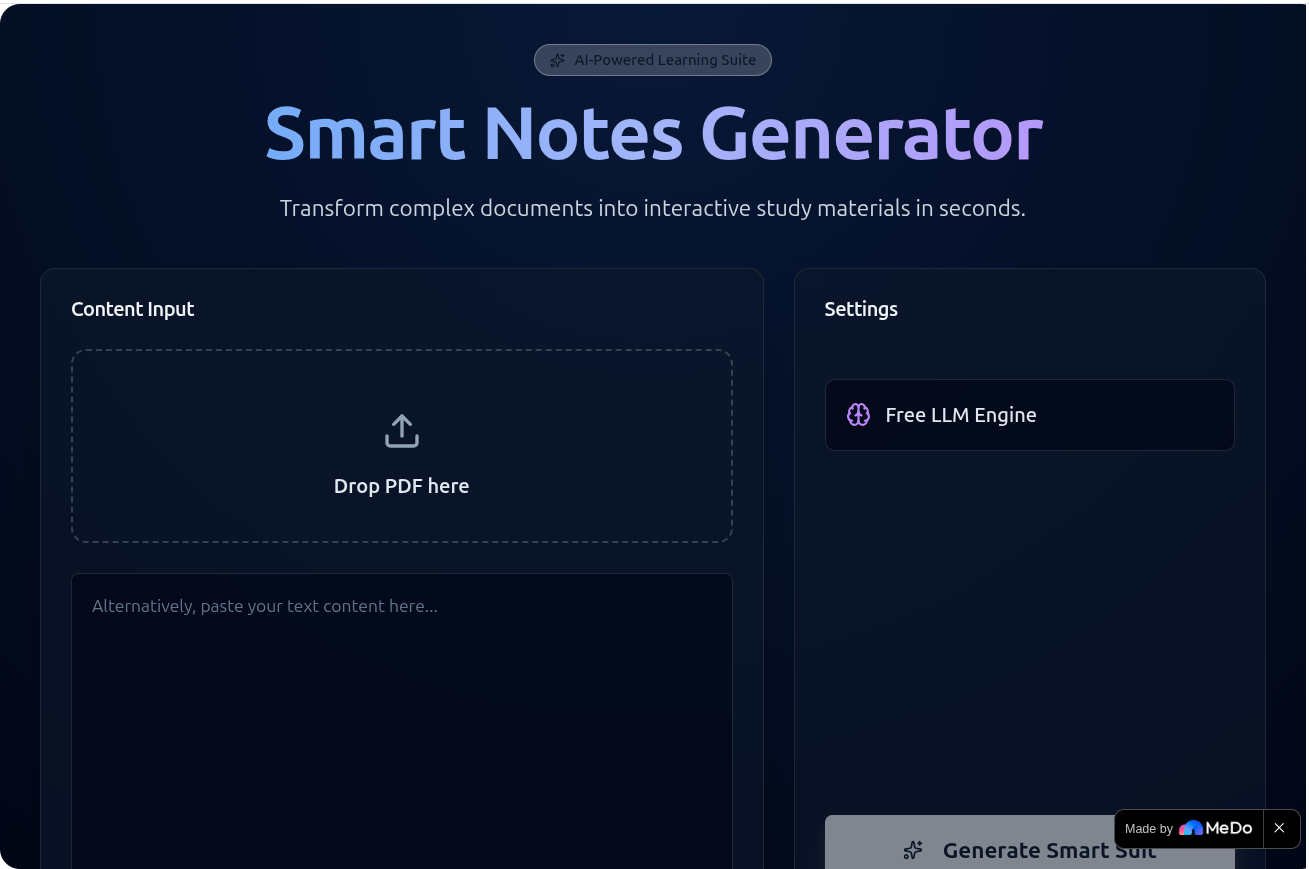
StudyFlow AI is an AI-powered learning assistant that helps students:
Generate personalized study plans Create concise revision notes Solve academic doubts instantly Generate quizzes for self-assessment Track study progress and productivity
The platform combines productivity tools with generative AI to create a personalized learning ecosystem.
What we learned
Through this project, we learned:
Practical AI integration in real-world applications Prompt engineering techniques Full-stack application architecture Real-time database handling UI/UX optimization for productivity apps Rapid MVP development under hackathon pressure
We also learned how impactful AI can be when applied to education in a meaningful and accessible way.
What's next for LearnSync AI
We plan to expand StudyFlow AI with:
Voice-based AI tutoring Regional language support Adaptive learning analytics Smart spaced repetition Collaborative study rooms Teacher dashboards Offline learning support
Built With
- css3
- figma
- firebase
- firebase-authentication
- firestore
- framer
- git
- github
- html5
- javascript
- next.js
- node.js
- notes-summarization
- ocr-api
- openai-api
- pdf-processing
- postman
- productivity-tracking
- quiz-generation
- react.js
- shadcn/ui
- study-planner
- tailwind-css
- typescript
- vercel
- vs-code

Log in or sign up for Devpost to join the conversation.