-
-
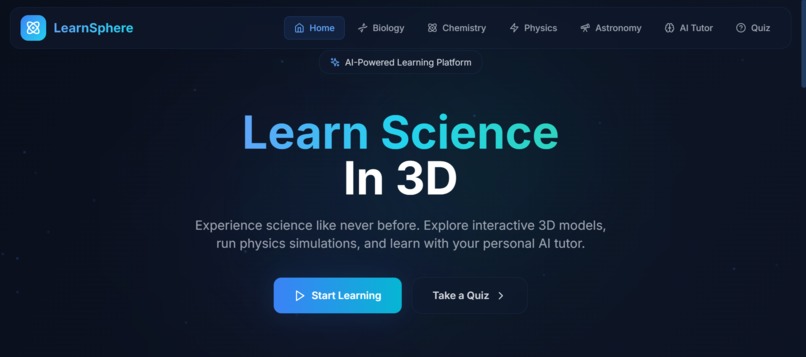
LearnSphere_HomePage
-
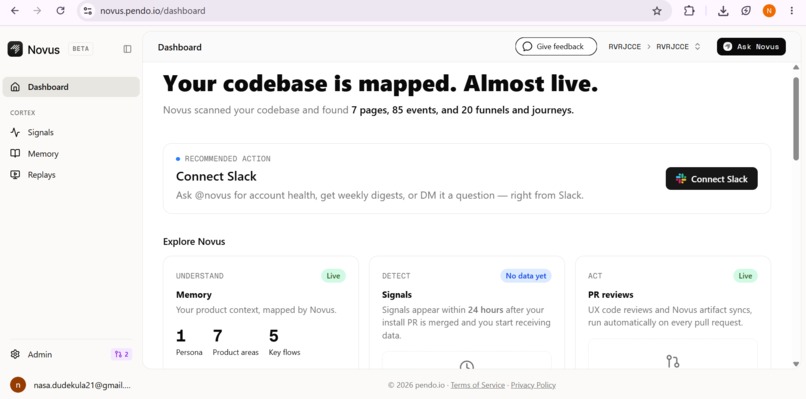
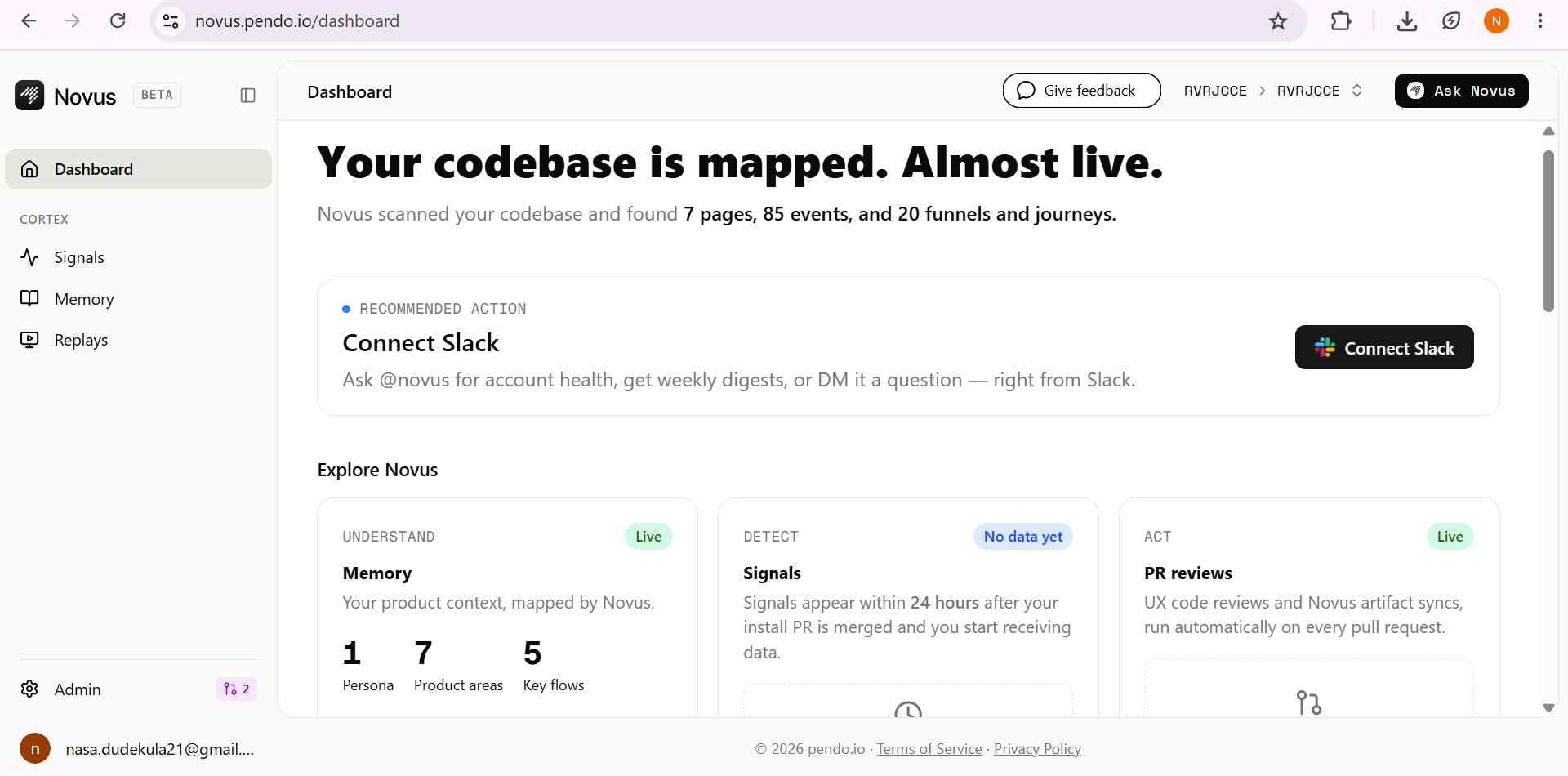
novus_dashboard
-
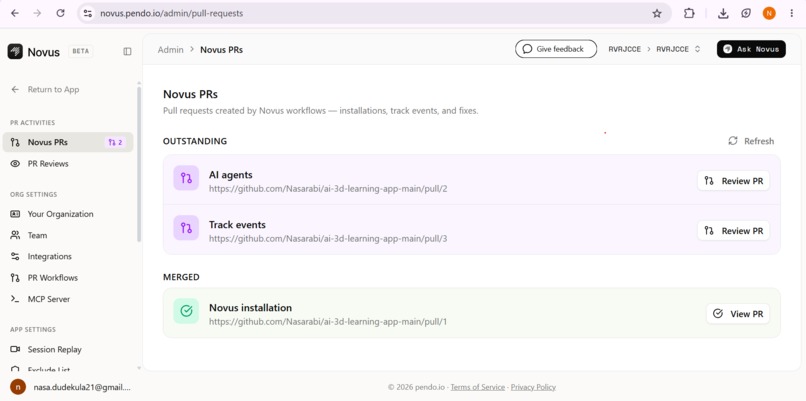
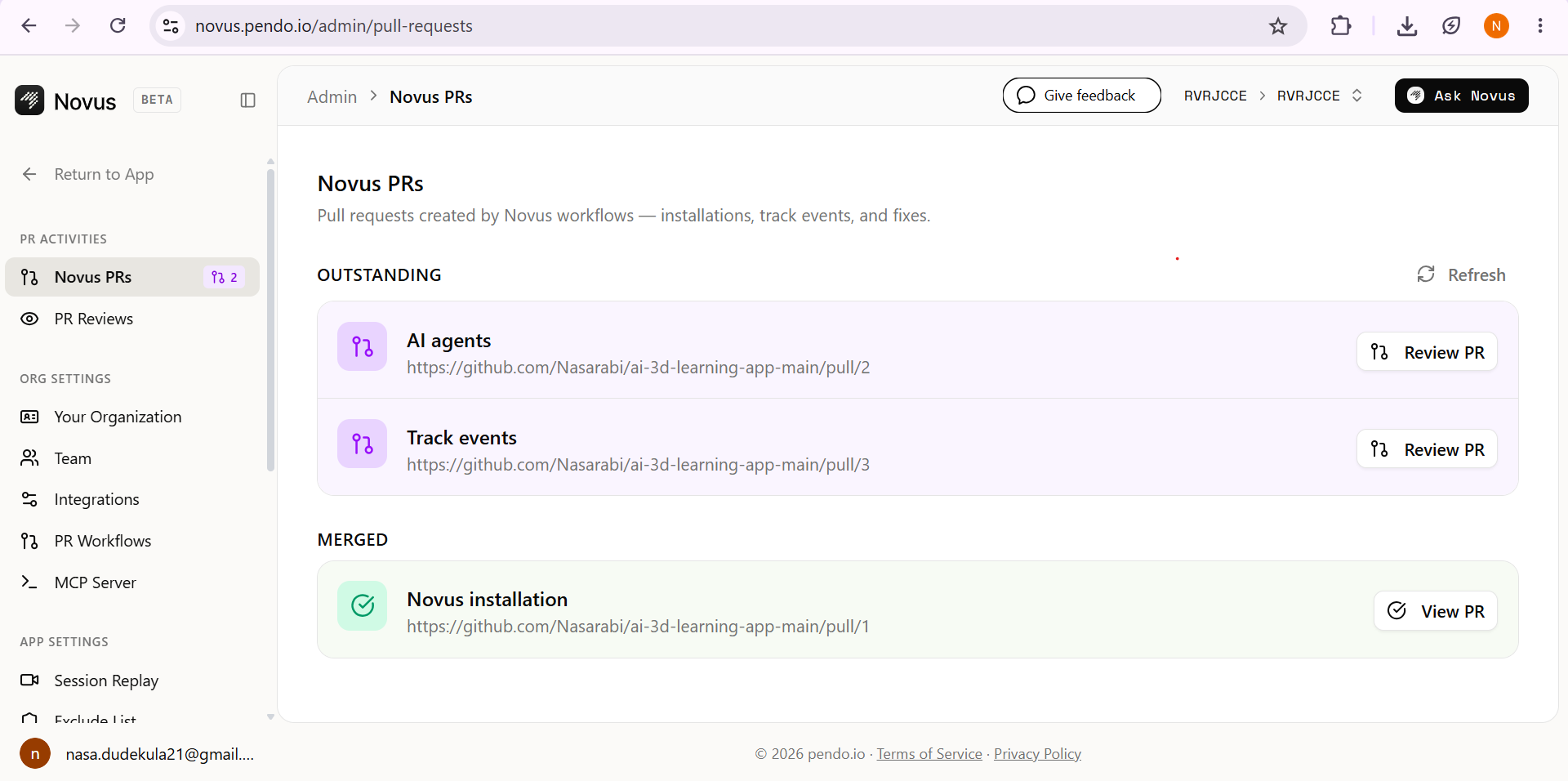
novus_connection
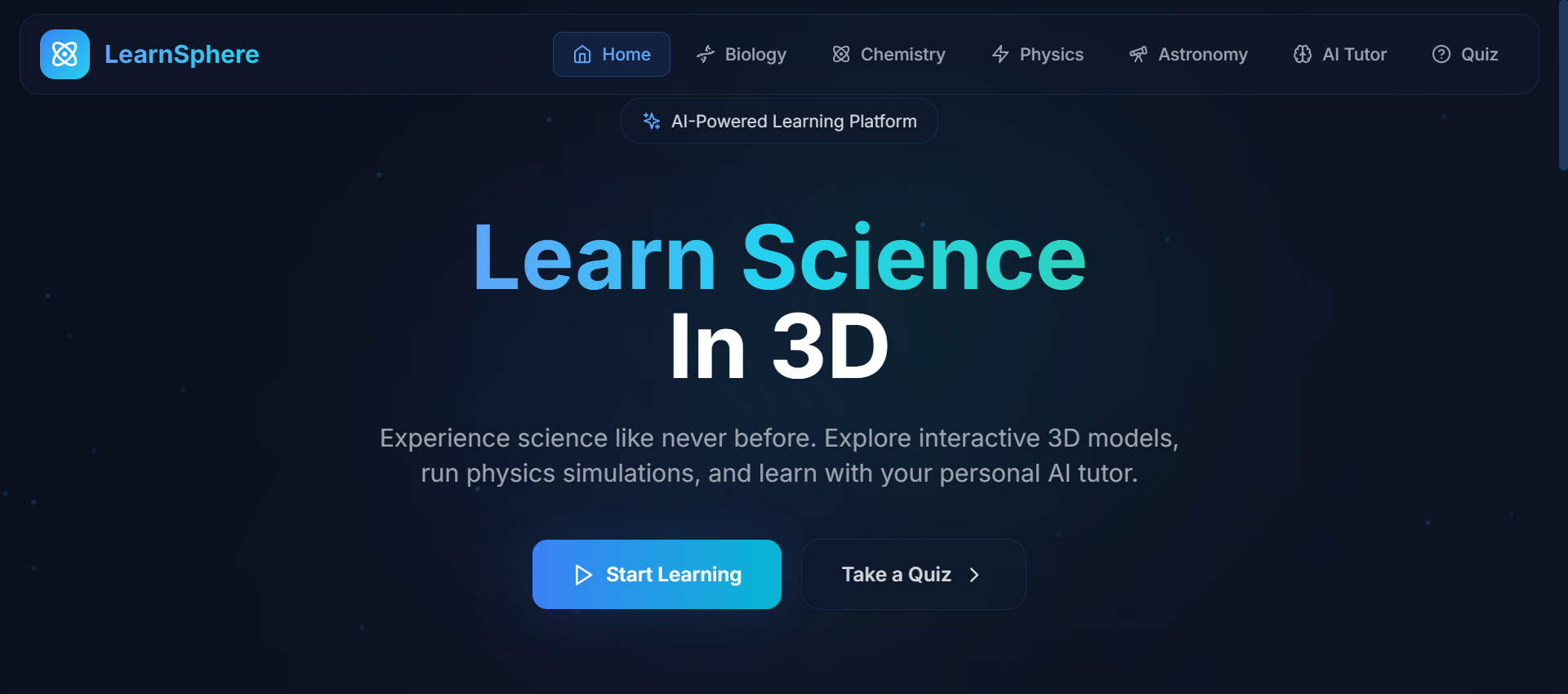
Inspiration
As a student, I often found that many STEM concepts are difficult to understand through textbooks alone. Topics such as human anatomy, astronomy, and scientific processes require visualization to truly grasp how they work. Traditional learning methods often rely on static diagrams, making complex concepts harder to understand and less engaging.
This inspired me to build LearnSphere, an AI-powered interactive learning platform that combines 3D visualization, immersive learning experiences, and intelligent assessments to help students learn science in a more engaging and intuitive way.
What it does
LearnSphere is an AI-powered educational platform designed to make STEM education more interactive and accessible.
The platform includes:
Interactive 3D anatomy models:
- Kidney
- Heart
- Brain
- Neuron
- Intestine
Astronomy and space learning modules
Educational content covering:
- Biology
- Chemistry
- Physics
- Astronomy
Interactive quizzes for knowledge assessment
A modern and responsive user interface that works across devices
The platform enables students to explore scientific concepts visually instead of relying solely on static textbook diagrams, making learning more engaging and memorable.
How we built it
LearnSphere was developed using modern web technologies and interactive 3D visualization tools.
Frontend
- React
- TypeScript
- Vite
3D Visualization
- Three.js
- React Three Fiber
- React Drei
- Sketchfab Models
UI & Animations
- Tailwind CSS
- Framer Motion
Development & Collaboration
- VS Code
- GitHub
- Novus.ai
- Bolt.new
The application uses GLB-based 3D models that users can rotate, zoom, and inspect directly within the browser, creating an immersive educational experience.
Challenges we ran into
Building LearnSphere involved several technical challenges:
- Loading and rendering multiple GLB models correctly
- Managing model orientation, scaling, and positioning
- Fixing rotation and camera control issues
- Resolving blank-screen errors caused by incompatible 3D assets
- Debugging TypeScript and React integration issues
- Organizing educational content across multiple STEM subjects
- Ensuring responsive performance across different screen sizes and devices
Each challenge required extensive testing, debugging, and iteration to achieve a smooth and intuitive user experience.
Accomplishments that we're proud of
- Successfully built a complete STEM learning platform during the hackathon period
- Integrated multiple interactive 3D anatomy models into a web-based learning environment
- Created dedicated learning modules for Biology, Chemistry, Physics, and Astronomy
- Designed a modern, engaging, and responsive user experience
- Implemented an interactive quiz system for student self-assessment
- Connected the project with Novus.ai for product analytics and user insights
- Successfully prepared the application for public deployment and real-world usage
What we learned
This project significantly strengthened our understanding of:
- React and TypeScript development
- 3D web visualization using Three.js and React Three Fiber
- State management and component architecture
- UI/UX design principles
- Product thinking and user-centered design
- GitHub workflows and deployment processes
- Debugging complex frontend applications
Most importantly, we learned how powerful interactive visualization can be in improving educational experiences and helping students better understand complex scientific concepts.
What's next for LearnSphere
Future improvements include:
- Fully integrated AI tutoring capabilities
- Dynamically generated quiz questions
- Student progress tracking and learning analytics
- Additional STEM subjects and learning modules
- Interactive simulations and virtual experiments
- Personalized learning recommendations
- Gamification features such as achievements, badges, and learning streaks
- Expanded 3D scientific and medical model libraries
Our long-term vision is to make LearnSphere a comprehensive interactive learning ecosystem that helps students understand complex scientific concepts through visualization, exploration, assessment, and personalized learning experiences.
Built With
- 3d
- bolt.new
- code
- css
- css3
- drei
- fiber
- framer
- github
- glb
- html5
- javascript
- models
- motion
- novus.ai
- react
- sketchfab
- tailwind
- three
- three.js
- typescript
- vercel
- vite
- vs

Log in or sign up for Devpost to join the conversation.