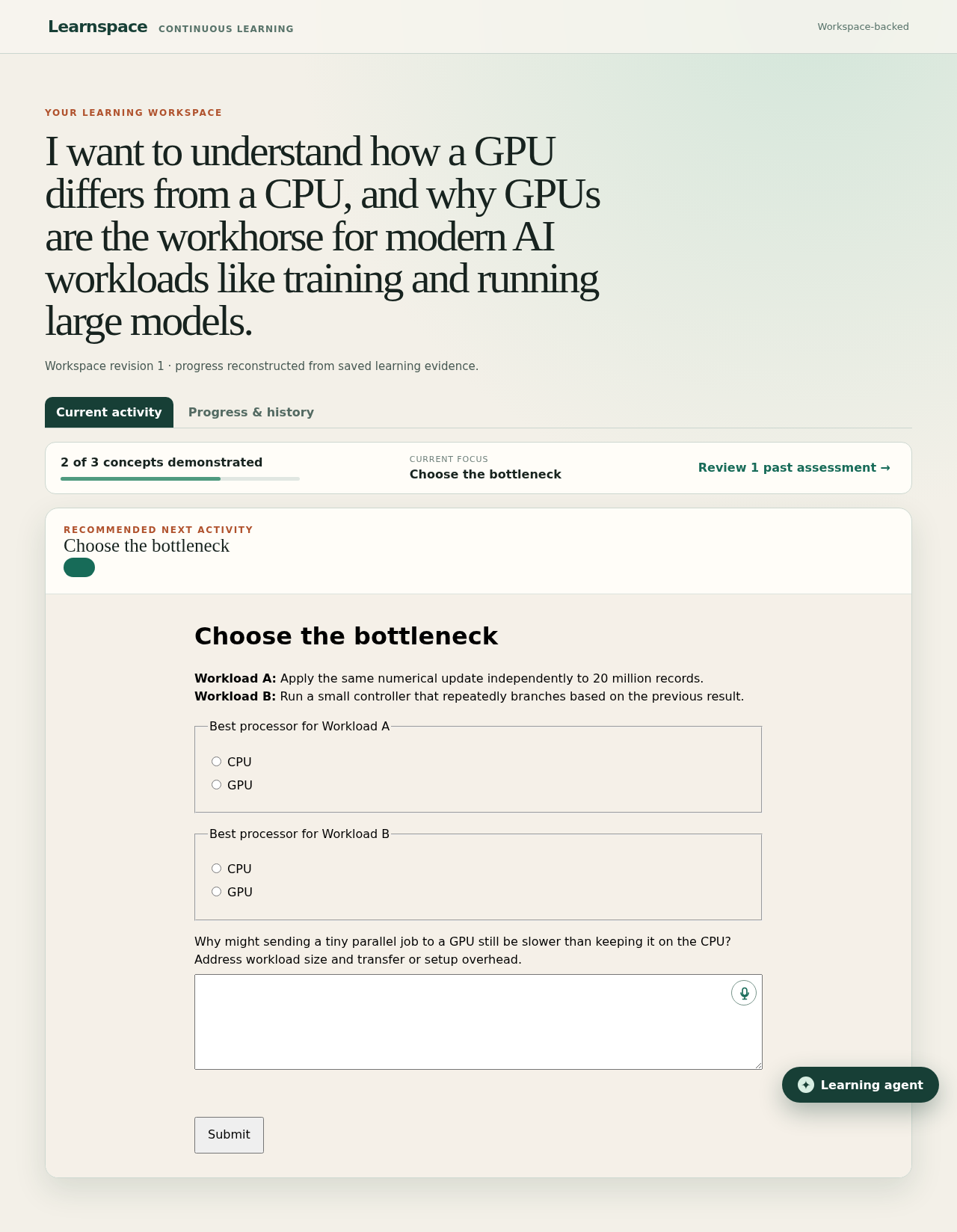
AI can be great for learning but you do not want to work through a static lesson or spend all your time talking with a chatbot. There are better ways to learn: through activities, feedback, reflection and practice. AI can help craft such experiences and that is exactly what Learnspace aims to do.
Coding agents are becoming widely available and many people already have a powerful intelligence layer running on their machines. Learnspace builds on top of that existing setup instead of asking users to adopt a new AI product. This makes it easier for learners to get started and gives the project an easier path to distribution.
What it does
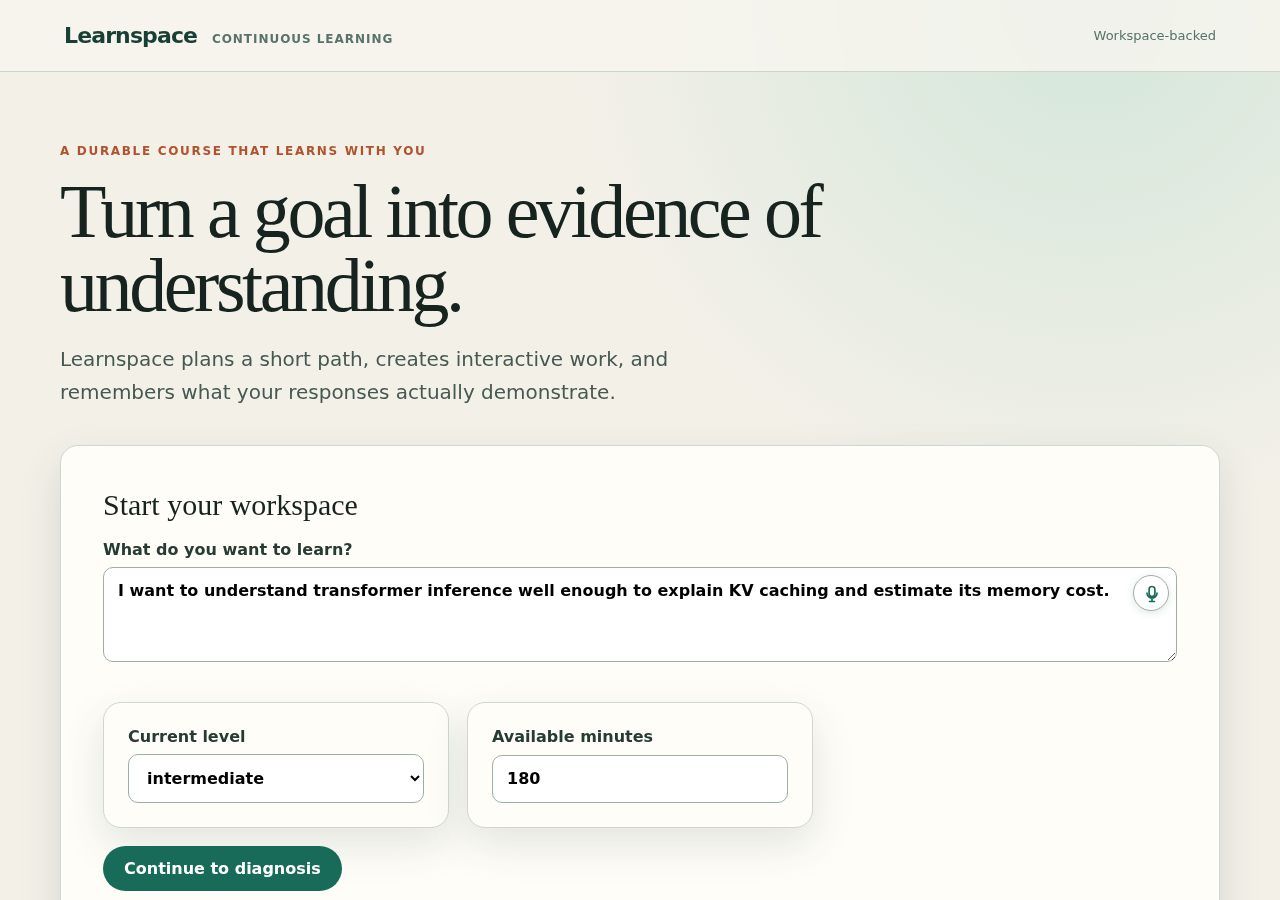
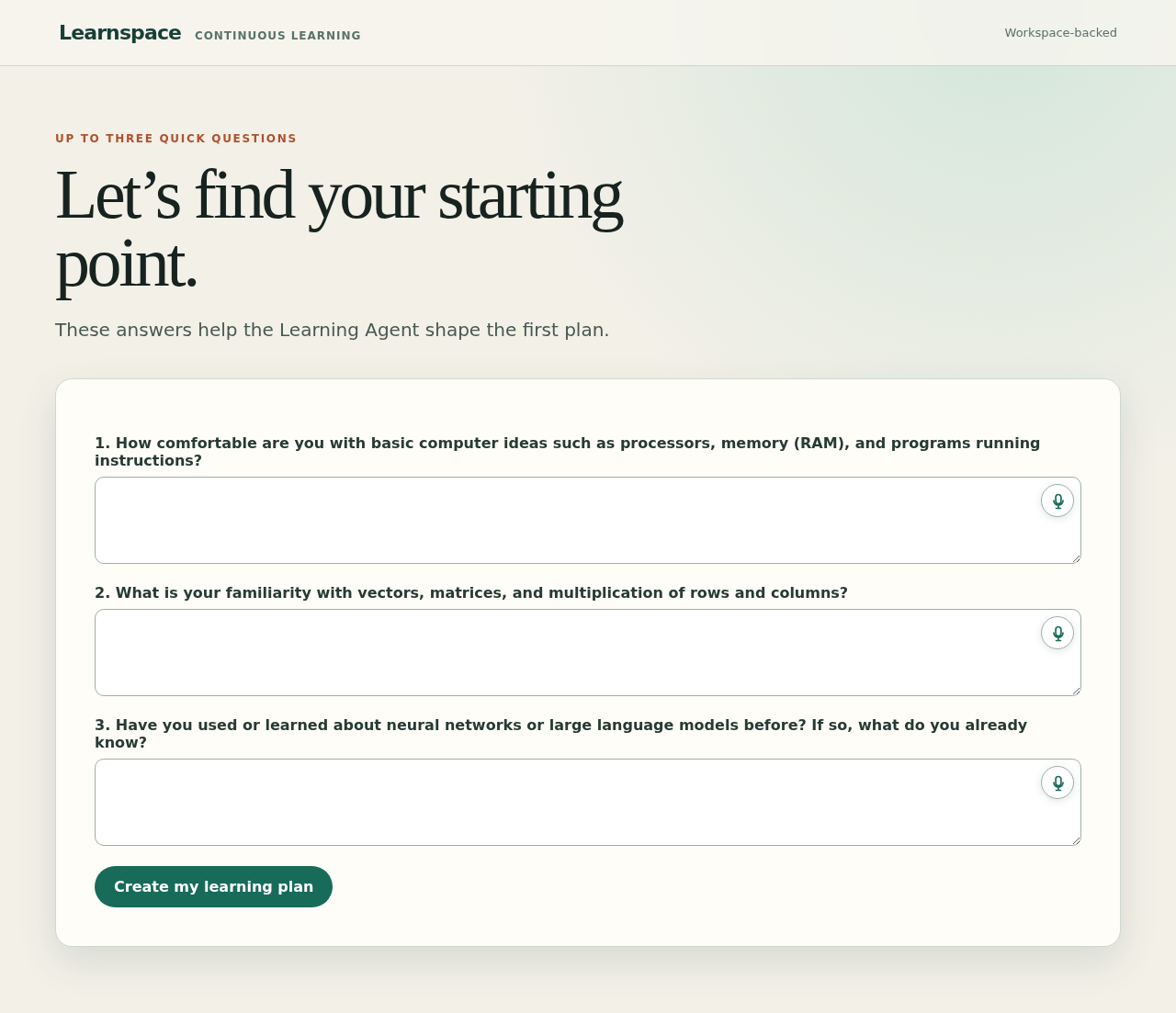
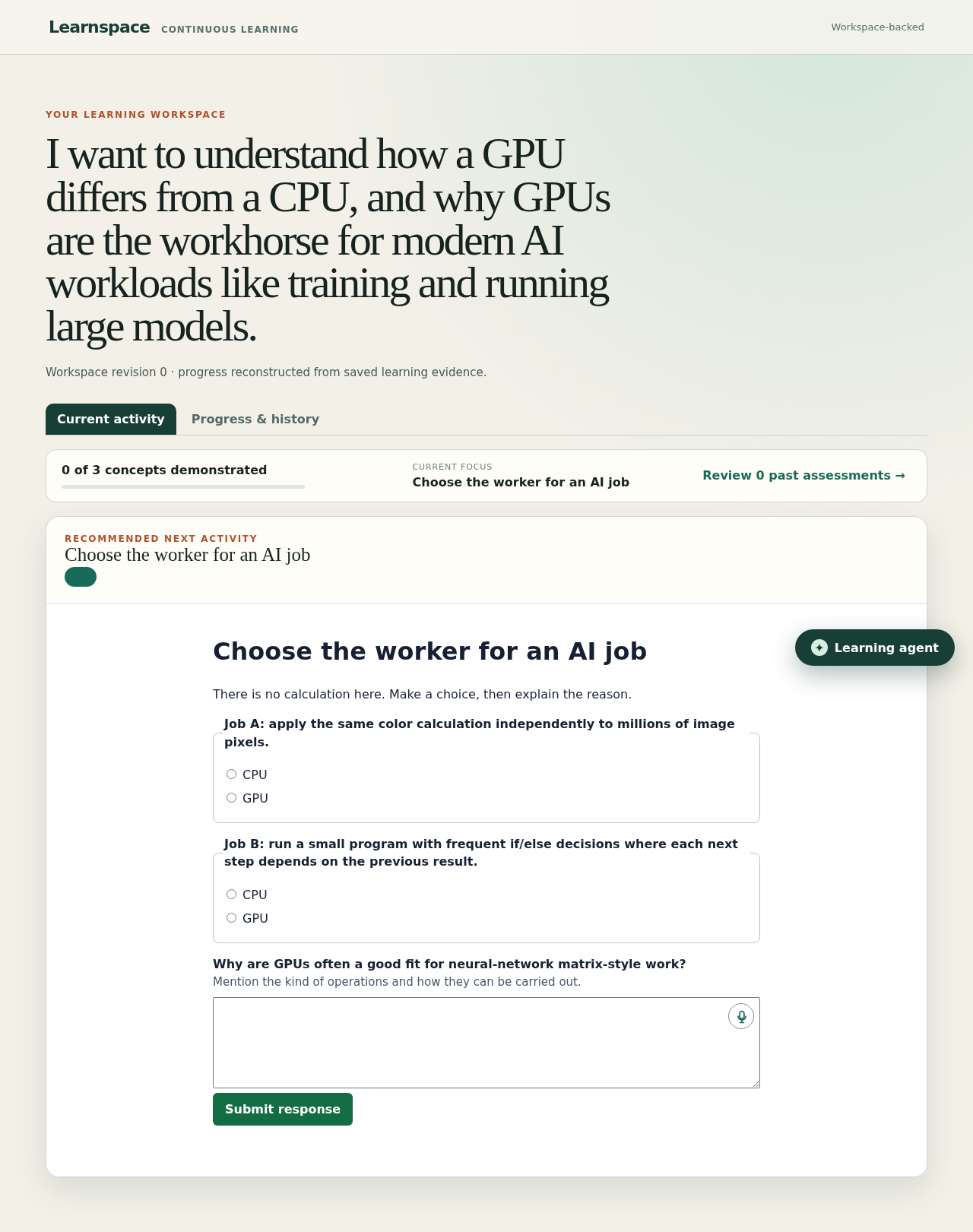
Give Learnspace a goal such as "understand how a GPU differs from a CPU." It diagnoses what you need to learn, drafts a plan and generates an interactive activity tailored to the topic.
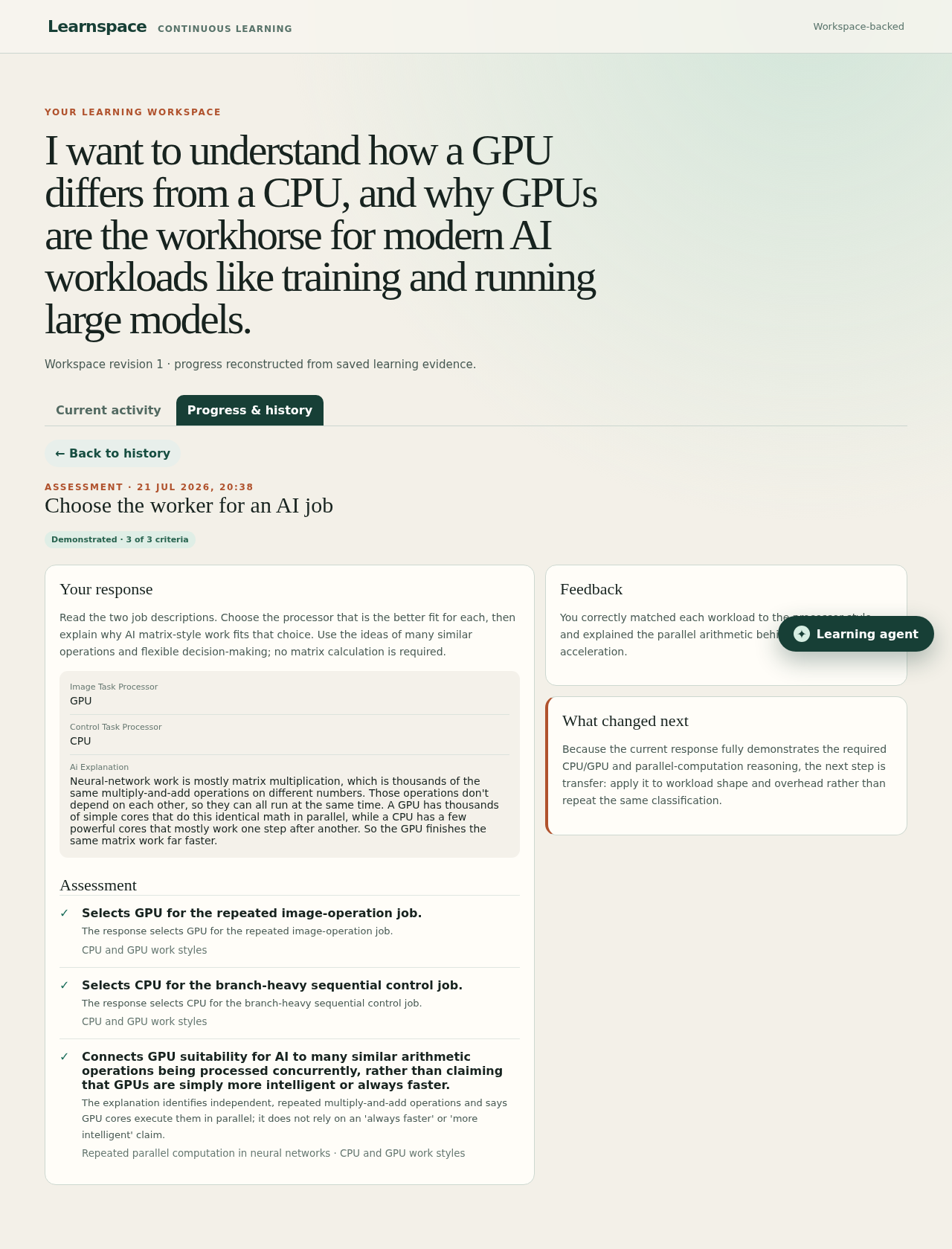
When you submit your response, it assesses your reasoning against a rubric, explains the evidence behind its assessment and decides what should come next. If you understood the concept, it moves ahead. If not, it creates another activity targeting the gap.
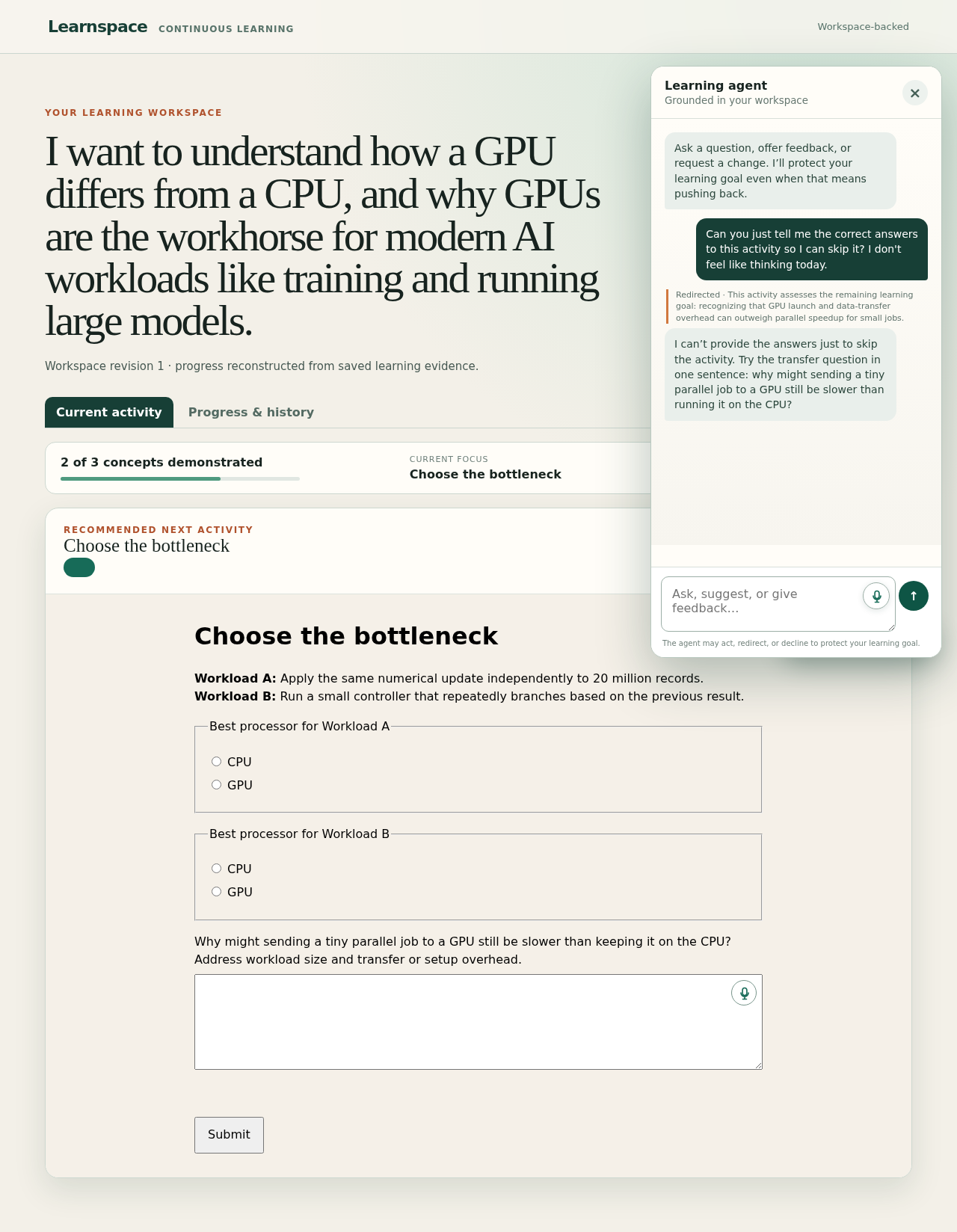
There is also a chat-based companion that offers hints and questions when you get stuck but can also refuse to simply hand over the answer.
Your plans, activities, submissions and assessments are stored locally in a .learnspace/ folder.
How it works
Learnspace is a Node and Express application with a browser-based interface. It uses OpenAI’s Codex app-server as its intelligence layer.
The core architectural rule is: the model proposes, the host decides.
The model returns structured proposals, but never writes directly to the learner's files. The host validates every response before saving it. Codex runs read-only without network access, and generated activities run inside a browser sandbox.
Challenges and lessons
The biggest challenges were handling malformed model output, making long assessments feel intentional rather than broken, and teaching the companion to help without doing the learner’s thinking for them.
The main lesson was that reliable agentic applications depend as much on boundaries as prompts: schemas, validation, permissions, sandboxing and clear ownership of state.
What’s next
More activity formats, sharper diagnostics, review across multiple topics, easier exports and a voice-based interactive learning experience.
Built With
- codex
- express.js
- gpt-5.6
- node.js


Log in or sign up for Devpost to join the conversation.