-
-
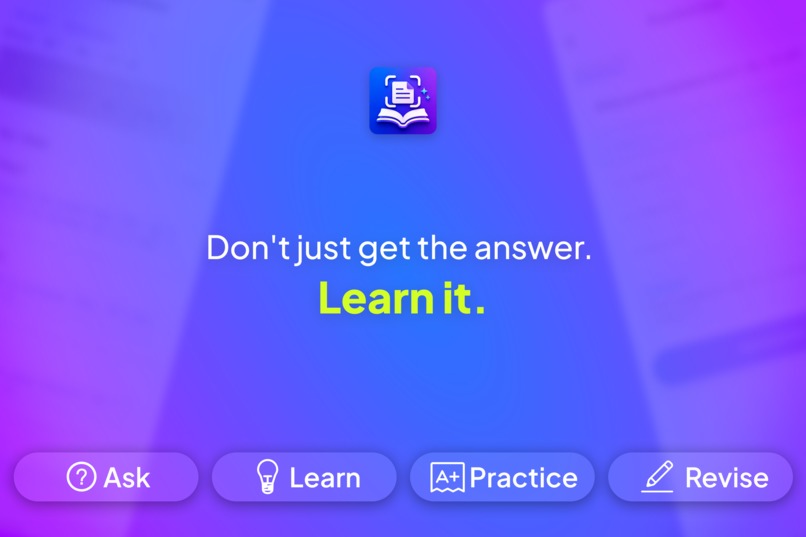
LearnSnap turns AI answers into a learning loop: Ask → Learn → Practice → Revise.
-
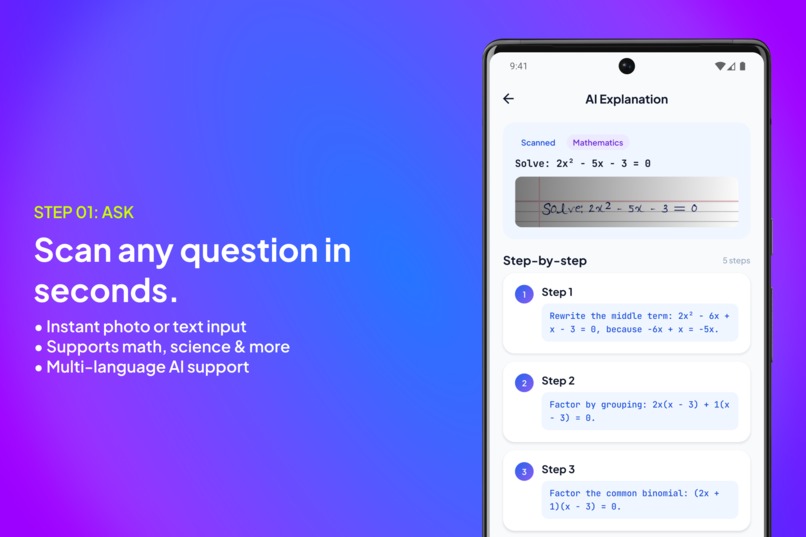
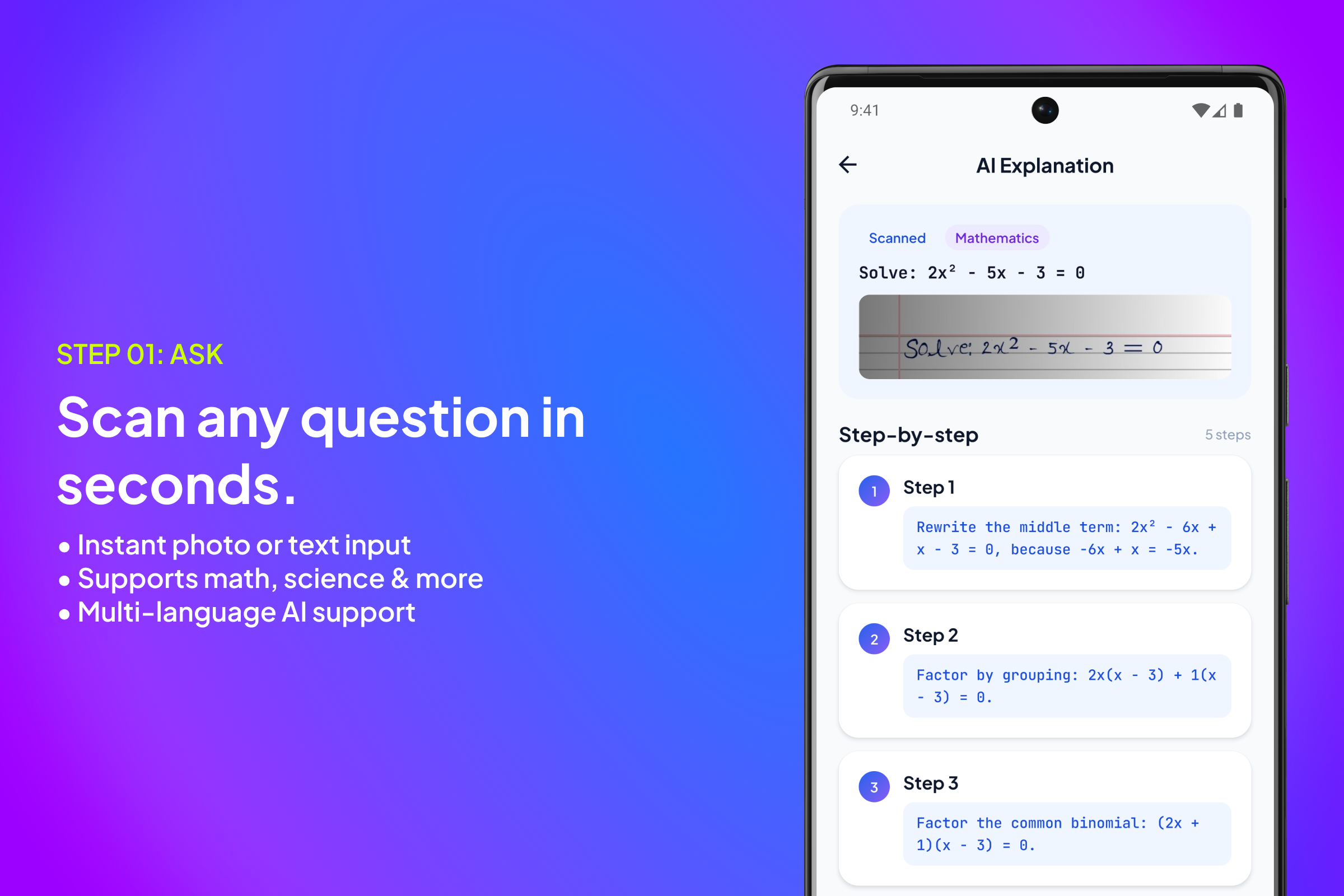
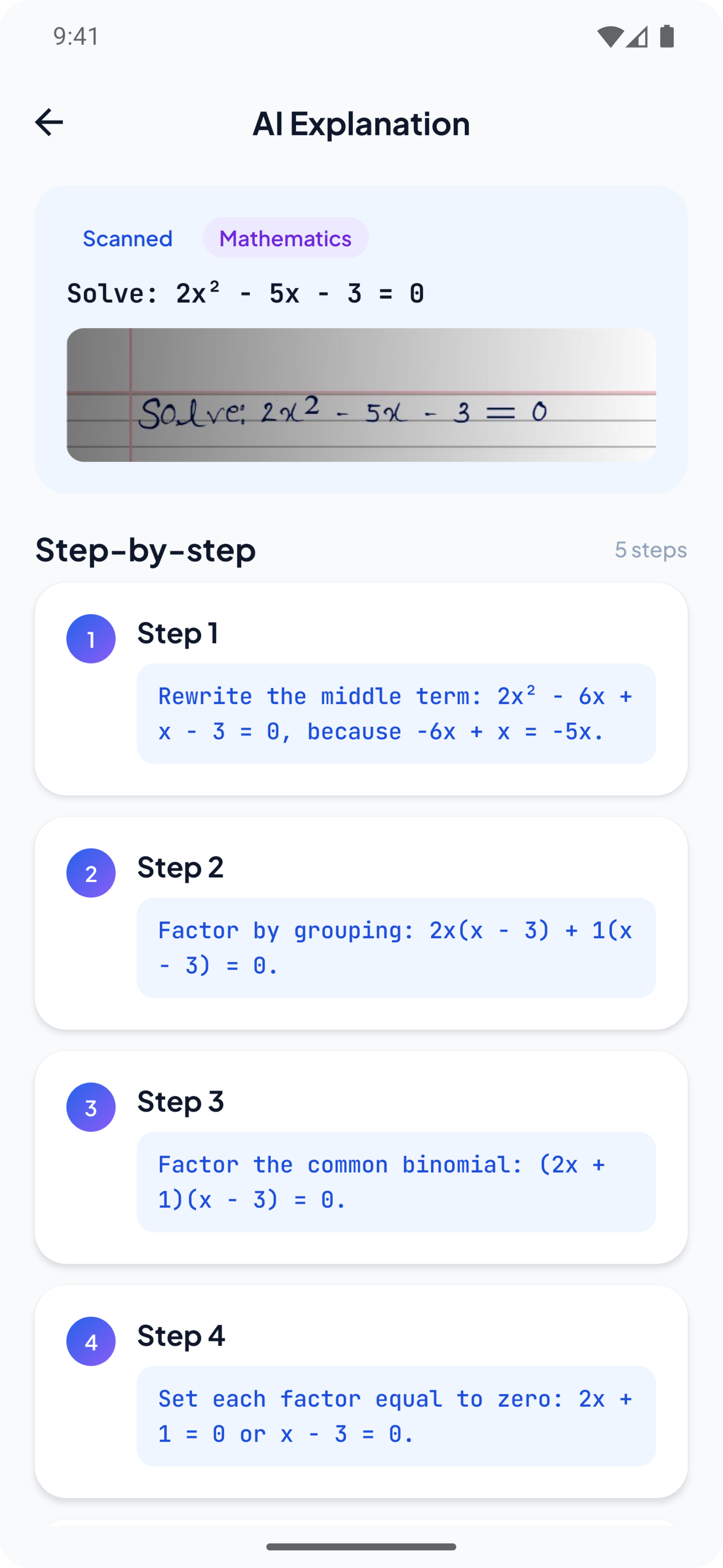
Scan or type a question and get a clear, step-by-step explanation designed for understanding.
-
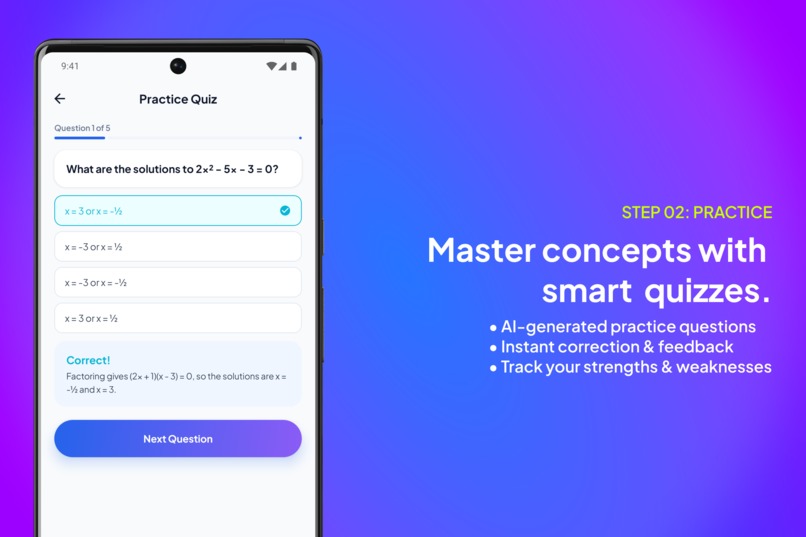
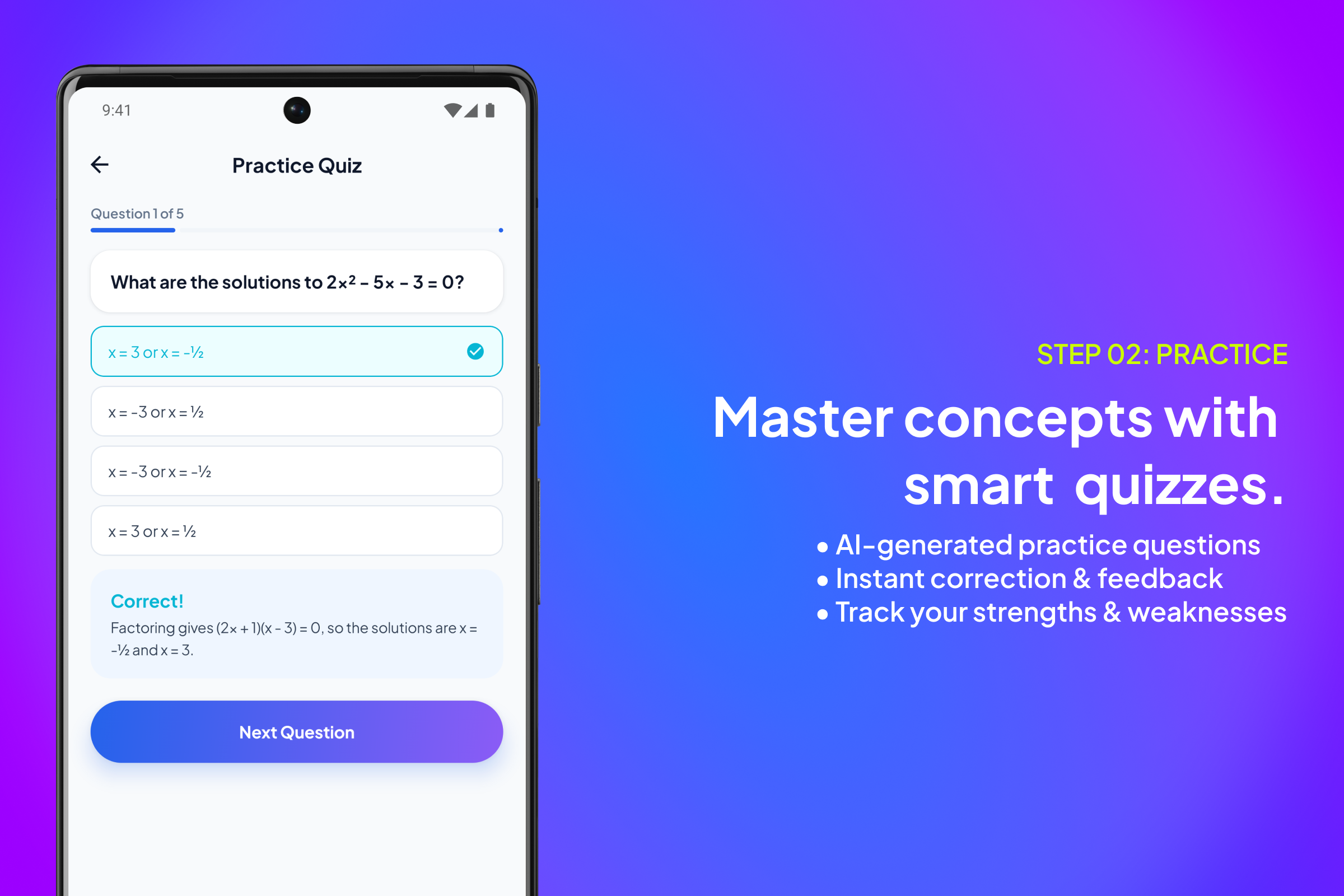
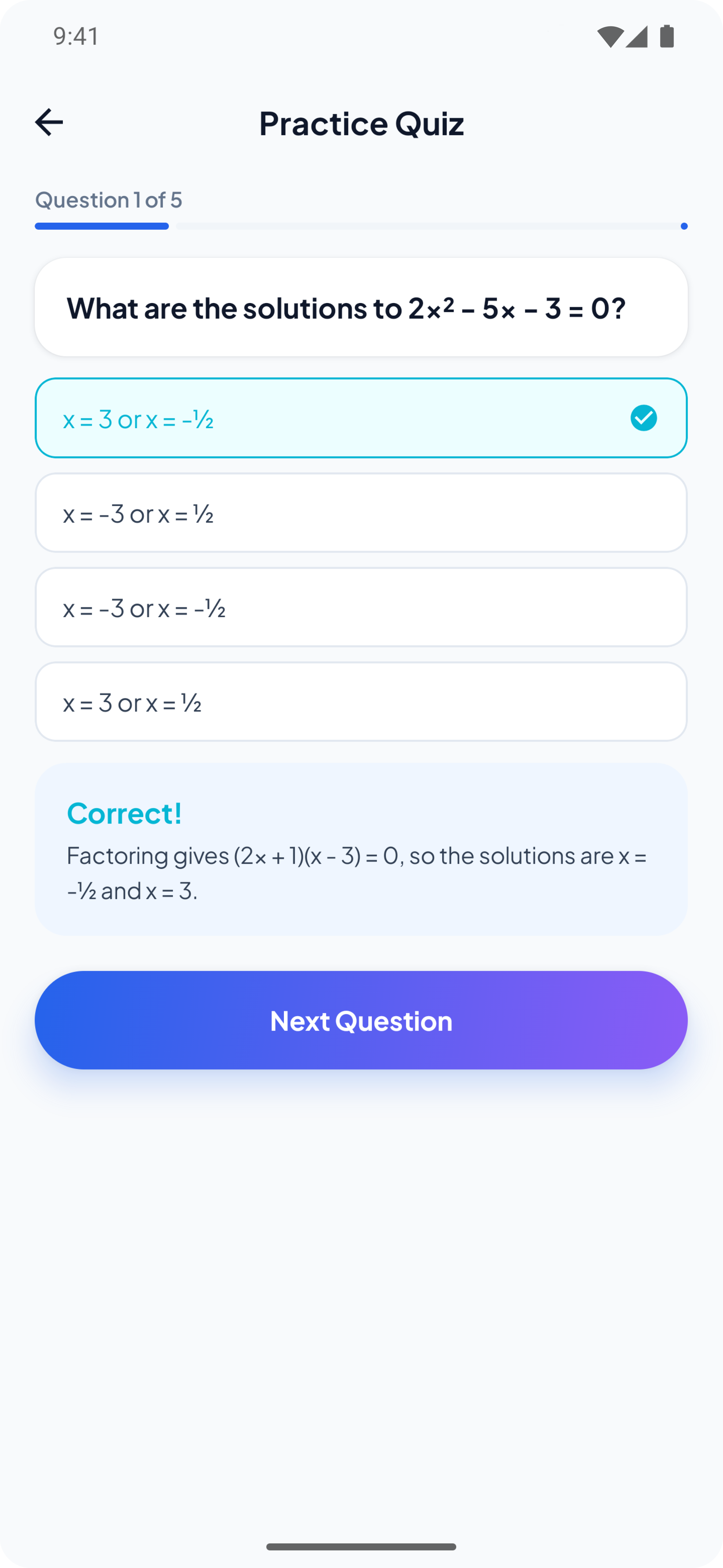
Turn the same topic into a 5-question practice quiz and immediately test your understanding.
-
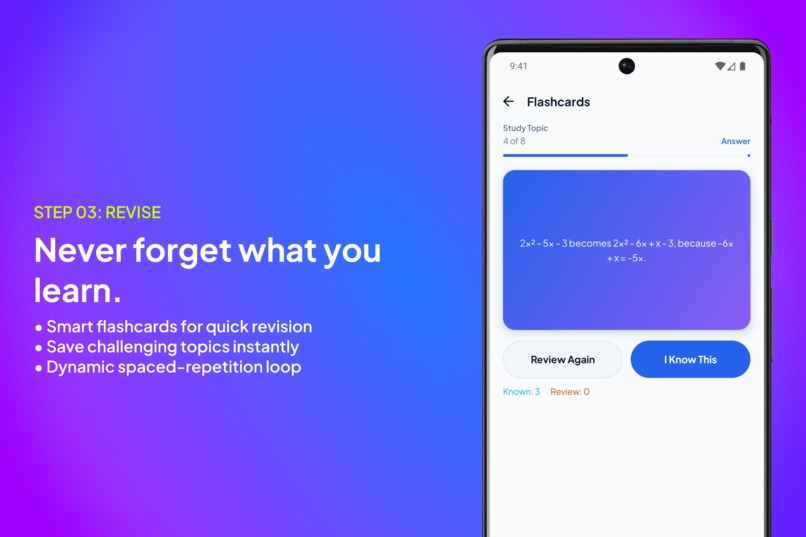
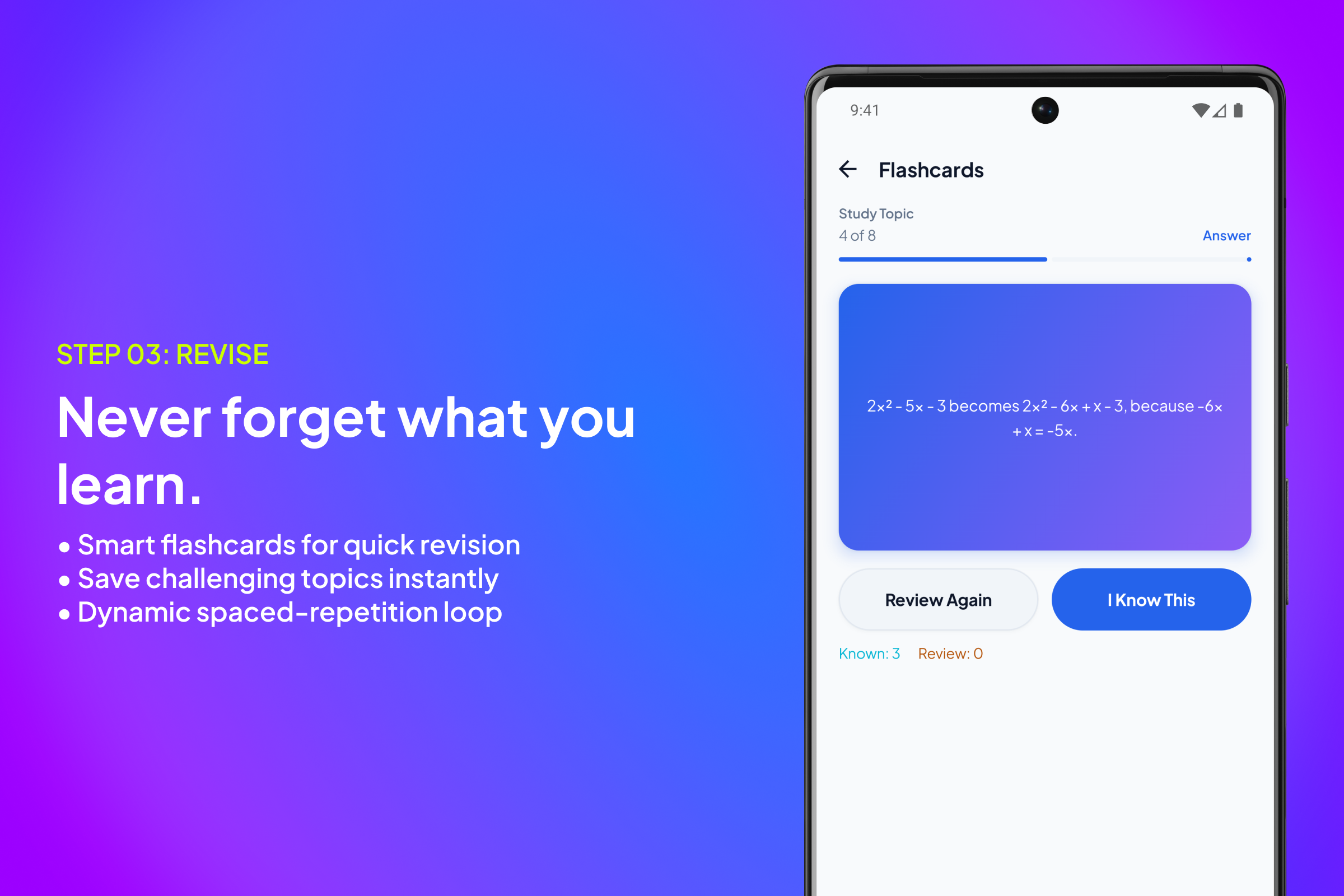
Convert what you learned into flashcards so the answer becomes something you can revise later.
-
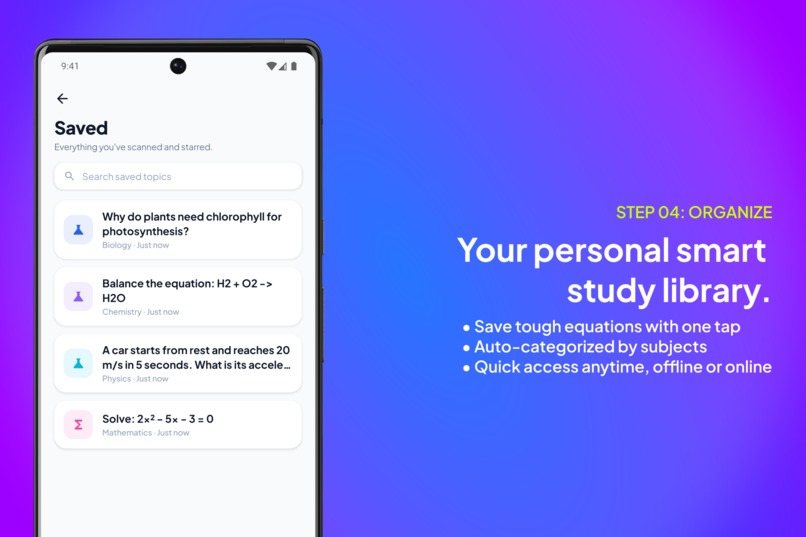
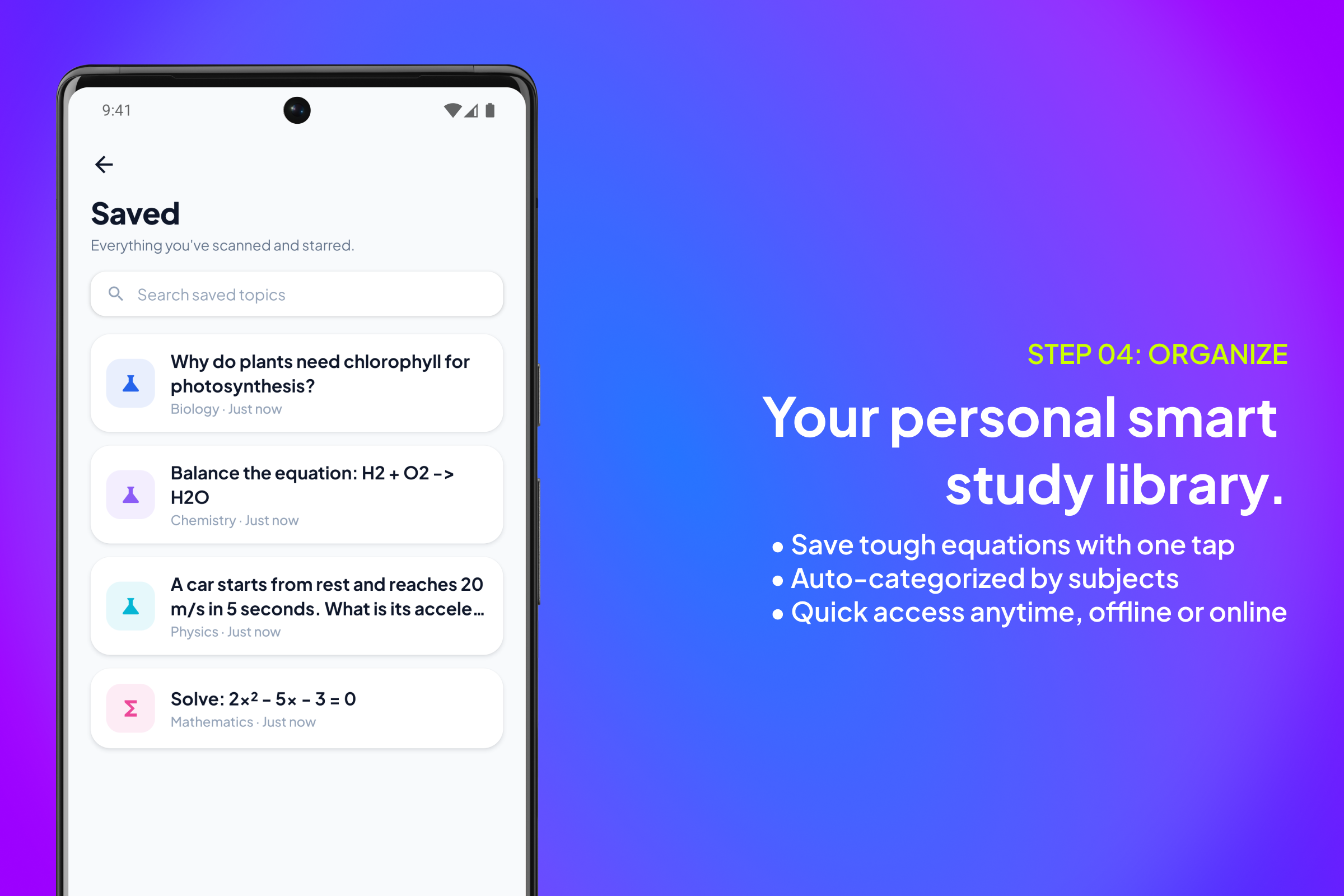
Save learning sessions and return to explanations, quizzes and flashcards without starting over.
-
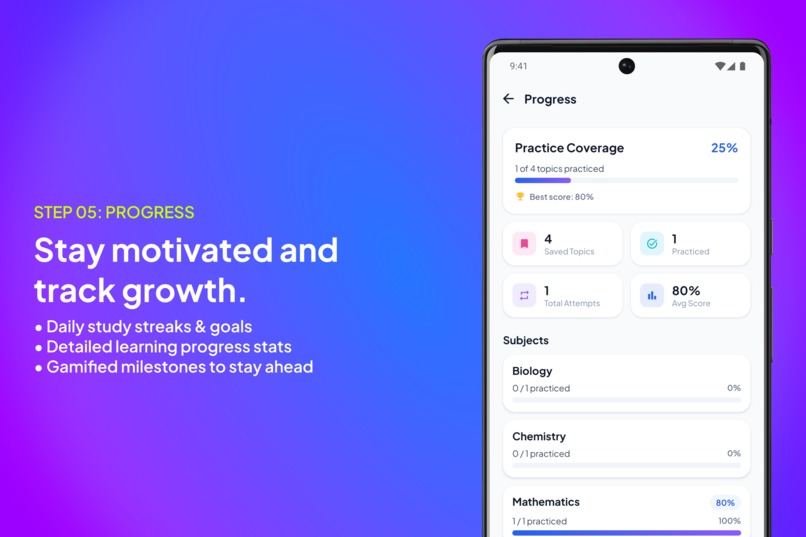
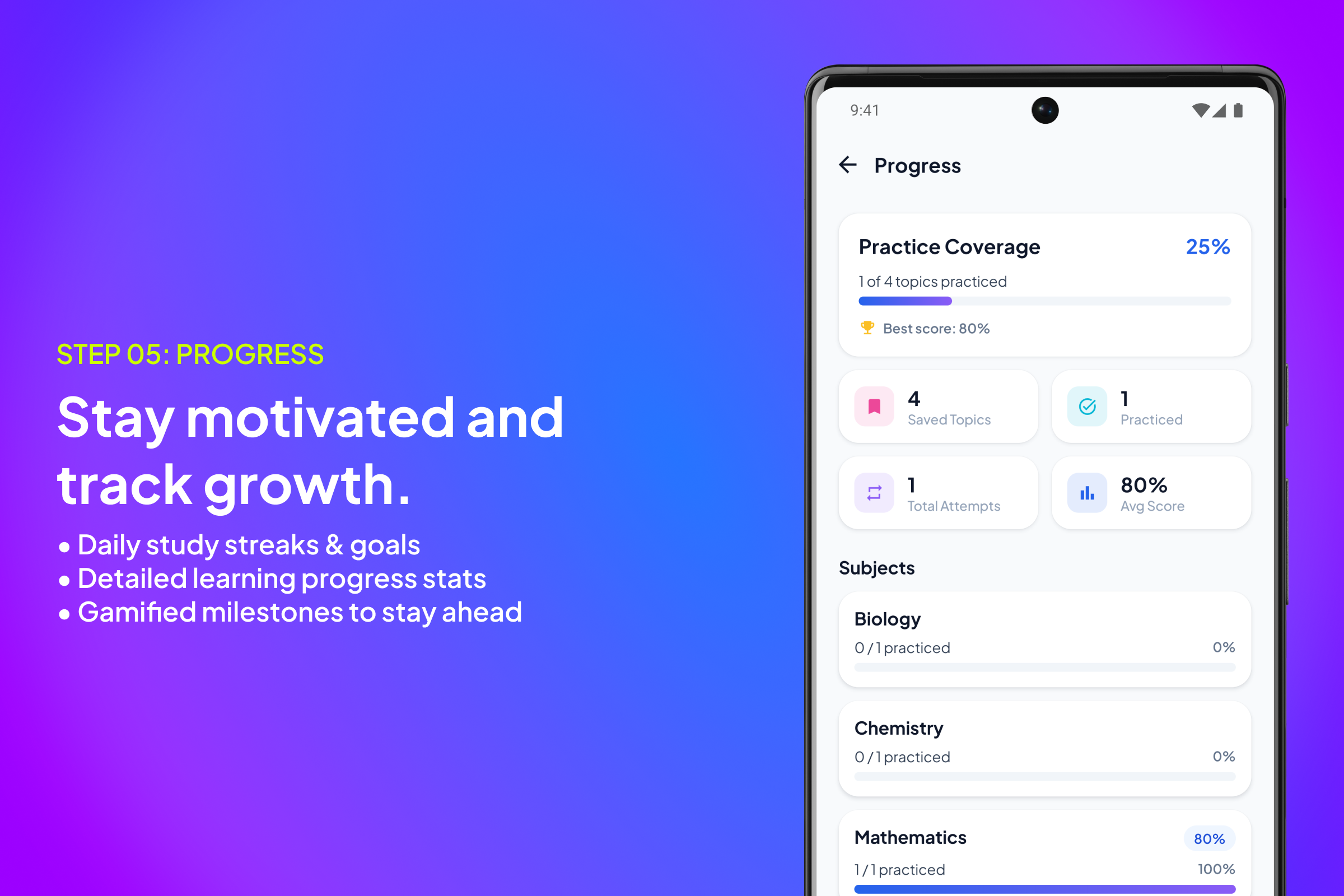
Track learning activity, practice and progress so studying continues beyond a single AI answer.
-
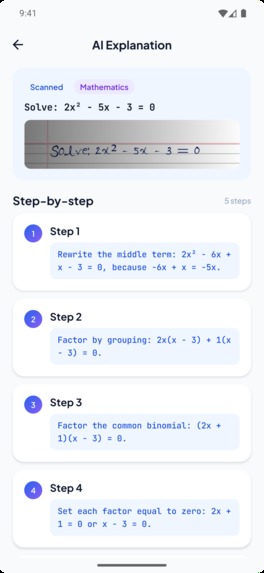
Raw Android app screenshot showing the AI explanation experience without a device frame.
-
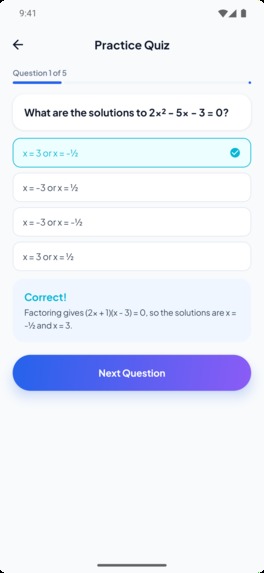
Raw Android app screenshot showing the practice quiz experience without a device frame.
-

App Icon 1024 * 1024

Inspiration
One day, while I was at my sister’s place, I noticed her kids using AI to complete their homework.
They were getting answers quickly and finishing their work without much difficulty.
About 10–15 minutes later, I casually asked them a few questions about the same topic. They hesitated. Even though they had just completed the homework, they struggled to explain what they had learned.
That moment stayed with me.
AI has made it incredibly easy for students to get answers. But getting the answer is not the same as understanding it.
That is the problem behind LearnSnap.
I wanted to build a learning experience that does not stop when AI produces a solution. Instead, LearnSnap continues the learning process by helping students understand the answer, test themselves, and revise what they learned.
What it does
Students can type or scan a question and receive a clear AI-generated explanation.
But that is only the beginning.
From the same learning session, LearnSnap can turn the topic into a practice quiz and flashcards, creating one connected learning loop:
Ask → Learn → Practice → Revise
Generated quizzes, flashcards, saved topics, and Daily Practice can be revisited offline once they have been created.
LearnSnap also responds in the language the student uses, making the experience more useful for learners across different languages and regions.
Why I built it differently
Most AI study tools focus heavily on answering the question.
I became more interested in what happens after the answer.
Did the student understand it?
Can they answer a related question?
Will they remember it tomorrow?
That became the core product direction for LearnSnap.
The goal is not to make AI answer faster. The goal is to turn that answer into something the student can understand, practice, and return to later.
When a student completes the full LearnSnap loop, I want them to be able to answer a related question themselves instead of freezing and trying to remember what they previously asked AI.
How I built it
LearnSnap is a native Android app built with Kotlin and Jetpack Compose, supported by a backend that handles AI operations, authentication, credits, subscriptions, referrals, and study generation.
RevenueCat manages subscription access and purchase lifecycle events, while LearnSnap uses a credit-based model to balance useful free access with the real cost of AI-powered study features.
I also integrated Firebase Analytics and Crashlytics, backend observability through Sentry, and OneSignal for retention.
For monetization, I added optional rewarded advertising for users who run out of credits. The rewarded flow gives free users another way to continue studying without forcing an interruption, while RevenueCat Ads allows ad monetization to sit alongside subscription revenue.
OneSignal is used to support contextual, low-frequency retention rather than generic push messaging, with the intention of bringing students back to meaningful learning actions such as practice and revision.
LearnSnap is now publicly available on Google Play.
Challenges I ran into
One of the biggest challenges was balancing product usefulness, AI usage costs, and a sustainable monetization model.
The difficult problems were often not the obvious features.
They appeared around the edges of the product: subscription renewals and refunds, credit expiry, account restoration, process death, referral attribution, provider outages, rewarded-credit handling, and keeping the UI consistent while entitlement state was still resolving.
I learned that a subscription product is not complete when the purchase succeeds.
It also has to behave correctly when a subscription renews, expires, is refunded, is restored, or temporarily cannot be verified.
I also had to make the AI experience financially sustainable. That led me to optimize the AI pipeline and reduce inference costs by roughly 73% while keeping both text and image-based study workflows available.
Accomplishments that I'm proud of
The accomplishment I am most proud of is taking LearnSnap from an idea into a complete, publicly available Android product during Shipaton.
I built a single question into multiple stages of learning: explanation, practice quiz, flashcards, saved revision, Daily Practice, and progress tracking.
I also spent significant time hardening the parts users should never have to think about. LearnSnap protects AI operations against duplicate credit charges after process death, handles subscription allowance expiry and refunds consistently, restores premium state more reliably, captures referral attribution from Google Play install links, and monitors both the Android app and backend through production observability tools.
I also shipped RevenueCat subscriptions, rewarded advertising, RevenueCat Ads integration, OneSignal retention infrastructure, analytics, crash reporting, referrals, and a production backend around the core learning experience.
Another accomplishment I am proud of is that LearnSnap became a solo project end to end.
I initially explored bringing other people into the project, but with no external funding and potential collaborators already committed elsewhere, I chose not to wait.
That meant learning and handling areas outside my original Android development comfort zone, including backend development, product design, Figma workflows, store assets, video editing, positioning, QA, monetization, analytics, growth experiments, and public launch execution.
Most importantly, LearnSnap is no longer a hackathon prototype.
It is a real product that students can install from Google Play and use.
What I learned
The biggest lesson was that the answer is not the product.
AI can generate an answer very quickly. The harder and more valuable problem is helping a student do something useful with that answer afterwards.
I also learned that reliability and monetization have to be designed together.
Credits, subscriptions, renewals, refunds, referral bonuses, rewarded ads, and AI usage all affect each other. Treating them as isolated systems creates edge cases that only appear later.
Another lesson was to measure before guessing.
Several product decisions, from how answers are presented to how learning activity contributes to streaks and retention, improved when I tested actual behavior instead of relying only on assumptions.
For retention, I learned to think about the experience the student expects rather than simply sending more notifications.
A useful reminder should bring a student back to something meaningful, not just bring them back to the app.
Building LearnSnap solo also changed how I think about AI-assisted development.
I started Shipaton primarily as an Android developer, but by the end I had worked across backend development, infrastructure, monetization, design, analytics, growth, launch assets, and product strategy.
AI did not remove the need to understand those areas. It gave me a way to learn and execute across them much faster.
What's next for LearnSnap
Now that I have completed the MVP and launched LearnSnap publicly, development is no longer the only challenge.
The next challenge is growth.
What's next for LearnSnap
Now that the MVP is live, my main challenge is no longer just development. It is growth.
The Android app and backend will continue to be maintained, but most of my attention now needs to move toward user acquisition, retention, and understanding how real users behave inside the product.
My next focus is building stronger analytics funnels around:
Ask → Learn → Practice → Revise
I want to understand where users drop, what brings them back, which features create the most value, and which behaviors are connected with retention and subscription conversion.
The biggest constraint is acquisition budget. Most scalable channels such as Google Ads, Meta, TikTok, creators, and Noise require money before I have the user and revenue numbers that would make funding easier.
So I am starting with what I can control: organic short-form content, Product Hunt, community distribution, and partnerships with academies, tutors, schools, and colleges where referrals can be tied directly to successful subscriptions.
An iOS version is also part of the longer-term plan, but my priority is to first prove that LearnSnap can acquire, retain, and monetize users on Android.
I started Shipaton asking whether I could build the product.
Now the question is whether I can build a repeatable way to grow it.
I want LearnSnap to turn AI answers into actual learning, and then put that experience in front of the students who need it.
Built With
- android
- compose
- datastore
- firebase
- firebaseanalytics
- firebasecrashlytics
- googleplaybilling
- googlesignin
- hilt
- kotlin
- mariadb
- material3
- nestjs
- node.js
- okhttp
- onesignal
- openai
- prisma
- retrofit
- revenuecat
- room
- sentry
- typescript

Log in or sign up for Devpost to join the conversation.