Inspiration
Most Nigerian children of primary age cannot read and understand a simple text, by World Bank and UNICEF estimates (LINK). Their teachers are not the problem. A teacher with 50 children and one textbook cannot tell which foundational skill each child is missing, so lessons pitch to the middle of the class and the children furthest behind fall further.
There is an approach that works: Teaching at the Right Level. Group children by what they can actually do, not by age, and teach to that level. It is usually run with paper tallies, which take hours to keep up. We wanted to make it something a teacher can run in ten minutes on the phone they already carry.
What it does
LearnSignal follows one loop: Assess, Identify, Group, Intervene, Reassess.
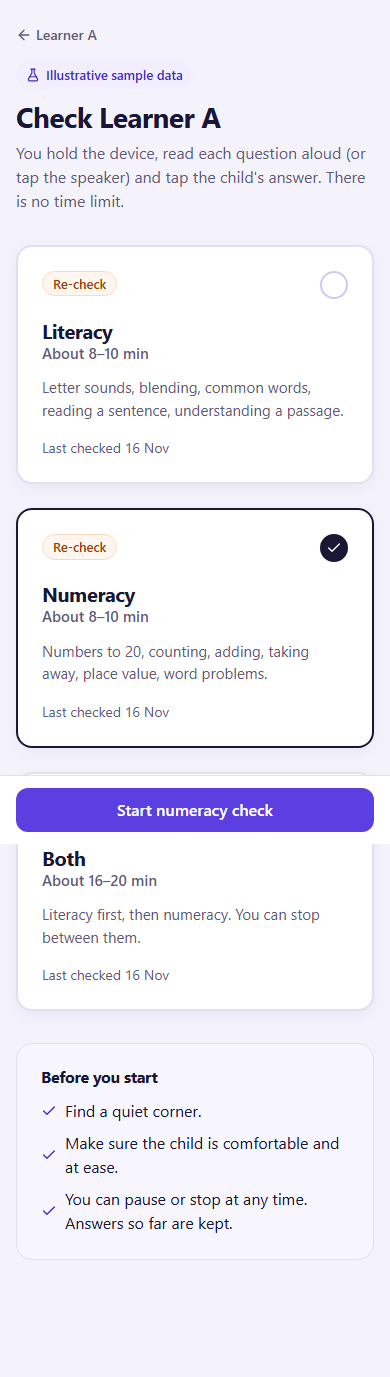
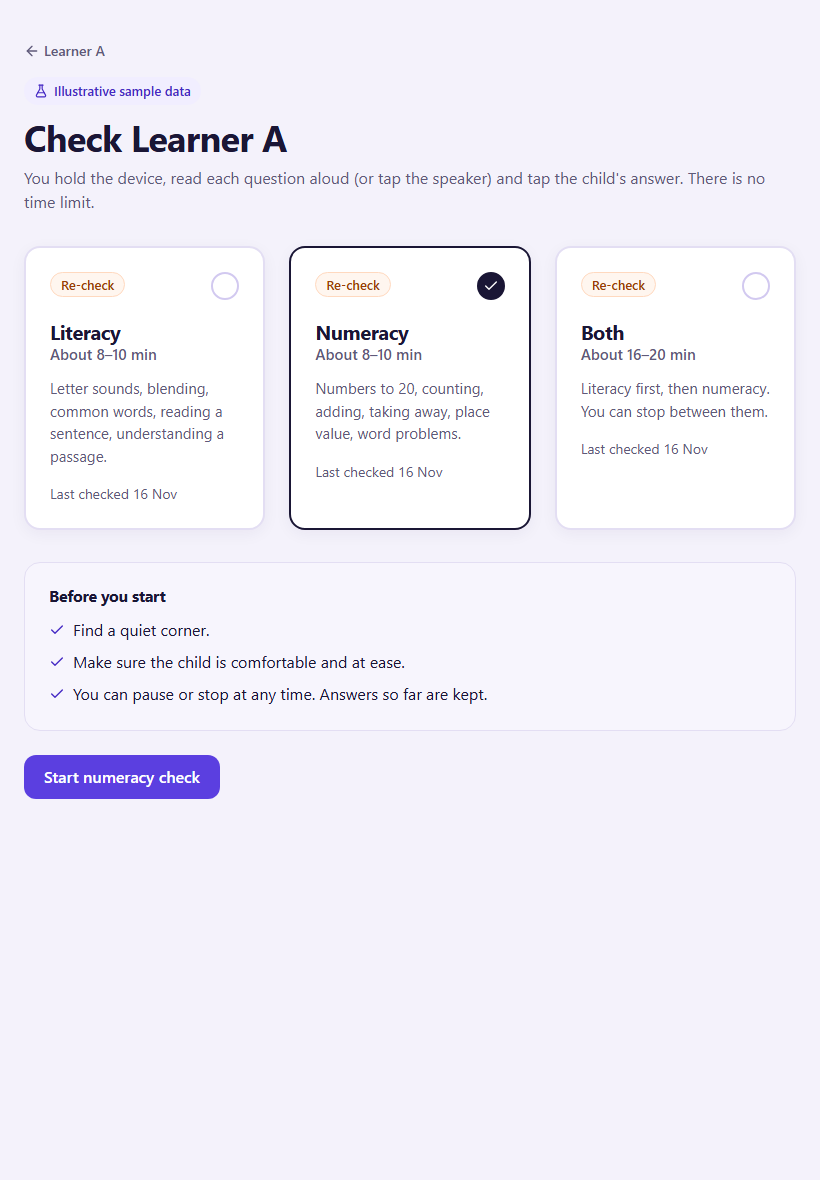
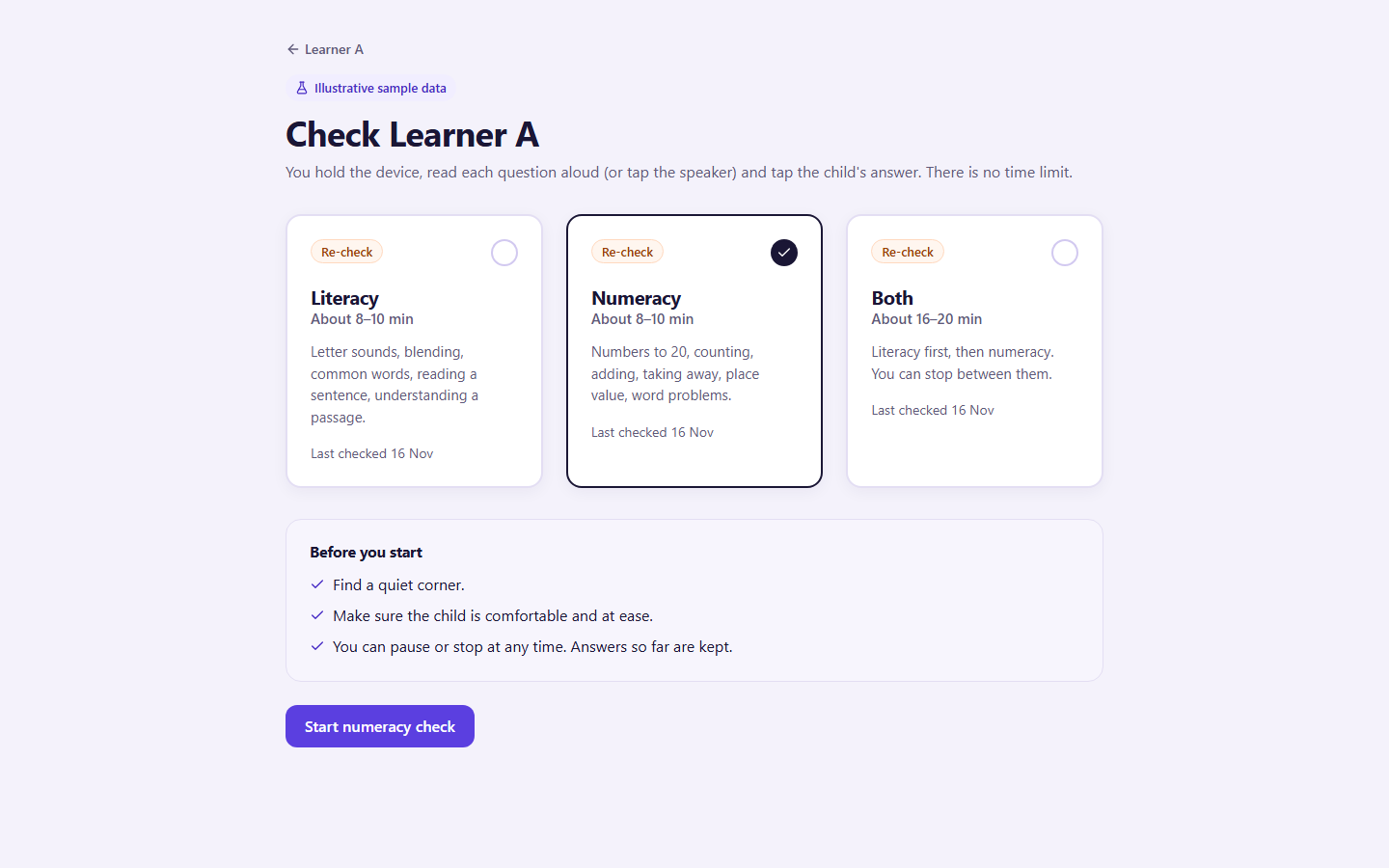
- Assess. A 10 minute check per strand (reading and numbers). The teacher holds the phone, reads each question aloud and taps the child's answer. Children never log in.
- Identify. Each child gets a working skill: the first rung on a six-step ladder they have not yet demonstrated.
- Group. The Class Ladder shows every child standing on the step they are working on, so the whole class is visible at a glance. Children on the same step are grouped. The teacher decides.
- Intervene. Each group gets a 15 minute activity using things every classroom has (bottle tops, sticks, cards), plus practice questions the teacher approves before any child sees them.
- Reassess. A re-check shows who moved up the ladder.
Every screen ends with the same promise: this shows which skills a child has demonstrated so far. It is not a diagnosis.
How we built it
- Next.js, React and TypeScript for a fast, phone-first web app that works on cheap Android phones.
- Supabase (Postgres) with row-level security on every table, so a teacher can only ever see their own classes. School admins see totals only, and any count under three is hidden.
- Deterministic scoring, not AI. Every answer is evidence. Recent sessions count more than older ones, and practice counts half. A skill is only "demonstrated consistently" after strong results in two separate sessions. A safeguard means one bad day cannot define a child: a skill already shown is never dropped to "not yet" from a single session. The scoring rules are covered by unit tests.
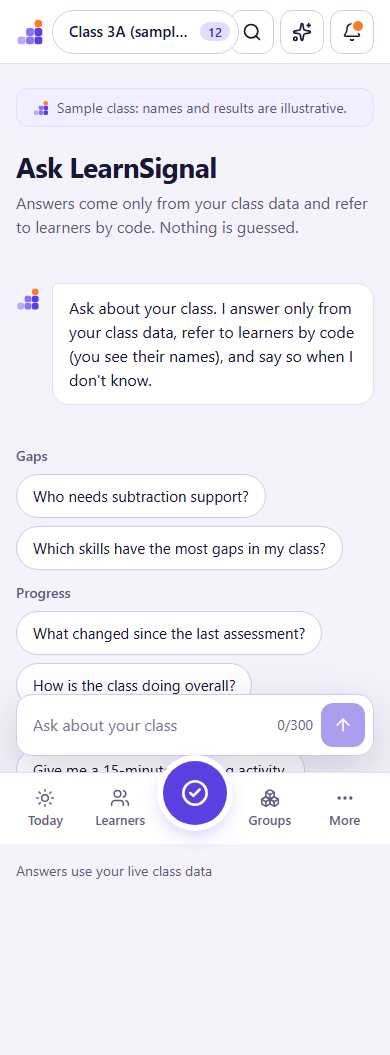
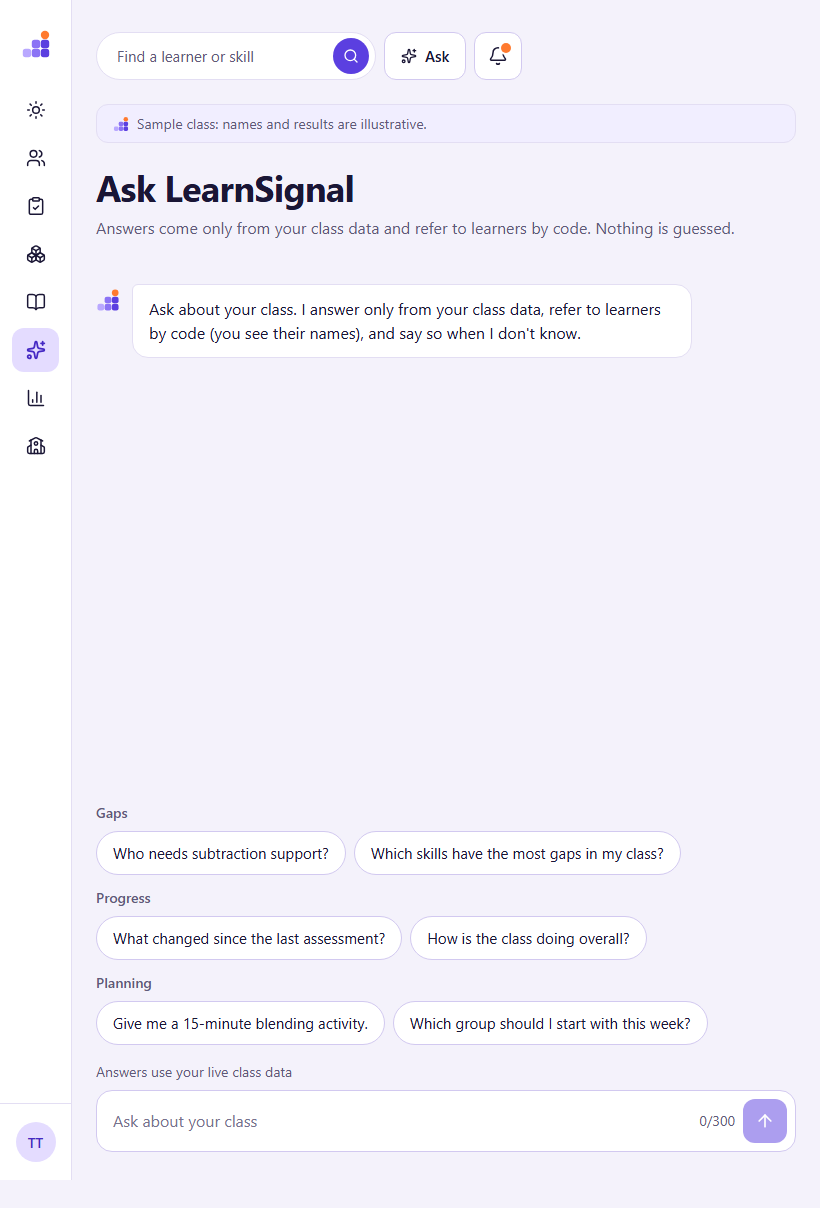
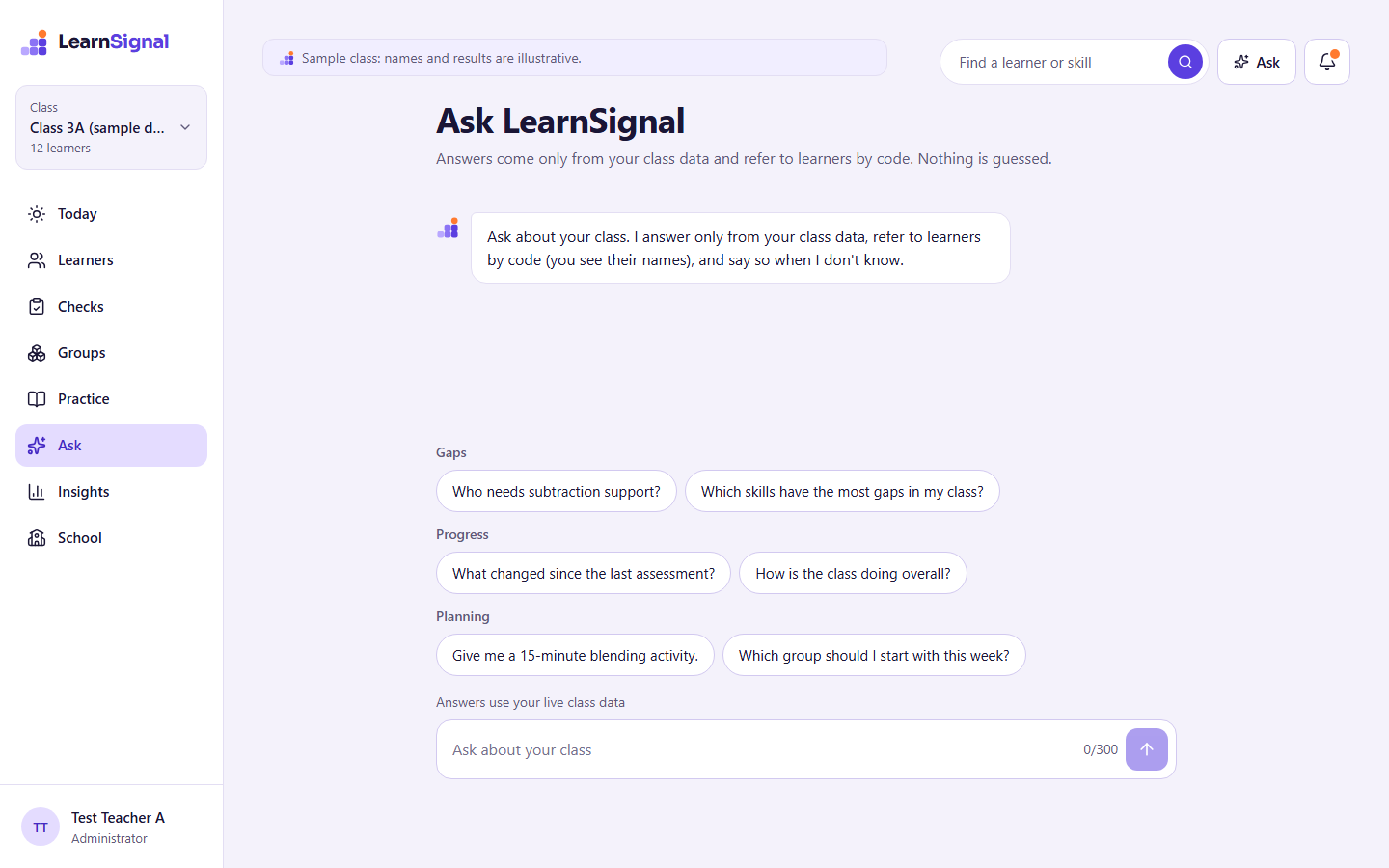
- AI only where it can be checked. Google Gemini drafts practice questions, then our code recomputes every answer, counts the objects in each picture and checks words against curated lists. Anything it cannot verify is dropped. A second AI feature, Ask, answers teacher questions only from class data through five fixed database tools, and a post-check blocks invented learner codes or diagnosis-style language.
- Privacy by design. First names only. AI sees random learner codes like LS-3F9A2C and skill facts, never names. Answer keys never leave the server.
Challenges we ran into
- Being honest about uncertainty. One strong session should not count as proof, and one bad day should not erase progress. We added confidence levels, "provisional" results and a "Why?" panel that explains every result in plain language.
- Making AI safe for children. Early drafts sometimes had wrong answers or confusing word problems. Building a validator that drops anything it cannot check took several rounds, and we kept real examples of failures in our logs.
- Designing for a busy teacher on a small screen. We rebuilt the interface several times so that the next useful action is always obvious, it works at 390px wide, and it passes automated accessibility checks (axe: zero violations on 16 screens in light and dark mode).
Accomplishments we're proud of
- A whole class's learning level visible in one picture, the Class Ladder.
- 54 unit tests and 12 live database isolation tests, with a passing production build.
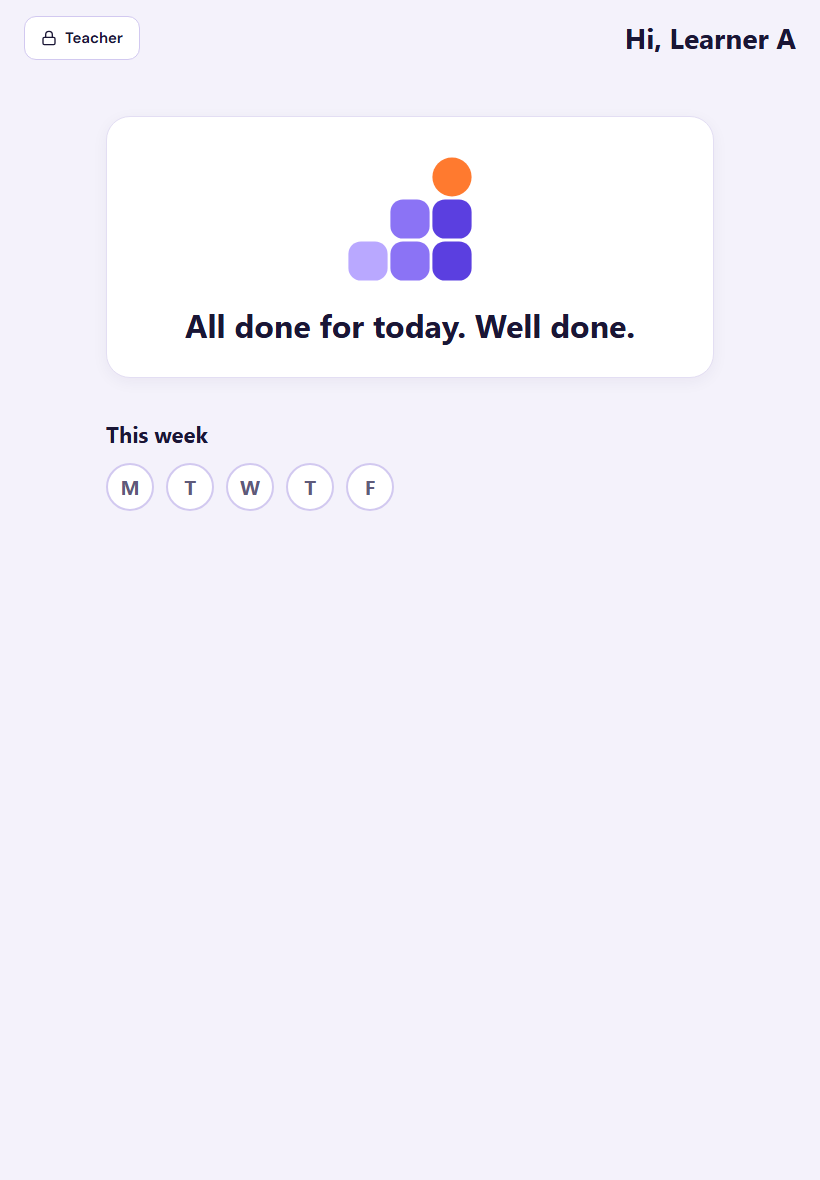
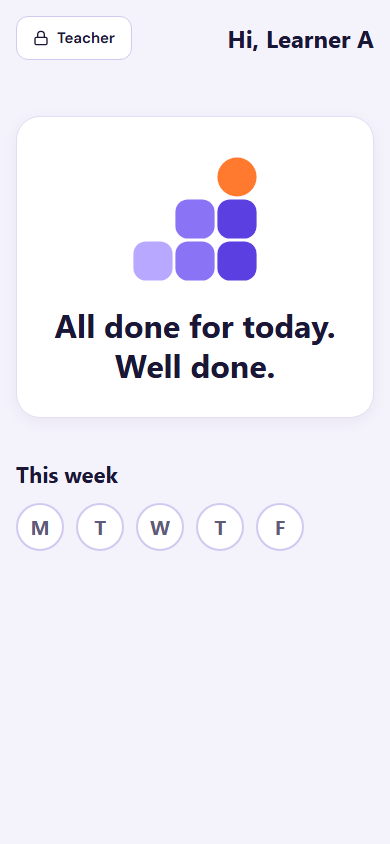
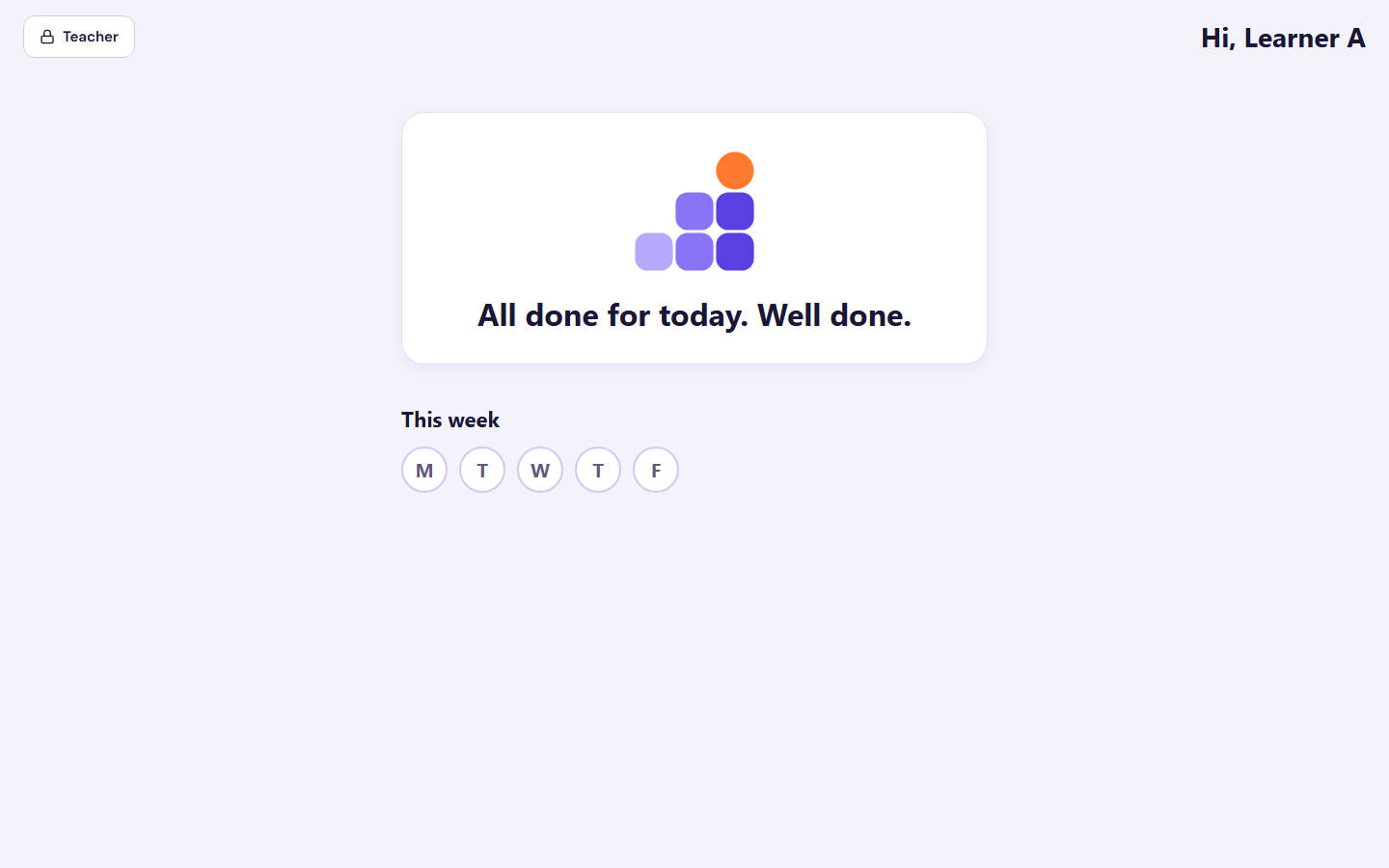
- A gentle child mode with large tiles and kind feedback, and no scores, timers or rankings.
What we learned
That the hard part of education technology is not the AI. It is trust: teachers need to see why a child is placed where they are, and children need to be protected from being labelled. Rules you can explain beat a model you cannot.
What's next
LearnSignal has not yet been piloted with real children; every learner in the demo is synthetic sample data. Next we want to run a pilot with two or three schools, gather structured teacher feedback, and add Yoruba, Hausa and Igbo content.
Built With
- google-gemini
- lucide
- nextjs
- playwright
- postgresql
- react
- recharts
- socialgood
- supabase
- tailwindcss
- typescript
- vercel
- vitest
- zod
