-
-
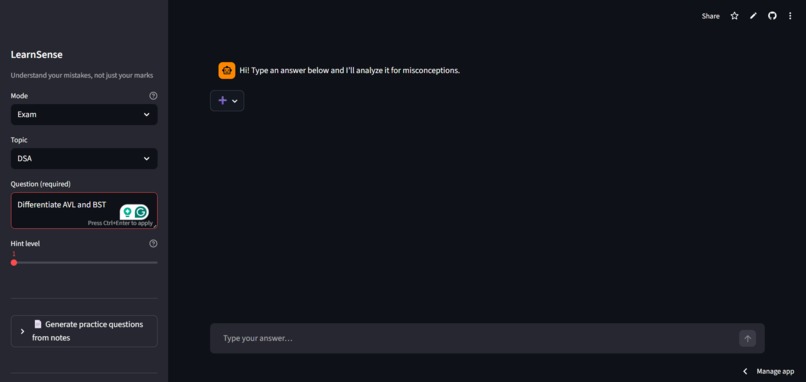
Interface
-
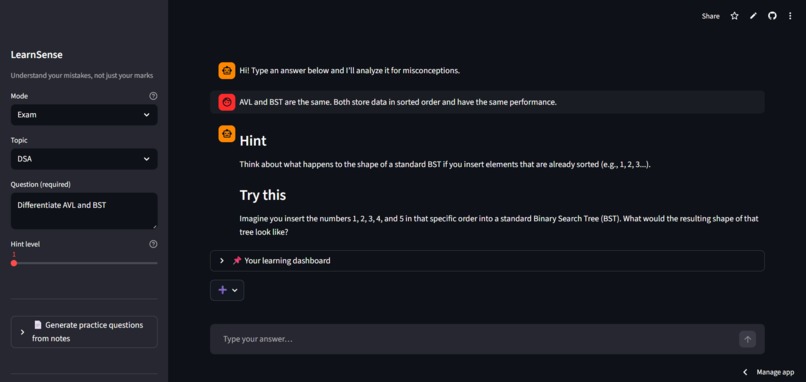
Working
-
-


Inspiration
As a student, I realized that most learning tools and AI assistants focus on producing answers rather than understanding why a student’s reasoning is incorrect. In exams and interviews, marks are often lost not because of a lack of knowledge, but because of small conceptual misunderstandings. LearnSense was inspired by this gap — the need for an AI tutor that helps students understand their mistakes instead of simply correcting them.
What it does
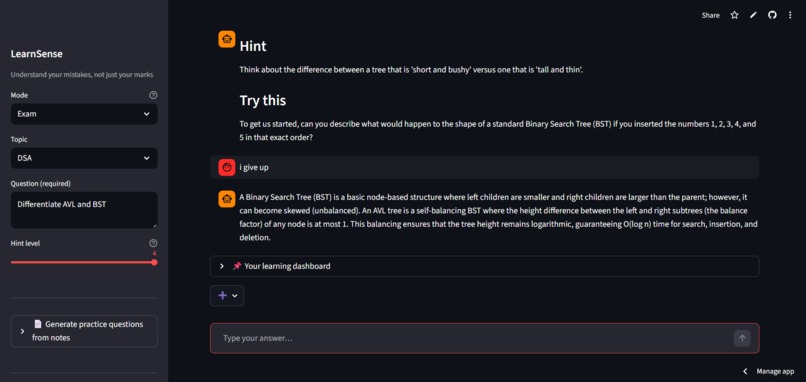
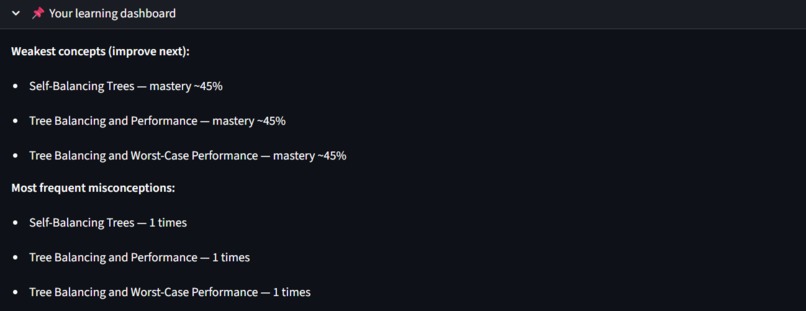
LearnSense is an adaptive AI tutor that analyzes student answers to identify misconceptions and reasoning gaps. It supports both typed and handwritten responses. Instead of immediately revealing the correct answer, LearnSense guides students using a multi-level Socratic hint system. If the student chooses to give up, the system generates a full exam-style solution along with a grading rubric and a minimal fix that explains exactly what went wrong. LearnSense also tracks concept-level performance over time to surface weak areas and frequent misconceptions.
How we built it
LearnSense is built using Python and Streamlit, with a modular backend architecture. The Gemini 3 API is used for multimodal reasoning over text and images, structured diagnosis of reasoning steps, and generation of hints, solutions, and grading rubrics. Carefully designed prompts enforce strict JSON outputs to ensure reliability. The tutor adapts its explanations based on different modes such as ELI5, Exam, and Interview, allowing flexible learning experiences.
Challenges we ran into
One major challenge was ensuring reliable structured output from the model, especially during “give up” scenarios where the model tends to respond with free-form explanations. This was addressed by implementing fallback mechanisms that gracefully recover while preserving educational value. Another challenge was balancing guidance and answer disclosure so that the system encourages learning without frustrating the student.
Accomplishments that we're proud of
We successfully built an AI tutor that focuses on reasoning rather than answer generation. LearnSense can analyze handwritten solutions, identify the first incorrect reasoning step, and guide students interactively. The system also mirrors real exam evaluation by generating grading rubrics, making it especially useful for exam preparation and interview practice.
What we learned
This project taught us how to design robust, education-focused AI systems using large language models. We learned how to combine multimodal reasoning, structured outputs, and UX design to create a tutoring experience rather than a chatbot. We also gained insights into handling model limitations and building resilient AI workflows.
What's next for LearnSense
In the future, LearnSense could expand into full-length adaptive exams, deeper personalization through long-term learning profiles, and support for additional subjects and curricula. We also plan to integrate analytics for educators to better understand student learning patterns.

Log in or sign up for Devpost to join the conversation.