-
-

favicon/logo
-
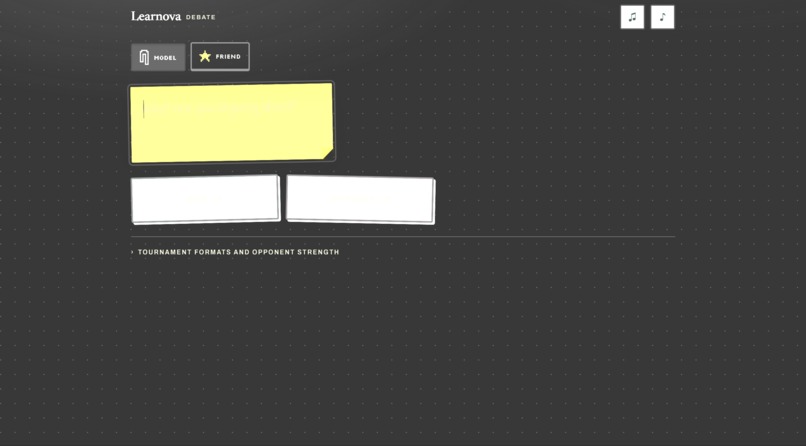
debate mode
-
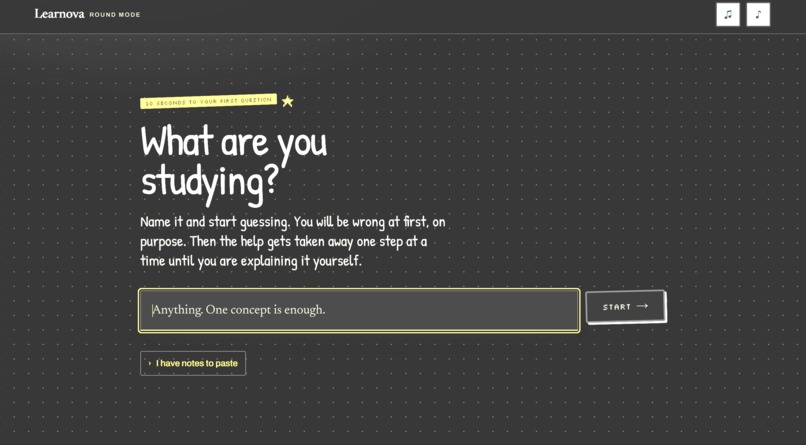
round mode
-
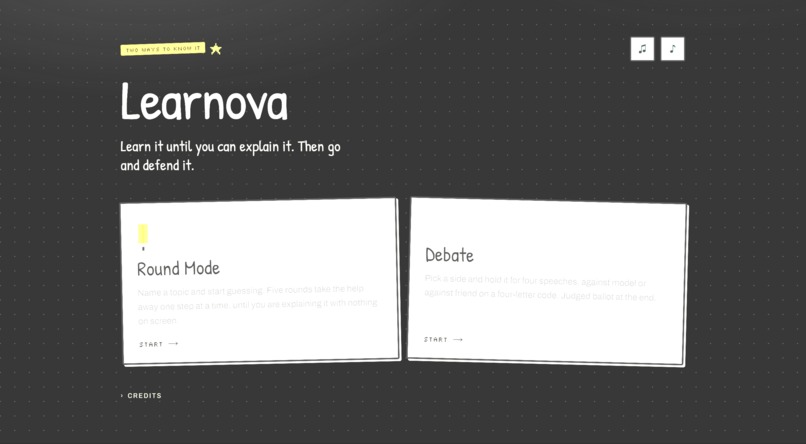
landing page

Inspiration
Most study tools students actually use — Quizlet, various AI tutoring apps — are proprietary, paywalled, and built around testing recall, not understanding. Talking to other students, the same complaints kept coming up: hitting free-tier limits mid-study-session, features locked behind subscriptions, and no way to see or trust how the grading actually works. On top of that, none of them are open source, so there's no way to verify what they're doing with your answers or how they're scoring you.
We wanted something different: a tool that's actually free to use, fully open source, and — more importantly — built around a different question entirely. Most apps ask "do you remember this?" We wanted to ask "can you actually explain it?"
What it does
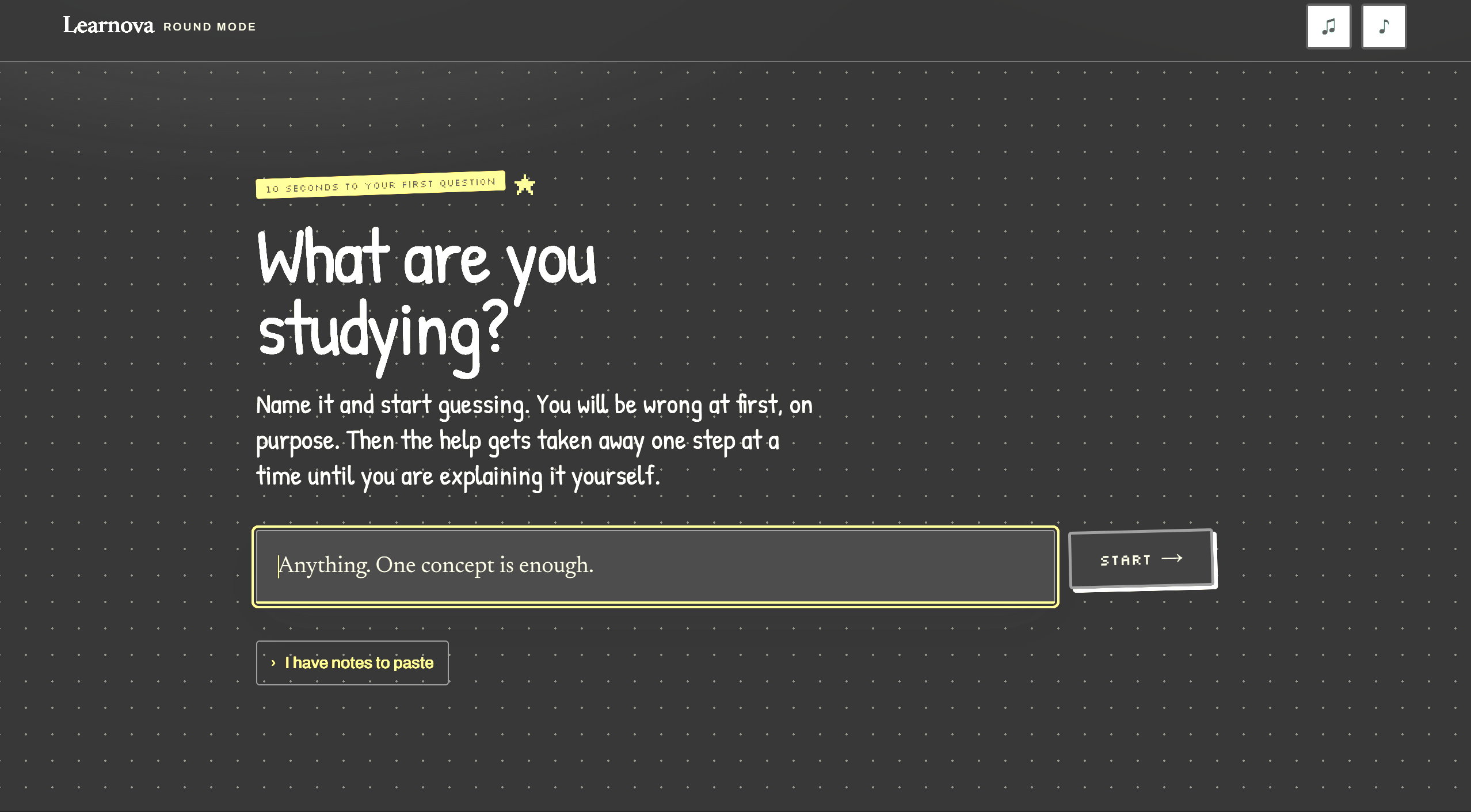
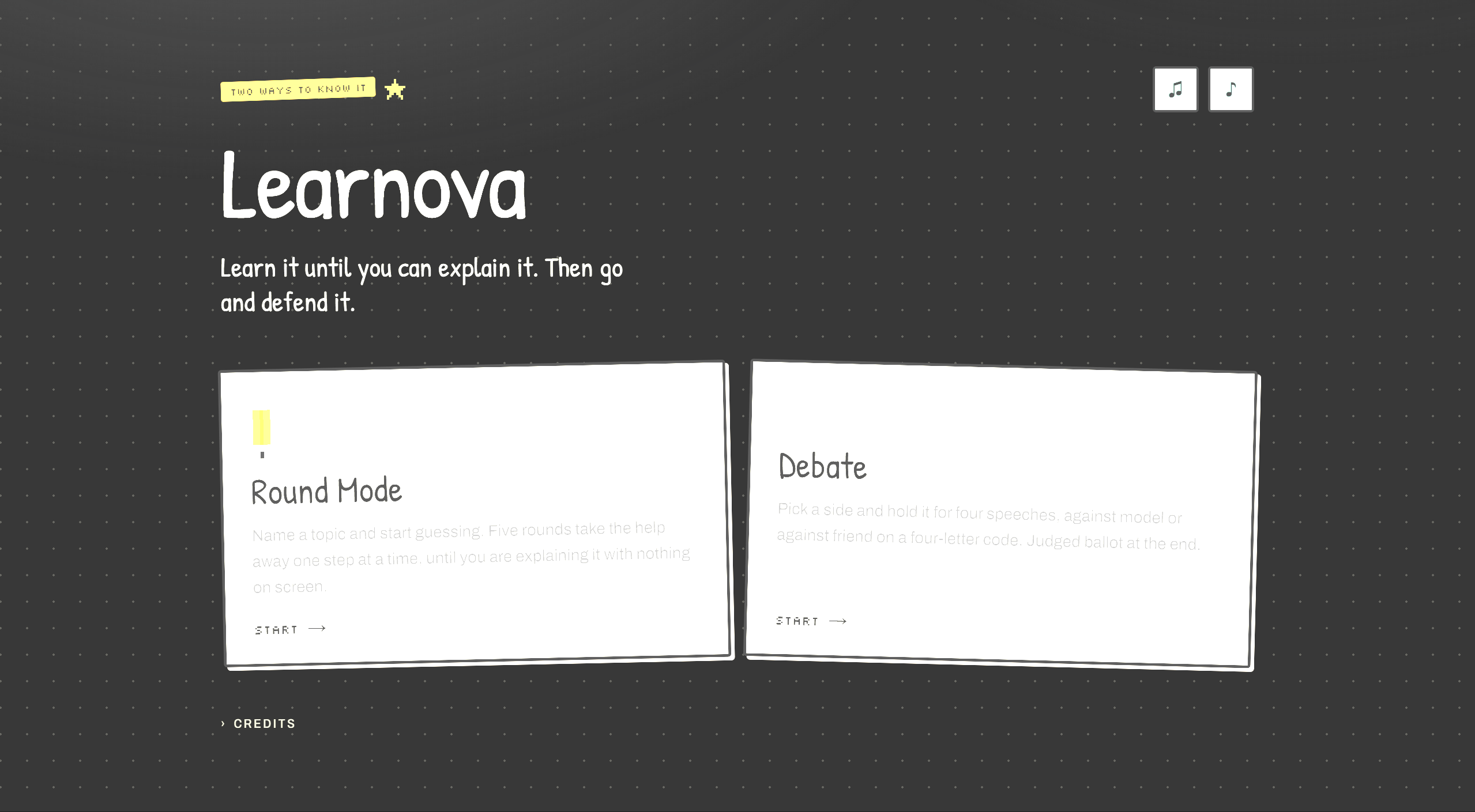
Learnova's core is Round Mode — a four-round ladder that strips away scaffolding as you go. You start with multiple choice, move to fill-in-the-blank, then assemble an explanation from pieces, and by Round 4 you're explaining the concept cold, in your own words, with no help. Round 4 can't be skipped — that's the whole point.
Grading isn't just right/wrong. A "see why" panel breaks down exactly which part of your answer showed real understanding of the mechanism versus which part was just correct vocabulary. It catches the case that matters most: a confidently wrong explanation that uses all the right words.
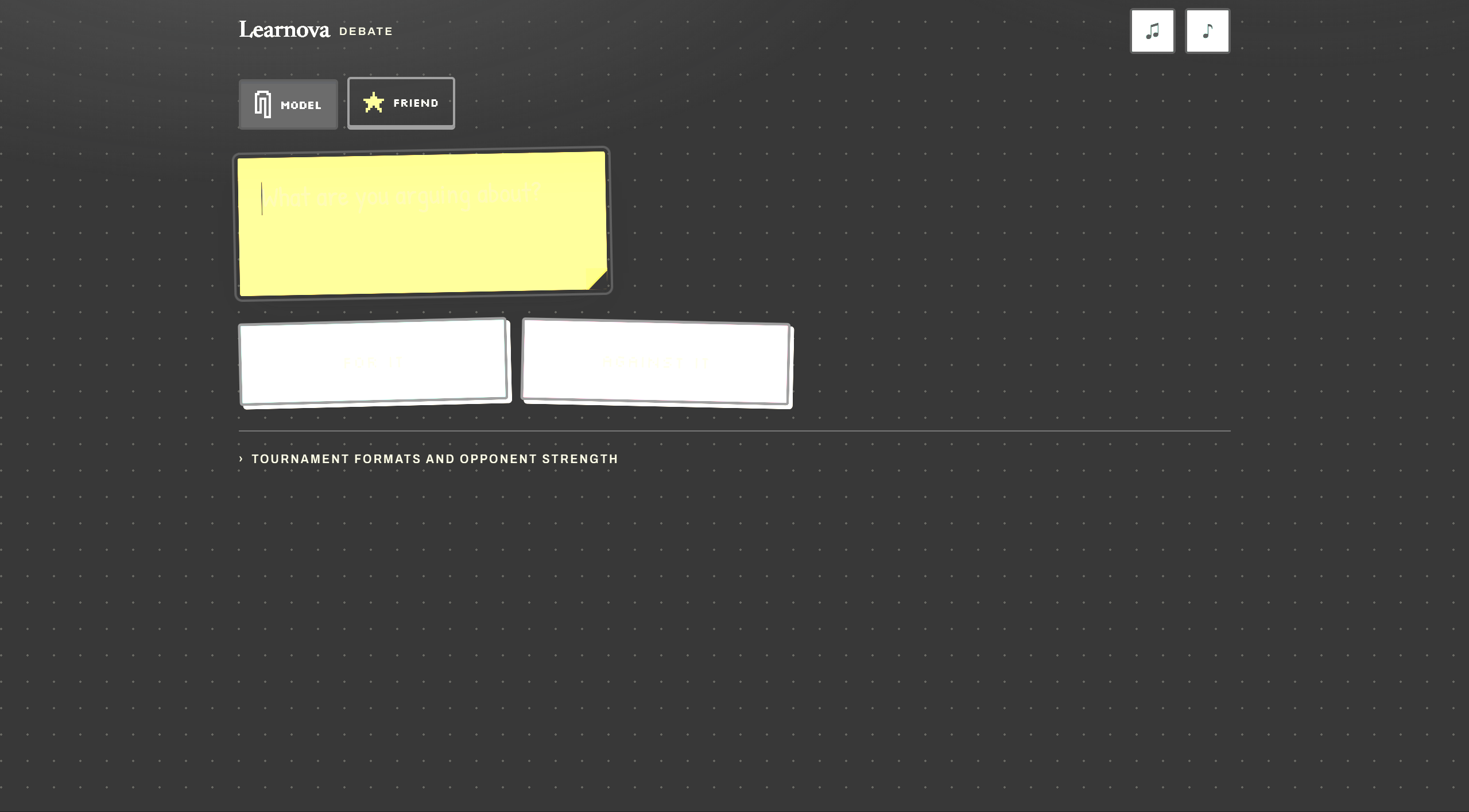
The other half is Debate Mode — you defend an explanation against an opponent, either an AI or a live person via a real-time 1v1 room (shareable link, no accounts, no database). Explaining something to a machine is one test; defending it against someone who disagrees is a harder one.
How we built it
Next.js app deployed on Vercel. AI grading runs through Hack Club AI. Live debate rooms use Ably for real-time sync, with room presence as the source of truth instead of server-side state (Vercel's serverless functions are stateless, so nothing persistent lives there). No accounts, no database — session state only.
Challenges we ran into
- Serverless statelessness. An early version of live rooms used an in-memory map to track room existence — it broke unpredictably because Vercel doesn't guarantee two requests hit the same instance. Switched to using Ably's channel presence as the actual room state.
- AI provider outages. The backend AI provider ran out of credits mid-build (a shared free resource for student hackathon participants), which blocked verification of live grading for a stretch. Worked around it by switching to a free-tier model until service was restored.
- Cutting features that didn't earn their place. We built and then removed an ELO rating system and a separate daily-challenge mode. Both worked, but neither actually served the core thesis — they were surface area without depth. Removing them was harder than adding them.
- Third-person leakage in AI responses. The debate opponent's voice occasionally referred to itself in the third person or misused pronouns — required tightening the prompt rules explicitly rather than assuming the model would infer correct voice from context.
What we're proud of
Round Mode's grading genuinely distinguishes a shallow-but-correct answer from a deep mechanistic one, and it correctly flags a confidently wrong explanation instead of rewarding fluent-sounding vocabulary. That was the entire bet behind the project, and it holds up under real testing, not just intended behavior.
Built With
- ably
- css
- hack-club-ai
- next.js
- openrouter
- react
- tailwind
- typescript
- vercel
- websockets


Log in or sign up for Devpost to join the conversation.