-
-
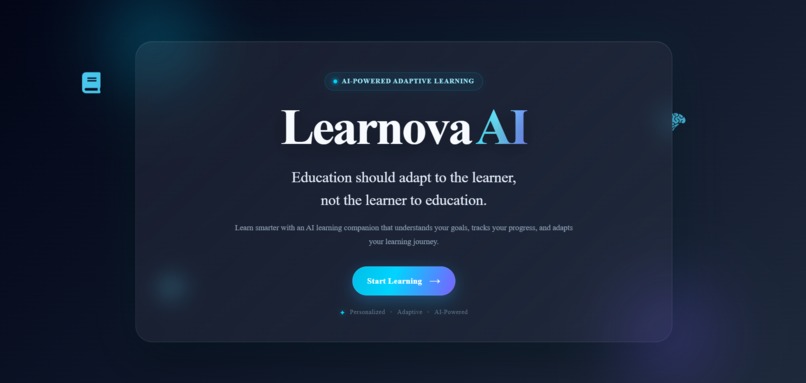
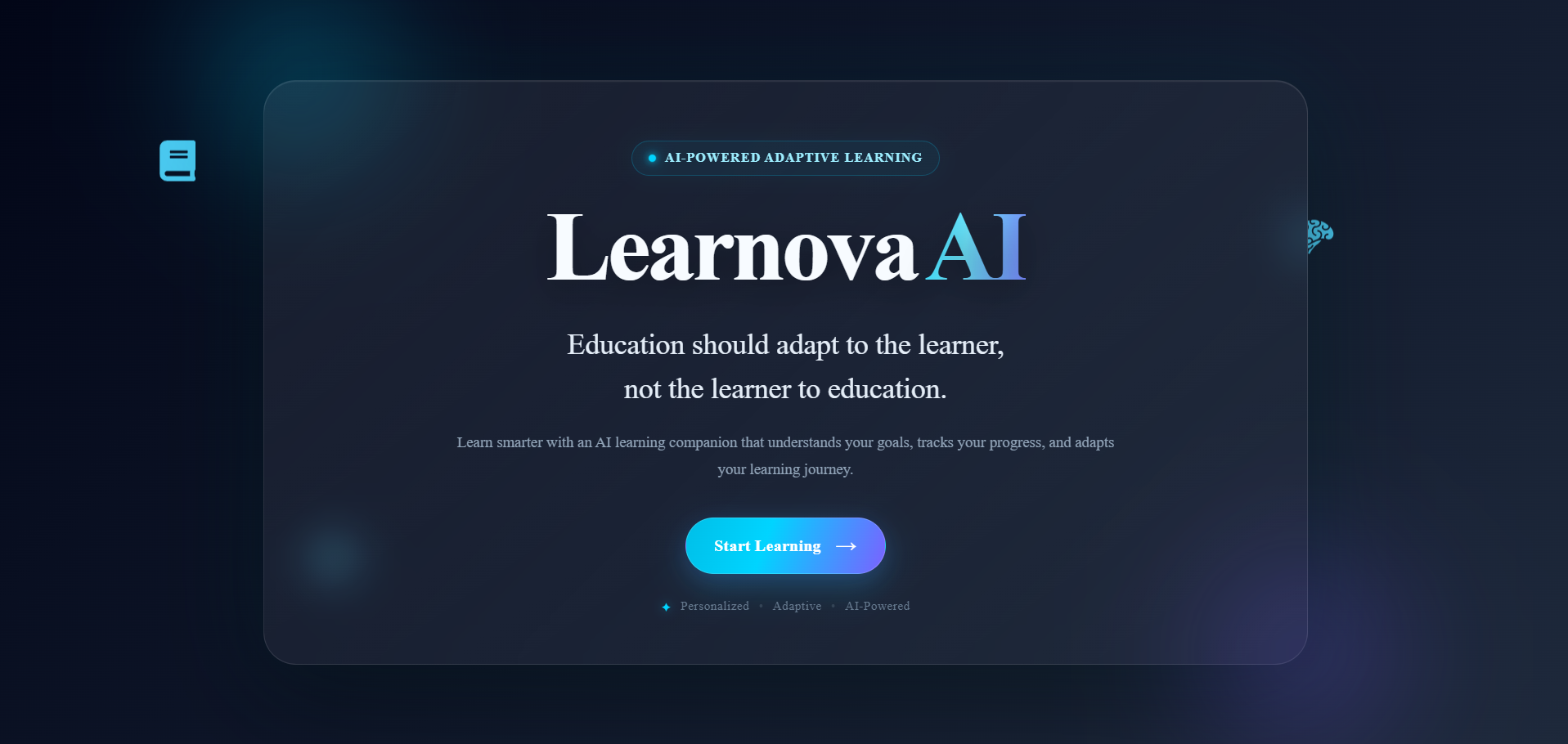
This is the Landing page of Learnova AI
-
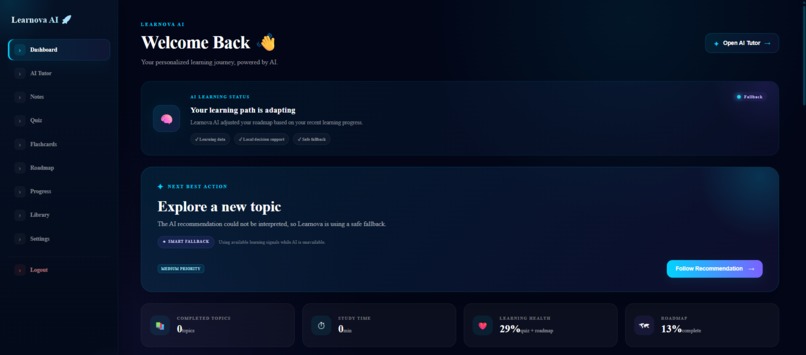
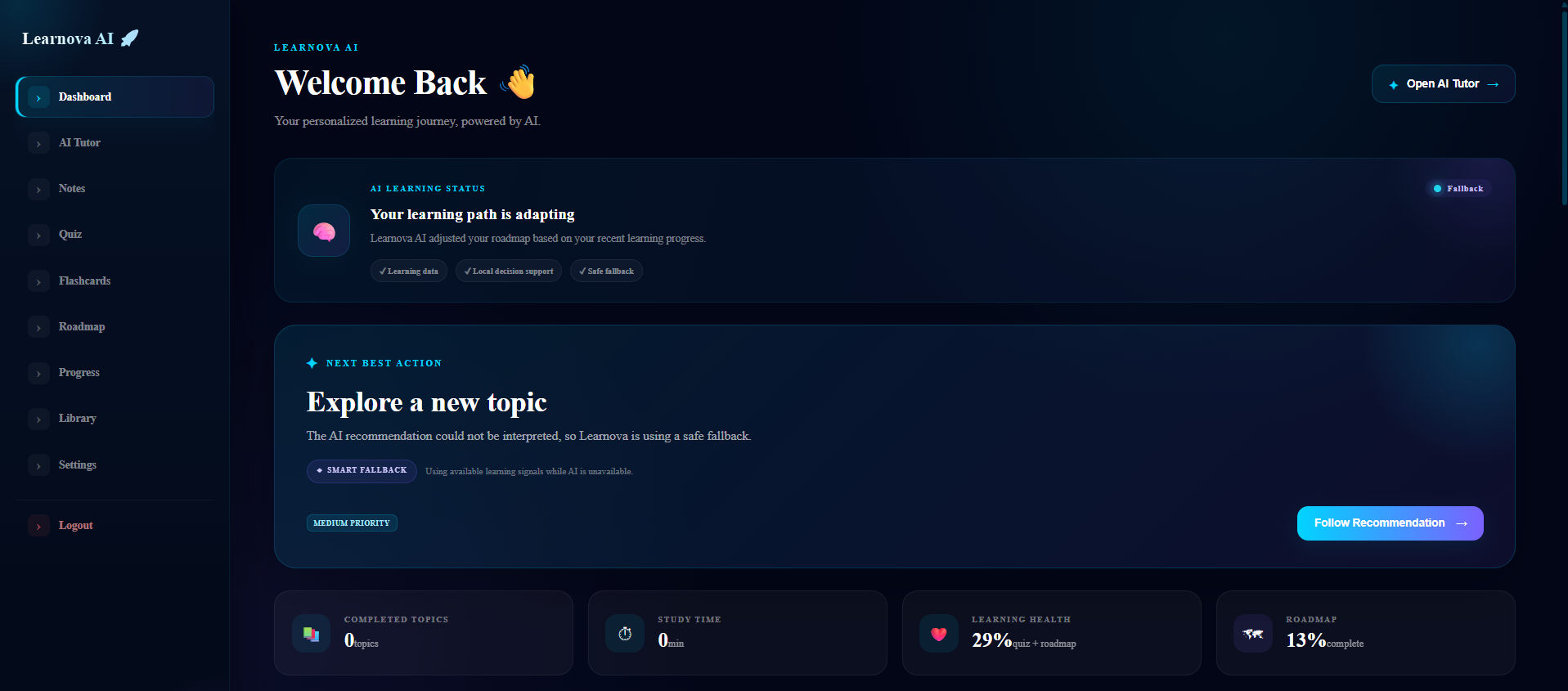
This is the dashboard
-
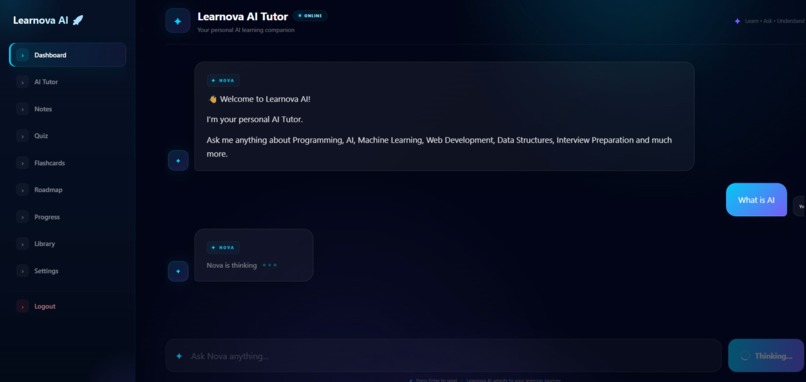
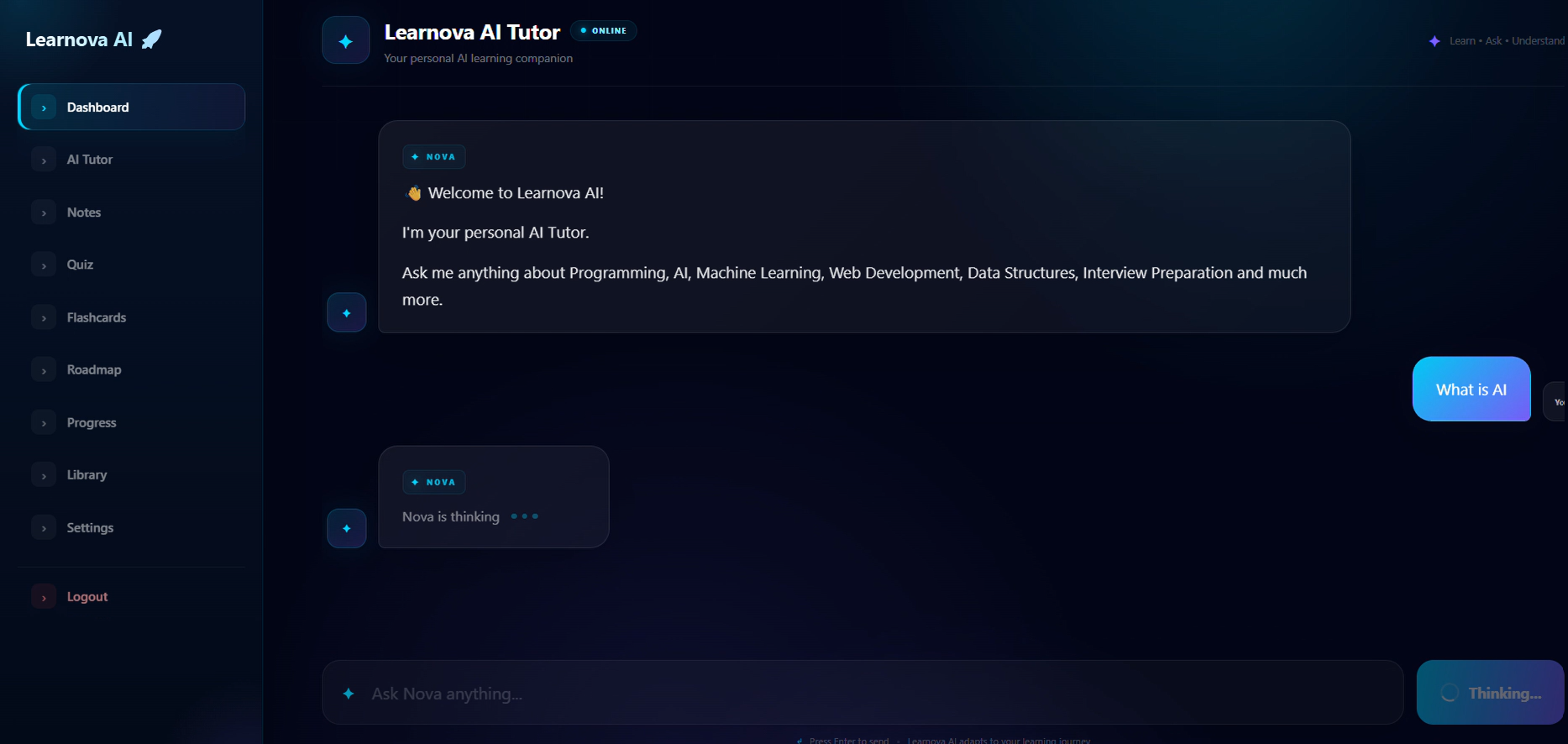
This is the AI Tutor
-
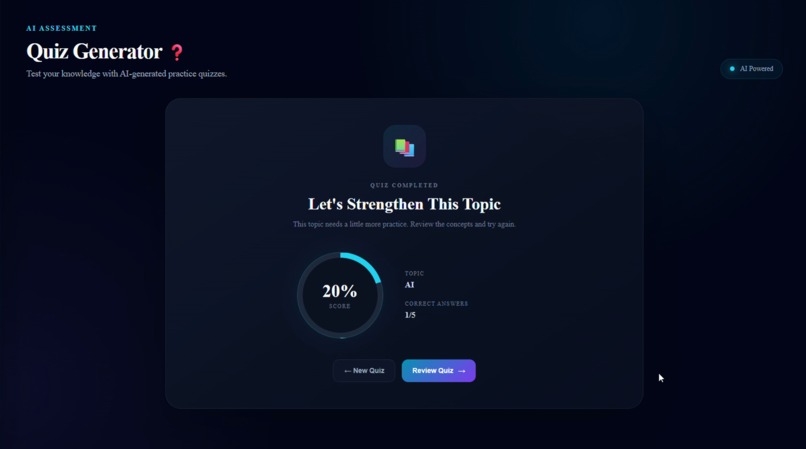
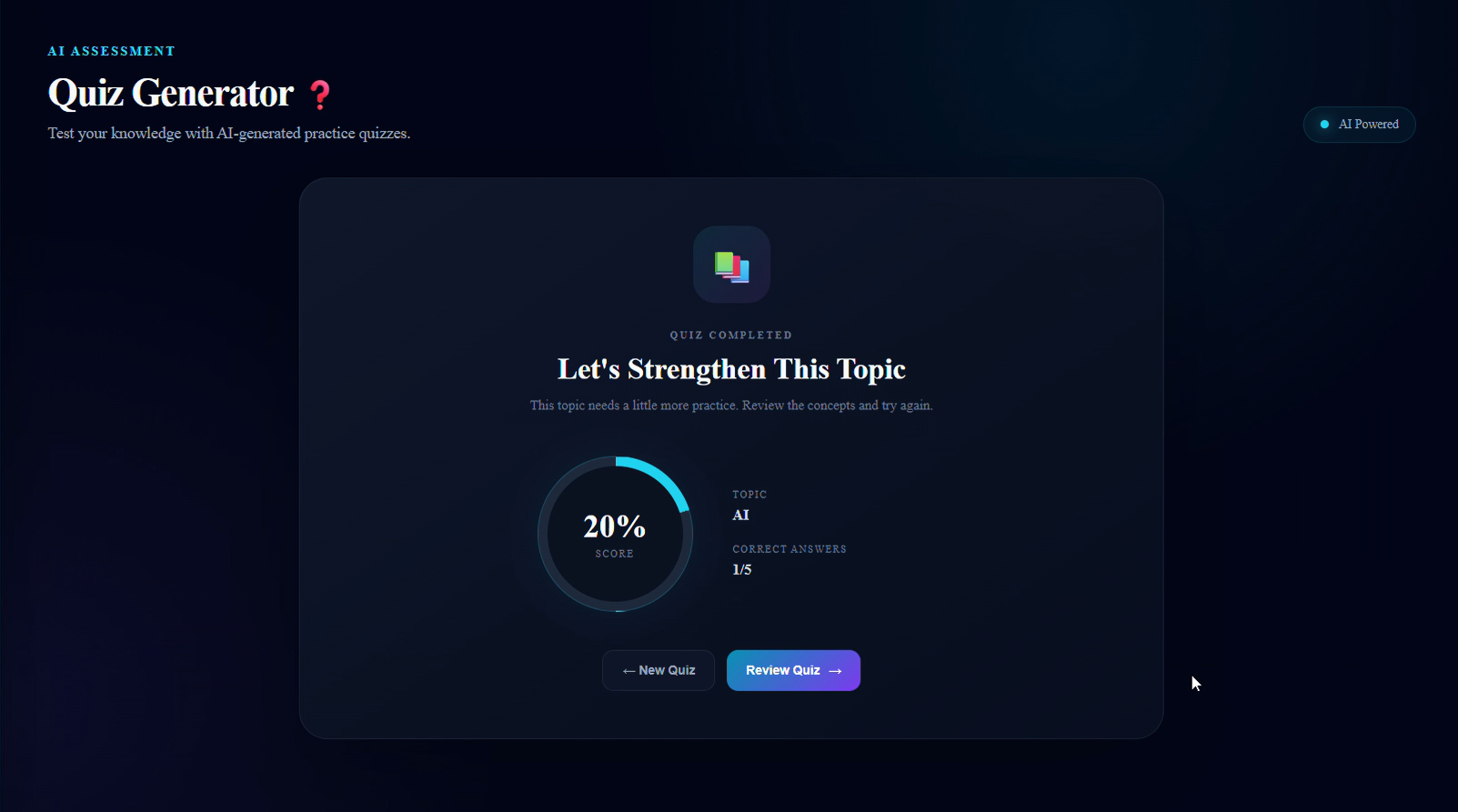
This the result of the Quiz
-
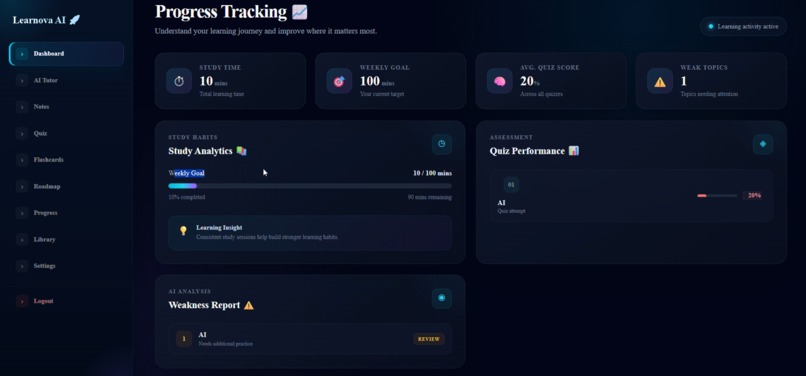
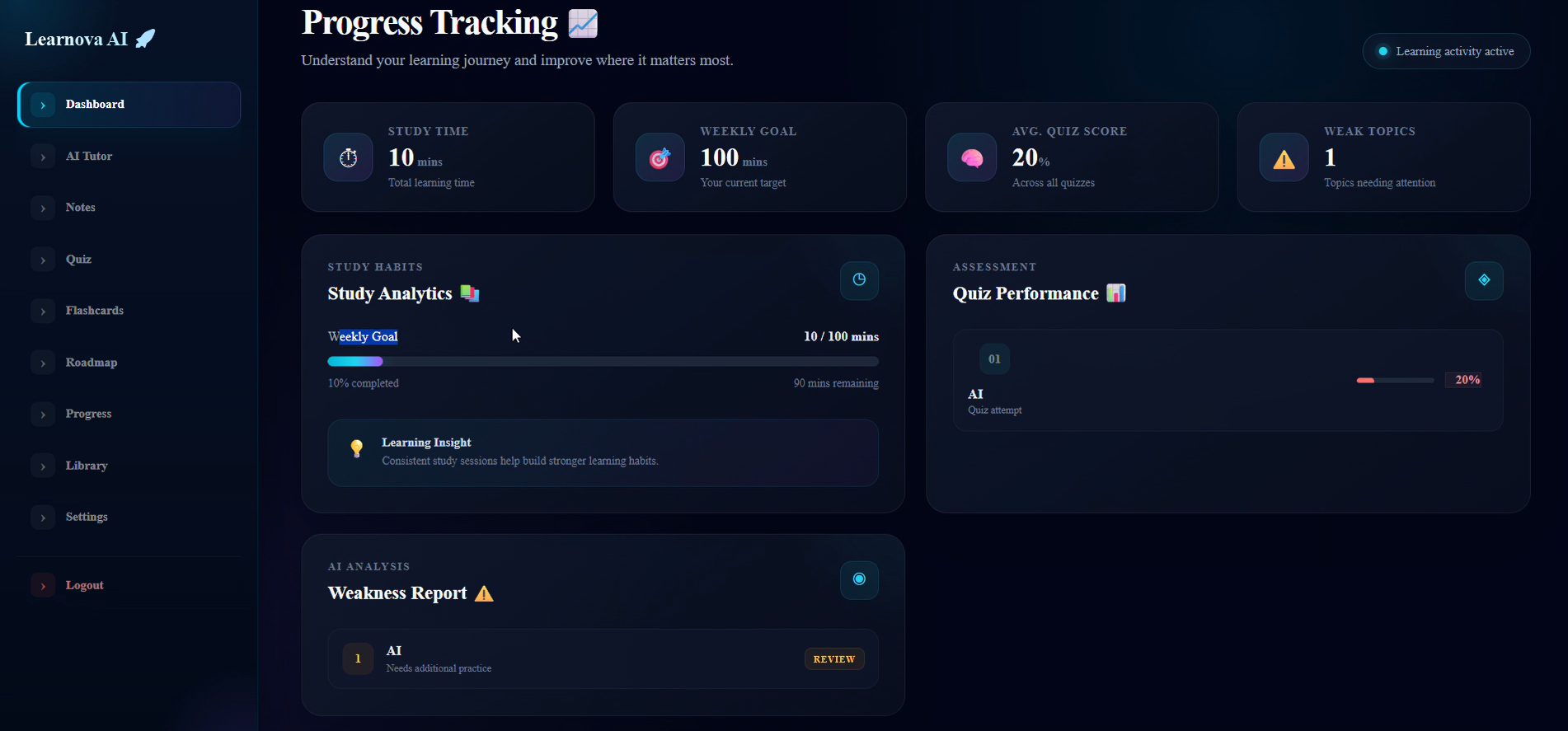
This is the tracking of the our progress
-
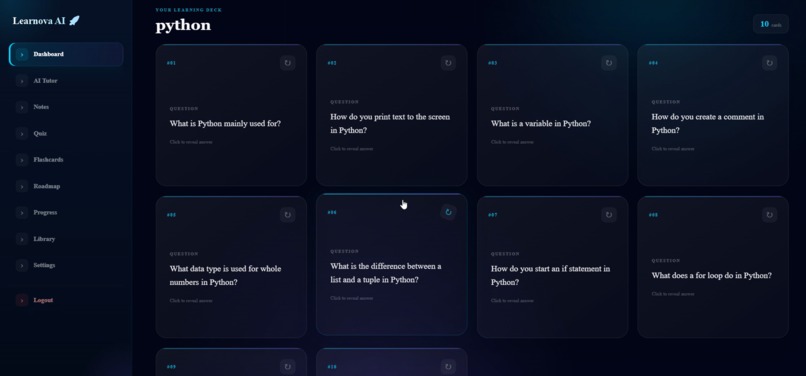
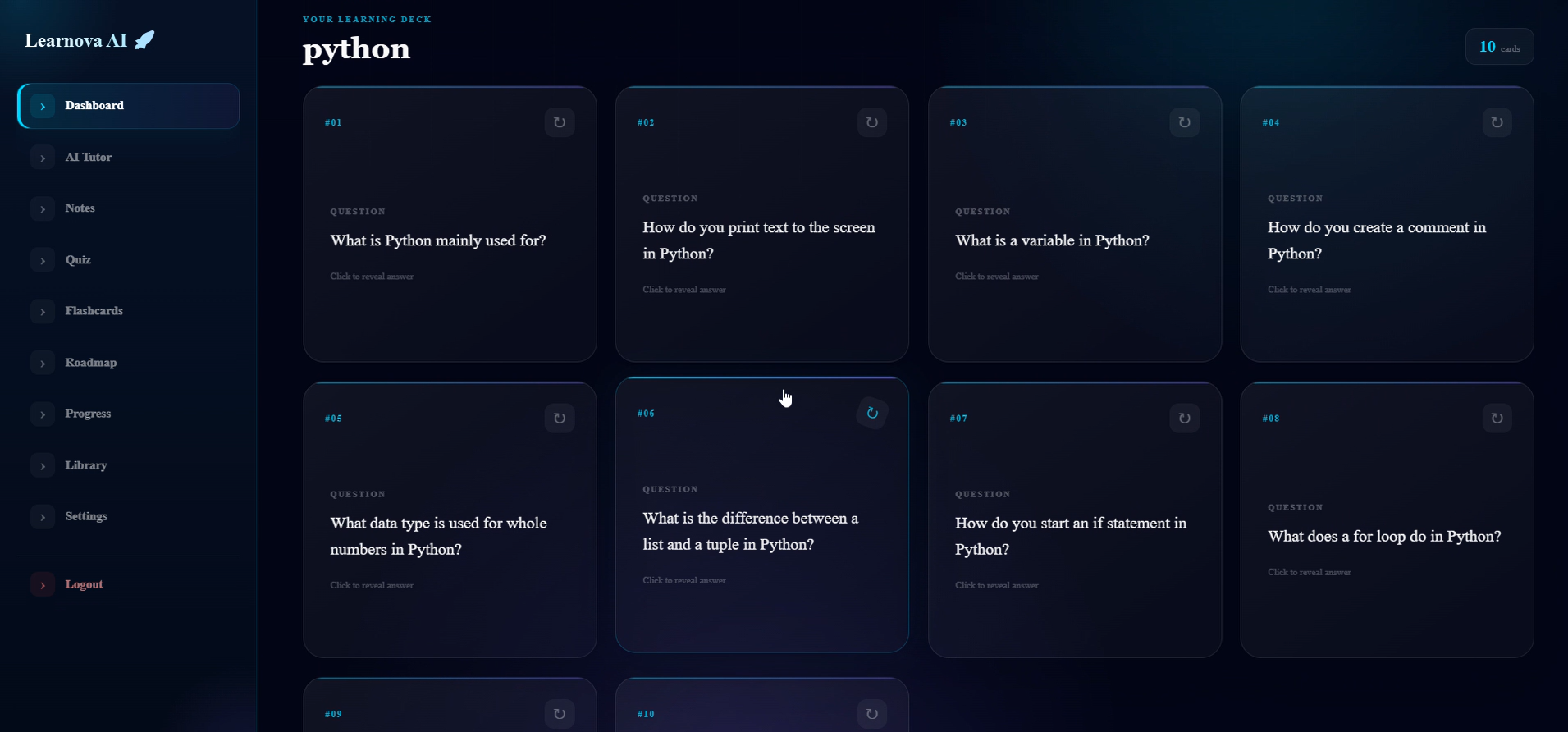
This is the flashcard generation page
Inspiration
When I was looking into ideas concerning learning and education, I continuously considered one simple issue: students do not learn in the same way or at the same pace. Yet many learning platforms stick to a fixed sequence and provide almost the same experience to all people.
It was this that inspired the concept of Learnova AI – a learning platform which adapts to the learner rather than requiring the learner to adapt to the platform.
What I Built
Learnova AI is an adaptive learning platform for students that makes use of the learner's profile, their goals, the learning activity they are engaged in, their performance in quizzes, their mistakes, and their knowledge gaps in order to determine what the learner should concentrate on next.
The platform is able to produce personalized learning roadmaps, generate various types of learning material such as notes, quizzes, and flashcards, analyze the results of quizzes, identify one's weak areas, and then recommend the next most appropriate learning action.
What's important is that the roadmap is not regarded as being fixed; the system is able to use the new evidence that the learner obtains as a result of carrying out various activities and assessments to adjust the learning pathway.
The core idea of the system is:
Observe → Understand → Decide → Act → Learn → Adapt
How I Built It
I created Learnova AI as a modular application, with a separate frontend, backend, and AI services.
The frontend was built with React, while the backend makes use of Node.js and Express.js and stores the learner profiles, progress, quiz results, roadmaps, and learning memory on MongoDB Atlas.
On the side relating to the AI I used Python along with the Strands Agents SDK and an LLM via OpenRouter; I also developed specific agent tools for various tasks including planning, assessment, learner memory, knowledge-gap detection, roadmap adaptation, and the decision of the next learning action.
I didn't want the AI agent to be limited to merely producing text; rather, the aim was to link the agent with the real information about the learners and the application workflows so that it could make learning decisions on the basis of evidence.
Challenges
A major challenge was linking the AI agent to actual application workflows rather than keeping it as a standalone chatbot.
I also needed to consider how learner-specific context and memory should be kept, how quiz results could be turned into useful learning decisions, and how changes to the roadmap should be based on real evidence rather than on random AI responses.
A further challenge was ensuring that the learning experience wouldn't be entirely disrupted in the event of AI or API failures. To address this, I designed the system to be modular and included fallback procedures for unavailable AI services.
What I Learned
The experience of building Learnova AI taught me that merely incorporating an LLM into an application is only one aspect of creating an AI product; the more important aspect is linking the AI with useful data, tools, memory, and the application's logic.
I gained a greater understanding of how to build a modular full-stack application and how to design an AI workflow such that the system is able to observe learner evidence, reason about it, and then take the appropriate next action.
What's Next
Learnova AI is at the stage of an early version of the concept. Later on I intend to enhance the learner modelling, the analytics, the adaptive actions, the integrations, and the general learning experience.
The aim is to enable learning to become more personal and adaptive in such a way that students have time to focus on what they really need to learn.


Log in or sign up for Devpost to join the conversation.