-
-
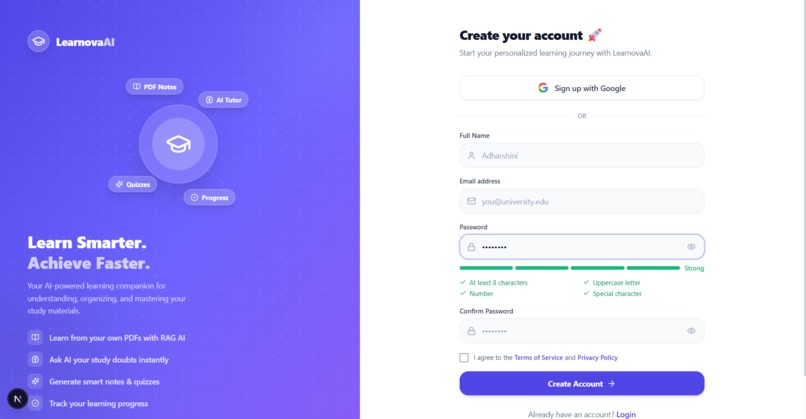
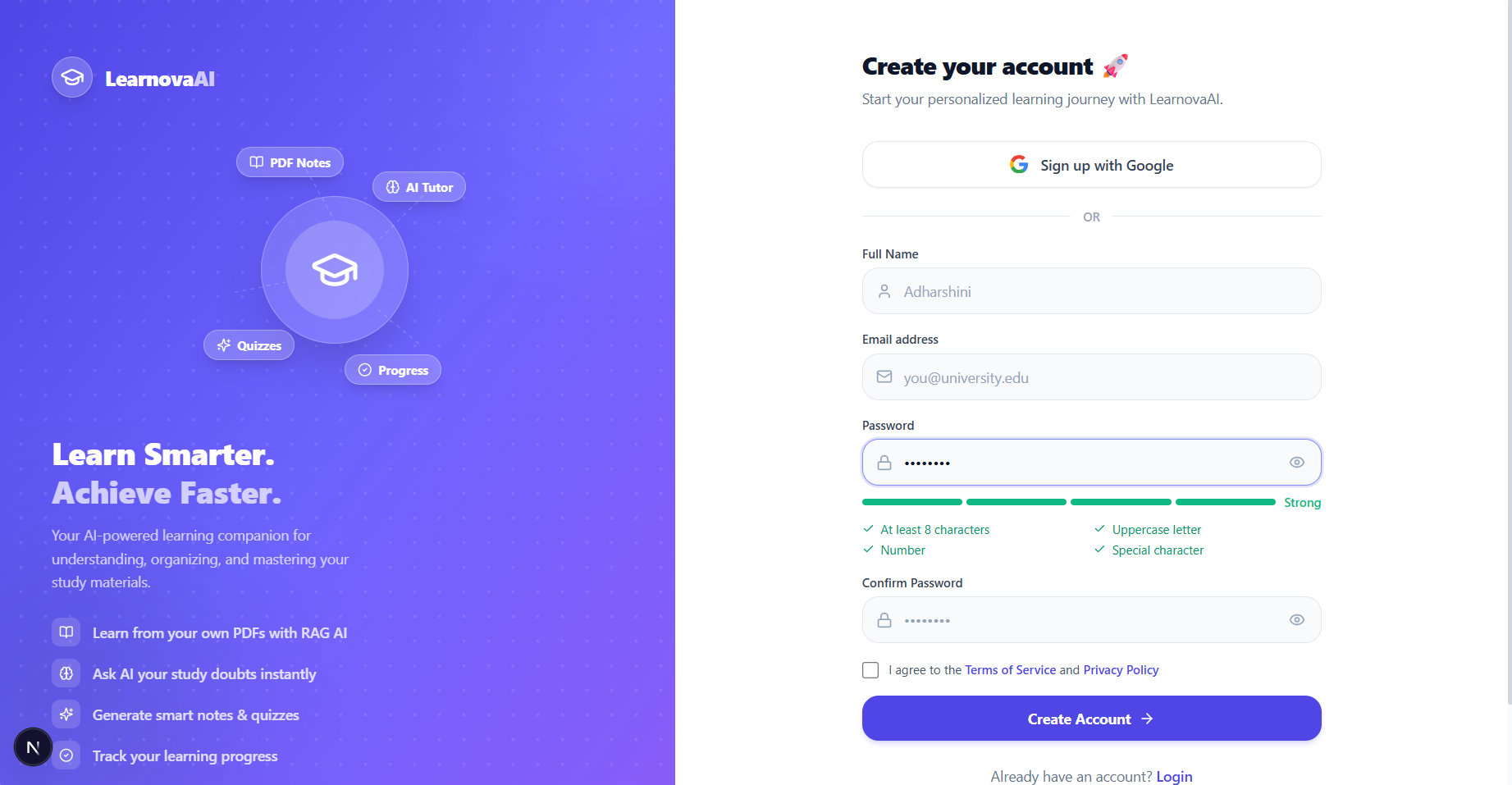
Register
-
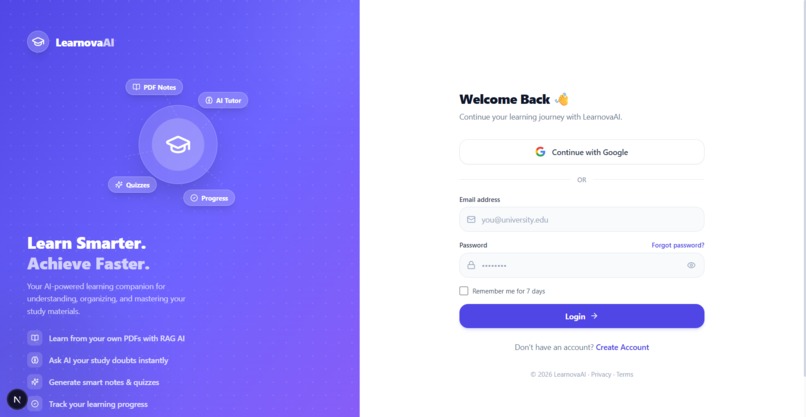
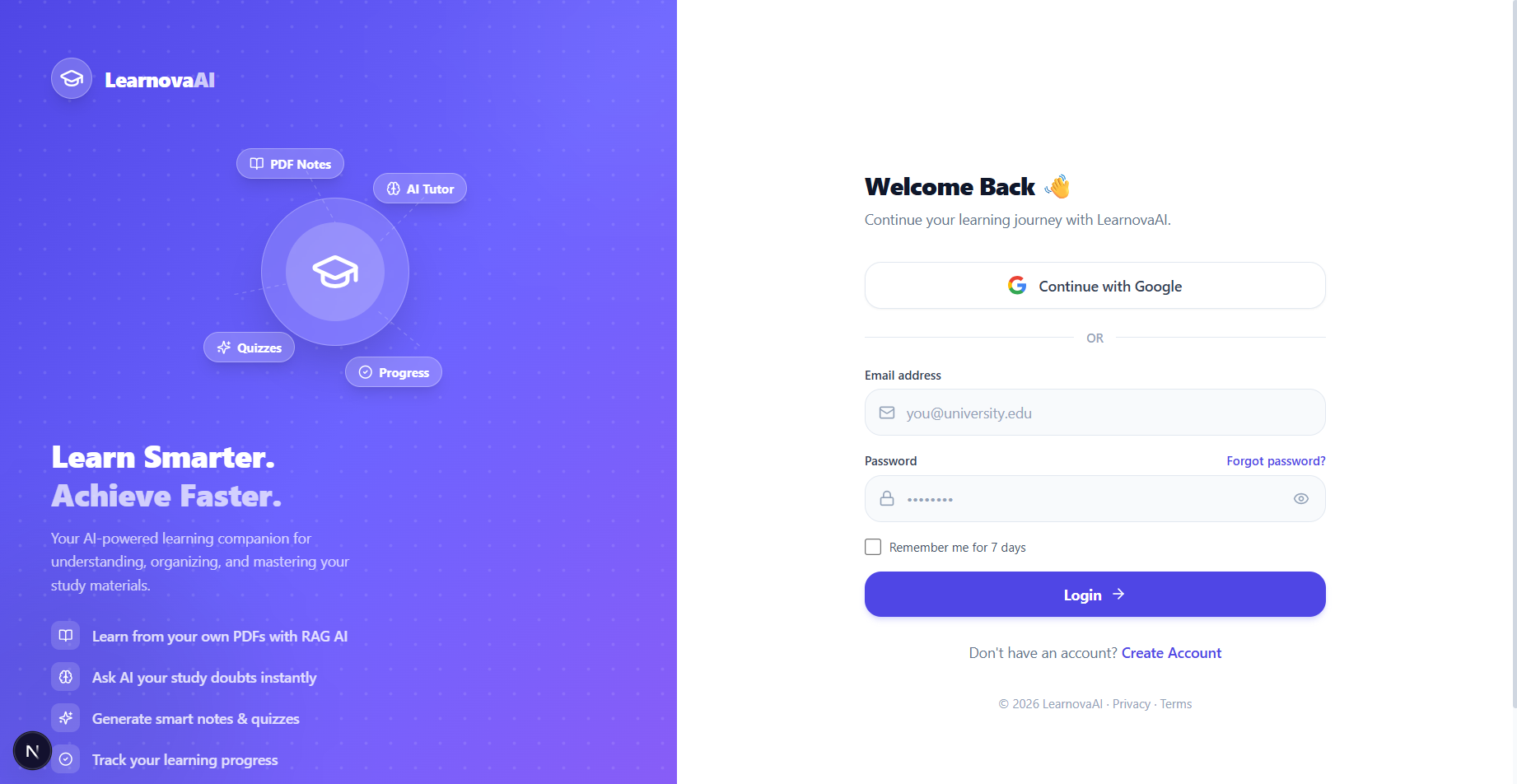
Login
-
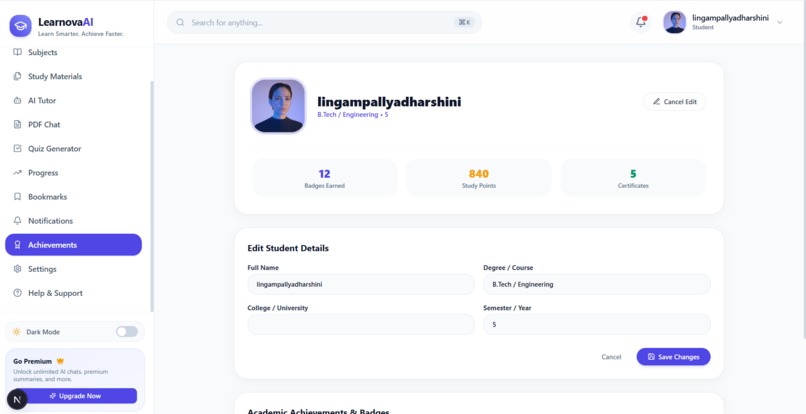
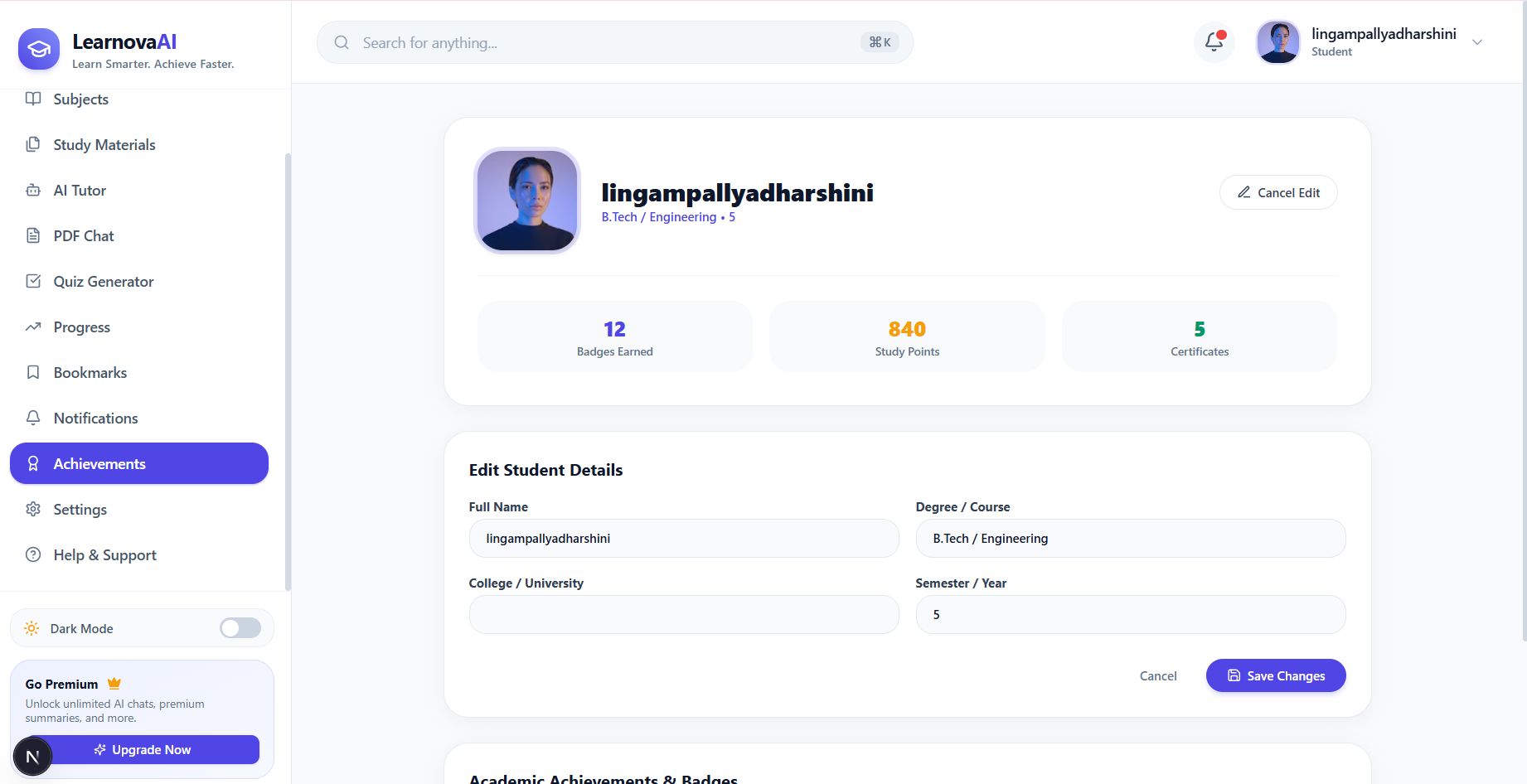
Edit profile
-
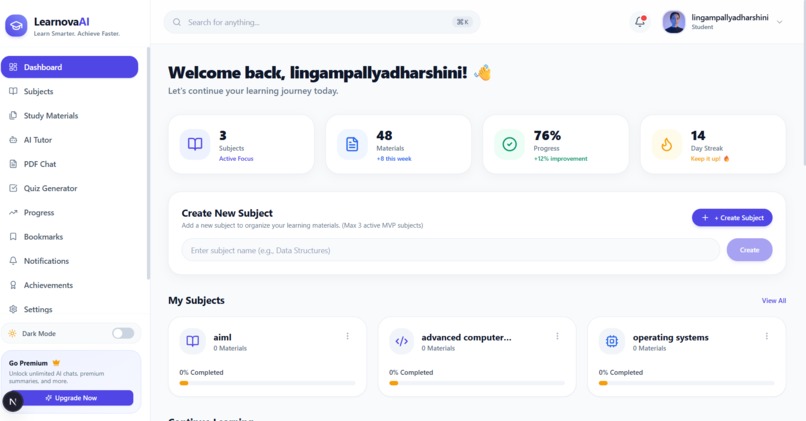
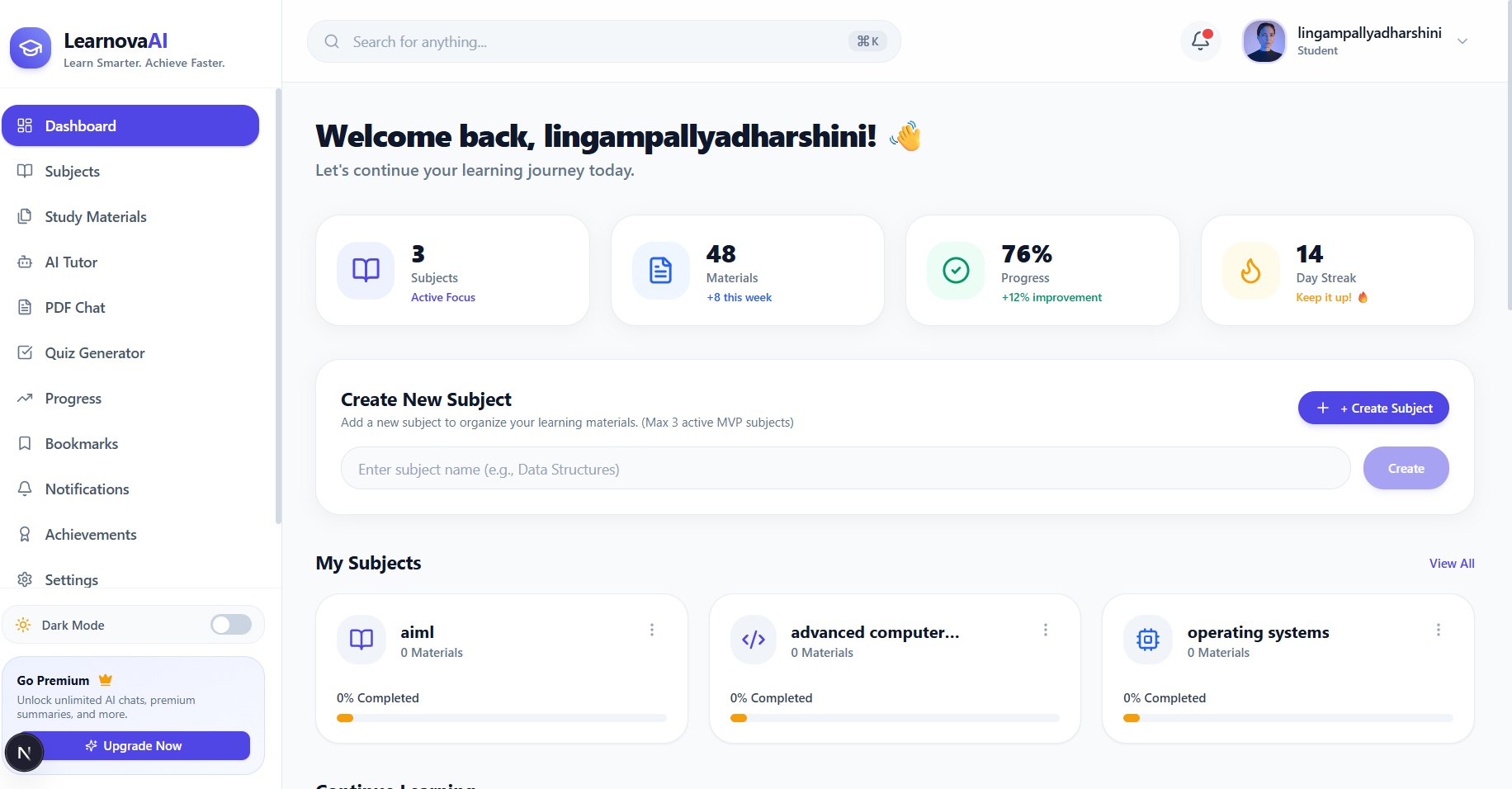
Dashboard
-
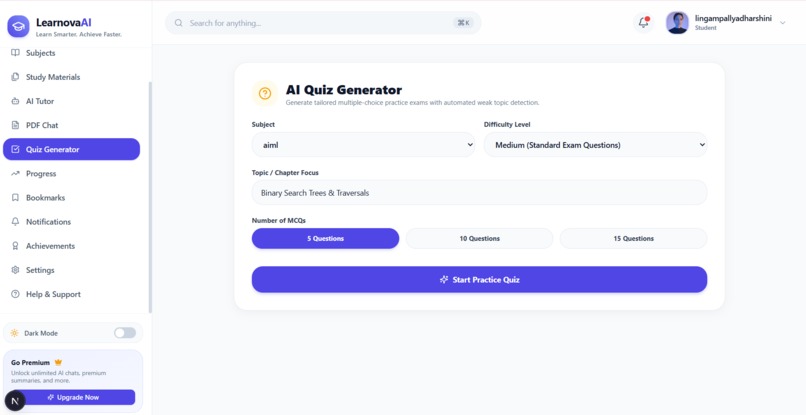
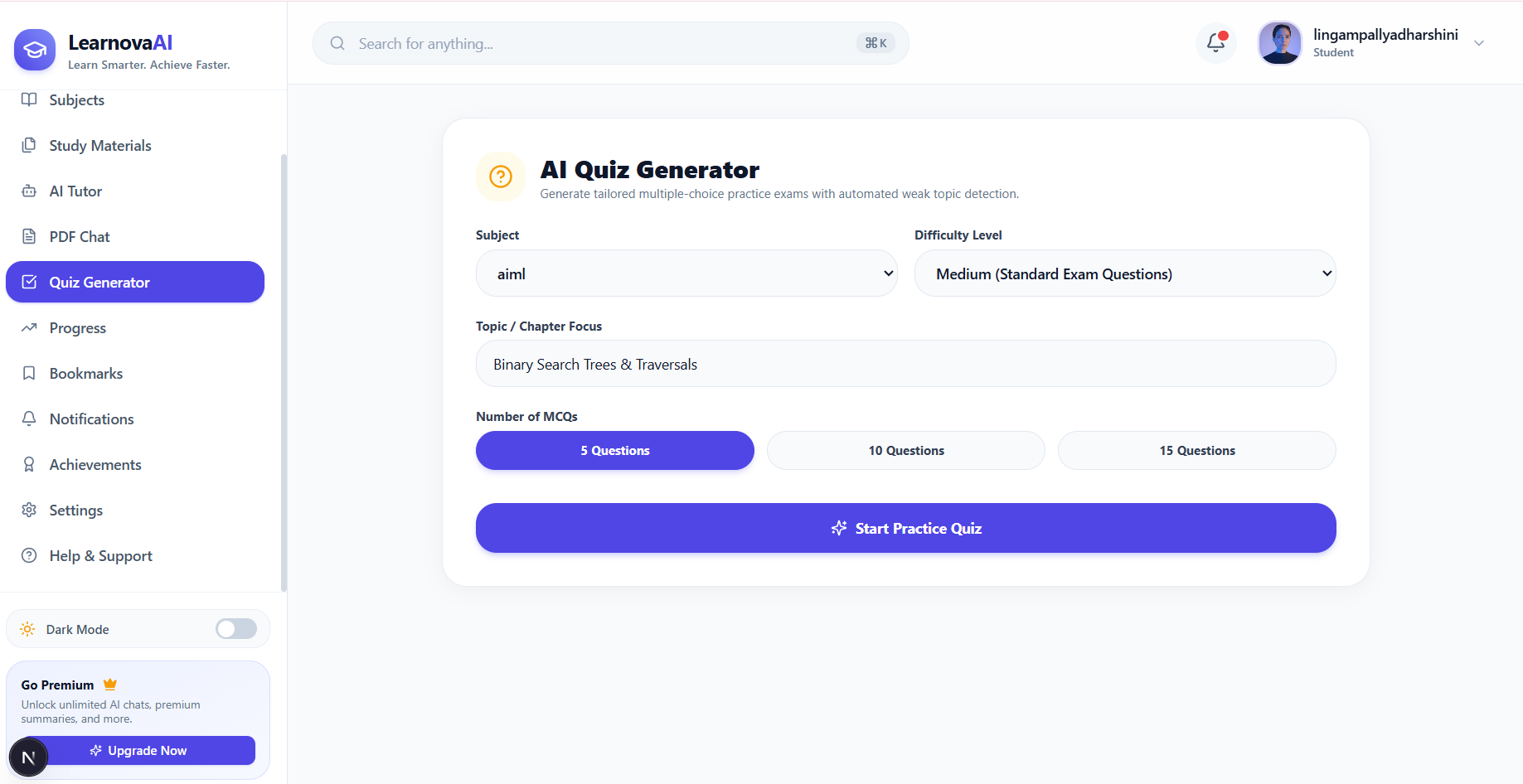
Quiz Generator (to test our knowledge)
-
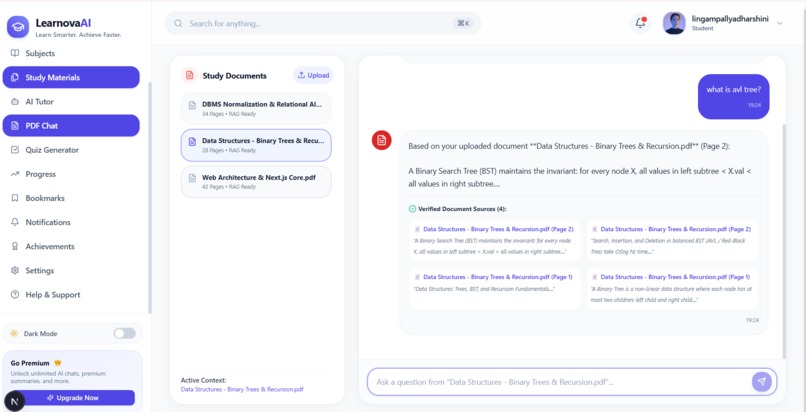
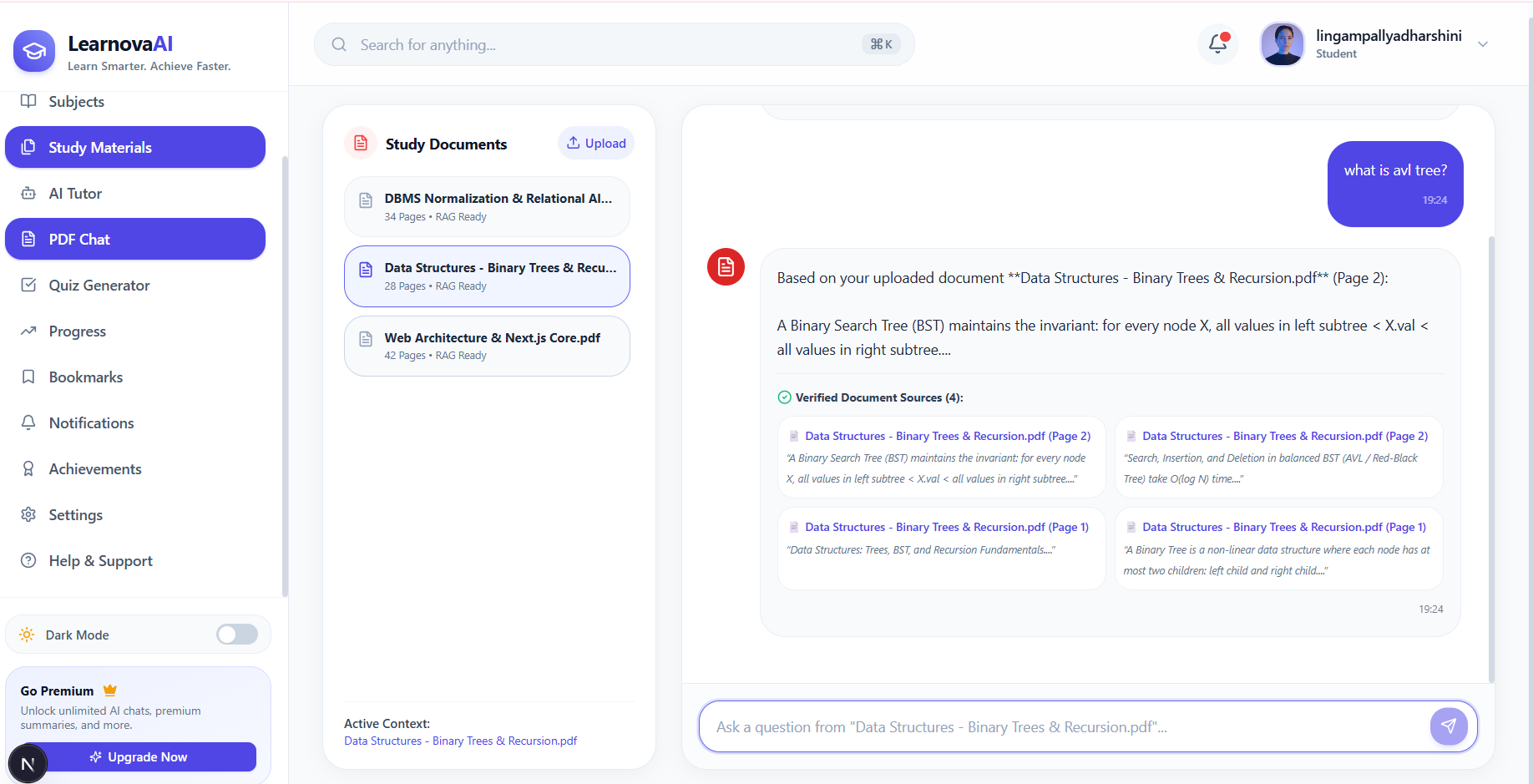
Pdf chat ( we can ask questions related to that pdf)
-
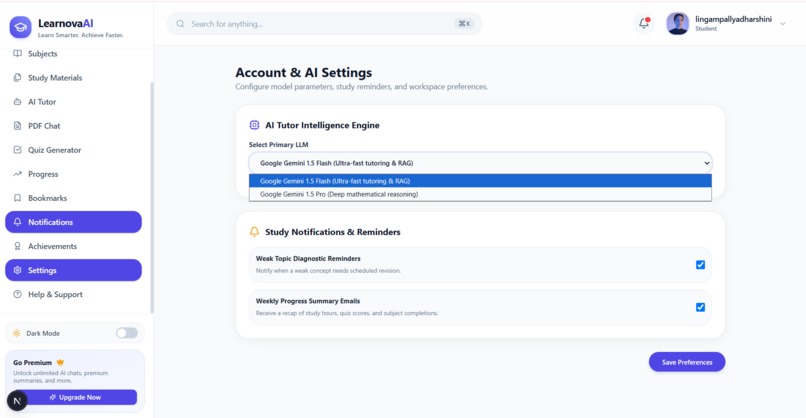
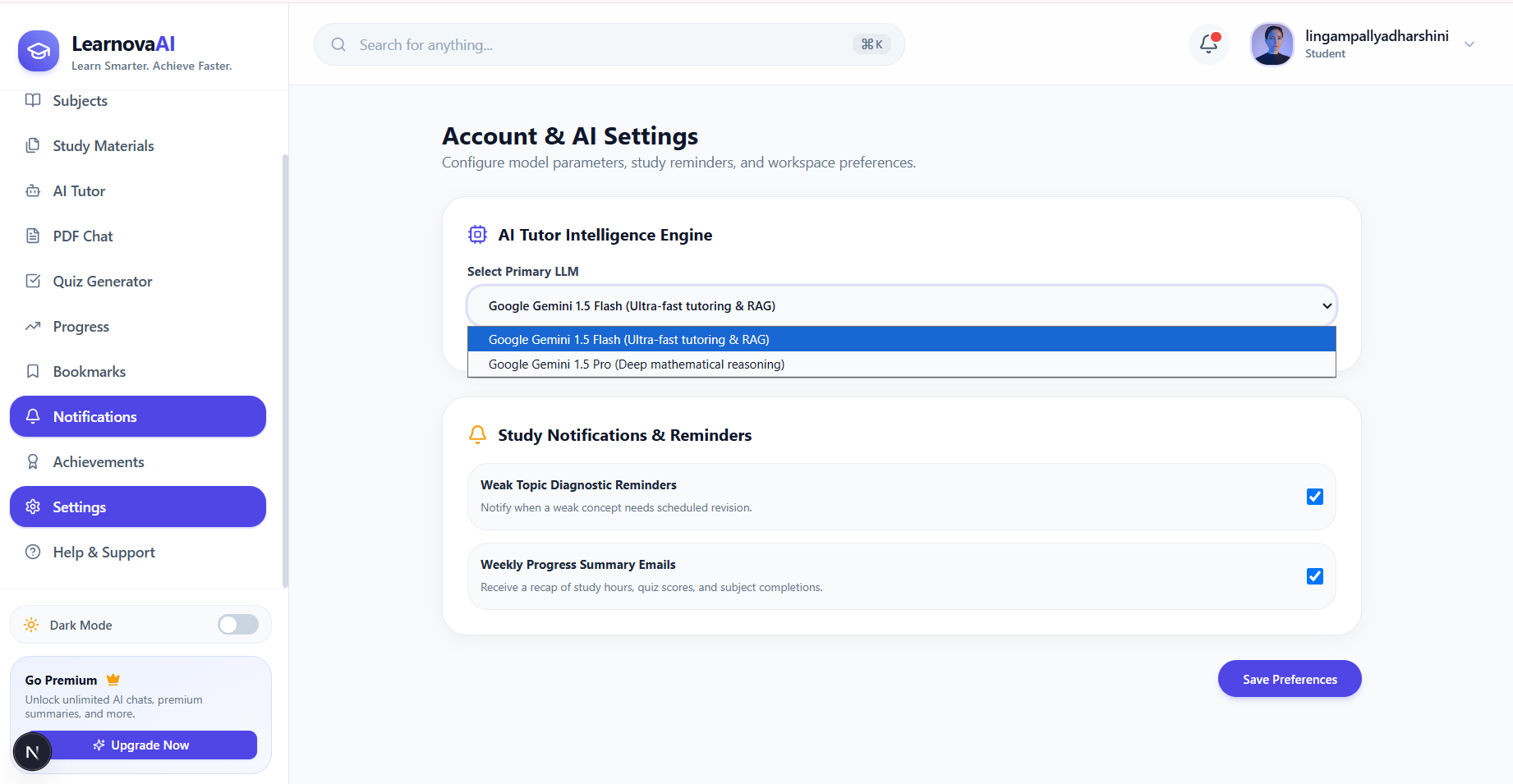
Account Settings & Notifications
-
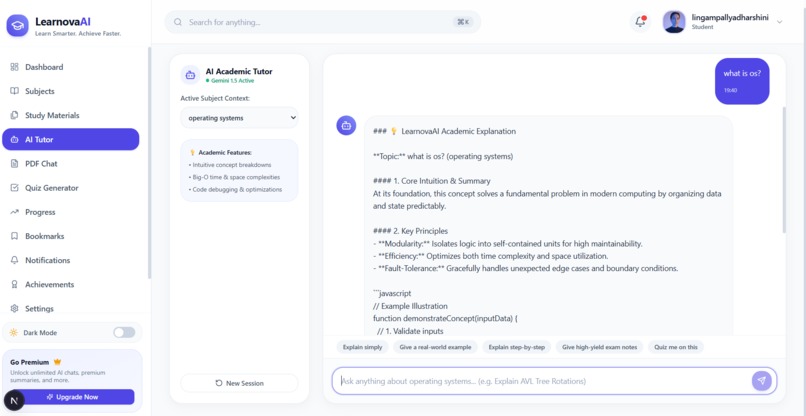
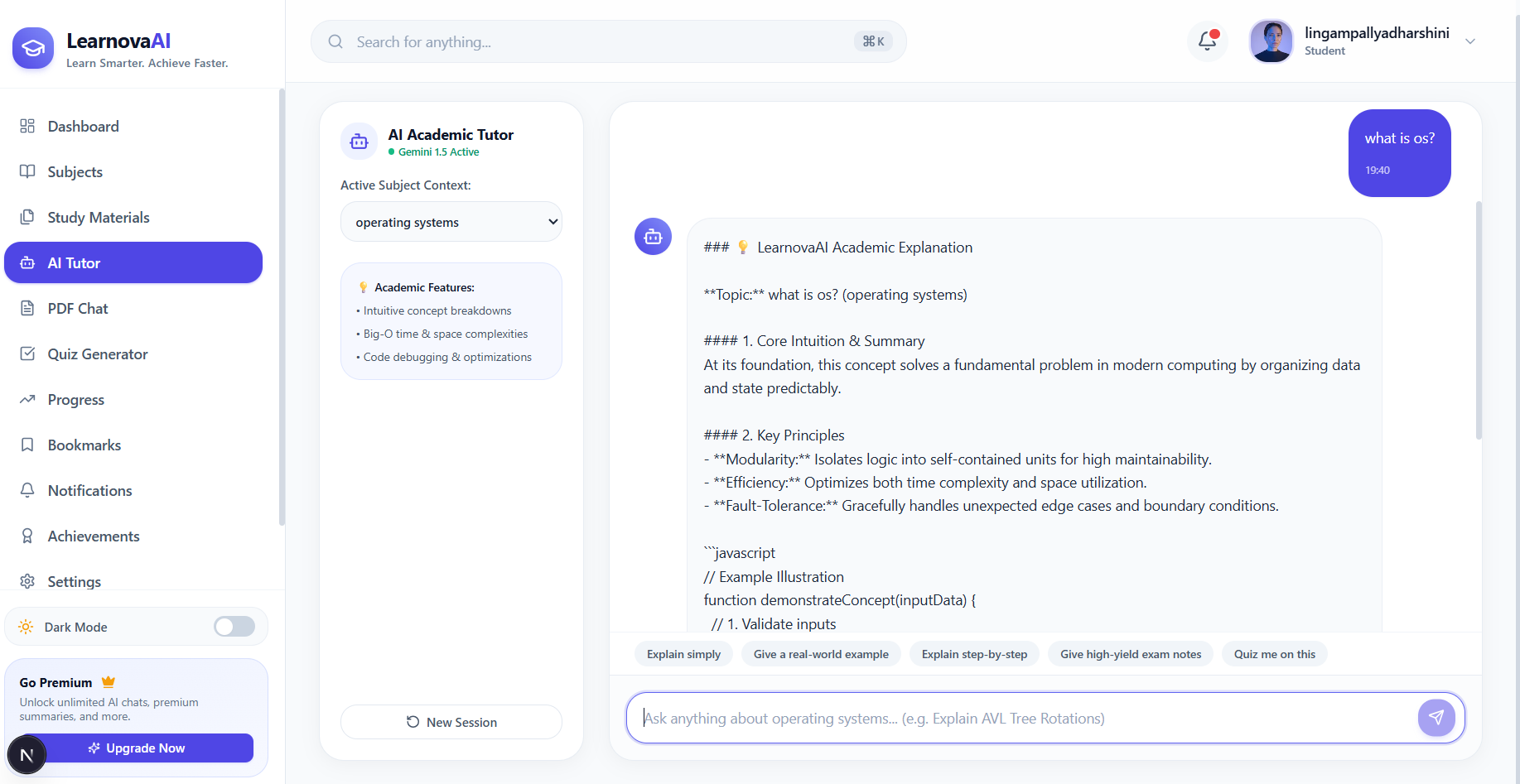
AI Tutor (Ask quesions about the subject)
Inspiration
Students often struggle with managing study materials, understanding difficult concepts, finding useful learning resources, and staying organized. Study content is usually scattered across PDFs, notes, videos, websites, and different apps. We wanted to create a single platform that could make learning more organized, personalized, and interactive.
This idea inspired us to build Learnova AI, an AI-powered learning hub designed to help students manage their subjects and study materials while getting AI assistance whenever they need it.
What it does
Learnova AI is a centralized AI learning platform where students can create and manage their subjects, organize study materials, and interact with an AI assistant for learning support.
Students can:
Create and manage their own subjects. Organize study materials in one place. Get AI-powered explanations for difficult concepts. Ask questions through an AI learning assistant. Get help understanding notes and learning content. Access learning resources without switching between multiple platforms. Use AI as a study companion instead of simply searching for answers.
Our goal is to make studying feel less like managing dozens of resources and more like having a personal AI-powered learning workspace.
How we built it
We designed Learnova AI as a modern web application with a responsive and student-friendly interface.
The frontend was built to provide a simple dashboard where students can manage subjects and learning resources. We used modern web technologies to create reusable components and a smooth user experience.
For the backend and data management, we used MongoDB to store user-related information, subjects, and learning data.
The AI assistant is integrated through an AI API, allowing students to interact with an intelligent assistant directly inside the learning platform.
The overall architecture consists of:
Frontend → Backend/API → MongoDB → AI API
We also designed the application with deployment in mind so that it can be hosted using platforms such as Vercel and accessed easily from anywhere.
Challenges we ran into
One of the biggest challenges was deciding how to make Learnova AI more useful than simply putting a chatbot inside a website.
We wanted the AI to be part of a complete learning workflow rather than just another chat interface.
Other challenges included:
Designing a clean interface without overwhelming students with too many features. Connecting the frontend, backend, database, and AI services. Handling API keys and external AI API integration securely. Structuring MongoDB data for subjects and learning resources. Making the application responsive across different screen sizes. Balancing useful AI features with a simple user experience. Debugging integration and deployment issues during development.
Accomplishments that we're proud of
We are proud of turning a simple idea—"an AI assistant for students"—into a complete learning platform concept.
Our biggest accomplishment is creating an experience where AI is not an isolated feature but a part of the student's overall learning workflow.
We are especially proud of:
Building a dedicated AI-powered learning environment. Creating a clean and student-focused dashboard. Integrating AI into the learning experience. Using MongoDB for persistent data management. Designing the project with real-world deployment in mind. Building the project within the limited time constraints of a hackathon.
Most importantly, Learnova AI helped us think beyond simply building features and focus on solving an actual student problem.
What we learned
While building Learnova AI, we learned that creating an AI application is not just about connecting an API to a chatbot.
We learned how important UI/UX, data organization, API integration, security, backend architecture, and user experience are when building a real-world AI product.
We also learned how to:
Integrate AI APIs into web applications. Work with MongoDB and application data. Connect frontend and backend services. Handle API-related errors and configuration issues. Design features around real user problems. Prioritize features when working under hackathon time constraints. Think about scalability and future improvements from the beginning.
The project also taught us that a good AI product should assist users rather than simply give them answers.
What's next for Learnova AI
Learnova AI is only the beginning.
In the future, we want to make the platform much more personalized and intelligent by adding features such as:
AI-generated study plans based on a student's subjects and goals. Document/PDF understanding so students can ask questions directly from their study materials. AI-generated quizzes and practice questions. Personalized recommendations based on learning progress. Video-based learning assistance. Progress analytics to help students identify their strengths and weak areas. Voice-based AI interaction for more natural learning. Collaborative study spaces where students can learn together. Support for multiple languages to make AI-powered education more accessible.
Our long-term vision is to turn Learnova AI into a personalized AI learning ecosystem where every student has an intelligent study companion that understands their learning needs and helps them learn more effectively
Built With
- ai
- api
- backend
- frontend
- fullstack
- generativeai
- javascript
- vercel
- webdevelopment


