-
-
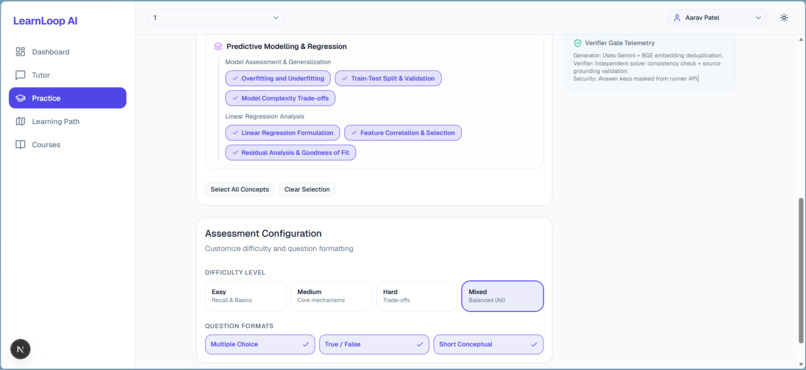
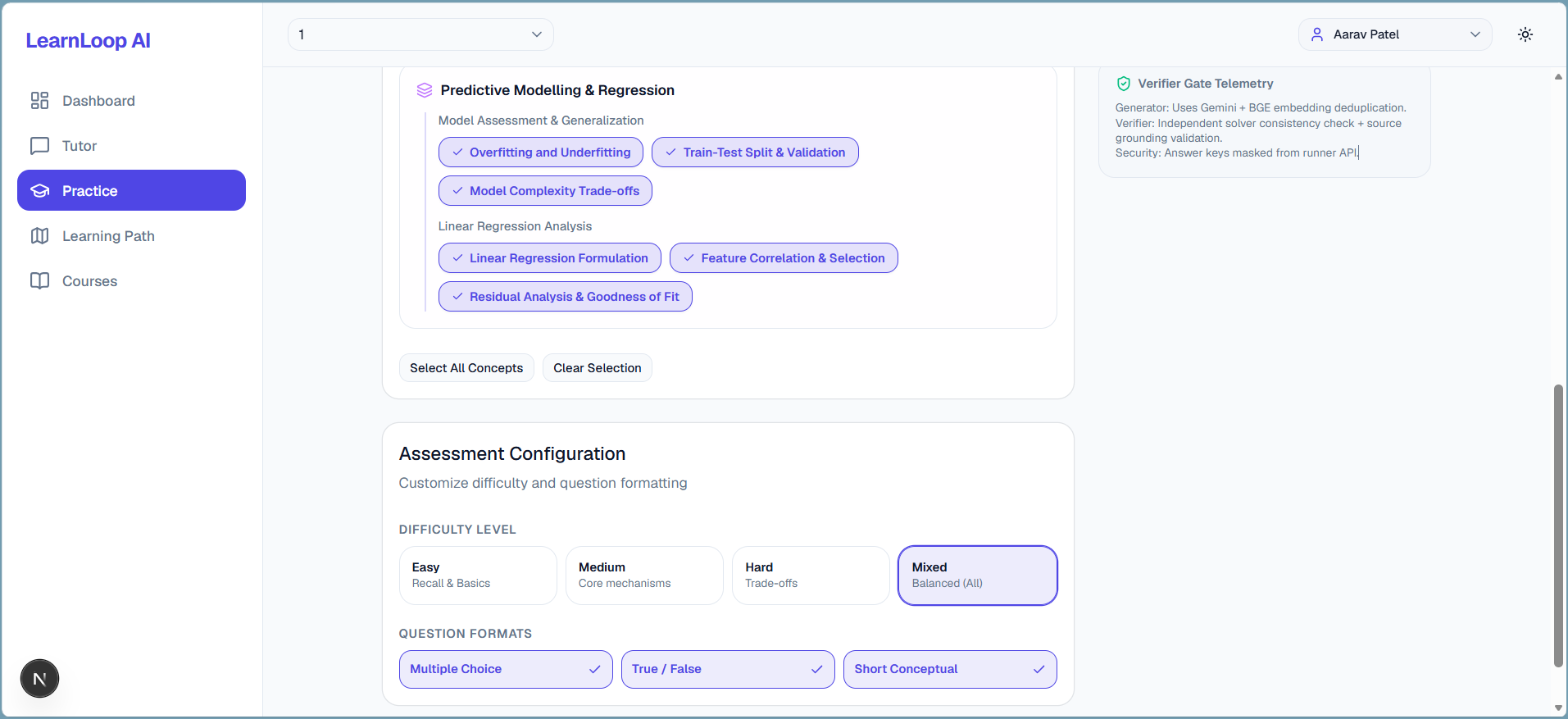
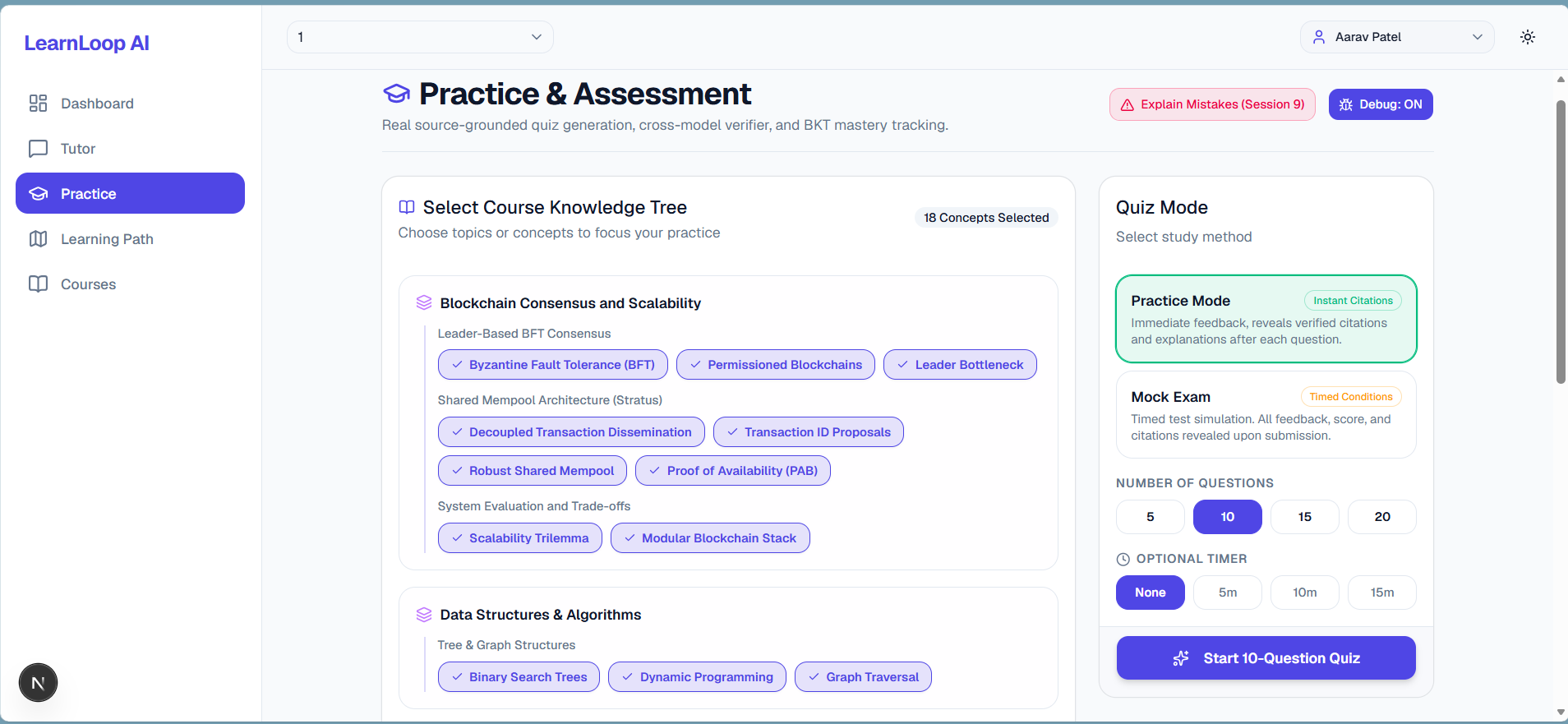
Practice Page: Here the student can solve the quizes and practice about the course section
-
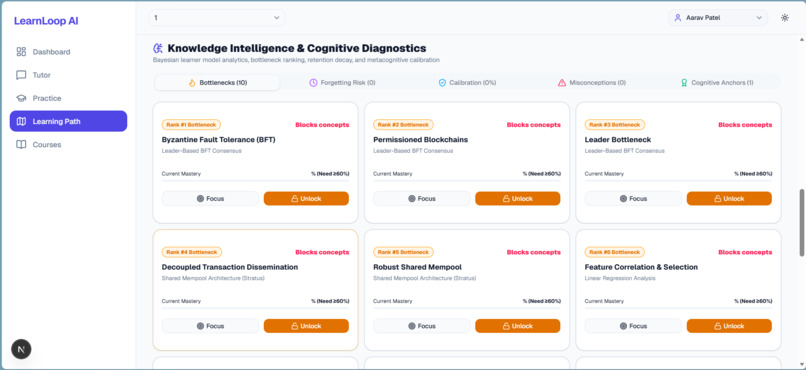
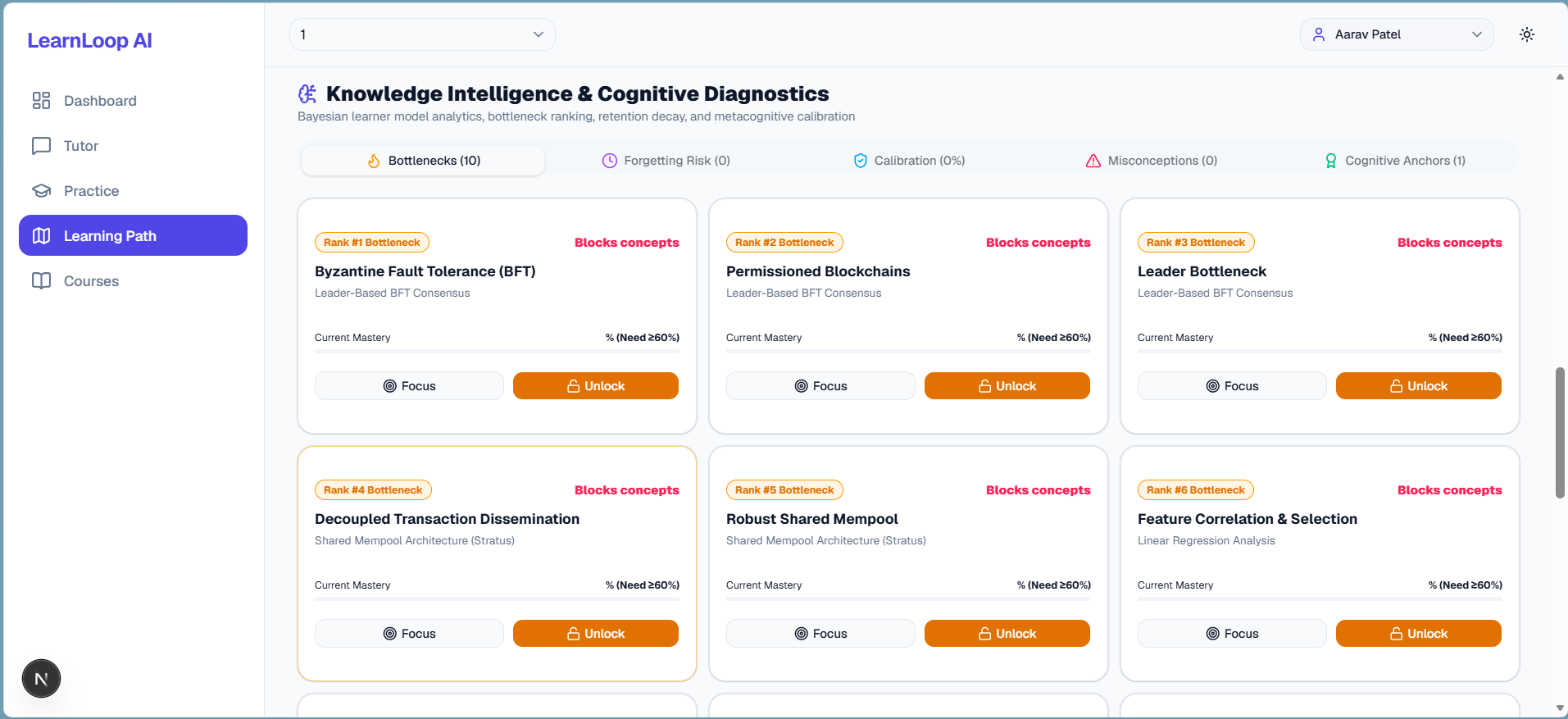
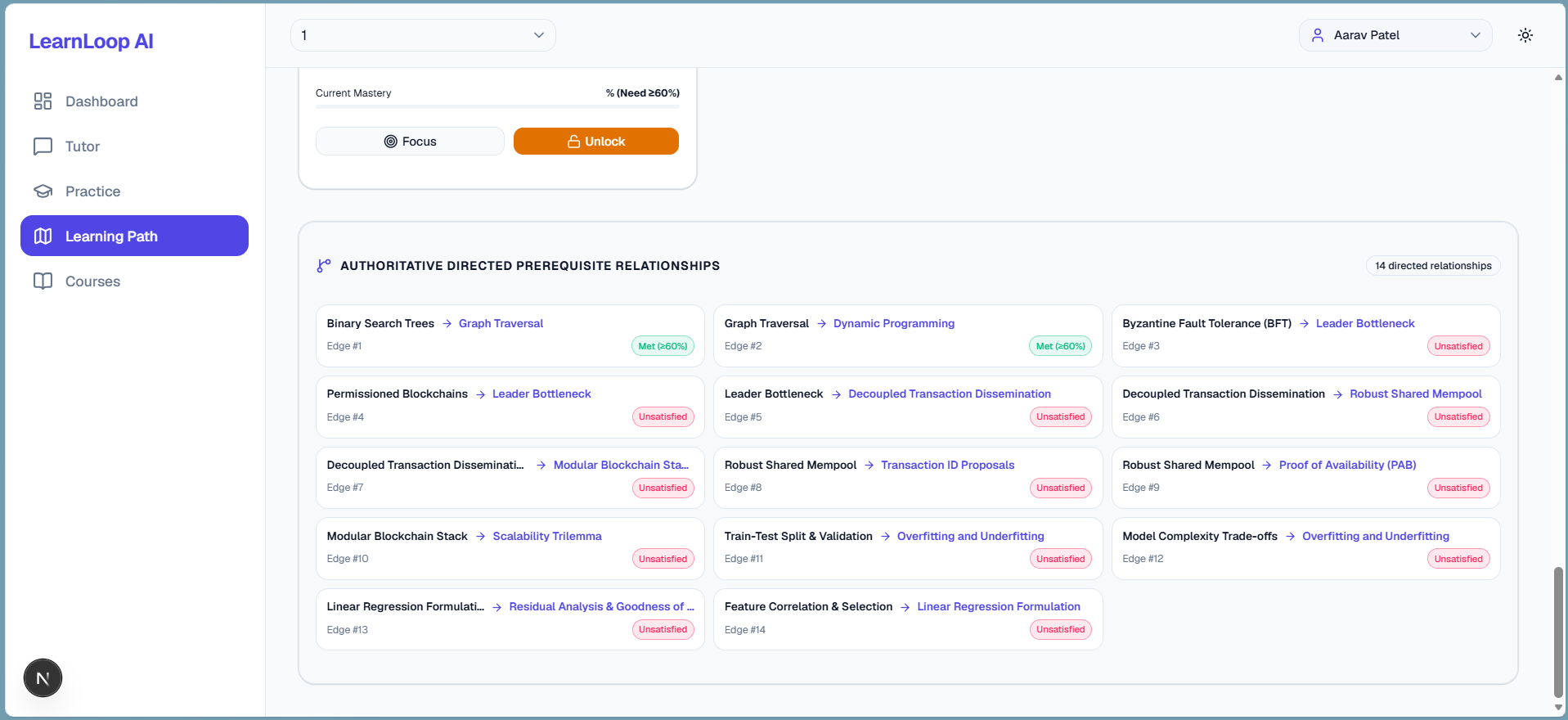
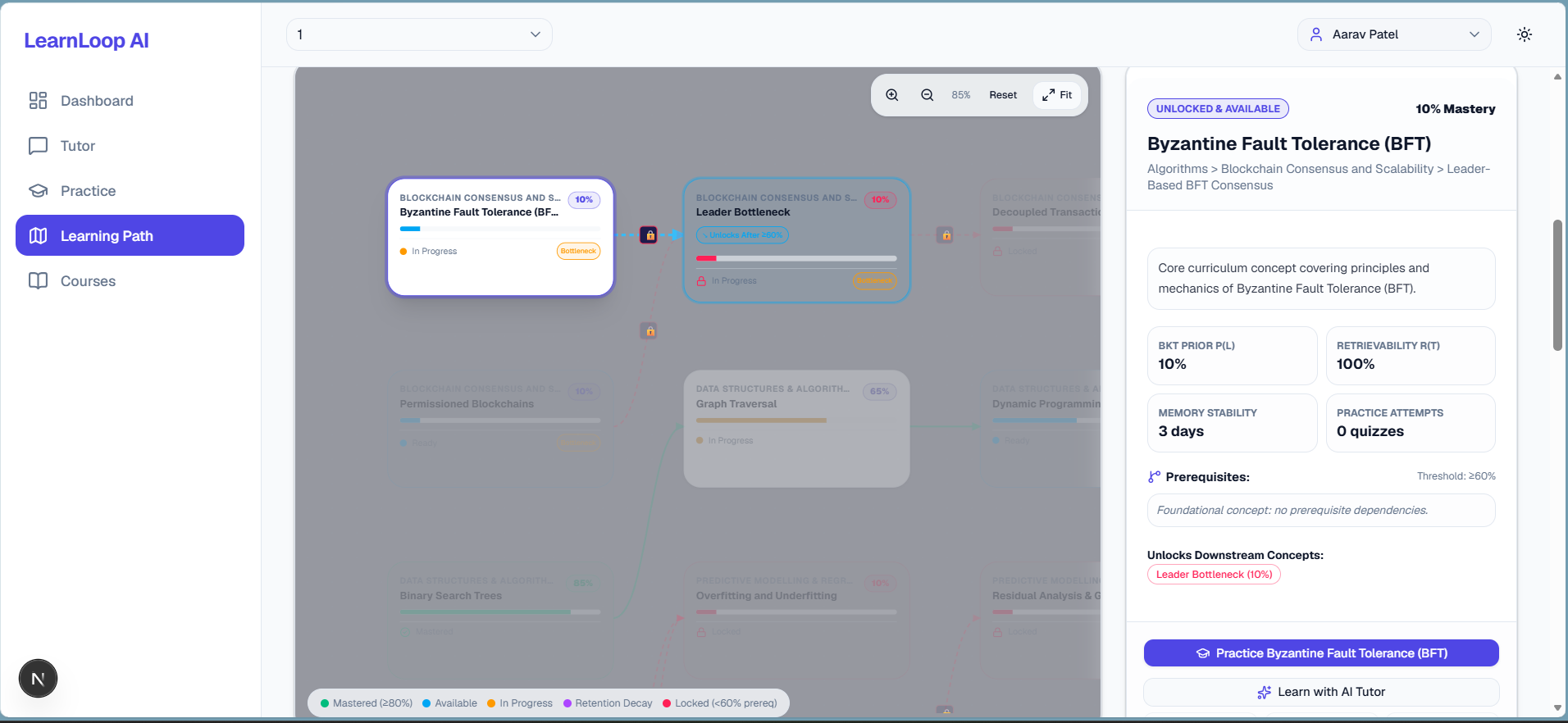
Learning Path: Shows the roadmap details about the courses in depth
-
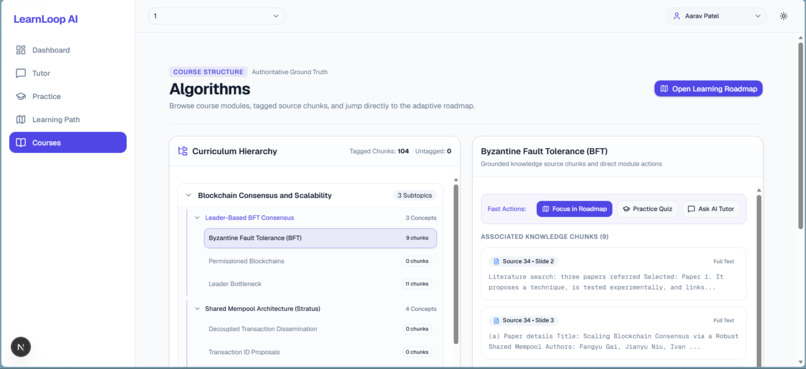
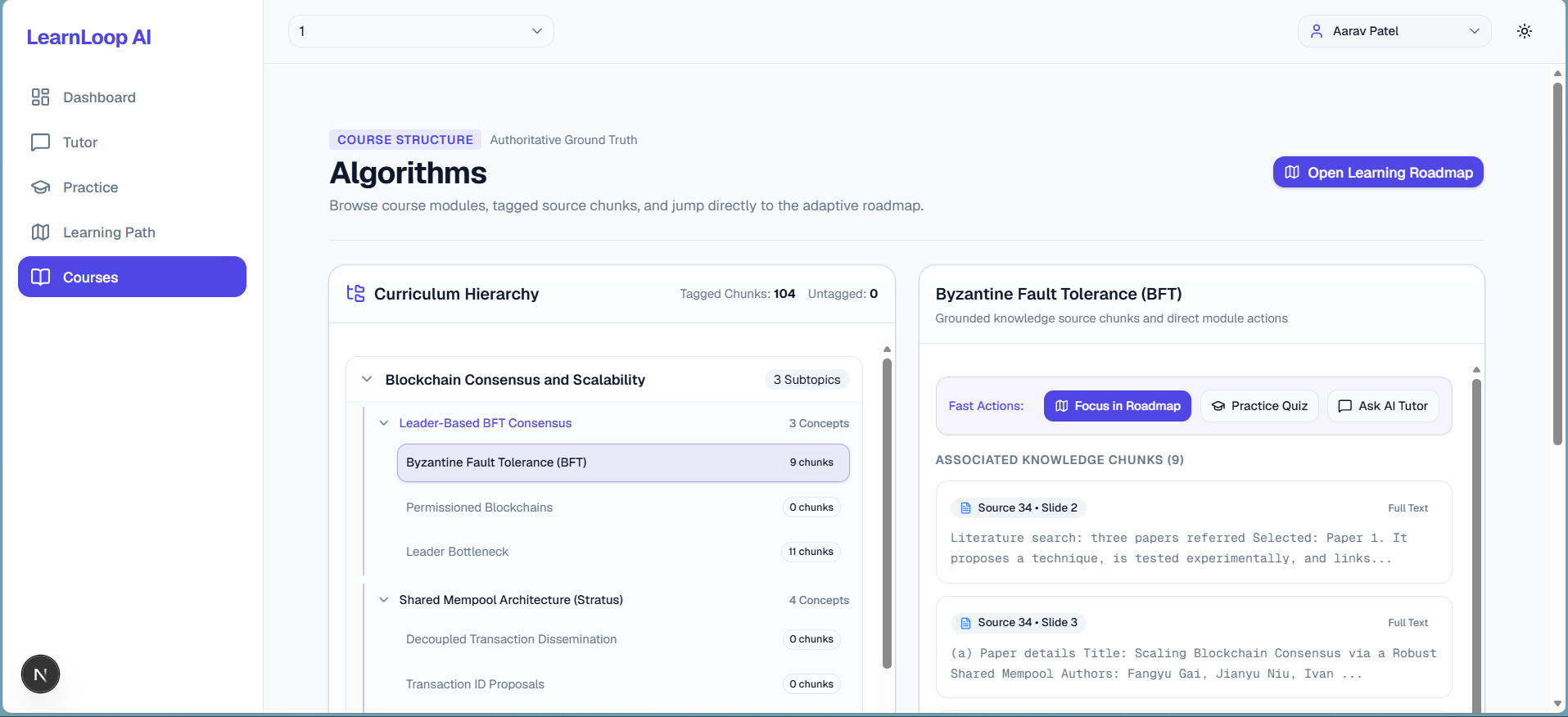
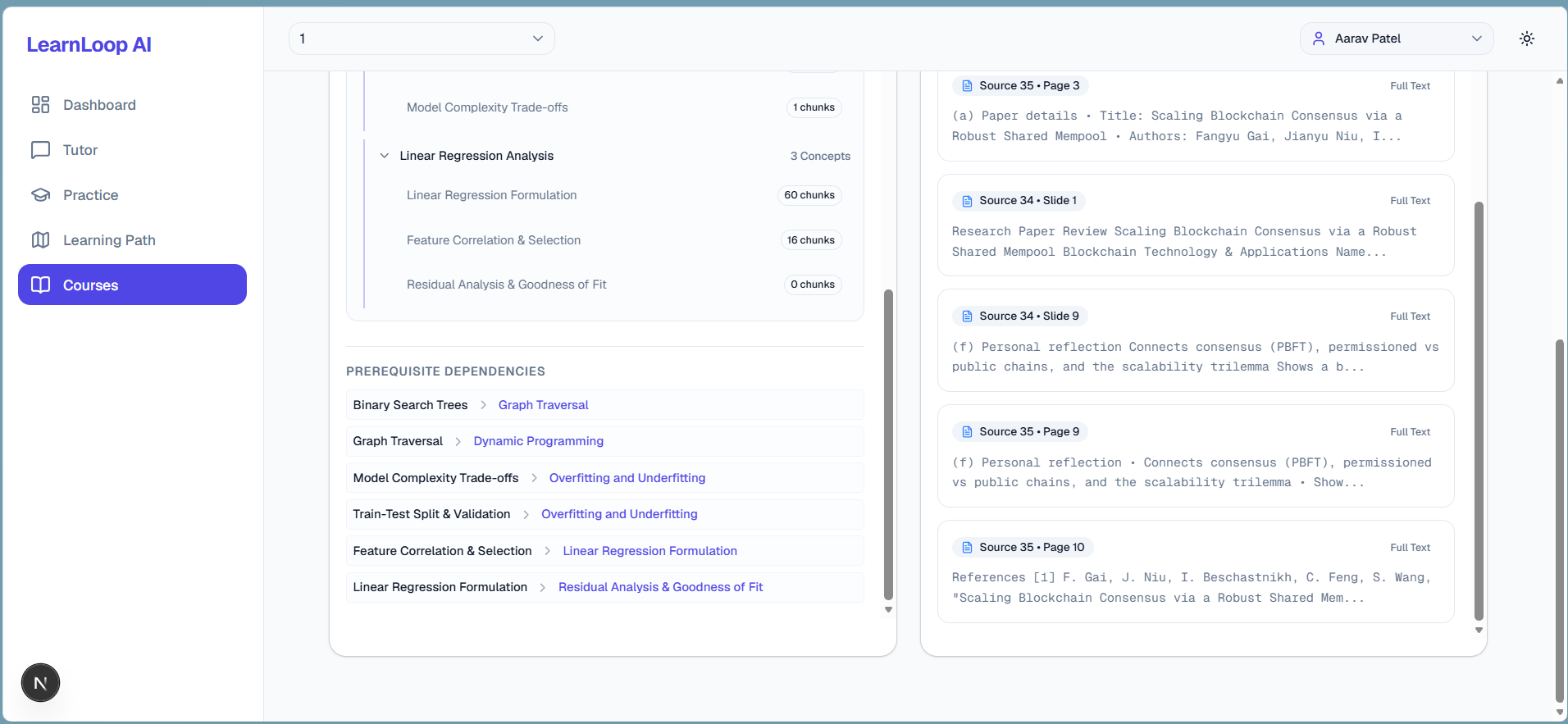
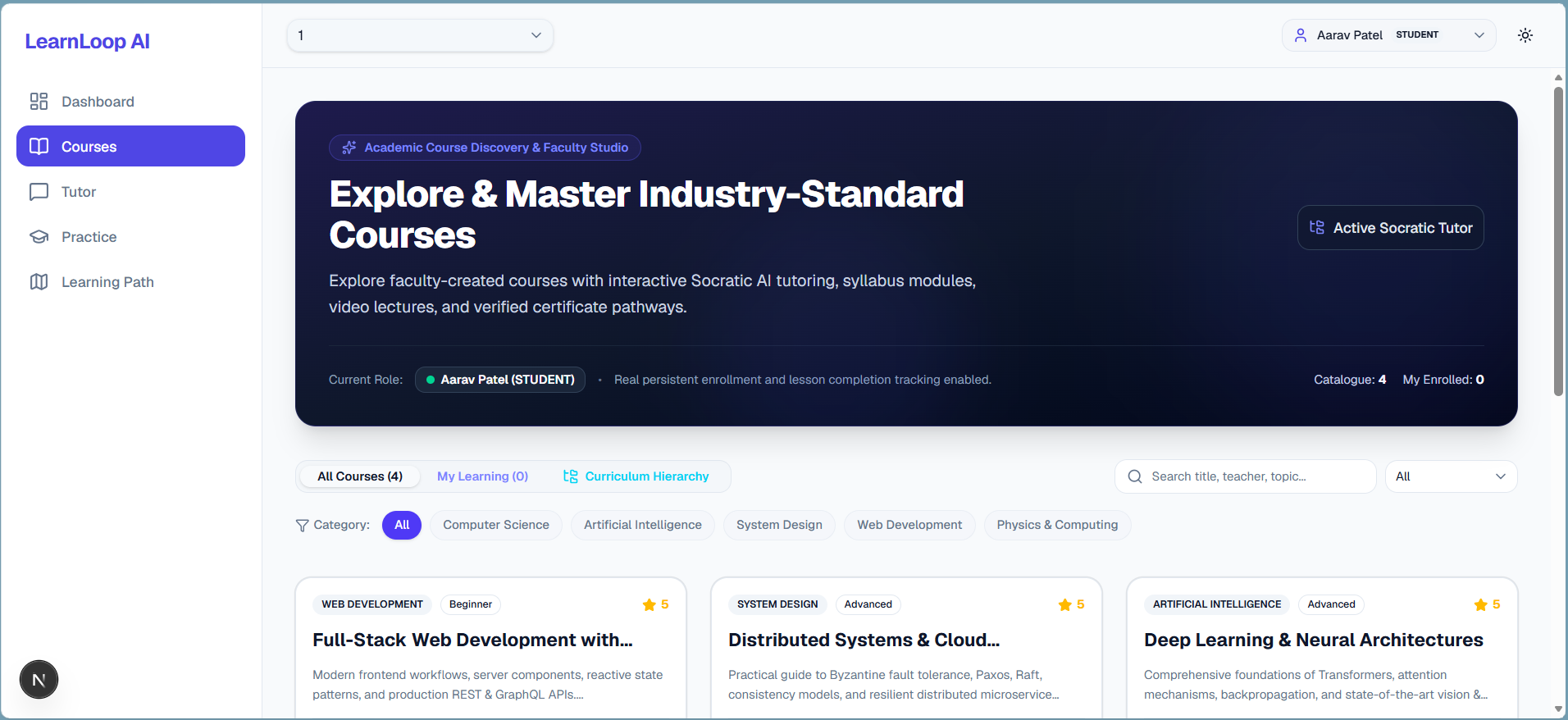
Course Page: Here we can see all the information related to courses and content about courses
-
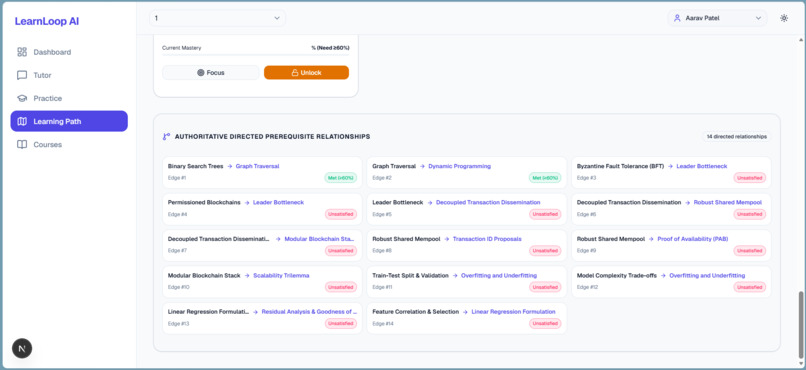
Learning Path: Shows the roadmap details about the courses in depth
-
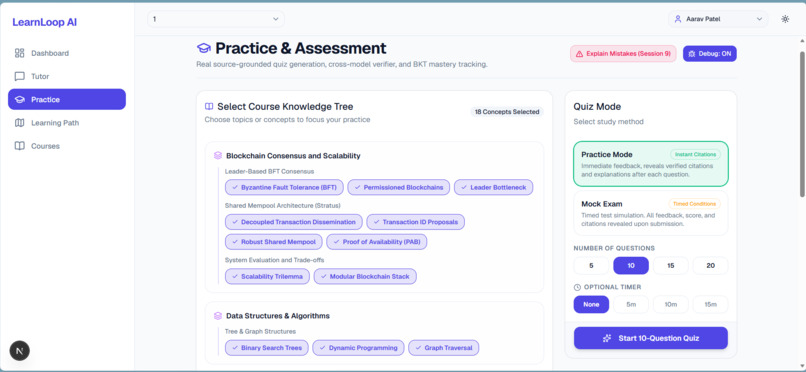
Practice Page: Here the student can solve the quizes and practice about the course section
-
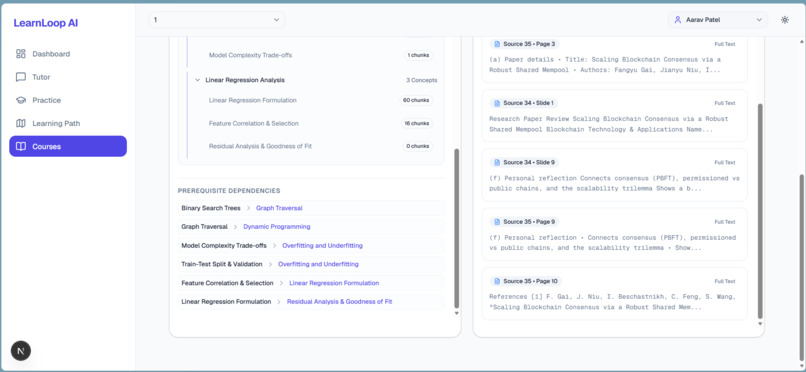
Course Page: Here we can see all the information related to courses and content about courses
-
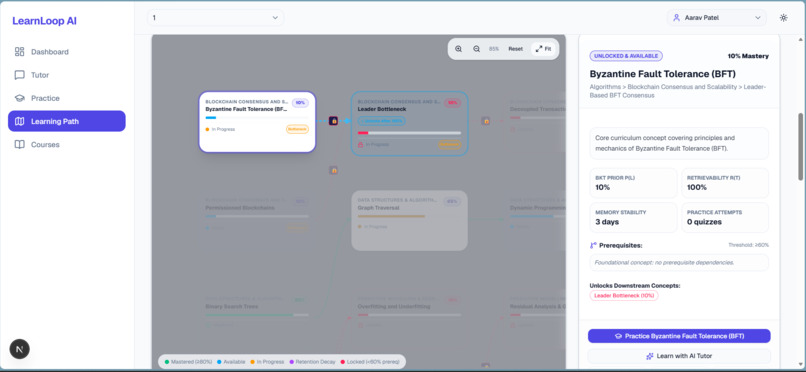
Learning Path: Shows actual roadmap.
-
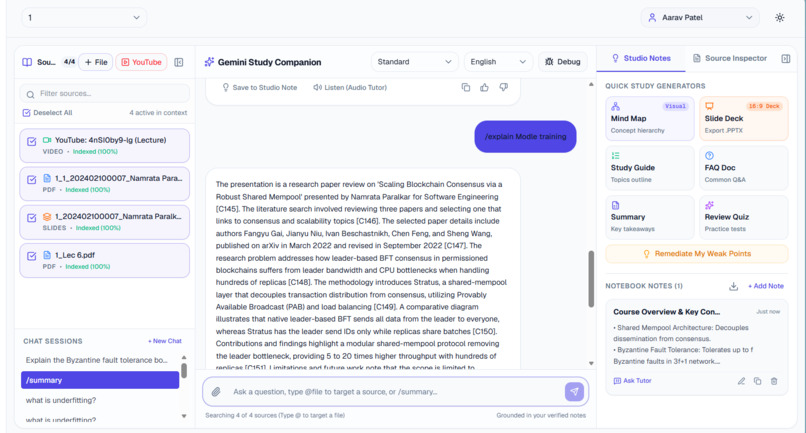
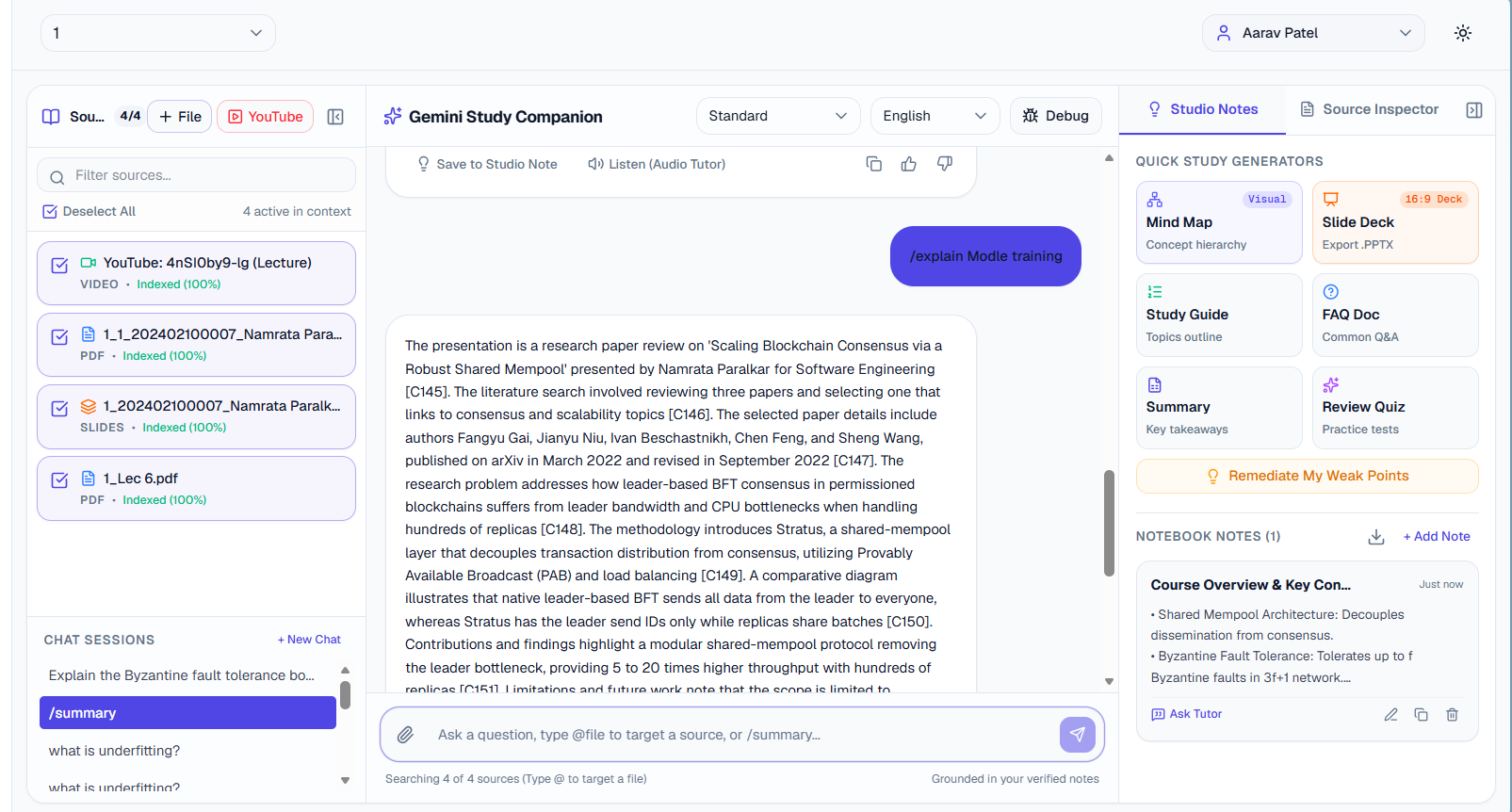
Chat page
-
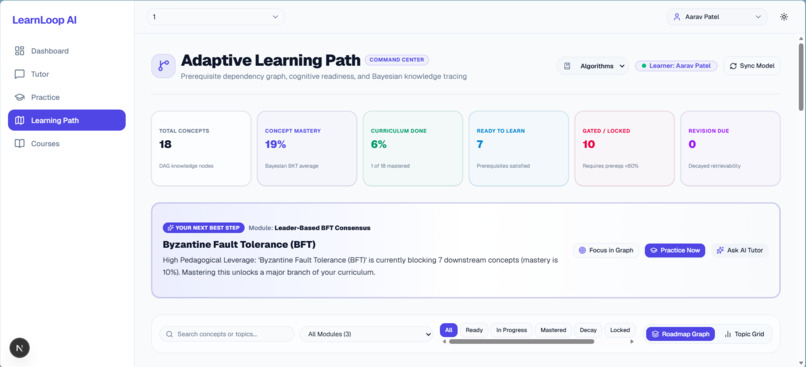
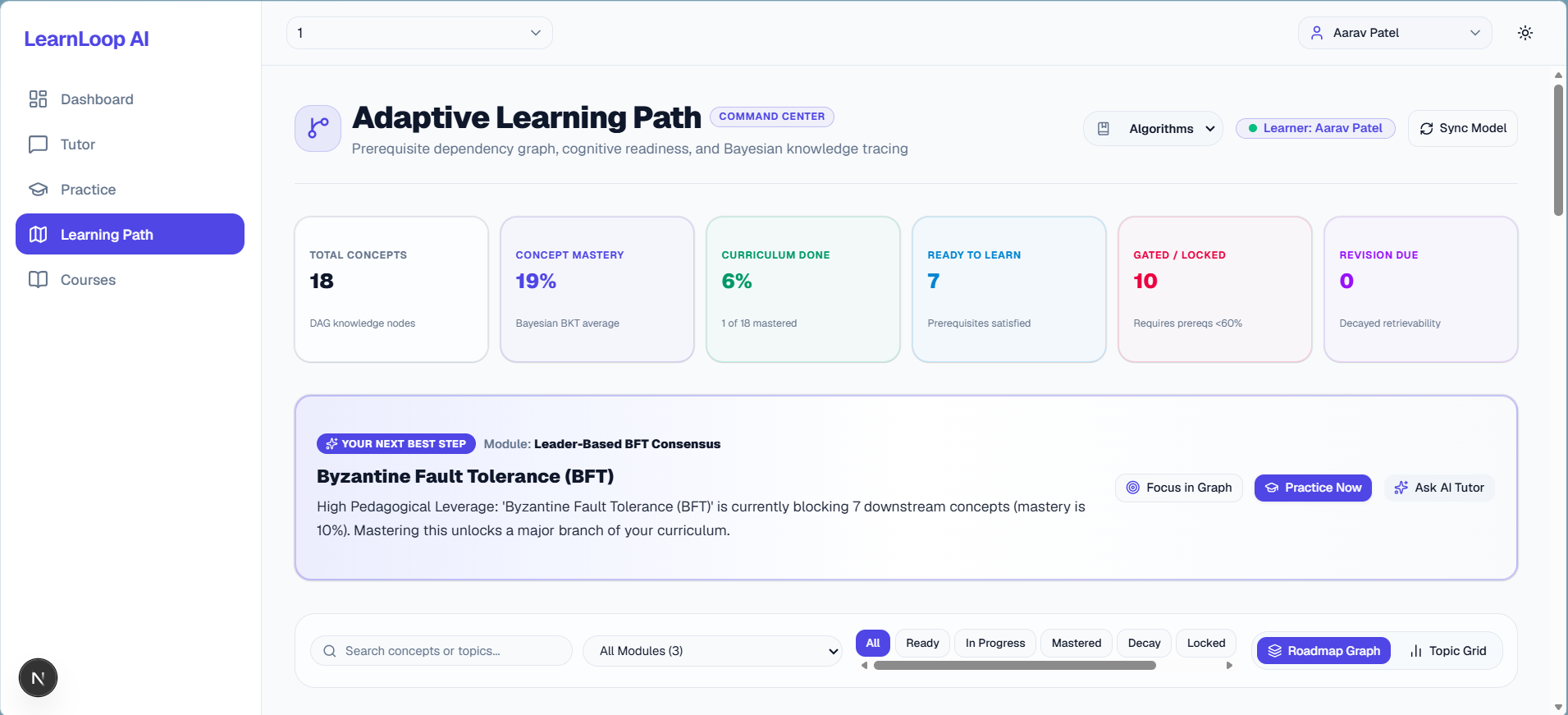
Learning Path: Detailed overview in short
-
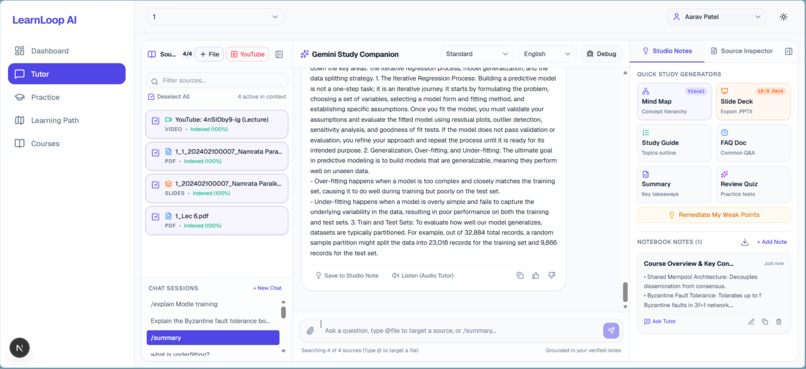
Tutor Page: Shows the info about tutors
-
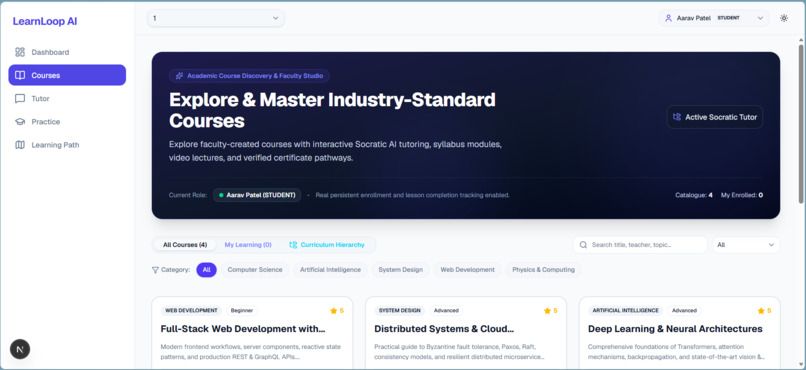
Course Landing Page: From here user/student can access and register for course
💡 Inspiration
Traditional learning platforms often provide the same content and assessments to every student, regardless of their individual understanding, learning speed, or knowledge gaps. Students frequently struggle to find reliable answers within lengthy PDFs, presentations, and video lectures. Generic AI chatbots can help explain concepts, but their answers may not always be grounded in the actual study material.
We wanted to build a smarter learning companion that understands a student's learning resources, provides answers supported by verifiable sources, identifies knowledge gaps, and creates a personalized learning experience. This vision inspired us to develop LearnLoop AI, a multimodal AI tutoring platform that combines intelligent content retrieval, adaptive assessments, personalized learning paths, and cognitive progress tracking.
🚀 What It Does
LearnLoop AI transforms static educational resources into an interactive and personalized learning environment.
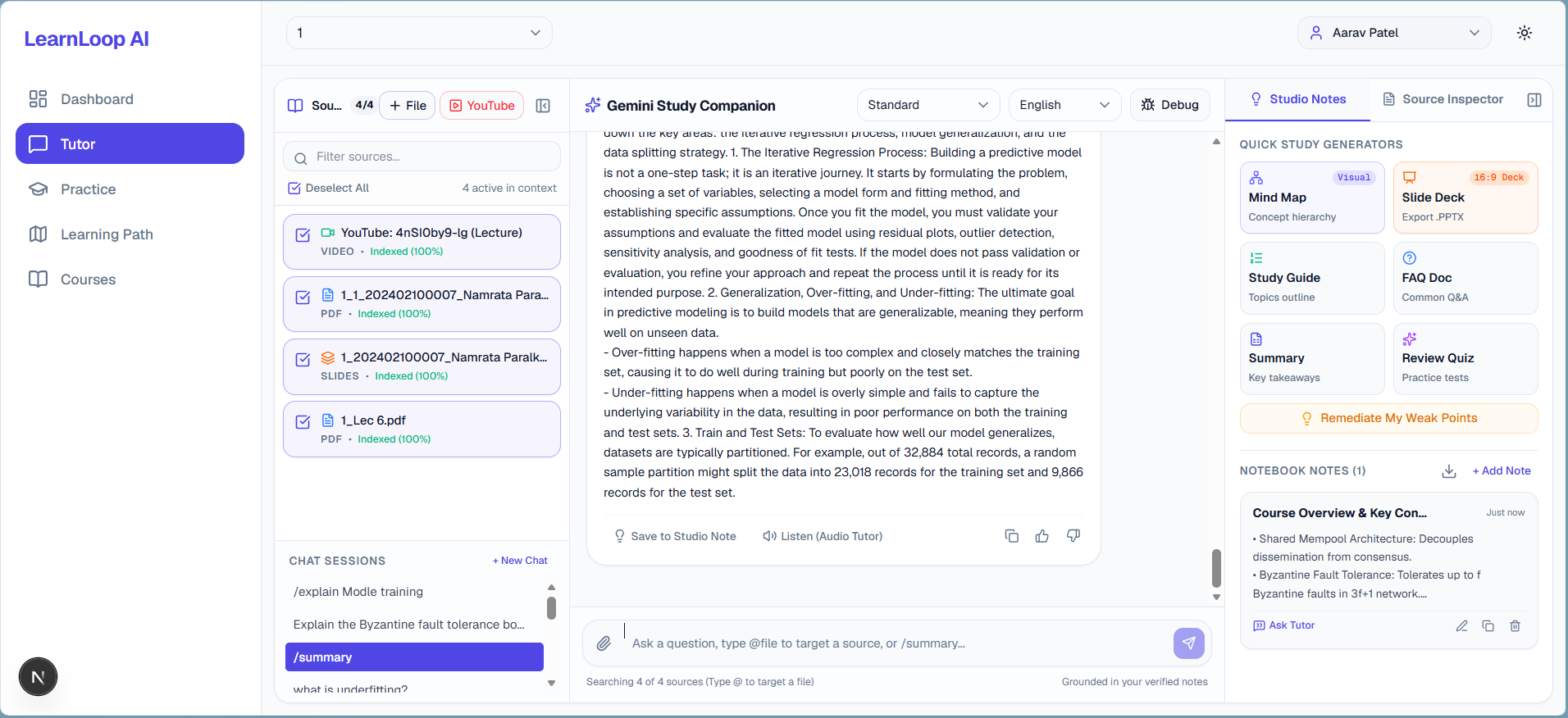
- Multimodal Knowledge Base: Ingests PDFs, PowerPoint presentations, MP4 video lectures, and YouTube URLs, extracting meaningful information and organizing it into a structured hierarchy of courses, topics, subtopics, concepts, and prerequisites.
- Source-Grounded AI Tutor: Uses Retrieval-Augmented Generation (RAG) to answer questions using relevant course material. Answers include clickable citations pointing to the original page, presentation slide, or video timestamp. Questions outside the available course knowledge are handled through a relevance-based refusal mechanism.
- Adaptive Assessments: Generates multiple-choice, short-answer, and numerical questions based on the learner's study material. A verification pipeline checks generated questions, while assessment analysis helps identify misconceptions and weak concepts.
- Personalized Learning Paths: Builds a visual learning journey around prerequisite relationships between concepts. Learners can progress through topics, understand dependencies, and focus on areas requiring improvement.
- Cognitive Progress Tracking: Uses Bayesian Knowledge Tracing (BKT) to estimate concept mastery and an Ebbinghaus-inspired memory-decay model to identify concepts that may need revision.
- AI-Powered Study Studio: Supports the creation of revision notes, study guides, FAQs, and summaries to make exam preparation more organized and efficient.
- Multilingual and Audio Learning: Supports explanations in English, Hindi, and Marathi, with browser-based text-to-speech for audio learning.
- Learning Analytics and Evaluation: Tracks learning progress and evaluates the quality of retrieval-based answers using metrics such as faithfulness, answer relevancy, context precision, and context recall.
🛠️ How We Built It
We designed LearnLoop AI as a modular application with separate frontend, backend, knowledge retrieval, assessment, and learner-model components.
1. Frontend
We used Next.js 16 with the App Router and Turbopack to build a responsive, interactive learning interface. The application brings together the dashboard, course management, AI tutor, quizzes, learning paths, revision tools, and learner progress into a unified experience.
The interface is designed to help learners move naturally from studying course material to asking questions, taking assessments, reviewing mistakes, and revisiting weak concepts.
2. Backend and Knowledge Processing
We built the backend using Python, FastAPI, and asynchronous API handlers. The ingestion pipeline processes educational resources and extracts text, figures, diagrams, and relevant video segments. The extracted information is organized and stored with source metadata so that retrieved content can be traced back to its origin.
PostgreSQL with pgvector provides structured storage and vector-based semantic retrieval for relevant educational content.
3. Retrieval-Augmented Generation
The AI tutoring pipeline combines semantic search, a cross-encoder reranker, and Gemini 2.5 Flash.
The process follows these stages:
- The learner submits a question.
- The system retrieves semantically relevant content from the knowledge base.
- A reranking stage improves the relevance of the retrieved passages.
- The system constructs a context from the selected course material.
- Gemini generates an explanation grounded in that context.
- The response includes source citations that help the learner verify the information.
A relevance threshold helps identify questions that cannot be adequately answered from the available course content.
4. Adaptive Assessment and Learner Modeling
The assessment module generates questions from the learner's selected study scope and uses a verification stage to improve question quality. After a quiz, the system analyzes incorrect answers to help identify possible misconceptions.
The learner model uses Bayesian Knowledge Tracing to estimate the probability that a learner has mastered a concept. It also incorporates a memory-decay model inspired by the Ebbinghaus forgetting curve to support revision recommendations.
These components connect assessment results with learning-path progression and targeted remediation.
5. Evaluation and Reliability
We incorporated an evaluation workflow using RAGAS/DeepEval-style metrics to assess retrieval and answer quality. The evaluation framework includes faithfulness, answer relevancy, context precision, and context recall, along with student-learning simulations for studying mastery progression and question repetition.
We also followed environment-based configuration practices to keep secrets out of source control and support flexible frontend and backend deployment configurations.
⚙️ Challenges We Faced
Grounding AI Responses in Reliable Sources
One of the main challenges was making the AI tutor useful without allowing it to rely solely on general model knowledge. We addressed this through semantic retrieval, reranking, contextual answer generation, source citations, and a relevance-based refusal mechanism.
Processing Different Learning Formats
Educational information is distributed across documents, presentations, and videos. Extracting useful content while preserving page numbers, slide references, figures, and video timestamps required a modular ingestion pipeline and consistent source metadata.
Personalizing the Learning Experience
A simple quiz score does not fully describe what a learner understands. We therefore incorporated knowledge tracing, memory-decay modeling, prerequisite relationships, and misconception analysis to provide a more meaningful representation of learning progress.
Maintaining Quality and Consistency
AI-generated questions and answers require validation. We designed separate verification and evaluation components to assess generated questions and measure the reliability and relevance of retrieval-based responses.
Connecting Multiple Components
The project brings together content ingestion, vector retrieval, AI generation, assessments, learner modeling, and the frontend experience. Keeping the data flow consistent across these components required a modular architecture and clearly defined interfaces.
📚 What We Learned
Building LearnLoop AI helped us understand how to combine multimodal data processing, Retrieval-Augmented Generation, semantic search, and generative AI into a practical educational application.
We learned the importance of source attribution, relevance filtering, and evaluation when building trustworthy AI systems. We also explored how Bayesian Knowledge Tracing and memory-decay models can support personalized education beyond conventional quiz scores.
From an engineering perspective, the project strengthened our understanding of API design, asynchronous backend development, vector databases, frontend-backend integration, environment-based configuration, and modular system architecture.
Most importantly, we learned that an effective AI tutor should do more than provide answers. It should help learners understand concepts, verify information, identify weaknesses, and decide what to study next.
🔮 What's Next
Our vision is to evolve LearnLoop AI into a more intelligent and accessible learning platform with richer visual knowledge maps, improved recommendations, more comprehensive learning analytics, expanded multilingual capabilities, and deeper integration between assessment results and revision activities.
By combining trustworthy AI assistance with adaptive learning science, LearnLoop AI aims to make learning more personalized, transparent, and effective for every student.
What we learned
What's next for LearnLoop
Built With
- adaptive-learning
- ai-agents
- bayesian-knowledge-tracing
- cross-encoder-reranking
- deepeval
- fastapi
- gemini-2.5-flash
- generative-ai
- javascript
- machine-learning
- multimodal-ai
- natural-language-processing-(nlp)
- next.js
- pgvector
- postgresql
- python
- ragas
- react
- rest
- retrieval-augmented-generation-(rag)
- semantic-search
- text-to-speech-(tts)
- turbopack
- typescript
- vector-database

Log in or sign up for Devpost to join the conversation.