-
-
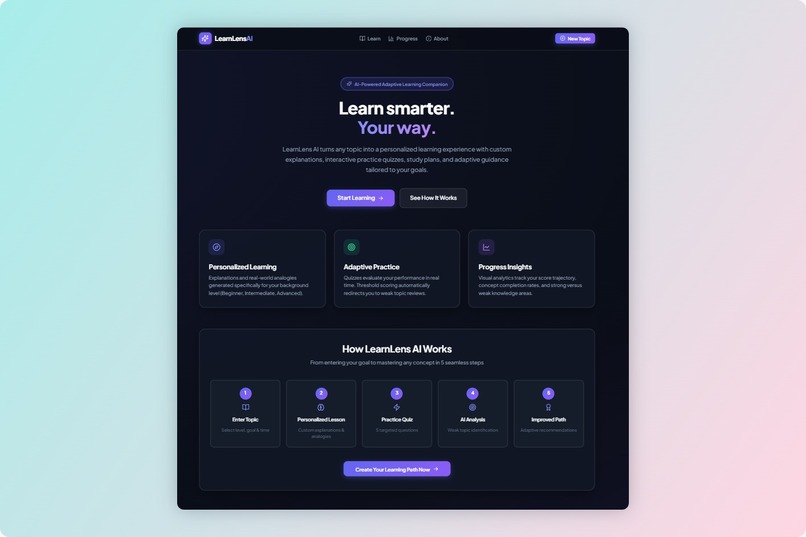
Landing page
-
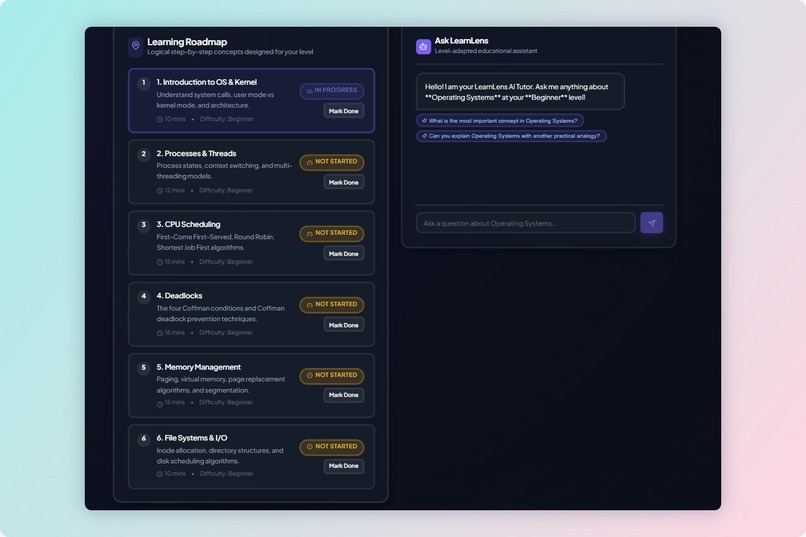
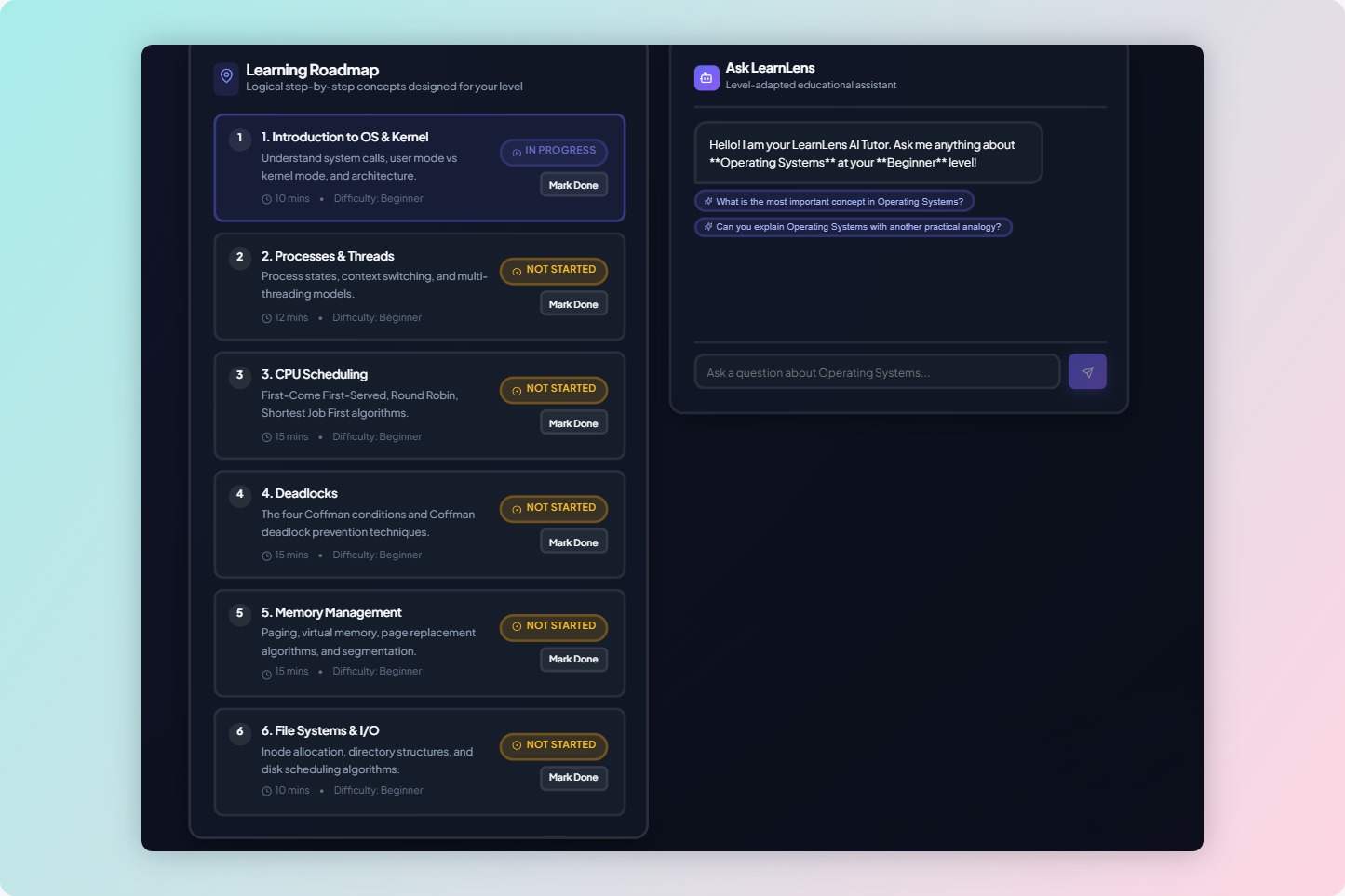
Personalized roadmap
-
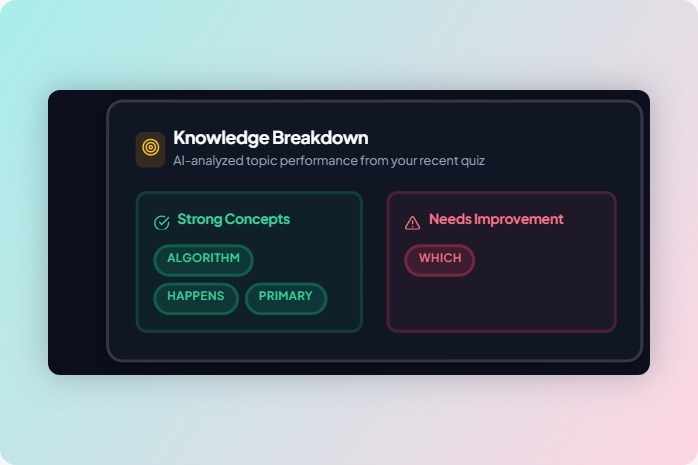
Quiz results
-
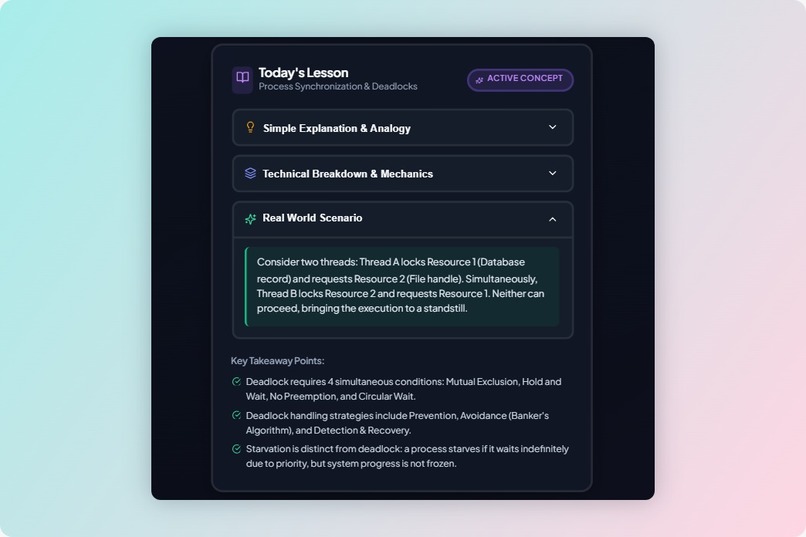
AI lesson
-
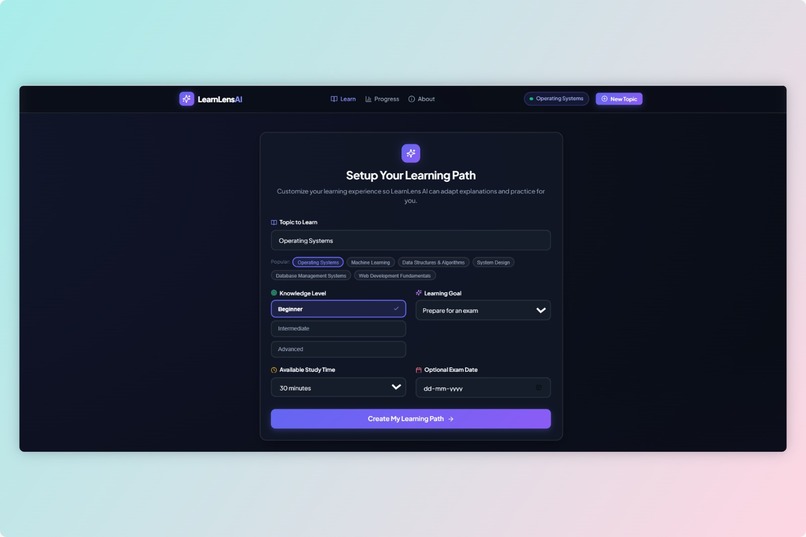
Learning setup
-
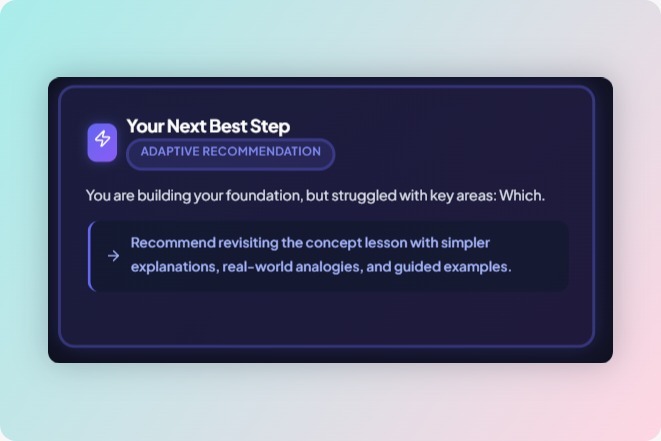
Adaptive recommendation
-
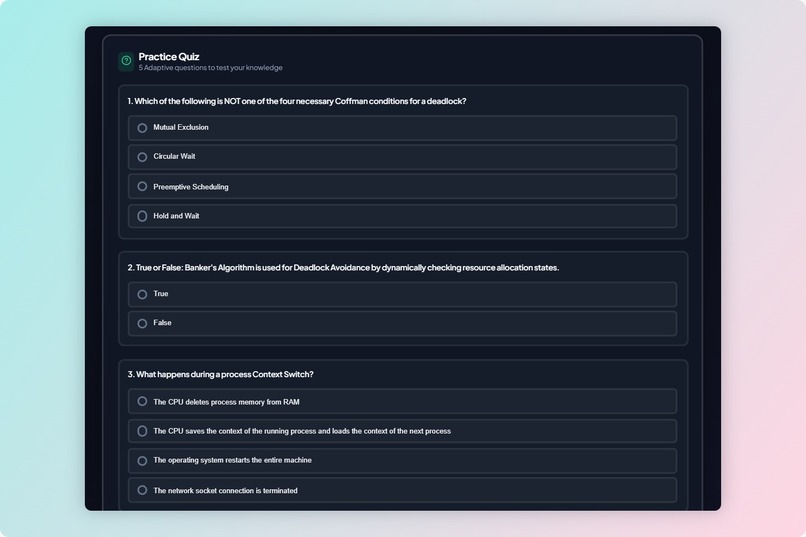
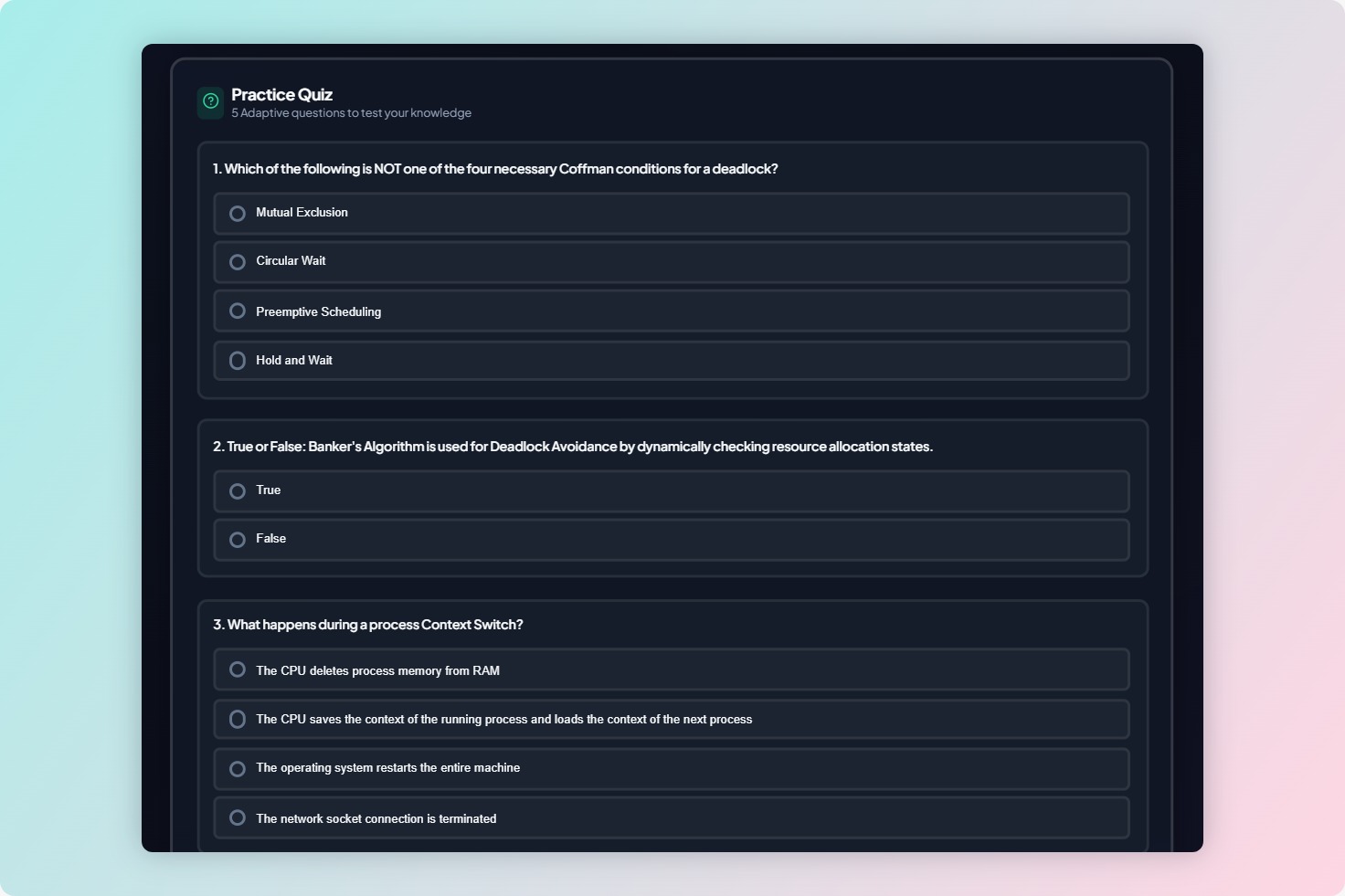
Quiz
-
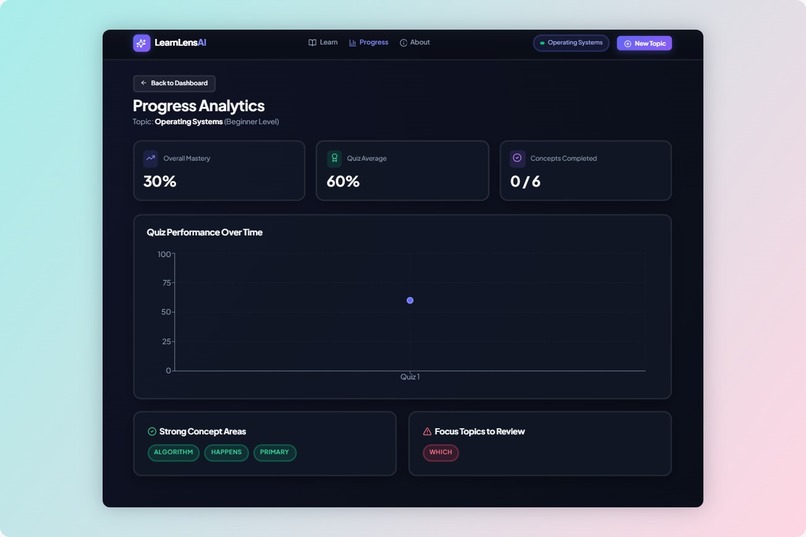
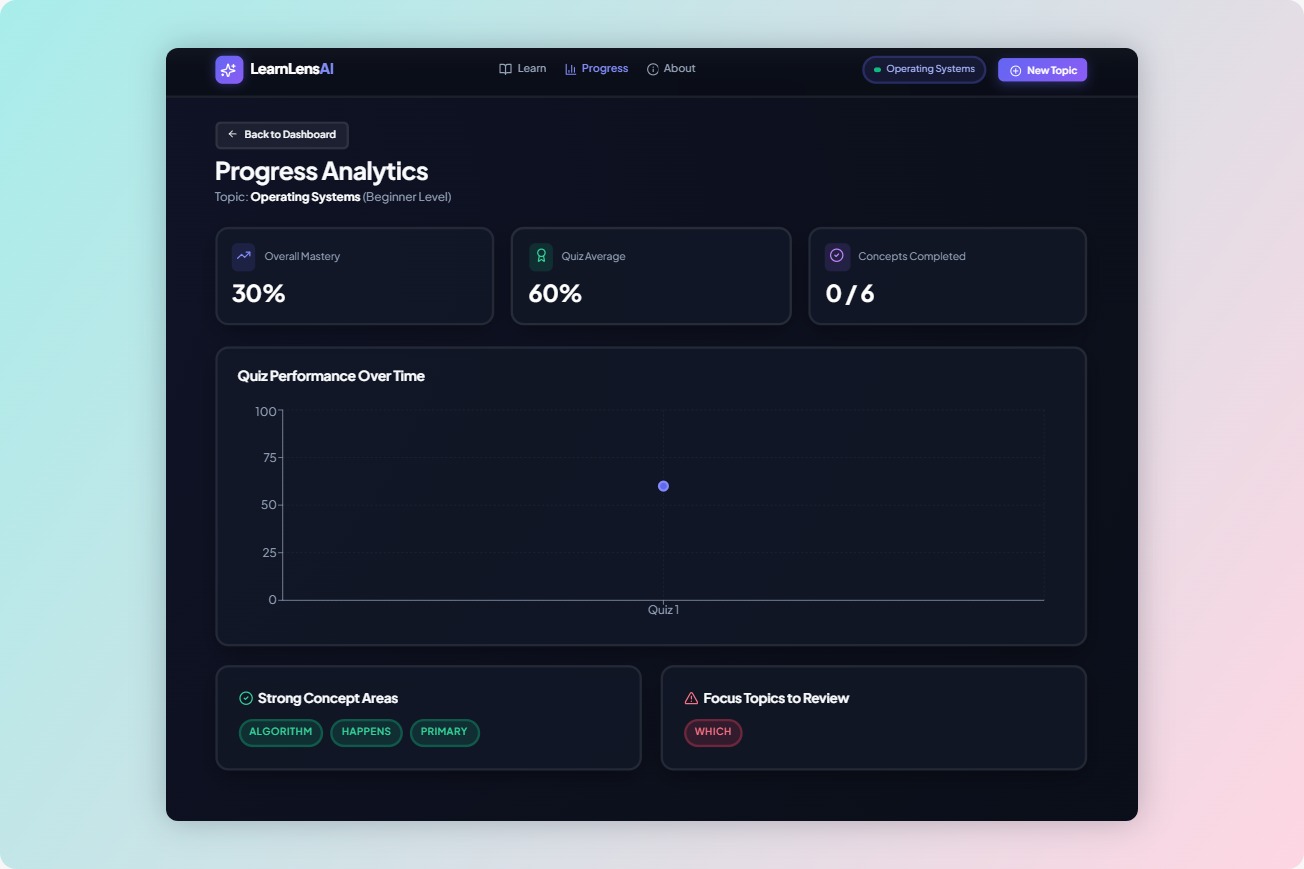
Progress dashboard
-
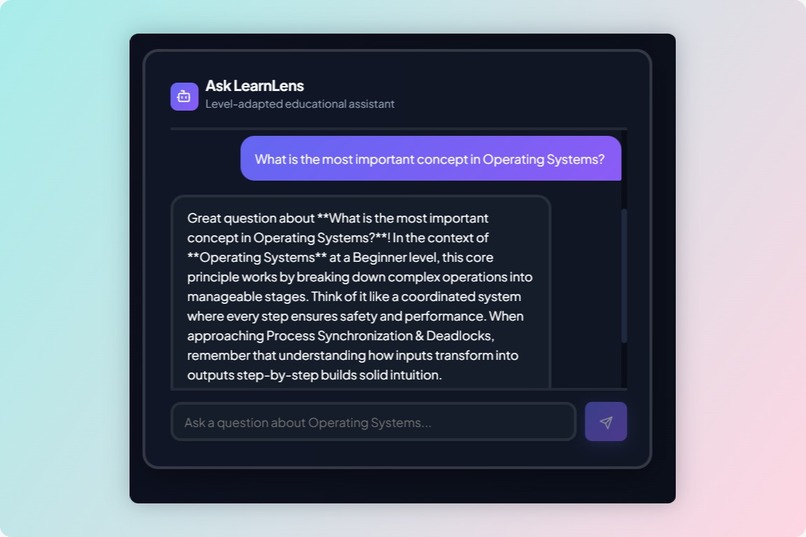
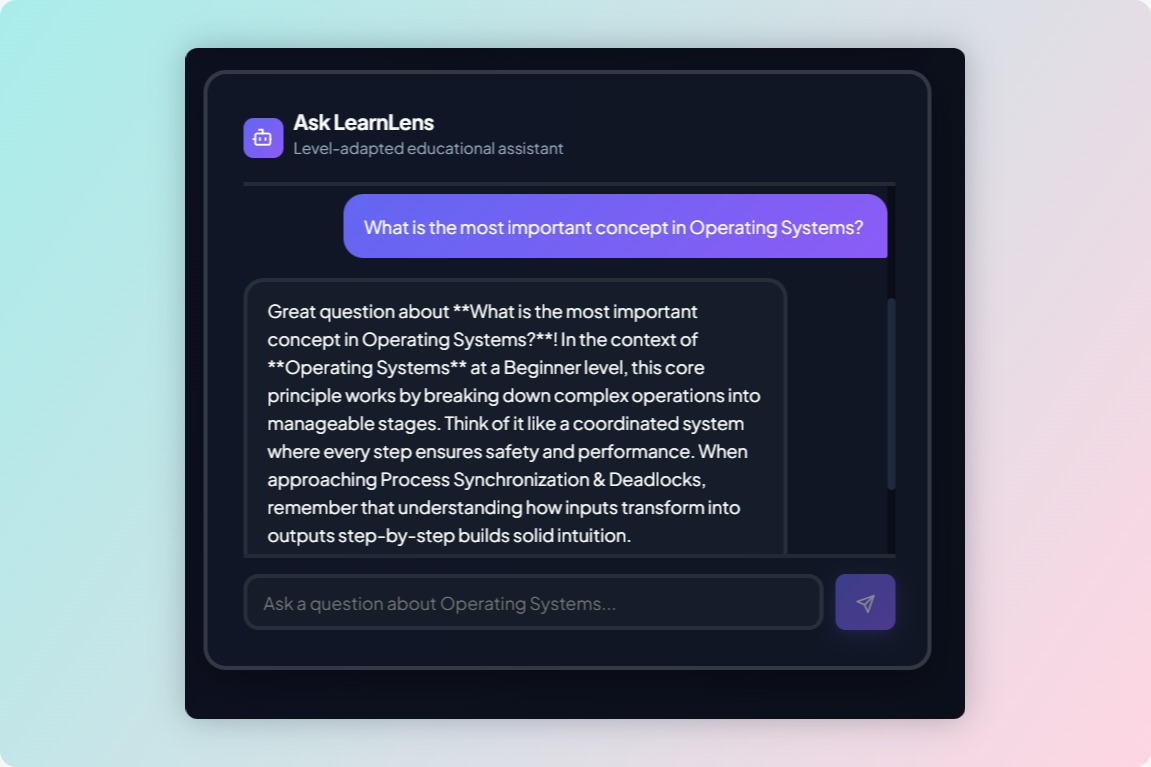
AI assistant
-
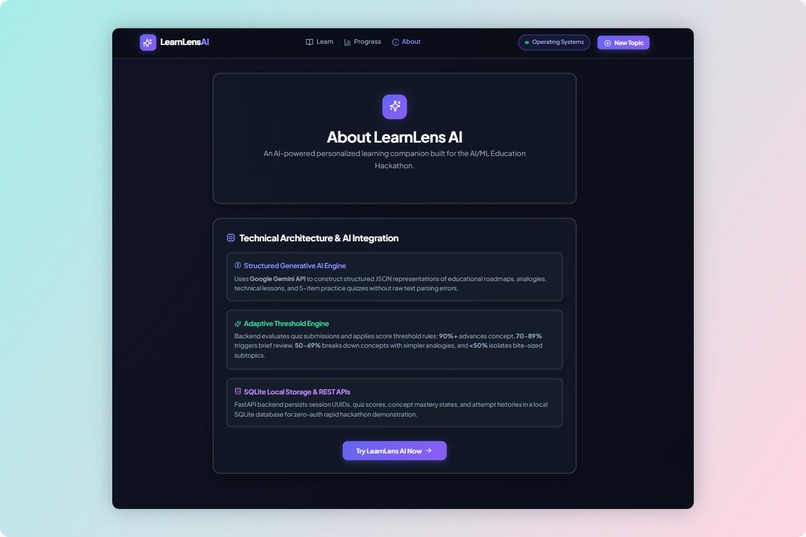
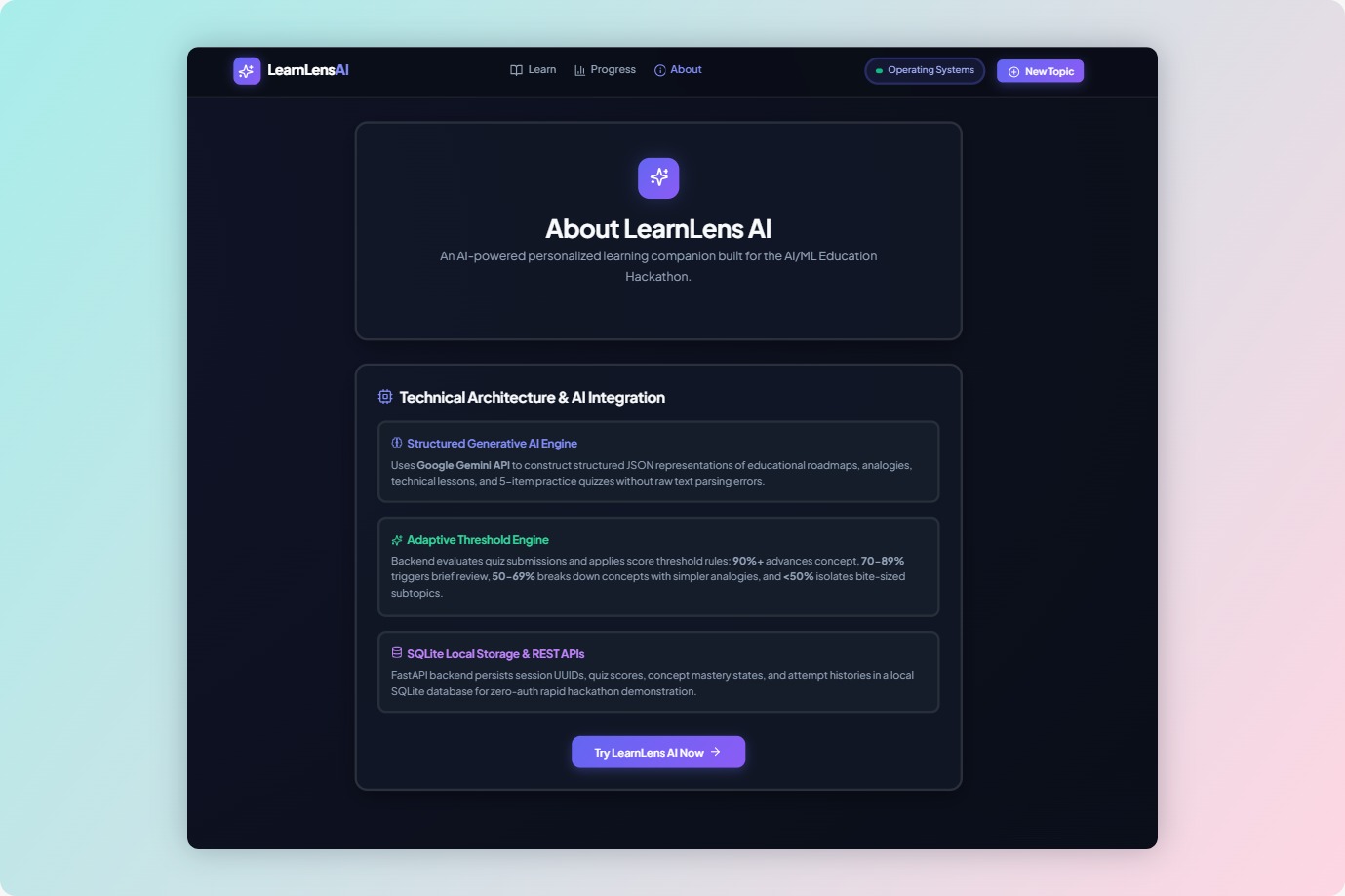
Overall product view
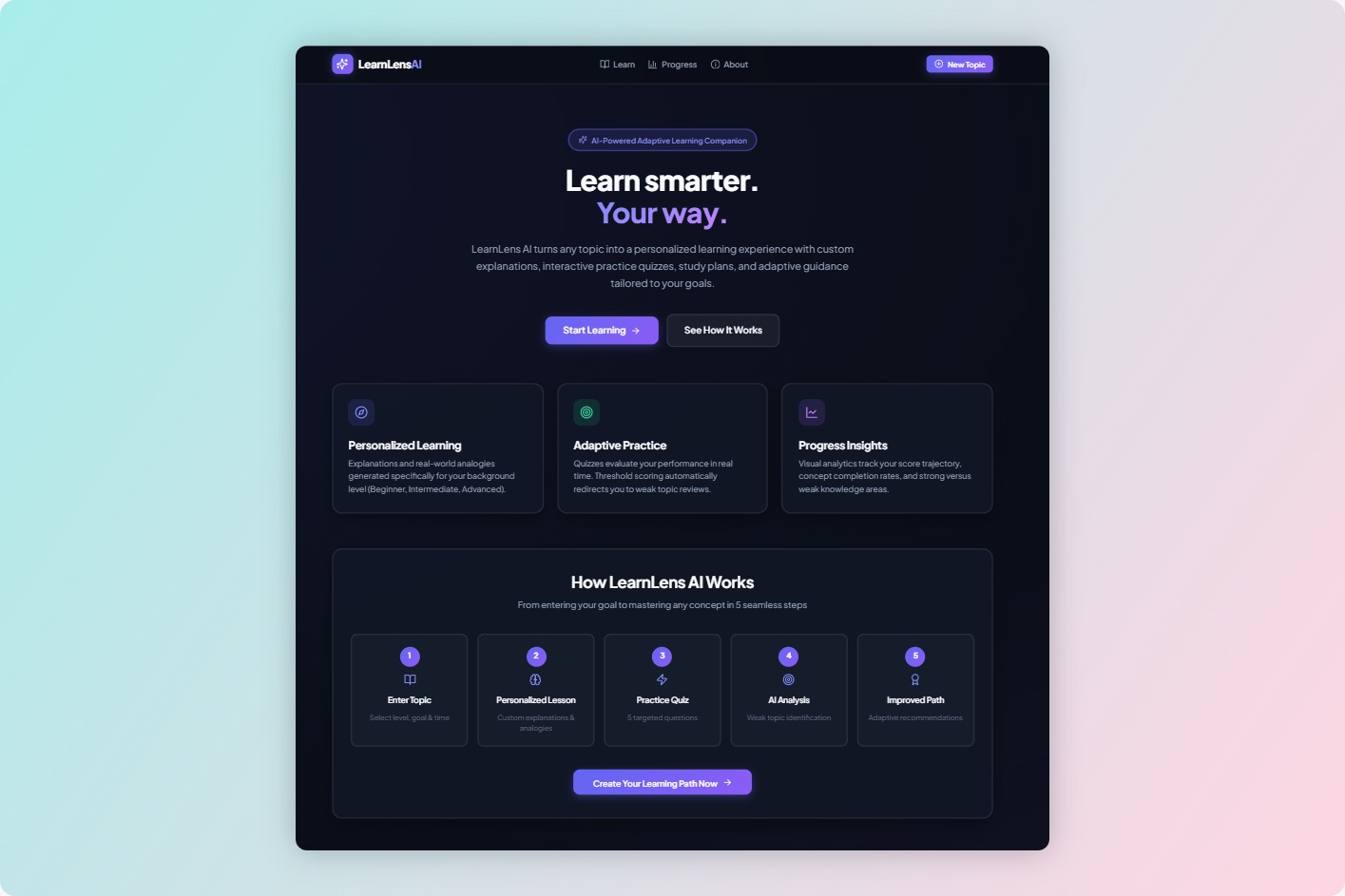
Inspiration Learning is not the same for everyone. Students often struggle with difficult concepts because explanations are either too advanced, too generic, or not adapted to their individual level. We wanted to build a learning assistant that could understand what a student is trying to learn and adapt the learning experience accordingly. This inspired us to create LearnLens AI, a personalized learning platform that transforms any topic into an interactive learning journey.
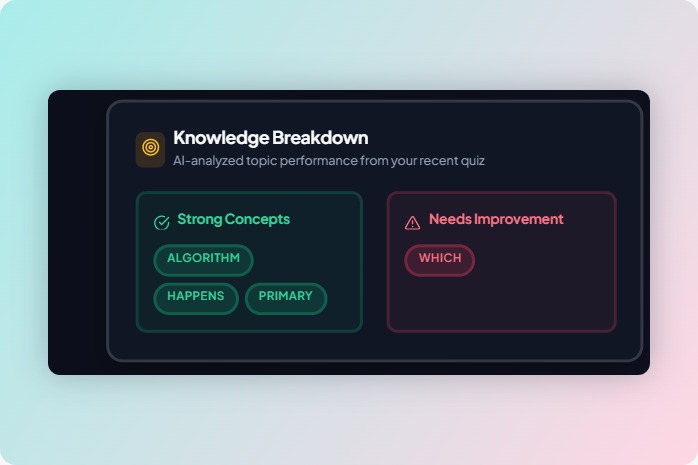
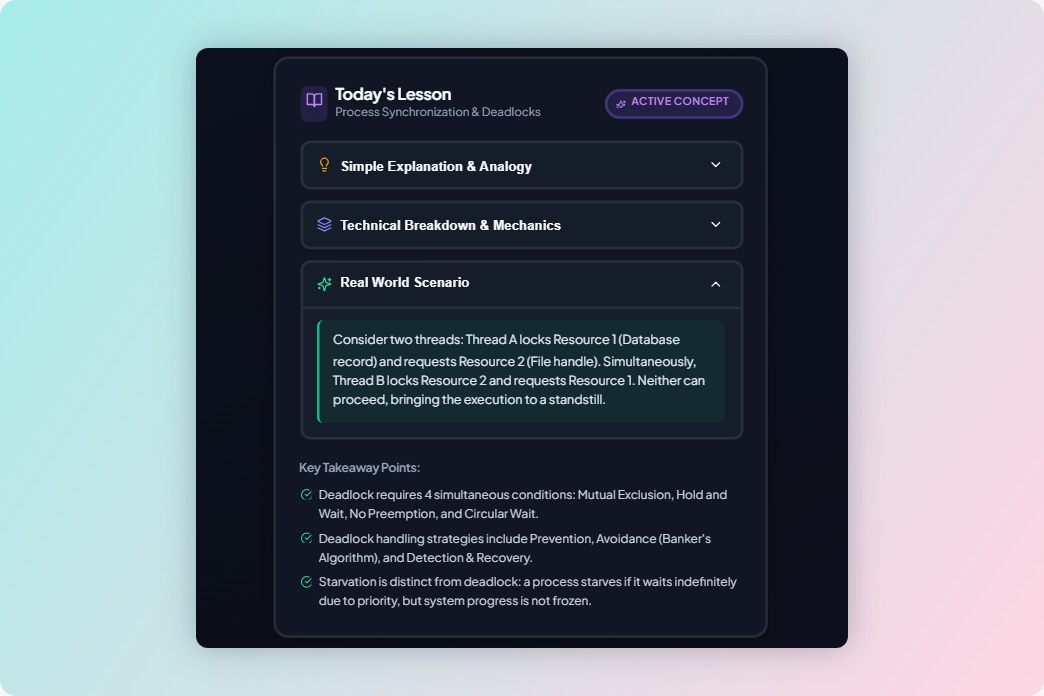
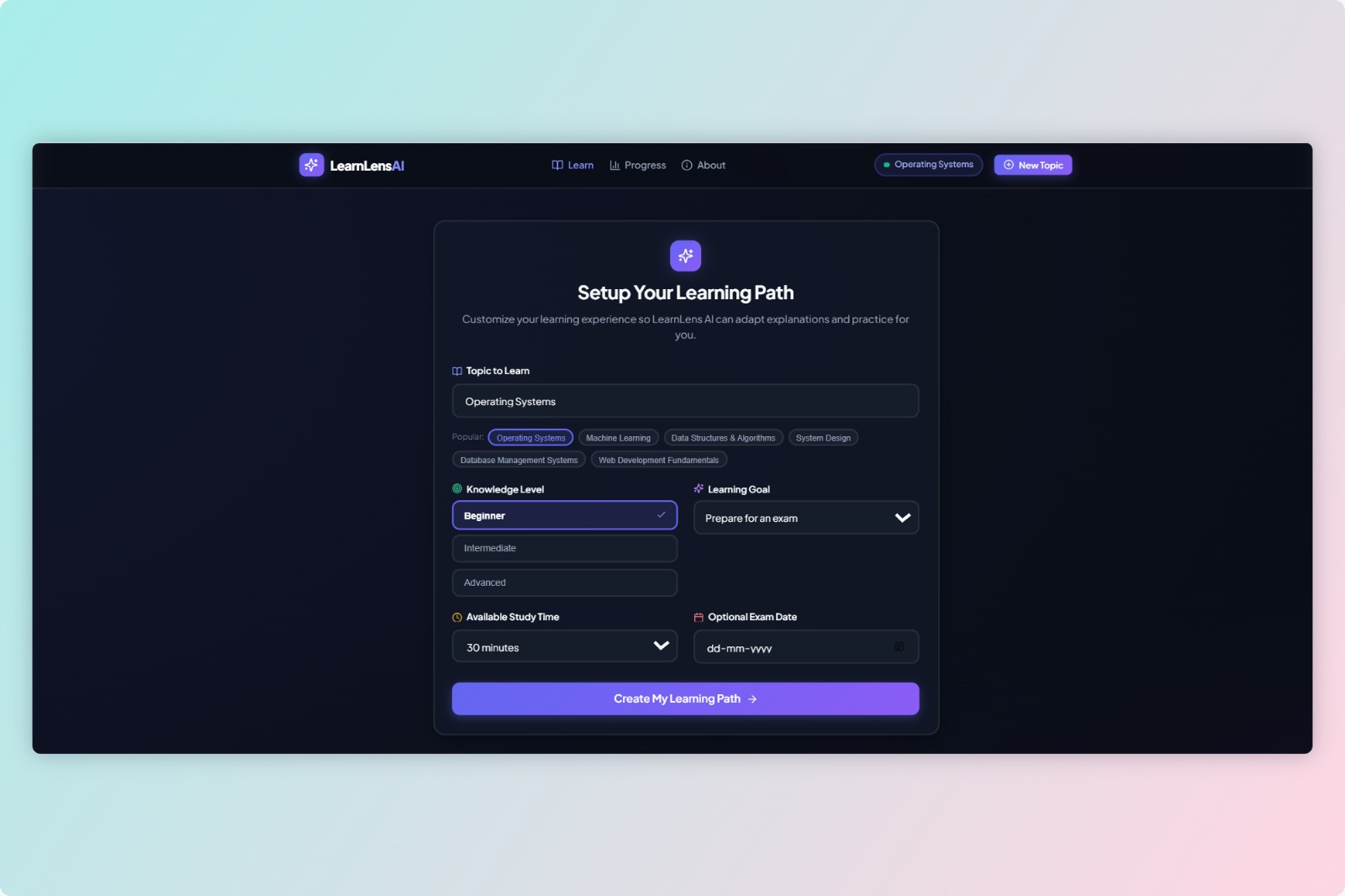
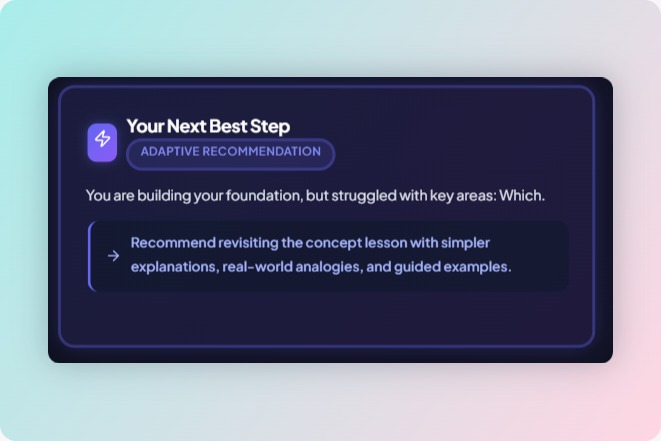
What It Does LearnLens AI helps students learn topics through personalized explanations based on their current knowledge level, interactive quizzes generated from the selected topic, simple examples and visual explanations for difficult concepts, personalized study plans based on learning goals and available time, progress tracking, and identification of weak areas. Instead of simply providing an answer, LearnLens AI aims to guide students through understanding, practicing, and improving.
How We Built It We designed LearnLens AI as a web based application with an interactive frontend and an AI powered backend. The AI layer is responsible for generating personalized explanations, questions, examples, and study recommendations. The application uses the learner's selected topic, level, goals, quiz performance, and progress to make the learning experience more relevant. We focused on keeping the interface simple so that a student can enter a topic and quickly start learning without needing complicated configuration.
Challenges We Faced One of our biggest challenges was making the AI output useful for different types of learners. A beginner and an advanced student should not receive the same explanation. We addressed this by making the learner's level and learning goals part of the AI generation process. Another challenge was designing quizzes that were relevant to the material instead of producing repetitive questions. We also had to balance AI functionality with a simple and intuitive user experience.
What We Learned Building LearnLens AI taught us that using AI effectively is more than connecting an application to an AI model. The important part is designing the right workflow around the model. We learned how to structure prompts, handle AI generated content, design adaptive learning flows, and connect AI functionality with a practical user interface. Most importantly, we learned that AI can be used not only to generate information, but also to create a more personalized and interactive learning experience.
Accomplishments that we're proud of We are proud of turning a simple idea into a working AI powered learning platform that can make studying more interactive and personalized. LearnLens AI can take a topic and help students understand it through explanations, examples, quizzes, and personalized learning guidance. We are especially proud of making the experience simple enough for students to use without needing any technical knowledge. We also focused on making the AI respond according to the learner's level instead of giving everyone the same type of explanation. Building the project also helped us understand how AI can be combined with a real world problem to create something useful rather than using AI only as a chatbot.
What's next for LearnLens AI
Our next goal is to make LearnLens AI more personalized and useful for students in their everyday studies. We plan to add features such as PDF and textbook analysis, voice based learning, personalized revision schedules, flashcards, multilingual explanations, visual diagrams, and detailed progress analytics. We also want LearnLens AI to identify a student's weak areas automatically and adjust future lessons and quizzes based on their performance. In the long term, we want to build LearnLens AI into a complete personal learning companion that can understand each student's goals, learning style, progress, and difficulties and continuously adapt the learning experience to help them improve.
Built With
- ai
- artificial-intelligence
- fastapi
- firebase
- generative-ai
- google-gemini
- javascript
- llm
- machine-learning
- python
- react
- rest-api

Log in or sign up for Devpost to join the conversation.