-
-
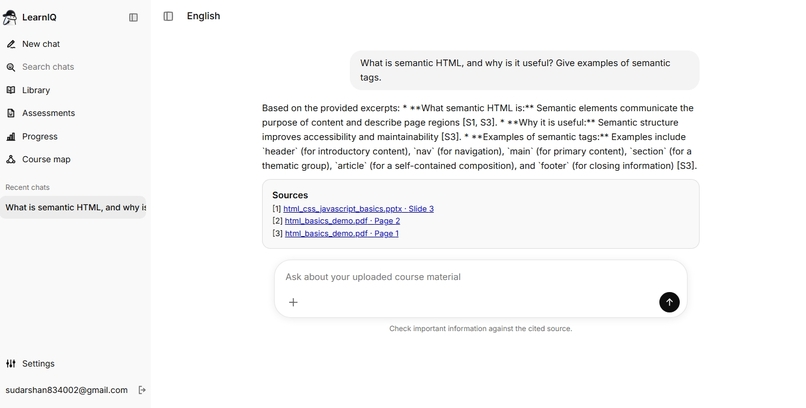
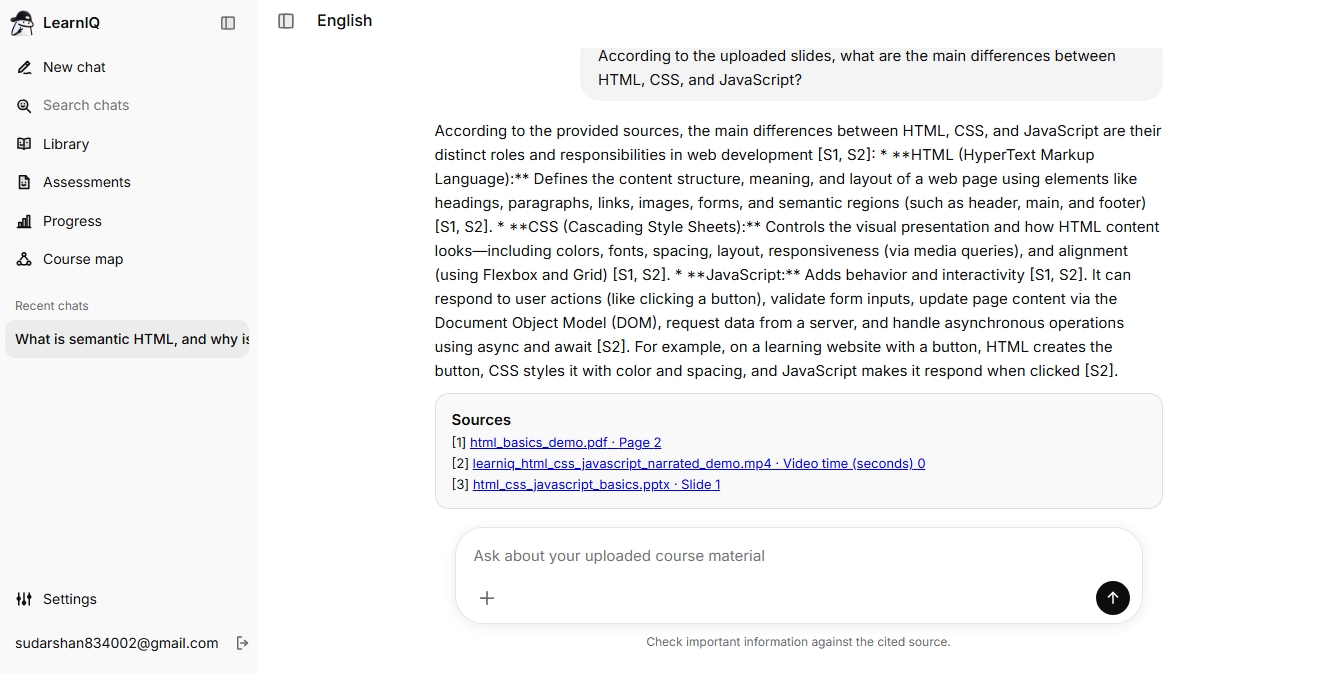
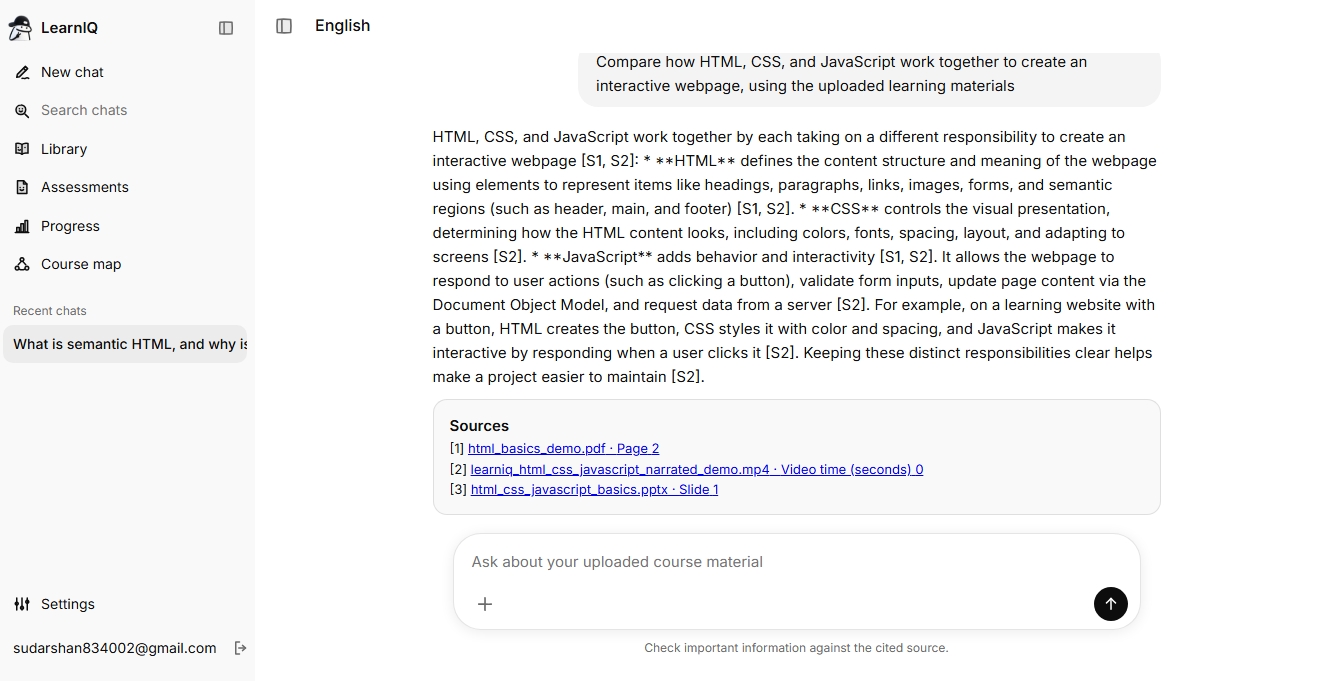
AI-Powered Learning Assistant — LearnIQ generates context-aware answers from uploaded PDFs, presentations, and videos
-
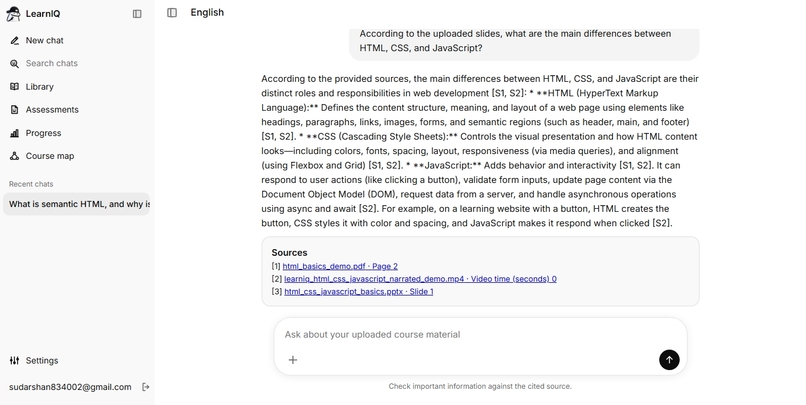
AI-Powered Learning Assistant LearnIQ generates context-aware answers from uploaded PDFs, presentations, and videos
-
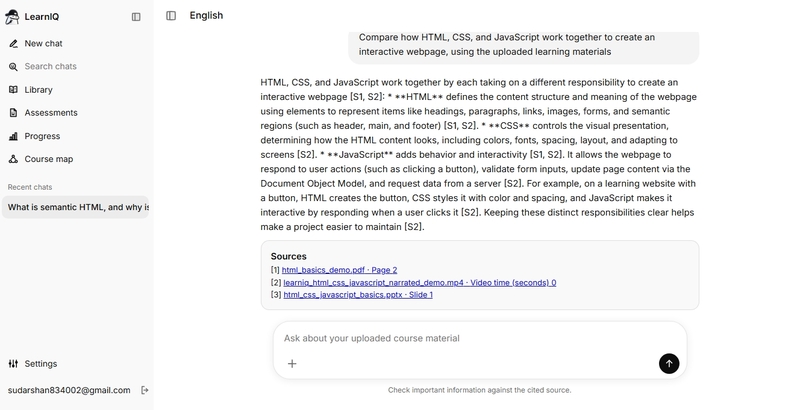
AI-Powered Learning Assistant — LearnIQ generates context-aware answers from uploaded PDFs, presentations, and videos
-
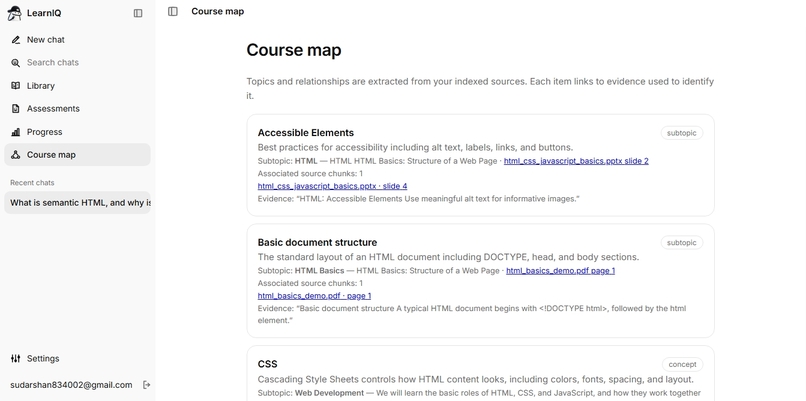
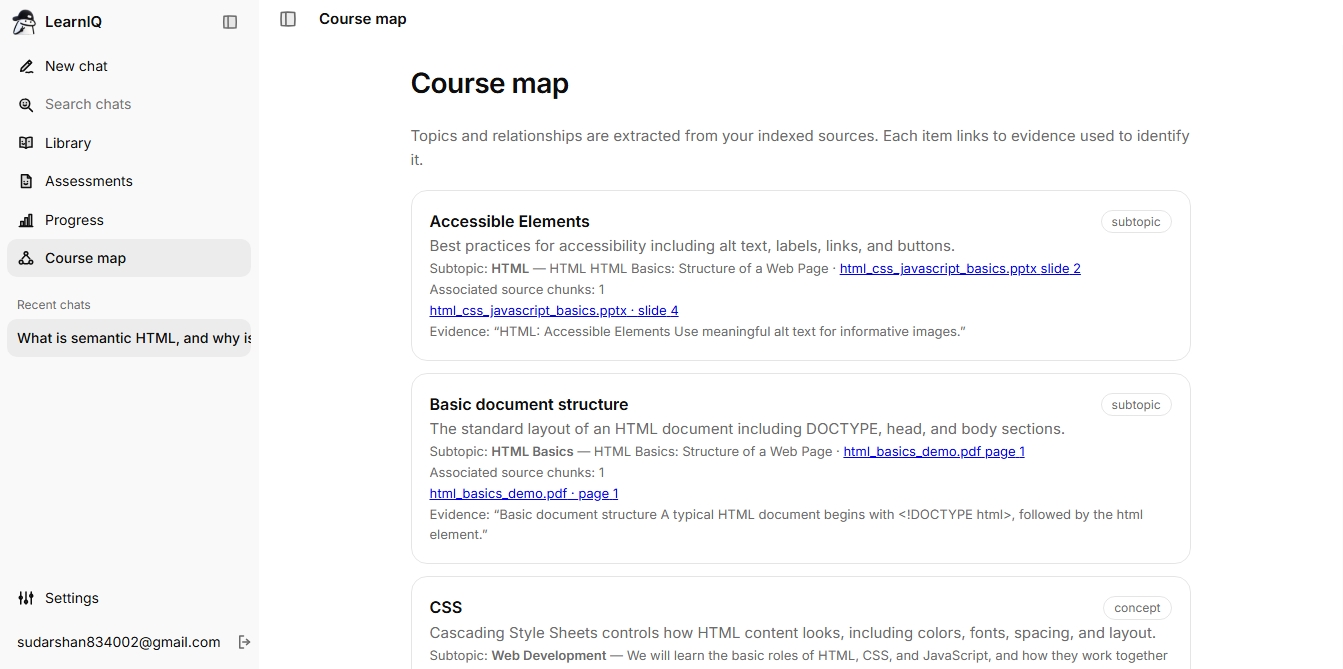
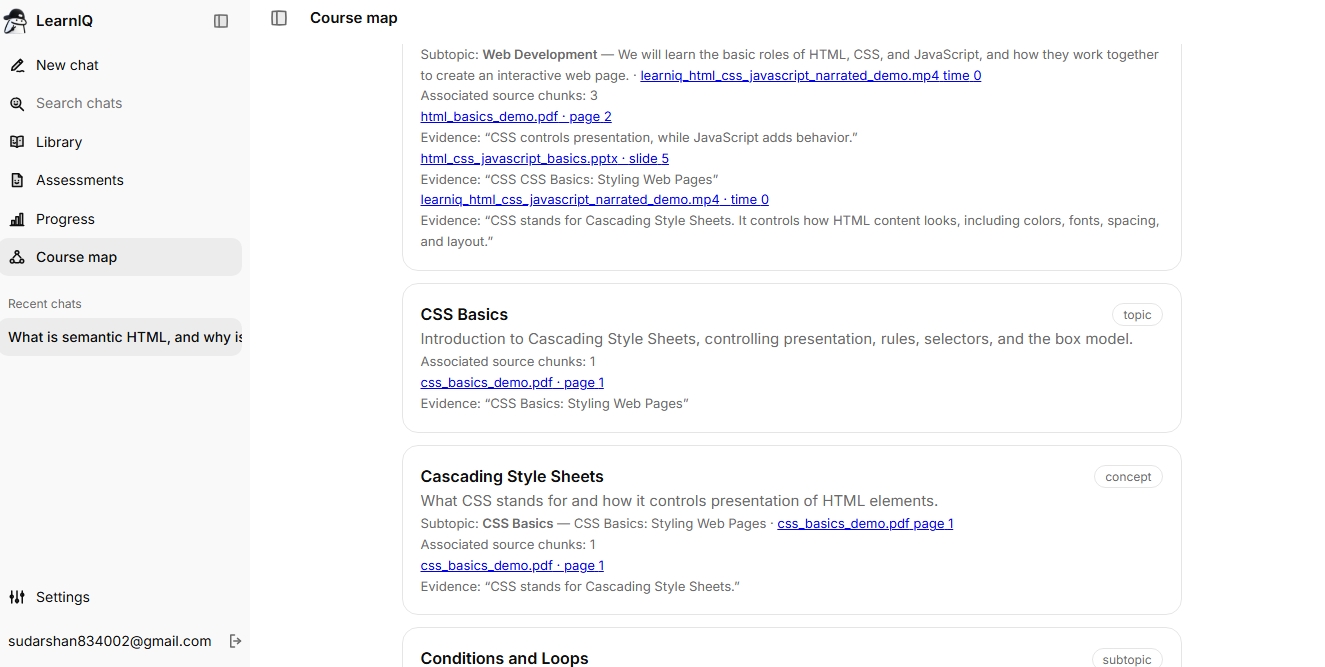
AI-Generated Course Map Discover key concepts, related subtopics, and evidence-backed relationships extracted from indexed course materials.
-
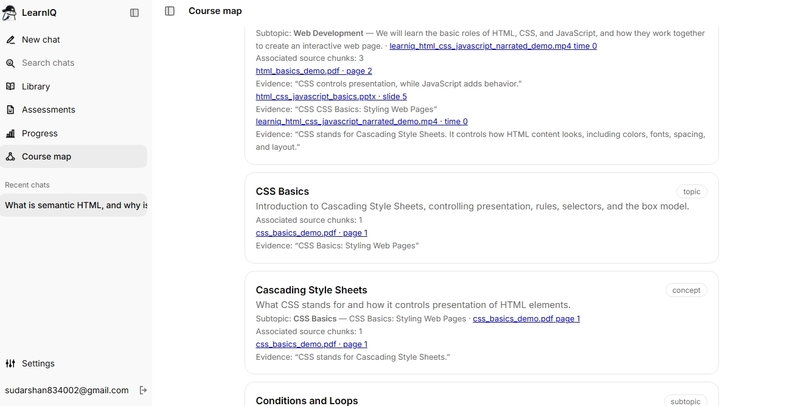
AI-Generated Course Map Discover key concepts, related subtopics, and evidence-backed relationships extracted from indexed course materials.
-
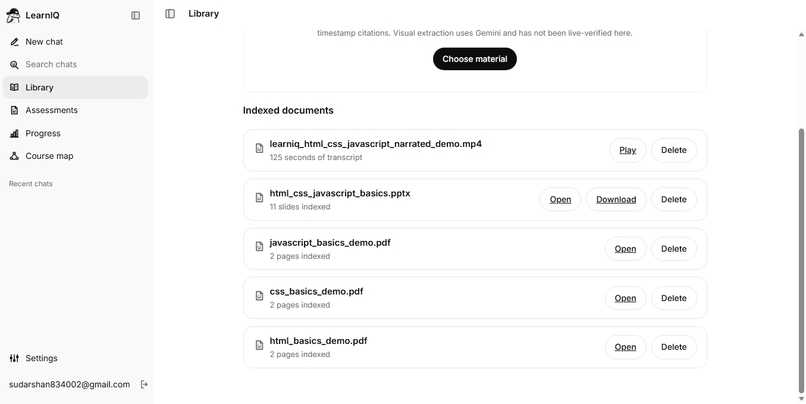
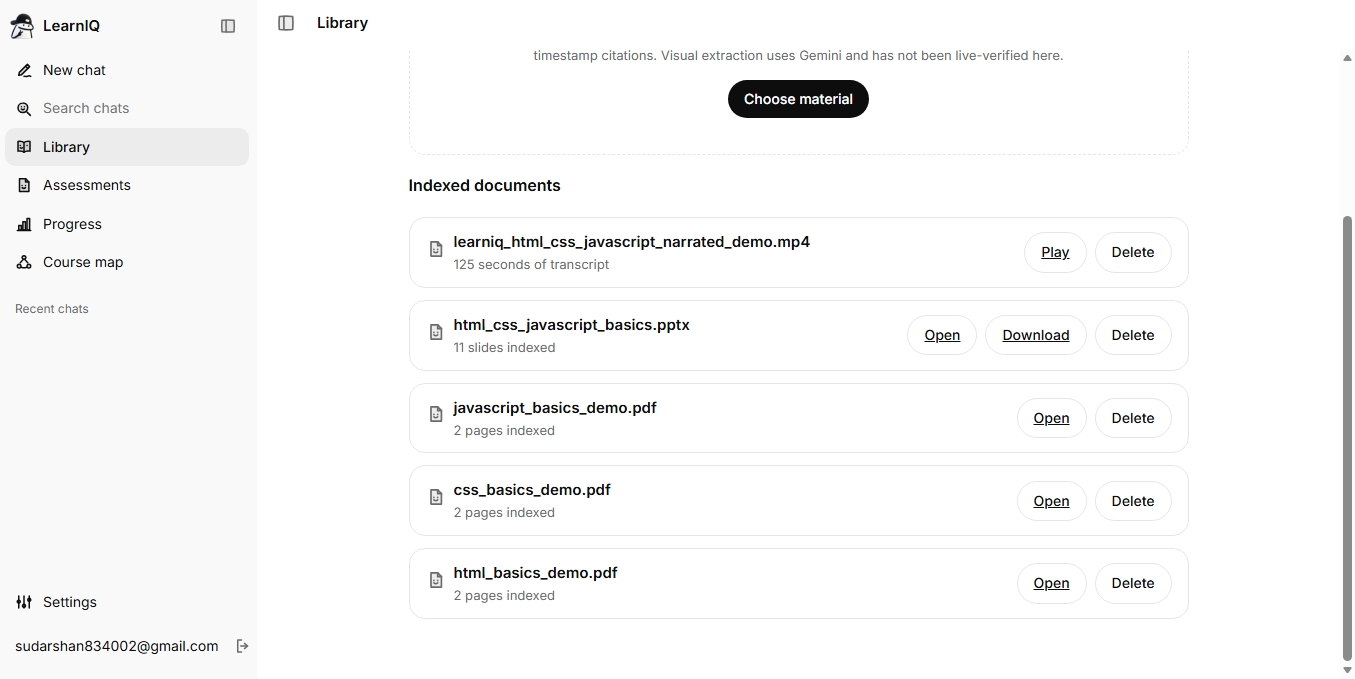
Multimodal Learning Library Organize and index PDFs, PowerPoint slides, and video learning materials in one place for AI-powered retrieval.
-
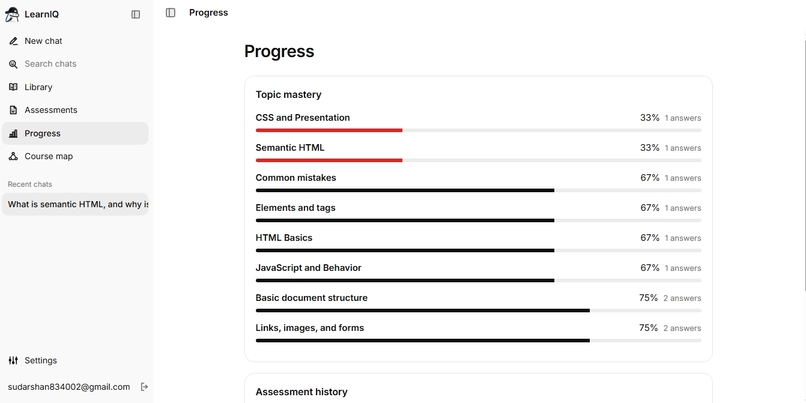
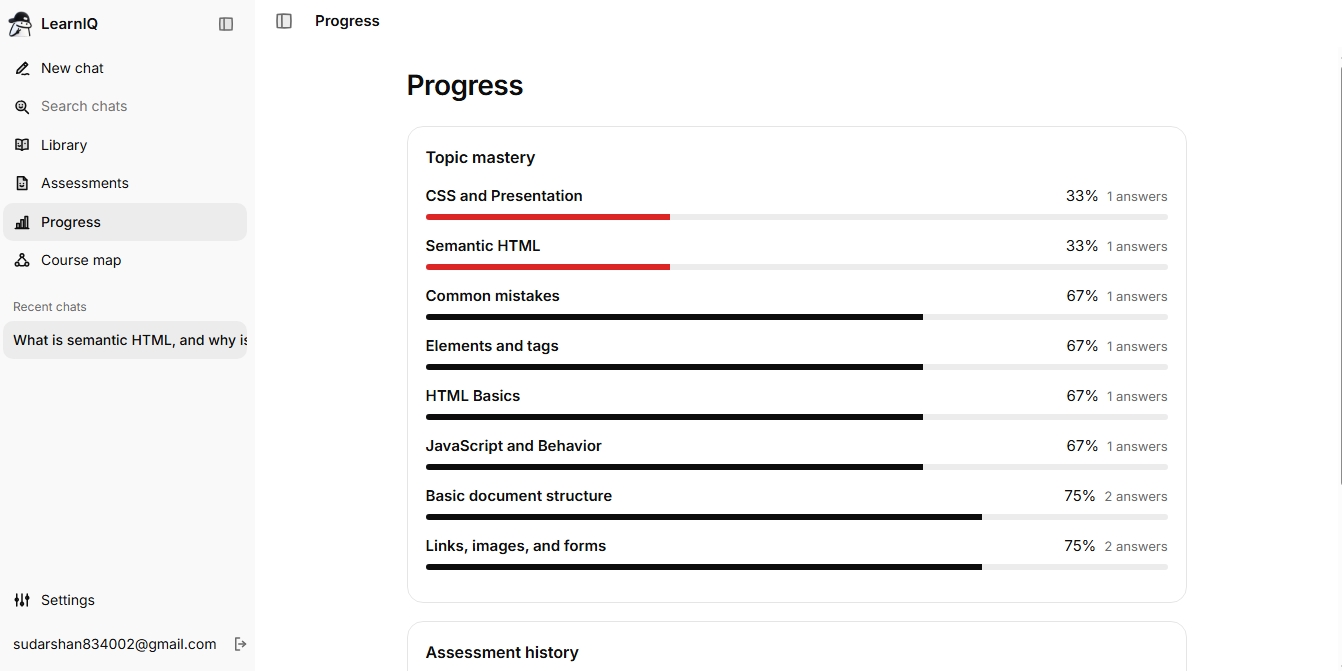
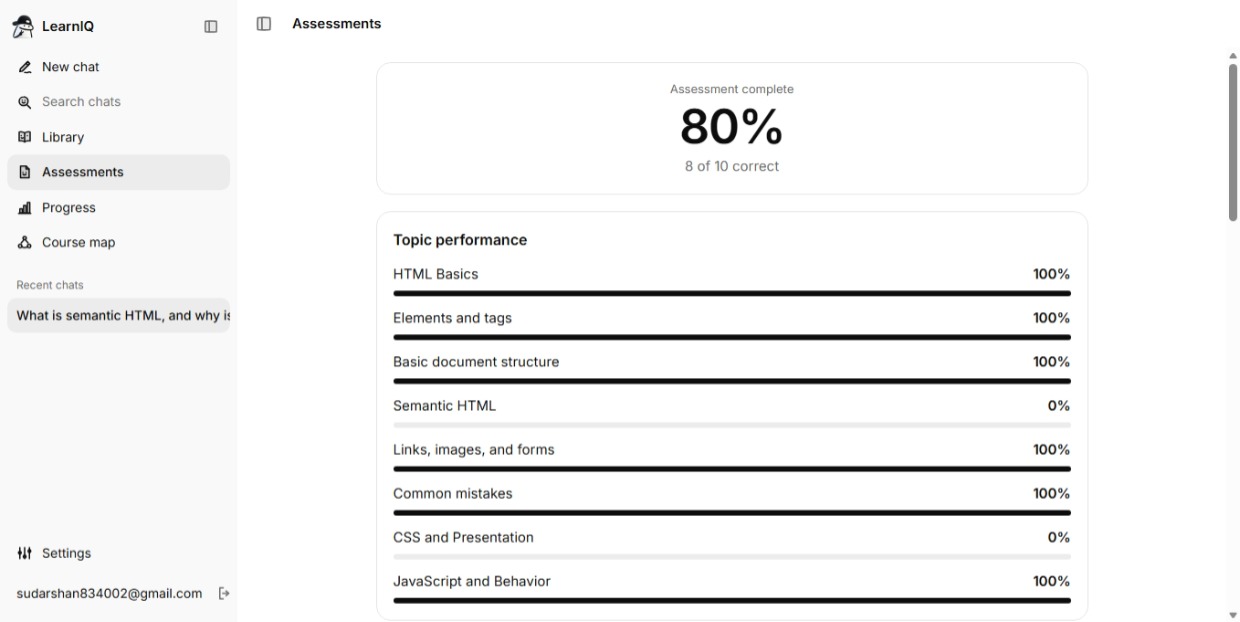
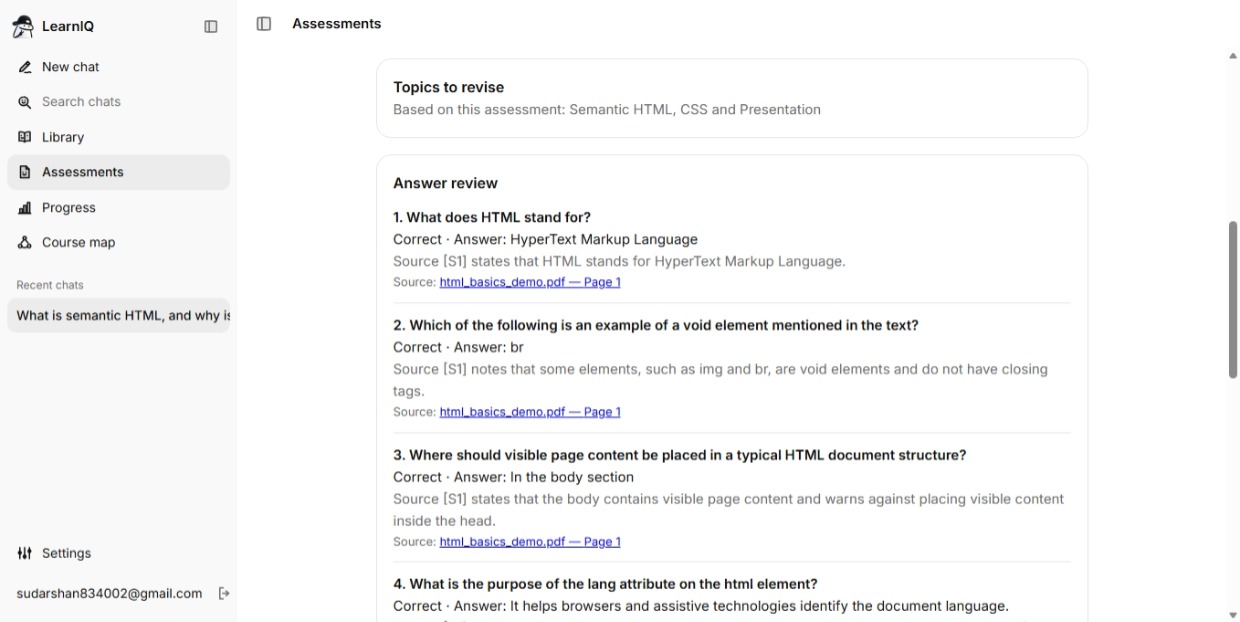
Assessment Results and Feedback — Review scores, topic-wise performance, answer explanations, and source-backed feedback to guide
-
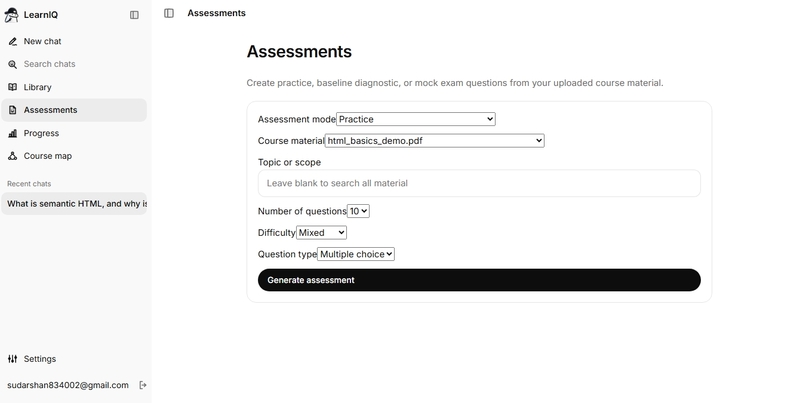
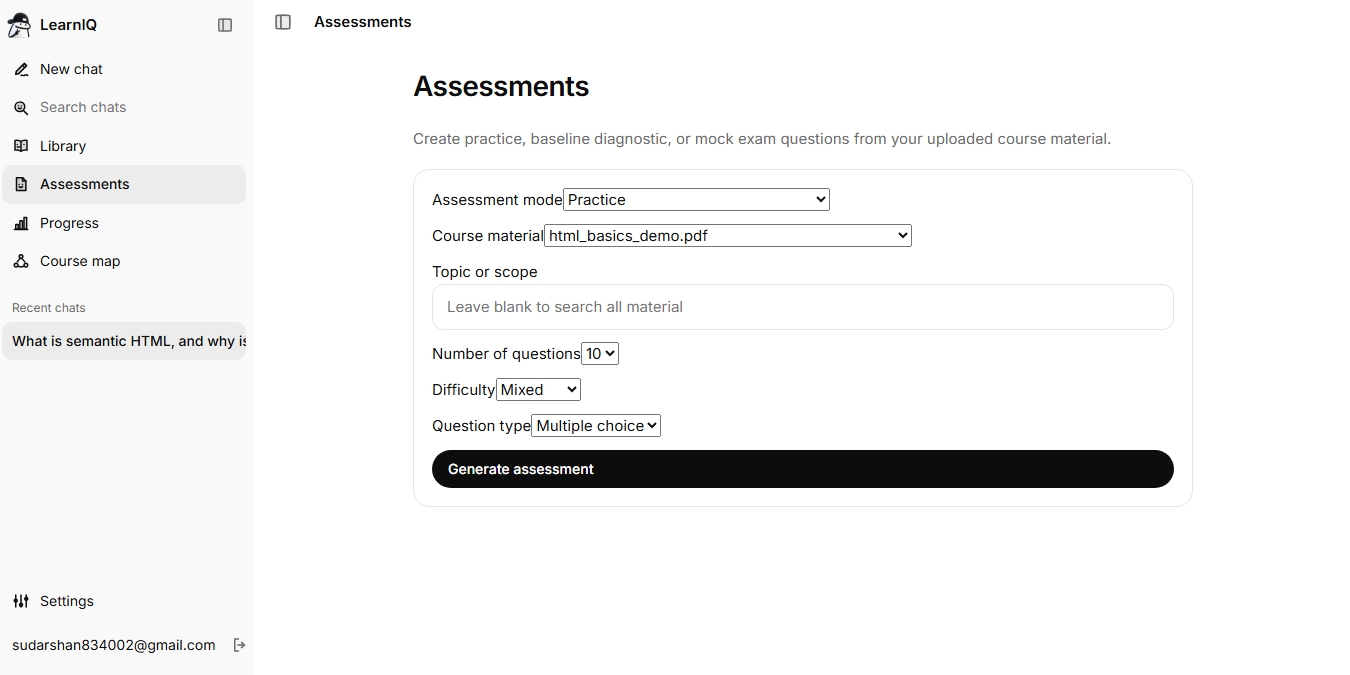
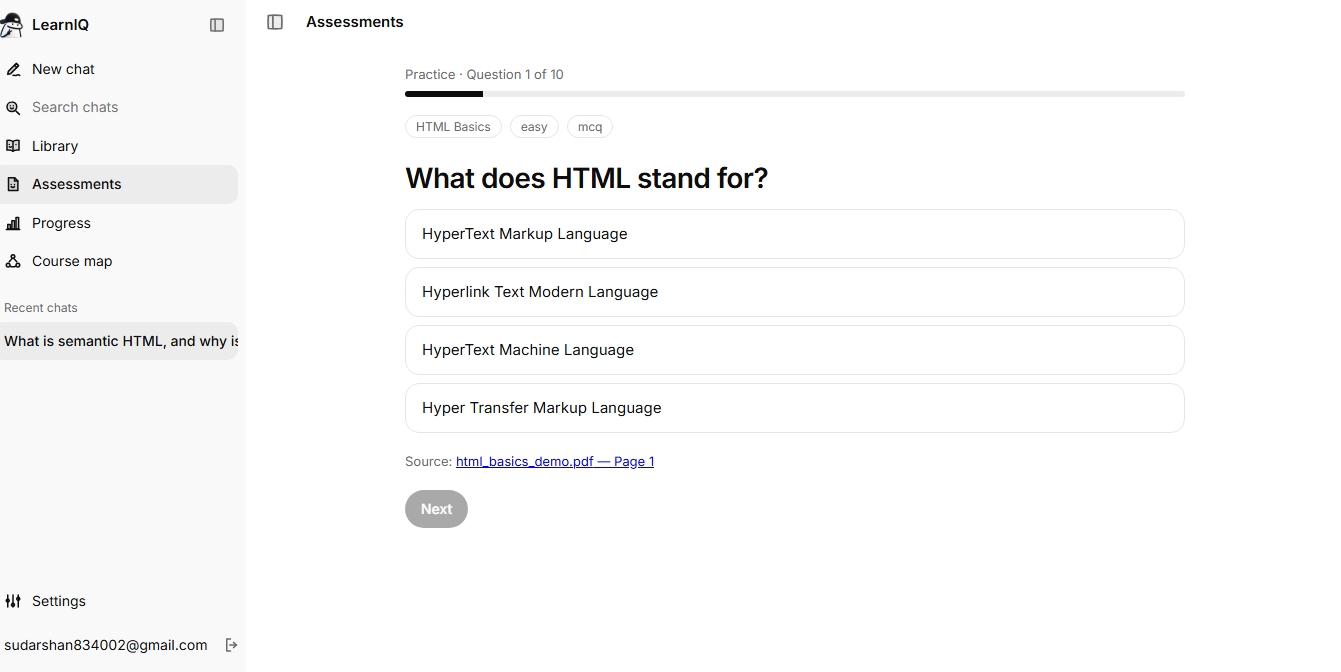
Create personalized practice quizzes from uploaded learning resources, with configurable difficulty, question count, and question type.
-
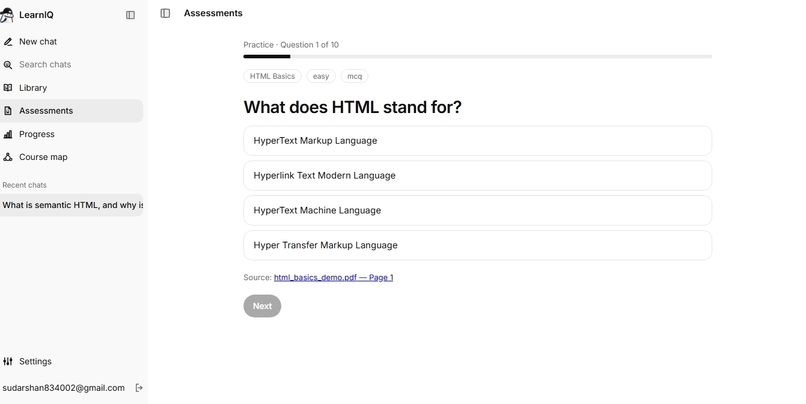
Create personalized practice quizzes from uploaded learning resources, with configurable difficulty, question count, and question type.
-
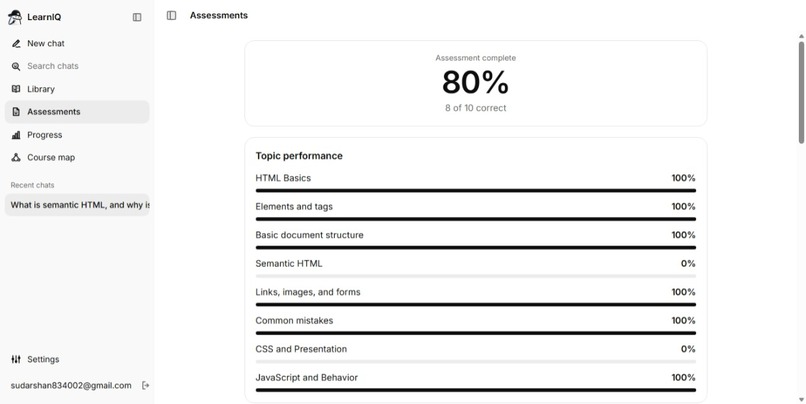
Assessment Results and Feedback — Review scores, topic-wise performance, answer explanations, and source-backed feedb
-
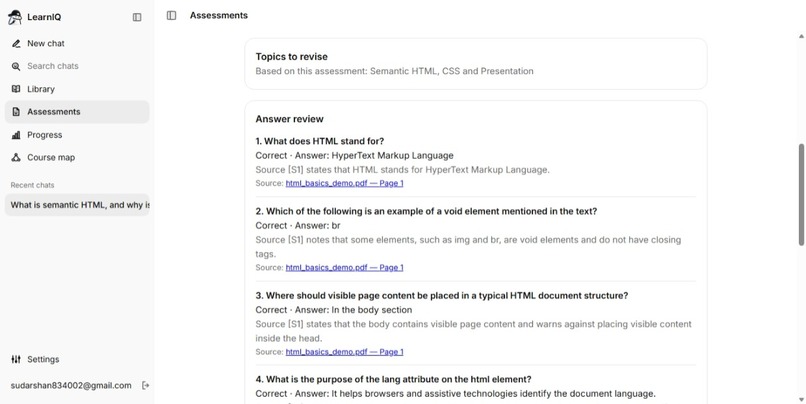
Assessment Results and Feedback — Review scores, topic-wise performance, answer explanations, and source-backed feedb
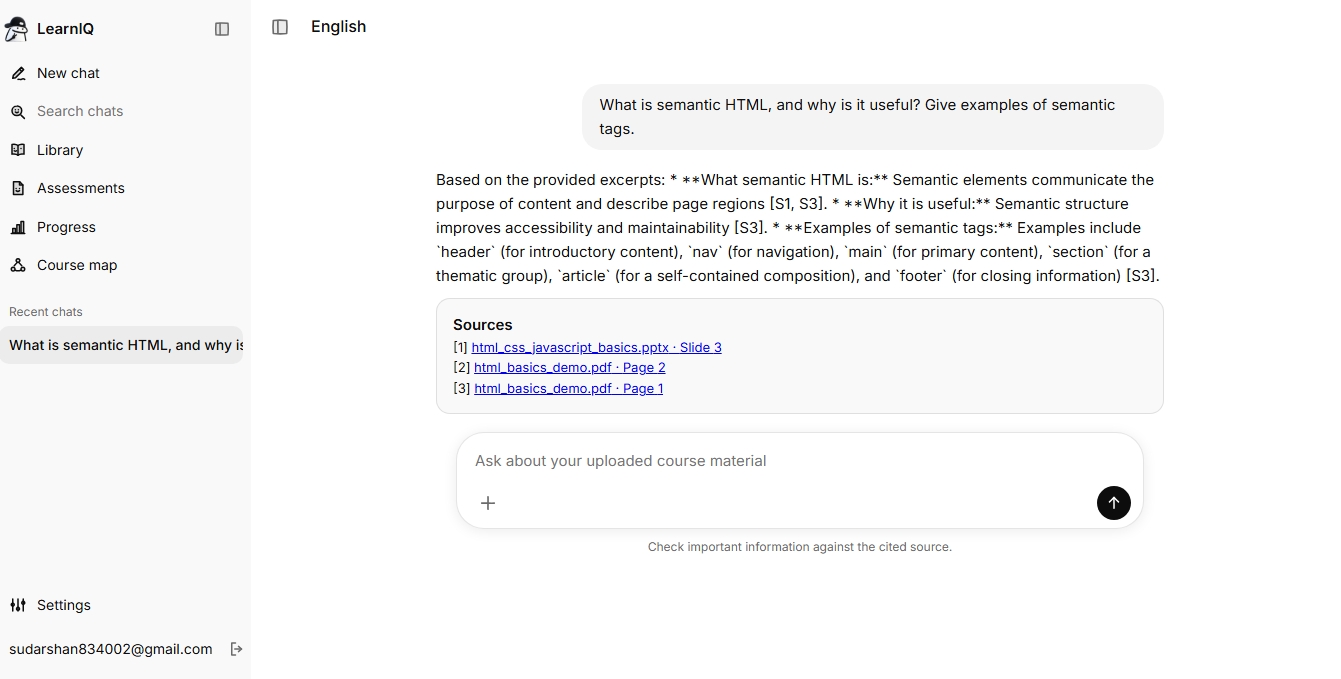
LearnIQ — Your Multimodal AI Learning Companion
Inspiration
Students gather information from PDFs, PowerPoint presentations, recorded videos, and personal notes. However, finding reliable answers across these resources and identifying topics that need more revision can be difficult.
This inspired us to build LearnIQ, an interactive learning companion that brings these resources together to provide grounded explanations, generate assessments, and track learning progress.
What It Does
LearnIQ transforms learning materials into an interactive study experience through:
- Multimodal Ingestion: Extracts content from PDFs, PowerPoint presentations, and supported lecture videos.
- Grounded AI Tutoring: Uses Retrieval-Augmented Generation (RAG) to answer questions using relevant content from uploaded materials, with source references.
- Smart Assessments: Supports practice, diagnostic, and mock-exam modes, including question generation, verification, and server-side grading.
- Personalized Learning: Estimates topic-level performance to identify areas that may need more practice.
- Progress Tracking: Stores assessment history and learning progress for future review.
How We Built It
LearnIQ uses a React and TypeScript frontend with a Node.js and Express backend. Its document-processing pipeline extracts content, divides it into manageable chunks, adds source metadata, generates embeddings using Google Gemini, and indexes them in Qdrant, a vector database.
When a learner asks a question, the retrieval pipeline searches for relevant content and supplies it to the language model as context, helping generate answers grounded in the uploaded learning materials.
The assessment system generates questions, performs verification checks, and grades submitted answers on the server. Topic-level estimates use assessment evidence to represent learner progress.
We also developed automated tests, evaluation fixtures, an RAG benchmark runner, and a learner-simulation runner to assess system behavior and catch regressions.
Technology Stack
- Frontend: React, TypeScript, Vite
- Backend: Node.js, Express
- AI: Google Gemini for language-model and embedding workflows
- Vector Database: Qdrant
- Persistence: SQLite
- Evaluation: Automated tests, benchmark fixtures, and learner simulations
Challenges We Faced
One major challenge was building a consistent retrieval pipeline for PDFs, slides, and videos, as each format requires different extraction methods. Preserving source metadata was also essential for meaningful references.
Another challenge was generating valid, diverse assessment questions that passed verification checks. Limited source material sometimes made it difficult to generate enough distinct questions that met the required criteria.
We also worked on vector-database integration, embedding validation, document ownership, error handling, and organizing backend logic into maintainable services.
What We Learned
Building LearnIQ gave us practical experience with RAG, embeddings, vector search, multimodal processing, backend API design, assessment validation, and automated testing.
We learned that reliable AI applications require more than generating convincing responses. Answers must be grounded in evidence, and assessment questions must be validated before use.
What's Next
Our priorities are to strengthen end-to-end testing, improve question diversity and regeneration, evaluate retrieval and citation quality, and refine learner-performance estimates.
LearnIQ — Learn from your materials. Practice with purpose. Grow with every assessment.
Built With
- automated-assessment
- edtech
- express.js
- generative-ai
- google-gemini
- multimodal-ai
- node.js
- personalized-learning
- qdrant
- rag
- react
- retrieval-augmented-generation-(rag)
- sqlite
- typescript

Log in or sign up for Devpost to join the conversation.