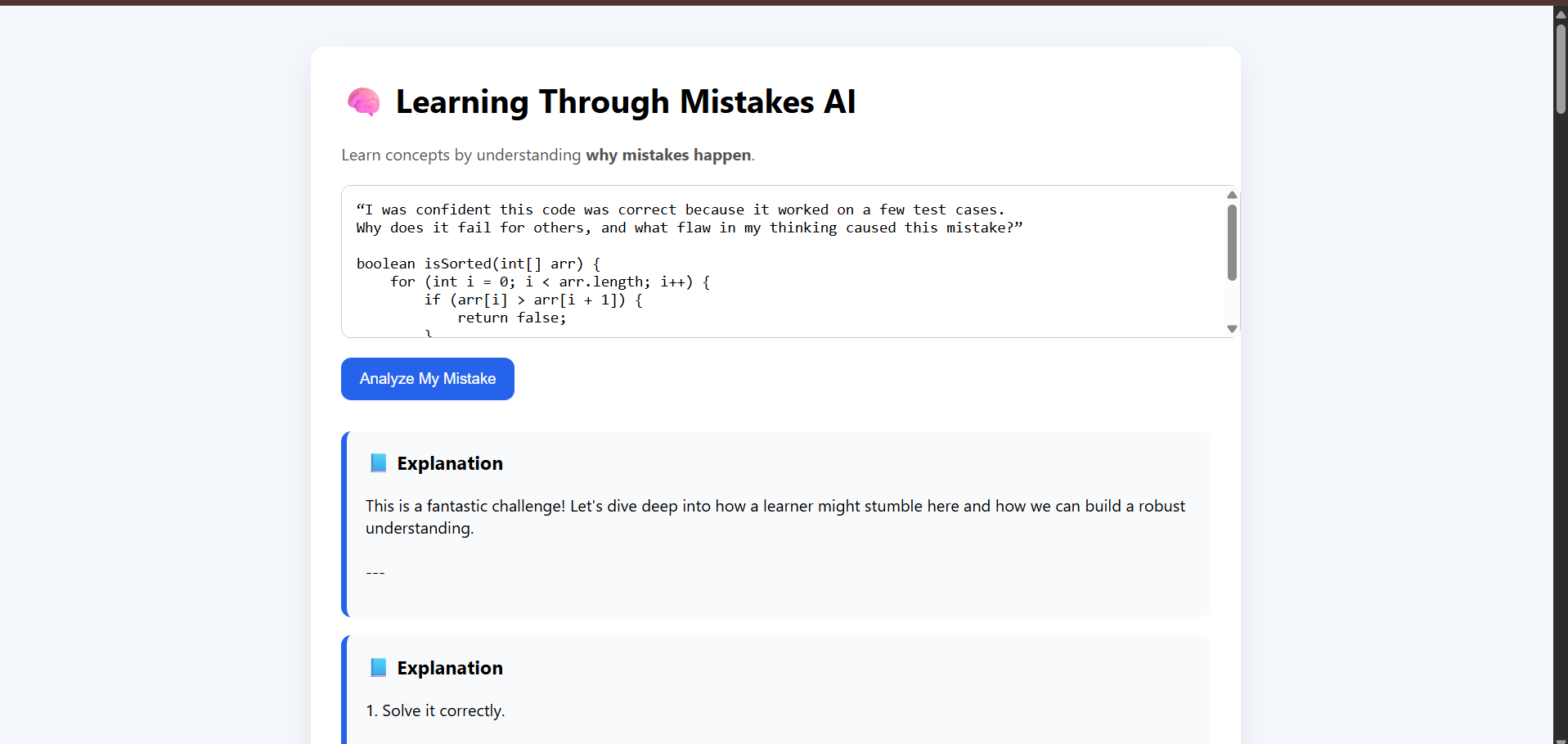
Learning Through Mistakes AI is an AI-powered learning assistant that helps users understand why their code or answers are wrong by analyzing their reasoning process.
Instead of only pointing out syntax errors or giving the correct solution, the system:
Identifies the core thinking mistake
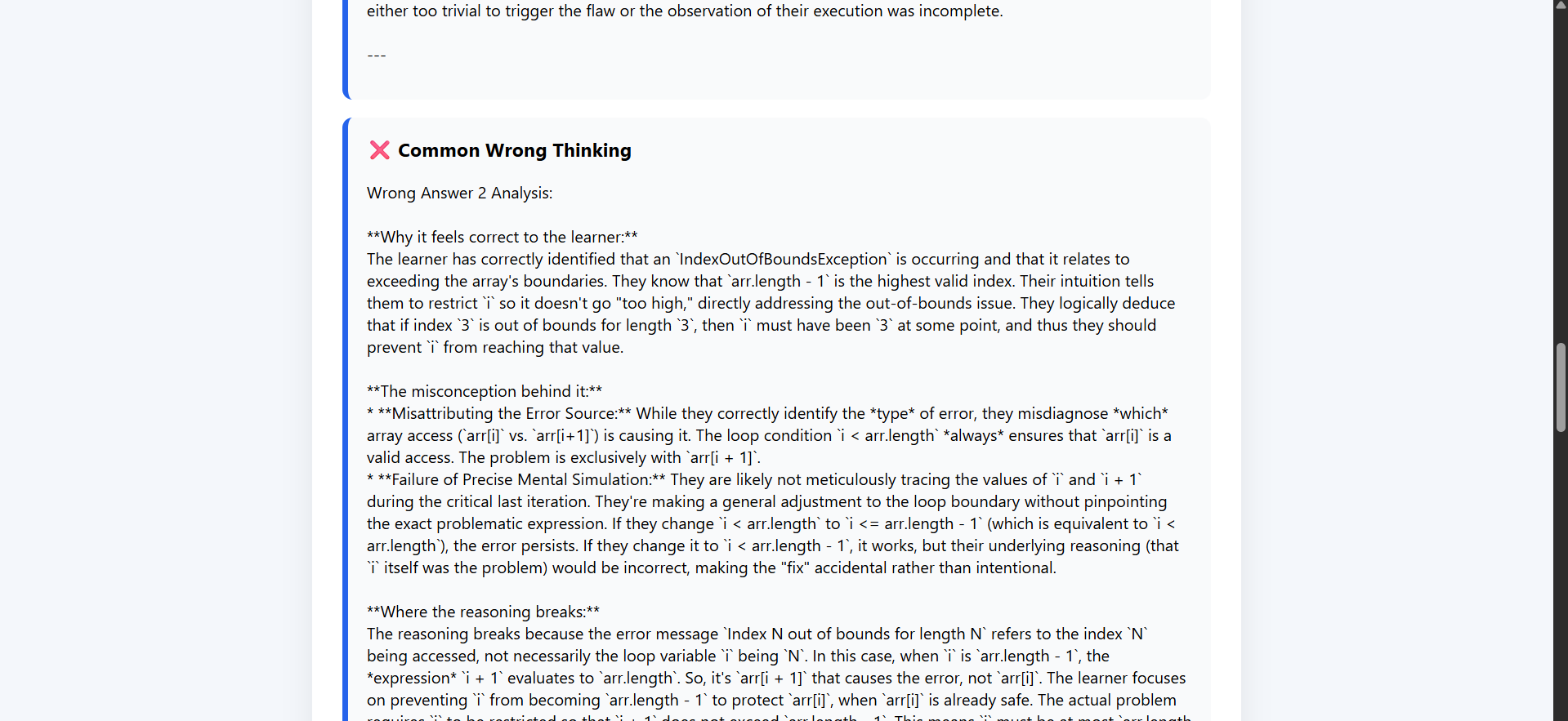
Explains why the wrong logic felt correct
Highlights common misconceptions
Rebuilds the correct mental model step by step
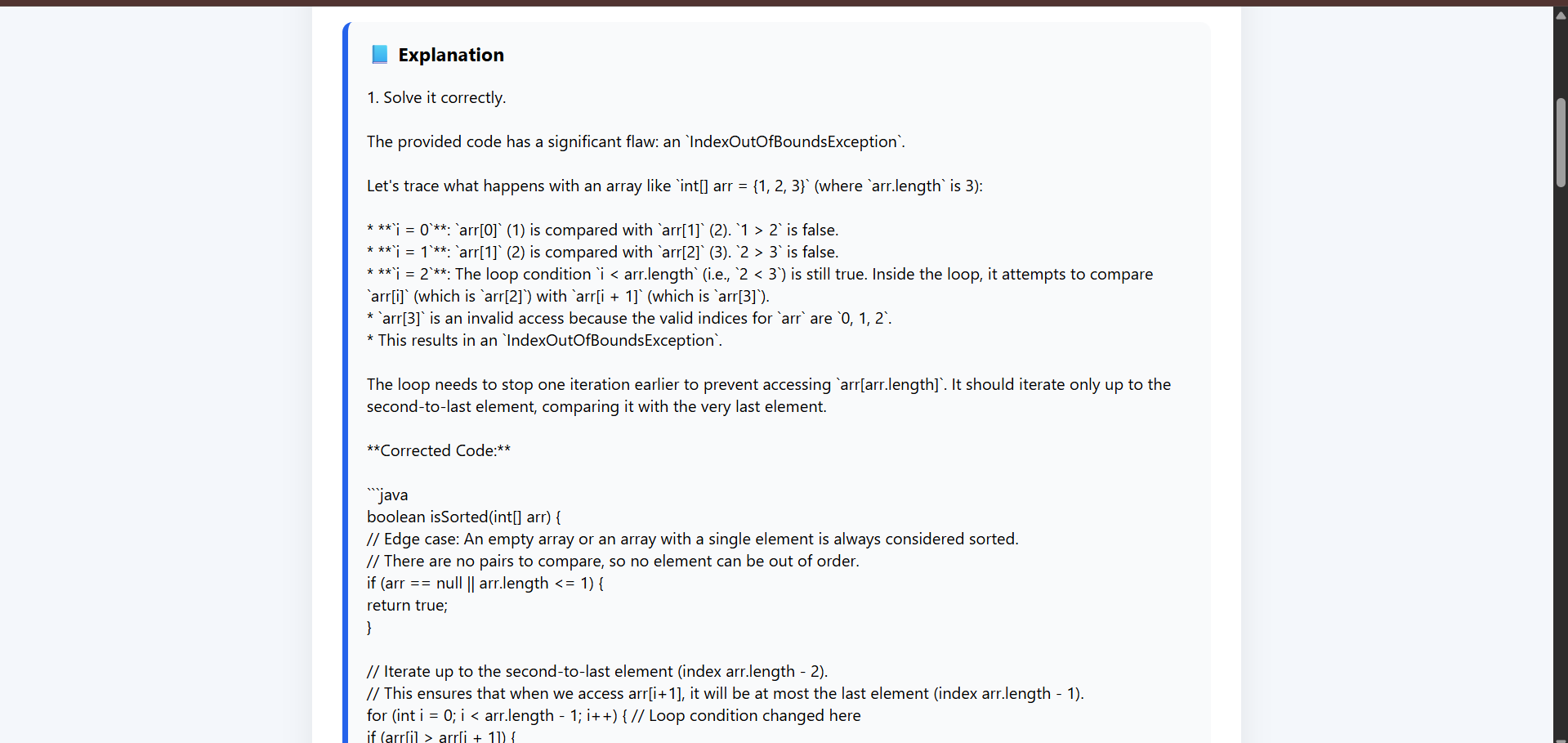
For example, when a learner submits buggy code, the AI doesn’t just fix it—it explains the boundary error, the incorrect assumption, and how to avoid the same mistake forever.
The goal is to transform mistakes into powerful learning moments.
🛠️ How I Built It
The project is designed as a simple, clean web interface where users:
Describe their mistake or wrong assumption
Paste their code or answer
Ask the AI to analyze their thinking
On submission, the AI generates a structured explanation that includes:
The actual bug or issue
Common wrong interpretations
Why those interpretations are tempting
The correct conceptual model
A practical tip to avoid repeating the mistake
The explanations are intentionally written in a human, mentor-like tone, focusing on clarity and reasoning rather than jargon.
🚧 Challenges I Faced
One of the biggest challenges was not overcorrecting.
It’s easy for AI to sound authoritative and jump straight to the solution. The real challenge was shaping responses that:
Respect the learner’s original thinking
Avoid shaming or dismissiveness
Clearly explain why the logic fails
Another challenge was balancing technical accuracy with educational clarity, ensuring explanations are helpful for beginners while still being conceptually correct.
📚 What I Learned
Through this project, I learned:
How powerful explainability is in education
That mistakes often come from reasonable—but incomplete—assumptions
How to design AI responses that teach thinking, not memorization
How to structure feedback in a way that builds long-term understanding
Most importantly, I learned that mistakes are not failures—they are data.
🚀 Future Scope
In the future, this project can expand to:
Categorize mistakes (e.g., off-by-one errors, logical fallacies, algorithm misconceptions)
Support multiple domains like DSA, OS, DBMS, and math
Track a learner’s recurring thinking patterns
Provide personalized learning paths based on mistake history

Log in or sign up for Devpost to join the conversation.