

About the Project - LearnHub
Inspiration
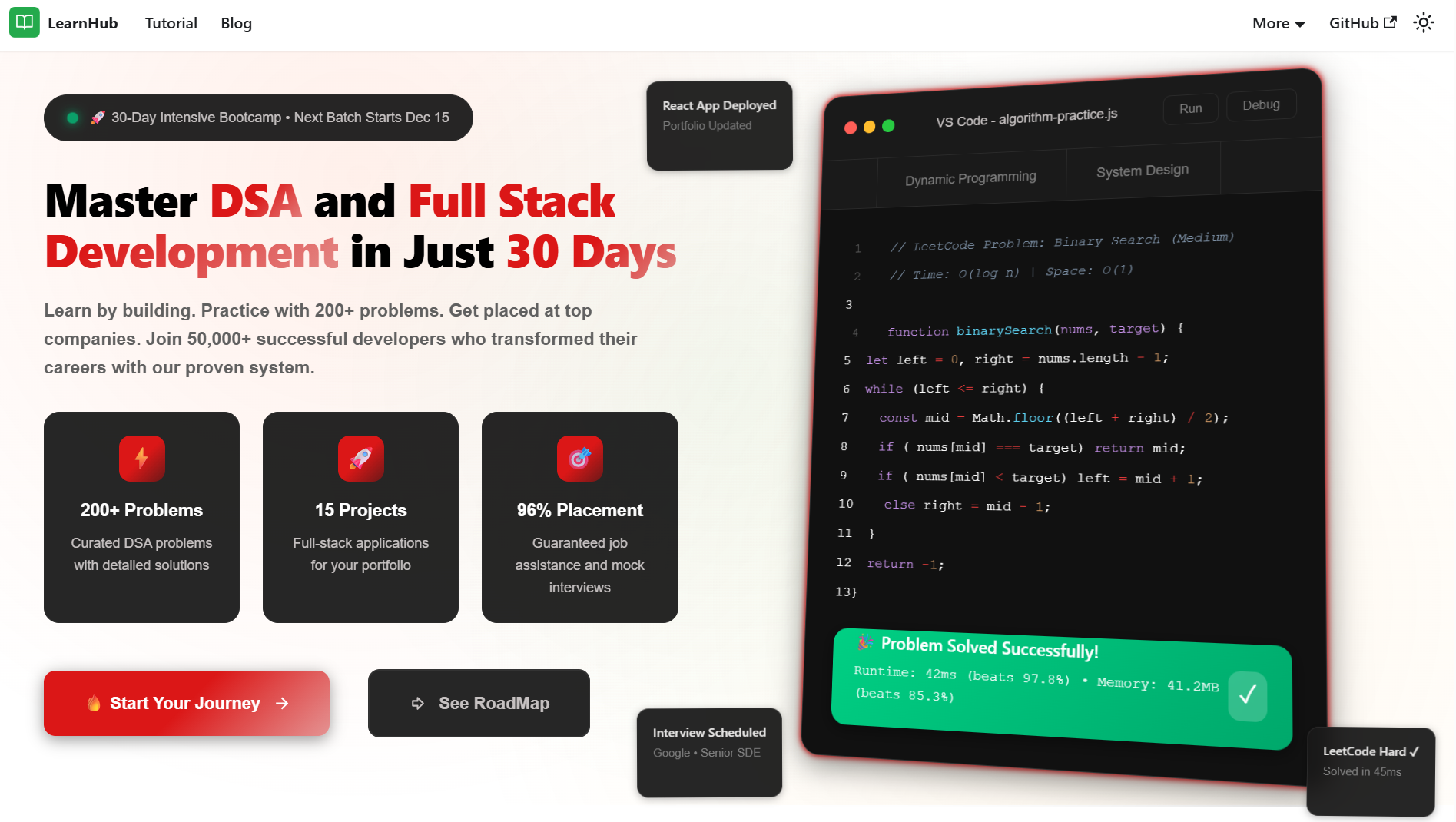
LearnHub was inspired by the gap between theoretical tech education and practical skill application in modern learning platforms. Traditional documentation sites lack interactivity, while coding platforms often miss structured learning paths. We recognized that learners need hands-on practice, interactive assessments, and structured courses all in one unified platform. Our goal is to bridge this gap by providing comprehensive, engaging education across Web Development, AI, Blockchain, and DSA domains. LearnHub empowers learners to master technologies through an integrated learning ecosystem that combines theory with hands-on practice.
What it does
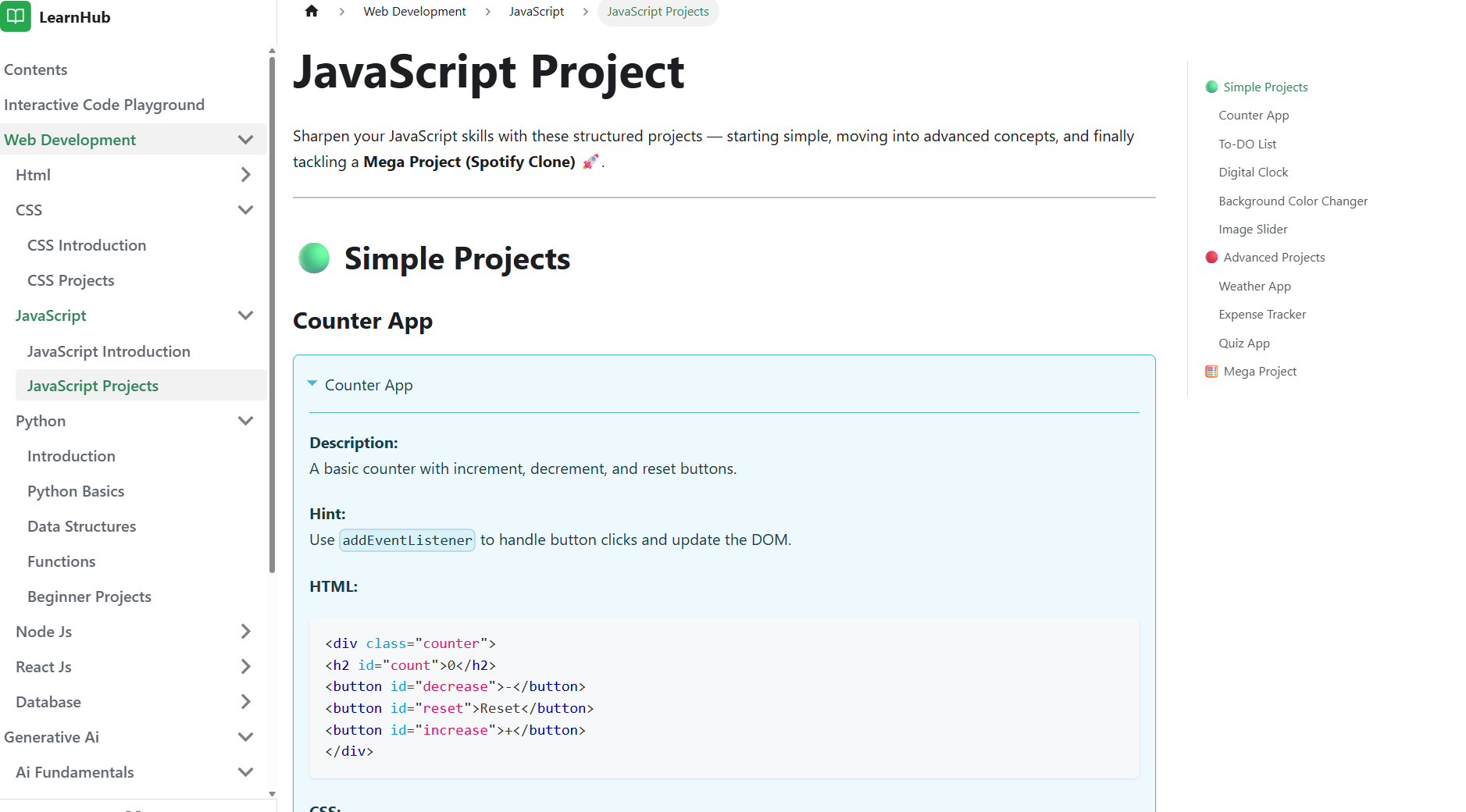
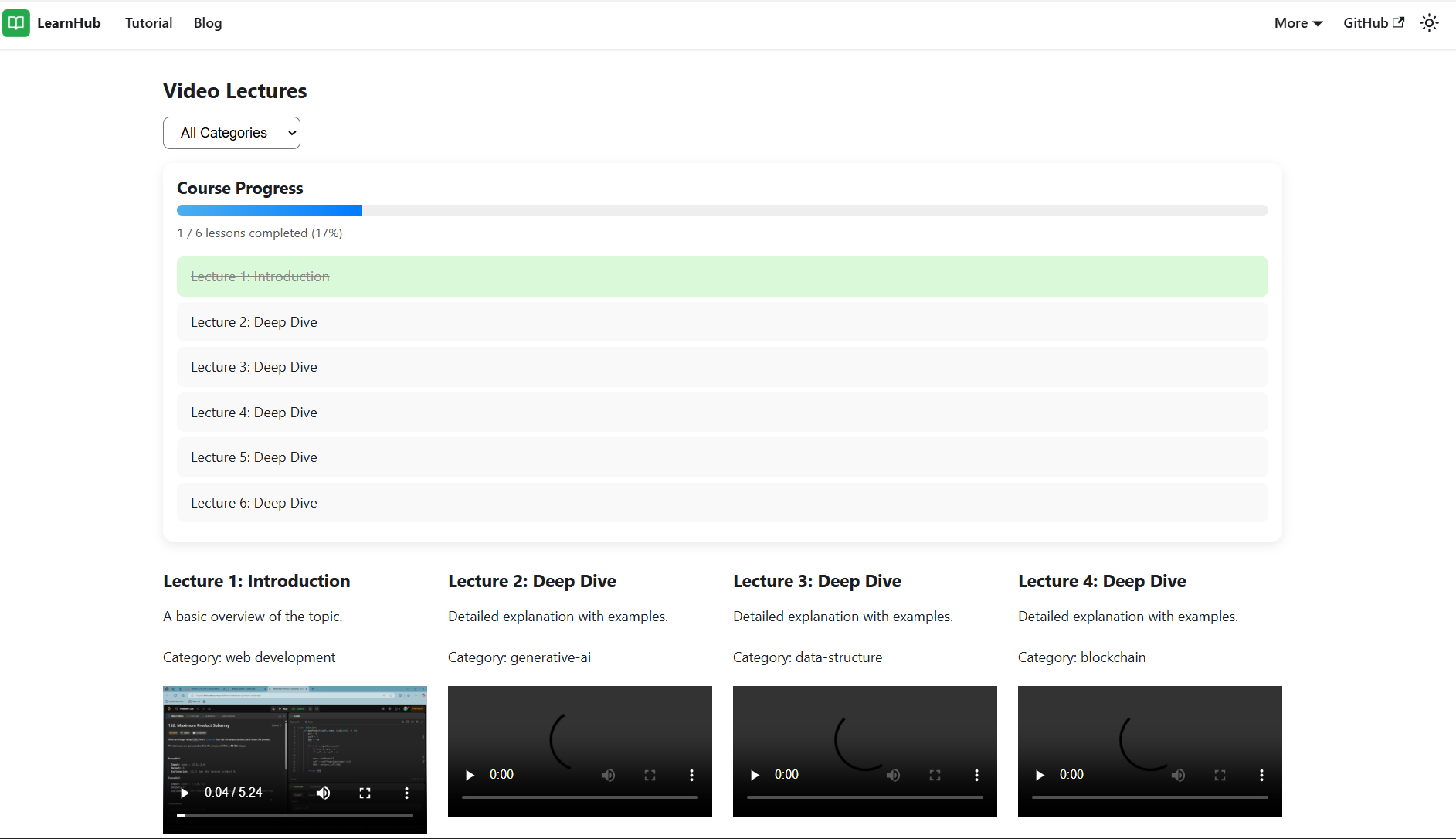
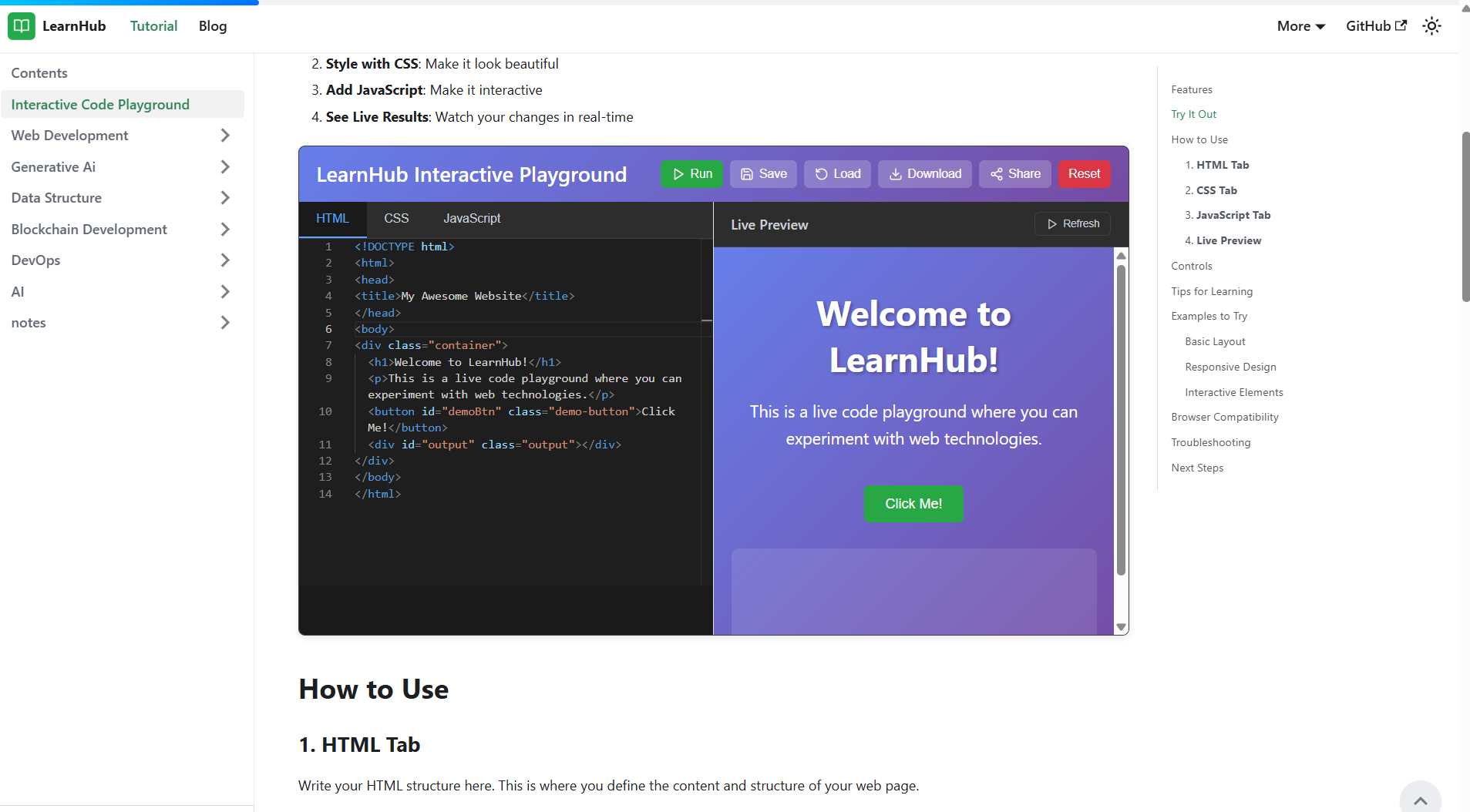
LearnHub is a comprehensive tech education platform offering structured courses across Web Development, Generative AI, Data Structures & Algorithms, Blockchain Development, and DevOps. The platform features an interactive Code Playground powered by Monaco Editor, enabling users to write, test, and execute HTML, CSS, and JavaScript code directly in the browser. Students can track learning progress through LocalStorage-powered progress tracking, complete interactive quizzes with instant feedback, and access categorized video lectures. The platform includes a Tech News aggregator that fetches real-time technology updates, keeping learners informed about industry trends. LearnHub combines multiple learning modalities text content, hands-on coding, assessments, and video resources into a seamless, accessible experience.
How we built it
LearnHub is built on Docusaurus 3.8.1 as the core framework, leveraging static site generation for optimal performance without requiring backend infrastructure. The frontend uses React 19.1.1 and TypeScript 5.6.2 for type-safe, maintainable component architecture with custom interactive modules. We implemented the Code Playground using Monaco Editor for syntax highlighting and code execution, while quizzes use JSON-based question banks parsed by React components. Content is organized using Markdown and MDX files, allowing seamless integration of React components within documentation pages. The platform uses CSS Modules for scoped styling, follows a component-based architecture, and integrates Vercel Analytics for engagement tracking.
Challenges we ran into
Implementing secure code execution in the Code Playground required careful sandboxing of user-generated code to prevent XSS vulnerabilities and security breaches. Integrating multiple learning modules while maintaining consistent UX across different course categories required complex state management and LocalStorage synchronization. Organizing extensive content across 6+ technology domains with proper navigation through Docusaurus's sidebar system presented significant structural challenges. Optimizing build performance with Monaco Editor's large bundle size (~2MB) required code splitting, lazy loading strategies, and careful dependency management. Ensuring responsive design and accessibility (WCAG compliance) across all interactive components for different screen sizes and assistive technologies was an ongoing challenge.
Accomplishments that we're proud of
We successfully built a production-ready learning platform with 6 major course categories and 50+ lesson modules without any backend infrastructure, demonstrating the power of static site generation. The interactive Code Playground provides a seamless coding experience with syntax highlighting and real-time execution, eliminating the need for learners to set up development environments. We achieved comprehensive progress tracking using browser LocalStorage, enabling persistent learning state across sessions with zero server costs. The platform successfully integrates multiple learning modalities text content, interactive quizzes, video lectures, and hands-on coding into a unified, engaging user experience. We created a scalable, modular architecture that makes it easy for open-source contributors to add courses and extend features, fostering community collaboration.
What we learned
Through building LearnHub, we gained deep insights into static site generation (SSG) advantages, learning how Docusaurus handles complex documentation while maintaining excellent performance and SEO. We mastered React component composition and MDX integration, understanding how to build reusable components that render dynamically within Markdown content. Working with TypeScript taught us the critical importance of type safety in large-scale projects, significantly reducing runtime errors and improving developer experience. We learned practical strategies for client-side state management using React hooks and LocalStorage, understanding trade-offs between different state management solutions for static sites. We discovered the significance of web accessibility, implementing ARIA labels, keyboard navigation, and semantic HTML to ensure the platform is usable by all learners regardless of their abilities.
What's next for LearnHub
Our immediate roadmap includes implementing user authentication to enable personalized learning profiles, cross-device progress synchronization, and social features like leaderboards and study groups. We plan to expand the Code Playground to support additional programming languages (Python, Java, C++) with backend compilation support for comprehensive coding practice. We aim to integrate AI-powered features such as personalized learning recommendations, automated code review for exercises, and intelligent quiz generation targeting weak areas. Another major initiative is developing a mobile application (React Native) with offline content download capabilities, making LearnHub accessible on-the-go even in areas with limited connectivity. We envision transforming LearnHub into a comprehensive learning ecosystem with community features where learners can share projects, participate in coding challenges, collaborate on group projects, and receive mentorship from industry professionals.


Log in or sign up for Devpost to join the conversation.