-
-
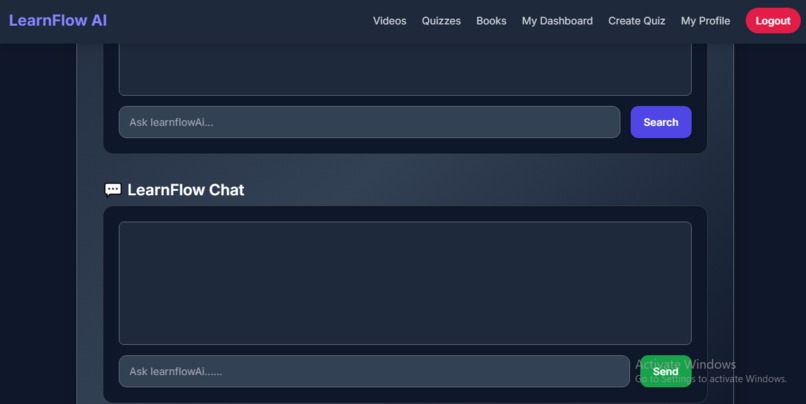
ai chatbot
-
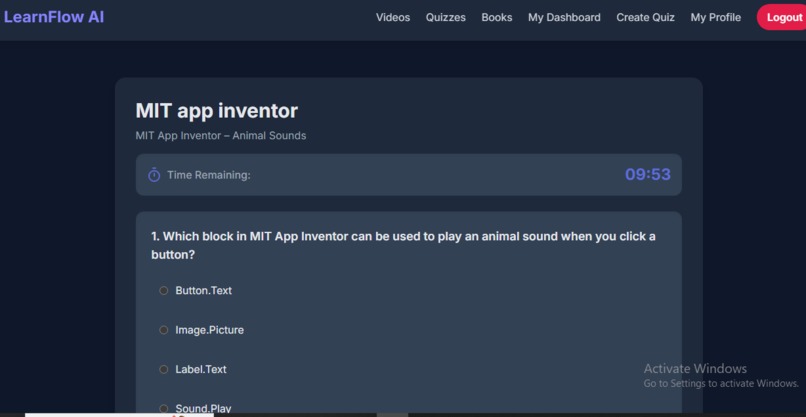
quiz attempt page
-
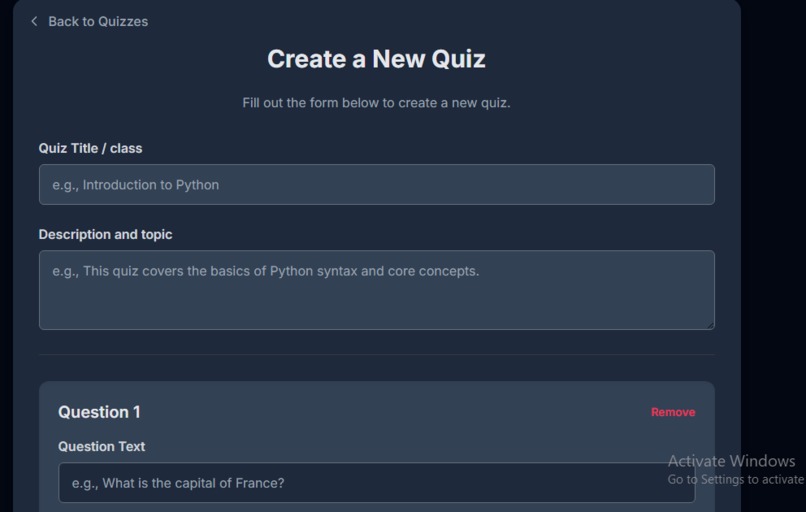
quiz upload page
-
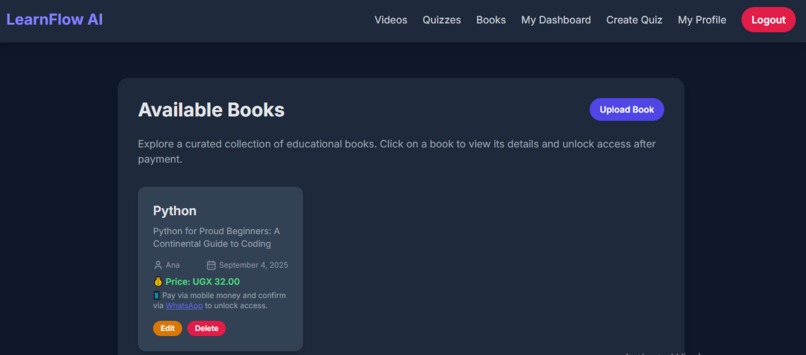
ebook
-
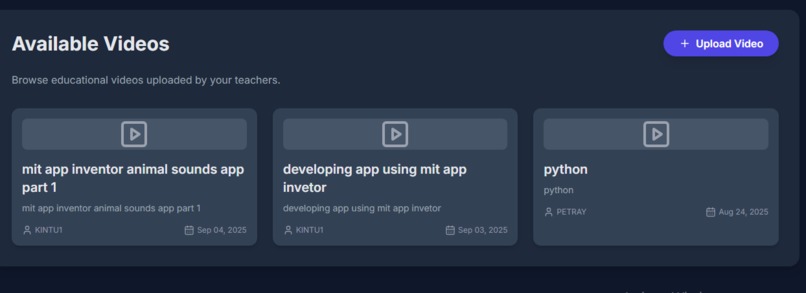
videos and video upload
-
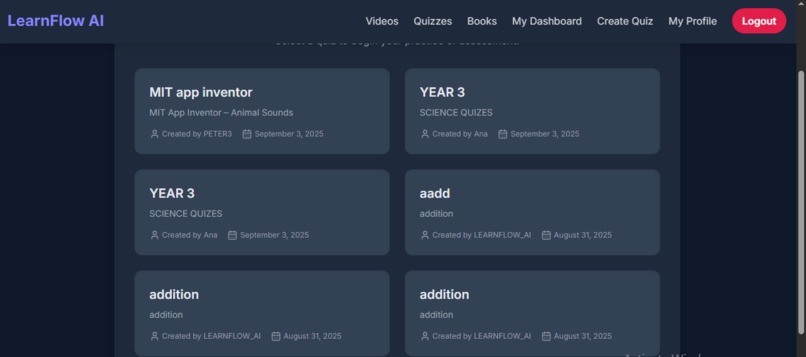
quizzes
-
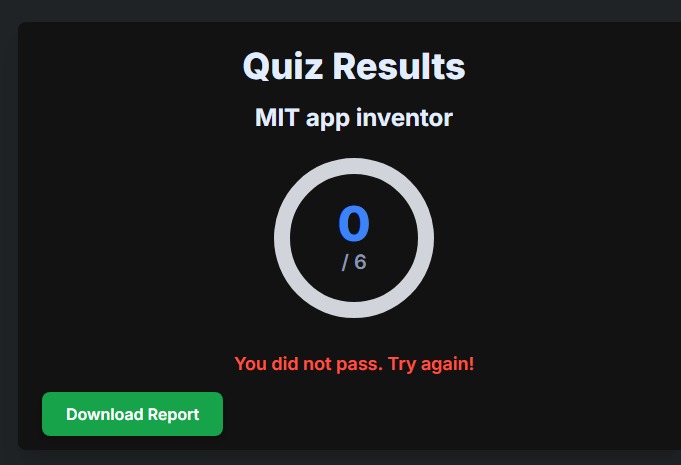
ai generated feedback and report download


Inspiration
Education is evolving, but many digital tools still feel static and disconnected. I wanted to build a platform that empowers both educators and learners with dynamic, personalized experiences. The idea sparked from imagining a space where quizzes aren’t just tests, they’re conversations, reflections, and stepping stones to deeper understanding.
What it does
learnFlow Ai is an intelligent learning platform where teachers can:
- Create interactive quizzes with embedded videos
- Offer downloadable performance reports to learners
- Enable learners to upload video responses
- Provide real-time support via an AI-powered chatbot
- Allow users to compile and publish eBooks based on their learning journey It’s a full-circle ecosystem that blends assessment, feedback, creativity, and personalization.
How we built it
learnFlow Ai was built using a robust full-stack architecture designed for scalability, performance, and ease of use:
- Backend: Django served as the backbone of our application, handling business logic, user authentication, and API endpoints with speed and reliability.
- Frontend: React.js powered the user interface, delivering a dynamic and responsive experience for both educators and learners.
- Database: PostgreSQL provided a secure and structured relational database for storing user data, quiz results, and content metadata.
- Media Management: Cloudinary was integrated to handle video uploads, image optimization, and seamless media delivery across the platform.
- Hosting & Deployment: We used Render to deploy both the Django backend and static HTML/CSS assets, ensuring smooth CI/CD and uptime. This stack allowed us to rapidly prototype and iterate while maintaining a clean separation of concerns between content, logic, and presentation.
Challenges we ran into
- Video Integration Complexity: Embedding and managing video content—both from educators and learners required careful handling of formats, storage limits, and playback compatibility.
- Chatbot Training: Building a responsive AI chatbot that could understand diverse learning queries and provide meaningful feedback was more nuanced than expected.
- Report Generation Logic: Designing a system that could analyze quiz attempts and generate insightful, downloadable reports pushed us to refine our data models and scoring algorithms.
- Deployment Hurdles: Coordinating Django backend and React frontend deployment on Render, while ensuring smooth media delivery via Cloudinary, took some trial and error.
Accomplishments that we're proud of
- Built a fully functional MVP with seamless quiz creation, video embedding, and report generation.
- Integrated Cloudinary for smooth media uploads and optimized delivery.
- Developed a chatbot that enhances learner engagement and provides contextual support.
- Enabled learners to publish personalized eBooks based on their quiz responses and reflections.
- Created a clean, responsive UI that educators and learners found intuitive during early testing.
What we learned
- User Experience is Everything: Even powerful features fall flat without thoughtful UX design.
- AI Needs Guardrails: Chatbots are only as helpful as the boundaries and context you give them.
- Media Management Matters: Handling video uploads and playback across devices is a challenge that demands robust infrastructure.
- Educators Want Flexibility: Giving teachers control over content structure and feedback tools makes the platform far more valuable.
What's next for LearnFlow Ai
- Gamification: Adding badges, streaks, and leaderboards to boost learner motivation.
- Analytics Dashboard: Giving educators real-time insights into learner performance and engagement.
- Multilingual Support: Expanding chatbot and UI capabilities to support global learners.
- Mobile Optimization: Enhancing the mobile experience for learners on the go.
- Community Features: Allowing educators to share quizzes, eBooks, and best practices with each other.
Built With
- cloudinary
- css
- django
- github
- html
- javascript
- jwt
- languages-&-frameworks:-python
- postgresql
- react.js
- render


Log in or sign up for Devpost to join the conversation.